

Quiet professionals consistently outperform their louder counterparts in sustained, high-stakes environments. Introverts bring focused thinking, careful preparation, and deep listening to every professional setting. These strengths translate directly into career excellence when channeled with intention rather than suppressed in favor of extroverted performance styles.
Everyone assumed I ran my advertising agencies the way the industry expected. Loud pitches, constant client entertainment, a revolving door of energy and noise. What they didn’t see was the quiet work happening before any of that. The analysis at 6 AM. The careful preparation that made every client presentation feel effortless. The listening in meetings that told me more about a client’s real problem than any briefing document ever could.
That quiet work was never a limitation. It was my actual competitive advantage. It just took me an embarrassingly long time to recognize it as such.
Our Career Paths and Industry Guides hub covers the full range of professional development for introverts, and this article adds a layer that often gets overlooked: what career excellence actually looks like when you stop performing extroversion and start working with your natural strengths instead.

What Does Professional Success Actually Look Like for Introverts?
A 2023 study published through the American Psychological Association found that introverted leaders consistently score higher on measures of preparation quality, active listening, and strategic thinking than their extroverted peers. None of those findings surprised me. What surprised me was how long I spent trying to compensate for exactly those strengths.
What’s your personality type?
Take our free 40-question assessment and get a detailed personality profile with dimension breakdowns, context analysis, and personalised insights.
Discover Your Type8-12 minutes · 40 questions · Free
Professional success gets defined by visible behaviors in most workplaces. Who speaks up in meetings. Who dominates the room during presentations. Who seems to know everyone at the company retreat. Those metrics favor extroverts by design, not by merit.
Actual career excellence, the kind that compounds over time, looks different. It looks like the analyst who catches a flaw in a proposal that everyone else missed. The account director who remembers exactly what a client said in passing three months ago and builds an entire strategy around it. The creative director who produces their best work in focused solitude rather than brainstorming sessions.
That last one was me. My best agency work never came from group ideation. It came from long, quiet mornings with a legal pad and a problem I’d been turning over in my mind for days. My teams eventually learned to leave those mornings alone.
Why Do So Many Introverts Underestimate Their Own Career Strengths?
Workplace culture has a visibility problem. Contributions that happen quietly, through careful preparation, deep analysis, or thoughtful written communication, tend to get credited less than contributions that happen loudly. A person who speaks confidently in a meeting often receives more recognition than the person who wrote the memo that made the meeting possible.
This creates a distorted feedback loop. Introverts do excellent work, receive less visible credit for it, and conclude that they must be less capable than colleagues who project more confidence. The conclusion is wrong, but the feedback environment makes it feel true.
I watched this happen repeatedly at my agencies. Talented introverted strategists would quietly produce the most insightful client work we had, then sit silently while a more vocal colleague presented it and received the client’s praise. Over time, some of those strategists started to believe they were supporting players rather than the actual architects of the work.
Part of what I’ve come to understand is that introverts need to learn to advocate for their contributions without performing extroversion. That’s a skill, and it’s learnable. It doesn’t require becoming louder. It requires becoming more intentional about when and how you make your work visible.

How Can Introverts Build Career Momentum Without Burning Out?
Burnout is something I know from the inside. Not as a concept, but as a specific Tuesday in October when I sat in my agency’s parking lot for twenty minutes before I could make myself go inside. I had been running at an extroverted pace for months, back-to-back client meetings, networking events I didn’t want to attend, open-door policies that meant constant interruption. My tank was empty in a way that sleep couldn’t fix.
The Mayo Clinic describes burnout as a state of physical and emotional exhaustion that develops from prolonged stress, and their research points specifically to misalignment between a person’s natural working style and their actual work demands as a primary driver. That misalignment is something introverts face structurally in most professional environments.
Building career momentum without burning out requires understanding your energy budget. Every professional interaction has a cost and a return. For introverts, large group meetings, open-plan offices, and constant social performance drain energy faster than they generate it. Focused solo work, meaningful one-on-one conversations, and preparation time restore it.
Sustainable career momentum comes from structuring your professional life to spend more time in energy-generating activities and less time in energy-draining ones. That sounds obvious, but most introverts spend years trying to do the opposite, pushing harder into draining activities in hopes of eventually feeling comfortable there.
After my parking lot moment, I restructured my schedule. I blocked the first two hours of every morning for focused work with no meetings. I reduced my attendance at networking events to ones where I genuinely expected meaningful conversations rather than volume. My output improved significantly, and so did my ability to sustain it over time.
For introverts thinking about which career paths support this kind of sustainable momentum, the Best Jobs for Introverts: Complete Career Guide 2025 maps out roles that align with how this personality type actually works best.
What Communication Strategies Actually Work in Professional Settings?
One of the most persistent myths about introverted professionals is that they’re poor communicators. The opposite is closer to the truth. Introverts tend to be precise, thoughtful communicators who choose words carefully and listen more than they speak. Those qualities are extraordinarily valuable in professional settings.
The challenge isn’t communication ability. It’s communication timing and format. Most professional environments are built around verbal, spontaneous, real-time communication. Introverts often do their best communicating in writing, after reflection, or in smaller groups where depth is possible.
A practical shift that made a significant difference in my own agency leadership was learning to front-load my thinking. Before any important meeting, I’d spend time writing out my key points. Not to read from notes, but to clarify my own thinking so that when I did speak, my contributions were precise and well-formed. Colleagues who didn’t know about this preparation often assumed I was a natural speaker. The preparation was the naturalness.
Written communication is another area where introverts hold a genuine structural advantage. A 2022 study from Harvard Business Review found that written communication in professional settings correlates strongly with perceived competence and leadership potential, particularly in remote and hybrid work environments. Introverts who invest in their writing are investing in one of their most transferable professional assets.
Public speaking is the area where many introverted professionals feel the most exposed. What most people don’t realize is that preparation and depth, both natural introvert strengths, are exactly what separates memorable presentations from forgettable ones. Public Speaking: Why Introverts Actually Have a Secret Advantage explores this in detail, including why the introvert’s tendency to over-prepare often produces better outcomes than the extrovert’s tendency to wing it.

Can Introverts Succeed in Leadership Roles Without Changing Who They Are?
Yes. Not just succeed, but often excel, and in ways that matter more than the visible markers of leadership that workplaces tend to reward.
Wharton professor Adam Grant’s research, cited widely in organizational psychology, found that introverted leaders produce better outcomes with proactive teams than extroverted leaders do. The explanation is intuitive once you hear it: introverts listen more carefully to their team members’ ideas, which encourages more initiative and better execution from people who feel genuinely heard.
My own leadership style was never the charismatic, center-of-the-room variety. I led through preparation, through one-on-one conversations that went deeper than most managers had time for, and through a tendency to ask questions rather than deliver pronouncements. Some early mentors told me I needed to be more commanding. What I eventually discovered was that my teams produced better work and stayed longer than teams at comparable agencies. Quiet leadership was working. I just hadn’t been measuring the right things.
The evidence on this has become difficult to dismiss. Why Introverts Make Better Leaders Than You Think examines the research and the real-world patterns in depth, including why the traits that make introverts seem less suited to leadership in theory often make them more effective in practice.
The National Institutes of Health has published research connecting introversion to higher conscientiousness and deeper information processing, both of which correlate with better decision-making in complex, high-stakes situations. Leadership, at its core, is a series of complex decisions. The introvert’s natural inclination to think before acting is an asset, not a liability.
How Do Introverts Handle Networking Without Losing Themselves in the Process?
Networking is the word that makes most introverts want to cancel their professional development entirely. I understand that feeling completely. Standing in a room full of strangers, exchanging business cards and elevator pitches, pretending to be energized by the whole exercise, it’s an experience that feels fundamentally misaligned with how introverts connect with people.
The problem isn’t networking itself. It’s the extroverted performance model of networking that most professional culture promotes. Introverts connect differently: through depth rather than breadth, through sustained conversation rather than quick exchanges, through shared interest rather than social obligation.
Reframing networking as relationship-building rather than contact-collecting changes the entire experience. Instead of attending every industry event and collecting fifty shallow connections, an introvert might attend two events per year and leave each one with three meaningful conversations that actually go somewhere. The second approach builds a more valuable professional network and costs far less in energy and authenticity.
Written networking is another underused tool. Reaching out to someone whose work you admire with a specific, thoughtful observation about something they’ve published or presented is far more effective than a generic LinkedIn connection request. It’s also far more comfortable for most introverts, because it allows for the reflection and precision that written communication makes possible.
For introverts who want to build a professional life that doesn’t depend on traditional networking at all, Freelancing: Why Introverts Really Thrive (Without Networking) makes a compelling case for why independent work structures often suit this personality type better than corporate environments built around constant social performance.

What Interview Strategies Help Introverts Get Hired on Their Own Terms?
Job interviews are designed to reward extroverted behavior. Quick responses, confident self-promotion, high-energy presence. Introverts who try to perform those behaviors often come across as inauthentic, which is counterproductive. The better approach is to work with your natural strengths rather than against them.
Preparation is where introverts win interviews. Most candidates walk in with a general sense of what they want to say. Introverts who prepare thoroughly walk in knowing exactly what they want to communicate, what stories illustrate their strengths most effectively, and what questions they want to ask the interviewer. That preparation shows up as competence and confidence, even when the underlying experience is anxiety.
A 2021 study from Psychology Today found that candidates who asked more thoughtful questions during interviews were rated significantly higher by hiring managers on measures of intelligence, engagement, and cultural fit. Asking good questions is an introvert’s natural mode. Most introverts just don’t realize it’s also an interview strategy.
The follow-up is another area where introverts can differentiate themselves. A well-crafted post-interview email that references specific points from the conversation and adds a thoughtful observation demonstrates exactly the qualities that make introverts excellent professionals: attention to detail, follow-through, and the ability to synthesize information and communicate it precisely.
Introvert Interviews: What Really Gets You Hired goes deeper on the specific strategies that work, including how to handle the “tell me about yourself” question without feeling like you’re performing a personality you don’t have.
How Do Introverts With ADHD Approach Career Development Differently?
Introversion and ADHD create a particular combination of strengths and challenges that standard career advice rarely addresses. Introverts with ADHD often have intense focus capacity in areas of genuine interest alongside significant difficulty sustaining attention in environments that don’t engage them. Career fit becomes even more consequential for this group, because a poor fit doesn’t just feel uncomfortable, it can make basic professional functioning genuinely difficult.
The Centers for Disease Control and Prevention estimates that approximately 4.4% of adults in the United States have ADHD, and a significant portion of those individuals also identify as introverted. The overlap creates a distinct professional profile that benefits from career environments offering autonomy, variety within a defined scope, and protection from constant social demands.
What works for introverts with ADHD in professional settings tends to involve finding the intersection between deep interest and structured independence. Roles that allow for hyperfocus on meaningful problems, with clear deliverables and limited mandatory social performance, tend to produce the best outcomes. 25+ ADHD Introvert Jobs: Careers That Work With Your Brain identifies specific roles that fit this profile, with practical guidance on how to evaluate opportunities through this lens.
What Daily Habits Separate Thriving Introverts from Struggling Ones?
Career excellence isn’t built in dramatic moments. It accumulates through daily habits that either align with or work against your natural wiring.
Introverts who thrive professionally tend to share a few consistent habits. They protect their focused work time with the same seriousness they’d give a client meeting. They invest in written communication as a professional skill rather than treating it as a secondary channel. They build recovery time into their schedules rather than treating it as a luxury. And they’ve learned to distinguish between discomfort that signals growth and discomfort that signals misalignment.
That last distinction took me years to develop. Early in my career, I pushed through all discomfort equally, assuming that any resistance was weakness to be overcome. What I eventually understood was that some discomfort, like presenting to a room of skeptical clients, was productive growth territory. Other discomfort, like forcing myself to attend every social event on the agency calendar, was just energy depletion with no professional return. Learning to tell the difference changed how I allocated my effort.
The World Health Organization has identified workplace well-being as directly connected to productivity and professional sustainability. For introverts specifically, well-being at work is closely tied to having sufficient autonomy over how and when they do their best work. Habits that protect that autonomy compound over time into genuine career resilience.
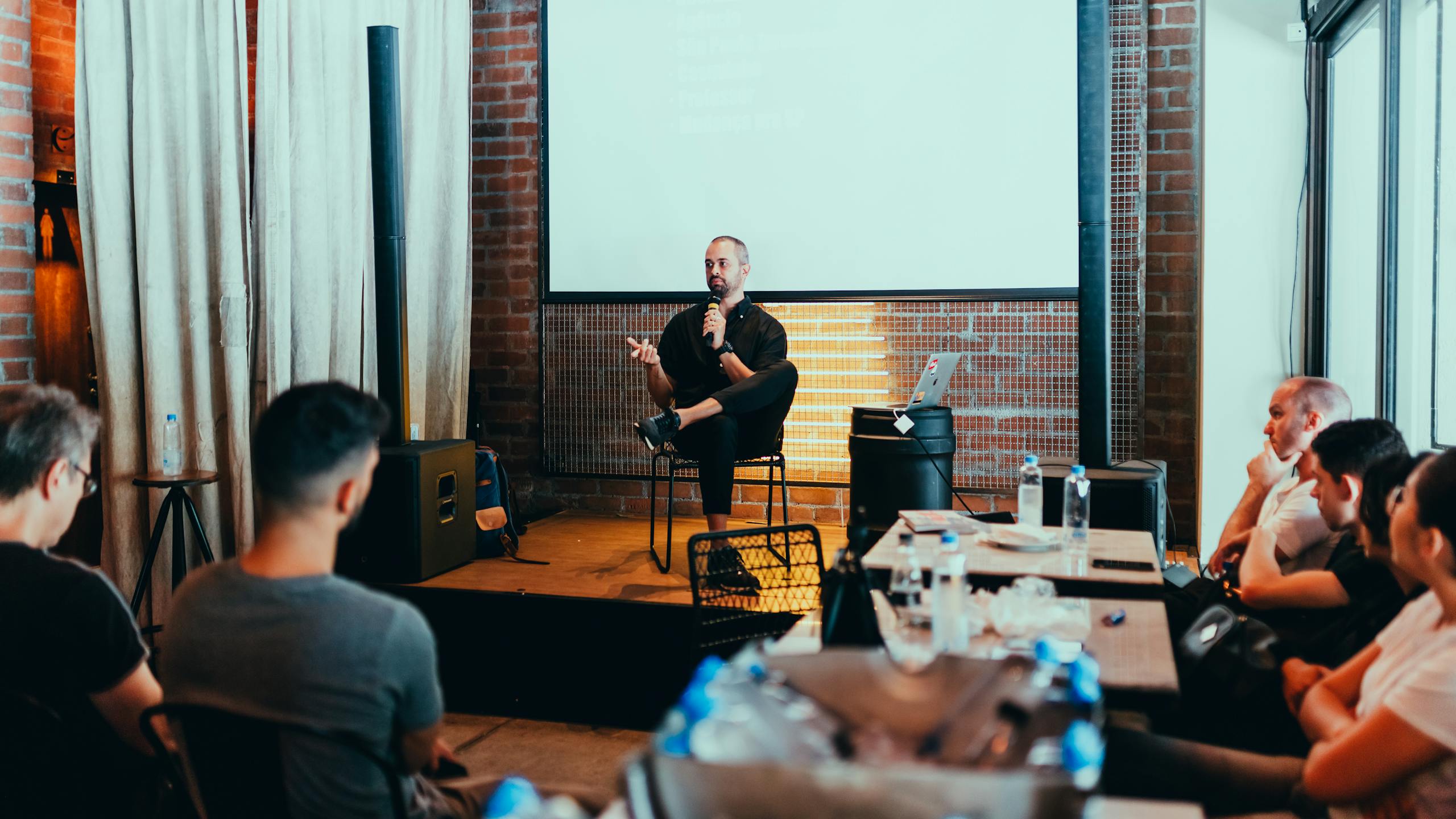
How Do You Build a Long-Term Career Strategy Around Introvert Strengths?
Long-term career strategy for introverts starts with honest self-assessment rather than aspirational mimicry. Most career advice implicitly assumes an extroverted professional as the default, which means introverts following standard advice are often optimizing for a version of success that will drain rather than sustain them.
A career strategy built around introvert strengths asks different questions. Instead of “how do I become more visible?” it asks “what environments let my best work speak for itself?” Instead of “how do I get comfortable with networking?” it asks “what relationship-building approaches feel authentic and sustainable for me?” Instead of “how do I perform better in meetings?” it asks “what communication formats let me contribute at my highest level?”
Those questions lead to different career decisions. They might mean choosing a role with more writing and analysis over one with more meetings and presentations. They might mean seeking out managers who value depth over visibility. They might mean building a reputation through published work, careful client relationships, or deep subject matter expertise rather than through social performance.
At my agencies, my most enduring professional relationships were never the ones built at industry events. They were built through long client engagements where I’d listened carefully enough to understand problems the client hadn’t fully articulated yet. That depth of understanding created loyalty that outlasted any amount of social charm. Several of those client relationships lasted fifteen years or more.
Career excellence, for introverts, is less about reaching a particular title or income level and more about building a professional life that draws on your actual strengths consistently enough that the work compounds. That compounding, over time, produces results that are genuinely difficult for others to replicate, because they’re built on something authentic rather than performed.
If you’re still mapping out what that professional path looks like for you, the full Career Paths and Industry Guides hub brings together resources across every stage of that process, from choosing the right field to building the habits that make any career sustainable over the long run.
About the Author
Keith Lacy is an introvert who’s learned to embrace his true self later in life. After 20 years in advertising and marketing leadership, including running agencies and managing Fortune 500 accounts, Keith now channels his experience into helping fellow introverts understand their strengths and build fulfilling careers. As an INTJ, he brings analytical depth and authentic perspective to every article, drawing from both professional expertise and personal growth.
Frequently Asked Questions
Can introverts truly succeed at the executive level without adopting an extroverted leadership style?
Yes, and the evidence supports this consistently. Introverted executives often outperform extroverted counterparts in environments that require careful decision-making, team retention, and strategic thinking. what matters is finding or creating leadership structures that allow for depth-oriented work rather than forcing a performance of extroverted behaviors. Many of the most effective CEOs and executives in recent decades have been self-identified introverts who led through preparation, listening, and strategic clarity rather than charisma and social dominance.
How do introverts handle performance reviews and salary negotiations without feeling inauthentic?
Preparation is the most powerful tool available. Introverts who document their contributions systematically throughout the year, tracking specific outcomes and their role in producing them, enter performance conversations with concrete evidence rather than relying on in-the-moment self-promotion. For salary negotiations specifically, written preparation and a clear, evidence-based case often work better than the confident verbal performance style that most negotiation advice recommends. Framing contributions in terms of measurable business impact rather than personal qualities tends to feel more natural and land more effectively.
What work environments tend to support introvert professional success most effectively?
Environments that offer autonomy over how and when work gets done, access to focused work time without constant interruption, and communication channels that include writing alongside verbal exchanges tend to produce the best outcomes for introverted professionals. Remote and hybrid work arrangements have expanded access to these conditions significantly. Within any environment, having a manager who values output quality over visible engagement makes a substantial difference in how well an introvert can perform at their actual capacity.
How can introverts build professional visibility without constant self-promotion?
Consistent, high-quality written contributions, whether internal memos, published articles, or detailed project documentation, build professional reputation over time without requiring constant social performance. Developing deep subject matter expertise in a specific area creates a form of visibility that comes to you rather than requiring you to pursue it. Strategic participation in high-value meetings, where you contribute prepared, precise observations rather than speaking frequently, often has more impact on professional perception than constant vocal presence.
Is burnout more common among introverts in traditional workplaces, and what can be done about it?
Burnout does appear more frequently among introverts in environments built around extroverted work norms, primarily because the energy cost of sustained social performance is higher for introverts than it is for extroverts. The most effective prevention involves structuring your workday to include genuine recovery time, not as a reward for completing draining activities, but as a built-in component of a sustainable professional schedule. Identifying which professional activities restore your energy rather than depleting it, and finding ways to do more of those, is a long-term strategy rather than a quick fix.