
Introvert self-care means deliberately protecting and restoring your mental and emotional energy through solitude, intentional boundaries, and activities that align with how your brain actually processes the world. It goes beyond bubble baths and early bedtimes. It means understanding that your nervous system works differently, and building a life that respects that difference.

There was a period in my agency years when I genuinely believed exhaustion was a badge of honor. I was running a mid-sized advertising shop, managing a team of about thirty people, fielding calls from Fortune 500 clients who expected constant availability. I kept my calendar packed because packed calendars looked like success. What I didn’t understand then was that I was burning through a resource I couldn’t replenish the way my extroverted colleagues could. They recharged in the noise. I was drowning in it.
It took me an embarrassingly long time to connect the dots between my chronic fatigue and the way I was structuring my days. Once I did, everything about how I managed my energy shifted. Not my ambition. Not my output. Just the conditions I created to sustain both.
Self-care for people with this personality type isn’t a luxury or a personality quirk to apologize for. It’s a functional requirement. And getting it right changes more than your mood. It changes your capacity to do the work you actually care about.
Why Does Standard Self-Care Advice So Often Miss the Mark for Introverts?
Most mainstream wellness content treats social connection as a universal recharger. Group fitness classes, team retreats, accountability partners, social media communities. The assumption baked into most of this advice is that being around people is inherently restorative. For a significant portion of the population, that assumption is simply wrong.
What’s your personality type?
Take our free 40-question assessment and get a detailed personality profile with dimension breakdowns, context analysis, and personalised insights.
Discover Your Type8-12 minutes · 40 questions · Free
A 2012 study published in the American Psychological Association‘s journals found that introverts and extroverts show measurably different responses to social stimulation, with introverts experiencing heightened cortisol responses in high-stimulation environments. That’s not a character flaw. That’s neurobiology. Telling an introvert to “get out more” as a stress-relief strategy is like telling someone with a sunburn to spend more time outdoors.
The self-care industry also tends to conflate self-care with self-improvement, which creates a particular trap for those of us who already spend a lot of time inside our own heads. We can turn meditation into a productivity hack, journaling into a performance metric, and rest into something we have to earn. That’s not restoration. That’s just a different flavor of depletion.
Genuine self-care for this personality type requires a different framework entirely, one built around energy management rather than activity accumulation.
What Does Energy Depletion Actually Feel Like for an Introvert?
I can describe it precisely because I’ve felt it hundreds of times. It’s not tiredness in the ordinary sense. It’s more like a kind of cognitive static, where thinking feels effortful and even simple decisions carry an unusual weight. My patience shortens. My curiosity flattens. I start responding to things reactively instead of thoughtfully, which for an INTJ who prides himself on measured responses, is a reliable warning signal.
During a particularly demanding pitch season at the agency, I remember sitting in a client dinner, surrounded by people I genuinely liked, and feeling completely hollow. Not sad. Not angry. Just empty in a way that had nothing to do with the food or the conversation. My body was present. Everything else had already left the building.
According to Mayo Clinic, chronic stress without adequate recovery periods can contribute to burnout, which presents as emotional exhaustion, reduced performance, and a growing sense of detachment from work and relationships. What they describe clinically maps almost exactly to what prolonged social overstimulation feels like when you’re wired for depth and quiet.
The signs tend to build gradually. Increased irritability in conversations that would normally feel easy. A pulling away from even low-stakes social interactions. Difficulty accessing the kind of focused, sustained thinking that usually comes naturally. A creeping sense that everything requires more effort than it should.
Recognizing these signals early matters enormously. The further into depletion you get, the longer the recovery takes. An afternoon of solitude can reset a mildly drained system. A week of ignoring the signals can require days of deliberate withdrawal to restore function.
How Do You Build a Self-Care Practice That Actually Restores Your Energy?
Start by auditing your week honestly. Not what you wish your week looked like, but what it actually contains. Map out where your energy goes and where it comes back. Most people who do this exercise are surprised by what they find. The things draining them most aren’t always the obvious culprits.
For me, it wasn’t the big client presentations that cost the most. Those I could prepare for and recover from predictably. It was the accumulated small stuff: the open-door policy I’d adopted because good managers were supposed to be accessible, the back-to-back meetings with no buffer between them, the casual office socializing I participated in because opting out felt antisocial. Each of those was a small withdrawal from an account I wasn’t depositing back into.
Effective self-care for this personality type tends to involve three distinct categories of practice.
Solitude as a Non-Negotiable
Not solitude as a reward for finishing everything else. Solitude as a scheduled, protected part of the week. I eventually learned to block the first hour of every workday as thinking time, no meetings, no calls, no Slack. My team initially found this baffling. Over time, they noticed I was sharper, more decisive, and easier to work with during the hours I was available. The protected time wasn’t selfish. It made everything else more effective.
The National Institutes of Health has published research connecting regular periods of quiet and solitude to improved cognitive function, better emotional regulation, and lower baseline stress levels. What introverts have always known intuitively, science is steadily confirming.
Depth Over Breadth in Activities
Shallow engagement drains this personality type faster than most people realize. Scrolling social media, attending events where conversation stays perpetually surface-level, consuming content without reflection: these activities feel like rest but often function as a different kind of stimulation. They keep the mind busy without giving it anything to actually process.
What genuinely restores tends to involve depth: reading that requires real attention, creative projects with no audience or deadline, long walks without podcasts, conversations with one or two people who think carefully. The common thread is absorption. When I’m fully absorbed in something that engages my mind on its own terms, I come out the other side more energized than when I went in.
Physical Practices That Match Your Temperament
Exercise matters for everyone, but the form it takes matters more for those of us who find group energy exhausting rather than motivating. I spent years feeling vaguely guilty for preferring solo runs over gym classes, as if my preference for exercising alone was another introvert flaw to overcome. Eventually I stopped apologizing for it and started treating solo movement as part of my self-care architecture rather than a compromise.
The Centers for Disease Control and Prevention recommends 150 minutes of moderate physical activity per week for adults, and the mental health benefits are well-documented regardless of format. The format, though, is worth getting right. A solo hike that leaves you feeling clear and centered does more good than a group fitness class that leaves you overstimulated and depleted, even if the cardiovascular output is identical.

Are Boundaries a Form of Self-Care, or Just a Coping Mechanism?
Both, and the distinction matters less than people think. success doesn’t mean build walls. It’s to create conditions where you can show up fully for the things and people that matter most to you.
I resisted the word “boundaries” for a long time because it felt clinical and slightly precious. What I eventually understood was that the boundaries I needed weren’t about keeping people out. They were about keeping enough of myself in reserve to actually be present when I chose to engage.
At the agency, I started being explicit with my team about my working style. I told them I did my best thinking in writing, that I preferred a detailed email over an impromptu hallway conversation, and that my closed door meant I was in deep work mode, not that I was unavailable. Most people adapted quickly and without resentment. A few found it strange at first. What surprised me was how many of them, once I modeled it, started setting their own similar preferences. Turns out a lot of people were quietly relieved to have permission to work the way they actually worked best.
Setting limits on social obligations outside work follows the same logic. Saying no to the optional networking event isn’t antisocial. It’s allocating a limited resource deliberately. Psychology Today has written extensively on how introverts who consistently override their energy limits in social settings show higher rates of anxiety and emotional exhaustion over time. Protecting your capacity isn’t avoidance. It’s maintenance.
How Does an Introvert Recover from Burnout That’s Already Set In?
Recovery from genuine burnout is slower and less linear than most people want it to be. There’s a temptation to treat it like a short-term problem with a short-term fix: take a long weekend, sleep more, do some yoga, get back to work. For introverts who’ve been running on empty for months, that approach rarely works.
What worked for me, after a particularly punishing year that ended with me barely able to think straight through a client presentation I’d delivered dozens of times before, was a more structural reset. I took two weeks largely offline. Not a vacation in the traditional sense, not sightseeing and social dinners, but actual withdrawal. I read. I walked. I cooked. I slept without an alarm. I let my mind wander without directing it anywhere.
The first few days felt almost uncomfortable. My brain kept reaching for the next task, the next problem to solve, the next thing to optimize. Somewhere around day four, something settled. The static cleared. I started thinking in longer sentences again, noticing things I’d stopped noticing, feeling curious about ideas rather than just processing them.
Burnout recovery for this personality type requires extended periods of low-stimulation time, not just rest in the sense of physical inactivity, but genuine mental quietude. The World Health Organization classifies burnout as an occupational phenomenon characterized by exhaustion, increased mental distance from work, and reduced professional efficacy. Their guidance emphasizes that recovery requires addressing the conditions that caused burnout, not just treating the symptoms.
After that reset, I restructured my work life more deliberately than I ever had before. Fewer commitments overall. More protected thinking time. A clearer sense of which obligations were genuinely necessary and which ones I’d taken on because declining felt uncomfortable. The changes weren’t dramatic from the outside. From the inside, they were significant.

What Role Does Environment Play in Introvert Self-Care?
A significant one, and it’s consistently underestimated. Your physical environment either supports your nervous system or works against it. For people who process deeply and feel stimulation acutely, the spaces where you spend your time matter in ways that go beyond aesthetics.
Noise is the most obvious factor. Open-plan offices became fashionable in the 2000s and 2010s, partly because they signaled collaboration and transparency. They were also, for many introverts, a slow-motion drain on concentration and wellbeing. I moved my agency into an open-plan space in 2011 because it seemed modern and collegial. Within six months I had quietly reclaimed a small enclosed office for myself and started noticing how many of my best thinkers had also found ways to carve out acoustic privacy.
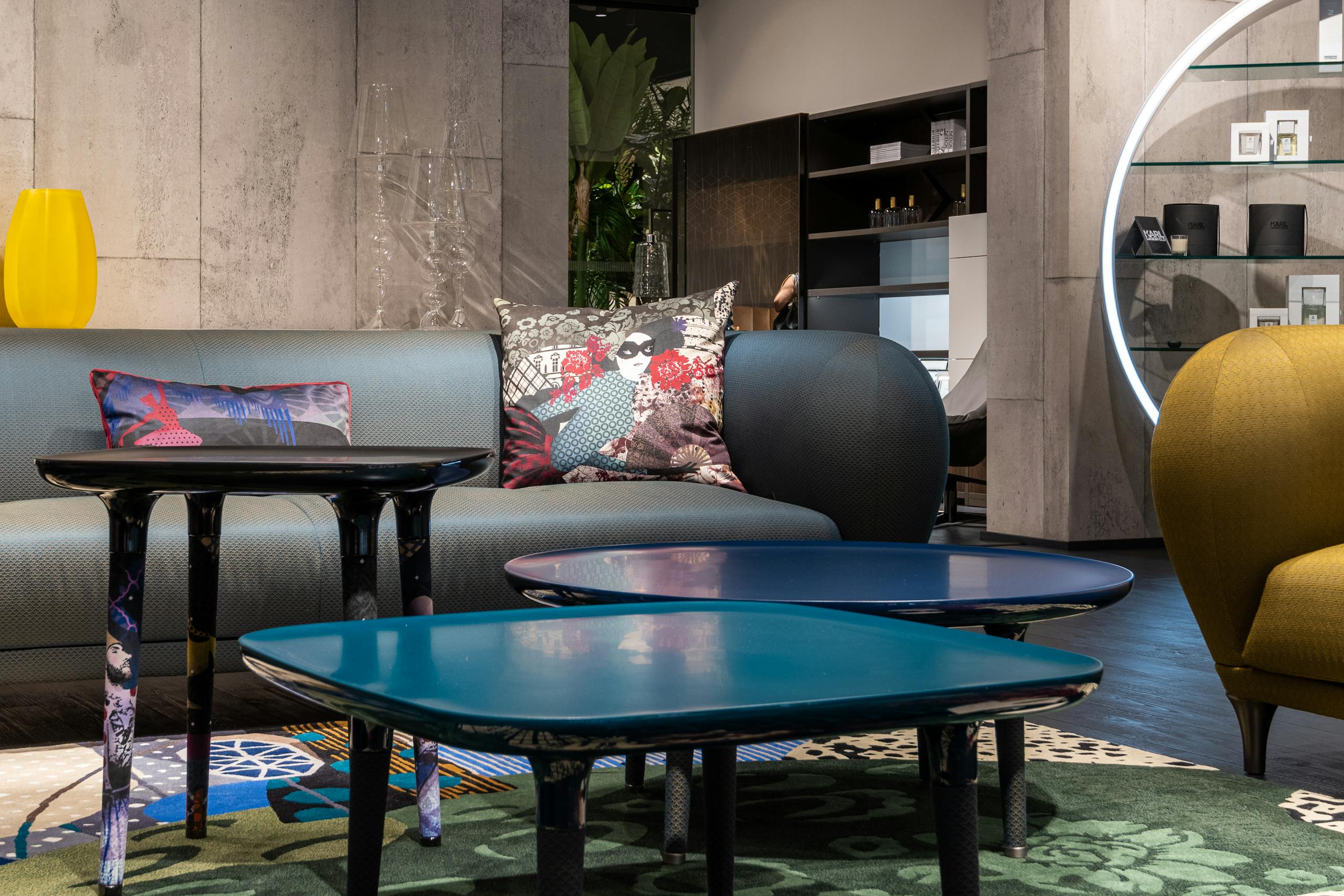
At home, the same principle applies. A space that feels calm, ordered, and free from sensory clutter supports restoration in a way that a chaotic or noisy environment simply cannot. That doesn’t require expensive renovation. It requires paying attention to what your environment is actually doing to your nervous system and making adjustments accordingly.
Natural light, access to outdoor spaces, reduced visual clutter, and control over sound levels are all environmental factors that show up consistently in research on cognitive performance and stress recovery. A 2015 study from the University of Michigan found that spending time in natural settings reduced mental fatigue and improved attention restoration significantly. For those of us who are highly attuned to sensory input, these effects are amplified.
Designing your environment intentionally is itself a form of self-care, and often a more durable one than any individual practice. You can forget to meditate. You can’t forget the effect of your surroundings, because you’re living in them constantly.
How Do You Maintain Self-Care Without Withdrawing From Life Entirely?
This is the tension most introverts I know wrestle with. The need for solitude and the desire for meaningful connection aren’t opposites, but they can feel that way when you’re depleted. The answer isn’t to choose one over the other. It’s to be more intentional about the quality and timing of both.
Meaningful connection for this personality type tends to be one-on-one or in very small groups, focused on ideas or experiences rather than social performance. An evening with one close friend who thinks carefully and speaks honestly does more for my sense of connection than a party of fifty people where conversation skims the surface all night. Knowing that about myself means I can say yes to the former without guilt and decline the latter without feeling like I’m failing at being human.
The Harvard Business Review has published several pieces on how introverted leaders often build stronger one-on-one relationships than their extroverted counterparts, precisely because they invest more deeply in fewer connections. What looks like social limitation from the outside is often a different, and sometimes more effective, approach to building trust and understanding.
Sustainable self-care isn’t about maximizing solitude. It’s about calibrating your social and solitary time so that both serve you. Some weeks that means more people, more engagement, more external energy. Other weeks it means protecting long stretches of quiet and being unapologetic about it. The skill is reading your own system accurately and responding to what it actually needs rather than what you think it should need.

Building a sustainable self-care practice connects directly to the broader work of understanding your introvert identity and strengths. Our complete Introvert Self-Care hub explores the full range of energy management, boundaries, and restoration strategies that work with your wiring rather than against it.
About the Author
Keith Lacy is an introvert who’s learned to embrace his true self later in life. After 20 years in advertising and marketing leadership, including running agencies and managing Fortune 500 accounts, Keith now channels his experience into helping fellow introverts understand their strengths and build fulfilling careers. As an INTJ, he brings analytical depth and authentic perspective to every article, drawing from both professional expertise and personal growth.
Frequently Asked Questions
What is the most important self-care practice for introverts?
Protecting regular periods of solitude is the single most important practice, because it addresses the root cause of introvert depletion rather than just managing symptoms. Scheduled alone time, treated as non-negotiable rather than optional, allows the nervous system to reset and restores the cognitive clarity and emotional steadiness that social stimulation gradually erodes. Everything else, exercise, sleep, creative activity, builds on that foundation.
How do introverts recharge differently from extroverts?
Extroverts typically gain energy from social interaction and external stimulation, while introverts expend energy in those same conditions and restore it through quiet and solitude. This isn’t a preference or a shyness issue. It reflects genuine differences in how the nervous system processes stimulation. Introverts tend to have higher baseline arousal levels, which means additional external stimulation pushes them toward overload more quickly. Recovery requires reducing, not adding, stimulation.
Can introverts experience burnout more easily than extroverts?
Introverts working in high-stimulation environments, particularly open-plan offices, client-facing roles, or cultures that reward constant availability, are at elevated risk for burnout because the conditions of the work consistently run counter to how they restore energy. When there’s no recovery time built into the structure of daily life, depletion accumulates. Many introverts also internalize the pressure to perform extroversion, which adds a layer of effort that extroverts simply don’t carry.
Is it selfish for an introvert to prioritize alone time over social obligations?
Protecting your energy isn’t selfish. It’s what makes genuine presence possible. An introvert who consistently overrides their need for solitude to meet social obligations becomes depleted, irritable, and less able to show up fully for the people they care about. Prioritizing restoration is what sustains the capacity for connection and contribution. The people in your life benefit from you being genuinely present in fewer interactions more than they benefit from you being physically present but mentally absent in many.
How do you know when your self-care routine needs to change?
Watch for the signals that your current approach isn’t working: persistent cognitive fog, shortened patience, difficulty accessing your usual depth of thinking, growing reluctance to engage even in interactions you normally enjoy, and a sense that rest isn’t actually restoring you. These are signs that the system needs adjustment. Sometimes that means more solitude. Sometimes it means addressing a specific drain, a relationship, a work structure, an environment, that your current practices can’t compensate for on their own.