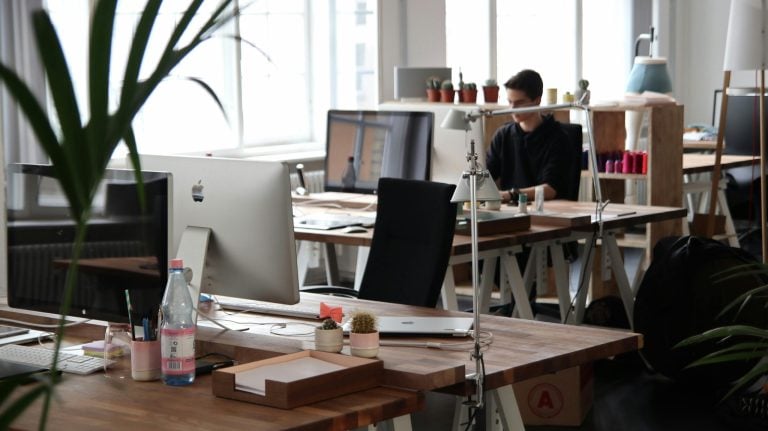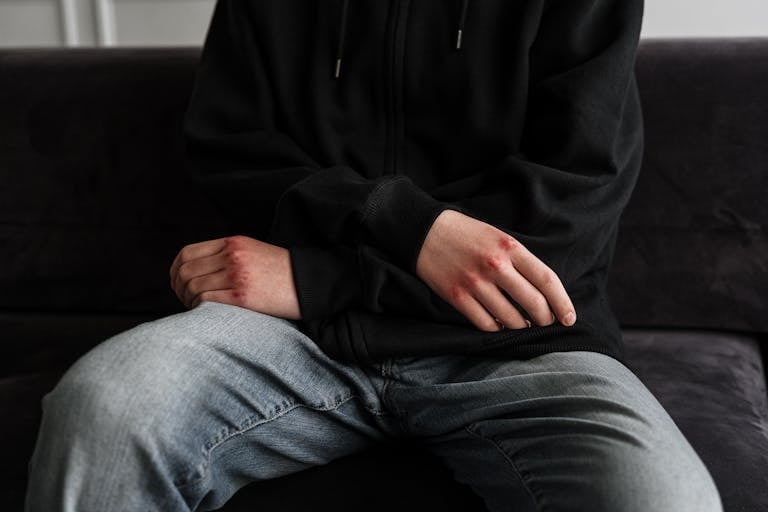
Introvert stock photos tend to follow a predictable script: a lone figure hunched over a book, someone hiding behind a coffee cup, a person sitting apart from a laughing crowd. These images carry a quiet message, and it’s not a flattering one. They frame introversion as isolation, awkwardness, or quiet suffering rather than what it actually is: a rich, internally driven way of engaging with the world.
The visual language we use to represent introverts matters more than most people realize. Stock photography shapes perception, and perception shapes how introverts see themselves and how others treat them. When every image of “introvert” shows someone shrinking, the cultural story gets reinforced in ways that are hard to shake.
There’s a better story worth telling, and it starts with understanding what these images actually get wrong.

If you’ve ever felt like the way introverts get depicted doesn’t match your actual experience, you’re in good company. Our General Introvert Life hub covers the full texture of what it means to live as an introvert, from the misconceptions we fight to the genuine strengths we bring to every room we walk into.
Why Does Visual Representation of Introverts Matter So Much?
Images communicate before words do. Long before someone reads a caption or a headline, they’ve already absorbed the emotional message of a photograph. And the emotional message embedded in most introvert stock photos is: something is wrong with this person.
What drains your social battery?
Not all social exhaustion is the same. Our free quiz identifies your specific drain pattern and gives you personalised recharging strategies.
Find Your Drain PatternUnder 2 minutes · 8 questions · Free
Consider the most common visual tropes. A person sitting alone at a party, looking uncomfortable. Someone with headphones on, physically blocked off from the world. A figure in a corner, arms crossed, while everyone else connects. These images aren’t neutral documentation. They’re editorial choices that frame introversion as social failure.
A study published in PubMed Central on personality and social behavior found that introversion is consistently misread as social anxiety or aloofness by outside observers, even when the introverted person is perfectly content. Stock photos don’t just reflect this misreading. They actively create it, over and over, in every blog post, article, and social media graphic that reaches for the “introvert” folder in a stock library.
I felt this acutely during my years running advertising agencies. Visual storytelling was my profession, and I understood how images built or dismantled brand perception. What I didn’t fully appreciate until much later was how the same dynamics applied to identity. The images I’d internalized about what an introvert looked like, withdrawn, passive, slightly sad, had shaped how I thought about myself. Recognizing that was uncomfortable. It was also necessary.
There’s a reason we’ve written extensively about introvert discrimination and how to change it. The bias doesn’t always announce itself. Sometimes it arrives quietly, embedded in a photograph.
What Stereotypes Do Introvert Stock Photos Keep Reinforcing?
Pull up any stock photo site and search “introvert.” The results cluster around a handful of recurring images. Solitude framed as loneliness. Quiet framed as sadness. Preference for depth framed as social failure. These aren’t random aesthetic choices. They reflect deeper cultural assumptions that have been baked into how introversion gets represented.
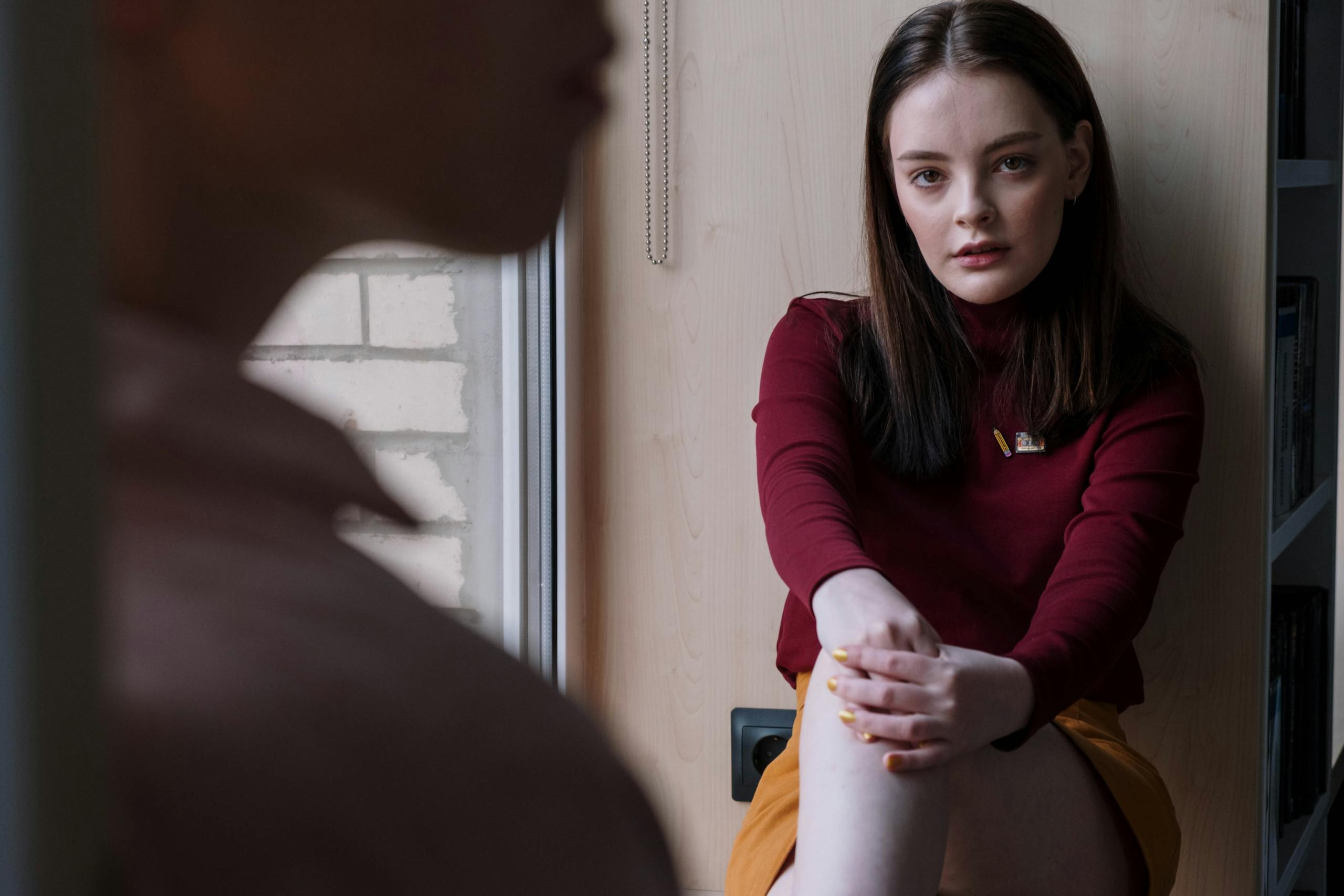
The first stereotype is the isolation myth. Most introvert stock photos show people alone, not by choice, but in ways that signal exclusion. There’s a meaningful difference between a person who has chosen solitude to recharge and a person who is sitting alone because no one wants to include them. Stock libraries almost always show the second scenario, even when the caption says “introvert.”
The second stereotype is the sadness conflation. Introverts in stock photos look melancholy. They stare out rainy windows. They sit in empty cafes with untouched drinks. They look like they’re waiting for something that never arrives. This conflates a preference for internal processing with chronic unhappiness, which is both inaccurate and damaging.
A third recurring image type shows introverts as overwhelmed by social situations, covering their ears, retreating from crowds, physically recoiling from noise. There are real moments of sensory overload that some introverts experience, and those deserve acknowledgment. But when it becomes the dominant visual representation, it suggests that ordinary social life is a kind of assault on introverts rather than simply something we approach differently.
These stereotypes connect directly to the misconceptions that introversion myths have been perpetuating for decades. The photographs and the myths reinforce each other in a loop that’s genuinely hard to interrupt.
How Does Inaccurate Imagery Affect How Introverts See Themselves?
There’s a concept in psychology called the looking-glass self: we form our self-image partly by seeing how others perceive us. When the dominant images of “people like you” are consistently negative, it seeps in. Not all at once. Gradually, over years of ambient exposure.
I spent the first decade of my career in advertising trying to be a different kind of leader than I naturally was. Louder. More spontaneous. More visibly enthusiastic in group settings. Part of that was professional pressure, the genuine expectation that leadership looked a certain way. But part of it was something more internal. I’d absorbed a story about what introversion meant, and the story wasn’t flattering. The images I’d seen, in media, in stock photo libraries, in the cultural shorthand of “that quiet guy in the corner,” had told me that my natural way of being was a problem to be fixed.
A research paper examining personality representation in media found that how personality traits are visually coded affects both self-perception and external evaluation. When introversion is coded as withdrawal and unhappiness, introverts internalize those associations. The effect is subtle but cumulative, and it takes real effort to separate who you are from what you’ve been shown you are.
This is one reason that understanding the genuine strengths of introversion matters so much. Accurate representation, in words and in images, gives introverts a different mirror to look into.
The identity piece runs deep. When I finally stopped trying to perform extroversion and started working with my actual wiring, my leadership improved. My client relationships deepened. My thinking got clearer. None of that happened because I found better coping strategies. It happened because I stopped treating my introversion as a liability that needed managing. That shift required a different self-image, one that wasn’t built on stock photos of sad people sitting alone.
What Would Accurate Introvert Stock Photos Actually Look Like?
Accuracy doesn’t mean flattering propaganda. It means showing the actual range of introvert experience rather than flattening it into a single, unflattering narrative. And that range is genuinely wide.
An accurate introvert stock photo might show someone in deep, focused concentration. Not sad. Not isolated. Absorbed. There’s a quality of presence in deep focus that looks completely different from loneliness, and a skilled photographer can capture that distinction. The introvert who is genuinely engaged with a problem or a book or a piece of writing isn’t suffering. They’re doing exactly what they’re wired to do.
Accurate imagery might also show introverts in conversation, real conversation, not the performative networking-event variety. Psychology Today has documented how introverts tend to prefer fewer, deeper conversations over many shallow ones. A stock photo that captured two people genuinely talking, leaning in, fully present, would represent introvert social life far more honestly than a lone figure avoiding a crowd.
Accurate imagery might show introverts leading. In my years running agencies, I sat across the table from some of the most quietly powerful people I’ve ever met. They didn’t fill rooms with noise. They asked the question that cut through three hours of circular discussion. They noticed the thing everyone else had missed. That’s introvert leadership, and it doesn’t look like the stock photo version at all.
It might show introverts in nature, not because introverts are hermits who flee human contact, but because many of us find that open, quiet spaces genuinely restore us in ways that crowded environments don’t. That’s not a pathology. It’s a preference. There’s a difference, and a good photograph can honor it.
How Does the Stock Photo Problem Connect to Broader Cultural Bias?
Stock photos don’t exist in a vacuum. They’re produced by photographers and curated by libraries that reflect the cultural assumptions of the people making those decisions. And in a culture that has historically valued extroversion as the default mode of healthy human functioning, the visual language around introversion was always going to skew negative.
Susan Cain’s work brought introversion into mainstream conversation in a meaningful way, but the stock photo libraries haven’t fully caught up. You can find more positive introvert imagery now than you could a decade ago, but the default still leans toward isolation and discomfort. The cultural update is happening slowly, unevenly, and with significant resistance from people who benefit from the existing framing.
Part of what makes this worth examining is the way it connects to how introverts are treated in professional and educational settings. Research from Rasmussen University on introverts in professional environments found that introverts are routinely underestimated in contexts that reward visible, performative engagement over substantive contribution. The stock photo version of introversion, passive, withdrawn, slightly pathetic, feeds directly into those underestimations.
At one of my agencies, we had a brilliant strategist who almost never spoke in large group meetings. Her contributions came in writing, in one-on-one conversations, in the documents she produced that consistently outthought everyone else in the room. She was passed over for a promotion by a manager who described her as “not quite ready” and “hard to read.” What he meant, though he’d never have said it this way, was that she didn’t perform engagement the way extroverted contributors did. The stock photo version of her personality had already told him what to think.
Addressing this requires more than better photographs. It requires the kind of sustained reframing that comes from understanding how introverts can thrive in environments built for extroverts, and from pushing back on the visual and cultural assumptions that make those environments harder to move through.
What Can Introverts Do When Visual Stereotypes Feel Overwhelming?
There’s something disorienting about seeing yourself misrepresented repeatedly. It creates a low-grade friction between your actual experience and the version of you that exists in the cultural imagination. Over time, that friction accumulates.
One thing that genuinely helped me was becoming more intentional about the images and stories I consumed. Not in an obsessive or curated way, but in a basic awareness that the media I absorbed was shaping how I thought about myself. Seeking out accounts, books, and communities that represented introversion accurately, as a legitimate and valuable way of being rather than a deficiency, changed the internal narrative.
Another shift was learning to name the misrepresentation when I saw it. Not in a combative way, but simply as an act of internal clarity. When I’d see a stock photo captioned “introvert” showing someone looking miserable and alone, I’d notice the gap between that image and my actual experience. That noticing created distance between the stereotype and my self-perception.
A 2024 study published in Frontiers in Psychology examining identity and media representation found that critical media literacy, the ability to analyze and question the messages embedded in media, significantly reduced the negative self-perception effects of stereotypical representation. Simply being aware of what the image is doing changes how much power it has over you.
There’s also real value in finding community with other introverts who are working through the same questions. Finding genuine peace with your introvert identity is partly an internal process, but it’s also supported by being around people who understand the experience from the inside rather than through the lens of a stock photo.

How Can Creators and Communicators Do Better?
If you’re a writer, blogger, educator, or content creator who uses stock photos to illustrate articles about introversion, you have more influence over this than you might think. The aggregate effect of thousands of individual image choices shapes the cultural story.
Start by auditing the images you reach for automatically. When you search “introvert” in a stock library, do you accept the first results, or do you interrogate what those images are actually communicating? A little friction in the selection process can produce significantly more accurate representation.
Consider the full range of introvert experience when you’re choosing images. Introverts in deep focus. Introverts in genuine conversation. Introverts leading, creating, teaching, building. Introverts who look content rather than sad. Introverts who are alone by choice rather than by exclusion. The images exist. They just require more intentional searching.
Think about what you’re pairing images with. An image of someone alone can read very differently depending on the context the surrounding text creates. A person sitting quietly with a book, paired with copy about the restorative power of solitude, tells a completely different story than the same image paired with copy about social isolation. The image and the text create meaning together.
Educators have a particular responsibility here. Introverted students already face significant challenges in classroom environments designed around participation and group work. When the visual materials in those environments also frame introversion negatively, it compounds the message that something is fundamentally wrong with the way these students are wired. Better image choices in educational contexts aren’t a small thing.
The Harvard Program on Negotiation has noted that introverts bring distinct strengths to high-stakes professional interactions, including careful listening, thorough preparation, and the ability to read a room without dominating it. Those strengths are invisible in the standard stock photo vocabulary. Making them visible is a creative and cultural challenge worth taking seriously.
What Does It Mean to Represent Introversion Honestly?
Honest representation doesn’t require making introversion look glamorous or problem-free. There are real challenges that come with being wired for depth and internal processing in a world that often rewards breadth and external performance. Those challenges deserve acknowledgment, not erasure.
What honest representation does require is showing the full picture. Yes, introverts sometimes feel drained by social situations that energize their extroverted colleagues. That’s real. And introverts also experience a quality of engagement, with ideas, with work, with the people they genuinely connect with, that is profound and sustaining. Both things are true. The stock photo version of introversion shows only the first half.
Honest representation also means showing introverts as agents rather than victims. The person who chooses solitude to recharge is exercising agency. The introvert who prepares thoroughly before a big presentation is exercising agency. The leader who builds a team culture that values written communication and thoughtful deliberation is exercising agency. These are active, empowered stances, not the passive, suffering posture of the standard introvert stock photo.
Late in my agency career, I stopped apologizing for how I led. I stopped opening every presentation with performative energy I didn’t feel. I started sending detailed written briefs before meetings so that the conversation could go deeper faster. I built in reflection time before major decisions instead of rewarding whoever spoke first. The results were measurably better. And the image of leadership I was projecting looked nothing like the extroverted archetype I’d spent years trying to imitate. It also looked nothing like the stock photo introvert, sad and alone and slightly lost. It looked like someone who had figured out how to work with their own wiring rather than against it.
That’s the image worth creating. That’s the story worth telling. And it starts with being honest about what the current visual language gets wrong, and what a more accurate representation would look like.

There’s more to explore about living authentically as an introvert in every area of life. Find the full collection of perspectives and resources in our General Introvert Life hub.
Running on empty?
Five drain profiles, each with specific triggers, warning signs, and a recharging playbook.
Take the Free QuizUnder 2 minutes · 8 questions · Free
About the Author
Keith Lacy is an introvert who’s learned to embrace his true self later in life. After 20 years in advertising and marketing leadership, including running agencies and managing Fortune 500 accounts, Keith now channels his experience into helping fellow introverts understand their strengths and build fulfilling careers. As an INTJ, he brings analytical depth and authentic perspective to every article, drawing from both professional expertise and personal growth.
Frequently Asked Questions
Why do most introvert stock photos show people looking sad or isolated?
Most introvert stock photos depict sadness or isolation because they conflate introversion with social failure or loneliness. The people selecting and tagging these images are working from cultural assumptions that treat introversion as a deficiency rather than a personality trait with its own strengths. The result is a visual library that shows introverts as suffering rather than simply wired differently. This misrepresentation is worth actively resisting, both as a content creator choosing images and as an introvert deciding which visual stories about yourself you accept as true.
Does the way introverts are visually represented actually affect how they feel about themselves?
Yes, significantly. Visual representation shapes self-perception through repeated exposure to images that code your personality trait as negative or deficient. A 2024 study in Frontiers in Psychology found that stereotypical media representation affects self-perception in measurable ways, and that critical awareness of what images are communicating reduces those effects. Introverts who consistently see themselves represented as isolated, sad, or socially incompetent absorb those associations over time. Seeking out accurate, affirming representations and developing the ability to critique inaccurate ones both help counter this effect.
What would a more accurate introvert stock photo actually show?
Accurate introvert stock photos would show the full range of introvert experience: deep focus and concentration, genuine one-on-one conversation, thoughtful leadership, creative work, and chosen solitude that looks restorative rather than lonely. They would show introverts as engaged and purposeful rather than passive and sad. The key distinction is between solitude chosen for restoration and isolation imposed by social failure. Most current stock photos show the second; accurate representation would center the first, while also showing introverts fully present and capable in social and professional contexts.
How can content creators choose better images when writing about introversion?
Content creators can improve their image choices by auditing what the default search results for “introvert” are actually communicating, then searching more specifically for images that show the aspect of introversion they’re actually writing about. Searching for “deep focus,” “thoughtful conversation,” “quiet leadership,” or “intentional solitude” will surface more accurate imagery than a generic “introvert” search. Pairing images with text that frames introversion positively also changes how the same image reads. The goal is to make sure the visual and written messages reinforce each other rather than the image defaulting to the standard negative framing.
Is the negative visual representation of introverts getting better over time?
Slowly, yes. The broader cultural conversation about introversion has shifted meaningfully over the past decade, and stock photo libraries have begun to include more varied and positive representations of introverted traits. That said, the default imagery when you search “introvert” still skews heavily toward isolation and discomfort. The improvement is real but uneven, and it requires active effort from both content creators choosing images and from photographers and stock libraries deciding what to produce and curate. The cultural update is in progress, but it hasn’t fully arrived yet.