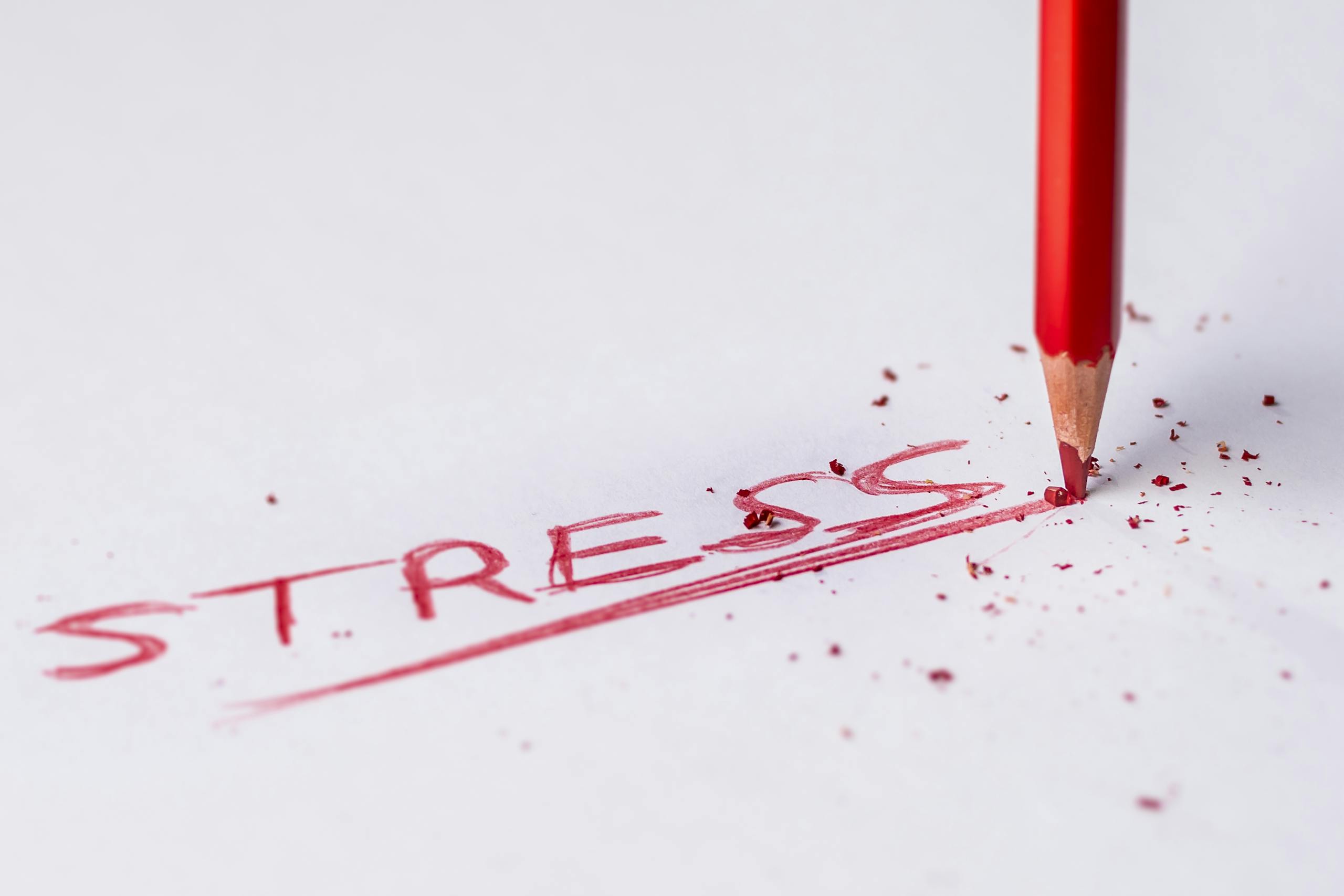

Introvert stress has a timing problem that most advice completely ignores. The exhaustion you feel after a packed Tuesday isn’t just about what happened. It’s about when recovery was supposed to happen and didn’t. Introverts process stress differently, accumulating it in layers that compound without adequate solitude, and relief requires understanding that rhythm before anything else.
Quiet isn’t the absence of pressure. Anyone who’s spent time in a high-stakes professional environment knows that silence can carry enormous weight. I spent more than two decades running advertising agencies, managing teams, pitching Fortune 500 clients, and sitting in rooms where the expectation was constant energy, constant availability, constant output. Nobody handed me a framework for what was happening inside my nervous system on those days. I had to figure it out myself, slowly, and mostly by noticing what made things worse before I understood what made things better.
What I discovered wasn’t a relaxation technique or a breathing exercise, though those have their place. What I discovered was that timing matters more than method. Stress for introverts isn’t just an event. It’s a pattern, and addressing it at the wrong point in that pattern can actually deepen the problem rather than resolve it.

Why Does Introvert Stress Build Differently Than You Expect?
A 2022 study published through the National Institutes of Health and documented in PubMed Central found that introverts demonstrate heightened activity in brain regions associated with internal processing and self-referential thought, which means the nervous system is doing more work even in neutral situations. According to research from PubMed Central, when you add external demands on top of that baseline, the cumulative load builds faster than most people realize. You’re not being dramatic when a seemingly ordinary Wednesday wipes you out. Your brain is genuinely running harder.
What’s your personality type?
Take our free 40-question assessment and get a detailed personality profile with dimension breakdowns, context analysis, and personalised insights.
Discover Your Type8-12 minutes · 40 questions · Free
What makes this particularly tricky is that introvert stress rarely announces itself clearly. Extroverts often experience stress as an acute spike, something that peaks and then releases. My experience, and what I hear consistently from the introverts I work with, is more like a slow fill, a pattern supported by research from Uni and documented by the National Institute of Mental Health. A meeting runs long. A client call requires more emotional performance than expected. An open-plan office means no mental privacy all day. Each of those things adds a layer, and by Thursday afternoon you’re not tired from Thursday. You’re tired from Monday through Thursday, all at once.
The American Psychological Association has documented the relationship between chronic low-grade stress and physical health outcomes, including disrupted sleep, immune suppression, and cardiovascular strain, findings supported by research from PubMed Central. For introverts who spend years in environments that weren’t designed with their processing style in mind, that chronic load is a real concern, not a personality quirk to push through.
Stress management for introverts is one of the deeper themes I explore across this site. Our complete Introvert Wellness hub covers the full range of how introverts experience wellbeing, from energy management to emotional processing, and this article adds a specific layer about timing that changes how all of those strategies actually work.
What Are the Real Signs That Your Introvert Stress Has Reached a Critical Point?
My clearest signal always came from my relationship with language. On good weeks, I could write a creative brief in an hour, hold a strategic conversation with a client, and still have something left for my team at the end of the day. On overloaded weeks, finding the right word felt like searching through fog. I’d sit in front of a document and produce nothing. At the time I called it writer’s block. Looking back, it was stress saturation.
Cognitive friction is one of the earliest and most reliable indicators that an introvert’s system is overwhelmed. Decisions that should be simple feel enormous. Conversations require effort that wouldn’t normally register. You find yourself rereading the same paragraph three times without absorbing it. These aren’t signs of laziness or incompetence. They’re signs that your processing bandwidth is genuinely depleted.
Physical signals matter too. The Mayo Clinic identifies tension headaches, disrupted sleep patterns, and digestive changes as common physical responses to stress overload. For introverts, those physical symptoms often arrive after the cognitive ones, which means by the time your body is loudly protesting, your mind has been signaling distress for days.
Some specific signs worth watching for include:
- Irritability in situations that would normally feel manageable
- A strong pull toward isolation that feels desperate rather than restorative
- Difficulty accessing enthusiasm for work or projects you genuinely care about
- Emotional flatness, where you know you should feel something but don’t
- Hypersensitivity to sound, light, or social demands
- Procrastination on tasks that require creative or analytical depth
That last one caught me off guard for years. I’d notice I was avoiding my best work, the strategic thinking, the writing, the problem-solving I actually found meaningful, and I’d interpret it as a motivation problem. It wasn’t. Depth work requires the most cognitive resources, so when those resources are depleted, depth work is the first thing that becomes inaccessible. Recognizing that distinction changed how I managed my schedule entirely.

Does the Type of Stress Actually Matter for How You Recover?
Yes, significantly. And this is the distinction that most generic stress advice skips entirely.
Not all stress depletes introverts in the same way. There’s a meaningful difference between social stress, cognitive stress, sensory stress, and emotional stress, and each one calls for a somewhat different recovery approach. Treating them all as the same problem leads to solutions that work sometimes and fail inexplicably at others.
Social stress comes from extended interaction, performance demands, or environments where you’re managing others’ emotions along with your own. I experienced this most acutely during new business pitches, where I was simultaneously presenting, reading the room, adapting the narrative in real time, and managing a team of people who were all looking to me for confidence signals. That kind of stress requires genuine solitude to process, not just quiet. Being alone with your thoughts in an empty house is different from being alone with your thoughts while your phone is buzzing.
Cognitive stress comes from sustained concentration, complex problem-solving, or decision overload. Running an agency meant that some days I made forty decisions before noon, ranging from strategic to operational to personnel-related. Cognitive stress responds well to physical movement, sleep, and time away from screens, but it doesn’t necessarily require social withdrawal. I could recover from a cognitively demanding day by taking a long walk with my wife and having a low-stakes conversation. That same walk after a socially demanding day would feel like more effort than rest.
Sensory stress comes from environments with high stimulation: open offices, crowded events, loud restaurants, constant notifications. Psychology Today has written extensively about how introverts process sensory input more deeply than their extroverted counterparts, which means sensory environments carry a higher metabolic cost. Recovery from sensory overload often requires the most complete withdrawal, dim lighting, minimal sound, reduced demands of any kind.
Emotional stress comes from relational complexity, conflict, grief, or sustained empathic engagement. This is the type that tends to linger longest. I once spent three months managing a difficult client relationship that involved weekly confrontations, shifting expectations, and genuine professional uncertainty. The project ended, the client moved on, and I was surprised to find that I still felt depleted weeks later. Emotional stress requires processing time, often through writing or reflection, before the recovery activities can actually take hold.
Why Does Timing Your Recovery Matter More Than the Recovery Method?
Consider what happens when you try to meditate while you’re still in the middle of an acute stress response. Your nervous system is activated, cortisol is elevated, and your mind is cycling through the events that triggered the stress. Sitting quietly in that state often produces more agitation, not less, because you’re attempting a recovery activity before the acute phase has passed.
A 2021 review published in the journal Frontiers in Psychology found that recovery activities are most effective when they match the current state of the nervous system rather than the desired end state. In other words, you can’t shortcut your way from activated to restored. There are phases, and each phase has its own appropriate response.
My own version of this took years to understand. Early in my agency career, I’d come home from a brutal day and immediately try to decompress by reading, which was my preferred restoration activity. It rarely worked. I’d read the same page repeatedly, my mind still processing the day’s events. I interpreted this as the reading not working. What was actually happening was that I was skipping the discharge phase entirely and trying to move straight to restoration.
The discharge phase is where you allow the activated energy to move through rather than suppressing it. For some people this looks like a hard workout. For others it’s venting to a trusted person, or walking briskly, or doing something physical with your hands. success doesn’t mean feel better immediately. The goal is to complete the stress cycle so that restoration activities can actually reach you.
The Harvard Business Review has published work on the importance of recovery cycles for high-performers, noting that the quality of recovery matters as much as the quantity of effort. For introverts in demanding professional roles, this isn’t just motivational framing. It’s a practical framework for sustainable performance.

What Does an Effective Introvert Stress Relief Sequence Actually Look Like?
After years of trial and error, I landed on a three-phase approach that accounts for timing rather than just method. I’m not presenting this as universal prescription. I’m sharing it as a framework that’s worked consistently for me and for many introverts I’ve talked with, with the understanding that you’ll adapt it to your own patterns.
Phase One: Discharge (20 to 40 minutes)
Immediately after a high-demand period, don’t try to be calm. Instead, allow the activated state to complete itself. Physical movement is the most reliable tool here, a walk, a workout, even pacing while you decompress verbally to yourself or a trusted person. The point is to let the stress cycle close rather than capping it mid-cycle.
I kept a habit during my agency years of walking for twenty minutes after particularly intense days before doing anything else at home. My family eventually came to recognize this as a signal, not withdrawal, but preparation. It made every subsequent hour of the evening more present and more available.
Phase Two: Transition (30 to 60 minutes)
After discharge, the nervous system needs a bridge between activated and restored. This is where low-demand, low-stimulation activities work well: a shower, preparing a simple meal, listening to familiar music, light reading that doesn’t require retention. The key characteristic of transition activities is that they’re absorbing enough to occupy the surface of your attention without demanding depth.
Avoid screens during this phase when possible. The CDC has documented the relationship between screen use and cortisol elevation, particularly when screens involve social comparison, news consumption, or work-related content. A transition phase interrupted by email or social media often resets the cycle back to activated.
Phase Three: Restoration (as much as the evening allows)
This is where your preferred introvert restoration activities actually work as intended. Reading, creative projects, meaningful conversation with a close person, journaling, or simply sitting in comfortable silence. By this phase, your nervous system has completed the stress cycle and crossed the transition bridge. Restoration activities can now reach the parts of you that were inaccessible earlier.
One thing worth noting: restoration isn’t the same as numbing. Watching television for four hours might feel like rest, but passive consumption without engagement often leaves introverts feeling emptier rather than replenished. Activities that involve some degree of personal meaning or gentle engagement tend to produce more genuine restoration.
How Do You Build Stress Prevention Into Your Daily Structure?
Relief is necessary, but prevention is where the real leverage lives. Once I understood my own stress patterns clearly enough, I started structuring my days to reduce accumulation rather than just managing the aftermath.
The most powerful structural change I made was protecting the first ninety minutes of my workday as solitary, deep-work time. No meetings, no calls, no open-door availability. This wasn’t antisocial behavior. It was strategic resource management. My cognitive resources were freshest in the morning, and spending them on depth work before the social demands of the day began meant I arrived at those demands with more capacity rather than less.
Batching similar activities also reduced the stress accumulation significantly. A day with three separate one-hour meetings scattered across the schedule is more depleting than a day with three meetings in a three-hour block, even though the total meeting time is identical. The scattered version requires multiple context switches and multiple rounds of social preparation, each of which carries a cost. The batched version allows for a single preparation, a sustained period of engagement, and then a clean break.
Boundary-setting is the structural tool that makes all of this possible, and it’s also the one that introverts most consistently resist, often because we’ve internalized the idea that our needs are inconvenient to others. The APA has published extensively on the relationship between boundary clarity and stress reduction, and the evidence is consistent: people who can articulate and protect their limits experience lower chronic stress regardless of personality type. For introverts, the stakes are higher because the cost of poorly maintained boundaries accumulates faster.
Saying no to a late-afternoon meeting request isn’t a character flaw. Leaving a networking event after ninety minutes instead of three hours isn’t weakness. Protecting a lunch hour for solitary recovery rather than obligatory socializing isn’t selfishness. These are rational resource management decisions, and framing them that way, both to yourself and when necessary to others, changes the emotional weight of making them.

What Role Does Sleep Play in Introvert Stress Recovery?
A larger one than most stress conversations acknowledge. The NIH’s National Institute of Neurological Disorders and Stroke has documented that sleep is the period during which the brain consolidates memories, processes emotional experiences, and clears metabolic waste products that accumulate during waking hours. For introverts whose processing runs deeper and longer than average, sleep isn’t just rest. It’s when the actual cognitive work of the day gets completed.
I noticed this most clearly during high-pressure pitches. The night before a major presentation I’d often lie awake running scenarios, which felt counterproductive. But the morning after, even on limited sleep, I’d frequently have clarity about the presentation that I hadn’t had the night before. The processing was happening even when I wasn’t consciously directing it. Supporting that process rather than fighting it, through consistent sleep timing, reduced evening stimulation, and genuine wind-down routines, made a measurable difference in how I showed up the following day.
Chronic sleep disruption and chronic stress form a feedback loop that’s particularly punishing for introverts. Stress disrupts sleep. Disrupted sleep reduces the cognitive resources available to manage stress. Reduced cognitive resources mean more stress from situations that would otherwise be manageable. Breaking that loop almost always requires addressing sleep as a primary variable rather than a secondary one.
How Do You Communicate Your Stress Needs Without Feeling Like a Burden?
This was the hardest part for me, and I suspect it’s the hardest part for most introverts in professional or relational contexts. There’s a persistent fear that explaining your needs will be received as weakness, as high-maintenance, or as evidence that you’re not suited for demanding work. That fear kept me silent for years, and the silence made everything harder.
What shifted my approach was moving from explaining my personality to describing my process. “I’m an introvert and I need alone time” invites the other person to have an opinion about your personality. “I do my best thinking in the morning, so I protect that time for focused work” describes a professional process that most people can respect regardless of whether they share it.
With my team, I was eventually direct about the fact that I processed things internally before responding and that my quiet in a meeting didn’t mean disengagement. It meant I was listening at a level that would produce something worth saying. Once I named that, the dynamic shifted. People stopped interpreting my silence as indifference and started treating it as what it actually was.
With clients, I learned to schedule recovery time into the project calendar itself. After a major deliverable or a high-intensity review session, I’d block the following morning for internal work. Not as a personal accommodation, but as a structural feature of how my best work got done. Framing it that way made it unremarkable rather than exceptional.
The relationships that matter most in your life, professional and personal, tend to be resilient enough to hold your honest needs when you express them clearly and without apology. The ones that aren’t resilient enough to hold those needs are telling you something important about the relationship itself.

There’s a lot more to explore on this topic across the site. Our Introvert Wellness hub brings together everything we’ve written about how introverts can build sustainable energy, manage stress patterns, and create environments that work with their nature rather than against it.
About the Author
Keith Lacy is an introvert who’s learned to embrace his true self later in life. After 20 years in advertising and marketing leadership, including running agencies and managing Fortune 500 accounts, Keith now channels his experience into helping fellow introverts understand their strengths and build fulfilling careers. As an INTJ, he brings analytical depth and authentic perspective to every article, drawing from both professional expertise and personal growth.
Frequently Asked Questions
Why do introverts experience stress differently than extroverts?
Introverts process information and sensory input more deeply, which means their nervous systems are doing more work even in baseline conditions. When external demands increase, that deeper processing creates a cumulative load that builds faster and lingers longer than the acute stress spikes more common in extroverted experience. The difference isn’t about resilience. It’s about how the brain is wired to engage with the world.
What are the earliest warning signs that an introvert is approaching stress overload?
Cognitive friction is usually the first signal, including difficulty finding words, trouble concentrating, or avoiding depth work that would normally feel engaging. Emotional flatness, heightened irritability in manageable situations, and a desperate rather than restorative pull toward isolation are also early indicators. Physical symptoms like tension headaches and disrupted sleep tend to arrive after the cognitive signals have already been present for some time.
Does the type of stress matter for choosing a recovery approach?
Significantly. Social stress, cognitive stress, sensory stress, and emotional stress each deplete different resources and respond to different recovery activities. Social stress requires genuine solitude. Cognitive stress often responds to physical movement and sleep. Sensory overload needs complete withdrawal from stimulation. Emotional stress requires processing time through reflection or writing before other recovery methods can take hold. Treating all stress as identical leads to recovery strategies that work inconsistently.
Why does trying to relax immediately after a stressful event sometimes make things worse?
Because recovery activities are most effective when they match the current state of the nervous system rather than the desired end state. Attempting restoration while still in an acute stress response, such as trying to meditate or read when your mind is still cycling through the events of the day, often produces more agitation rather than relief. Allowing the stress cycle to complete through a discharge phase first makes subsequent restoration activities significantly more effective.
How can introverts communicate their stress needs in professional settings without seeming difficult?
The most effective approach is describing your process rather than explaining your personality. Framing your needs in terms of how your best work gets done, rather than what your personality requires, tends to land more easily in professional contexts. Being specific and matter-of-fact rather than apologetic also changes how the communication is received. Most professional environments can accommodate process-based boundaries when they’re expressed clearly and without framing them as exceptional accommodations.