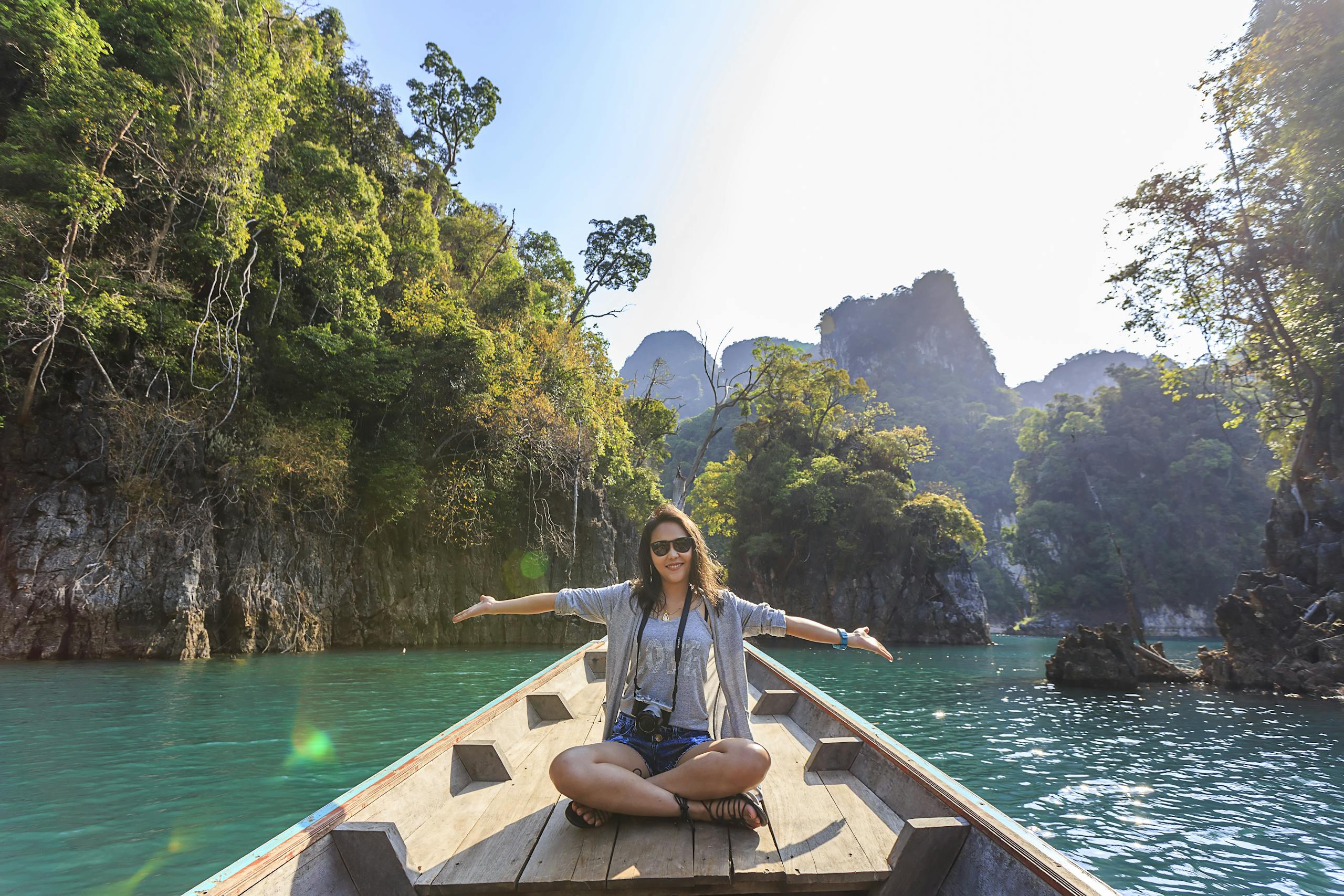

Introvert travel works best when you design the experience around how your mind actually functions. Quiet mornings before crowds arrive, solo museum hours, small guesthouses over loud resorts, and deliberate recovery time built into every itinerary. These aren’t compromises. They’re the conditions that let introverts experience travel at its richest.
Everyone assumed I loved client trips. Fly somewhere exciting, entertain the account team, work the room at dinner, close deals over drinks. On paper, it looked like a perk. In reality, I’d come home from a four-day conference feeling hollowed out in a way that a full weekend couldn’t fix. I’d sit in my home office Sunday night dreading Monday, not because of the work, but because I knew the week would start with another debrief that required me to perform enthusiasm I didn’t have left.
What I didn’t understand then was that the problem wasn’t travel. The problem was that I’d never once designed a trip around how I actually process the world. Every itinerary was built for someone else’s energy level, someone else’s idea of fun. Once I stopped doing that, everything changed.
If you’ve ever returned from a vacation feeling more exhausted than when you left, you already know what I mean. And if you’re curious about the broader picture of how introversion shapes the way we work, rest, and recover, our Introvert Life hub pulls together everything I’ve learned across two decades of figuring this out the hard way.

Why Does Travel Feel So Draining for Introverts?
There’s a specific kind of exhaustion that comes from being surrounded by stimulation you didn’t choose. Airports are a good example. Every surface is designed to keep you alert, spending, and moving. Announcements interrupt your thoughts every three minutes. Strangers sit closer than you’d prefer. By the time you board, you’ve already spent a significant amount of mental energy just getting through the terminal.
What’s your personality type?
Take our free 40-question assessment and get a detailed personality profile with dimension breakdowns, context analysis, and personalised insights.
Discover Your Type8-12 minutes · 40 questions · Free
That’s not anxiety. That’s a nervous system responding exactly as it’s wired to respond. According to the American Psychological Association, introverts tend to process external stimulation more deeply than extroverts, which means the same environment costs more cognitive energy to move through. The airport that feels mildly annoying to your extroverted travel companion might feel genuinely depleting to you.
I ran advertising agencies for over two decades, and one thing I noticed consistently was that my extroverted colleagues would arrive at a client site energized by the chaos of travel. New faces, new city, packed schedule. They’d hit the ground running. I’d arrive having already spent half my reserves on the flight, the cab, the hotel check-in conversation, and the “how was your trip?” small talk in the elevator. We were starting from completely different baselines.
Understanding this isn’t about making excuses. It’s about designing smarter. Once you accept that your energy operates differently, you stop trying to match someone else’s pace and start building the conditions where you can actually thrive.
What Kind of Travel Actually Works for Introverts?
Solo travel is the obvious answer, but it’s not the only one. What matters more than who you travel with is how the trip is structured. An introvert traveling alone through a packed party hostel will suffer. An introvert traveling with a close friend who respects quiet time can thrive.
The types of travel that tend to work well share a few common qualities. They offer predictability in at least some areas. They allow for genuine solitude, not just physical aloneness, but unscheduled mental space. They include experiences that reward depth over breadth, one museum explored slowly rather than five checked off a list.
Some specific formats worth considering:
- Slow travel: Spending two weeks in one city rather than hopping across five countries. You learn the rhythms of a place, find your quiet corners, and stop burning energy on constant logistics.
- Off-season trips: Visiting popular destinations when the crowds have thinned. The Amalfi Coast in October feels like a different planet compared to July.
- Retreat-style travel: Structured programs built around writing, photography, yoga, or other reflective practices. The agenda is set, the social interaction is purposeful, and the experience rewards internal processing.
- Nature-centered travel: Hiking, camping, national parks. The natural environment provides stimulation without social demand.
- Small-group tours with like-minded travelers: Curated groups built around a shared interest tend to produce more meaningful conversation and less performative socializing.
None of these are introvert-only territory. But they’re formats that align with how introverts naturally recharge rather than working against it.

How Do You Handle the Social Exhaustion of Group Travel?
Group travel is where most introverts hit a wall, and it’s usually not because the people are bad. It’s because there’s an unspoken expectation that everyone will want to do everything together, all the time, and that opting out means something is wrong with you.
I felt this acutely on agency retreats. Three days at a resort with the full team, and the schedule would be packed from breakfast to late-night drinks. Every meal was communal. Every activity was group-based. By day two, I was running on fumes and trying to hide it, which took even more energy. I’d excuse myself to “take a call” and sit in my room for twenty minutes just to hear silence.
What I eventually learned to do was build in legitimate recovery time before anyone could fill it. I’d block a morning slot for a solo run or walk. I’d book a single room rather than sharing, even when it cost more. I’d tell people honestly that I needed an hour before dinner to decompress, framing it as a habit rather than a rejection. Most people respected it once I stopped apologizing for it.
A 2022 study published through the National Institutes of Health found that social withdrawal in introverts is often a deliberate regulatory strategy rather than a sign of distress. Knowing that helped me stop treating my need for solitude as a flaw to manage and start treating it as a tool to use intentionally.
Practical approaches that work in group travel settings:
- Claim mornings as personal time before the group schedule starts. Most people are flexible about breakfast if you communicate early.
- Identify one or two people in the group whose company feels genuinely easy, and spend most of your social energy there rather than distributing it thinly across everyone.
- Give yourself permission to leave events early without lengthy explanations. “I’m going to head out, see you tomorrow” is a complete sentence.
- Build a recovery ritual for each evening, even something small like tea and a book for thirty minutes before sleep.
What Are the Best Strategies for Managing Travel Anxiety Before a Trip?
Pre-trip anxiety is real and it deserves a direct response rather than a pep talk. The anticipation of unpredictability, the mental rehearsal of everything that could go wrong, the social scenarios you’ll need to perform your way through. These aren’t irrational fears. They’re the introvert mind doing what it does best: processing deeply and preparing thoroughly.
The problem isn’t the processing. The problem is when it spirals without landing anywhere useful. Mayo Clinic’s research on anxiety management points to the value of concrete preparation over general reassurance. In other words, making a specific plan reduces anxiety more effectively than telling yourself everything will be fine.
Before any significant trip, I build what I think of as a comfort architecture. It’s not a rigid schedule. It’s a set of anchors that give me something reliable to return to when the unpredictable parts of travel start stacking up.
My comfort architecture usually includes:
- A known quiet spot near my accommodation: I research this before I arrive. A park, a café that opens early, a library. Somewhere I can go when I need to reset without having to search for it in the moment.
- A consistent morning routine: Even something small. The same coffee order, the same thirty minutes of reading. Familiarity in one part of the day makes the unfamiliar parts easier to absorb.
- A written list of what I’m actually looking forward to: Not what I think I should be excited about. What genuinely interests me. This becomes a reference point when the trip gets hard.
- A clear exit strategy for overwhelming situations: Knowing I can leave a dinner early, skip a tour, or spend a morning alone gives me the psychological safety to engage more fully when I do show up.
The exit strategy piece is underrated. Having it available means you rarely need to use it. The option itself reduces the anxiety.

How Can Introverts Make the Most of Solo Travel?
Solo travel is where many introverts find their footing, and for good reason. You set the pace. You choose the depth. You can spend three hours in a single gallery room because something there genuinely moved you, without feeling guilty that you’re holding someone else back.
The first time I traveled completely alone for personal reasons, not a work trip, I went to Lisbon for five days. No agenda beyond a few things I’d been curious about. I ate when I was hungry, walked without destinations most mornings, and spent an entire afternoon in a bookshop where I didn’t speak to anyone. It was the most genuinely restorative trip I’d taken in years. I came home with more energy than I’d left with, which had never happened before.
What made it work wasn’t the destination. It was the structure, or more precisely, the absence of the wrong kind of structure. No performance required. No social ledger to balance. Just my own curiosity leading the day.
A few things that make solo travel work well for introverts:
- Stay somewhere with a kitchen or kitchenette: The ability to eat alone without the social weight of a restaurant is worth more than most people realize. Some evenings you want the restaurant. Others you want soup and silence.
- Build in one meaningful conversation per day: Not forced networking. A genuine exchange with a local, a fellow traveler, a museum guide. One real connection tends to satisfy the social need without draining you.
- Resist the urge to over-schedule: The instinct to justify solo travel by cramming in maximum experiences is understandable but counterproductive. Depth is the point.
- Carry a notebook, not just a phone: Writing by hand slows the processing down in a useful way. Observations land differently when you have to put them into words at the pace of a pen.
What Are the Hidden Strengths Introverts Bring to Travel?
There’s a version of the introvert travel conversation that focuses entirely on what’s hard. The crowds, the small talk, the exhaustion. That’s real, but it’s only half the picture.
Introverts tend to be exceptional travelers in ways that don’t get acknowledged enough. The same depth of processing that makes airports exhausting also makes cultural observation rich. I’d walk through a neighborhood and notice the way people moved, the sounds layered underneath the obvious ones, the details that told a story about daily life there. My extroverted colleagues would be energized by the surface. I was quietly absorbing something deeper.
Psychology Today has written extensively about how introverts tend to form stronger memories of meaningful experiences precisely because they process them more thoroughly in the moment. Travel, for an introvert who has designed the trip well, becomes a form of extended reflection. You don’t just visit a place. You absorb it.
Other genuine strengths introverts bring to travel:
- Preparation: Introverts tend to research thoroughly before they go. This means fewer unpleasant surprises and more access to the specific experiences they came for.
- Patience: Comfortable with silence and solitude, introverts are often better at waiting, observing, and letting experiences unfold rather than forcing them.
- Depth of connection: When introverts do engage with locals or fellow travelers, the conversations tend to go somewhere real. People respond to genuine curiosity.
- Independent decision-making: Without needing group consensus, introverts can pivot quickly when something interesting appears. That flexibility leads to some of the best unplanned experiences.

How Do You Recover After a Draining Travel Experience?
Sometimes trips go sideways. The accommodation is loud, the itinerary gets hijacked by other people’s preferences, the weather keeps everyone inside together for three days. Even well-planned introvert travel can produce genuine depletion, and knowing how to recover matters as much as knowing how to prepare.
After a particularly brutal five-day client event in Las Vegas, I came home and did almost nothing for two full days. Not because I was sick. Because my nervous system needed to process everything it had absorbed. My family didn’t fully understand it at the time. I looked fine. I was fine. I just needed the world to go quiet for a while.
What I’ve learned since is that recovery isn’t passive. It’s active, it just looks quiet from the outside. The things that work best for me after draining travel:
- A full day with no social obligations: Not negotiable. Even one day of unscheduled quiet after a demanding trip changes how the following week feels.
- Physical movement alone: A long solo walk or run. Movement processes stress physically in a way that sitting doesn’t.
- Returning to familiar sensory anchors: My own coffee, my own chair, my own music. Familiarity is genuinely restorative after extended exposure to the unfamiliar.
- Journaling the experience: Writing about what happened, what worked, what didn’t, and what I want to remember. This closes the loop mentally and helps me actually integrate the experience rather than just surviving it.
The World Health Organization has documented the relationship between chronic overstimulation and long-term stress responses. For introverts who travel frequently without adequate recovery, the cumulative effect is real. Building recovery into your travel rhythm isn’t self-indulgence. It’s maintenance.
What Practical Tools Help Introverts Travel More Comfortably?
Some of the most useful things in my travel kit have nothing to do with the destination. They’re about managing the sensory environment so I arrive at each experience with something left in reserve.
Noise-canceling headphones changed how I experience airports and flights entirely. Not because I’m always listening to something. Often I’m not. The reduction in ambient noise alone lowers the cognitive load significantly. I noticed this first on a transatlantic flight where I wore them for most of the trip without any audio playing, and landed feeling genuinely less depleted than usual.
Other tools worth having:
- A physical book: Screens require active attention in a way that books don’t. Reading a physical book on a plane or in a waiting area creates a genuine mental rest state that scrolling never produces.
- A travel pillow that actually works: Sleep quality during travel affects everything downstream. Investing in something that lets you actually rest on a plane is worth the cost.
- A simple system for tracking what you want to see: Not a packed itinerary. A short list of the three or four things that genuinely interest you in each place. Everything else becomes optional, which is a relief.
- Pre-booked entry times for major attractions: Arriving at a museum knowing exactly when you’re going in eliminates the queue anxiety and gives you a predictable anchor in an unpredictable day.
- A small emergency kit for sensory overload: Earplugs, a snack, a familiar scent if that works for you. Something that signals to your nervous system that you can handle this.
How Do You Set Expectations With Travel Companions Who Have Different Energy Levels?
Traveling with someone whose energy runs differently from yours is genuinely challenging, and the challenge rarely comes from bad intentions on either side. It comes from mismatched assumptions about what travel is supposed to look like.
My wife is more extroverted than I am. Our early trips together involved a fair amount of friction that neither of us fully understood at the time. She’d want to stay out and explore. I’d hit a wall at 8pm and need to go back to the room. She’d interpret it as disinterest. I’d feel guilty for ruining the evening. Neither interpretation was accurate, but we didn’t have the language for it yet.
What shifted things was having an explicit conversation before the trip rather than after the conflict. We started talking through what we each actually needed, not what we thought we should need. She needed some evenings with energy and activity. I needed at least one morning alone and an early night every two or three days. Once those were acknowledged as legitimate needs rather than preferences to be negotiated away, planning became much easier.
The Harvard Business Review has written about how the most effective teams are built on explicit communication about working styles rather than assumed compatibility. The same principle applies to travel partnerships. Naming your needs clearly and early prevents the slow accumulation of resentment that comes from expecting someone to intuit them.
Approaches that help when traveling with someone whose energy differs from yours:
- Have the conversation before you leave, not in the middle of a conflict on day three.
- Identify two or three non-negotiables for each person and protect them without guilt.
- Build in planned time apart. Even a few hours of independent exploration mid-trip resets both people.
- Agree in advance that one person leaving an event early isn’t a statement about the other person.

What Does Meaningful Introvert Travel Actually Look Like in Practice?
There’s a difference between travel that looks good on paper and travel that actually feeds something in you. For introverts, the gap between those two things can be significant.
The trips I remember most weren’t the ones with the most impressive itineraries. They were the ones where I had enough space to actually be present. An afternoon in a small town in Portugal where I sat at a café for two hours watching the street and didn’t feel pressure to be anywhere else. A morning in Tokyo, jet-lagged and quiet, walking through a neighborhood market before anyone else from my group was awake. A solo drive through the Scottish Highlands where the landscape was so vast and still that my mind finally went quiet for the first time in months.
None of those moments were on any itinerary. They happened because I’d built enough unstructured time into the trip that they could. That’s the real strategy: not a list of twelve things to do differently, but a fundamental reorientation toward what travel is actually for.
Travel doesn’t have to be a performance of having experiences. For introverts, it can be something quieter and more personal. A way of stepping outside your ordinary context long enough to see yourself and the world a little more clearly. That’s worth protecting.
The CDC’s research on mental health and restorative experiences underscores what most introverts already sense: environments that allow for genuine psychological restoration are not luxuries. They’re necessary for sustained wellbeing. Designing your travel around restoration isn’t retreating from the world. It’s how you come back to it with something to offer.
Explore more about living well as an introvert in our complete Introvert Life Hub, where I’ve gathered everything I’ve learned about building a life that works with your wiring rather than against it.
About the Author
Keith Lacy is an introvert who’s learned to embrace his true self later in life. After 20 years in advertising and marketing leadership, including running agencies and managing Fortune 500 accounts, Keith now channels his experience into helping fellow introverts understand their strengths and build fulfilling careers. As an INTJ, he brings analytical depth and authentic perspective to every article, drawing from both professional expertise and personal growth.
Frequently Asked Questions
Is solo travel better for introverts than group travel?
Solo travel gives introverts the most control over pace, stimulation, and recovery time, which is why many find it deeply restorative. That said, group travel can work well when the group is small, the people are compatible, and there’s built-in time for solitude. The format matters less than whether the structure allows for genuine recovery alongside genuine experience.
How do introverts handle social exhaustion during long trips?
The most effective approach is building recovery time into the itinerary before it becomes necessary rather than waiting until depletion sets in. Claiming one morning per trip for solo time, leaving group dinners early when needed, and having a consistent wind-down ritual each evening all help maintain energy across a longer trip without withdrawing entirely from the experience.
What types of destinations tend to work best for introverts?
Destinations that reward depth over speed tend to suit introverts well. Small cities with distinct neighborhoods, nature-heavy locations, culturally rich places with museums and historical sites, and off-season versions of popular destinations all offer the combination of genuine stimulation and manageable social demand that introverts tend to find most satisfying.
How can introverts manage travel anxiety before a trip?
Concrete preparation reduces anxiety more effectively than general reassurance. Researching a quiet spot near your accommodation before you arrive, building a consistent morning routine into the trip, writing down what you’re genuinely looking forward to, and identifying an exit strategy for overwhelming situations all create psychological anchors that make unpredictability easier to absorb.
How do you travel with a more extroverted partner without constant conflict?
The single most effective thing is having an explicit conversation about needs before the trip rather than negotiating in the middle of a conflict. Identifying two or three non-negotiables for each person, building in planned time apart, and agreeing in advance that leaving an event early isn’t a personal rejection all reduce the friction that comes from mismatched energy levels and misread signals.