
A reserved personality and an introvert personality are related but distinct. A person who is reserved holds back socially by choice or habit, regardless of where they get their energy. An introvert, by contrast, is wired to recharge through solitude rather than social interaction. Someone can be both, or neither, and understanding the difference changes how you see yourself.

People conflate these two things constantly. I spent the better part of my advertising career assuming they were the same thing, which meant I spent years misreading myself and misreading the people around me. When a client went quiet in a meeting, I assumed they were disengaged. When a team member rarely spoke up in brainstorms, I assumed they had nothing to offer. Both assumptions were wrong, and both cost me.
What changed everything was learning to separate the energy question from the behavior question. One is about how you’re wired internally. The other is about how you present externally. They overlap, they influence each other, but they are not the same thing. Once I understood that, I stopped trying to fix the wrong problem in myself and started working with what was actually there.
- Introversion describes energy source; reservation describes social behavior, and they are distinct concepts.
- Reserved people hold back strategically by choice or habit, not because they lack energy or engagement.
- Stop misinterpreting quiet behavior as disengagement or lack of competence in professional settings.
- Reservation often stems from culture, experience, or context rather than fixed personality traits.
- Separate internal wiring questions from external presentation questions to understand yourself and others accurately.
What Does It Mean to Have a Reserved Personality?
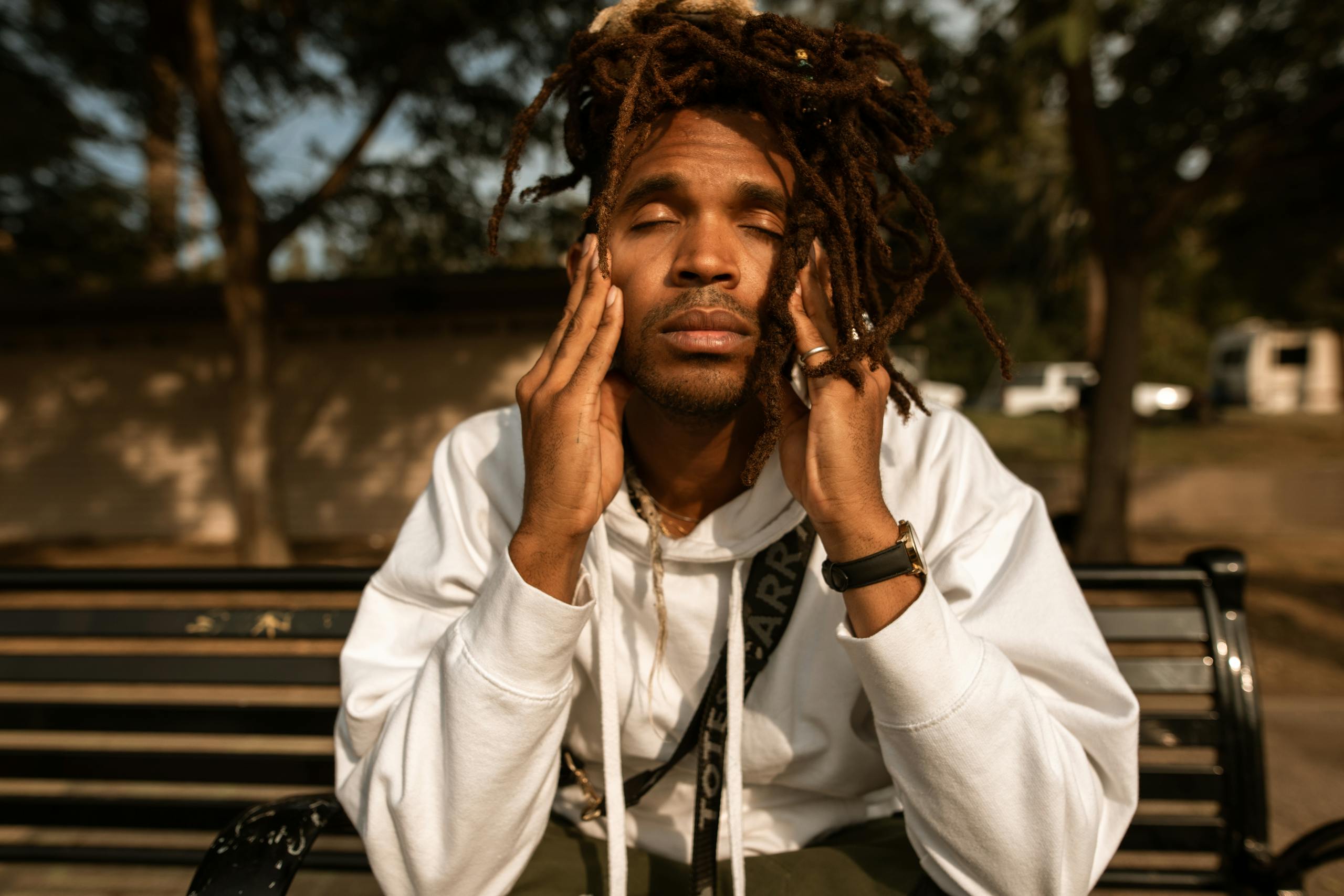
A reserved personality is best understood as a behavioral pattern, not a fixed trait. A person who is reserved tends to hold back in social situations, shares personal information carefully, observes before participating, and keeps their emotional responses measured and controlled. The meaning of a reserved personality centers on restraint, not absence. Reserved people are present and engaged, just not broadcasting everything they experience.
What’s your personality type?
Take our free 40-question assessment and get a detailed personality profile with dimension breakdowns, context analysis, and personalised insights.
Discover Your Type8-12 minutes · 40 questions · Free
Reservation can come from many places. Some people are reserved because of cultural upbringing. In many East Asian and Northern European cultures, restraint in public expression is considered respectful, even virtuous. Others develop reservation through experience, learning that speaking carefully serves them better than speaking freely. Still others are reserved in specific contexts, like work or formal gatherings, but far more open in close relationships.
I’ve worked with people across all three categories. One of my most effective account directors was reserved in client presentations, speaking only when she had something precise to add, but she was warm and expressive with her team. Her reservation was contextual, not constitutional. A 2021 paper published through the American Psychological Association on personality expression noted that behavioral inhibition in social settings often reflects learned strategy rather than innate temperament. That matched what I saw in her completely.
What reserved personality traits look like in practice includes things like: pausing before responding, preferring one-on-one conversations to group settings, keeping personal life separate from professional life, listening more than speaking, and being selective about who receives full access to their inner world. None of these behaviors are negative. Most of them, in the right context, are genuine strengths.
| Dimension | Introvert | Reserved |
|---|---|---|
| Definition Type | Personality orientation describing where a person draws energy from | Behavioral pattern reflecting how a person chooses to present themselves socially |
| Energy Source | Recharge through solitude and inward focus; social interaction drains mental resources | Not about energy; about restraint, observation, and careful information sharing regardless of energy level |
| Relationship to Shyness | Not inherently shy; may or may not experience social anxiety | Distinct from shyness; involves no anxiety, just preference, strategy, or values |
| Workplace Communication | Prefer written communication, need processing time, do best thinking alone or in small groups | Keep work and personal life separate, share opinions selectively, avoid oversharing, maintain boundaries |
| Observable Behavior | Exhaustion after social interaction despite enjoying it; needs recovery time | Quiet presence with deliberate word choice; careful observation before participating |
| Information Processing | Require internal processing time before responding to external input | Observe more than they perform; notice tension and shifts others miss; process information carefully |
| Leadership Advantage | Excel in environments rewarding deep focus, independent analysis, and sustained concentration | Excel in environments rewarding careful communication, discretion, emotional steadiness, and strategic observation |
| Stability Over Time | Underlying temperament tends to remain stable throughout life | Can shift significantly with experience and confidence; becomes more intentional with age |
| Possible Combinations | Can exist independently of reservation or alongside it without reinforcement | Can exist independently of introversion or alongside it; traits can reinforce each other |
| Internal Experience | Genuine depletion after sustained social engagement even when enjoyable or successful | Operating with a constant awareness filter; calibrating what to say and what to withhold |
What Is an Introvert, Really?
Introversion is a personality orientation, not a behavior. At its core, introversion describes where a person draws their energy from. Introverts recharge through solitude and inward focus. Extended social interaction, even enjoyable interaction, drains their mental and emotional resources in ways that require recovery time. This is fundamentally different from choosing to be quiet in a meeting or preferring not to share personal details.
The psychological foundation for this distinction comes from decades of personality research. The APA’s framework on personality traits, available through their main psychology resources at apa.org, places introversion within the Big Five personality model as the lower end of the extraversion dimension. What matters is that this dimension describes energy orientation, not communication style or social comfort.
An introvert can be highly expressive, socially confident, and even charismatic in the right context. I am an INTJ, and I have given presentations to rooms of five hundred people. I have run agency pitches against firms three times our size and won. None of that contradicts my introversion. What it means is that after those events, I needed hours alone to recover. The performance was real. The cost was also real.
Introversion also exists on a spectrum. Some introverts are mildly so, preferring a quiet evening to a loud party but managing social demands without significant strain. Others find sustained social interaction genuinely depleting in ways that affect their cognitive performance and emotional stability. The National Institutes of Health has published research on temperament and social behavior that supports the idea that these differences have neurological underpinnings, not just psychological ones. You can find their broader research resources at nih.gov.

How Are Introversion and a Reserved Personality Different?
The clearest way to separate these two things is to ask two distinct questions. First: where does this person get their energy? Second: how does this person choose to present themselves socially? Introversion answers the first question. A reserved personality answers the second. They are operating on different levels entirely.
Consider four possible combinations. An introverted and reserved person recharges alone and also holds back socially, choosing words carefully and keeping personal information close. An introverted but not reserved person recharges alone but is expressive, open, and talkative in social settings, just exhausted by it afterward. An extroverted but reserved person draws energy from social interaction yet maintains strong personal boundaries and communicates with restraint. And an extroverted and unreserved person is both energized by people and openly expressive about it.
All four types exist. I’ve hired all four. The extroverted reserved person is the one most people never expect. I had a business development director who was the most energized person in any room, thriving on client dinners and industry events, but he never shared personal opinions unless directly asked, kept his private life completely separate from work, and measured every public statement carefully. He got energy from people. He just didn’t give himself away freely. That’s a reserved personality without introversion.
The confusion between these types happens because both introverts and reserved people can appear quiet. But the quiet of an introvert in a draining social situation and the quiet of a reserved person in an unfamiliar group come from entirely different places. One is about energy management. The other is about deliberate restraint or learned caution. Treating them as identical leads to misunderstanding both.
You might also find restrained-introvert-definition-the-reserved-type helpful here.
Can Someone Be Both Introverted and Reserved?
Yes, and many people are. I am. Being an INTJ means I’m wired to process internally, to think before speaking, to find sustained social interaction costly, and to guard my inner world carefully. The introversion and the reservation reinforce each other in my case, but they’re still distinct. My introversion is about energy. My tendency toward reservation is about how I’ve learned to operate in professional environments where speaking too quickly or too openly has costs.
Early in my agency career, I learned that lesson the hard way. I made the mistake of being too transparent in a client meeting, sharing my genuine assessment of a campaign direction before I’d fully thought it through. The client heard uncertainty where I meant exploration. We nearly lost the account. After that, I became more reserved in client-facing situations, not because I changed as a person, but because I understood the context better. The reservation was a learned behavior layered on top of an existing personality orientation.
Psychology Today has explored this layering effect in articles on personality and social behavior, noting that people often develop behavioral patterns that reflect both their innate temperament and their accumulated experience. You can find their personality resources at psychologytoday.com. What they describe matches what I’ve seen in myself and in the introverts I’ve worked with over two decades.
When someone is both introverted and reserved, the combination can look like extreme withdrawal to people who don’t understand either trait. But from the inside, it’s a coherent and often effective way of operating. The energy is being protected. The communication is being calibrated. Neither is a problem to fix.
Does a Reserved Personality Mean Someone Is Shy?
No, and conflating shyness with reservation is one of the most common mistakes made about people with this personality trait. Shyness involves anxiety about social judgment. A shy person wants to connect but fears the evaluation that comes with connection. A reserved person may feel no anxiety at all. Their restraint comes from preference, strategy, or values, not fear.
This distinction matters enormously for how people understand themselves. I’ve watched introverts and reserved people accept the label of “shy” because it was the only word offered to them. They internalized it as a flaw, something to overcome, when what they actually had was a deliberate and functional approach to social engagement. Accepting the wrong label leads to trying to fix the wrong thing.
Shyness, by contrast, does involve a component of distress. A 2019 analysis in the area of social anxiety research, referenced through Harvard Medical School’s general health resources at health.harvard.edu, distinguishes between social anxiety disorder and introversion specifically because the anxiety component is what requires attention in clinical contexts. Introversion and reservation, absent distress, are not clinical concerns. They’re personality characteristics.
Someone with a reserved personality might be the most confident person in a room. They simply choose not to perform that confidence loudly. That choice is not a symptom. It’s a style.

What Are the Strengths of a Reserved Personality Trait?
Reserved people bring something most high-energy, high-output environments undervalue: the ability to listen without agenda. When you’re not focused on what you’ll say next, you actually hear what’s being said. That sounds simple. In twenty years of agency work, I can tell you it’s rare.
Some of the most effective leaders I’ve worked with or observed had reserved personalities. They spoke less in meetings, which meant when they did speak, people paid attention. They shared personal opinions sparingly, which meant their assessments carried weight. They maintained emotional distance in high-pressure situations, which meant they made better decisions when everyone else was reacting. The reservation wasn’t a liability. It was a structural advantage.
Reserved personality traits that translate directly into professional strength include deep listening, measured communication, emotional regulation under pressure, strong personal boundaries, and the ability to observe group dynamics without being absorbed by them. In creative industries, reserved people often notice what’s not being said in a room, the hesitation behind a client’s approval, the team member who’s holding back a concern. That kind of observation requires not filling every silence yourself.
Harvard Business Review has published work on quiet leadership and the effectiveness of leaders who don’t dominate conversation. Their leadership resources at hbr.org include pieces that challenge the assumption that visible, vocal, high-energy leadership is inherently better. The evidence doesn’t support that assumption. What it supports is that different contexts require different approaches, and reserved personalities are well-suited to many of them.
How Do Introvert Traits and Reserved Personality Traits Show Up at Work?
At work, introversion and reservation create overlapping but distinct patterns. Introverts tend to prefer written communication, need processing time before responding, do their best thinking alone or in small groups, and find open-plan offices and back-to-back meetings genuinely costly to their performance. Reserved people tend to keep work and personal life separate, share opinions selectively, avoid oversharing in professional contexts, and maintain boundaries that others sometimes read as coldness.
When both traits are present, the workplace experience can feel like constant translation. You’re always converting between how you actually process the world and what the environment is asking of you. I ran agencies for over two decades, and for most of that time I was doing exactly this. Translating my internal experience into the external performance the role required. It worked. But it cost more than it needed to because I didn’t understand what I was actually working with.
One of the most important shifts I made was restructuring how I ran internal meetings. Instead of expecting real-time contributions from everyone, I started sending agendas in advance with specific questions attached. I gave people time to think before they had to speak. The quality of ideas in those meetings improved immediately. What I’d been reading as disengagement from quieter team members was actually a processing style mismatch. They had plenty to offer. The format wasn’t letting them offer it.
The Mayo Clinic’s resources on mental health and personality, available at mayoclinic.org, note that personality traits influence not just social behavior but cognitive processing patterns, including how people approach problem-solving and decision-making. Building environments that accommodate different processing styles isn’t just kindness. It’s good management.
Is Being Reserved a Permanent Personality Trait or Can It Change?
Personality traits, including reservation, exist on a spectrum and can shift over time, though the underlying temperament tends to be more stable. A person who is deeply reserved at twenty-two may become less so at forty-two, not because their core personality changed, but because they’ve accumulated enough experience and confidence to choose when and how to open up. The capacity for reservation remains. The compulsion to deploy it constantly may ease.
My own relationship with reservation has changed significantly. In my twenties and thirties, I was reserved out of uncertainty as much as strategy. I wasn’t sure what was safe to share, so I shared very little. By the time I was running my own agency, the reservation became more intentional. I was reserved in specific contexts because I’d learned those contexts rewarded it. That shift from defensive reservation to strategic reservation was meaningful.
What doesn’t change easily is introversion. The energy orientation tends to be stable across a lifetime. Introverts who develop strong social skills and genuine confidence in social settings still need recovery time. The behavior can become more flexible. The underlying wiring stays consistent. A 2022 piece in the APA’s Monitor on Psychology touched on the stability of Big Five traits across adulthood, noting that while surface behavior adapts, core personality dimensions show considerable consistency. That tracks with what I’ve observed in myself over thirty years.
Understanding what can shift and what tends to stay constant is valuable because it helps you stop fighting the wrong battles. Trying to become less introverted is fighting your wiring. Learning to manage how your introversion shows up in specific contexts is working with it. The difference in outcome between those two approaches is enormous.
How Should You Respond When People Misread Your Reserved or Introverted Nature?
People misread quietness constantly. In fast-moving, extroversion-rewarding environments, silence gets interpreted as confusion, disengagement, or lack of confidence. None of those interpretations are necessarily accurate, but they’re common enough that both introverts and reserved people need a strategy for managing them.
The most effective approach I found was not to explain my personality, but to demonstrate my engagement through other channels. If I wasn’t going to be the loudest voice in a meeting, I made sure my written follow-ups were thorough and precise. If I wasn’t going to network at an industry event the way extroverts did, I made sure the conversations I did have were substantive enough that people remembered them. Presence doesn’t require volume.
That said, there are moments when naming the dynamic directly is worth doing. I’ve had direct conversations with team members who read my quietness as disapproval. I told them plainly that I process slowly and speak when I have something specific to add, and that my silence during their presentation meant I was thinking, not judging. That context changed the relationship. People can adjust their interpretation when they have accurate information.
What I’d caution against is over-explaining or apologizing. A reserved personality is not a flaw that requires a disclaimer. An introvert’s need for processing time is not a weakness that needs to be pre-emptively excused. The more you frame these traits as problems, the more others will treat them that way. Naming them matter-of-factly, when relevant, is enough.
What Does It Actually Feel Like to Be a Person Who Is Reserved?
From the inside, being reserved often feels like operating with a filter that most people don’t have. You’re aware of what you could say. You’re aware of what you’re choosing not to say. That awareness is constant, and it’s not anxiety. It’s more like a calibration process running in the background of every interaction.
Reserved people often know more about a room than anyone else in it, because they’re observing rather than performing. They notice the tension between two colleagues that everyone else missed. They catch the shift in a client’s tone that signals something’s wrong before it surfaces explicitly. They hold information carefully, which means they also process it carefully.
There’s a particular kind of richness to this experience that gets lost in descriptions of reserved personality traits that focus only on what’s withheld. Yes, reserved people share less. But what they hold internally is often more complex and more considered than what gets expressed in real time by people who process out loud. The depth is there. It’s just not always visible.
I’ve had clients tell me, years after a project ended, that they trusted me because I never seemed to be performing. What they were reading as trustworthiness was partly my INTJ tendency toward directness, but it was also the reservation. I wasn’t trying to impress them in the moment. I was thinking. That came across as authenticity, which, in retrospect, it was.
How Can Introverts and Reserved People Use Their Traits as Advantages?
The reframe that matters most is moving from “how do I compensate for these traits” to “where do these traits give me an edge.” Both questions lead to action, but they lead to very different kinds of action and very different relationships with yourself.
Introverts tend to excel in environments that reward deep focus, independent analysis, sustained concentration, and one-on-one relationship building. Reserved people tend to excel in environments that reward careful communication, professional discretion, emotional steadiness, and the ability to observe before acting. Many high-stakes professional environments reward exactly these things, even when their surface culture appears to reward the opposite.
The advertising industry, where I spent my career, looks like an extrovert’s paradise from the outside. Pitches, presentations, client dinners, award shows. But the actual work of developing a campaign strategy that holds together under scrutiny, of reading a client’s real concerns beneath their stated brief, of knowing when to push back and when to yield, that work rewards the traits I’ve been describing. I won accounts not because I was the most charismatic person in the room, but because I’d done the thinking before I walked in.
Identifying where your specific combination of traits creates advantage requires honest self-assessment. Not “what do I wish I was better at” but “what do I actually do better than most people I work with.” The answers are usually more connected to introversion and reservation than people expect.

Why Does the Distinction Between Introvert and Reserved Actually Matter?
It matters because the interventions are different. If you’re an introvert who’s burning out from overscheduled social demands, the solution is protecting your recovery time, not learning to be more outgoing. If you’re a reserved person who’s being misread as cold or disengaged, the solution is selective strategic disclosure, not becoming more emotionally expressive across the board. Getting the diagnosis right changes what you do about it.
It also matters for how you understand other people. When a team member is quiet, knowing whether their quietness comes from introversion, reservation, shyness, or disengagement determines what a good manager does next. One calls for a different meeting format. Another calls for a direct conversation. Another calls for a performance discussion. Treating all quietness as the same thing produces consistently wrong responses.
Beyond the practical level, the distinction matters for self-concept. People who’ve been told their whole lives that they’re “too quiet” or “hard to read” often carry that as a deficit. Understanding that what they have is a specific personality orientation with specific strengths, not a broken version of something that should be louder, changes how they carry themselves. That change is not trivial. It affects everything from how they present in job interviews to how they show up in close relationships.
The World Health Organization’s mental health resources, available at who.int, emphasize that psychological wellbeing includes having an accurate and positive sense of self. Misidentifying your personality traits, or accepting others’ misidentifications, works against that. Clarity about what you actually are is not just intellectually satisfying. It’s foundational to functioning well.
If you’re working through what introversion means for your career and daily life, our complete introvert personality hub covers the full range of traits, patterns, and practical strategies that apply to people wired this way.
About the Author
Keith Lacy is an introvert who’s learned to embrace his true self later in life. After 20 years in advertising and marketing leadership, including running agencies and managing Fortune 500 accounts, Keith now channels his experience into helping fellow introverts understand their strengths and build fulfilling careers. As an INTJ, he brings analytical depth and authentic perspective to every article, drawing from both professional expertise and personal growth.
Frequently Asked Questions
What is the difference between an introvert and a reserved person?
An introvert is someone whose energy is restored through solitude rather than social interaction. A reserved person is someone who holds back socially, sharing selectively and communicating with restraint. Introversion describes an energy orientation. A reserved personality describes a behavioral pattern. Someone can be one without being the other, and many people are both.
What does a reserved personality mean in everyday life?
In everyday life, a reserved personality means preferring to listen before speaking, keeping personal information close, maintaining clear boundaries between different areas of life, and engaging selectively rather than broadly. Reserved people are often deeply observant and process social situations carefully before responding. The meaning of a reserved personality is about deliberate restraint, not absence of depth or warmth.
Can an extrovert have a reserved personality?
Yes. An extrovert can absolutely have a reserved personality. Extroversion describes where someone gets their energy, specifically from social interaction and external stimulation. Reservation describes how someone chooses to present and communicate socially. An extroverted reserved person draws genuine energy from being around people but still maintains strong personal boundaries, communicates with care, and keeps their private life separate from their social life.
Is being reserved the same as being shy?
No. Shyness involves anxiety about social evaluation, a fear of being judged negatively in social situations. A reserved personality involves deliberate restraint that comes from preference, strategy, or values rather than fear. A reserved person may feel entirely comfortable in social settings but simply chooses to engage selectively. Shyness is associated with distress. Reservation, in most cases, is not.
What are the strengths of a reserved personality?
Reserved personality traits translate into genuine professional and personal strengths. These include deep listening, measured and precise communication, strong emotional regulation under pressure, the ability to observe group dynamics without being pulled into them, and professional discretion. Reserved people often notice what others miss because they’re not focused on performing their own reactions. In leadership, in creative work, and in high-stakes negotiation, these traits carry real advantage.