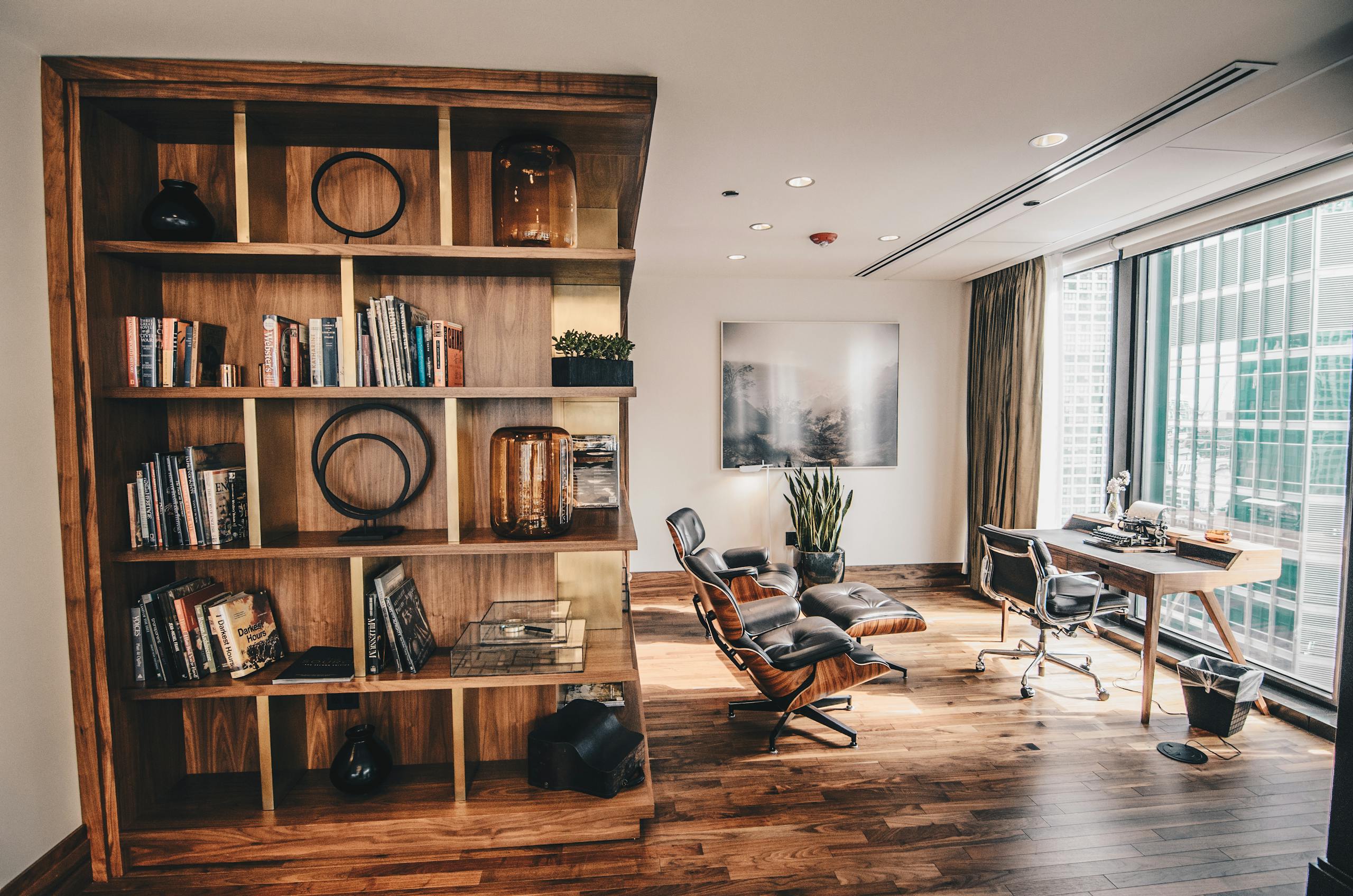

The open office plan I walked into on my first day as a marketing director should have been perfect. Floor-to-ceiling windows flooded the space with natural light. Sleek standing desks dotted the landscape. Everyone seemed energized by the buzz of collaboration.
Three weeks later, I was arriving at 6 AM just to get two hours of silence before the chaos began.
Your workspace isn’t just where you work. For someone wired for depth rather than breadth, for reflection rather than reaction, your physical environment either amplifies your natural strengths or systematically depletes them. Most workspaces are designed by extroverts, for extroverts. The result? Millions of capable professionals fighting their surroundings instead of working with them.

During my two decades managing teams across Fortune 500 accounts, I watched talented people struggle not because they lacked skills, but because their environments worked against how their brains actually functioned. The best performers carved out small territories of control within larger chaos. They arrived early. Left late. Found conference rooms that nobody used.
Workspace design for those who process internally isn’t about isolation or antisocial behavior. Research from the University of California, Irvine found that it takes an average of 23 minutes and 15 seconds to return to a task after an interruption. For someone who builds understanding through sustained focus, that statistic isn’t just interesting. It’s a career killer.
Creating environments that support how you actually think requires understanding the specific elements that either enhance or deplete your cognitive resources. Our General Introvert Life hub explores various aspects of daily functioning, and workspace design stands out as one of the most immediate, controllable factors affecting performance.
The Neuroscience Behind Workspace Sensitivity
When researchers at Harvard Medical School studied differences in sensory processing, they found something fascinating. Brains wired for internal processing show heightened sensitivity to environmental stimuli. Not weakness. Heightened sensitivity.
What’s your personality type?
Take our free 40-question assessment and get a detailed personality profile with dimension breakdowns, context analysis, and personalised insights.
Discover Your Type8-12 minutes · 40 questions · Free
Consider what happens when you enter a typical office. Fluorescent lights flicker at 120 cycles per second. Your visual cortex registers every pulse even when your conscious mind doesn’t. Conversations happen three desks away. Your auditory system processes those words whether you want to or not. Someone microwaves fish in the break room. Your olfactory bulb activates threat responses before you realize why you feel uncomfortable.
Each sensory input demands processing power. For some nervous systems, this happens in parallel. Background noise becomes actual background. For others, every stimulus requires conscious filtering. A 2019 study published in Cognitive, Affective, & Behavioral Neuroscience demonstrated that people with higher sensory processing sensitivity showed increased activation in brain regions associated with awareness, empathy, and sensory processing when exposed to environmental stimuli.
What feels like an inability to concentrate is actually a different processing architecture dealing with information overload. When Harvard Business Review analyzed productivity patterns across different workspace designs, they found that employees with higher sensory sensitivity performed significantly better in environments with controlled stimuli. The difference wasn’t minor. Performance gaps reached 32% between optimal and suboptimal conditions.
Why Traditional Office Design Fails You
The open office movement promised collaboration, transparency, and efficiency. Organizations could pack more people into less space while claiming cultural benefits. What they actually created was a productivity disaster for a significant portion of their workforce.

Managing an agency account team meant working through these spaces daily. I watched exceptional strategists arrive with headphones as armor. Saw brilliant analysts booking conference rooms just to think. Noticed that our best work happened before 9 AM or after 6 PM, when the office emptied.
The problem isn’t collaboration itself. Teams need connection. The problem is the assumption that constant availability produces better outcomes. Research from the American Psychological Association on workplace social connection demonstrates that face-to-face interactions actually decreased significantly when companies transitioned to open offices. Workers compensated by using email and messaging more, creating a worst-of-both-worlds scenario: constant distraction without meaningful connection.
Traditional office design also assumes uniform energy patterns. Extroverted nervous systems gain energy from external stimulation. More people, more noise, more activity equals more fuel. Introverted systems work differently. They don’t avoid stimulation. They process it more deeply, which requires more energy. The same environment that energizes some colleagues systematically drains others.
Consider these common workspace elements and their hidden costs:
Hot desks eliminate territorial security. Your workspace changes daily, preventing the development of environmental familiarity that reduces cognitive load. Every morning requires re-establishing comfort patterns.
Glass walls create visual chaos. The Stanford Center for the Study of Language and Information found that visual clutter activates the same brain regions as auditory noise. Seeing movement forces your attention system to constantly evaluate whether the activity matters.
Collaborative zones without quiet alternatives assume everyone needs identical conditions. Like demanding that people with different sleep cycles all work the same hours, this one-size-fits-all approach ignores fundamental differences in how nervous systems function.
Core Design Principles That Actually Work
Creating a workspace that supports rather than sabotages your processing style starts with understanding which elements matter most. After years of experimentation across different environments, certain patterns consistently produced better outcomes.
Controlled Sensory Input
Visual noise drains attention faster than most people realize. One client project required deep analysis of consumer behavior patterns. The work demanded hours of sustained focus. My first attempts in our main office produced fragmented thinking and surface-level insights.
Moving to a conference room with frosted glass changed everything. Same data. Same time investment. Completely different cognitive access. The difference was eliminating visual interruptions that forced constant attention management.
Position your primary workspace to minimize visual distractions. Face walls rather than walkways. Use partitions not to isolate but to create visual boundaries that reduce the number of objects your attention system must process. Studies on environmental psychology consistently show that reducing visual complexity improves task performance and subjective well-being.
Control lighting intensity and color temperature. Harsh fluorescent overhead lighting activates stress responses. Natural light or warm LED alternatives reduce cortisol levels while maintaining alertness. If you lack control over primary lighting, add task lighting that supplements rather than replaces ambient sources.
Acoustic Architecture
Sound management isn’t about silence. It’s about control and predictability. Random noise forces constant alertness as your brain evaluates each sound for potential relevance. Consistent background sound can actually improve focus by masking irregular disruptions.

White noise machines or apps create acoustic consistency. Your attention system stops evaluating sounds because they’re predictable. Brown noise works similarly but emphasizes lower frequencies that many find less intrusive. Rain sounds or gentle music without lyrics provide variety while maintaining consistency.
Physical barriers matter. Heavy curtains, acoustic panels, or even strategically placed bookshelves dampen sound transmission. One marketing manager I worked with transformed a problematic home office by hanging heavy fabric behind her desk. The investment was minimal. The reduction in auditory chaos was immediate.
Noise-canceling technology has improved dramatically. Quality headphones don’t just block sound. They create acoustic isolation that lets you choose your environment. Some people need silence. Others work better with carefully selected background music. What matters most is having control over your acoustic space.
Territorial Boundaries
Consistent workspace location reduces cognitive load in ways that surprise people. Your brain maps environments automatically. After repeated exposure to the same space, less attention goes toward spatial orientation and more becomes available for actual work.
One of our best account strategists insisted on the same desk even when company policy promoted hot desking. Her performance justified the exception. What looked like stubbornness was actually optimization. She’d trained her attention system to associate that specific location with deep work.
If you lack permanent workspace, create consistency through portable elements. The same coffee mug. Specific desk organization. Familiar objects that signal “work mode” to your brain. These environmental anchors provide psychological territory even in shared spaces.
Personal items aren’t decoration. They’re environmental familiarity cues that reduce the cognitive cost of settling into work. A photo, a specific notebook, a particular pen. Small objects that make any space yours temporarily.
The Home Office Advantage
Remote work revealed something many already knew. Performance improved when people controlled their environments. The shift to home offices wasn’t just about commute elimination or schedule flexibility. It was about finally matching workspace design to individual processing needs.
A Stanford study found that remote workers were 13% more productive than their office counterparts. The biggest gains came from those who needed sustained concentration. People whose work required deep analysis, complex problem-solving, or creative synthesis showed the largest performance jumps.
Home workspace design offers control that office environments rarely provide. You choose everything: lighting, temperature, sound levels, visual complexity, furniture ergonomics. Each element can be optimized for how your specific nervous system functions.
Location Within Your Home
Where you work matters as much as how you work. Ideally, your workspace occupies dedicated space that your brain associates exclusively with work. A separate room provides the strongest boundary. Walk in, and your attention shifts to work mode. Leave, and work thoughts release more easily.
Shared spaces require psychological boundaries since physical ones aren’t possible. Position your desk to face away from household activity. Use room dividers, curtains, or furniture to create visual separation. The goal is environmental cueing that helps your brain distinguish between work time and personal time.
Natural light access affects immediate performance and long-term wellbeing. Research from Harvard Health shows that exposure to natural light regulates circadian rhythms, improves mood, and enhances cognitive function. Position your primary workspace near windows when possible. If natural light is limited, full-spectrum lighting provides partial compensation.
Distance from household noise determines how much attention management you’ll need. A home office near the kitchen during meal prep times forces constant sound filtering. Location near a quiet bedroom or away from main traffic patterns preserves more cognitive resources for actual work.
Essential Equipment Choices
Your chair matters more than most furniture. You’ll spend thousands of hours sitting. Cheap seating creates physical discomfort that demands attention. Quality ergonomic chairs fade into the background, letting you forget about your body and focus on your mind.

Desk height affects posture and circulation. Standard desk height assumes average human dimensions. You’re not average. Nobody is. Adjustable desks let you find optimal position. Even better, they enable position changes throughout the day, reducing the physical strain of static postures.
Monitor placement prevents neck strain and eye fatigue. Position screens at arm’s length with the top of the display at or slightly below eye level. Proper ergonomics reduce constant microadjustments your body makes to compensate for poor alignment.
Keyboard and mouse selection affects hand comfort. Ergonomic keyboards reduce wrist extension. Vertical mice maintain more natural hand positions. These aren’t luxury items. They’re tools that prevent cumulative stress injuries that can end careers.
Visual Environment Optimization
What you see while working affects cognitive load more than most people realize. Complex visual environments require constant processing. Simple environments free attention for actual tasks.
Minimize visible clutter. Each object your eyes encounter requires evaluation, even subconsciously. Closed storage removes visual noise. Clear desk surfaces reduce the number of items competing for attention. Not minimalism for aesthetics but attention management for performance.
Wall color influences mood and energy. Bright colors activate arousal systems. Calm colors reduce activation. Neither is objectively better. The right choice depends on your work type. High-energy creative work might benefit from stimulating colors. Deep analytical work often performs better in calmer environments. Our guide to maximizing small spaces explores these color psychology principles further.
Natural elements reduce stress and improve concentration. Plants, wood textures, or nature imagery activate different brain networks than artificial environments. A University of Melbourne study found that even brief views of nature improved attention and reduced mental fatigue. One small plant on your desk isn’t decoration. It’s a cognitive tool.
Managing Office Politics Around Workspace Needs
Requesting workspace accommodations can feel like admitting weakness. It’s not. You’re asking for conditions that match your processing architecture, just as someone with vision problems requests appropriate lighting.
Frame requests in terms of outcomes rather than preferences. Don’t say “I need quiet because noise bothers me.” Say “I produce my best analysis when I can minimize interruptions. Would it be possible to use the conference room during heavy focus work?” Focusing on performance benefits everyone.
Several account managers I worked with negotiated flexible schedules that let them do focused work during off-peak hours. Early morning access before the office filled. Late afternoon quiet after most people left. Demonstrating that alternative arrangements produced better results, not just better feelings.
Document your productivity patterns. Track when you do your best work. Identify which environmental conditions correlate with peak performance. Data removes the appearance of personal preference. It becomes a question of business outcomes.
Some organizations resist accommodation requests regardless of justification. Understanding that silence represents strength rather than deficiency helps maintain confidence in your workspace needs even when others don’t immediately recognize their validity.
Remote work options provide ultimate control. If your organization allows flexible location, use it strategically. Don’t frame it as avoiding the office. Position it as maximizing specific work types that benefit from focused conditions. Strategic remote work becomes a tool rather than an accommodation.
Adapting to Unavoidable Workspace Constraints
Sometimes you lack control over your environment. Budget constraints, company policies, or living situations limit options. Adaptation becomes necessary when optimization isn’t possible.
Portable boundaries create psychological territory in shared spaces. Noise-canceling headphones signal “focus mode” to your brain and colleagues. Even without music, they reduce interruptions by creating social distance. Some people need the physical reminder that someone is working, not simply available for conversation.
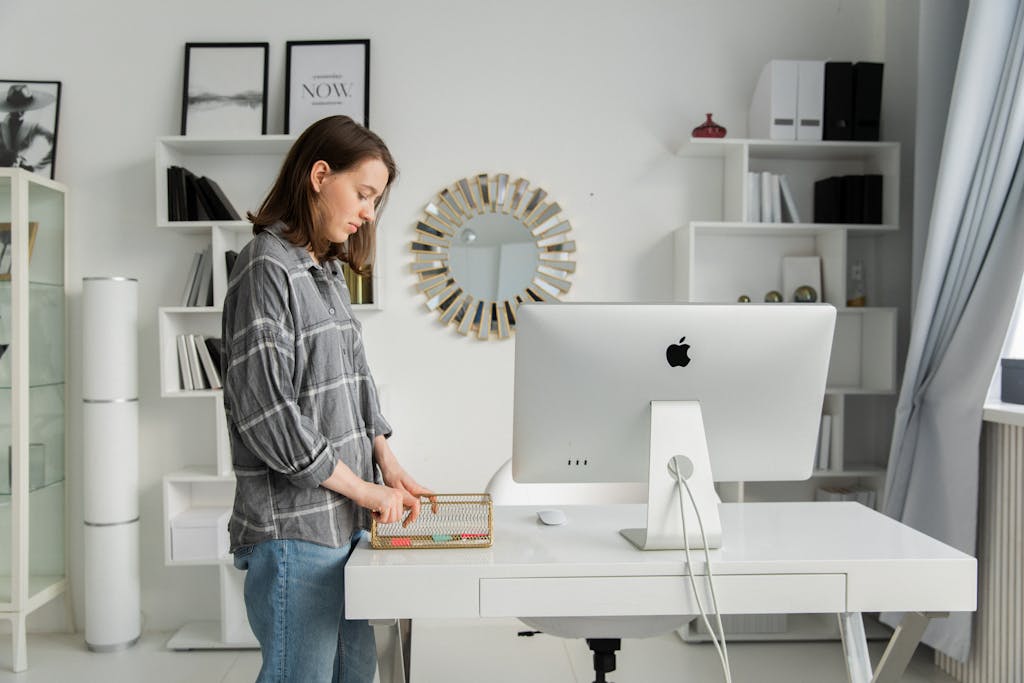
Schedule protection preserves peak hours for demanding work. Block morning calendar time if that’s when your focus peaks. Reserve afternoons for meetings and collaborative work that doesn’t require sustained concentration. Most organizations respect clearly communicated boundaries better than implicit ones.
Environmental rotation prevents complete depletion. When your primary workspace becomes overwhelming, shift locations temporarily. A quiet conference room, an unused office, even a different floor can provide sensory reset. Brief environmental changes reduce cumulative strain without requiring permanent relocation.
Strategic concessions preserve energy for battles that matter. Maybe you accept the open office layout but negotiate for a corner position with better acoustic isolation. Perhaps you compromise on desk location but insist on quality headphones. Perfect environments rarely exist. Optimized environments always remain possible.
Recovery rituals between high-stimulus periods extend your capacity. Short breaks in quiet spaces. Brief walks outside. Moments of deliberate sensory reduction. These aren’t productivity losses. They’re maintenance that prevents larger performance degradation. Like finding peace in a noisy world, small recovery moments accumulate into sustained capability.
Creating Workspace Habits That Support Focus
Physical environment provides the foundation. Consistent habits build on that foundation to create reliable performance patterns. Your brain learns associations between specific cues and mental states. Deliberate habit design harnesses those associations.
Start work rituals signal your attention system that focus time has begun. Maybe you make coffee using the same process. Perhaps you spend five minutes organizing your desk. Some people review their task list. The specific action matters less than its consistency. Repeated daily, these rituals become attention triggers.
Time blocking protects cognitive resources. Designate specific hours for deep work when interruptions are minimized. Schedule meetings and collaborative tasks for other blocks. Your brain adapts to these patterns, entering focus states more quickly during protected time.
Transition routines help shift between different mental modes. When I needed to move from strategy work to client calls, five minutes of deliberate transition made the switch smoother. Review notes. Change physical position. Adjust environmental cues. These micro-rituals reduce the cognitive cost of context switching.
End-of-day shutdown procedures prevent work thoughts from following you home. Close all applications intentionally. Review tomorrow’s priorities. Physically leave your workspace if possible. Clear boundaries between work and personal time protect recovery periods that maintain long-term performance.
Recognizing When Your Workspace Isn’t Working
Environmental problems manifest as performance issues that feel like personal failings. Concentration difficulties. Persistent fatigue. Decreased output quality. People blame themselves when their workspace might be the actual culprit.
Pay attention to when problems occur. Do they intensify during busy office hours? Improve when you work from home? Correlate with specific environmental conditions? Patterns reveal whether your struggles come from workspace design or other factors.
Physical symptoms often indicate environmental stress. Tension headaches from poor lighting. Neck pain from improper desk setup. Eye strain from screen glare. Shoulder tightness from inadequate chair support. Bodies communicate environmental problems through discomfort.
Emotional depletion accumulates gradually. One noisy day feels manageable. Five consecutive days create exhaustion that coffee can’t fix. Workspace stress doesn’t announce itself dramatically. It erodes performance slowly until you normalize dysfunction.
Track your energy levels across different locations and times. Note when work feels effortless versus when every task demands willpower. Environmental optimization becomes measurable when you document actual experience rather than relying on assumptions.
Compare your performance in controlled versus chaotic conditions. The difference reveals how much your environment affects your capabilities. Small performance gaps suggest minimal environmental impact. Large gaps indicate that workspace design deserves serious attention. Similar to how making cubicle spaces work requires specific adaptations, recognizing environmental effects leads to targeted solutions.
Frequently Asked Questions
How much does workspace design actually affect productivity?
Environmental factors can impact performance by 20-30% for work requiring sustained concentration. The effect is larger for people with higher sensory processing sensitivity. Your workspace either supports or sabotages cognitive function, with measurable consequences for output quality and quantity.
What’s the minimum investment needed to optimize a workspace?
Basic optimization costs little. Repositioning your desk away from traffic areas is free. Quality noise-canceling headphones run $100-300. A desk lamp with adjustable color temperature costs $30-50. Small plants start around $10. The most effective changes address your specific environmental pain points rather than following expensive templates.
Can I be productive in an open office, or should I look for different work?
Many people adapt successfully to open offices through strategic behavior. Arrive early or stay late for quiet hours. Use noise-canceling technology. Book conference rooms for focus work. Negotiate flexible remote options. If your organization provides zero accommodation and you consistently struggle despite adaptation attempts, that might signal misalignment worth addressing.
How do I explain workspace needs without sounding difficult or antisocial?
Frame requests around performance outcomes. Instead of “I can’t concentrate with noise,” try “I produce my best analytical work with minimal interruptions. Would it be possible to use the empty conference room during heavy focus periods?” Data helps. Track productivity differences between conditions and present results. Most managers care about output quality more than seating preferences.
What if my home is too small for a dedicated office?
Dedicated space is ideal but not essential. Create psychological boundaries through consistent location and portable environmental cues. Always work at the same spot, even if it’s a corner of your bedroom or kitchen table. Use specific objects that signal work mode: a particular lamp, a special mug, noise-canceling headphones. Your brain learns to associate these cues with focus, compensating for lack of physical separation.
Explore more resources for optimizing your daily environment in our complete General Introvert Life hub.
About the Author
Keith Lacy is an introvert who’s learned to embrace his true self later in life. With a background in marketing and a successful career in media and advertising, Keith has worked with some of the world’s biggest brands. As a senior leader in the industry, he has built a wealth of knowledge in marketing strategy. Now, he’s on a mission to educate both introverts and extroverts about the power of introversion and how understanding this personality trait can unlock new levels of productivity, self-awareness, and success.