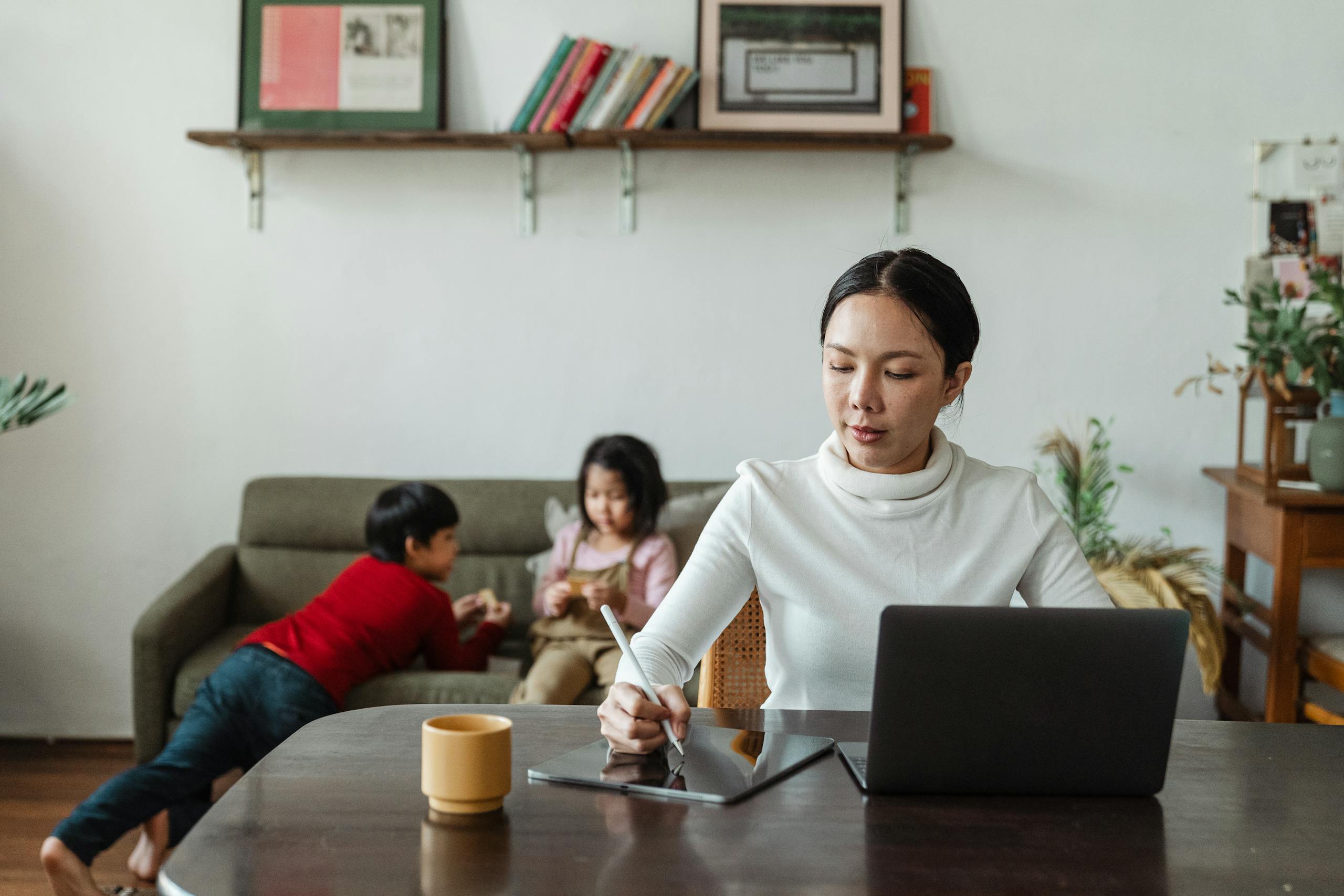

An introverted Asian parent raising an extroverted child faces a specific kind of beautiful tension: you love this person completely, and you sometimes feel like you’re parenting someone from a different planet. Your child fills every room with noise and energy while you’re quietly processing the day. You crave stillness; they crave an audience. And somewhere in the middle of that gap, you’re both trying to feel understood.
That tension is real, and it’s worth taking seriously. Not because something is wrong with either of you, but because the personality mismatch between an introverted parent and an extroverted child creates genuine friction that can quietly shape the relationship for years if it isn’t handled with care.
Add the weight of Asian cultural expectations, where quiet obedience is often prized and emotional expressiveness can feel like a disruption, and you have a parenting dynamic that deserves its own honest conversation.
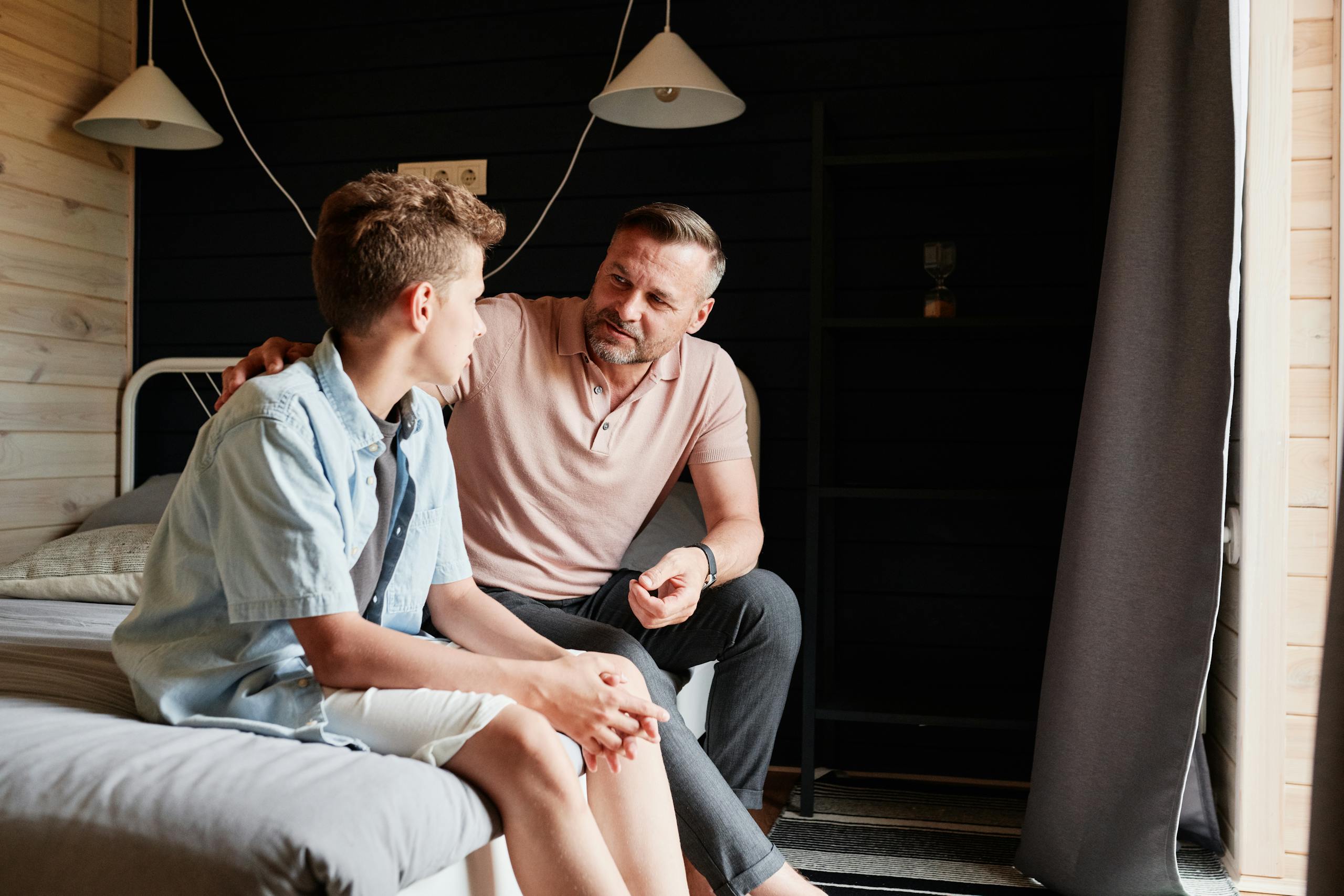
If you’re exploring the broader world of introvert parenting and family dynamics, our Introvert Family Dynamics and Parenting Hub is a good place to start. It covers everything from sensory sensitivity in parents to how introversion shapes the way we connect with our kids across different life stages. This article goes deeper into one specific and underexplored corner of that world.
Why Does This Particular Combination Feel So Disorienting?
Most parenting advice assumes a kind of temperament neutrality that doesn’t exist in real life. The books tell you to “be present” and “follow your child’s lead,” but they rarely account for what happens when following your child’s lead means three hours of high-stimulation play after an already exhausting workday.
What’s your personality type?
Take our free 40-question assessment and get a detailed personality profile with dimension breakdowns, context analysis, and personalised insights.
Discover Your Type8-12 minutes · 40 questions · Free
As an INTJ who spent two decades running advertising agencies, I know what it feels like to be the quietest person in a loud room and still be expected to perform. I’d come home from client presentations, team meetings, and pitch sessions completely hollowed out. My need for solitude wasn’t a preference; it was a biological requirement. My brain needed silence the way a phone needs a charger.
Now imagine bringing that same depleted person home to a child who has been saving up every thought, story, and social impulse since 7 AM and is ready to release all of it the moment you walk through the door. That’s the daily reality for many introverted parents with extroverted kids. And for Asian parents specifically, there’s often an additional layer: the cultural script that says good parenting means being endlessly available, emotionally stoic, and self-sacrificing in ways that leave no room for your own needs.
The National Institutes of Health has noted that temperament, including introversion, shows early and tends to remain stable into adulthood. Your extroverted child isn’t going through a phase. Their energy, their need for social connection, their discomfort with long silences: that’s who they are. And your introversion is equally fixed. So the work isn’t about changing either of you. It’s about building a family culture that genuinely makes room for both.
What Does Asian Cultural Context Actually Add to This Dynamic?
This is the part that often goes unspoken, even in thoughtful conversations about introvert parenting.
Many Asian families carry an implicit hierarchy of values around behavior. Quietness signals respect. Restraint signals maturity. Emotional expressiveness, especially in public, can be read as a lack of self-control or, worse, a reflection on the family. These aren’t arbitrary rules. They come from deep cultural roots around collective harmony, face-saving, and the belief that discipline is a form of love.
But an extroverted child doesn’t experience the world through that framework instinctively. They want to be seen. They want to talk through their feelings out loud. They want to perform, connect, and engage in ways that can feel disruptive to a household shaped by quieter values.
I’ve watched this play out with colleagues over the years. One of my creative directors, a second-generation Chinese American, told me once that growing up she always felt like she was “too much” for her family. Her parents weren’t cold; they were deeply introverted and shaped by a culture that read her extroversion as a kind of social recklessness. She spent years shrinking herself at home and then overcorrecting in every other environment. Understanding your child’s personality through a more complete lens, one that includes temperament science alongside cultural values, can prevent that kind of fracture.
If you want a clearer picture of where you and your child each land on the personality spectrum, the Big Five Personality Traits Test is a useful starting point. The Big Five measures extraversion as one of five core dimensions, and seeing the data laid out plainly can make the conversation with yourself, and eventually with your child, feel less personal and more grounded.

How Do You Honor Your Child’s Extroversion Without Losing Yourself?
This is the real question, and I want to be honest about how hard it is.
For most of my agency years, I operated on willpower. I pushed through the noise, the meetings, the after-hours client dinners, and I told myself I was fine. I wasn’t fine. I was running a chronic energy deficit that eventually showed up as short temper, poor judgment, and a kind of emotional flatness that wasn’t good for anyone around me, including the people I was supposed to be leading.
Parenting an extroverted child while being deeply introverted carries the same risk. You can white-knuckle your way through the chaos, but the cost accumulates. What your child needs from you isn’t a parent who performs endless availability while quietly resenting it. They need a parent who models what it looks like to know yourself and take your own needs seriously.
A few things that actually help:
Name the dynamic early and often. Even young children can understand “Dad gets quiet when he’s tired, and that’s how he fills back up.” You don’t need to use the word introvert. You just need to give your child a framework that doesn’t make your need for solitude feel like rejection.
Create structured social outlets that don’t require you. Extroverted children thrive with teammates, classmates, and neighborhood friends. When your child has strong social structures outside the home, they arrive home having already discharged some of that social energy. You’re not their only source of connection, and they shouldn’t be.
Protect transition time. The 20 minutes after you get home from work are often the most critical. I started treating that window like a non-negotiable meeting with myself. A short walk, a few minutes alone before engaging. It sounds small, but it changed how I showed up for every conversation that followed.
Engage on their terms during your good hours. An introverted parent who is fully present for 45 minutes of genuine connection gives their extroverted child more than a distracted parent who half-listens for three hours. Quality isn’t a consolation prize here. It’s actually what works.
The PubMed Central research on parent-child attachment consistently points to attunement, the sense that a parent truly sees and responds to a child’s emotional state, as more predictive of secure attachment than sheer time spent together. You don’t have to match your child’s energy. You have to meet their emotional reality, which is something introverts are often quietly excellent at when they’re not completely depleted.
What Happens When Cultural Pressure Collides With Your Child’s Personality?
Here’s a scenario that plays out in many Asian households: an extroverted child comes home from school talking loudly, interrupting dinner, wanting to share every detail of their day with whoever will listen. A parent shaped by quieter cultural norms, and their own introversion, reads this as a lack of discipline. The correction comes. The child learns that their natural expressiveness is a problem. Over time, they either suppress it at home and become someone different in every other environment, or they push back harder and the relationship fractures along temperament lines.
Neither outcome is what anyone wanted. And yet it happens constantly, because the underlying dynamic is never named.
Psychology Today’s work on family dynamics describes how unspoken rules and temperament mismatches between family members often become the invisible architecture of a household, shaping what’s allowed, what’s valued, and who gets to be fully themselves under the family roof. When those rules are never examined, they simply operate in the background, doing quiet damage.
The antidote isn’t abandoning cultural values. It’s expanding the frame. An extroverted child can learn respect and restraint in appropriate contexts. And an introverted Asian parent can learn to see their child’s expressiveness not as a character flaw but as a different kind of strength that deserves to be cultivated, not corrected into silence.
It’s also worth noting that extroversion in children often looks different from what we expect. Some extroverted kids are loud and bouncy. Others are deeply social but emotionally intense, craving connection and validation in ways that can feel overwhelming to a parent who processes emotion quietly and internally. If your child’s emotional needs feel particularly acute, it may be worth exploring whether sensitivity is part of their profile too. Our article on HSP Parenting: Raising Children as a Highly Sensitive Parent covers the overlap between high sensitivity and emotional intensity in children, which is more common than most parents realize.
How Do You Build Genuine Connection Across Such Different Wiring?
Connection between an introverted parent and an extroverted child doesn’t happen by accident. It requires some intentional engineering, which, frankly, introverts tend to be good at once they stop feeling guilty about needing to plan what comes naturally to others.
One of the most effective things I’ve seen, both in my own experience and in conversations with parents handling this dynamic, is finding the activity that bridges both temperaments. For introverted parents, this is often something structured with a clear purpose: cooking together, building something, working on a project with a defined outcome. These activities give the extroverted child plenty of room to talk and engage while giving the introverted parent something to focus on besides the social performance of the interaction itself.
At my agency, I used a similar approach with extroverted team members. Rather than scheduling open-ended “let’s chat” meetings that drained me, I’d frame conversations around a specific problem or decision. The extrovert got the social engagement they needed. I got a structure that made the interaction feel purposeful rather than exhausting. The same principle scales down to parenting remarkably well.
Another piece that matters more than most parents expect: letting your child see you be likeable in your own way. Extroverted children often measure connection through social energy. If they only ever see you as the quiet, tired parent who needs space, they may interpret your introversion as emotional unavailability. Showing them that you can be warm, funny, and genuinely engaged, just in quieter and more focused ways, gives them a more complete picture of who you are. The Likeable Person Test is an interesting self-reflection tool here. Not because likeability is something you need to perform, but because understanding how you come across to others, including your own children, can surface blind spots worth examining.
One more thing worth naming: extroverted children often need explicit verbal affirmation in ways that don’t come naturally to introverted parents. Many Asian parents show love through action, through sacrifice, through showing up. Those are real and meaningful expressions of love. But an extroverted child may not register them as love without the words attached. Learning to say “I’m proud of you” or “I love talking with you about this” out loud, even when it feels unnecessary or slightly awkward, can close a gap that neither of you fully realizes is there.
What Should You Watch for in Yourself as the Introverted Parent?
Parenting an extroverted child when you’re introverted creates specific stress patterns that are worth monitoring, because they tend to compound quietly before they become obvious.
Chronic overstimulation is the most common. If you’re never getting enough quiet time to genuinely recharge, your baseline irritability rises, your patience shortens, and small things start feeling enormous. I’ve been there in professional settings, and I’ve seen what it does to decision-making and relationships. In a parenting context, it can mean snapping at your child for something that isn’t really the problem, or withdrawing in ways that your extroverted child experiences as abandonment rather than self-care.
Guilt is another one. Many introverted parents, especially those shaped by cultural expectations of selfless parenting, feel genuinely ashamed of needing space from their children. That guilt often drives them to override their own limits, which accelerates the depletion cycle. Recognizing that your need for solitude is not a parenting failure is foundational. It’s not optional self-indulgence. It’s what makes sustained, quality parenting possible.
It’s also worth paying attention to whether stress is affecting your mood and emotional regulation in ways that go beyond normal introvert fatigue. The American Psychological Association has written extensively about how chronic stress reshapes emotional responses over time, and parenting under conditions of persistent overwhelm can create patterns worth addressing with professional support. If you’re finding that your reactions to your child feel disproportionate or out of character, that’s worth taking seriously.
On a related note, if you’re ever uncertain whether emotional dysregulation is part of a larger pattern, the Borderline Personality Disorder Test on this site offers a self-assessment that can help clarify whether what you’re experiencing is introvert depletion, something worth discussing with a mental health professional, or simply the very normal exhaustion of parenting a high-energy child while being wired for quiet.

How Do You Prepare Your Child for a World That Rewards Extroversion, Without Dismissing Your Own Values?
This is a question I find genuinely fascinating, partly because I lived a version of it in reverse. As an introverted INTJ in an industry that rewarded loud confidence, I spent years watching extroverted peers get credit for ideas they articulated faster, not better. I learned, slowly, how to present my thinking in ways that landed. But I also learned that the world doesn’t actually reward extroversion uniformly. It rewards people who can communicate their value clearly, and that’s a skill that can be built regardless of temperament.
Your extroverted child already has natural advantages in social settings. They’re comfortable with strangers, energized by groups, and generally skilled at making connections quickly. What they may need from you, specifically, is help developing the complementary skills that don’t come as naturally: depth over breadth, reflection before reaction, and the capacity to be alone with their thoughts without immediately reaching for stimulation.
You are, without realizing it, a living model of those skills. The way you read a room quietly before speaking. The way you think before you commit. The way you build a small number of deep relationships rather than a wide network of shallow ones. These aren’t deficits your child is spared from. They’re capacities your child can learn by watching you, if you make them visible rather than invisible.
Some extroverted children, particularly those in highly active or physically demanding pursuits, also benefit enormously from structured mentorship outside the home. If your child is drawn to fitness, athletics, or wellness careers, it might be worth exploring what formal training in those areas looks like. The Certified Personal Trainer Test is one resource that can help a young person assess their readiness for that kind of professional path, which suits many extroverted personalities well.
And for extroverted children who are drawn to caregiving or people-focused roles, the Personal Care Assistant Test Online is another self-assessment worth knowing about. Extroverted children often gravitate toward careers built around human connection, and giving them early exposure to what those paths actually require can help them channel their energy purposefully.
The broader point is this: you’re not just raising a child. You’re raising someone who will eventually have to work alongside people very different from themselves. Showing them, from inside your own home, that two people with completely different temperaments can love each other well and build something together is one of the most useful things you can give them.
Research published through PubMed Central on temperament and parenting outcomes suggests that the quality of the parent-child relationship, particularly the degree to which a parent accurately perceives and responds to their child’s temperament, is among the strongest predictors of positive developmental outcomes. In other words, understanding your extroverted child’s wiring and responding to it thoughtfully matters more than sharing it.

There’s a lot more to explore in this space, and if this article resonated with you, the full Introvert Family Dynamics and Parenting Hub covers the wider landscape, from how introverted parents handle school events and social obligations to how introversion shapes sibling dynamics and family communication styles.
About the Author
Keith Lacy is an introvert who’s learned to embrace his true self later in life. After 20 years in advertising and marketing leadership, including running agencies and managing Fortune 500 accounts, Keith now channels his experience into helping fellow introverts understand their strengths and build fulfilling careers. As an INTJ, he brings analytical depth and authentic perspective to every article, drawing from both professional expertise and personal growth.
Frequently Asked Questions
Is it common for introverted parents to have extroverted children?
Yes, and more common than many people expect. Introversion and extroversion are influenced by a combination of genetic and environmental factors, and there’s no reliable pattern that says introverted parents produce introverted children. Many families include parents and children with very different temperaments, which creates real friction but also genuine opportunities for growth on both sides.
How do I explain my need for quiet to my extroverted child without making them feel rejected?
Age-appropriate honesty works well here. Even young children understand “Dad needs some quiet time to feel better, the same way you need playtime to feel happy.” Framing your introversion as a personal need rather than a response to your child’s behavior helps them understand it isn’t about them. Over time, naming the pattern consistently builds a shared family vocabulary that reduces confusion and hurt feelings.
Should I encourage my extroverted child to be quieter to match our household culture?
There’s a meaningful difference between teaching situational awareness, knowing when quiet is appropriate, and suppressing a child’s natural temperament. Extroverted children can absolutely learn context-appropriate behavior. What they shouldn’t learn is that their fundamental wiring is a problem. The goal is to help them understand when and where their energy fits, not to make them smaller versions of themselves at home.
How does Asian cultural pressure specifically affect introverted parents raising extroverted children?
Asian cultural frameworks often prize quietness, restraint, and collective harmony in ways that can make an extroverted child’s expressiveness feel disruptive or disrespectful. Introverted Asian parents may find themselves caught between their own temperament, cultural values, and the genuine needs of a child who is wired very differently. The most effective path tends to involve expanding the cultural frame rather than choosing between it and the child’s personality, finding ways to honor respect and connection that don’t require the child to become someone they’re not.
What are the signs that the temperament mismatch is creating real problems in the relationship?
Watch for patterns like your child consistently seeking connection outside the home while avoiding it with you, frequent conflict that seems to be about energy and presence rather than specific behaviors, or a sense that your child sees you as emotionally unavailable rather than simply quiet. On your side, persistent irritability, guilt about needing space, or a feeling that parenting is always draining rather than sometimes draining are worth taking seriously. Both patterns suggest the dynamic needs more intentional attention than it’s currently getting.