
Introverted moms are mothers whose natural wiring draws them toward quiet, reflection, and solitude as sources of renewal, and who often feel the weight of a parenting culture that equates good motherhood with constant availability, cheerful noise, and endless social energy. They love their children deeply, and they also need stillness to function well. Both things are true at the same time, and that tension is where most of the difficulty lives.
Society has a very specific picture of what a devoted mother looks like. She organizes the birthday parties. She volunteers at every school event. She hosts playdates with genuine enthusiasm and never seems to need a moment alone. For introverted moms, that picture can feel less like an aspiration and more like an indictment.
I want to talk about that honestly, because I’ve watched the women in my life carry this particular kind of quiet guilt for years, and I think it deserves a real conversation.

If you’re looking for a broader picture of how introverted parents handle the full range of family life, our Introvert Family Dynamics and Parenting hub covers everything from early childhood to blended families to the specific challenges of parenting through major life changes. This article focuses on something more specific: what it actually feels like to be an introverted mother in a world that keeps misreading your love as distance.
Why Does Motherhood Feel So Loud for Introverts?
Children, especially young ones, generate an almost constant stream of sensory and social input. Questions, sounds, needs, emotions, requests, conflicts. For extroverted parents, much of that input is energizing. For introverted mothers, it draws from a reserve that doesn’t replenish itself through more interaction. It replenishes through quiet.
What’s your personality type?
Take our free 40-question assessment and get a detailed personality profile with dimension breakdowns, context analysis, and personalised insights.
Discover Your Type8-12 minutes · 40 questions · Free
A 2019 study published in PubMed Central examined how individual temperament shapes parental responsiveness and stress responses. The findings pointed to something many introverted mothers already know from lived experience: the same emotional sensitivity that makes them deeply attuned parents also makes them more vulnerable to overstimulation in high-demand environments. Parenting, almost by definition, is a high-demand environment.
Add to that the social expectations that follow mothers specifically. Fathers who are quiet and reserved often get described as calm or thoughtful. Mothers who are quiet and reserved get asked if they’re okay, if they’re depressed, if they’re bonding properly. The double standard is real, and it creates an exhausting layer of self-monitoring on top of the already exhausting work of raising children.
I noticed this dynamic clearly when I was running my agency. The women in leadership who processed information internally before speaking were frequently described as “hard to read” or “not engaged.” The men doing the same thing were described as “strategic.” Same behavior, completely different interpretation. That kind of misreading doesn’t disappear at home. It follows introverted mothers into the school pickup line and the neighborhood Facebook group and the pediatrician’s waiting room.
Is There Something Wrong With Needing Alone Time as a Mom?
No. And the science is clear on this, even when the culture isn’t.
The National Institutes of Health has documented that introversion has biological roots, with infant temperament showing measurable correlations to introverted traits in adulthood. This isn’t a preference or a habit. It’s a fundamental aspect of how the nervous system processes stimulation. Needing solitude to recover isn’t selfishness. It’s physiology.
That said, knowing something intellectually and believing it emotionally are two different things. Most introverted mothers I’ve spoken with can articulate that their need for quiet is legitimate. What they struggle with is the guilt that surfaces anyway, especially when they close a door, or sit in a parked car for five extra minutes before going inside, or feel a wave of relief when a playdate gets canceled.
That guilt is worth examining. It’s almost always rooted in a comparison to an idealized version of motherhood that doesn’t actually exist for anyone, introverted or not. The difference is that introverted mothers tend to notice the gap between that ideal and their reality more acutely, because they spend more time in internal reflection. Their minds go there naturally.
Mine certainly does. Even now, years after leaving agency life, I catch myself measuring my behavior against some invisible standard and finding it wanting. That’s an introvert habit. We process deeply, which means we also critique deeply. The work isn’t to stop reflecting. It’s to reflect with more accuracy.

How Do Introverted Moms Actually Connect With Their Kids?
Deeply. Often more deeply than they give themselves credit for.
Introverted mothers tend to be exceptional observers. They notice when something is slightly off with their child before anyone else does. They pick up on the subtle shift in tone, the hesitation before answering a question, the way a child holds their shoulders differently when something is bothering them. This kind of attentiveness isn’t loud, but it’s profoundly valuable.
When I think about the best mentors I had in my career, and the best I tried to be for the people I managed, the common thread wasn’t energy level. It was presence. The ability to make someone feel genuinely seen and heard. Introverted mothers bring that quality to parenting in ways that matter enormously to children, even if those children can’t articulate it yet.
One-on-one time is where introverted mothers often shine. The quiet conversation at bedtime. The focused attention during a shared activity. The unhurried listening when a child needs to work through something difficult. These moments don’t require a crowd or a performance. They require exactly what introverted mothers naturally offer: genuine presence and depth of attention.
Our full guide on parenting as an introvert goes deeper into how these natural strengths play out across different stages of childhood, and how to build a parenting approach that works with your wiring instead of against it.
The challenge comes when children are in phases that demand more volume and stimulation than an introverted mother can comfortably sustain. Toddlers who want to narrate every moment. Preschoolers who need constant engagement. School-age kids who bring home the full emotional weight of their social world every afternoon. These phases are genuinely hard, and pretending otherwise doesn’t help anyone.
What Happens When the Whole Family Is Wired Differently?
Family systems are complicated even when everyone shares similar temperaments. When an introverted mother is raising extroverted children, or partnered with an extroverted spouse, or both, the complexity multiplies.
An extroverted child who processes emotions out loud and draws energy from social interaction isn’t doing anything wrong. Neither is the introverted mother who finds that same processing style exhausting after a full day of it. Both people have legitimate needs. The difficulty is that those needs are in direct tension with each other, and someone usually ends up feeling like the problem.
It’s almost always the introvert who internalizes that role.
The Psychology Today overview of family dynamics frames this well: family systems develop patterns based on the needs and personalities of their members, and those patterns become self-reinforcing over time. An introverted mother who quietly withdraws to manage her overstimulation may be perceived by her extroverted family members as unavailable or disengaged, which creates more pressure, which leads to more withdrawal. The cycle is exhausting and rarely talked about openly.
Breaking that cycle starts with naming it. Not as a problem with any individual person, but as a structural tension that needs conscious management. Our article on introvert family dynamics and the challenges that come with them offers practical frameworks for exactly this kind of situation.
It’s also worth noting that introverted mothers aren’t alone in this experience. Many introverted fathers face parallel struggles, though the social expectations differ significantly. The piece on introverted dads and the gender stereotypes they face explores how introversion intersects with cultural expectations of fatherhood in ways that are both similar to and distinct from the maternal experience.
How Do Introverted Moms Handle the Social Demands of Parenting?
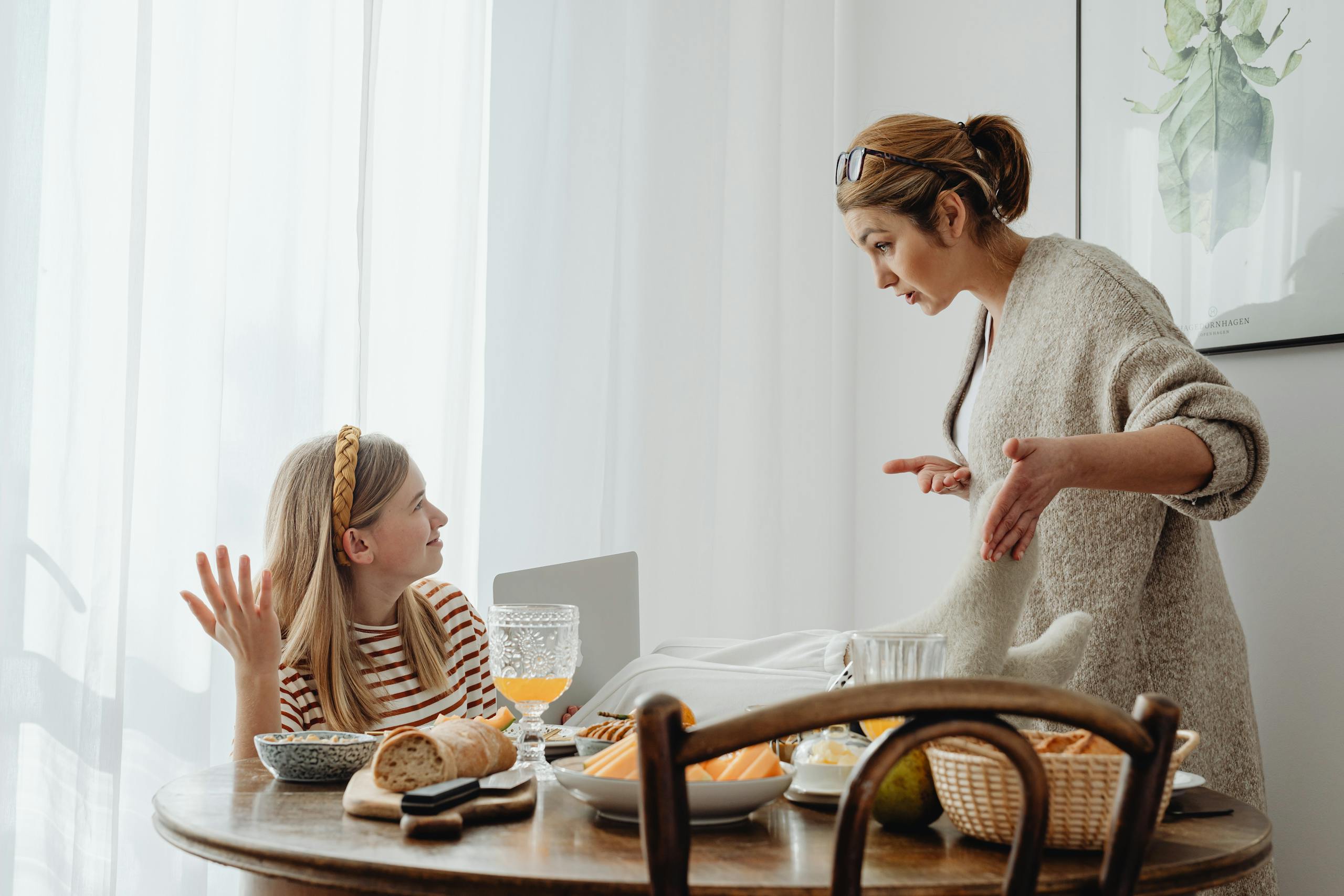
This is where the rubber meets the road for most introverted mothers, because parenting in modern culture is intensely social. School communities, sports teams, parent-teacher organizations, neighborhood groups, birthday party circuits. The social obligations attached to raising children can feel like a second job for someone who finds sustained social interaction draining.
A few things have helped the introverted mothers I know manage this without either burning out or retreating entirely.
First, selective participation. Not every social obligation is equally important. An introverted mother who shows up meaningfully for the events that matter most to her child, and gracefully declines the ones that don’t, is making a strategic choice, not a selfish one. I spent years in agency life attending every networking event, every client dinner, every industry conference because I thought presence equaled commitment. It didn’t. Selective, intentional presence is actually more effective, and the same principle applies at home.
Second, having honest conversations with partners and children about what recharging looks like. A child who understands that mom needs thirty minutes of quiet after school isn’t being burdened with adult problems. They’re learning something valuable about how different people are wired, and about respecting those differences. That’s a lesson worth teaching.
Third, building structure around the social demands rather than leaving them open-ended. A defined playdate with a clear end time is manageable. An open-ended afternoon where the neighbor kids might stay for dinner or might not is a recipe for anxiety. Introverted mothers tend to do better when they can see the shape of what’s coming.
Setting those kinds of structures requires clear communication about boundaries, and that’s genuinely hard for many introverts who were raised to accommodate rather than articulate their needs. The work on family boundaries for adult introverts addresses this directly, including how to set limits with extended family without triggering guilt or conflict.
What Changes When Kids Become Teenagers?
Something interesting happens when children hit adolescence. The relentless physical demands of early childhood ease somewhat, but the emotional and conversational demands intensify in a different way. Teenagers need parents who can hold space for complexity, who won’t panic at ambiguity, who can listen without immediately problem-solving.
Those happen to be introvert strengths.
Introverted mothers often find that the teenage years are when their particular way of engaging finally clicks with what their children need. A teenager who wants to talk through something difficult at 10 PM doesn’t want a performance. They want a parent who will actually listen. Introverted mothers tend to be very good at that.
That said, teenagers also present new challenges. They’re testing independence, pushing against structure, and often bringing home social dramas that require more energy to process than the introverted parent has at the end of a long day. The approach to parenting teenagers as an introverted parent explores both the advantages and the specific friction points that come with this stage.
One thing I’ve observed, both in my own life and in conversations with introverted parents over the years, is that teenagers often respect the quiet parent more than they let on. They notice that their mother doesn’t perform emotions for an audience. They notice that she means what she says because she doesn’t say much she doesn’t mean. That kind of credibility is hard-won and deeply valuable during the years when children are figuring out who to trust.
How Does Divorce or Co-Parenting Change Things for Introverted Moms?
Divorce restructures everything, and for introverted mothers, it creates a specific kind of complexity. On one hand, shared custody means there are periods of genuine solitude, which can feel like relief and guilt at the same time. On the other hand, co-parenting requires sustained communication with another adult, often under emotionally charged circumstances, which is exhausting for someone who finds conflict and sustained social negotiation draining.
The American Psychological Association’s resources on trauma and stress are worth reviewing in this context, because divorce, even an amicable one, carries real psychological weight. Introverted mothers who are already managing sensory and social overload may find that the added stress of co-parenting logistics pushes them toward shutdown rather than engagement. That’s not weakness. It’s a predictable response to accumulated demand.
Structured communication systems help enormously. Co-parenting apps that reduce the need for real-time conversation, written agreements about logistics, clear handoff protocols. These aren’t cold or clinical. They’re tools that allow introverted mothers to show up fully for their children without burning through their reserves on administrative friction.
The detailed work on co-parenting strategies for divorced introverts covers this terrain thoroughly, including how to handle the emotional complexity of shared parenting when your natural processing style runs internal rather than external.
What Does Good Self-Care Actually Look Like for Introverted Moms?
Not a spa day. Or not only a spa day.
The self-care conversation in parenting culture tends to be both undervalued and misunderstood. It gets reduced to bubble baths and wine, which misses the point entirely for introverted mothers. What they actually need is protected time for genuine mental stillness. Not distraction. Stillness.
A 2020 study in PubMed Central examined the relationship between solitude and psychological well-being, finding that voluntary solitude, time alone chosen rather than imposed, was associated with meaningfully higher rates of emotional regulation and reduced anxiety. For introverted mothers, this isn’t a luxury. It’s maintenance.
What that looks like in practice varies. Some introverted mothers wake up thirty minutes before the rest of the household. Some have a standing arrangement with a partner or trusted family member for a weekly afternoon alone. Some have learned to use car time, the drive to work or the grocery store, as a transition buffer between the demands of home and the demands of the world.
I used to do something similar in my agency years. Before a major client presentation, I’d find fifteen minutes alone somewhere quiet, not to review my notes, but to let my mind settle. My team thought I was meditating. I was just letting the noise drain out so I could think clearly. Introverted mothers who find their version of that practice tend to be more present, more patient, and more effective than those who push through without it.
The harder piece is giving yourself permission to do it without apologizing. Many introverted mothers describe a specific kind of guilt around taking time alone, as though their need for it is evidence of some deficiency in their love. It isn’t. A mother who protects her capacity to be present is doing something profoundly generous for her family, even when it doesn’t feel that way.
Can Introversion Actually Make You a Better Mother?
Yes. With real specificity, not just reassurance.
Introverted mothers tend to model something their children desperately need to see: that it’s possible to be thoughtful rather than reactive. That you can pause before responding. That silence isn’t failure. That you don’t have to perform your emotions to prove they’re real.
Children raised by introverted mothers often develop a higher tolerance for quiet and a greater comfort with their own inner lives. In a world that is relentlessly loud and externally stimulating, that’s a significant gift. The Truity research on personality types points to the relative rarity of strongly introverted profiles in the general population, which means children with introverted mothers are getting exposure to a way of moving through the world that isn’t the cultural default. That broadens their range.
There’s also the quality of attention that introverted mothers bring. They notice things. They remember details. They ask the follow-up question three days later because they were still thinking about what their child said. That kind of sustained, quiet attentiveness communicates something to a child that no amount of cheerful busyness can replace: you matter enough for me to really pay attention.
At the same time, I want to be honest that introversion doesn’t automatically produce good parenting any more than extroversion does. What it produces is a particular set of strengths and a particular set of challenges. The work is in leaning into the strengths while being honest about the challenges, and building systems and support structures that help manage the gap.
The Psychology Today framework for blended family dynamics is worth reading even for mothers in intact families, because it addresses how different personality styles within a family system affect attachment and communication patterns. The principles apply broadly.

What Do Introverted Moms Most Need to Hear?
That the quiet love they give is real love, and that their children feel it.
I’ve spent a lot of time thinking about what made the best leaders I worked with effective, and it was rarely the ones who filled every room with energy and noise. It was the ones who paid attention, who thought before they spoke, who made you feel like your words had actually landed somewhere. Introverted mothers do this for their children every single day, often without recognizing it as a strength.
The culture will keep sending messages that good motherhood looks a certain way, and that way will probably continue to look extroverted. Loud, social, endlessly available, effortlessly warm in public settings. Introverted mothers will keep bumping up against that image and feeling like they fall short.
What I’d offer instead is this: your children aren’t measuring you against that image. They’re measuring you against their actual experience of being loved by you. And if you’re reading this, thinking carefully about how to show up for them, protecting your capacity to be present, that experience is almost certainly richer than you realize.
The guilt isn’t evidence of failure. It’s evidence of how much you care. The difference between those two things is worth sitting with.
Everything we cover about introverted parenting, from early childhood through the adult years, lives in our Introvert Family Dynamics and Parenting hub, and I hope you’ll find it a useful companion as you work through what this looks like in your own life.
Curious about your personality type?
Our free MBTI assessment goes beyond the four letters. Get a full breakdown of your scores, see how your type shows up at work and in relationships.
Take the Free Test8-12 minutes · 40 questions · Free
About the Author
Keith Lacy is an introvert who’s learned to embrace his true self later in life. After 20 years in advertising and marketing leadership, including running agencies and managing Fortune 500 accounts, Keith now channels his experience into helping fellow introverts understand their strengths and build fulfilling careers. As an INTJ, he brings analytical depth and authentic perspective to every article, drawing from both professional expertise and personal growth.
Frequently Asked Questions
Are introverted moms less affectionate toward their children?
No. Introversion describes how someone processes stimulation and where they draw energy from, not how deeply they feel or express love. Introverted mothers are often highly affectionate in one-on-one settings and tend to express love through attentiveness, thoughtful gestures, and sustained presence rather than through large displays or constant verbal expression. Their affection may look quieter than the cultural norm, but it is no less real or meaningful to their children.
How can an introverted mom recharge when she has no alone time?
Micro-recovery matters more than most introverted mothers realize. Short periods of genuine mental stillness, even five to ten minutes of quiet before the household wakes, a few minutes alone in the car, a brief walk without headphones, can provide meaningful recovery when extended solitude isn’t available. Building predictable structure around the day also helps, because knowing when stimulation will ease allows the nervous system to pace itself rather than stay in a constant state of alert.
What should an introverted mom tell her extroverted child about needing quiet time?
Honesty calibrated to the child’s age works well. Young children can understand simple explanations: “Mom’s brain needs quiet time to feel good, the same way your body needs sleep.” Older children can handle more nuance about how different people are wired differently and what that means for how the family operates. Framing it as a difference rather than a problem, and modeling that it’s okay to have and communicate needs, teaches children something genuinely valuable about self-awareness and respect for others.
Is it normal for an introverted mom to feel relieved when her kids are at school?
Yes, and it doesn’t mean she loves her children any less. Relief at having time and quiet is a natural response for someone whose nervous system has been in high-demand mode. Many introverted mothers feel guilty about this relief, but the guilt is misplaced. A parent who uses periods of quiet to genuinely recover is more capable of being present and engaged when her children return. The relief and the love coexist without contradiction.
Can an introverted mom raise a confident, socially comfortable child?
Absolutely. Social confidence in children comes from feeling securely attached to their caregivers, from having their emotions taken seriously, and from being given age-appropriate opportunities to practice social skills. Introverted mothers tend to be very strong on the first two counts. They may need to be intentional about creating social opportunities for extroverted children, and about not inadvertently modeling avoidance of social situations they find draining, but those are manageable adjustments, not fundamental obstacles.