
Introvertida is the Spanish feminine form of “introvert,” describing a person whose energy comes from within, who processes the world through reflection rather than external stimulation, and who tends to prefer depth over breadth in relationships and conversation. The word carries the same core meaning as its English counterpart, yet something about hearing it in another language can make the concept feel fresh, even clarifying.
Across cultures and languages, the experience of being an introvert is remarkably consistent. Whether you call it introvertida, introvertido, introverti, or simply introvert, the internal architecture is the same: a mind that turns inward, a preference for quiet processing, and a deep capacity for observation that others often miss entirely.

My own relationship with this concept took decades to sort out. I spent most of my career leading advertising agencies, managing large teams, presenting to Fortune 500 boardrooms, and performing a version of confidence I thought leadership required. Nobody handed me a word that explained why I needed two days of silence after a major client presentation. Nobody told me that my preference for written communication over impromptu meetings wasn’t a professional liability. It was just who I was, wired into my INTJ nature, and it took a long time before I had language for it that felt true.
If you’re exploring what introvertida means, whether you’re a Spanish speaker discovering the term for the first time or someone who simply wants a fuller picture of introversion across cultures, you’re in the right place. Our General Introvert Life hub covers the full spectrum of what it means to live as an introvert in a world that often rewards the loudest voice in the room. This article goes deeper into the meaning, the lived experience, and what understanding this word can genuinely offer you.
What Does Introvertida Actually Mean?
In Spanish, adjectives change form based on gender. “Introvertido” applies to masculine subjects, while “introvertida” applies to feminine ones. Both describe the same fundamental personality orientation: someone who directs their mental energy inward, who recharges through solitude, and who tends to think before speaking rather than thinking out loud.
What drains your social battery?
Not all social exhaustion is the same. Our free quiz identifies your specific drain pattern and gives you personalised recharging strategies.
Find Your Drain PatternUnder 2 minutes · 8 questions · Free
The root of the word traces back to Latin. “Intro” means inward, and “vertere” means to turn. So introvertida, at its most literal, means someone who turns inward. That’s a remarkably accurate description of how many of us experience our own minds. My thinking doesn’t happen in real time, visible to everyone in the room. It happens in layers, privately, before I’m ready to share any of it.
Carl Jung popularized the introvert/extrovert framework in the early twentieth century, and the concept has evolved considerably since then. Modern psychology generally understands introversion as a dimension of personality related to how people manage stimulation and energy, not as shyness, social anxiety, or antisocial behavior. Those are separate traits that sometimes overlap with introversion but aren’t the same thing. An introvertida can be warm, funny, socially skilled, and genuinely enjoy people. She simply needs time alone to recover after those social encounters, and she does her best thinking away from the noise.
What strikes me about the Spanish framing is how naturally it integrates into everyday conversation in many Latin cultures. In my experience working with creative teams that included Spanish-speaking colleagues, I noticed that the concept of needing space, of being a person who observes before acting, carried less stigma in some of those conversations than it often did in American corporate culture, where extroversion can feel like a professional expectation.
Is Being Introvertida a Personality Type or a Trait?
This is a question worth sitting with, because the answer shapes how you understand yourself. Introversion is generally considered a trait, not a rigid category. Most personality researchers place it on a spectrum, with pure introversion at one end, pure extroversion at the other, and the majority of people landing somewhere in between. The people in the middle are sometimes called ambiverts, though that term gets overused as a way of avoiding the label entirely.
Within frameworks like the Myers-Briggs Type Indicator, introversion is one of four preference dimensions. As an INTJ, my introversion combines with intuition, thinking, and judging preferences to create a specific cognitive style. But the introversion piece alone, the “I” in INTJ, is what determines where I get my energy and how I process the world. That part is consistent regardless of which framework you use to describe it.

What matters practically is that introversion influences real behavior in consistent ways. Introvertidas tend to prefer one-on-one conversations over group settings. They often communicate more effectively in writing than in spontaneous verbal exchanges. They notice details in their environment that others walk past. They form fewer but deeper connections. And they need genuine solitude, not just physical aloneness, to feel restored.
That last point is something I’ve written about in depth, because it’s one of the most misunderstood aspects of introversion. There’s a piece on this site about the role of solitude in an introvert’s life that I’d encourage you to read, because it gets at something important: alone time isn’t a character flaw or a sign of depression. For an introvertida, it’s as necessary as sleep.
I remember a period when I was running a mid-sized agency and managing a team of about thirty people. My calendar was packed from eight in the morning until six at night, five days a week. By Thursday, I was making worse decisions, snapping at people I genuinely liked, and losing the thread of my own thinking. It took me years to recognize that I wasn’t burning out from the work itself. I was burning out from the relentless stimulation with no recovery built in. Once I started protecting even small pockets of quiet in my week, my performance improved noticeably. That wasn’t a coincidence.
How Does Introversion Show Up Differently Across Cultures?
The word introvertida exists because introversion is a human experience that transcends any single language or culture. Yet how that experience is received, valued, or stigmatized varies considerably depending on where you live and what cultural norms surround you.
In many Western cultures, particularly in the United States, extroversion has historically been treated as the default for success. The ideal employee speaks up in meetings, networks enthusiastically, and projects visible confidence at all times. An introvertida who prefers to send a carefully written email rather than grab someone in the hallway can be misread as disengaged or unambitious, even when her actual output is exceptional.
Some research in cross-cultural psychology suggests that East Asian cultures, for example, have traditionally placed higher value on restraint, careful listening, and thoughtful speech, traits that align naturally with introversion. That doesn’t mean introversion is universally celebrated anywhere, but it does mean the friction introvertidas experience isn’t inevitable. It’s often a product of specific cultural expectations, not a universal human judgment.
In the advertising world, I worked with colleagues and clients from dozens of countries. The Spanish-speaking creative directors I collaborated with over the years were often among the most observant people in the room. They absorbed everything before they spoke, and when they did speak, it counted. I learned to read that pattern as a sign of depth, not hesitancy.
One thing that holds across cultures is the introvert’s preference for meaningful conversation over surface-level exchange. Psychology Today has explored why introverts need deeper conversations, and it resonates: small talk feels draining not because introverts are snobs, but because it doesn’t engage the parts of the mind that actually light up. An introvertida at a networking event isn’t being difficult. She’s simply waiting for a conversation worth having.
What Are the Genuine Strengths of Being Introvertida?
There’s a temptation in articles like this one to spend all the time reassuring introvertidas that they’re okay, that they don’t need to change, that the world will eventually catch up. That’s true as far as it goes, but it undersells something more interesting: introversion comes with real, specific advantages that extroversion often doesn’t.
Deep focus is one of them. Introvertidas tend to sustain concentration on complex problems for longer stretches than their more extroverted counterparts. In an economy that increasingly rewards creative and analytical work, that capacity is genuinely valuable. Some neuroscience research has explored the relationship between introversion and dopamine sensitivity, suggesting that introverts may be more responsive to internal rewards, which supports sustained independent work. A relevant discussion of this appears in published research via PubMed Central on personality and neurological processing differences.

Careful observation is another strength. An introvertida notices what’s actually happening in a room, not just what’s being said. In my agency years, this showed up constantly. While more extroverted colleagues were busy talking in client meetings, I was watching the client’s face when a particular idea landed. I could tell before anyone else whether we’d won the room or lost it, because I was paying attention to the signals everyone else was generating too much noise to see.
Written communication is a third area where introvertidas often excel. The ability to compose thoughts carefully, to choose words with precision, and to structure an argument before sharing it is enormously valuable in professional and personal contexts alike. Some of the most effective communicators I’ve ever worked with were quiet people who wrote beautifully.
Emotional resilience is another quality worth naming. Because introvertidas process emotions internally before expressing them, they often develop a kind of psychological stability that holds up under pressure. They’ve already worked through the scenario in their head. They’ve considered the worst case. By the time a crisis arrives, they’ve often already processed their initial reaction and can respond from a steadier place. That’s not emotional suppression. It’s a different rhythm of processing that has real functional value.
There’s also something to be said about how introvertidas handle negotiation and conflict. Counter to the assumption that quieter people are pushovers, many introvertidas are actually effective in high-stakes conversations precisely because they’ve prepared thoroughly and don’t feel the need to fill silence. Harvard’s Program on Negotiation has examined whether introverts are actually at a disadvantage in these situations, and the conclusion is more nuanced than the stereotype suggests.
What Challenges Do Introvertidas Face in Daily Life?
Honesty matters here. Being introvertida in a world built for louder personalities creates real friction, and pretending otherwise doesn’t help anyone.
Social exhaustion is probably the most universal challenge. Events that energize extroverts, parties, open offices, group brainstorming sessions, networking happy hours, drain introvertidas at a cellular level. The math is simple: when your energy comes from within, spending it in high-stimulation environments depletes you faster than it would someone who refuels from external interaction. The challenge isn’t avoiding those environments entirely. It’s building enough recovery time around them that you don’t arrive at the next one already running on empty.
Being misread is another persistent challenge. Introvertidas are frequently labeled as aloof, arrogant, or uninterested when they’re actually deeply engaged, just internally. I’ve had clients tell me I seemed “hard to read” in early meetings, which I understood as a professional liability at the time. What they were actually experiencing was someone who was listening very carefully before forming an opinion. That’s not coldness. It’s precision.
Conflict can also feel disproportionately costly. Many introvertidas find interpersonal conflict genuinely draining in a way that goes beyond the discomfort most people feel. The internal processing required after a tense conversation can take hours or days. Psychology Today has outlined a practical conflict resolution framework that accounts for the introvert’s need to process before responding, which is worth exploring if this resonates.
Major life transitions add another layer of complexity. Moving to a new city, starting college, changing careers, any significant shift in environment requires rebuilding the quiet routines and trusted relationships that introvertidas depend on. Our piece on how introverts handle life’s constant transitions addresses this directly, because the challenge is real and the strategies for handling it are specific.
What Does Introvertida Life Look Like in Different Environments?
Environment shapes the introvert experience enormously. The same person can feel completely different depending on where they live, work, and spend their time.
Take college, for example. For many young introvertidas, arriving at a university is the first time they’re surrounded by noise and social expectation twenty-four hours a day with no escape. The dorm room that’s supposed to be a refuge becomes another social space. Our guide to dorm life survival for introverted college students covers practical strategies for carving out genuine restoration in that environment, because it’s genuinely hard without a plan.
Greek life presents a different version of the same challenge. The assumption that sororities and fraternities are only for extroverts leaves a lot of introvertidas feeling like they have to choose between belonging and authenticity. Our piece on Greek life for introverted college students reframes that choice, because there are ways to participate meaningfully without performing extroversion constantly.

City living is its own category. New York, in particular, is a place that seems designed to overwhelm an introvertida. The density, the noise, the constant visual stimulation, the social pressure of being surrounded by millions of people at all times. And yet many introverts thrive there, precisely because the city also offers anonymity, incredible solitary experiences, and the ability to disappear into a museum or a park or a library without anyone noticing. Our article on introvert life in New York City explores how that balance actually works in practice.
Suburban life is where many introvertidas eventually land, and it can be genuinely wonderful when approached with intention. The quieter rhythms, the space, the ability to control your social environment more deliberately, all of these suit the introvert temperament well. That said, suburban life has its own social pressures, and learning to work with them rather than against them makes a real difference. Our piece on how suburban introverts can actually love where they live offers a grounded look at making that environment work for you.
Can an Introvertida Thrive in Careers That Seem Built for Extroverts?
Without question. And I say that as someone who spent two decades leading advertising agencies, which is about as extrovert-coded a profession as exists. Pitching new business, presenting creative work, managing client relationships, running team meetings, all of it looked from the outside like an extrovert’s domain. From the inside, I was doing it as an INTJ introvert who prepared obsessively, listened carefully, and relied on depth of thinking rather than spontaneous charisma.
The careers that seem most extrovert-dependent often turn out to reward introvert strengths at the highest levels. Leadership, therapy, marketing, law, medicine, all of these fields benefit from the kind of careful observation, deep preparation, and sustained focus that introvertidas naturally bring. Point Loma University has addressed whether introverts can thrive as therapists, and the answer is that introversion may actually be an asset in that work, not an obstacle.
In marketing specifically, the introvert’s capacity for careful research, strategic thinking, and precise communication translates directly into effective work. Rasmussen University has explored how introverts approach marketing careers, and the picture that emerges is one of quiet competence rather than the brash self-promotion the industry is stereotyped for.
What introvertidas often need isn’t a different career. It’s a different relationship with how they show up in their career. That means advocating for communication styles that suit them, building recovery time into demanding schedules, and finding colleagues who value depth over performance. None of that requires changing who you are. It requires understanding who you are well enough to work with your nature rather than against it.
There’s also growing recognition in organizational research that introverted leadership styles produce strong outcomes, particularly with teams that are proactive and self-directed. Published research in PubMed Central has examined personality dimensions in leadership contexts, contributing to a more complete picture of what effective leadership actually looks like beyond the extrovert ideal.
How Do You Embrace Being Introvertida Without Apologizing for It?
This is where the conversation gets personal for me, because I spent a long time doing the opposite of embracing it.
My default for most of my career was to compensate. I over-prepared for every presentation so I could perform confidence even when I wasn’t feeling it. I stayed at networking events longer than I wanted to because leaving early felt like weakness. I said yes to speaking engagements and panel discussions that left me depleted for days, because declining felt like admitting something I wasn’t ready to admit.
What changed wasn’t a single moment. It was a slow accumulation of evidence that the compensation was costing me more than it was earning. My best work, the campaigns that actually moved the needle for clients, came from the quiet periods. The strategies that held up under scrutiny were the ones I’d developed alone, thinking carefully, not the ones I’d brainstormed in a loud room to prove I was present.
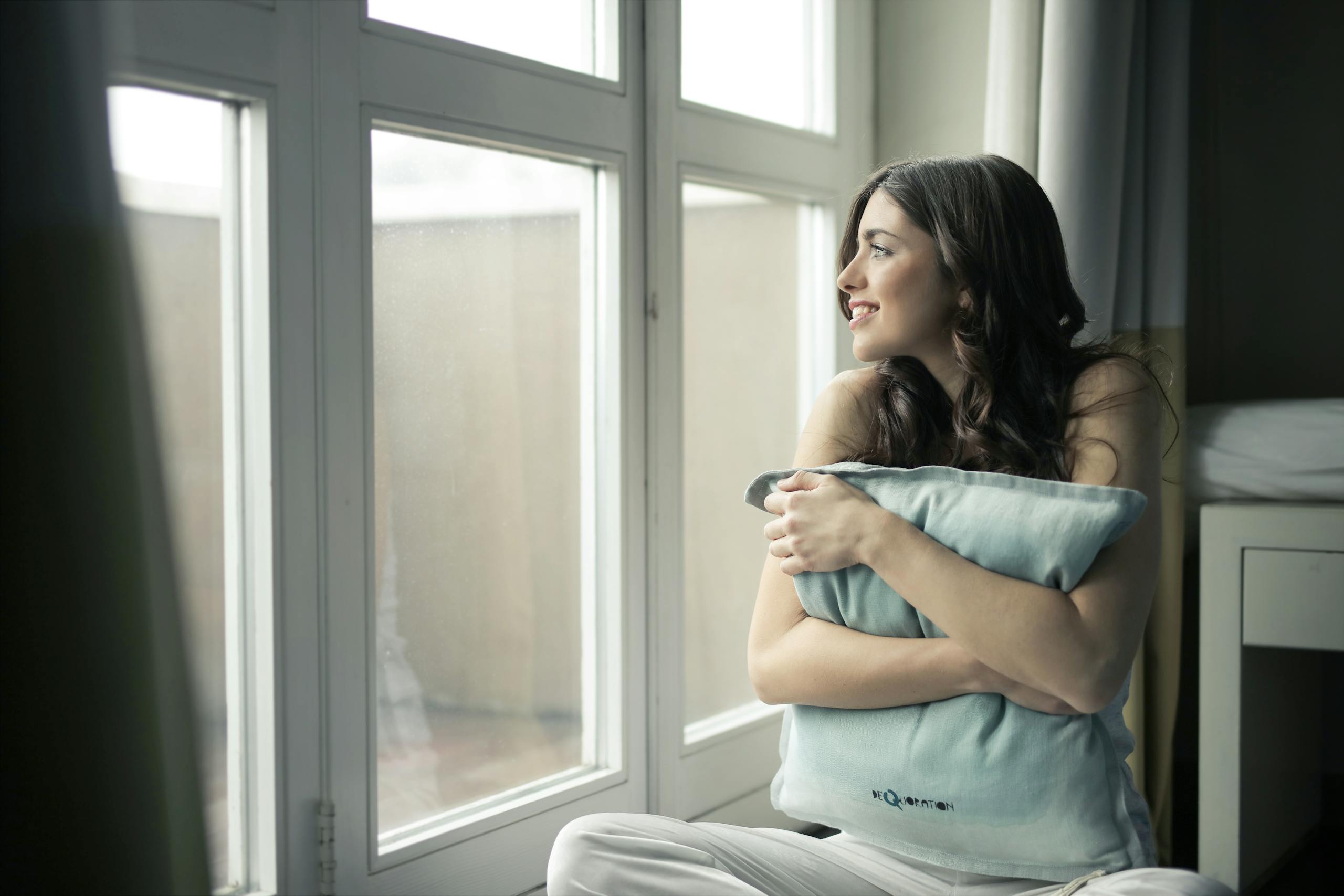
Embracing being introvertida doesn’t mean withdrawing from the world. It means building a life that includes the conditions you actually need to function at your best. It means being honest with yourself about what drains you and what restores you. It means finding the language, whether that’s introvertida, INTJ, HSP, or simply “I’m someone who needs quiet,” and using it without apology.
It also means recognizing that your way of moving through the world has value. The depth you bring to relationships. The care you put into your thinking. The way you notice what others miss. These aren’t consolation prizes for not being extroverted. They’re genuine contributions that the people around you benefit from, whether they name it or not.
Some of the most meaningful feedback I’ve ever received came from clients who said they trusted me because I never oversold. I never promised what I couldn’t deliver. I listened more than I talked. Those weren’t things I was doing strategically. They were just how I operated as an introvert. Turns out, they were also what built lasting professional relationships.
Additional perspectives on the full range of introvert experience, from relationships and work to daily habits and self-understanding, are collected in our General Introvert Life hub, which continues to grow with articles written from the inside out.
Running on empty?
Five drain profiles, each with specific triggers, warning signs, and a recharging playbook.
Take the Free QuizUnder 2 minutes · 8 questions · Free
About the Author
Keith Lacy is an introvert who’s learned to embrace his true self later in life. After 20 years in advertising and marketing leadership, including running agencies and managing Fortune 500 accounts, Keith now channels his experience into helping fellow introverts understand their strengths and build fulfilling careers. As an INTJ, he brings analytical depth and authentic perspective to every article, drawing from both professional expertise and personal growth.
Frequently Asked Questions
What is the difference between introvertida and shy?
Introvertida refers to a personality orientation centered on internal energy and inward processing. Shyness is a form of social anxiety rooted in fear of negative judgment. An introvertida may be completely confident in social situations and simply prefer fewer of them. A shy person may desperately want social connection but feel held back by anxiety. The two traits can overlap, but they’re distinct. Many introvertidas are not shy at all, and some extroverts experience significant shyness.
Can someone be introvertida and still enjoy socializing?
Absolutely. Introversion doesn’t mean disliking people or avoiding social interaction. It means that social interaction costs energy rather than generating it. An introvertida can genuinely enjoy parties, close friendships, professional networking, and lively conversations. The difference is that she’ll need time alone afterward to restore herself, while an extrovert might feel more energized after those same experiences. Enjoying socializing and being introvertida are entirely compatible.
Is introvertida a permanent trait or can it change over time?
Most personality researchers view introversion as a relatively stable trait that remains consistent across a person’s lifetime, though its expression can shift with age, experience, and circumstance. Many people become more comfortable with their introversion as they get older and develop better strategies for working with it. Life events like marriage, parenthood, or career changes can also shift how introversion shows up day to day. The underlying orientation, where you get your energy and how you process the world, tends to remain fairly consistent.
How does being introvertida affect romantic relationships?
Being introvertida shapes how a person communicates, connects, and needs to be loved. Introvertidas often prefer fewer, deeper relationships over a wide social circle, and they tend to express care through thoughtful actions and meaningful conversation rather than constant verbal affirmation. In romantic partnerships, they may need their partner to understand that needing alone time isn’t rejection, it’s restoration. Clear communication about these needs, and finding a partner who respects them, makes an enormous difference in relationship satisfaction.
What’s the best way to support an introvertida in your life?
The most effective thing you can do is take their need for solitude seriously rather than treating it as something to fix. Don’t pressure them to attend every social event, and don’t interpret their quiet as a sign that something is wrong. Give them advance notice before plans change, because spontaneous social demands are particularly draining. Create space for one-on-one conversations rather than always meeting in groups. And when they do share something with you, recognize that they’ve thought carefully about it before saying it. That kind of attentiveness matters to an introvertida more than almost anything else.