ISFP productivity tools work best when they honor how this personality type actually thinks, creates, and recharges. Standard planners, rigid apps, and color-coded systems built for linear thinkers tend to feel suffocating rather than helpful to ISFPs, whose strengths lie in sensory awareness, emotional depth, and aesthetic intuition. The tools covered here are chosen specifically to match that wiring.
What separates a useful productivity tool from a frustrating one, for an ISFP, often comes down to feel. Not just function. An app that looks cold and corporate, a planner with no room for spontaneity, a workflow system that demands you map out every step three weeks in advance: these create friction instead of flow. The right tools get out of the way and let the creative work happen.
If you haven’t confirmed your type yet, take our free MBTI test before going further. Knowing your type with confidence changes how you read every recommendation here.
ISFPs and ISTPs share the Introverted Explorer category, and there’s a lot of common ground worth understanding before we focus specifically on ISFP tools. Our MBTI Introverted Explorers (ISTP and ISFP) hub covers both types in depth, including how their shared introverted sensing interacts with very different feeling and thinking orientations. That context matters when you’re choosing tools, because what energizes an ISFP and what energizes an ISTP often point in opposite directions.

Why Do Most Productivity Systems Feel Wrong to ISFPs?
Most productivity systems were designed by and for a particular kind of thinker: someone who finds comfort in structure, who can commit to a plan three weeks out, and who measures success by tasks completed rather than meaning created. That profile doesn’t describe an ISFP.
ISFPs process the world through their dominant function, Introverted Feeling, which means values, emotional resonance, and personal meaning drive almost every decision. When a productivity system ignores that layer entirely and just hands you a Kanban board with columns labeled “To Do,” “In Progress,” and “Done,” something feels hollow about the whole exercise. You might use it for a week, then abandon it without quite knowing why.
I watched this pattern play out in my agencies more times than I can count. We’d bring in a new project management platform, run the team through training, and within six weeks the creatives had either stopped using it or had bent it into something unrecognizable. The strategists loved it. The designers had migrated back to sticky notes. That wasn’t a discipline problem. It was a mismatch between the tool’s assumptions and how those people actually thought.
A 2019 study published in PubMed Central on self-regulation and goal pursuit found that people are significantly more likely to sustain productive behaviors when those behaviors align with their core values rather than external expectations. For ISFPs, that finding isn’t abstract. It’s the precise reason a beautiful analog planner might outperform a sophisticated digital system: one feels like an extension of who you are, and the other feels like a job requirement.
The Myers-Briggs Foundation describes ISFPs as gentle, sensitive, and open to experience, with a strong need for personal space and creative freedom. Productivity tools that box in rather than open up tend to work against those traits at a fundamental level.
What Analog Tools Actually Support ISFP Creative Productivity?
There’s a reason so many ISFPs gravitate toward paper. Physical tools engage the senses in a way that screens simply don’t. The texture of a page, the weight of a pen, the visual spread of a hand-drawn mind map: these aren’t just aesthetic preferences. They’re part of how ISFPs process and retain information.
The Leuchtturm1917 dotted notebook has become something of a standard recommendation for creative introverts, and for good reason. The dot grid gives enough structure to keep writing organized without imposing rigid lines. Pages are numbered. There’s an index in the front. You can use it as a bullet journal, a sketchbook, a project log, or all three simultaneously. ISFPs tend to resist systems that demand consistency, and this notebook accommodates inconsistency gracefully.
For task capture specifically, the Hobonichi Techo planner deserves attention. It’s a Japanese daily planner printed on Tomoe River paper, which is thin enough to feel almost translucent but handles ink beautifully without bleed-through. Each day gets a full page. There’s no pre-printed hourly schedule forcing you into blocks. You decide how to use the space. That flexibility matters enormously to someone who might spend a morning in deep creative flow and an afternoon handling logistics, with no predictable pattern from one day to the next.
Sticky notes deserve a mention here, not as a joke, but as a genuinely effective tool for ISFPs who think spatially and need to see relationships between ideas. The physical act of moving a note from one cluster to another engages a kind of tactile reasoning that digital drag-and-drop never quite replicates. A large blank wall or a dedicated whiteboard surface turns this into a surprisingly powerful planning method.
Watercolor brush pens, fine liners, and washi tape aren’t frivolous additions to a planning system. For ISFPs, visual differentiation through color and texture is often how meaning gets encoded. A task written in a certain color carries a different emotional weight than the same task written in another. That might sound impractical to a thinking-dominant type, but for ISFPs it’s often the difference between a system they return to and one they forget.

Which Digital Apps Fit the ISFP Workflow Without Creating Friction?
Digital tools aren’t inherently wrong for ISFPs. The problem is that most productivity apps are designed around features rather than feeling. They add complexity in the name of power, and that complexity becomes noise. The apps that tend to work well for ISFPs are the ones that disappear into the background and let the work take center stage.
Notion stands out as one of the most adaptable options available. Unlike rigid project management platforms, Notion is essentially a blank canvas. You build exactly what you need, nothing more. An ISFP might create a simple dashboard with a mood tracker, a creative project log, an inspiration gallery, and a weekly intentions section, all in one place, all designed to their own aesthetic. The cover image and icon customization features aren’t superficial. For someone who is energized by beauty, opening an app that looks like you made it matters.
Craft, a newer note-taking app, has gained a strong following among creative types for its visual approach to documents. Cards can be nested, reordered, and styled in ways that feel more like arranging a physical space than filling in a spreadsheet. ISFPs who work in writing, design, or any field where ideas need room to breathe often find Craft more natural than Notion’s more database-oriented structure.
For task management specifically, Things 3 (Apple ecosystem only) hits a balance that many ISFPs appreciate: it’s structured enough to capture everything, but the interface is clean and warm rather than clinical. The “Today” view keeps focus narrow. The “Upcoming” view lets you see what’s coming without overwhelming the present moment. There’s no gamification, no badges, no social features. Just a calm, well-designed space to hold your commitments.
Todoist works across platforms and offers a similar simplicity, though its aesthetic is more neutral. The natural language input, where you type “finish proposal Friday” and it automatically schedules the task, reduces the friction of capture significantly. ISFPs who struggle with the administrative overhead of productivity systems often find that lowering the capture barrier makes a meaningful difference.
One thing worth noting: ISFPs and ISTPs often get grouped together in productivity conversations because both types resist over-structured systems. But their reasons differ. If you’re curious about how the ISTP version of this resistance plays out, the article on ISTP problem-solving and practical intelligence gives a clear picture of why that type needs tools that support hands-on, in-the-moment thinking rather than long-range planning.
How Should ISFPs Approach Creative Project Management?
Managing creative projects is one of the areas where ISFPs most often run into trouble, not because they lack capability, but because most project management frameworks assume a linear process. Define scope, break into tasks, assign deadlines, execute in order. Creative work rarely moves that way, and ISFP creative work almost never does.
The creative genius that ISFPs bring to their work operates through immersion, intuition, and emotional attunement. A project might sit quietly in the background for days while the ISFP absorbs relevant experiences, then produce a burst of highly integrated output that seems to come from nowhere. Managing that process requires a different framework than a standard Gantt chart.
One approach that works well is what I’d call a “seasons” model. Rather than breaking a project into linear phases, you identify the different modes the project requires, research and gathering, incubation, creation, refinement, and delivery, and you build space for each without forcing them into a strict sequence. A simple Notion board with these as columns, rather than status columns like “to do” and “done,” gives ISFPs a way to see where their energy is without implying they should be moving in a straight line.
Milanote is worth a specific mention here. It’s a visual planning tool designed specifically for creative projects, where you can pin images, notes, links, and sketches to a freeform board. For an ISFP working on anything visual, from brand identity to interior design to photography projects, Milanote functions more like a physical mood board than a project tracker. That aesthetic and spatial orientation makes it genuinely useful rather than just another app to maintain.
Deadline management is where ISFPs most often need external support. The American Psychological Association’s guidance on stress management consistently points to the value of breaking large goals into smaller, time-bound steps as a way of reducing anxiety and maintaining momentum. For ISFPs, what matters isn’t adding more deadlines. It’s creating gentle checkpoints that feel like natural pauses rather than pressure points. A weekly “where am I?” review, framed as reflection rather than accountability, tends to work far better than a daily task list.

What Focus Tools Help ISFPs Protect Deep Work Time?
ISFPs do their best work when they can sink fully into a task without interruption. That’s not laziness or inefficiency. It’s how depth-oriented, feeling-driven personalities process and create. The challenge is that most modern work environments are engineered for constant interruption, and the digital tools that were supposed to help often make it worse.
I spent years running agencies where the open-office layout was considered a progressive design choice. The theory was that proximity created collaboration. What it actually created, at least for the introverts on my team, was a kind of low-grade cognitive exhaustion that accumulated over weeks and showed up as missed deadlines and creative blocks. The extroverts thrived. The ISFPs and INFPs quietly burned out.
Focus tools that actually help ISFPs tend to work in two directions: blocking out digital noise and creating a sensory environment that supports concentration. On the blocking side, Freedom is one of the most effective options available. It runs across all your devices simultaneously, so you can’t simply switch from your laptop to your phone when the urge to check something strikes. Scheduled focus sessions, set up in advance, remove the willpower requirement entirely.
For ambient sound, Brain.fm uses AI-generated audio specifically designed to support focus states rather than just mask background noise. Many ISFPs find that music with lyrics pulls their attention into the words, while pure silence feels uncomfortably stark. Brain.fm occupies a middle ground that many creative introverts find genuinely effective. Endel is a similar option with a more minimal, aesthetic interface that tends to appeal to visually oriented ISFPs.
Time-tracking for awareness rather than accountability is another tool worth considering. Toggl Track lets you see where your hours actually go without imposing a judgment framework. Many ISFPs are surprised to discover that their “unproductive” days often contain significant stretches of genuine focused work that simply didn’t feel productive because the output wasn’t immediately visible. Seeing the data can recalibrate that perception in a meaningful way.
The Pomodoro technique, working in 25-minute focused intervals with short breaks, gets recommended constantly in productivity circles. For ISFPs, it sometimes works and sometimes doesn’t, depending on the type of work. Creative flow states often take longer than 25 minutes to reach, so interrupting them on a timer can be counterproductive. A modified version, working in 45 to 90-minute blocks with longer recovery periods, tends to fit the ISFP creative rhythm more naturally.
How Do ISFP Productivity Needs Connect to Career and Work Environment Choices?
Productivity tools exist within a larger context: the kind of work you’re doing and the environment you’re doing it in. For ISFPs, choosing the right tools is often inseparable from choosing the right career path and work structure. The best planner in the world won’t compensate for a job that fundamentally conflicts with how you’re wired.
The guide to ISFP creative careers covers this in depth, including how ISFPs can build professional lives that align with their values rather than fighting against them. What’s worth noting here is that the productivity tools you need are partly determined by the work structure you’re operating within. A freelance ISFP photographer needs different systems than an ISFP working in a corporate design department, even though both are creative roles.
The Bureau of Labor Statistics Occupational Outlook Handbook consistently shows strong growth projections in fields where ISFPs tend to excel, including arts, design, healthcare support, and counseling. As more ISFPs move into these roles, the question of sustainable productivity becomes increasingly important. Burnout in creative fields is common precisely because the tools and systems available were designed for different cognitive profiles.
Remote and hybrid work arrangements have been significant for ISFPs. Having control over the sensory environment, the lighting, the sounds, the physical arrangement of a workspace, makes a real difference to someone whose productivity is so closely tied to how a space feels. If you’re an ISFP currently in a role that requires constant in-person collaboration with little private time, that’s worth addressing directly, not just through better apps, but through conversations about how you work best.
Comparing ISFP needs to ISTP needs here is instructive. Both types value autonomy and resist micromanagement, but ISTPs tend to be energized by physical problem-solving and hands-on challenges in ways that ISFPs aren’t. The challenges ISTPs face in desk-bound roles stem from a different source than ISFP struggles, even when the surface symptoms look similar. Understanding that distinction helps you choose tools and structures that address your actual needs rather than a generalized introvert profile.
What Physical Workspace Tools Make the Biggest Difference for ISFPs?
The workspace itself is a productivity tool. For ISFPs, perhaps more than any other type, the physical environment directly influences the quality of creative output. A space that feels aesthetically coherent and personally meaningful isn’t a luxury. It’s infrastructure.
Lighting is the single highest-impact change most people can make to a workspace, and it’s chronically underestimated. Overhead fluorescent lighting, which still dominates most offices, has been associated in a 2011 National Institutes of Health study with increased eye strain and reduced alertness over extended work periods. Warm, adjustable LED lighting, particularly desk lamps with dimmer controls, allows ISFPs to shift the mood of a space to match the work. Bright and clear for detail-oriented tasks, softer and warmer for reflective or creative work.
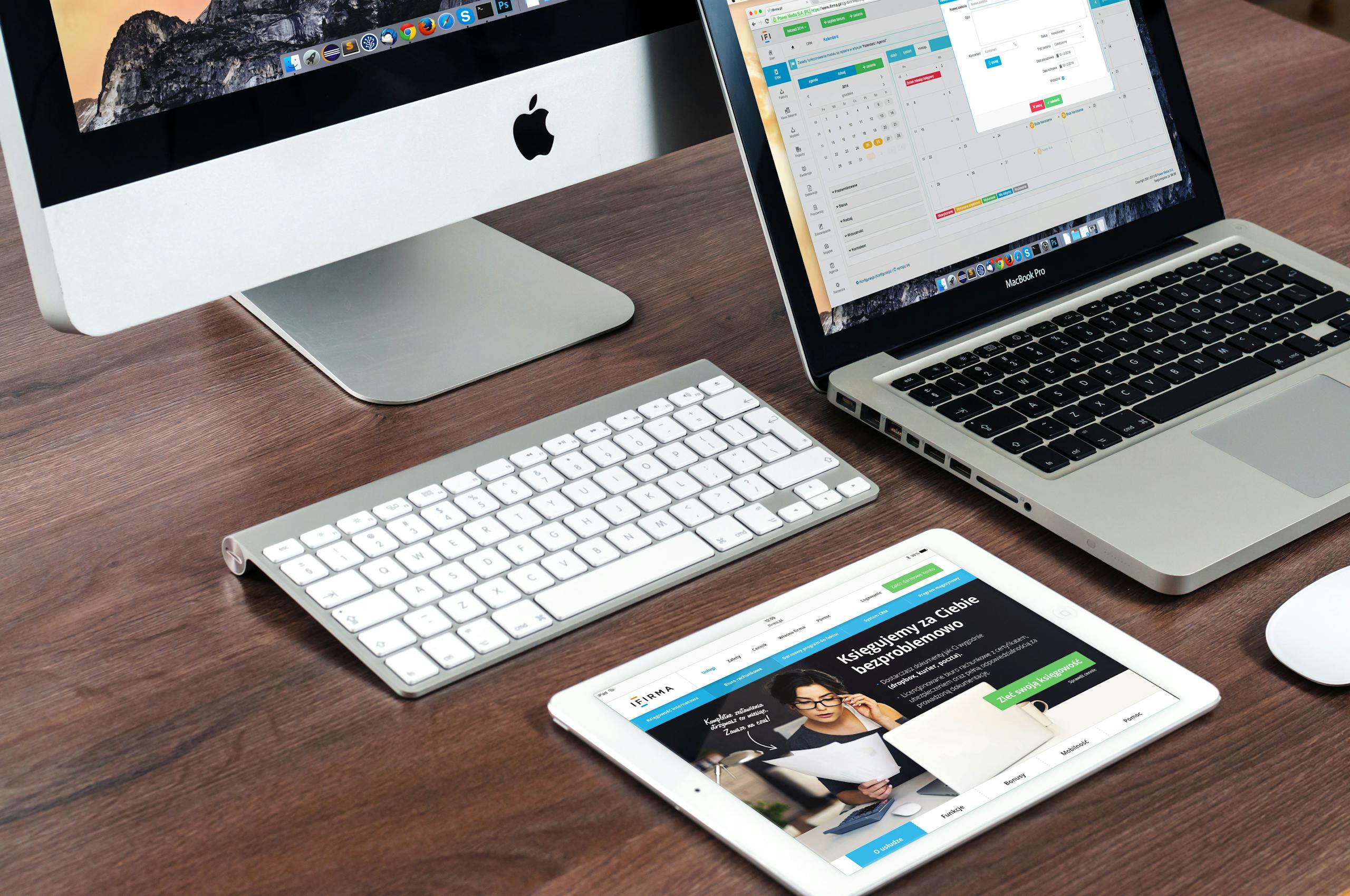
A quality display matters for ISFPs who work visually. A larger screen, or a dual-monitor setup, reduces the cognitive load of constantly switching between windows and gives creative work room to breathe. Color accuracy is worth investing in if your work involves any visual output, from photography to graphic design to video editing.
Noise-canceling headphones are close to essential for ISFPs who work in shared spaces. The Sony WH-1000XM5 and the Bose QuietComfort 45 are consistently rated at the top of their category. Beyond just blocking noise, they signal to others that you’re in focused work mode, which reduces interruptions without requiring you to have an awkward conversation about needing quiet.
Plants, artwork, and objects with personal meaning aren’t decorative extras. They’re part of what makes a workspace feel safe and generative for an ISFP. I’ve had team members over the years who could produce exceptional work in a sterile conference room and others who visibly struggled in the same environment. The ISFPs on my teams consistently performed better when they had some control over their immediate surroundings. That observation has been reinforced by 16Personalities’ research on type and environment, which notes that feeling types particularly benefit from environments that align with their values and aesthetic sensibilities.
An ergonomic setup matters too, not just for physical health but for sustained focus. A chair that supports good posture, a monitor at eye level, a keyboard that feels comfortable under your hands: these reduce the low-level physical discomfort that gradually erodes concentration over a long work session. ISFPs are often highly attuned to physical sensation, which means discomfort that a thinking-dominant type might push through can be genuinely distracting for someone with strong sensory awareness.
How Can ISFPs Use Tools to Manage Emotional Energy and Avoid Burnout?
Emotional energy management is a productivity topic that most productivity guides ignore entirely. For ISFPs, it’s central. This type processes emotion deeply and continuously. A difficult conversation, a piece of critical feedback, or even a creative project that isn’t coming together can create an emotional weight that makes forward movement genuinely hard.
Journaling tools are worth taking seriously in this context. Day One is a beautifully designed digital journal app that makes the act of writing feel intentional rather than administrative. The end-of-day reflection habit, even just five minutes of honest writing about what felt good and what felt hard, helps ISFPs process the emotional residue of a workday rather than carrying it into the next one. Over time, those entries also reveal patterns: which types of work energize, which drain, which environments support focus, and which undermine it.
Mood tracking apps like Bearable or Daylio let you log emotional state alongside activities and sleep, which can surface connections that aren’t obvious in the moment. An ISFP who consistently rates their energy low on days after heavy client-facing work might use that data to advocate for a different meeting structure, or to schedule recovery time more intentionally.
I want to be honest about something here. During my agency years, I didn’t have language for what I now understand as energy management. I just knew that certain weeks left me depleted in a way that a weekend didn’t fully repair. I attributed it to working hard. What I understand now is that I was consistently operating in modes that conflicted with my introvert wiring, and no amount of caffeine or willpower was going to compensate for that structural mismatch. The tools I’m describing here aren’t about squeezing more productivity out of yourself. They’re about building a sustainable rhythm that doesn’t require you to override your own nature constantly.
The ISFP personality shares certain traits with other introverted types while differing in important ways. Comparing notes with ISTPs, who share the introverted sensing function, can be useful. Looking at the signs of an ISTP personality type alongside your own experience clarifies where the types converge and where they diverge, which helps you filter advice that’s meant for a different profile.
What Does a Complete ISFP Productivity System Actually Look Like?
Pulling all of this together into a coherent system requires resisting the temptation to adopt every tool mentioned above. The most effective ISFP productivity setup is a minimal one, chosen deliberately and allowed to evolve over time. More tools create more maintenance overhead, and maintenance overhead is exactly the kind of friction that causes ISFPs to abandon systems entirely.
A starter system worth considering: one physical notebook for daily capture and reflection (Leuchtturm1917 or Hobonichi), one digital app for project-level organization (Notion or Craft), one focus tool for blocking distraction during deep work sessions (Freedom), and one journaling app for end-of-day emotional processing (Day One). That’s four tools total. Each serves a distinct function. None overlap significantly.
The physical workspace layer sits underneath all of this: adjustable lighting, noise-canceling headphones, a display large enough to work comfortably, and enough personal objects to make the space feel like yours. These aren’t optional enhancements. For an ISFP, they’re foundational.
The review rhythm matters as much as the tools themselves. A brief daily check-in, five to ten minutes of looking at what’s on deck and setting an intention for the day, keeps the system from becoming something you only look at when things go wrong. A longer weekly review, perhaps thirty minutes on Friday afternoon or Sunday evening, gives you a chance to assess the emotional texture of the week alongside the practical output.
Understanding how ISFPs differ from closely related types also sharpens your tool choices. The unmistakable personality markers of ISTPs make clear how much the thinking versus feeling distinction shapes everything from communication style to creative process. Tools that work brilliantly for an ISTP’s analytical, hands-on approach may feel sterile and impersonal to an ISFP whose work is driven by values and emotional meaning.
The goal of a productivity system, for any type, is to spend more time doing the work that matters and less time managing the logistics around it. For ISFPs, that means choosing tools that feel like an extension of who you are rather than a constraint imposed from outside. When the system fits, you stop thinking about the system. You just work.
The 16Personalities research on personality and team communication reinforces something I’ve observed directly: feeling types like ISFPs are most productive in environments where their contributions are recognized as meaningful, not just efficient. The right tools support that by reducing administrative noise and making space for the kind of thoughtful, values-driven work that ISFPs genuinely excel at.
Find more resources on both introverted explorer types in our complete MBTI Introverted Explorers (ISTP and ISFP) hub.
About the Author
Keith Lacy is an introvert who’s learned to embrace his true self later in life. After 20 years in advertising and marketing leadership, including running agencies and managing Fortune 500 accounts, Keith now channels his experience into helping fellow introverts understand their strengths and build fulfilling careers. As an INTJ, he brings analytical depth and authentic perspective to every article, drawing from both professional expertise and personal growth.
Frequently Asked Questions
What makes a productivity tool suitable for an ISFP personality type?
A productivity tool works well for ISFPs when it offers flexibility rather than rigid structure, allows for aesthetic personalization, and doesn’t demand long-range planning that conflicts with how this type naturally works. ISFPs are driven by values and emotional meaning, so tools that feel cold, clinical, or bureaucratic tend to get abandoned quickly. The best options are minimal, visually appealing, and easy to adapt as needs change.
Should ISFPs use digital or analog productivity tools?
Many ISFPs benefit from a combination of both. Physical tools like dotted notebooks engage the senses in a way that supports the tactile, sensory orientation of this type. Digital tools like Notion or Things 3 offer flexibility and accessibility for project-level organization. The most effective approach is usually a small, intentional set of tools that serve distinct functions rather than a complex all-digital or all-analog system.
How can ISFPs manage creative project deadlines without feeling overwhelmed?
ISFPs tend to work better with gentle checkpoints framed as reflective pauses rather than hard accountability deadlines. A “seasons” model of project management, which identifies different modes of work like gathering, incubation, creation, and refinement, accommodates the non-linear nature of ISFP creative process. Visual tools like Milanote support this approach by allowing ideas to exist in a spatial, flexible format rather than a rigid task list.
What focus tools work best for ISFPs during deep creative work?
Freedom for blocking digital distractions across all devices, Brain.fm or Endel for ambient audio that supports concentration without pulling attention, and noise-canceling headphones for controlling the physical sound environment are all strong choices. Modified work intervals of 45 to 90 minutes tend to suit ISFPs better than the standard 25-minute Pomodoro blocks, since creative flow states often require longer ramp-up periods.
How does the ISFP approach to productivity differ from the ISTP approach?
Both types resist rigid structure and value autonomy, but their underlying motivations differ significantly. ISFPs are driven by Introverted Feeling, meaning personal values and emotional resonance shape how they work and what tools they’ll sustain. ISTPs are driven by Introverted Thinking, meaning logical efficiency and hands-on problem-solving take priority. An ISTP might thrive with a streamlined task management system focused on execution, while an ISFP needs tools that also honor the emotional and aesthetic dimensions of their work.