An ISFP workspace setup works best when it reflects personal meaning, sensory comfort, and creative freedom rather than rigid productivity systems. People with this personality type think and create through their senses, and the physical environment around them either fuels that process or quietly drains it.
Getting the environment right matters more for ISFPs than almost any other type. A cluttered, impersonal, or sterile workspace doesn’t just feel uncomfortable, it actually interferes with the way this personality type accesses their best thinking. The products and tools in this guide are chosen with that reality in mind.
If you’re not yet sure whether ISFP fits your personality, you can take our free MBTI test before reading further. Understanding your type makes every recommendation in this guide more useful.
ISFPs and ISTPs share a lot of common ground as introverted sensing types who process the world through direct experience rather than abstract theory. Our MBTI Introverted Explorers hub covers both types in depth, including how their different cognitive priorities shape the way they work, create, and recharge. This article zeroes in on the ISFP experience specifically, with product recommendations built around how this type actually functions at their best.
Why Does the Physical Environment Matter So Much for ISFPs?
Most workspace advice treats environment as secondary. Get the right apps, build the right habits, follow the right schedule. For ISFPs, that hierarchy is backwards.
Dominant Introverted Feeling paired with auxiliary Extraverted Sensing means this personality type experiences the world through a constant, rich stream of sensory input filtered through deep personal values. Sound, light, texture, color, and spatial arrangement aren’t background noise. They’re the medium through which ISFPs think. A workspace that feels wrong creates a kind of low-grade friction that never quite goes away, and it shows up in the work.
I noticed something similar in my agency years, though I’m an INTJ, not an ISFP. We had a creative director who was one of the most gifted visual thinkers I’d ever worked with. Her output was extraordinary when she had her corner of the studio arranged the way she wanted it, plants, specific lighting, a particular playlist running softly. When we moved offices and she spent two weeks working from a generic hot desk, her work visibly suffered. Not because she was less talented. Because the environment was actively working against her. I didn’t fully understand the mechanism at the time, but looking back, I recognize it clearly now.
A 2011 study published in PubMed Central found that environmental factors including noise, light quality, and spatial control significantly affect cognitive performance and emotional regulation. For a type already doing significant internal emotional processing, that effect is amplified.

What Lighting Products Actually Support ISFP Creative Work?
Harsh overhead fluorescent light is the enemy of ISFP productivity. It flattens the visual environment and creates a kind of sensory monotony that dulls creative thinking. Warm, layered, controllable lighting is what this personality type needs.
Warm Desk Lamps With Dimmer Control
A lamp with adjustable color temperature and brightness lets ISFPs shift the mood of their workspace throughout the day. Cooler, brighter light for focused detail work. Warmer, dimmer light for ideation and creative flow. The BenQ e-Reading LED Desk Lamp is worth considering here. It offers a wide range of color temperatures, a large illumination area that reduces eye strain, and a clean design that doesn’t crowd the desk visually.
Alternatively, the Elgato Key Light is popular among creatives for its precise color temperature control via app. It’s designed for video work but functions beautifully as a primary workspace light, especially for ISFPs who work with visual content or spend long hours at a screen.
Ambient and Accent Lighting
ISFPs often benefit from layered lighting that creates depth and warmth in a space rather than a single bright source. Philips Hue smart bulbs throughout the room allow full color and intensity control from a phone or voice assistant. A warm Edison-style bulb in a corner lamp adds character. LED strip lighting behind a monitor or along shelving creates a soft glow that makes the space feel inhabited and personal rather than clinical.
Natural light is worth protecting too. If the workspace has a window, positioning the desk to receive indirect daylight without screen glare makes a significant difference. A sheer curtain diffuses harsh direct sun while keeping the space feeling open and connected to the outside world, something ISFPs tend to value.
Which Sound Products Help ISFPs Focus Without Feeling Trapped?
Sound is a powerful lever for ISFPs. The right audio environment can shift them into a creative flow state. The wrong one, whether too chaotic or too sterile, creates a persistent low-level distraction that’s hard to identify but easy to feel.
Noise-Canceling Headphones
A quality pair of noise-canceling headphones is probably the single highest-impact purchase an ISFP can make for their workspace. Not because they need silence, but because they need control. The Sony WH-1000XM5 remains one of the best options for extended creative sessions. The noise cancellation is genuinely excellent, the sound quality is warm and full without being fatiguing, and the fit is comfortable enough for hours of wear.
The Bose QuietComfort 45 is another strong choice, particularly for people who find the Sony’s bass response a bit heavy. Both allow ambient sound passthrough modes, which ISFPs often prefer when they want a gentle connection to their environment without full immersion in background noise.
Desktop Speakers for a More Open Feel
Some ISFPs find headphones too isolating for extended work. A pair of quality desktop speakers fills the room with sound in a way that feels more natural and less confining. The Audioengine A2+ compact powered speakers offer impressive audio quality for their size and connect easily via USB or Bluetooth. Paired with a curated playlist or a service like Brain.fm, they create an audio environment that supports sustained focus without demanding attention.

What Analog Tools Do ISFPs Actually Use and Love?
ISFPs often have a complicated relationship with purely digital workflows. The screen can feel like a layer of glass between them and their actual thinking. Analog tools, especially ones with texture, weight, and visual character, give this personality type a more direct connection to their creative process.
This connects to something I’ve observed across years of working with creative professionals. The people who did their best conceptual thinking rarely started at a keyboard. They started with a pen, a marker, a sticky note, a whiteboard. The physical act of making marks seemed to access something that typing didn’t. As someone who explored this with my own teams, I came to believe the medium genuinely shapes the thinking, not just records it.
Notebooks and Sketchbooks
ISFPs tend to be selective about their notebooks in a way that might seem excessive to other types, but makes complete sense once you understand how sensory experience shapes their thinking. The paper texture, the cover material, the binding style, all of it matters. The Leuchtturm1917 dotted notebook is a perennial favorite for its quality paper, subtle dot grid that doesn’t constrain visual thinking, and satisfying hardcover feel. The Moleskine Art Sketchbook is worth considering for ISFPs who blend writing and drawing in their process.
For those who prefer a looser, more spontaneous feel, the Rhodia Webnotebook offers exceptionally smooth paper that works beautifully with fountain pens, felt tips, and even light watercolor. Having multiple notebooks for different purposes, one for daily notes, one for creative ideation, one for personal reflection, is a pattern many ISFPs naturally fall into and shouldn’t feel guilty about.
Pens and Markers That Feel Good to Use
A pen that writes smoothly and feels balanced in the hand is not a trivial consideration for an ISFP. The Uni-ball Jetstream is consistently praised for its smooth, fast-drying ink and comfortable grip. For those drawn to more expressive writing tools, the Pilot Metropolitan fountain pen offers an entry point into fountain pens without a significant investment. The tactile experience of a good fountain pen often resonates with ISFPs who find that slowing down slightly to write actually improves their thinking quality.
Tombow dual brush markers are worth mentioning for ISFPs who use color in their planning or creative work. The brush tip allows expressive, variable line weight that feels more like drawing than highlighting, which tends to appeal to this type’s aesthetic sensibility.
How Should ISFPs Approach Digital Tools Without Losing Their Creative Flow?
ISFPs can thrive with digital tools, but they tend to work best with software that feels intuitive, visually clean, and flexible rather than rigid. The personality type described by the Myers-Briggs Foundation as leading with Introverted Feeling and auxiliary Extraverted Sensing needs tools that respond to their input rather than imposing a predetermined structure on their thinking.
Visual Project Management
Notion and Milanote are both worth exploring, though they suit different ISFP working styles. Notion offers flexibility and can be shaped into almost any organizational structure, which appeals to ISFPs who want to build something that genuinely reflects how their mind works. Milanote is more visually oriented, essentially a digital mood board and project space that feels closer to analog thinking. For ISFPs working in creative fields, Milanote often feels more natural from the start.
Trello’s card-based visual layout also resonates with many ISFPs. The ability to move tasks around visually, add images and color labels, and see a project as a spatial arrangement rather than a linear list aligns well with how this type processes information. The creative careers ISFPs often pursue frequently involve managing multiple projects simultaneously, and a visual board system handles that more gracefully than a traditional to-do list.
Speaking of which, if you’re exploring how your ISFP strengths translate into professional life, the article on ISFP creative careers and how artistic introverts build thriving professional lives covers this territory thoroughly.
Drawing and Design Software
For ISFPs who work visually, Procreate on iPad remains one of the most intuitive and expressive digital drawing tools available. The Apple Pencil integration creates something close to an analog drawing experience on a digital surface. Adobe Fresco offers similar functionality with a broader brush library and tighter integration with the Adobe Creative Suite for those already working in that ecosystem.
Canva serves ISFPs who need to produce polished visual content without a steep learning curve. Its drag-and-drop interface and extensive template library make it genuinely accessible, and the results look professional without requiring technical design skills.
What Physical Comfort Products Make a Real Difference for ISFPs?
Physical discomfort is a particular productivity killer for ISFPs because of how directly they experience their sensory environment. An uncomfortable chair or a desk at the wrong height doesn’t just cause physical strain. It creates a persistent sensory irritant that pulls attention away from creative work.
As noted by Truity’s research on Extraverted Sensing, types who lead with or rely heavily on Se are especially attuned to physical sensations and environmental input. For ISFPs, whose auxiliary function is Extraverted Sensing, this means physical comfort in the workspace isn’t a luxury consideration. It’s a functional one.
Ergonomic Seating
The Herman Miller Aeron remains the benchmark for ergonomic office chairs, and for good reason. Its adjustability, lumbar support, and breathable mesh back make long creative sessions significantly more comfortable. That said, the price point is real. The Branch Ergonomic Chair and the Autonomous ErgoChair Pro both offer strong ergonomic features at a more accessible price and are worth considering for ISFPs setting up a workspace on a tighter budget.
Some ISFPs find that alternating between a standard chair and a floor cushion or yoga ball for shorter periods works well for them. The variety in physical position seems to support cognitive variety, which aligns with how Extraverted Sensing functions in practice.
Desk Setup and Standing Options
A sit-stand desk gives ISFPs the physical flexibility to shift position as their energy and focus shift throughout the day. The Flexispot E7 and the Uplift V2 are both well-regarded options with smooth, quiet motors and solid build quality. For ISFPs who move between creative and administrative tasks, having the option to stand during more mechanical work and sit during deep creative focus can make a meaningful difference in sustained energy.
A monitor arm frees up desk surface and allows precise positioning of the screen, which matters for ISFPs who are visually sensitive to the relationship between their eyes, their screen, and their workspace as a whole. The Ergotron LX is the most consistently recommended option at a reasonable price point.
How Do ISFPs Create a Workspace That Reflects Who They Are?
Personalization isn’t decoration for ISFPs. It’s function. A workspace that contains objects with personal meaning, visual beauty, and sensory texture creates an environment that actively supports the internal emotional processing this personality type relies on for their best work.
This is something I’ve come to understand more deeply since leaving the agency world and spending more time writing and thinking. My own workspace has evolved from a fairly generic executive setup into something that genuinely reflects my thinking style. A particular piece of art that I return to visually when I’m stuck on a problem. A small collection of books that I pull from regularly. Objects from meaningful professional moments. None of it is random, and none of it is purely aesthetic. Each thing there does something for how I think.
For ISFPs, that process is even more central. The creative genius that ISFPs bring to their work is deeply connected to their personal values and their sensory relationship with the world around them. A workspace that honors that connection amplifies it.
Plants and Natural Elements
Living plants are consistently cited by ISFPs as meaningful workspace additions, and there’s solid reasoning behind this beyond aesthetics. A 2015 study from the University of Exeter found that workspaces enriched with plants showed a 15% increase in productivity compared to lean workspaces. For ISFPs whose Extraverted Sensing is attuned to natural sensory input, plants provide a kind of organic visual texture that feels grounding rather than distracting.
Low-maintenance options like pothos, snake plants, or ZZ plants work well for busy ISFPs who want the benefit without significant upkeep. A small succulent arrangement on the desk surface adds visual interest without demanding much attention.
Art, Color, and Meaningful Objects
A small piece of original art, a print from an artist the ISFP admires, or even their own work displayed in the workspace creates a visual anchor that supports the emotional processing this type does constantly. Color choices matter too. Warm, muted tones tend to support the calm, inward-focused state ISFPs need for deep work. Bold, saturated colors can energize a space but may be better reserved for accent elements rather than dominant surfaces.
Objects with personal history carry particular weight for ISFPs. A gift from someone meaningful, a souvenir from a significant experience, a tool inherited from a creative mentor. These aren’t clutter. They’re environmental anchors that connect the workspace to the deeper value system that drives this personality type’s best work.
What Can ISFPs Learn From How ISTPs Approach Their Workspace?
ISFPs and ISTPs share the introverted sensing foundation, but they arrive at their workspaces from very different directions. Understanding those differences can help ISFPs borrow what’s useful without abandoning what makes their own approach work.
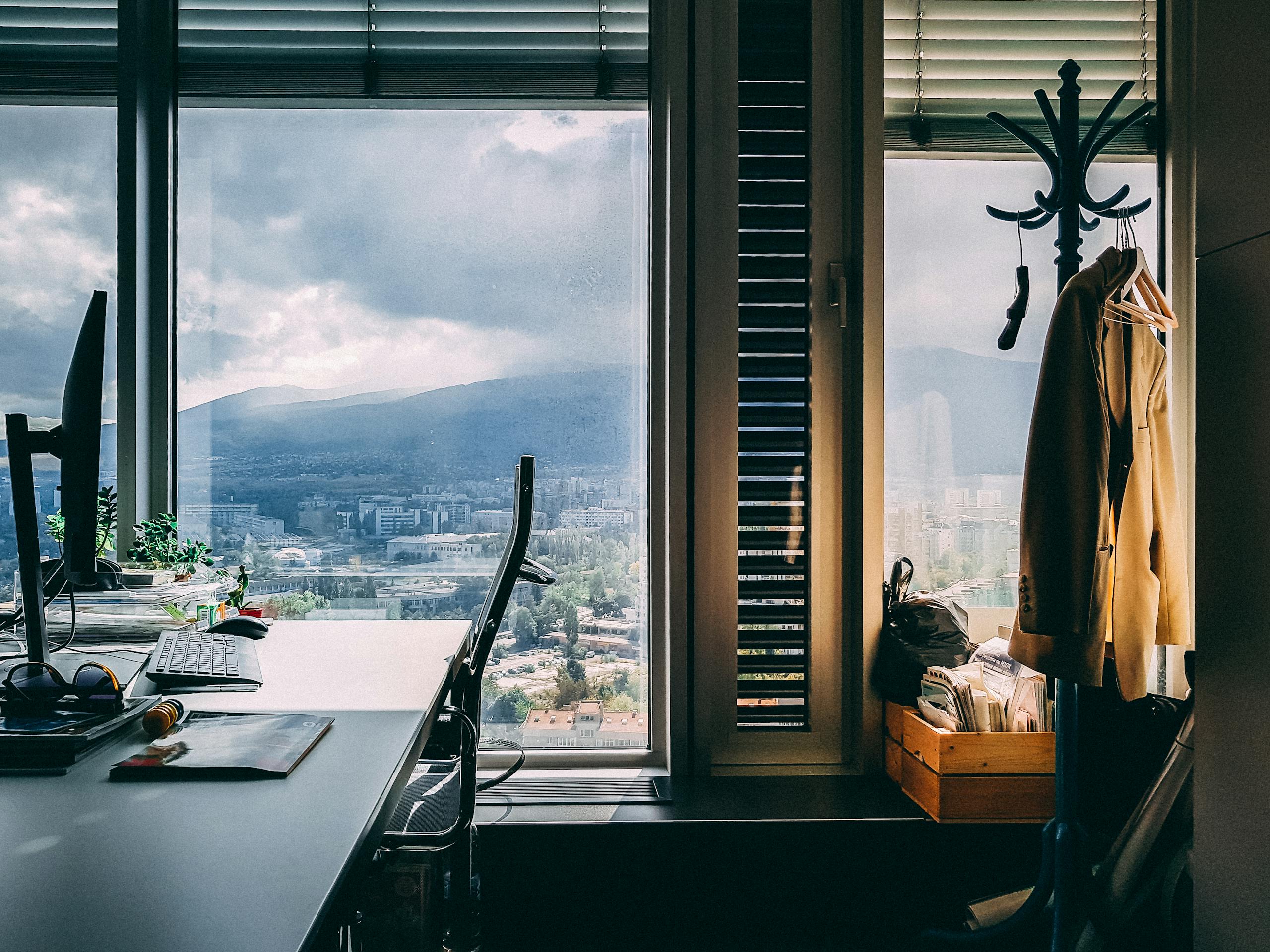
ISTPs tend toward functional minimalism. Their workspace is a tool, and every object in it should serve a clear purpose. The unmistakable markers of ISTP personality include a preference for efficiency over aesthetics and a deep discomfort with anything that adds complexity without adding value. Their workspaces often look stripped down to an outside observer, but every element is precisely chosen for what it does.
ISFPs can genuinely learn from this. The tendency toward personalization can sometimes tip into visual noise that actually interferes with focus. Borrowing the ISTP instinct to ask “does this thing earn its place here?” when curating the workspace can help ISFPs maintain the personal meaning they need without creating sensory overload.
The practical intelligence that defines ISTP problem-solving also offers something useful for ISFPs setting up their workspace. Rather than planning the perfect setup in advance, the ISTP approach would be to start with the basics, observe what’s actually working and what isn’t, and adjust iteratively. ISFPs who spend weeks researching the ideal desk setup before buying anything might find that actually working in a space for a month reveals more about what they need than any amount of advance planning.
That said, the ISFP’s emphasis on personal meaning and sensory quality is a genuine strength, not a weakness to be corrected. The differences between how these two types work are explored further in the context of ISTP personality type signs, which illuminates just how differently two introverted sensing types can process the same environment.
It’s also worth noting what doesn’t translate between types. The ISTP’s comfort with sparse, utilitarian environments doesn’t map onto ISFP needs. Research from 16Personalities on personality and communication highlights how differently these types process interpersonal and environmental input. What feels clean and focused to an ISTP can feel cold and uninspiring to an ISFP. The workspace needs to feel like theirs.
There’s also a useful contrast in how these types experience desk-based work over time. The article on ISTPs trapped in desk jobs and why it fails them explores how ISTPs can struggle with sedentary, repetitive environments in ways that ISFPs, who draw more deeply from internal emotional resources, may handle somewhat differently, though ISFPs have their own version of this challenge when the work lacks personal meaning or creative expression.
What Organization Products Work With ISFP Thinking Instead of Against It?
Standard productivity organization systems are often designed for linear, sequential thinkers. ISFPs don’t naturally operate that way. Their thinking tends to be associative, values-driven, and responsive to present-moment experience. Organization tools that work for this type need to accommodate that rather than fight it.
Visual and Spatial Organization
A large cork board or magnetic whiteboard on the wall near the desk gives ISFPs a spatial thinking surface that can hold ideas, images, references, and work-in-progress materials without forcing them into a rigid hierarchy. The ability to pin something up, step back, and see how things relate spatially is genuinely useful for how this type processes complex creative work.
Desktop organizers that keep frequently used tools visible and accessible, rather than hidden in drawers, tend to work better for ISFPs. Out of sight often means out of mind for a type that relies on sensory cues to prompt action. A simple bamboo or ceramic desk organizer that holds pens, scissors, and small tools while looking attractive enough to keep on the surface is more useful than a drawer full of supplies that never gets opened.
File and Paper Management
ISFPs who work with physical materials often struggle with paper management because the standard filing system feels both arbitrary and disconnected from how they actually think about their work. A color-coded folder system, where colors carry personal meaning rather than following a generic convention, tends to work better. Pairing this with a desktop file holder that keeps active projects visible rather than filed away reduces the cognitive overhead of remembering where things are.
For digital file management, a tool like Eagle (for visual asset organization) or even a well-structured Notion database with cover images can make the organizational system feel more aligned with how ISFPs naturally categorize and retrieve information. The goal is a system that feels intuitive enough to maintain without effort, because an organizational system an ISFP finds aesthetically unpleasant or emotionally neutral simply won’t get used consistently.
The American Psychological Association’s research on environment and wellbeing supports the broader point here: environments that feel personally meaningful and emotionally resonant support sustained engagement and reduce cognitive fatigue. For ISFPs, this applies directly to how their workspace is organized, not just how it looks.

How Do ISFPs Protect Their Energy in a Workspace That Supports Deep Work?
ISFPs do their best creative work in states of calm, unhurried focus. External pressure, interruption, and the ambient stress of a disorganized or overstimulating environment all erode access to that state. The workspace setup plays a direct role in protecting it.
Boundary-setting tools matter here. A simple “do not disturb” indicator for shared living or working spaces, whether a physical sign, a status light like the Luxafor Flag, or simply a pair of headphones worn visibly, signals to others that focused work is happening. ISFPs often struggle with asserting this boundary verbally, so having a physical indicator that does it passively reduces the social friction around protecting deep work time.
The Psychology Today overview of introversion notes that introverts tend to experience overstimulation more acutely than extroverts, and that recovery from overstimulation requires genuine quiet time. For ISFPs, whose emotional processing is particularly active, this means the workspace needs to function as a genuine refuge, not just a functional room. The products and arrangements in this guide are chosen with that in mind.
A small essential oil diffuser with calming scents can contribute to the sensory environment in a way that signals to the nervous system that this is a safe, focused space. It sounds minor, but for a type as sensorially attuned as ISFPs, the olfactory dimension of the workspace is genuinely part of the experience. Lavender, eucalyptus, and cedarwood are commonly cited as supporting calm focus rather than energized alertness, which tends to suit ISFP deep work states better.
Workspace rituals also serve a protective function. A consistent sequence of actions that signals the transition from general life into focused creative work, making a specific tea, arranging the desk a particular way, putting on a particular playlist, helps ISFPs access their best working state more reliably. The ritual itself becomes a sensory cue that the nervous system recognizes and responds to over time.
Explore more resources on introverted personality types and how they work in our complete MBTI Introverted Explorers (ISTP and ISFP) hub.
About the Author
Keith Lacy is an introvert who’s learned to embrace his true self later in life. After 20 years in advertising and marketing leadership, including running agencies and managing Fortune 500 accounts, Keith now channels his experience into helping fellow introverts understand their strengths and build fulfilling careers. As an INTJ, he brings analytical depth and authentic perspective to every article, drawing from both professional expertise and personal growth.
Frequently Asked Questions
What is the most important element of an ISFP workspace setup?
Sensory comfort and personal meaning matter more than any specific product or system. ISFPs think and create through their senses, so a workspace that feels aesthetically right, physically comfortable, and personally resonant will support their best work more effectively than any productivity tool or organizational method applied in an environment that feels wrong. Start with lighting, sound control, and at least a few objects that carry genuine personal significance before adding anything else.
Do ISFPs work better with analog or digital tools?
Many ISFPs find that a blend of both serves them best. Analog tools, particularly quality notebooks and pens, give this personality type a more direct, tactile connection to their thinking process that digital tools can’t fully replicate. Digital tools, especially visually oriented ones like Milanote or Procreate, work well for ISFPs when they’re flexible and intuitive rather than rigid and structured. The ideal setup usually includes analog tools for ideation and reflection alongside digital tools for production and organization.
How should ISFPs handle noise and distraction in their workspace?
ISFPs need control over their sonic environment rather than a specific type of sound. Some ISFPs work well with music or ambient sound running continuously. Others need periods of genuine quiet. Quality noise-canceling headphones give this personality type the flexibility to choose their audio environment moment to moment, which is more useful than any fixed solution. Curated playlists, ambient sound services, and the ability to block external noise when needed are all worth investing in.
Is it worth spending more on ergonomic furniture for an ISFP workspace?
Yes, particularly for ISFPs who spend extended hours doing creative work. Physical discomfort creates a persistent sensory distraction that this personality type experiences more acutely than many others because of their strong Extraverted Sensing function. An ergonomic chair and a properly positioned monitor are not luxury items for ISFPs. They’re functional requirements for sustained creative output. Budget options exist that offer solid ergonomic support without the premium price of top-tier brands.
How much personalization is too much in an ISFP workspace?
Personalization becomes counterproductive when it tips into visual clutter that creates sensory overload rather than sensory richness. A useful test: if walking into the workspace feels calming and grounding, the personalization is working. If it feels overwhelming or visually busy in a way that makes it hard to settle into focus, some curation is needed. ISFPs can borrow from the ISTP instinct here and ask whether each object genuinely earns its place in the space, not by being useful in a functional sense, but by contributing positively to the overall sensory and emotional environment.