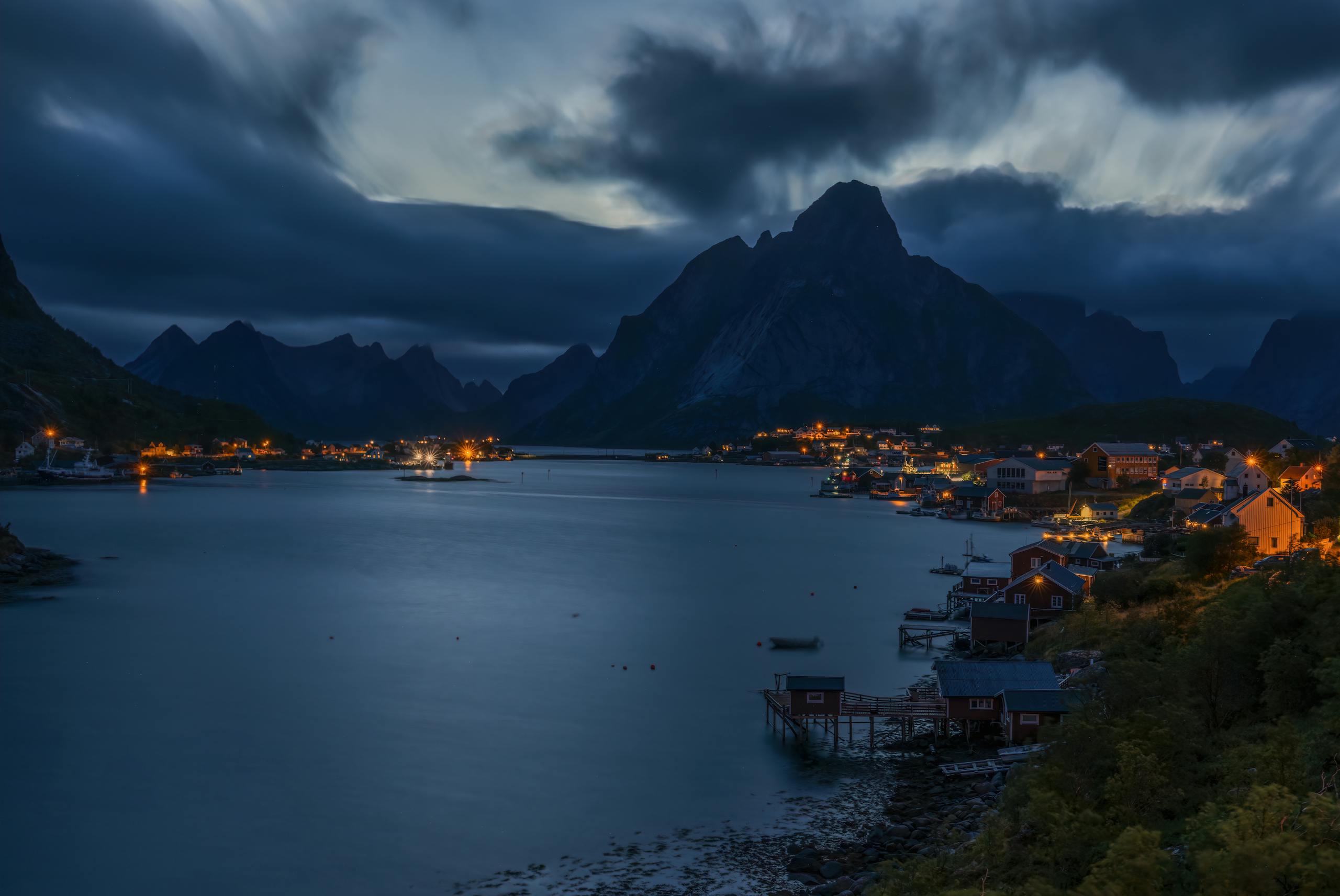

Island life offers introverted minimalists something most environments cannot: genuine quiet, natural beauty that rewards slow observation, and a pace of life that matches the way introverted minds actually work. The reduced social noise, smaller communities, and rhythmic simplicity of island living create conditions where deep thinkers tend to feel most like themselves.
Contrast that with what I lived for two decades. Running advertising agencies meant constant motion, open-plan offices humming with noise, and a calendar that treated silence as wasted time. I managed Fortune 500 accounts, led creative teams, and sat in back-to-back client meetings where the expectation was always to be “on.” Nobody in that world talked about restoration. You pushed through, and then you pushed harder.
What I noticed, though, was that my best thinking never happened in those rooms. It happened on long drives home, on solo walks during lunch breaks I rarely allowed myself, or on the occasional weekend when I could get somewhere genuinely quiet. My mind needed space to do what it does best, and the agency world was designed to prevent exactly that.
Island living, I eventually came to understand, is the structural opposite of that environment. And for people wired the way I am, that difference is not trivial.

If you find yourself drawn to the idea of trading overstimulation for ocean air and smaller social circles, you are in good company. Our Introvert Lifestyle hub explores how introverts can design daily environments that genuinely support the way they think and recharge, and island living sits at an interesting intersection of all those themes.
Why Do Introverts Feel Drawn to Island Living in the First Place?
Spend enough time in a major city as an introvert and you start to feel like you are constantly running a tab you cannot pay. Every interaction, every crowded subway platform, every open-office afternoon draws from a reserve that needs quiet to refill. A 2022 study published through the American Psychological Association found that environmental overstimulation directly affects cognitive performance and emotional regulation, particularly in individuals with higher sensory sensitivity. That finding resonated with me personally long before I ever read it.
What’s your personality type?
Take our free 40-question assessment and get a detailed personality profile with dimension breakdowns, context analysis, and personalised insights.
Discover Your Type8-12 minutes · 40 questions · Free
Islands reduce that tab. Smaller populations mean fewer mandatory social performances. Natural soundscapes replace urban noise. The rhythm of tides and weather creates a kind of external structure that does not demand anything from you emotionally.
There is also something specific about the visual environment. Islands tend to offer long sight lines, open water, and natural textures that change slowly. For minds that process detail quietly and deeply, that kind of environment is not just pleasant. It is genuinely restorative. The National Institutes of Health has documented the connection between natural environments and reduced cortisol levels, pointing to measurable physiological benefits from time spent in settings with lower sensory demand.
I remember the first time I visited a small island off the coast of Maine during a rare week off between agency pitches. I had brought my laptop, fully intending to work. I never opened it. Not because I was being disciplined, but because something in the environment simply did not require me to perform. That was a strange and unfamiliar feeling. It took two full days before I stopped waiting for the next obligation.
What Does Minimalism Have to Do With Introversion?
Minimalism and introversion share a common root: both are fundamentally about reducing what is unnecessary so that what matters can breathe. Introverts tend to process deeply rather than broadly. A cluttered environment, whether physical or social, creates interference in that processing. Minimalism removes the interference.
In my agency years, I watched extroverted colleagues thrive in chaotic environments. Busy offices, packed schedules, and constant context-switching seemed to energize them. I admired it, tried to replicate it, and consistently failed. What I eventually understood was that my brain was not broken. It was optimized for a different set of conditions.
Minimalism, for introverts, is less about aesthetics and more about cognitive bandwidth. When you own fewer things, you make fewer low-stakes decisions. When your home contains only what you actually use, your attention is free for the thinking that actually matters to you. The Mayo Clinic has noted that reducing decision fatigue, the mental cost of repeated small choices, can meaningfully improve focus and emotional resilience over time.

Island living tends to enforce a kind of practical minimalism whether you plan for it or not. Supply chains are slower. Storage is limited. The lifestyle itself creates natural constraints on accumulation. For introverted minimalists, those constraints feel less like deprivation and more like relief.
Which Types of Islands Actually Work for Introverted Minimalists?
Not every island is created equal, and this is worth being honest about. Some islands are tourist economies built entirely around social activity, nightlife, and constant stimulation. Those environments may offer beautiful scenery while delivering the same overstimulation you were trying to escape.
What tends to work better are islands with year-round local communities, economies built around fishing, agriculture, or remote work, and a culture that values self-sufficiency over entertainment. Smaller populations, where you might know your neighbors by name but are not required to socialize with them daily, tend to match the introvert’s preference for depth over breadth in relationships.
Some introverts I have spoken with over the years describe island communities as having a natural social rhythm that feels manageable. You see the same people regularly, which means you are not constantly meeting strangers and recalibrating. Familiarity reduces the social energy cost of basic community participation. You can be a genuine member of a place without performing for it constantly.
Practical factors matter too. Reliable internet access has changed the calculus for remote workers significantly. An island that once required choosing between isolation and career is now, in many cases, a viable full-time base for someone doing knowledge work. That shift has opened options that simply did not exist when I was running agencies in the mid-2000s.
How Does Island Life Support Burnout Recovery for Introverts?
Burnout is something I understand from the inside. By year fifteen of running agencies, I had developed what I can only describe as a chronic low-grade exhaustion that sleep did not fix. I was functional, productive even, but something essential had been running on empty for a long time. My introversion, which I had spent years suppressing in favor of an extroverted leadership style, had been sending signals I kept ignoring.
The American Psychological Association describes burnout as a state of chronic stress that leads to physical and emotional exhaustion, cynicism, and feelings of ineffectiveness. What they also note, and what I found to be true, is that recovery requires more than rest. It requires a genuine change in environment and demand structure.

Island environments change the demand structure in ways that are particularly meaningful for introverts. The pace is slower not because nothing happens, but because the culture does not treat urgency as a default setting. There is less ambient social pressure. Nature provides a kind of passive engagement that restores attention without depleting it. A 2019 study cited by Psychology Today found that spending time near water, what researchers called “blue space,” was associated with significantly lower psychological distress and higher wellbeing scores.
For someone recovering from the kind of burnout that comes from years of working against your own nature, that combination of slower pace, natural environment, and reduced social demand is not a luxury. It is a prerequisite for actual recovery.
What I noticed in myself, during extended time away from the agency environment, was that my thinking gradually changed character. It became less reactive and more generative. Ideas that had felt impossible to access in the noise of daily agency life started surfacing again. That is what genuine restoration feels like for an introvert. Not just rest, but the return of your own mind.
What Are the Practical Realities Introverts Should Know Before Moving to an Island?
Honesty matters here. Island living is not a permanent vacation, and romanticizing it does a disservice to people making real decisions. There are genuine trade-offs that introverts should weigh carefully before committing.
Healthcare access is often the most significant practical concern. Smaller islands may have limited medical facilities, and serious health situations can require expensive and logistically complicated travel to mainland care. This is not a reason to dismiss island living, but it is a reason to research thoroughly before choosing a specific location.
Supply chains move differently on islands. Grocery options may be more limited, delivery times longer, and certain goods simply unavailable locally. For a minimalist, this can actually align well with existing values. You buy less, you buy more intentionally, and you develop a different relationship with consumption. Even so, the adjustment period is real.
Social dynamics in small communities can also be more complex than they initially appear. The same familiarity that reduces social energy costs can, in some communities, tip into a lack of privacy that introverts find difficult. Knowing your neighbors is different from having no anonymity at all. Some islands have strong cultures of community involvement that carry implicit expectations. Researching the specific culture of a place matters as much as researching its geography.

Career and income considerations have shifted considerably with remote work, but they have not disappeared. Some professions still require physical presence in urban centers. Some clients, as I learned during my agency years, equate proximity with commitment. If your career depends on in-person relationships, an island base requires a clear strategy for how you will maintain those relationships from a distance.
How Can Introverted Minimalists Create the Right Daily Structure on an Island?
Structure is something introverts tend to need more than they admit. The freedom of island living can initially feel disorienting, particularly if you have spent years in environments where your schedule was dictated externally. Without the imposed rhythm of an office or a commute, the day can become shapeless in ways that are not actually restful.
What works, from what I have observed both personally and in conversations with others who have made this shift, is creating a rhythm that mirrors the natural environment. Morning hours for deep work, when the mind is freshest and the day is quietest. Midday for practical tasks, errands, and any necessary social contact. Afternoons and evenings for restoration, whether that means walking, reading, or simply sitting with the view.
The Harvard Business Review has written extensively about the productivity advantages of matching cognitive work to natural energy cycles rather than forcing output during low-energy periods. For introverts, whose energy cycles tend to be particularly sensitive to environmental conditions, that alignment is especially valuable.
Minimalism supports this structure in practical ways. Fewer possessions mean less time spent on maintenance and management. Simpler meals, whether by necessity or choice, reduce the daily decision load. A home that contains only what serves you requires less attention, which means more attention is available for the work and reflection that actually matter to you.
One pattern I have noticed is that introverts who thrive in island environments tend to be intentional about maintaining one or two meaningful connections rather than trying to replicate the social density of city life. Quality over breadth is a principle that applies to relationships as much as it applies to possessions. A small number of genuine friendships, maintained with care, tends to provide more actual connection than a large network of surface-level contacts.
What Does the Research Say About Nature, Solitude, and Introvert Wellbeing?
The evidence connecting natural environments to improved mental health has grown considerably stronger over the past decade. What is particularly relevant for introverts is that the mechanisms researchers have identified, reduced cortisol, restored attentional capacity, lower sympathetic nervous system activation, align directly with what introverts are trying to achieve when they seek quiet and space.
The World Health Organization has formally recognized the health benefits of access to green and blue natural spaces, noting that populations with greater access to natural environments show lower rates of anxiety, depression, and stress-related illness. Island environments, almost by definition, provide that access in abundance.
Solitude is a related factor that deserves specific attention. There is a meaningful difference between loneliness, which is a painful experience of unwanted isolation, and solitude, which is a chosen and restorative state. Introverts tend to have a higher capacity for solitude and a greater need for it. Island living, particularly on smaller or less tourist-heavy islands, provides natural opportunities for solitude without requiring elaborate effort to create it.
In my agency years, I had to fight for solitude. I would arrive early, stay late, or find conference rooms to hide in just to get thirty minutes of uninterrupted thinking time. The idea that an environment could simply offer that as a default condition was almost incomprehensible to me then. It is one of the things I find most compelling about island living now.

What the research and personal experience both point toward is the same conclusion: introverts do not need to be fixed or pushed to engage more. They need environments that match how their minds actually work. Island living, at its best, is one of those environments.
Explore more introvert lifestyle perspectives and practical guidance in our complete Introvert Living resource collection at Ordinary Introvert.
About the Author
Keith Lacy is an introvert who’s learned to embrace his true self later in life. After 20 years in advertising and marketing leadership, including running agencies and managing Fortune 500 accounts, Keith now channels his experience into helping fellow introverts understand their strengths and build fulfilling careers. As an INTJ, he brings analytical depth and authentic perspective to every article, drawing from both professional expertise and personal growth.
Frequently Asked Questions
Is island living actually a good fit for introverts, or is it just a romantic idea?
Island living genuinely suits many introverts, but it depends on the specific island and your personal needs. Smaller, year-round communities with natural environments and slower social rhythms tend to match how introverts process and recharge. Tourist-heavy islands with nightlife economies may replicate the overstimulation of city life. Research the culture and community of a specific place before committing, not just the scenery.
How does minimalism connect to introversion specifically?
Minimalism reduces the cognitive and sensory load that introverts find particularly draining. Fewer possessions mean fewer low-stakes decisions, less environmental clutter competing for attention, and more mental bandwidth for deep thinking and meaningful work. Many introverts find that minimalism is less a lifestyle trend and more a practical tool for protecting their cognitive resources.
Can introverts maintain careers while living on an island?
Remote work has made this significantly more viable than it was a decade ago. Knowledge workers, writers, designers, consultants, and many other professionals can maintain productive careers from island locations with reliable internet. Professions requiring regular in-person presence need a clear strategy for travel and client relationship maintenance. The logistics are manageable for many careers, but they require honest planning.
What are the biggest challenges introverts face when moving to a small island community?
The most common challenges include limited healthcare access, reduced supply chain options, and the social dynamics of small communities where anonymity is limited. Some island cultures carry implicit expectations of community participation that can feel demanding for introverts who prefer selective social engagement. Healthcare logistics and career considerations deserve particular attention during the planning process.
How does living near water specifically benefit introverted people?
Research on “blue space,” environments near water, shows measurable reductions in psychological distress and improvements in wellbeing for people who spend time in these settings. For introverts, the specific benefits include natural soundscapes that replace urban noise, long sight lines that reduce visual clutter, and a sensory environment that engages attention gently rather than demanding it. Water environments tend to support the kind of quiet observation that introverts find naturally restorative.