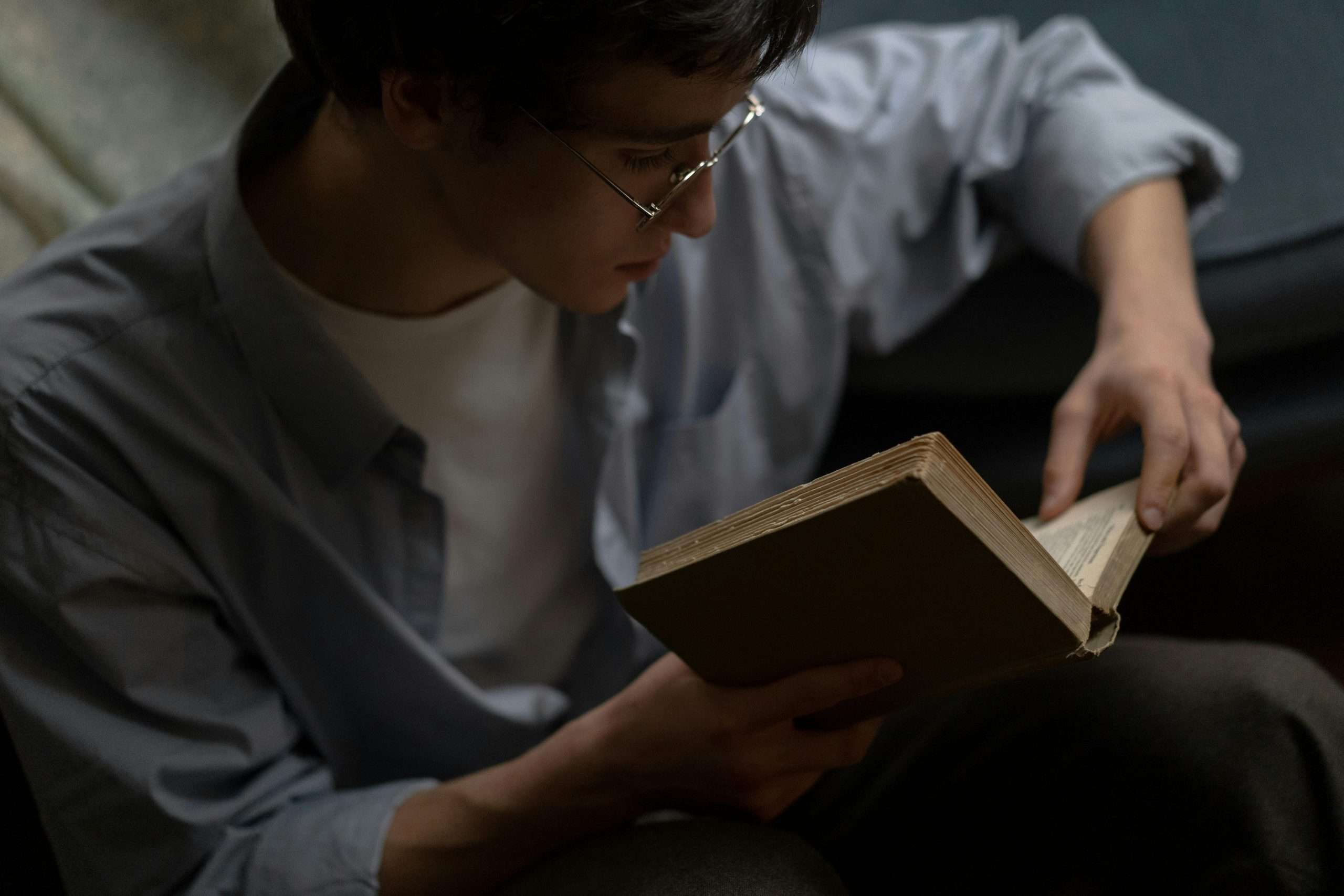

Katrina Kenison writes about solitude the way most people only feel it: as something sacred, quietly necessary, and far too easy to surrender. Her perspective on why you must have time alone isn’t a productivity tip or a self-care trend. It’s a recognition that without space to return to yourself, you risk losing the thread of who you actually are.
Many introverts already sense this at a cellular level. We feel the erosion that happens when days stack up without a single quiet hour. What Kenison offers is language for something we’ve been living without the words to defend.
If you’ve ever felt guilty for needing to close the door, for wanting the house to yourself, for protecting a Saturday morning like it’s the last one on earth, this is the article I wish someone had handed me twenty years ago.

Solitude in family life is one of the most complicated territories an introvert can occupy. The tensions around alone time, parenting, partnership, and presence are explored in depth across our Introvert Family Dynamics and Parenting Hub, where you’ll find resources that treat these needs as legitimate rather than inconvenient.
Who Is Katrina Kenison and Why Does Her Voice Matter Here?
Katrina Kenison is a writer and editor known most widely for her memoir “Mitten Strings for God” and her later work “The Gift of an Ordinary Day.” She writes about motherhood, slowing down, and the interior life with a precision that feels almost uncomfortable in its honesty. She isn’t writing about introversion specifically. She’s writing about something adjacent and equally vital: the cost of never being still.
What’s your personality type?
Take our free 40-question assessment and get a detailed personality profile with dimension breakdowns, context analysis, and personalised insights.
Discover Your Type8-12 minutes · 40 questions · Free
What makes her perspective resonate so deeply with introverts is that she articulates the quiet devastation of a life lived entirely outward. She describes the particular exhaustion of a woman, a parent, a person who has given every available moment to others and arrived at a place of near-invisibility to herself. That experience isn’t exclusive to introverts, but introverts tend to arrive there faster and feel it more acutely.
Her insistence that time alone isn’t selfish, that it is in fact the condition required for genuine presence with others, is the kind of reframing that introverts often need to hear from someone outside their own head. We tend to believe it privately and then apologize for it publicly. Kenison refuses that apology.
Why Do Introverts Specifically Struggle to Protect Alone Time?
There’s a particular cruelty in how introvert needs get categorized. Extroverts who need social time are described as vibrant, engaged, good with people. Introverts who need solitude are described as antisocial, difficult, or at best, quirky. That framing gets internalized early and runs deep.
At the agency, I ran a team of around thirty people at our peak. Client calls, creative reviews, pitch presentations, staff check-ins, they filled every visible hour. What I didn’t tell anyone was that I kept the first thirty minutes of each morning entirely clear on my calendar. My assistant knew not to schedule anything before 9:30. I told people it was for strategic planning. That was partly true. Mostly, it was the only way I could arrive at the day as a functional human being rather than a depleted one.
I felt vaguely ashamed of that for years. As though a real leader would bound into the office energized by the prospect of interaction. What I’ve come to understand, and what Kenison’s writing helped me articulate, is that those thirty minutes weren’t a weakness I was hiding. They were the source of whatever clarity I brought to the rest of the day.
The neurological differences between introverts and extroverts are well documented. Introverts process dopamine differently, which means social stimulation that feels energizing to an extrovert can feel genuinely depleting to an introvert. This isn’t a preference or a mood. It’s a wiring difference that has real consequences when ignored.
Yet most family structures, most workplaces, most social expectations are built around extroverted rhythms. The introvert who needs to step away isn’t failing to meet the standard. The standard was simply never designed with them in mind.

What Happens to an Introvert Who Never Gets Time Alone?
The short answer is burnout. The longer answer is something more gradual and harder to name.
What I’ve noticed in myself, and what I’ve watched happen to introverts on my teams over the years, is a kind of slow withdrawal from the inside. The outer performance continues. Meetings get attended, emails get answered, dinners get made, children get driven to practice. But something underneath goes quiet in a way that isn’t restful. It’s the quiet of depletion, not renewal.
One of my senior account directors at the agency was one of the most gifted strategic thinkers I’ve ever worked with. She was also, I came to realize, profoundly introverted in a workplace that rewarded constant visibility. After about eighteen months of back-to-back client demands and no real breathing room, her work started to lose its edge. Not dramatically. Just a flatness where there used to be spark. She left the agency six months later. I’ve always believed that wasn’t inevitable.
What the research literature around burnout and psychological restoration consistently points toward is that recovery requires genuine disengagement, not just rest in the passive sense. For introverts especially, that means time without social demands, without performance, without the low-grade monitoring that comes with being around other people.
Kenison writes about this in terms of what gets lost when a person never stops. She’s talking about the self as something that requires tending, not just managing. That framing matters because it shifts the conversation from indulgence to necessity.
Introverts who skip that tending don’t just feel tired. They start to lose access to the internal resources that make them who they are: the depth of observation, the quality of thought, the capacity for genuine connection when they do engage. The irony is that protecting solitude makes an introvert more present, not less, when they’re with the people they love.
How Does Alone Time Function Differently for Introverts Than for Everyone Else?
Solitude for an introvert isn’t simply the absence of people. It’s an active state. Something happens in that space that doesn’t happen anywhere else.
My mind does its best processing when no one is watching it. Not because I’m secretive, but because observation changes the process. When I’m in a room full of people, even people I trust, some part of my attention is always monitoring the room. Reading faces, tracking energy, anticipating what’s needed. That’s not anxiety. It’s just how I’m wired. The research on introvert cognitive processing suggests this kind of rich internal activity is characteristic, not pathological.
When I’m alone, that monitoring stops. And in that stopping, something else becomes available. Ideas that were half-formed start to complete themselves. Emotions that I’d been holding at arm’s length get processed. Decisions I’d been circling become clear. Solitude, for an introvert, is where the actual thinking happens.
This is part of what Kenison is pointing at when she insists on the necessity of time alone. She’s not advocating for withdrawal from life. She’s arguing that the quality of your engagement with life depends on having somewhere to return to. A center. A self that isn’t constantly in response mode.
Understanding your own personality architecture matters here. If you’ve never formally examined where you fall on the introversion spectrum or how your traits interact with your need for solitude, tools like the Big Five Personality Traits Test can offer a useful framework. The Big Five measures openness, conscientiousness, extraversion, agreeableness, and neuroticism, and the extraversion dimension in particular can clarify how much alone time you genuinely need versus how much you’ve been told you should be able to manage without.

What Does Kenison’s Perspective Offer Parents Who Are Also Introverts?
Parenting is perhaps the single most sustained demand on an introvert’s reserves. Children, especially young ones, require constant presence. Not just physical presence but attentive, responsive, emotionally available presence. For an introvert parent, that can be genuinely beautiful and genuinely exhausting in equal measure.
Kenison writes from the experience of motherhood, and her argument for solitude is partly an argument for what kind of parent you can be when you’re not running on empty. She observed in herself that the moments when she was most impatient, most reactive, most disconnected from her children were the moments when she had given herself no room to breathe. The solitude wasn’t a retreat from her family. It was what made her capable of being fully present with them.
Introverted parents carry an additional layer of complexity here. Many feel genuine guilt about needing space from the people they love most. There’s a cultural script that says good parents are always available, always engaged, always on. That script doesn’t account for the reality that an introvert who never recharges doesn’t become a more present parent. They become a more depleted one.
If you’re raising children while managing your own sensitivity and need for quiet, the challenges compound in specific ways. Our piece on HSP parenting and raising children as a highly sensitive parent addresses this intersection with real honesty, particularly the guilt that comes with needing more than the parenting ideal seems to allow.
What Kenison offers introverted parents is permission. Not permission to abandon their families, but permission to treat their own need for solitude as legitimate rather than as something to be managed around and apologized for. That shift in framing changes everything about how you ask for what you need.
How Do You Actually Carve Out Alone Time When Life Keeps Filling Every Gap?
This is where the conversation gets practical, and where a lot of well-intentioned advice falls apart. Telling an introvert they need more solitude without addressing the structural reality of their life is like telling someone they need more sleep without acknowledging that they have three children and two jobs.
What I’ve found, both in my own life and in watching introverts I’ve managed and mentored, is that solitude has to be protected with the same deliberateness you’d apply to any other non-negotiable commitment. It can’t be what’s left over after everything else is handled. Because in most lives, nothing is ever fully handled.
At the agency, I eventually stopped apologizing for my calendar habits and started being straightforward about them. Not defensive, just matter-of-fact. I need uninterrupted time to think well. That’s how I do my best work for this team and these clients. Once I framed it as a professional practice rather than a personal quirk, the resistance largely evaporated. People respect clarity more than they respect martyrdom.
In family life, the conversation is more tender but the principle holds. Communicating your need for alone time isn’t a rejection of the people you love. It’s an honest account of what you need to be the person you want to be for them. Kenison’s writing models this kind of honest self-knowledge beautifully. She doesn’t frame her need for solitude as a flaw she’s working around. She frames it as part of how she’s built, and therefore part of what her family deserves to understand about her.
Practically speaking, the strategies that tend to work include: protecting early mornings before the household wakes, establishing a weekly rhythm of solo time that everyone knows to expect, finding outdoor spaces that serve as accessible solitude even when the house isn’t quiet, and being honest with partners about what you’re asking for and why. The Harvard Health resources on mind and mood offer solid grounding for why psychological restoration isn’t optional, which can be useful when you’re trying to explain this to a partner who doesn’t share your wiring.
What Gets in the Way of Believing You Deserve Time Alone?
Beyond the logistical challenges, there’s an interior obstacle that’s harder to solve with calendar blocking: the belief that you don’t actually deserve it.
Many introverts carry a low-grade conviction that their need for solitude is a burden they impose on others. That the right response is to try harder to be more available, more social, more present in the ways that feel natural to extroverts. This conviction doesn’t usually announce itself directly. It shows up as guilt when you close the door, as preemptive apology when you ask for space, as a tendency to frame your needs as smaller than they are.
Some of this is personality. Some of it is conditioning. And some of it, in cases where the guilt is particularly intense or the patterns particularly entrenched, can reflect deeper relational or psychological dynamics worth examining. Tools like the Borderline Personality Disorder test can be a starting point for distinguishing between introvert needs and patterns that might benefit from professional support. They’re not diagnostic, but they can help clarify what you’re actually dealing with.
What Kenison’s writing does, at its best, is challenge the belief that constant availability is a virtue. She argues, implicitly and sometimes explicitly, that a person who has no interior life to return to has nothing particularly rich to offer the people they’re always available to. That’s a harder argument to dismiss than “I just need some quiet time.”

How Does Solitude Connect to the Quality of Your Relationships?
There’s a counterintuitive truth at the center of everything Kenison writes about time alone: the people who protect their solitude most deliberately tend to be the most genuinely present when they’re with others.
This runs against the cultural assumption that availability equals love. That the person who’s always reachable, always responsive, always there is the most committed partner, parent, or friend. Introverts know from lived experience that this isn’t quite right. The version of yourself that shows up after three days of no downtime is a diminished version. Technically present, functionally absent.
Some of the most meaningful conversations I’ve had with my children happened on the mornings when I’d already had an hour to myself before they woke up. Not because the hour made me wise, but because it made me available in a way I simply wasn’t when I came to them depleted. The solitude created the capacity for connection.
Kenison describes something similar in her writing about marriage and motherhood. She found that protecting time for herself, for reading, for walking, for simply being quiet, made her a better companion to her husband and a more patient presence for her sons. The solitude wasn’t a withdrawal from relationship. It was what made genuine relationship possible.
There’s also something worth naming about likability and social ease. Introverts who are chronically depleted don’t show up as their most authentic, warm, or engaged selves. They show up as flat, distracted, or slightly irritable. If you’ve ever wondered why you seem more socially capable on some days than others, alone time is almost certainly part of the answer. The Likeable Person Test is a light way to examine how you come across to others, and you might notice that your scores correlate with how rested and recharged you actually feel.
What Professions Make Solitude Hardest to Protect, and What Can You Do?
Some careers are structurally hostile to introvert needs. Caregiving roles in particular tend to demand constant relational presence with very little built-in recovery time. Nurses, teachers, therapists, social workers, and personal care workers often find themselves in a paradox: the very skills that make them excellent at their work, empathy, attentiveness, patience, are the ones that deplete fastest without adequate solitude.
If you work in a caregiving field or are considering one, understanding your own capacity and limits isn’t weakness. It’s professional self-awareness. Resources like the Personal Care Assistant test online can help you assess whether a caregiving role aligns with your temperament and what accommodations you’d need to sustain it without burning out.
Similarly, fitness and wellness professions that require constant client-facing energy can be demanding for introverts who are drawn to health and helping. The Certified Personal Trainer test is worth exploring if you’re considering that path, both to assess your readiness and to think honestly about whether the relational demands of the role match your energy profile.
Across all of these fields, the principle Kenison articulates holds: you cannot pour from an empty vessel. That’s not a self-help cliche when you’re an introvert. It’s a neurological reality. The research on emotional labor and depletion supports the idea that recovery requires active disengagement from the demands of the role, not just clocking out. For introverts, that means genuine solitude, not just a different kind of social activity.

What Is the Actual Practice of Protecting Solitude?
Kenison doesn’t offer a system. She offers a sensibility. And that sensibility is essentially this: treat time alone as something you owe yourself, not as something you earn by completing everything else first.
For introverts, that reframe is significant. Most of us have been operating on a deficit model: I’ll take time for myself once the work is done, once the kids are settled, once the relationship is stable, once things calm down. Things don’t calm down. The work is never fully done. The time you’re waiting for doesn’t arrive unless you create it.
What the practice actually looks like varies by person and circumstance. For me, it’s been morning quiet, long walks without headphones, and the discipline of not checking my phone for the first hour of the day. For others it’s an evening ritual, a weekly solo activity, a room in the house that’s understood as a retreat space. The form matters less than the consistency and the intention behind it.
Kenison writes beautifully about the quality of attention that becomes available in solitude. Not the scattered, reactive attention of a person moving through tasks, but a slower, more receptive kind of noticing. That quality of attention is, I think, one of the introvert’s genuine gifts. We’re capable of a depth of observation and presence that is genuinely rare. Solitude is where that capacity gets replenished.
The Psychology Today resources on family dynamics offer useful context for how individual needs, including the introvert’s need for solitude, intersect with the relational patterns of family life. Understanding those dynamics can help you make the case for your needs in terms that resonate with the people around you, not just in terms of what you’re asking for but in terms of what everyone gains when you get it.
At the end of the day, what Kenison is really arguing is that you are worth attending to. Not just as a function of your relationships or your productivity or your usefulness to others, but as a person with an interior life that deserves care. For introverts who have spent years minimizing that need, that argument can feel almost radical. It shouldn’t have to. But it does, and that’s exactly why it matters.
There’s much more to explore about how introverts show up in family life, as parents, as partners, as children handling family systems that don’t always understand them. Our complete Introvert Family Dynamics and Parenting Hub covers these themes with the depth they deserve.
About the Author
Keith Lacy is an introvert who’s learned to embrace his true self later in life. After 20 years in advertising and marketing leadership, including running agencies and managing Fortune 500 accounts, Keith now channels his experience into helping fellow introverts understand their strengths and build fulfilling careers. As an INTJ, he brings analytical depth and authentic perspective to every article, drawing from both professional expertise and personal growth.
Frequently Asked Questions
What does Katrina Kenison say about why time alone is necessary?
Kenison argues that solitude isn’t a luxury or a retreat from life but a condition required for genuine presence. She writes from the experience of motherhood and creative life, making the case that without time to return to yourself, you lose the interior resources that make meaningful engagement with others possible. Her perspective is particularly resonant for introverts, who experience this depletion more acutely and more quickly than most.
Why do introverts need more alone time than extroverts?
Introverts and extroverts process stimulation differently at a neurological level. Social interaction that energizes an extrovert tends to deplete an introvert, not because they dislike people, but because their nervous systems respond differently to external stimulation. Solitude is where introverts restore their cognitive and emotional resources. This isn’t a preference that can be trained away. It’s a fundamental aspect of how they’re wired.
How can introverted parents protect alone time without feeling guilty?
The guilt often comes from a cultural script that equates good parenting with constant availability. Reframing solitude as what makes you a better parent, rather than what takes you away from parenting, is a useful starting point. Kenison’s writing models this honestly: she found that protecting time for herself made her more patient, more present, and more genuinely connected with her children. Communicating your needs clearly to a partner and establishing consistent rhythms helps make alone time a known part of the family structure rather than a recurring negotiation.
What happens to an introvert who never gets time alone?
Without adequate solitude, introverts tend to experience a gradual depletion that goes beyond ordinary tiredness. The outer performance often continues, but the interior resources that make an introvert’s contributions distinctive, depth of thought, quality of observation, capacity for genuine connection, start to erode. Over time this can manifest as burnout, emotional flatness, reduced creativity, and a growing sense of disconnection from one’s own values and perspective. Recovery requires genuine disengagement, not just a change of scenery.
How do you practically carve out alone time in a busy family life?
Solitude has to be protected deliberately, not waited for. Practical approaches include protecting early morning hours before the household wakes, establishing a weekly rhythm of solo time that partners and children learn to expect, identifying outdoor or accessible spaces that offer quiet even when the home doesn’t, and being honest with family members about why this time matters. Framing it as a need rather than a preference, and connecting it to the quality of presence you bring to the family, tends to make the conversation more productive than treating it as an apology.