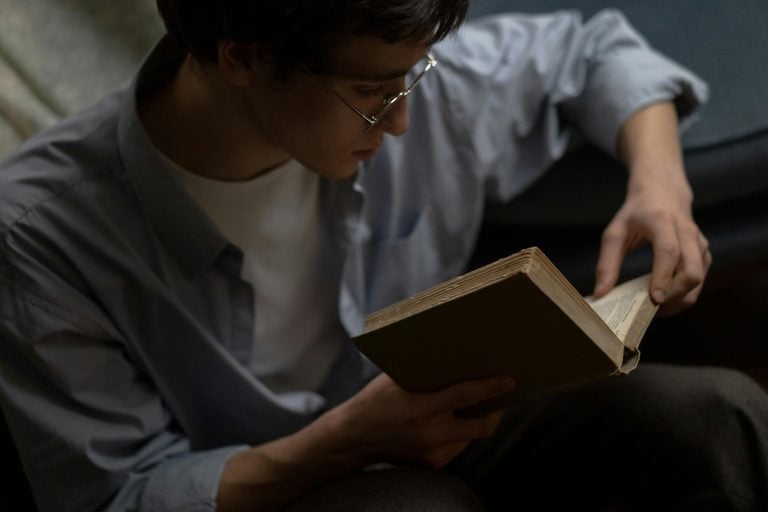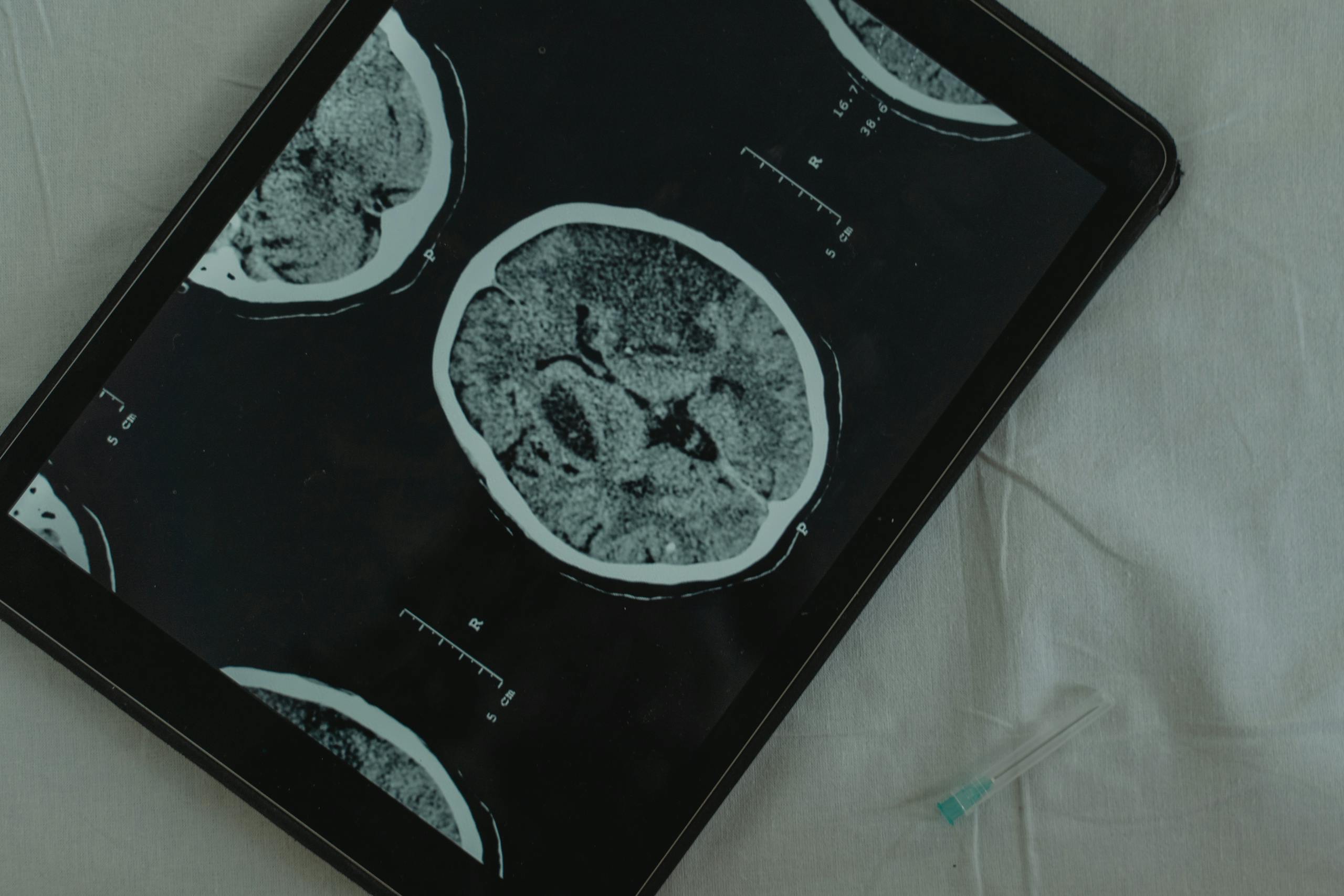
Lona Prasad is a mental health advocate and researcher whose work sits at the intersection of introversion, emotional processing, and depression. Her perspective matters because she addresses something many quiet people struggle to name: the way depression in introverts often hides behind behaviors that look completely normal from the outside.
An introvert who withdraws, goes quiet, and processes internally can look exactly like a depressed person doing the same. Prasad’s contribution is helping people understand that these experiences overlap but are not identical, and that recognizing the difference can change everything about how you respond.
I want to be honest with you about why this topic resonates with me personally. Running advertising agencies for over two decades, I watched myself and others around me misread internal states constantly. The person who needed quiet wasn’t always struggling. The person who seemed fine in meetings wasn’t always okay. Prasad’s framing gives language to something I experienced but couldn’t always articulate.
If you’re exploring how depression intersects with the introvert experience more broadly, our Depression & Low Mood hub covers the full range of these questions, from identifying symptoms to finding approaches that actually fit how introverted minds work.

Who Is Lona Prasad and Why Does Her Work Matter?
Lona Prasad has written and spoken about mental health with a specific focus on how personality type shapes the experience of depression. Her work draws attention to the fact that standard mental health frameworks were largely built around extroverted presentations of distress. Someone who cries openly, seeks out others for support, and shows visible signs of struggle fits the familiar picture. Someone who goes inward, becomes even quieter than usual, and processes alone often gets missed entirely.
What’s your personality type?
Take our free 40-question assessment and get a detailed personality profile with dimension breakdowns, context analysis, and personalised insights.
Discover Your Type8-12 minutes · 40 questions · Free
What makes her perspective valuable isn’t that it’s revolutionary. It’s that it names something real. Introverts already know their inner world is rich and complex. What Prasad adds is a clinical and psychological lens that validates why that complexity makes depression harder to identify, harder to communicate, and sometimes harder to treat through conventional means.
Her work also touches on a theme I’ve written about before: the way introverts are often their own worst diagnosticians. We’re good at observing the external world in detail. We’re less reliable at stepping back from our own internal experience and asking whether what we’re feeling is within normal range or something that deserves more attention. The line between introversion and depression is genuinely blurry, and Prasad’s framework helps make it clearer.
What Does Prasad Say About How Introverts Experience Depression Differently?
The core of Prasad’s argument is about internalization. Where extroverts often externalize emotional distress, introverts tend to fold it inward. This isn’t a character flaw or a coping failure. It’s a natural extension of how introverted minds process everything, slowly, thoroughly, and privately.
The problem is that depression feeds on exactly this tendency. When you’re wired to sit with difficult feelings rather than express them outwardly, a depressive episode can deepen without anyone around you noticing. And because the behavior looks so much like ordinary introversion, you might not notice either.
I managed a team of about fourteen people at one of my agencies, and one of my senior strategists was someone I’d describe as a textbook introvert. Brilliant, observant, did her best work alone. For months, I noticed she was producing less, taking longer to respond to emails, and seemed more withdrawn than usual. My instinct was to give her space, because that’s what introverts often need. It took a direct conversation to realize she wasn’t in a quiet phase. She was struggling in a way that needed real support, not more solitude. That experience taught me something I’ve never forgotten about the cost of misreading internal states.
Prasad’s work suggests that introverts themselves often make the same mistake I made as her manager. We assume our withdrawal is healthy recharging when it’s actually avoidance. We tell ourselves the heaviness we feel is just tiredness when it’s something that’s been building for weeks. Distinguishing between normal introvert low mood and something more serious requires a kind of self-awareness that doesn’t come automatically, even for people who pride themselves on introspection.

How Does the Introvert Tendency Toward Overthinking Complicate Depression?
One of the threads running through Prasad’s perspective is the relationship between deep thinking and depressive rumination. These are not the same thing, but they can feel identical from the inside. Introverts are often celebrated for their ability to think carefully and thoroughly. That same capacity, when it turns toward self-criticism or hopelessness, becomes something much darker.
Rumination is the mental loop that depression loves. You replay conversations, second-guess decisions, and construct elaborate explanations for why things went wrong. For introverts, this loop can run for hours without any external interruption because we’re comfortable spending time alone with our thoughts. The quiet that normally restores us becomes the environment where the loop plays on repeat.
I know this loop intimately. There were stretches during my agency years, particularly during pitches we lost or client relationships that ended badly, where I’d spend entire evenings dissecting what went wrong. At a certain point, that kind of analysis stops being useful and starts being corrosive. The connection between overthinking and depression is something I wish I’d understood earlier, because recognizing it is the first step toward interrupting it.
Prasad’s framing here is particularly useful because it doesn’t pathologize deep thinking. She’s not saying introverts should think less. She’s pointing out that the same cognitive style that produces insight can, under the right conditions, produce suffering. Understanding that distinction changes how you relate to your own mind.
There’s also a social dimension worth naming. Introverts often don’t have the same network of casual daily interactions that might interrupt a depressive loop for someone more extroverted. A brief chat in the office kitchen, an impromptu lunch with a colleague, a spontaneous phone call from a friend. These small moments of connection can disrupt rumination without the person even realizing it. Many introverts don’t have those interruptions built into their days, which means the loop has more room to run. According to the National Institute of Mental Health, persistent patterns of worry and internal distress can compound over time when left unaddressed, a pattern that maps closely onto what Prasad describes for introverted individuals.
What Does Prasad’s Framework Suggest About Personality Types and Vulnerability?
Prasad’s work doesn’t single out one personality type as uniquely at risk. What she observes is that certain combinations of traits create specific vulnerabilities. High internal standards, a tendency toward perfectionism, strong sensitivity to criticism, and a preference for processing alone can converge in ways that make depression both more likely and more difficult to address.
As an INTJ, I recognize most of those traits in myself. High standards, certainly. A tendency to hold myself to expectations that I’d never apply to anyone else on my team. The processing-alone piece is almost definitional for my type. What Prasad adds is the observation that these traits don’t cause depression on their own. They shape the texture of how depression is experienced when it does arrive.
I’ve watched this play out differently across personality types. The ISTJs I’ve managed over the years, people who relied heavily on structure and reliability, often showed depression in a particular way. Their systems started to slip. The person who was always five minutes early started being late. The meticulous project tracker started missing updates. When depression hits structured personalities, it often shows up first as a breakdown in the very systems they depend on most.
Prasad’s framework helps explain why that happens. When your coping mechanisms are built around control and structure, depression doesn’t just make you sad. It undermines the scaffolding you rely on to function. The same principle applies across introverted types. Whatever your particular strengths are, depression tends to attack them first.
How Does Prasad Think About Treatment and What Works for Introverted Minds?
One of the more practical threads in Prasad’s perspective is her attention to treatment fit. Standard recommendations for depression often include group therapy, social engagement, exercise classes, and community activities. For extroverts, these interventions make intuitive sense. For introverts, some of them can feel like additional stressors layered on top of an already depleted state.
This doesn’t mean introverts should avoid social connection or group-based support. It means the format matters. One-on-one therapy tends to work better than group settings for many introverted people. Written reflection, journaling, and structured self-examination can be powerful tools. Quiet physical activities like walking, swimming, or yoga often suit introverted nervous systems better than high-energy group fitness environments.
The question of medication versus other approaches is also worth addressing directly. Prasad doesn’t advocate for one path over another, and neither do I. What matters is that the choice is informed. The comparison between medication and natural treatment approaches is a conversation worth having carefully, with a qualified professional who understands your specific situation rather than a one-size-fits-all recommendation.
What I’ve observed in my own life and in conversations with introverts over the years is that treatment works best when it respects the introvert’s need for autonomy and internal processing. Being told to “just get out more” or “talk to people” can feel dismissive when your baseline is already different from the extroverted norm. The most effective support acknowledges that difference rather than trying to override it.
There’s also the environment question. Many introverts do their best healing in quiet, controlled settings. Managing depression while working from home is a real challenge that Prasad’s work touches on indirectly. The same environment that feels like a refuge can become an echo chamber when depression is present. Structure, routine, and intentional connection matter more, not less, when you’re both introverted and working through a difficult period.
What Is the Role of Self-Awareness in Prasad’s Approach?
Prasad places significant weight on self-awareness as a protective factor. Not self-awareness in the abstract sense of “knowing yourself,” but the specific ability to monitor your own internal state over time and notice when something has shifted.
Introverts often believe they’re naturally self-aware because they spend so much time in their own heads. Prasad challenges this assumption gently but directly. Spending time with your thoughts isn’t the same as observing those thoughts with any useful distance. In fact, the more immersed you are in your internal world, the harder it can be to step back and assess it clearly.
This resonates with something I noticed about myself during a particularly difficult stretch in my forties. I was running an agency through a major client transition, managing a team through significant uncertainty, and telling myself I was handling it fine. My internal narrative was coherent and calm. My behavior was anything but. I was shorter with people than I wanted to be. I was sleeping poorly. I was finding less meaning in work that had always energized me. The gap between my internal story and my actual functioning was wider than I realized, and it took someone outside my own head to point it out.
Prasad’s work suggests that building in external checkpoints matters for introverts. Not because we can’t be self-aware, but because our self-awareness operates from inside the very system we’re trying to evaluate. A trusted friend, a therapist, or even a structured journaling practice can provide the external reference point that pure introspection can’t always supply.
There’s also a communication dimension here that Prasad addresses. Introverts often struggle to articulate distress to others, not because they lack emotional intelligence, but because they process so internally that by the time they’re ready to speak, they’ve either resolved the issue or buried it. Psychology Today’s coverage of introvert communication patterns captures this well. The preference for internal processing over external expression is a genuine strength in many contexts. In the context of depression, it can become a barrier to getting help.

How Does Prasad Connect Perfectionism and Depression in Introverts?
Perfectionism is a thread that runs through much of Prasad’s thinking, and it’s one that many introverts will recognize immediately. The tendency to hold high internal standards, to notice every gap between what was achieved and what was possible, and to attribute shortcomings to personal failure rather than circumstance creates a particular kind of psychological weight.
What’s interesting about Prasad’s framing is that she doesn’t treat perfectionism as simply a bad habit to be corrected. She sees it as a trait with genuine adaptive value that becomes problematic under specific conditions. The same attention to detail that makes an introvert excellent at deep work can, when turned toward self-evaluation, produce a relentless internal critic that’s very hard to quiet.
A study from Ohio State University’s College of Nursing found that perfectionist tendencies, particularly the self-critical variety, were associated with higher rates of psychological distress. While that specific research focused on a particular context, the underlying dynamic maps onto what Prasad describes for introverted individuals more broadly. The internal critic doesn’t need an external audience to do damage. It runs quietly, persistently, and often without the person fully realizing how much energy it’s consuming.
I spent most of my agency career believing that high standards were simply the cost of doing excellent work. And to a point, they are. But there’s a version of high standards that crosses into something more corrosive, where no achievement feels sufficient, where every success is immediately replaced by the next benchmark, and where the gap between where you are and where you think you should be becomes a source of chronic low-grade misery. That’s the version Prasad is concerned with, and she’s right to be.
What Does Prasad’s Work Suggest About Resilience and Recovery?
Prasad’s perspective on recovery is grounded in something the American Psychological Association describes as resilience: not the absence of difficulty, but the capacity to adapt through it. For introverts, she argues, resilience often looks quieter than it does in extroverted individuals. It’s not always visible as bouncing back or showing up with energy. Sometimes it’s simply continuing to process, continuing to reflect, and continuing to move at a pace that respects how the introvert mind actually works.
This matters because introverts who are recovering from depression can feel like they’re failing because their recovery doesn’t look like what they’ve seen modeled. They’re not suddenly social and energized. They’re not visibly “better” in ways others can easily recognize. They’re working through something slowly and internally, which is exactly how they work through everything.
Prasad’s work also touches on the role of meaning-making in recovery. Introverts tend to need to understand their experiences, to find a framework that makes sense of what happened and why. This isn’t avoidance. It’s a genuine part of how introverted minds integrate difficult experiences. Therapy approaches that allow for this kind of reflective processing, rather than pushing for immediate behavioral change, often work better for introverted clients.
There’s also growing evidence that the relationship between personality and depression is more nuanced than simple vulnerability. A study published in PubMed Central examining personality traits and mood disorders found that the same traits that increase sensitivity to negative experiences can also enhance the capacity for positive emotional depth. Prasad’s work aligns with this: the introvert’s rich inner life is not simply a risk factor. It’s also a resource.
Additional research available through PubMed Central’s work on emotional regulation and personality supports the idea that how people process emotion, internally versus externally, shapes both their vulnerability to depression and their pathways through it. Understanding your own processing style isn’t just self-knowledge. It’s practical information about how to build a recovery approach that actually fits.

What Can You Actually Take From Prasad’s Perspective?
The most practical takeaway from Prasad’s work is permission: permission to have a different relationship with your own distress than the extroverted model suggests you should. You don’t have to talk about it constantly to be processing it. You don’t have to appear visibly improved to be genuinely recovering. You don’t have to match your experience of depression to someone else’s description of it to have it be real and worth addressing.
At the same time, Prasad is clear that internal processing has limits. At some point, the loop needs an outside perspective. The self-awareness that introverts pride themselves on needs to be checked against external reality. And the tendency to assume that quiet withdrawal is always healthy recharging needs to be questioned, gently but honestly, on a regular basis.
For me, the most valuable shift her work prompted was in how I think about asking for help. As an INTJ, asking for help has never come naturally. My default is to analyze the problem, develop a solution, and implement it alone. Depression doesn’t respond well to that approach, because the tool you’re trying to use to fix the problem is the same tool that’s compromised. Having someone outside your own head involved isn’t weakness. It’s a practical acknowledgment of how the mind works under stress.
Prasad’s framework also connects to something I’ve seen in research on introversion more broadly. A graduate research paper examining introversion and psychological wellbeing found that introverts who developed strong self-monitoring practices and maintained at least a few close relationships showed significantly better mental health outcomes than those who relied entirely on solitary processing. The introvert’s preference for depth over breadth in relationships isn’t a liability. It’s a strength, as long as those deep connections are actually being used.
One more thing worth naming: depression in introverts often goes unrecognized by the people around them precisely because introverts are so skilled at appearing composed. The clinical overview of depressive disorders from the National Library of Medicine emphasizes that outward presentation doesn’t always reflect internal severity. Someone can be significantly depressed and still show up, still function, still seem okay from the outside. For introverts, who are often practiced at managing their external presentation regardless of their internal state, this gap between appearance and reality can be particularly wide.
Prasad’s contribution is to keep pointing at that gap and insisting it matters. Not to pathologize introversion, but to ensure that introverts who are struggling aren’t missed simply because their distress doesn’t look like the standard picture.
There’s a lot more to explore on this topic. Our Depression & Low Mood hub brings together everything we’ve written about how introverts experience, recognize, and work through depression, with approaches grounded in how introverted minds actually function rather than how the extroverted majority presents these challenges.
Curious about your personality type?
Our free MBTI assessment goes beyond the four letters. Get a full breakdown of your scores, see how your type shows up at work and in relationships.
Take the Free Test8-12 minutes · 40 questions · Free
About the Author
Keith Lacy is an introvert who’s learned to embrace his true self later in life. After 20 years in advertising and marketing leadership, including running agencies and managing Fortune 500 accounts, Keith now channels his experience into helping fellow introverts understand their strengths and build fulfilling careers. As an INTJ, he brings analytical depth and authentic perspective to every article, drawing from both professional expertise and personal growth.
Frequently Asked Questions
What is Lona Prasad known for in the context of introversion and depression?
Lona Prasad is a mental health advocate whose work focuses on how introverted personality traits shape the experience of depression. She draws attention to the way depression in introverts often presents differently from extroverted presentations, making it harder to identify, communicate, and treat through conventional approaches. Her perspective emphasizes that the introvert’s tendency to process internally, while a genuine strength, can also allow depressive episodes to deepen without external detection.
Why is depression harder to recognize in introverts?
Depression in introverts is harder to recognize because many of its behavioral signs, withdrawal, quietness, reduced social engagement, and increased time alone, overlap with normal introvert behavior. Someone who already prefers solitude and processes internally doesn’t show the same contrast between their baseline and their depressed state that a more extroverted person might. This means both the person themselves and those around them can miss the signs for longer. Prasad’s work highlights this recognition gap as one of the most important issues in introvert mental health.
How does overthinking contribute to depression in introverted people?
Introverts are naturally inclined toward deep, thorough thinking. When this tendency turns toward self-criticism, regret, or hopelessness, it can create a rumination loop that depression feeds on. Because introverts are comfortable spending extended time alone with their thoughts, this loop can run for hours without interruption. The quiet that normally restores an introvert’s energy becomes the environment where depressive thought patterns cycle without challenge. Recognizing the difference between productive reflection and harmful rumination is a key skill that Prasad’s framework helps develop.
What treatment approaches does Prasad suggest work better for introverts?
Prasad doesn’t prescribe a single treatment path, but her work suggests that format and fit matter significantly for introverts. One-on-one therapy tends to suit introverted clients better than group settings. Reflective practices like journaling and structured self-examination align with how introverted minds naturally work. Quiet physical activities often fit better than high-energy group environments. The consistent theme is that treatment works best when it respects the introvert’s processing style rather than expecting them to adopt extroverted coping strategies. Any specific treatment decisions should involve a qualified mental health professional.
How can introverts build better self-awareness around their mental health?
Prasad emphasizes that spending time with your thoughts isn’t the same as observing them clearly. Introverts benefit from building in external checkpoints: a trusted friend, a therapist, or a consistent journaling practice that creates a record over time. Tracking mood, energy, and functioning across weeks rather than evaluating each day in isolation helps identify patterns that aren’t obvious from inside the experience. The goal is to pair the introvert’s natural introspective depth with enough external reference that the self-assessment stays grounded in reality rather than the internal narrative that depression can distort.