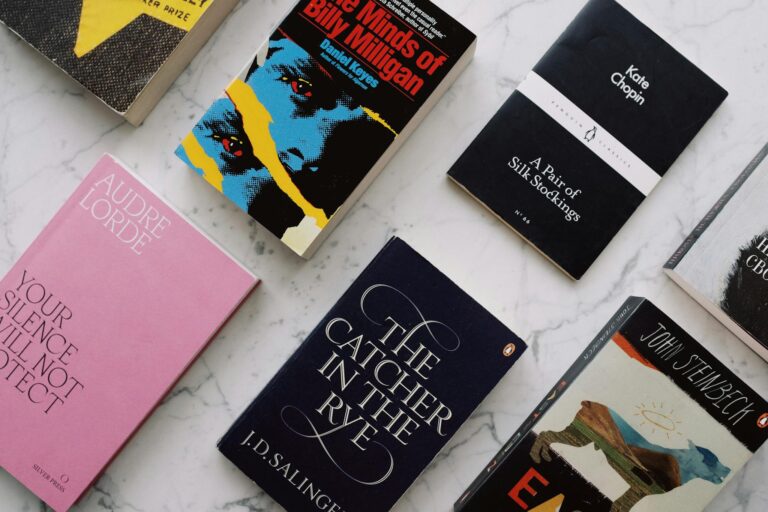
Books written for loners aren’t just comfort reads. They’re mirrors that reflect something most of us spend years trying to explain to people who don’t quite get it: the preference for solitude isn’t a wound to heal, it’s a way of being that deserves to be understood on its own terms. The best loner books do exactly that, offering frameworks, stories, and insights that help people who thrive alone make sense of their inner lives without pathologizing them.
Some of us find more clarity in a well-written page than in a room full of people. That’s not antisocial. That’s just how certain minds work.
I spent more than two decades running advertising agencies, surrounded by people who seemed to draw energy from every meeting, every brainstorm, every client dinner. I didn’t. I was the INTJ in the room who processed everything quietly, went home and thought for three hours, then came back the next morning with the actual answer. Books were always part of how I made sense of that experience. They still are.

If you’re exploring tools and resources that align with how introverts and loners actually think, our Introvert Tools and Products Hub covers a wide range of options beyond books, from apps to mental health resources to practical productivity tools. But books remain one of the most powerful resources in that collection, and the ones I’m covering here are worth your time.
Why Do Loners Turn to Books More Than Most?
There’s something that happens when a person who prefers solitude opens a book written by someone who genuinely understands that preference. It’s not just recognition. It’s relief. The kind of relief that comes from finally hearing your internal experience articulated by someone else, clearly and without apology.
What drains your social battery?
Not all social exhaustion is the same. Our free quiz identifies your specific drain pattern and gives you personalised recharging strategies.
Find Your Drain PatternUnder 2 minutes · 8 questions · Free
I’ve noticed this in myself for years. During the agency days, I’d sit through long collaborative sessions where ideas got generated through volume and energy, and I’d feel increasingly hollow. Then I’d go home, read for an hour, and feel replenished in a way no team activity ever managed. The book wasn’t distracting me from the world. It was giving me a way back into it.
Part of what makes reading so natural for people wired toward solitude is the depth of engagement it demands. A conversation in a busy room requires constant surface-level processing: reading body language, managing social expectations, tracking multiple voices at once. A book asks for something different. It asks you to go inward, to follow a single thread of thought as far as it will go. That’s the kind of cognitive environment where loners genuinely thrive.
Psychology Today has written about the introvert preference for depth over breadth in conversation, and the same principle applies to how many introverts and loners engage with ideas. Shallow engagement feels like noise. Deep engagement, the kind a good book provides, feels like signal.
That’s why the best loner books aren’t just books about being alone. They’re books that model the kind of thinking loners do naturally: careful, layered, honest about complexity, and unafraid of sitting with difficult questions for a long time.
What Makes a Book Actually Good for Someone Who Prefers Solitude?
Not every book marketed toward introverts or quiet people earns that label. Some are surface-level validation dressed up as insight. Others are genuinely useful but written in a way that feels clinical or detached, which misses the point entirely.
The books that actually resonate with loners tend to share a few qualities. They’re honest about the tension between solitude and social expectation without pretending that tension disappears once you “accept yourself.” They take seriously the idea that a preference for being alone is a legitimate orientation, not a symptom. And they offer something beyond validation: a framework, a story, a set of ideas that helps the reader think more clearly about their own experience.

One thing I’ve learned from years of reading in this space: the books that last are the ones that treat solitude as a subject worthy of serious intellectual attention, not just emotional reassurance. That distinction matters. Emotional reassurance has its place, but it doesn’t build the kind of self-understanding that actually changes how you move through the world.
Many loners also find that pairing books with reflective writing practices deepens the impact considerably. If you’re not already using a structured approach to that, the journaling tools and reflection practices covered here are worth exploring alongside your reading habit.
Which Loner Books Belong on Your Shelf?
I’m going to be specific here, because vague recommendations don’t help anyone. These are books I’ve read, thought about seriously, and found genuinely useful for understanding the loner experience with more precision and less shame.
Party of One by Anneli Rufus
This is probably the most direct treatment of loner identity in print. Rufus doesn’t hedge. She argues plainly that loners are a distinct psychological type, not broken extroverts, not people with social anxiety masquerading as preference, but people who genuinely function better in solitude and whose lives are enriched rather than diminished by that orientation.
What struck me most about this book was how clearly it separated the concept of the loner from the concept of the lonely person. Those two things get conflated constantly in popular culture, and the conflation does real damage. I spent years in agency environments where my preference for working alone was treated as a problem to solve rather than a strength to deploy. Rufus names that confusion and dismantles it methodically.
The book is also culturally wide-ranging, drawing on history, literature, and psychology to build its case. It’s not a self-help book in the conventional sense. It’s closer to a cultural argument, and a persuasive one.
Quiet by Susan Cain
If you’ve spent any time in introvert spaces, you’ve heard of this one. And yes, it deserves the reputation. Cain’s central argument, that Western culture has built an “extrovert ideal” that systematically undervalues the contributions of quieter, more internally oriented people, is one of the most useful frameworks I’ve encountered for understanding why so many introverts and loners feel like they’re constantly performing a version of themselves that isn’t quite real.
I recognized myself in almost every chapter. The section on how introverts are often pushed into leadership roles that drain rather than energize them hit particularly close to home. Running an agency meant constant visibility: client presentations, staff meetings, new business pitches. I got good at all of it. But “good at it” and “energized by it” are very different things, and Cain articulates that distinction better than almost anyone.
What makes Quiet especially valuable for loners is that it doesn’t stop at personal validation. It moves into workplace dynamics, relationships, parenting, and education, giving the reader a comprehensive picture of how introversion and solitude-seeking play out across a whole life.
Solitude by Anthony Storr
This is the book I recommend most often to people who want to think seriously about the value of being alone. Storr was a British psychiatrist who wrote this as a deliberate counterpoint to the psychological tradition that treated human connection as the only meaningful source of well-being. His argument is that solitude, genuine chosen aloneness, is not just tolerable but essential for certain kinds of creativity, self-development, and meaning-making.
Storr draws on the lives of composers, writers, philosophers, and scientists to show that many of the most significant human contributions came from people who spent large portions of their lives alone by choice. He’s not romanticizing isolation. He’s making a careful psychological case that the capacity to be alone is a mark of maturity rather than a deficit.
That reframe was significant for me. I’d spent so long treating my preference for solitude as something to manage around rather than something to honor. Storr gave me a different way of holding it.

The Highly Sensitive Person by Elaine Aron
Not every loner is a highly sensitive person, and not every HSP is a loner. But the overlap is significant enough that Aron’s work belongs on this list. Her research into what she termed high sensitivity describes a nervous system that processes sensory and emotional information more deeply than average, and the practical implications of that for daily life are substantial.
Many people who identify as loners find that their preference for solitude is partly about managing sensory and emotional overload. Crowds aren’t just socially draining. They’re physically overwhelming. Noise, competing stimuli, the emotional weight of being around many people at once, all of it accumulates in a way that doesn’t happen for people with less sensitive nervous systems.
If that resonates, Aron’s book provides a genuinely useful framework for understanding why certain environments are depleting and what to do about it. It pairs well with practical tools like the ones in this HSP mental health resource guide, which covers the full range of support options for highly sensitive people.
For those who find sensory environments particularly challenging, the strategies covered in this piece on HSP noise sensitivity and sound management are worth reading alongside Aron’s book. The theoretical understanding and the practical tools work better together.
The Introvert Advantage by Marti Olsen Laney
Laney’s book is one of the earlier entries in what became a larger cultural conversation about introversion, and it holds up well. Her contribution was connecting the introvert experience to neurological differences in how the brain processes stimulation and dopamine, giving people a physiological grounding for something they’d previously only been able to describe in behavioral terms.
That grounding matters. One of the most persistent challenges for loners is that their preference for solitude gets treated as a choice that could be unmade with sufficient effort or social exposure. Laney’s work points toward a different explanation: that the preference is rooted in how the brain actually functions, not in a failure of social development.
The practical sections of the book are also strong, covering relationships, parenting, career, and social situations with specific, actionable guidance that doesn’t ask loners to become something they’re not.
A Field Guide to Earthlings by Ian Ford
This one is less well-known but worth seeking out. Ford writes from the perspective of someone who has spent their life observing social behavior from the outside, and the book has an anthropological quality that many loners find deeply satisfying. It’s less about self-help and more about understanding the social world as a system, which is exactly the kind of analytical framing that appeals to people who process experience through observation rather than participation.
What I appreciate about this book is that it doesn’t try to help loners become better at fitting in. It helps them understand why fitting in feels so foreign, and that understanding is genuinely useful even if it doesn’t produce any behavioral change.
How Do These Books Work Best as Part of a Broader Practice?
Reading about loner identity is valuable. But the value compounds when reading becomes part of a larger practice of self-reflection rather than a passive activity. The people I’ve seen get the most out of books like these are the ones who engage with them actively: taking notes, writing in response to what they read, sitting with the ideas that create discomfort.
That’s where digital tools can genuinely help. The best journaling apps for reflective introverts are designed for exactly this kind of processing, capturing thoughts in the moment and building a record of how your thinking evolves over time. Pairing active reading with a consistent journaling practice is one of the most effective ways I know to turn intellectual understanding into actual self-knowledge.
There’s also something to be said for how you manage the environment in which you read. Loners often have strong preferences about their reading conditions, and those preferences aren’t arbitrary. They reflect genuine differences in how the nervous system processes information. Creating a reading environment that minimizes distraction and sensory interference isn’t indulgence. It’s good cognitive hygiene.

Beyond the reading environment itself, how you organize your broader intellectual life matters too. The right digital tools can support the kind of deep, focused engagement that loners do best. The introvert-oriented apps covered here include options specifically designed to support sustained attention and minimize the kind of interruption-heavy workflow that drains people who think in long, unbroken chains.
What Does the Science Actually Say About Solitude and Well-Being?
The popular narrative around solitude has shifted considerably over the past decade or so. For a long time, the dominant psychological view treated social connection as the primary driver of well-being and treated a preference for solitude as a risk factor for poor mental health. That view has become more nuanced as researchers have paid more careful attention to the distinction between chosen solitude and loneliness.
Loneliness is an unwanted state of social disconnection. Chosen solitude is something quite different: a deliberate preference for time alone that is experienced as restorative rather than painful. Work published through PubMed Central has examined how voluntary solitude differs from social isolation in its psychological effects, and the distinction is meaningful. People who choose solitude and who have the capacity to be comfortably alone tend to show different patterns of emotional regulation than people who are isolated against their will.
This matters for loners because it reframes the question. The relevant issue isn’t whether you spend a lot of time alone. It’s whether that time is chosen, whether it serves you, and whether you have the relational capacity to connect meaningfully when connection is what you want. Many loners have all three. They’re not avoiding connection out of fear. They’re choosing solitude because it’s where they do their best thinking and feel most like themselves.
Additional research available through PubMed Central has looked at how solitude functions in the context of emotional regulation and self-concept development, finding that for many people, time alone is an active process of meaning-making rather than a passive absence of social activity. That framing aligns closely with what the best loner books have been saying for years.
The practical implication is that loners don’t need to justify their preference for solitude by demonstrating that it makes them more productive or more creative, though it often does. The preference is legitimate on its own terms, as a valid way of being in the world that doesn’t require external justification.
How Do You Choose Which Loner Book to Read First?
The answer depends on what you’re actually looking for. These books serve different needs, and starting with the wrong one for your current situation can make the whole category feel less useful than it is.
If you’re in a place where you need validation more than analysis, start with Party of One or Quiet. Both make the case for loner and introvert identity with warmth and clarity, and both are written in a way that feels like being understood rather than studied.
If you’re ready to think more philosophically about what solitude means and why it matters, Storr’s book is the right starting point. It’s more intellectually demanding but also more rewarding for readers who want to engage with the subject at depth.
If sensory overwhelm and emotional sensitivity are central to your experience of preferring solitude, Aron’s work on high sensitivity is the most directly relevant. It explains mechanisms that other loner books tend to touch on only briefly.
And if you want to understand the social world you’re operating in without necessarily wanting to become more comfortable in it, Ford’s field guide offers something none of the others do: a detached, observational perspective that treats social behavior as a phenomenon to be understood rather than a standard to be met.
One thing I’d add from personal experience: don’t read these books in isolation from the rest of your self-understanding practice. The insights land differently when you’re also paying attention to how you work, how you manage your energy, and what environments bring out your best thinking. The productivity tools designed for introverts address exactly that last piece, and they’re worth considering alongside the reading you’re doing.

What’s Missing From Most Loner Books?
Honesty requires acknowledging what this genre doesn’t always do well. Most loner books are written for a general audience, which means they tend to focus on the most relatable, least complicated version of the loner experience. They validate the preference for solitude without always addressing the harder edges: the professional friction that comes from being visibly different from colleagues, the relationship strain that can come from needing more alone time than a partner or family member understands, the internal conflict that arises when you genuinely want connection but find the process of getting there exhausting.
I felt that gap acutely during my agency years. The books that existed at the time were helpful for understanding myself, but they weren’t written for someone trying to run a team of twenty while also managing client relationships with Fortune 500 brands. The interpersonal dynamics in that environment were complex in ways that “embrace your introversion” didn’t fully address.
That gap is worth naming because it affects how you use these books. They’re most valuable as tools for self-understanding, less useful as operational guides for handling specific professional or relational challenges. For that, you need different resources, and you need to be willing to do the harder work of translating general insights into specific situations.
There’s also a cultural limitation worth acknowledging. Most of the well-known loner books come from Western, English-language traditions and reflect assumptions about individualism and self-development that don’t map cleanly onto every cultural context. If your experience of solitude is shaped by cultural expectations that differ significantly from those assumptions, you may find that the most celebrated books in this space speak to you only partially.
None of that diminishes the value of the books I’ve recommended. It just means reading them with awareness of what they’re doing and what they’re not doing, which is good practice with any book.
If you’re building out a fuller toolkit beyond books, the Introvert Tools and Products Hub is a good place to see what else is available, from digital tools to mental health resources to practical guides for introverts in demanding environments.
Running on empty?
Five drain profiles, each with specific triggers, warning signs, and a recharging playbook.
Take the Free QuizUnder 2 minutes · 8 questions · Free
About the Author
Keith Lacy is an introvert who’s learned to embrace his true self later in life. After 20 years in advertising and marketing leadership, including running agencies and managing Fortune 500 accounts, Keith now channels his experience into helping fellow introverts understand their strengths and build fulfilling careers. As an INTJ, he brings analytical depth and authentic perspective to every article, drawing from both professional expertise and personal growth.
Frequently Asked Questions
Are loner books only useful for people who are completely socially isolated?
Not at all. The most valuable loner books are written for people who prefer solitude as a chosen orientation, not for people who are involuntarily isolated. Many readers of these books have active social lives, close relationships, and demanding careers. What they share is a preference for time alone as their primary mode of restoration and self-development. These books speak directly to that preference without requiring any particular degree of social withdrawal.
What’s the difference between a loner book and a general introvert book?
The distinction is subtle but real. Introvert books tend to focus on the introversion-extroversion spectrum, the social and professional dynamics that arise from that difference, and practical strategies for managing an extrovert-dominated world. Loner books go further, addressing the deeper preference for solitude as a fundamental orientation rather than just a personality trait. Books like Anneli Rufus’s Party of One and Anthony Storr’s Solitude are specifically concerned with what it means to be someone who finds their deepest satisfaction in aloneness, which is a more specific subject than introversion broadly defined.
Can reading loner books help with professional challenges in social workplaces?
They can help with the self-understanding piece, which is foundational. Knowing clearly why certain work environments drain you, why you process information differently from more extroverted colleagues, and why your best thinking happens in solitude rather than in group settings gives you a more accurate map of your own functioning. That map is genuinely useful in professional contexts. What these books don’t typically provide is specific tactical guidance for workplace dynamics, negotiation, or leadership challenges. For that, you’d want to supplement your reading with more operationally focused resources.
How do I know if the loner identity actually applies to me?
The clearest indicator is whether chosen solitude feels restorative or merely tolerable. People who identify as loners typically find that time alone is where they feel most fully themselves, most capable of clear thinking, and most replenished. It’s not about disliking people. It’s about where your energy comes from and where your best self shows up most reliably. If reading a description of the loner orientation produces recognition rather than just intellectual understanding, that’s usually a meaningful signal. The books themselves are often the best diagnostic tool: if Rufus’s Party of One or Storr’s Solitude feels like reading your own internal monologue, you’ve found your category.
Should I read these books in any particular order?
There’s no required sequence, but a practical approach is to start with whichever book addresses your most pressing current need. If you’re looking for validation and recognition, Quiet or Party of One are the most accessible entry points. If you want philosophical depth, Storr’s Solitude rewards readers who are ready to engage with the subject seriously. If sensory and emotional sensitivity are central to your experience, Aron’s work on high sensitivity is the most directly relevant starting point. After that initial entry point, the books build on each other naturally, and reading across several of them gives you a much richer picture than any single title can provide.