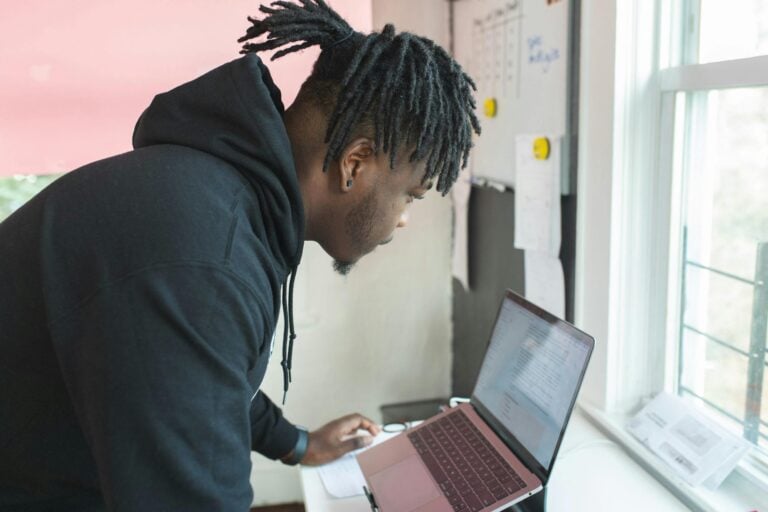
Mac alone time is the practice of carving out intentional, uninterrupted solo time with your Mac, using it as a dedicated space for deep thinking, creative work, or quiet restoration without the noise of meetings, notifications, or other people’s demands. For introverts especially, this kind of structured solitude isn’t a luxury or an avoidance tactic. It’s a genuine recharging strategy that aligns with how our minds actually work best.
My Mac has become something close to a thinking partner over the years. Not because the hardware is magic, but because of what I’ve trained myself to do with it when I’m alone. There’s a specific quality to the focus that arrives when it’s just me, a quiet room, and a screen that isn’t demanding anything social from me.
If you’ve ever felt most productive late at night or early in the morning, before anyone else is awake, you already understand the principle intuitively. This article is about making that instinct deliberate.
Much of what I explore here connects to a broader set of ideas I’ve been writing about for a while now. Our Solitude, Self-Care and Recharging hub pulls together the full picture of how introverts can build lives that actually restore them rather than drain them. Mac alone time is one specific piece of that larger puzzle.
Why Do Introverts Need Deliberate Alone Time in the First Place?
Somewhere around year twelve of running my advertising agency, I hired an executive coach. She was sharp, extroverted, and completely baffled by one thing I kept saying: that I did my best strategic thinking alone, not in brainstorms. She kept pushing me toward more collaborative sessions, more whiteboard meetings, more group ideation. I kept quietly producing my best work at 6 AM before anyone arrived at the office.
What drains your social battery?
Not all social exhaustion is the same. Our free quiz identifies your specific drain pattern and gives you personalised recharging strategies.
Find Your Drain PatternUnder 2 minutes · 8 questions · Free
What she didn’t understand, and what took me years to articulate clearly, is that introverts don’t recharge through interaction. We recharge through withdrawal from it. That’s not antisocial behavior. That’s neurology. The introvert brain processes stimulation differently, and extended social engagement, even enjoyable engagement, draws down a resource that only solitude can replenish.
The problem is that most professional environments are built around the assumption that collaboration equals productivity. Open offices, back-to-back meetings, group Slack channels, team lunches. All of it is designed for people who gain energy from external interaction. For those of us wired differently, that environment is genuinely exhausting in ways that are hard to explain without sounding like a complaint.
I spent a long time trying to match the extroverted leadership style I saw modeled around me. Louder in meetings, more available, more visibly engaged. It worked, in the sense that nobody questioned my commitment. But it cost me something significant in terms of clarity, creativity, and what I can only describe as inner coherence. When I finally stopped forcing that performance, everything about my work got sharper. If any of this resonates, the piece I wrote on why forcing extroversion leads to burnout goes deeper into what that shift actually feels like from the inside.
Mac alone time, at its core, is a structured response to this reality. It’s a way of protecting the conditions your mind needs to function at its best.
What Makes the Mac a Particularly Good Tool for Introvert Solitude?
You could make the case that any computer serves this purpose. And you’d be partially right. But there’s something about the Mac ecosystem specifically that I’ve found conducive to the kind of deep, distraction-resistant work that introvert solitude is meant to produce.
Focus Mode on macOS is genuinely useful. When I activate it for a writing or strategy session, my phone goes quiet, notifications disappear, and the only thing visible is whatever I’ve chosen to work on. That boundary isn’t just technical. It’s psychological. It signals to my brain that this time is protected.
Multiple Desktops, which Apple calls Spaces, let me create distinct mental environments within the same machine. One Space for writing. One for research. One for client work. Switching between them feels like moving between rooms in a house, each with its own purpose and energy. That kind of compartmentalization suits how an INTJ mind works, where context and structure support rather than restrict deep thinking.
The physical setup matters too. I’ve tested a lot of gear over the years in pursuit of a workspace that genuinely supports sustained focus. My six-month comparison of Herman Miller and Steelcase chairs taught me that physical comfort isn’t a perk. It’s a prerequisite for the kind of long solo sessions where real thinking happens. Discomfort is just another form of distraction.

Lighting is another variable most people underestimate. After spending ninety days experimenting with smart lighting setups in my home office, I found that warm, lower-intensity light in the late afternoon created noticeably better conditions for reflective work than overhead fluorescents. The full breakdown of what I found is in my smart lighting for focus test results, but the short version is that your environment shapes your mental state more than you think, and you have more control over it than you’re probably exercising.
How Is Mac Alone Time Different From Just Being on Your Computer?
This distinction matters more than it might seem at first glance. Most of us spend hours on our computers every day. Very few of us are spending that time in a way that actually restores us or produces deep work. There’s a meaningful difference between being on your Mac and using your Mac intentionally for alone time.
Passive screen time, scrolling social media, watching videos, bouncing between browser tabs, tends to stimulate without satisfying. It occupies attention without engaging it. For introverts, this kind of fragmented, reactive screen use can actually increase mental fatigue rather than reduce it, because it keeps the attention system activated without ever allowing the kind of deep processing that feels genuinely restorative.
Mac alone time is intentional. It has a defined purpose before you sit down. That purpose might be creative work, strategic planning, journaling, reading long-form content, building something in a personal project, or even structured reflection using a tool like a notes app. What it isn’t is reactive. You’re not responding to what the internet is throwing at you. You’re directing your own attention toward something you’ve chosen.
One of the most useful shifts I made was getting serious about my note-taking and thinking system. After months of frustration trying to force a single app to do everything, I landed on an approach that actually matched how my mind works. The article I wrote about Notion versus Obsidian and where your second brain should live covers that process in detail. Having a reliable system for capturing and connecting ideas changed what my alone time could produce.
Intentionality also means protecting the session from interruption. That might mean noise-canceling headphones if you’re in a shared space. I tested both Sony and Bose options extensively for exactly this purpose, and the results surprised me in a few ways. My Sony vs Bose noise-canceling headphone comparison is worth reading if you’re trying to create acoustic solitude in an environment that doesn’t cooperate naturally.
What Does the Research Actually Say About Solitude and Mental Restoration?
There’s a growing body of work on what solitude does for cognition and wellbeing, and it’s more nuanced than the popular narrative of “introverts need alone time, extroverts need people.” The benefits of intentional solitude appear to extend across personality types, though introverts tend to access them more readily and more urgently.
Greater Good Science Center at Berkeley has explored how voluntary solitude can support creative thinking by allowing the mind to move away from social performance and toward more internally generated thought. Their examination of solitude and creativity makes a compelling case that being alone, when chosen rather than imposed, functions differently in the brain than isolation does.
That distinction between chosen solitude and unwanted isolation is important. The Harvard Health breakdown of loneliness versus isolation clarifies why one can be restorative while the other is harmful. Mac alone time, structured and chosen, sits firmly in the restorative category.
A paper in Frontiers in Psychology examined how solitude functions as a self-regulatory resource, finding that people who engage in deliberate alone time tend to show better emotional regulation and reduced reactivity. For introverts who’ve spent years absorbing the emotional static of busy workplaces, that kind of regulation isn’t a minor benefit. It’s foundational.
Separately, research published through PubMed Central on solitude and psychological wellbeing points toward the importance of quality over quantity. It’s not simply about spending more time alone. It’s about the conditions and intentions surrounding that time. Unstructured, passive solitude doesn’t produce the same outcomes as solitude used for reflection, creation, or restoration.

Psychology Today has also covered the health case for embracing solitude, noting that many people who regularly practice intentional aloneness report improvements in clarity, mood, and a stronger sense of self. For introverts who’ve spent years apologizing for wanting this, that validation matters.
How Do You Actually Structure a Mac Alone Time Session?
The practical question is where most people get stuck. They understand the value in theory, but they sit down at their Mac without a clear structure and end up drifting toward email or news or anything that feels productive without requiring real depth.
consider this I’ve settled on after years of iteration.
Start with a defined window. Not “I’ll work until I feel done,” but a specific block of time. I use ninety minutes as my standard unit because it aligns reasonably well with natural attention cycles. Shorter than that and I often don’t reach the depth I’m after. Longer without a break and the quality starts to drop.
Set a single primary intention before you open the computer. One thing you’re there to do or think through. This sounds almost embarrassingly simple, but it changes everything about how the session unfolds. Without it, the default is reactive. With it, you have something to return to when attention wanders.
Activate whatever friction you need against distraction. For me, that means Focus Mode on macOS, headphones on even when there’s no sound playing, and my phone in another room. The headphones in particular create a psychological boundary that I find surprisingly effective even in silence. They signal to my own brain that I’m in a different mode.
During the agency years, I developed a version of this practice out of necessity rather than design. I had a standing 5:30 AM arrival time at the office, ninety minutes before anyone else showed up. No agenda, no email, just thinking time with a legal pad and later a laptop. Some of my best strategic work for clients came out of those sessions. Not because I was trying harder, but because I’d created the conditions where my actual thinking could surface.
Close the session with five minutes of capture. Whatever surfaced during the session, ideas, questions, connections, gets written down before you re-enter the world of other people’s demands. That transition is important. It’s the moment where the thinking becomes something you can actually use.
Is Wanting This Much Alone Time Actually Healthy?
This is the question that used to sit in the back of my mind for years, even as I built my professional life around protecting exactly this kind of solitude. Am I avoiding something? Is this a pattern that’s limiting me socially? Is wanting this much time alone actually a problem?
The honest answer is that the question itself reflects how thoroughly our culture has pathologized introversion. We’ve absorbed the message that preferring solitude is a symptom of something, a deficit of social skill or emotional health, rather than a legitimate orientation toward the world.
There’s a meaningful piece I wrote about why choosing solitude isn’t sinister that addresses this directly. The short version is that there’s a real difference between solitude as a chosen restorative practice and isolation as an avoidance mechanism. Most introverts who are drawn to alone time are experiencing the former, not the latter.
The CDC has noted that social disconnection carries genuine health risks, and that’s worth taking seriously. But social connection and constant social stimulation are not the same thing. Many introverts maintain deep, meaningful relationships while also protecting substantial amounts of alone time. Those two things coexist without contradiction.
What’s worth examining honestly is whether your alone time is helping you show up better in your relationships and work, or whether it’s become a way of avoiding things that need to be addressed. That’s a genuine question worth sitting with. For most introverts I’ve spoken with and written for, the answer is clearly the former. The alone time makes them better partners, better colleagues, better thinkers.

What Are the Specific Benefits Introverts Report From This Practice?
Beyond the research, the experiential picture is consistent across the introverts I’ve connected with through this site and through my years in professional environments.
Clarity of thinking is the most commonly reported benefit. When the social noise drops away and you have uninterrupted time to follow a thought wherever it leads, ideas that felt murky start to sharpen. Problems that seemed stuck begin to move. This isn’t mysterious. It’s what happens when a mind that processes deeply is finally given the conditions it needs.
Creative output tends to increase. Not because creativity requires isolation, but because many introverts find that their most generative ideas emerge in solitude and get refined in collaboration, rather than the other way around. I watched this pattern play out repeatedly in my agency. The creatives on my team who produced the most original work were often the ones who needed protected thinking time before they could contribute meaningfully in group sessions.
Emotional regulation improves. After a long week of client presentations, stakeholder management, and the particular exhaustion of performing extroversion in a boardroom, a structured solo session at my Mac felt like putting a phone on a charger. The anxiety that had been building through accumulated social demands would start to dissipate within the first twenty minutes.
A stronger sense of self tends to emerge over time. There’s something about regular, intentional solitude that keeps you connected to your own perspective. In busy professional environments, it’s easy to start absorbing other people’s priorities, values, and ways of seeing things. Alone time is partly how you remember who you actually are beneath all of that.
Additional PubMed research on solitude and psychological functioning supports the idea that intentional alone time contributes to a more stable sense of identity, particularly for people who tend toward deep internal processing. For INTJs and other introverted types who do much of their meaning-making internally, that kind of identity anchoring matters.
How Do You Protect Mac Alone Time When Life Keeps Interrupting?
The practical challenge isn’t understanding why this time matters. It’s protecting it against the constant pressure of availability that modern life generates.
During my agency years, protecting thinking time required active boundary-setting that felt uncomfortable at first. I had a team that expected me to be accessible, clients who assumed responsiveness was proportional to care, and a professional culture that treated busyness as a proxy for value. Carving out ninety minutes of genuine solitude in that environment meant saying no to things, and saying no in professional settings carries a cost that you have to decide you’re willing to pay.
What helped was treating the alone time like an external commitment. It went on the calendar. It had a start time and an end time. If someone wanted to schedule over it, I had a conflict. That reframe, from optional self-indulgence to non-negotiable appointment, changed how I held the boundary internally and how I communicated it externally.
At home, the challenge is different but equally real. Family, household demands, the ambient noise of shared living, all of it can make genuine solitude feel selfish or impractical. Communicating clearly about what you need, and why, tends to work better than quietly hoping people will intuit it. Most people who share space with introverts don’t understand the depth of the need until it’s explained plainly.
Technology boundaries matter too. The same device that enables your alone time is also the primary vector through which other people’s demands reach you. Turning off notifications isn’t just a productivity tip. It’s an act of self-respect. You’re saying that your thinking time is worth protecting from interruption, and that’s true regardless of what anyone else’s expectations are.

What Should You Actually Do During Mac Alone Time?
The answer depends on what you’re depleted of. That’s the question worth asking before each session rather than defaulting to a fixed routine.
If you’re creatively depleted, the session might be entirely generative. Writing without an audience, sketching ideas in a notes app, working on a personal project that has nothing to do with your professional obligations. The absence of external judgment is what makes this kind of work possible.
If you’re cognitively depleted from too many decisions and too much input, the session might be quieter. Reading something long and absorbing. Listening to music while doing something mechanical and low-stakes. Letting your mind wander without directing it anywhere specific. This kind of unfocused solitude has its own restorative value, distinct from productive solitude.
If you’re emotionally depleted from sustained social performance, the session might be reflective. Journaling about what’s been weighing on you. Using a notes app to process something you haven’t had time to think through properly. Sitting with a question that’s been nagging at you without trying to force a resolution.
The common thread is that you’re following your own internal signal rather than responding to external demands. That shift in orientation is itself restorative, regardless of what you’re actually doing during the time.
Psychology Today’s exploration of solo time as a preferred approach rather than a default behavior makes an interesting point about how people who consciously choose solitude tend to use it more effectively than those who simply end up alone. Intentionality, again, is what separates restorative solitude from empty time.
There’s more to explore on this topic and many others like it. The full collection of thinking around introvert self-care and restoration lives in our Solitude, Self-Care and Recharging hub, and it’s worth spending time there if this article has resonated with you.
Running on empty?
Five drain profiles, each with specific triggers, warning signs, and a recharging playbook.
Take the Free QuizUnder 2 minutes · 8 questions · Free
About the Author
Keith Lacy is an introvert who’s learned to embrace his true self later in life. After 20 years in advertising and marketing leadership, including running agencies and managing Fortune 500 accounts, Keith now channels his experience into helping fellow introverts understand their strengths and build fulfilling careers. As an INTJ, he brings analytical depth and authentic perspective to every article, drawing from both professional expertise and personal growth.
Frequently Asked Questions
What exactly is Mac alone time and why does it matter for introverts?
Mac alone time is intentional, uninterrupted solo time spent at your Mac for purposes you’ve chosen, whether that’s creative work, deep thinking, journaling, or quiet restoration. For introverts, it matters because it creates the conditions our minds need to recharge and process deeply. Unlike passive screen use, it’s directed and purposeful, which makes it genuinely restorative rather than simply time-filling.
How is Mac alone time different from just procrastinating or avoiding responsibilities?
The difference lies in intention and outcome. Procrastination is reactive, drifting toward distraction to avoid something uncomfortable. Mac alone time is proactive, a chosen practice with a defined purpose that produces clarity, creative output, or emotional restoration. A useful test is whether you feel more capable and clear after the session. Genuine alone time tends to improve your capacity to handle responsibilities, not diminish it.
How much Mac alone time do introverts actually need?
There’s no universal answer, and the amount varies based on how socially demanding your week has been, your baseline sensitivity to stimulation, and what kind of work or life pressures you’re carrying. Many introverts find that ninety minutes of intentional alone time per day makes a meaningful difference. Others need more. The more useful question is whether you’re currently getting enough, which you can gauge by whether you feel chronically depleted, irritable, or mentally foggy in ways that solitude tends to resolve.
Can Mac alone time help with creative blocks and professional performance?
Yes, and this is one of the most consistent patterns I’ve observed both personally and in the introverts I’ve worked with professionally. Creative blocks often aren’t a lack of ideas. They’re the result of never giving the mind enough quiet to hear what’s already there. Structured alone time creates the conditions where internal processing can surface. Many introverts find that their best professional thinking happens in solitude and gets refined in collaboration, rather than emerging in group brainstorms.
How do you protect Mac alone time when family or work keeps interrupting?
Treat it like an external commitment rather than an optional personal preference. Block it on your calendar with a start and end time. Communicate clearly with the people you share space with about what you need and why. Use macOS Focus Mode and put your phone in another room to reduce the technical vectors for interruption. The boundary feels uncomfortable at first, especially if you’ve spent years treating your own needs as negotiable, but it becomes easier once you’ve experienced consistently what protected alone time actually produces.