

Managing media challenges as an introvert means more than just limiting screen time. It means recognizing that constant digital noise, the pings, the headlines, the social feeds, drains your energy in ways that are real and measurable, and setting deliberate boundaries around media consumption is one of the most protective things you can do for your mental health and your capacity to grow.
Most of the advice out there treats media overload as a productivity problem. For introverts, it runs deeper than that. It’s a sensory and emotional load that accumulates quietly until you’re running on empty and you’re not quite sure why.
There’s a broader conversation worth having about how introverts manage their energy across all kinds of stimulation, not just media. Our Energy Management and Social Battery hub covers that full landscape, and this article fits squarely within it. Media consumption is one of the most overlooked contributors to social battery depletion, and it deserves its own honest examination.
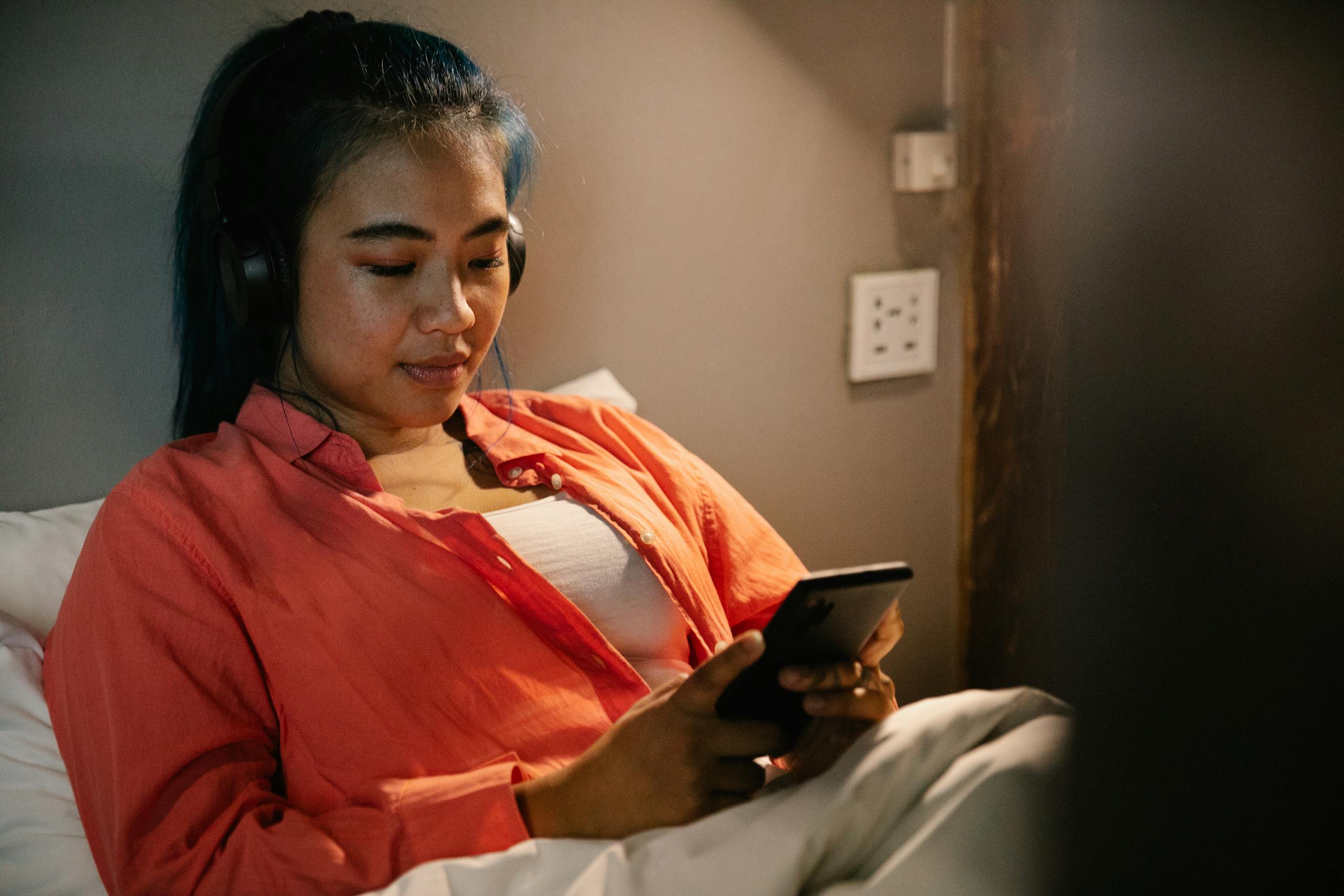
Why Does Media Feel So Much More Exhausting for Introverts?
Back when I was running my agency, we had a war room setup during major campaign launches. Every screen in the room was pulling live data, social feeds, news tickers, competitor monitoring, client messages. My extroverted colleagues seemed to thrive in it. They’d be cracking jokes, bouncing between conversations, feeding off the chaos. I’d sit in that room and feel something quietly tightening in my chest after about forty minutes.
What’s your personality type?
Take our free 40-question assessment and get a detailed personality profile with dimension breakdowns, context analysis, and personalised insights.
Discover Your Type8-12 minutes · 40 questions · Free
At the time, I thought something was wrong with me. I was the CEO. I was supposed to love this. What I didn’t understand then was that my brain was processing all of that input at a different depth than my extroverted colleagues. Not better or worse, just differently. Every notification, every breaking story, every ambient conversation was being filtered through layers of analysis and emotional processing. I wasn’t skimming the surface. I was absorbing it.
Neuroscience offers some grounding here. Cornell University research on brain chemistry and personality has pointed to differences in how introverts and extroverts respond to dopamine and stimulation. Introverts tend to be more sensitive to external input, which means environments designed for constant information flow hit harder and deplete faster.
Media, in its modern form, is essentially a stimulation machine. It’s engineered to keep you engaged, to reward checking, to create a low-level anxiety that makes you feel like you’ll miss something important if you look away. For someone already wired to process deeply, that’s not just distracting. It’s genuinely costly.
This is also why many introverts who identify as highly sensitive people find media consumption particularly taxing. The overlap between introversion and high sensitivity is real, and if you’ve ever noticed that an introvert gets drained very easily compared to their extroverted peers, media saturation is often a significant and underappreciated part of that equation.
What Does the Drain Actually Look Like in Real Life?
It doesn’t always announce itself clearly. That’s the tricky part.
Sometimes it looks like irritability that shows up about an hour after you’ve been scrolling. Sometimes it’s a kind of mental fog that settles in by mid-afternoon even though you haven’t been in a single meeting. Sometimes it’s the way a conversation with someone you love feels like too much effort by 7pm, even though you’ve technically been “alone” all day.
I had a client, a Fortune 500 retail brand, that required daily status reports pulled from about six different platforms. We’re talking social listening tools, analytics dashboards, media monitoring feeds, internal Slack channels, and client email threads. My team handled most of it, but during high-stakes periods I’d be in the middle of all of it personally. I started noticing I was ending those stretches feeling the same way I felt after a full day of back-to-back client presentations. Hollowed out.
What I eventually understood was that my brain doesn’t distinguish between social stimulation and media stimulation the way I assumed it did. Both require the same kind of active processing. Both pull from the same reserves. Psychology Today’s examination of why socializing drains introverts more than extroverts gets at this well, and the same underlying mechanism applies to heavy media consumption.
For those who are also highly sensitive, the drain compounds. Emotional content in media, conflict-heavy news cycles, distressing social media threads, doesn’t just pass through you. It lands. It stays. Understanding how to protect your reserves becomes less of a lifestyle tip and more of a genuine necessity. The guidance in HSP energy management for protecting your reserves speaks directly to this, and it’s worth reading alongside anything you’re doing to build better media habits.
How Does Sensory Sensitivity Intersect With Media Overload?
This is where the conversation gets more specific, and more useful.
Media isn’t just information. It’s sensory experience. Screens produce light. Videos produce sound. Notifications produce a physical startle response. The tactile experience of holding a device and feeling it vibrate becomes, over time, a conditioned trigger that keeps your nervous system in a low-level state of alert.
Noise is one of the most underestimated components of media fatigue. Autoplay videos, background music in apps, notification sounds layered throughout your day. For introverts who are sensitive to auditory input, this creates a cumulative load that’s hard to see but easy to feel. The strategies in HSP noise sensitivity coping approaches translate directly to media environments, particularly around creating intentional quiet periods and managing ambient sound.
Light is another factor that rarely gets discussed in media boundary conversations. Screen brightness, blue light exposure, and the visual density of certain platforms, think news sites with flashing ads and autoplay thumbnails, all create a form of visual stimulation that strains sensitive nervous systems. If you’ve ever ended a heavy screen day with tired eyes, a mild headache, or a strange sense of visual overwhelm, you’re experiencing something real. The conversation around HSP light sensitivity and how to manage it offers practical context for why this happens and what you can do about it.
Even the physical act of device use matters. Holding a phone for extended periods, the weight of it, the constant micro-adjustments, the haptic feedback. For people with heightened tactile sensitivity, these sensations add up. It might sound minor, but when you’re already processing a heavy information load, every layer of physical input costs something. The research on HSP touch sensitivity and tactile responses helps explain why some introverts feel physically worn out after long device sessions in a way that goes beyond eye strain.

What Makes Setting Media Boundaries Harder Than It Sounds?
Here’s something I’ve sat with for a long time: knowing you need a boundary and actually holding it are two completely different skills.
When I was running the agency, staying informed felt like a professional obligation. Missing a trend, a news cycle, a competitor’s campaign felt like negligence. My identity as a leader was partially built on being the person who knew what was happening. Stepping back from media felt like stepping back from competence.
That’s a story a lot of introverts tell themselves, and it’s worth examining carefully. The belief that staying constantly connected equals staying effective is one that benefits platforms and employers far more than it benefits you. Harvard Health’s perspective on introverts and social engagement touches on how introverts often internalize external expectations in ways that work against their natural functioning, and media consumption is a perfect example of this pattern.
There’s also the anxiety loop to contend with. Media, especially news and social media, is designed to create a sense that something important is always happening right now, and that you need to know about it immediately. For an introvert who already tends toward internal processing and rumination, this is a particularly effective trap. You check because you’re anxious. The checking increases your anxiety. You check again to manage it.
The physiological dimension of this is worth taking seriously. Research published in PubMed Central on stress and information processing points to how chronic low-level stress responses affect cognitive function and emotional regulation over time. Constant media exposure contributes to exactly this kind of chronic activation, which means the cost isn’t just feeling tired. It’s a gradual erosion of your capacity to think clearly and respond thoughtfully.
And then there’s the social pressure. Media is how people stay culturally connected. Opting out, even partially, can feel isolating. When colleagues reference a meme or a news story and you’ve been deliberately offline, there’s a small but real social cost. For introverts who already feel like they’re managing a gap between how they naturally function and what the world expects, that cost can feel disproportionately significant.
What Does a Sustainable Media Boundary Actually Look Like?
Sustainable is the word I keep coming back to. Not perfect. Not extreme. Sustainable.
After years of swinging between media immersion and guilt-driven detoxes, what I’ve found actually works is building structure rather than relying on willpower. Willpower is a finite resource, and it depletes in exactly the same way your social battery does. Leaning on it to manage media consumption is like trying to hold back water with your hands.
Structure means designated windows for media consumption rather than open-ended availability. It means deciding in advance which sources genuinely serve you and which ones you’re consuming out of habit or anxiety. It means creating physical environments that support the level of stimulation you actually need, not the level that’s been defaulted onto you.
One of the most useful shifts I made was separating information that served my work from information I was consuming to manage discomfort. The first category had a legitimate claim on my time. The second was just noise dressed up as necessity. Once I could tell the difference, the decisions became cleaner.
Finding the right level of stimulation is genuinely individual work. What overwhelms one person is background noise to another. The framework in HSP stimulation and finding the right balance is a useful starting point for figuring out where your own thresholds actually sit, which is the prerequisite for building any boundary that will hold.

Practically speaking, the boundaries that have worked for me and for many introverts I’ve talked with tend to share a few characteristics. They’re time-based rather than content-based, meaning you set windows for consumption rather than trying to filter what you consume. They include genuine offline periods, not just “quiet mode” on your phone but actual disconnection. And they’re built around your energy patterns, not arbitrary schedules. If your clearest thinking happens in the morning, protecting that window from media input is worth more than any productivity hack.
How Do You Hold the Boundary When the World Keeps Pushing Back?
Setting a boundary is one thing. Holding it when your phone buzzes, when a colleague sends you a link, when there’s a breaking news story and everyone around you is reacting, that’s where the real work is.
What I’ve found is that the boundary holds better when it’s grounded in something you actually value rather than something you’re trying to avoid. “I’m not checking social media because it drains me” is a fragile foundation. “I’m protecting my morning thinking time because that’s when I do my best work and I’ve seen what happens to my output when I don’t” is a much stronger one.
This is also where the growth piece comes in. Setting media boundaries isn’t just about protecting your energy in the moment. It’s about what becomes possible when you’re not running on a depleted system. The quality of your thinking, the depth of your relationships, your capacity to do work that actually matters to you. All of that improves when you’re not constantly absorbing and processing a stream of external noise.
There’s also a real skill in communicating these boundaries to people around you without it becoming a whole thing. I’ve found that being matter-of-fact works better than being apologetic. “I check messages twice a day” is a complete sentence. It doesn’t require explanation or defense. The people who respect you will adapt. The ones who don’t were already a problem.
The connection between media boundaries and broader mental health is worth naming directly. A 2024 study published in Springer’s BMC Public Health examined how digital media use patterns relate to psychological wellbeing, finding meaningful associations between heavy passive consumption and indicators of stress and reduced wellbeing. For introverts already managing a higher baseline of stimulation sensitivity, those associations are likely even more pronounced.
The other piece is consistency over time. Boundaries that work aren’t dramatic declarations. They’re quiet, repeated choices that gradually reshape your relationship with media from something that happens to you into something you consciously choose. That shift takes longer than a week. It’s worth it.
What Does Growth Actually Look Like on the Other Side of This?
I want to be honest about something: the first few weeks after I significantly reduced my media consumption during the agency years felt uncomfortable in a way I hadn’t anticipated. Not because I was missing information. Because I’d been using media as a way to avoid sitting with my own thoughts.
That’s a harder thing to admit than the usual “I was too busy” framing. But it’s true. The constant input was a form of noise that kept certain internal conversations from happening. When I reduced it, those conversations started. Some of them were productive. Some were uncomfortable. All of them were necessary.
Growth for introverts often works this way. It happens in the quiet. It requires space that constant stimulation fills up. The capacity for deep thinking, for genuine reflection, for the kind of insight that actually changes how you operate, all of that needs room that media consumption reliably consumes.
What became available to me on the other side of better media boundaries wasn’t just more energy, though that was real. It was a clearer sense of what I actually thought about things, separate from the ambient noise of what everyone else was saying. As an INTJ, my natural mode is to form independent assessments. Constant media exposure was undermining that, flooding my processing system with other people’s reactions before I’d had a chance to form my own.
The science behind why introverts need genuine downtime supports this. Introvert brains process information through longer internal pathways, which means they need actual quiet to complete that processing. Media fills the gaps that processing requires. Protecting those gaps isn’t laziness. It’s how you actually think.
There’s also something worth saying about the relationship between media boundaries and self-respect. Every time you hold a boundary you’ve set for yourself, you’re reinforcing the belief that your needs are legitimate and worth protecting. That compounds over time in ways that extend well beyond media consumption. It changes how you show up in relationships, in work, in the choices you make about how to spend your time and attention.

One more thing I want to name, because I think it often gets glossed over in conversations about digital wellness. The goal of managing your media consumption isn’t to become someone who doesn’t care about the world. It’s to engage with the world from a place of genuine capacity rather than depletion. An introvert who’s protecting their energy is not checked out. They’re preserving the depth of engagement that makes their contributions meaningful. That’s a distinction worth holding onto.
For a broader look at how energy management connects across all the areas where introverts face depletion, the full Energy Management and Social Battery hub pulls together everything from sensory sensitivity to social recovery strategies in one place.
The connection between media habits and how introverts process stimulation is also explored through PubMed Central research on emotional regulation and cognitive load, which offers useful scientific grounding for why managing your information environment is a genuine mental health practice, not just a preference.
About the Author
Keith Lacy is an introvert who’s learned to embrace his true self later in life. After 20 years in advertising and marketing leadership, including running agencies and managing Fortune 500 accounts, Keith now channels his experience into helping fellow introverts understand their strengths and build fulfilling careers. As an INTJ, he brings analytical depth and authentic perspective to every article, drawing from both professional expertise and personal growth.
Frequently Asked Questions
Why do introverts feel more drained by media consumption than extroverts?
Introverts process information through deeper internal pathways, which means media input requires more cognitive and emotional effort to absorb. Where an extrovert might skim a news feed and move on, an introvert tends to process, analyze, and emotionally register what they’ve consumed. That depth of processing is a genuine strength in many contexts, but it means media environments that are designed for constant, shallow engagement are disproportionately costly for introverted nervous systems.
What’s the difference between a media detox and a sustainable media boundary?
A media detox is a temporary, often reactive measure. You feel overwhelmed, you go offline for a weekend, you feel better, and then you return to the same patterns. A sustainable media boundary is a structural change to how you engage with media on an ongoing basis. It involves designated consumption windows, intentional choices about which sources serve you, and physical or environmental supports that make the boundary easier to maintain. The difference is between managing a crisis and redesigning your relationship with media entirely.
How do I handle professional situations where constant media monitoring feels expected?
Separate what’s genuinely required from what’s assumed. In most professional contexts, you don’t need to monitor media in real time. You need to be informed and responsive. Those are different things. Batching your media monitoring into two or three focused windows per day often serves professional needs just as well as constant checking, and it protects your cognitive capacity for the work that actually requires your depth. Being explicit with colleagues and clients about your communication rhythms also reduces the ambient pressure to be perpetually available.
Can media boundaries actually improve my thinking and creativity?
Yes, and the mechanism is fairly straightforward. Introverts do their best thinking in quiet, with space for internal processing. Constant media input fills that space with other people’s ideas, reactions, and framings before you’ve had a chance to develop your own. When you create genuine offline periods, you give your brain the conditions it actually needs to form original thoughts, make connections, and arrive at insights. Many introverts report that their most useful ideas come during or after periods of deliberate disconnection.
What should I do when holding a media boundary feels isolating?
Acknowledge the feeling without letting it override the boundary. Some degree of cultural disconnection is a real cost of media boundaries, and it’s worth being honest about that rather than pretending it doesn’t exist. The useful question is whether the cost of the boundary is smaller or larger than the cost of not having it. For most introverts, the energy and clarity gained from reduced media consumption far outweighs the occasional moment of not getting a reference. It also helps to have a few trusted sources you check intentionally, so you’re not completely disconnected from the world, just more deliberate about how you engage with it.