
Meditation and dissociation have a complicated relationship that most wellness content quietly ignores. For some people, particularly those with a tendency toward deep internal processing, sitting down to meditate doesn’t produce calm. It produces a strange, unmoored feeling, as if the floor has shifted slightly beneath you. If you’ve ever emerged from a meditation session feeling more disconnected from yourself than when you started, you’re not experiencing failure. You may be experiencing a known phenomenon where mindfulness practice triggers or amplifies dissociative states.
That distinction matters enormously, and understanding it could change how you approach your mental health practice entirely.
Much of what I write about on this site connects back to the broader territory of introvert mental health, and this topic sits squarely in that space. Our Introvert Mental Health hub covers the full range of challenges that quieter, more internally oriented people face, and the meditation-dissociation connection adds a layer that deserves its own careful examination.

What Is Dissociation and Why Does It Matter in Meditation?
Dissociation exists on a spectrum. At the mild end, it’s that familiar sensation of driving home and not remembering the last ten minutes of the route, or reading a page of text and realizing your mind was somewhere else entirely. At the more significant end, it involves feeling detached from your own body, watching yourself from a distance, or experiencing the world as flat and unreal. Clinicians refer to these more pronounced states as depersonalization (feeling detached from yourself) and derealization (feeling detached from your surroundings).
What drains your social battery?
Not all social exhaustion is the same. Our free quiz identifies your specific drain pattern and gives you personalised recharging strategies.
Find Your Drain PatternUnder 2 minutes · 8 questions · Free
Most people experience mild dissociation occasionally. It becomes worth paying attention to when it happens frequently, feels distressing, or is triggered by something meant to help you, like meditation.
The clinical literature on dissociative states describes them as the mind’s way of creating distance from overwhelming experience. That framing is important. Dissociation isn’t random. It’s a protective mechanism, and understanding that changes how we should think about it appearing during meditation.
Meditation asks you to turn your attention inward. For most people, that’s a gentle, grounding experience. For people who carry unprocessed trauma, significant anxiety, or a particularly intense relationship with their own inner world, turning inward can feel like opening a door you weren’t ready to open. The mind responds by stepping back from itself.
Why Are Introverts and HSPs Particularly Vulnerable to This?
Introverts, and especially highly sensitive people, process the world at a depth that most people don’t. That’s not a poetic exaggeration. The internal landscape is richer, more textured, and often more demanding. When you already spend a significant portion of your mental energy filtering and interpreting your own experience, adding a formal practice that intensifies that inward focus can sometimes tip the scale.
I’ve thought about this a lot in relation to my own experience as an INTJ. My default mode is internal. I’m always processing, always running quiet analyses of situations, emotions, and patterns. When I first started meditating seriously, I expected to find stillness. What I found instead was a very loud interior. Not chaotic exactly, but amplified. Every sensation felt magnified, every passing thought felt weighted. It took me a while to understand that my brain wasn’t broken. It was just doing what it always does, only now I’d removed all the external distractions that usually gave it somewhere else to point.
For highly sensitive people, the dynamic can be even more pronounced. The kind of sensory overwhelm that HSPs regularly experience doesn’t necessarily quiet down during meditation. Sometimes it intensifies, because the practice removes the mental busyness that was providing a buffer.
Add to that the fact that many introverts and HSPs carry a higher baseline of anxiety, and you have a situation where a practice designed to reduce distress can sometimes, paradoxically, create more of it. The anxiety that HSPs experience often has roots in hypervigilance, an always-on monitoring of internal and external states. Meditation doesn’t automatically turn that off. Sometimes it gives it a cleaner channel to run through.
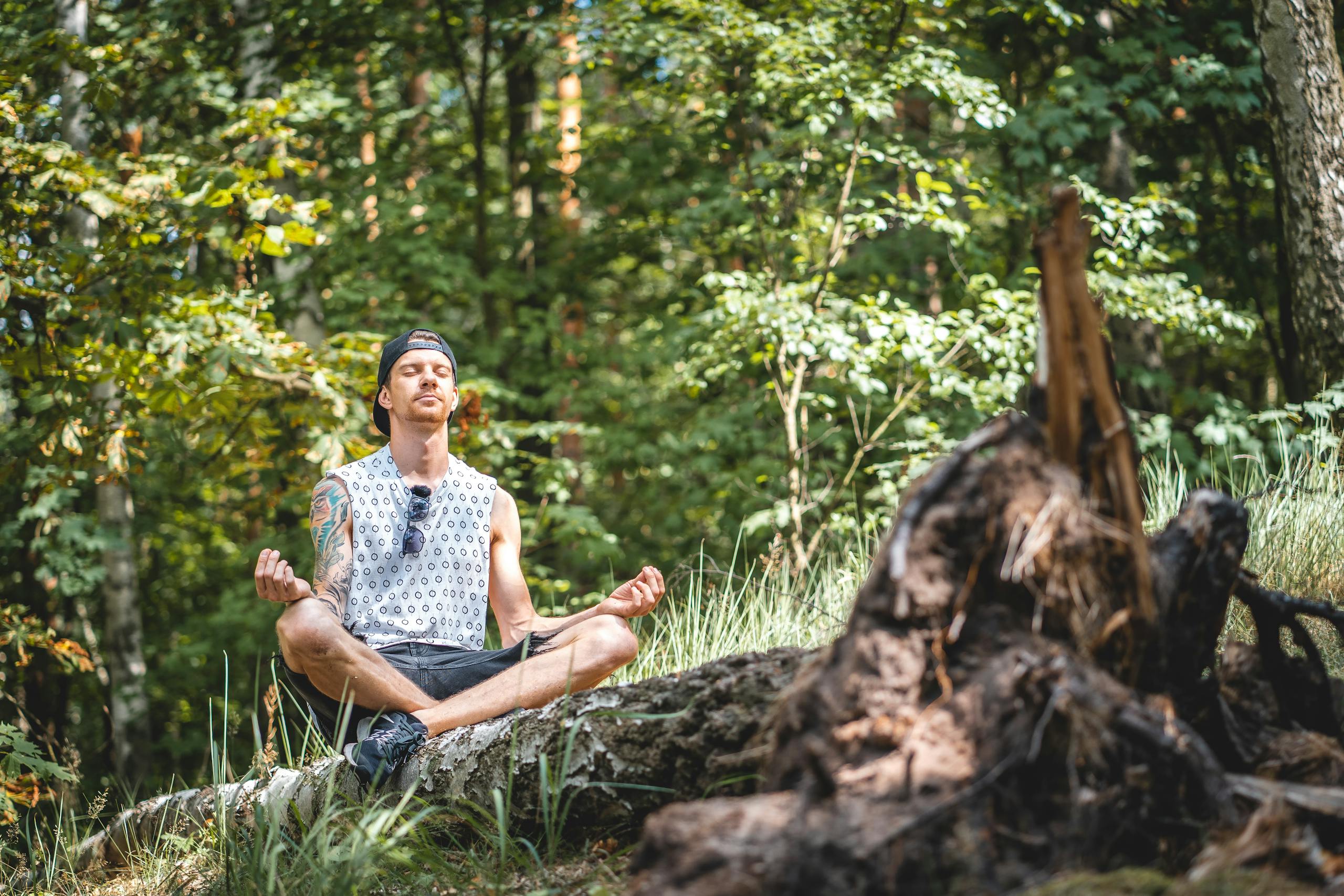
What Does Meditation-Induced Dissociation Actually Feel Like?
The experience varies, but there are common threads. Some people describe a floating sensation that doesn’t feel peaceful, more like being untethered. Others notice that sounds seem to come from further away than they should, or that their hands look strange when they open their eyes, as if they belong to someone else. Some people feel a sudden emotional blankness, not calm, but empty in a way that feels off.
There’s also a version that’s more cognitive. You sit down to meditate and find yourself unable to locate your thoughts. Not in the peaceful “my mind is quiet” way, but in a disorienting “I don’t know who I am right now” way. The sense of self becomes slippery.
One of my former creative directors at the agency, a deeply introspective person who had been meditating for years, described it to me once as “falling through the floor of yourself.” She’d had to stop using certain guided meditations entirely because body scan practices specifically triggered that falling sensation. At the time I didn’t have the framework to fully understand what she was describing. Looking back, it maps almost exactly onto what the clinical literature describes as depersonalization triggered by intensive inward focus.
What’s worth noting is that this experience is distinct from the emotional processing that meditation is supposed to facilitate. Healthy emotional processing, the kind that deeply feeling people do naturally, involves moving through emotions with awareness. Dissociation moves away from them by creating distance. The two can look similar from the outside but feel very different from the inside.
Is There a Link Between Trauma and Meditation-Induced Dissociation?
Yes, and it’s significant. Dissociation as a trauma response is well-documented. The mind learns to create distance from overwhelming experience as a survival mechanism. When someone with a trauma history sits down to meditate, the practice can inadvertently access stored material that the nervous system isn’t ready to process without support.
The research published in PubMed Central on mindfulness and its adverse effects acknowledges that a meaningful subset of meditators report negative experiences, including anxiety, depersonalization, and in some cases the surfacing of traumatic memories. This isn’t a fringe finding. It’s a documented outcome that the wellness industry has been slow to incorporate into how it talks about meditation.
For introverts and HSPs who tend to absorb and hold emotional material deeply, the intersection of trauma and meditation deserves particular attention. The same quality that makes highly sensitive people extraordinary at empathy, the ability to feel things at depth, can also mean that unprocessed pain is stored with more intensity. That empathic depth is genuinely a gift in many contexts. In the context of meditation, it means the inward turn can sometimes land harder than expected.
None of this means that people with trauma histories shouldn’t meditate. It means they may need a different approach, more structure, more grounding, and ideally some support from a therapist familiar with both trauma and contemplative practice.

How Do You Know If What You’re Experiencing Is Dissociation or Just Deep Relaxation?
This is a genuinely important question, and the answer lies mostly in how the experience feels rather than how it looks from the outside. Deep relaxation feels like a softening. There’s still a sense of self present, still a feeling of being located in your body, still a quality of ease. You might feel pleasantly floaty, but you know where you are.
Dissociation feels different. There’s often an edge of unease, even when the experience isn’t overtly distressing. The self feels less solid. Coming out of it can feel disorienting, like waking up in an unfamiliar room. Some people describe a quality of watching themselves from a slight distance, not with curiosity but with a kind of detached concern.
A few specific signals worth paying attention to: if you feel more anxious after meditation than before, if you feel emotionally numb rather than calm, if your sense of your own body feels strange or foreign, or if you feel like you’re watching the room from slightly outside yourself, those are worth taking seriously.
I spent a period in my mid-forties dealing with burnout that I’d systematically ignored for too long. Running an agency through a particularly brutal stretch of client demands and staff turnover had depleted me in ways I didn’t fully register until I crashed. During that period, I tried to use meditation as part of my recovery. Some sessions were genuinely helpful. Others left me feeling hollowed out in a way I couldn’t explain. Looking back, I think I was hitting dissociative states without knowing what they were. I just thought I was doing it wrong.
That’s a common interpretation. People assume the disconnected feeling means they’ve failed at meditating. Often it means their nervous system is communicating something worth listening to.
What Meditation Styles Are Safer for People Prone to Dissociation?
Grounding is the operative word here. Meditation practices that anchor attention to concrete, external, or physical experience tend to be safer for people who are prone to dissociation than practices that encourage a more open, spacious, or “letting go” quality of attention.
Open monitoring meditation, which invites you to observe thoughts without attachment, can be particularly challenging for people with dissociative tendencies because it loosens the grip on a fixed point of reference. If your sense of self is already somewhat unstable, removing the anchor can make things worse.
Focused attention practices tend to be more grounding. Counting breaths, focusing on the physical sensation of breath at the nostrils or the belly, or even using a mantra can provide the kind of cognitive anchor that keeps the mind from drifting into dissociative territory. The evidence around focused attention meditation suggests it produces different neurological effects than open monitoring practices, and for people with anxiety or dissociative tendencies, that difference can be clinically meaningful.
Walking meditation is another option worth considering. The physical engagement of movement provides a continuous grounding signal that purely still practices don’t offer. For people who struggle with body scan practices specifically, because the sustained inward focus on physical sensations can trigger dissociation, movement-based alternatives can provide the benefits of meditative attention without the destabilizing effects.
Eyes-open meditation is also underused. Many people assume meditation requires closed eyes, but keeping eyes softly open and resting on a fixed point can help maintain the sense of being located in a real, physical space. That perceptual anchor makes dissociation less likely.

What Role Does Perfectionism Play in Making This Worse?
More than most people realize. Highly sensitive people and introverts often bring significant perfectionism to their inner lives. The same careful attention to detail and high standards that make them thoughtful, thorough, and self-aware can also make them harsh self-critics when they feel they’re failing at something.
Meditation is an area where perfectionism can create a genuinely counterproductive loop. You sit down to meditate. You feel disconnected instead of calm. You interpret that as failure. The self-criticism activates more anxiety. The anxiety intensifies the dissociative response. You try harder to meditate correctly. The trying itself becomes another form of tension.
I watched this exact pattern play out in my own team during a period when we brought in a mindfulness consultant for agency-wide stress management. Several of the most conscientious people on the team, the ones who took every task seriously and held themselves to the highest standards, reported feeling worse after the sessions. They were applying the same perfectionist energy to meditation that they applied to client presentations. The practice became another performance to evaluate themselves against.
If that pattern resonates, it’s worth reading more about how perfectionism specifically affects highly sensitive people, because the meditation context is just one expression of a much broader dynamic that tends to undermine wellbeing in quiet but persistent ways.
When Should You Pause Meditation and Seek Professional Support?
There are clear signals that suggest meditation alone isn’t the right tool for what you’re dealing with, at least not without professional support alongside it.
If dissociative experiences are happening outside of meditation and becoming more frequent, that warrants attention. If you’re using meditation to avoid feeling difficult emotions rather than to process them, the practice may be reinforcing avoidance rather than building resilience. If the disconnected feelings persist for hours after a session, or if meditation is consistently leaving you feeling worse rather than better, those are meaningful signals.
The National Institute of Mental Health’s resources on anxiety are worth consulting if you’re trying to understand whether what you’re experiencing has roots in an anxiety condition. Dissociation and anxiety are closely linked, and sometimes what presents as a meditation problem is actually an anxiety management problem that meditation was never going to solve on its own.
There’s also a particular vulnerability around rejection sensitivity and self-worth that can complicate the meditation experience for HSPs. When someone already carries wounds around rejection and emotional pain, sitting quietly with their own thoughts can bring those wounds into sharp relief. That’s not a sign that meditation is wrong for them. It’s a sign that they might benefit from working through some of that material with a therapist before or alongside their meditation practice.
The American Psychological Association’s framework on resilience is useful here because it emphasizes that building psychological resilience isn’t about white-knuckling through difficult experiences alone. It’s about accessing appropriate support, developing realistic coping strategies, and recognizing that some challenges genuinely require professional help to work through safely.
How Do You Build a Meditation Practice That Actually Works for Your Nervous System?
Start shorter than you think you need to. Five minutes of grounded, focused attention is more valuable than thirty minutes of dissociated drifting. Many people who struggle with meditation are trying to sustain sessions that are simply too long for where their nervous system currently is. Building tolerance gradually is both safer and more effective.
Pay attention to time of day. Some people find that meditating when they’re already tired makes dissociation more likely, because the mind is already loosening its grip on focused attention. Others find that meditating when they’re alert and slightly activated makes it harder to settle. Experiment with different times and notice the patterns.
Consider adding a brief grounding practice before you meditate. Feeling your feet on the floor, pressing your palms together, or doing a few slow, deliberate breaths with an extended exhale can help regulate the nervous system before you turn inward. That preparation creates a more stable foundation for the practice itself.
Be willing to stop. This sounds obvious, but for people with perfectionist tendencies, stopping a meditation session early can feel like quitting. It isn’t. If you notice dissociative signals during a session, opening your eyes, looking around the room, and orienting yourself to your physical environment is exactly the right response. The practice serves you. You don’t serve the practice.
After years of trial and error, what works best for me as an INTJ is a highly structured approach. I use a timer, a specific focus point, and a very clear intention before I start. The structure gives my analytical mind something to hold onto rather than spinning off into abstraction. What works for me won’t work for everyone, but the principle of adapting the practice to your actual nervous system rather than forcing your nervous system to adapt to a generic practice holds broadly.
There’s also value in recognizing that meditation isn’t the only path to the benefits it promises. The academic literature on contemplative practices includes a wide range of approaches beyond seated mindfulness, including contemplative movement, creative practice, time in nature, and deliberate rest. For people who find that traditional meditation consistently triggers dissociation, one of these alternatives may provide a safer and equally effective route to the same outcomes.

What Does Healthy Meditation Look Like for Introverts and HSPs?
Healthy meditation for people who process deeply and feel intensely looks different from the generic version sold in wellness apps. It’s slower to build. It’s more attentive to feedback from the nervous system. It treats discomfort as information rather than resistance to push through.
It also tends to be more integrated with the rest of life rather than treated as a separate, special activity. For introverts who already spend significant time in reflective inner states, formal meditation may be most valuable as a brief, structured anchor rather than a lengthy immersive practice. The depth is already there. The practice doesn’t need to manufacture it.
One thing I’ve found genuinely useful is treating the moments just after meditation as part of the practice itself. Rather than jumping immediately back into activity, taking two or three minutes to re-orient, to notice where you are, what you can see and hear, and how your body feels in the chair, helps integrate whatever arose during the session and prevents the disoriented, dissociated quality that can linger when the transition is too abrupt.
The goal, if we can call it that, is a practice that leaves you feeling more yourself, not less. More located in your body, not floating above it. More connected to your experience, not watching it from a distance. When meditation is working, it should feel like coming home. When it consistently feels like losing your footing, something needs to change.
If this topic connects with other aspects of your mental health as an introvert or highly sensitive person, there’s much more to explore. The full range of these experiences is covered in the Introvert Mental Health hub, where you’ll find resources on everything from anxiety to emotional processing to sensory overwhelm.
Running on empty?
Five drain profiles, each with specific triggers, warning signs, and a recharging playbook.
Take the Free QuizUnder 2 minutes · 8 questions · Free
About the Author
Keith Lacy is an introvert who’s learned to embrace his true self later in life. After 20 years in advertising and marketing leadership, including running agencies and managing Fortune 500 accounts, Keith now channels his experience into helping fellow introverts understand their strengths and build fulfilling careers. As an INTJ, he brings analytical depth and authentic perspective to every article, drawing from both professional expertise and personal growth.
Frequently Asked Questions
Can meditation actually cause dissociation?
Yes, for some people it can. Meditation practices that involve sustained inward focus can trigger dissociative states, particularly in people with trauma histories, high anxiety, or a strong tendency toward deep internal processing. This is a documented phenomenon, not a personal failing. The experience typically ranges from mild feelings of unreality or floating to more pronounced depersonalization. Adjusting the type of meditation, session length, and preparation can significantly reduce this risk.
Why do introverts and HSPs seem more prone to meditation-induced dissociation?
Introverts and highly sensitive people already operate with a rich, active inner world. Adding a formal practice that intensifies inward focus can amplify what’s already present, including unprocessed emotions, anxiety, and stored stress. The same depth of processing that makes these individuals thoughtful and perceptive can also mean the inward turn of meditation lands with more force than it does for people with a less active interior life. This isn’t a weakness. It’s a characteristic that calls for a more tailored approach to practice.
How can I tell if I’m dissociating during meditation or just relaxing deeply?
Deep relaxation feels like a softening with a stable sense of self still present. Dissociation feels different: there’s often an edge of unease, a sense of watching yourself from a slight distance, emotional numbness rather than calm, or a feeling that your body or the room seems slightly unreal. Coming out of deep relaxation feels refreshing. Coming out of dissociation often feels disorienting. If you consistently feel more anxious, emptied out, or disconnected after meditation than before, that’s a meaningful signal worth paying attention to.
What types of meditation are safer for people prone to dissociation?
Grounding-focused practices tend to be safer than open, spacious styles of meditation. Focused attention meditation, where you anchor attention to a specific sensation like the breath at the nostrils, is generally more stabilizing than open monitoring practices. Walking meditation, eyes-open meditation with a soft gaze, and mantra-based practices all provide cognitive or perceptual anchors that reduce the likelihood of dissociation. Starting with shorter sessions and building gradually also helps the nervous system adjust without becoming overwhelmed.
When should someone with dissociation concerns seek professional help instead of meditating alone?
Seek professional support if dissociative experiences are occurring frequently outside of meditation, if they’re becoming more intense over time, if you’re using meditation to avoid rather than process difficult emotions, or if sessions consistently leave you feeling significantly worse. A therapist familiar with trauma-informed approaches and contemplative practice can help you work through underlying material safely and adapt your meditation practice to support rather than destabilize your mental health. Meditation is a valuable tool, but it works best as part of a broader approach to wellbeing, not as a standalone solution for complex psychological needs.