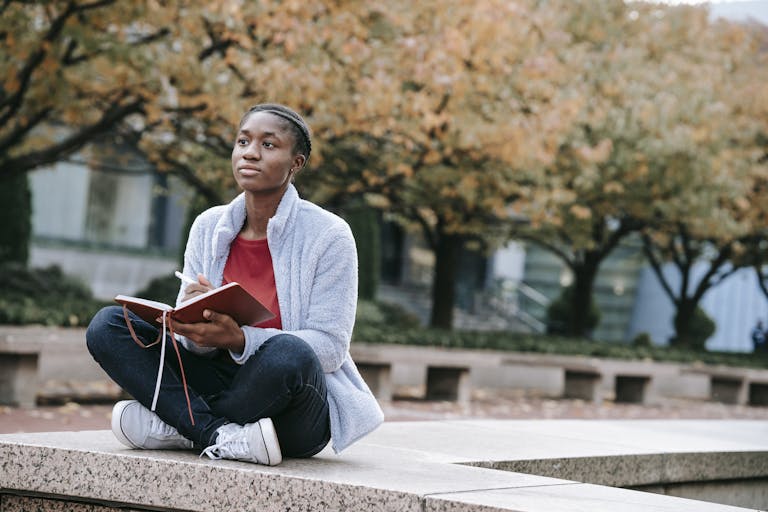
Meditation and self-awareness are natural partners for introverts, who already tend to process the world from the inside out. Where many people treat meditation as a tool to quiet an overactive mind, introverts often find it does something different: it sharpens a capacity for inner observation that was already running in the background, giving structure and intention to a process that happens naturally but often without direction.
My own experience with meditation didn’t start in a yoga studio or a wellness retreat. It started in a conference room in Chicago, sitting across from a client who was unhappy with a campaign we’d spent three months building. I wasn’t meditating in any formal sense. But I was doing something I’d always done without naming it: watching the room, watching myself, noticing the gap between what was being said and what was actually happening. That quiet internal observation, I’d eventually come to understand, was the raw material that meditation helps you refine.
If you’ve ever wondered whether your inner life is an asset or a liability, the relationship between meditation and self-awareness might be the most clarifying thing you explore this year.

Much of what I write here connects to a broader set of themes around how introverts operate in social and professional spaces. If you’re interested in exploring more of that territory, the Introvert Social Skills and Human Behavior hub pulls together a range of topics on how introverts communicate, connect, and carry themselves in the world.
What Does Meditation Actually Do for Introverts?
There’s a common assumption that meditation is primarily a stress-relief tool, something you do when life gets too loud. For introverts, that framing misses something more interesting. Meditation isn’t just about reducing noise. It’s about learning to observe your own mind with more precision and less reactivity.
What’s your personality type?
Take our free 40-question assessment and get a detailed personality profile with dimension breakdowns, context analysis, and personalised insights.
Discover Your Type8-12 minutes · 40 questions · Free
Introverts already spend significant time in internal processing. The American Psychological Association defines introversion as an orientation toward one’s inner life, characterized by a preference for reflection over external stimulation. That inward orientation means many introverts arrive at meditation with a head start. The challenge isn’t learning to go inward. The challenge is learning to do it with clarity rather than rumination.
Rumination and reflection look similar from the outside, but they feel very different from the inside. Rumination loops. It replays the same conversation, the same mistake, the same worry, without resolution. Reflection moves. It examines something, draws meaning from it, and releases it. Meditation trains the latter. Over time, it builds what you might call a witness perspective: the ability to observe your thoughts and feelings without being consumed by them.
I noticed this shift about two years into a consistent morning practice. I’d always been observant of others, reading rooms and picking up on what wasn’t being said. What changed was that I started applying that same quality of attention to myself. I could sit in a difficult client meeting and notice, in real time, that I was getting defensive. Not just feel it afterward. Notice it as it happened. That small gap between stimulus and response changed how I led.
Why Is Self-Awareness So Central to the Introvert Experience?
Self-awareness isn’t a soft skill. In professional environments, it’s one of the most practically useful capacities a person can develop. And for introverts, it’s often the foundation everything else is built on.
When I ran my agencies, I managed teams that spanned a wide range of personality types. The INFJs on my creative team, for example, had an extraordinary capacity for emotional attunement, the kind of deep empathy and vision that you can read more about in this complete guide to the INFJ personality type. What I observed in them was that their self-awareness was both their greatest strength and, when undeveloped, a source of real struggle. They absorbed the emotional climate of the room, often without realizing they were doing it. Meditation, for several of them, became a way to distinguish between their own feelings and the feelings they’d picked up from others.
As an INTJ, my version of that challenge looked different. I wasn’t absorbing other people’s emotions. I was analyzing situations so quickly and thoroughly that I often arrived at conclusions before others had finished speaking. That’s useful in a strategy session. It’s less useful when someone needs to feel heard. Self-awareness, for me, meant recognizing the moment I’d mentally left the conversation and learning to stay present longer.
The introvert advantage in leadership, as Psychology Today has explored, often comes down to exactly this quality: the capacity to observe, process, and respond thoughtfully rather than reactively. Meditation doesn’t create that capacity in introverts. It refines what’s already there.

How Does Meditation Connect to the Way Introverts Process Emotion?
Introverts tend to process emotion more slowly and more thoroughly than their extroverted counterparts. That’s not a flaw. It’s a feature of how the introvert nervous system works. The trade-off is that intense emotions, particularly in high-stakes situations, can feel overwhelming in the moment and take longer to integrate afterward.
There’s a meaningful body of work on how mindfulness-based practices affect emotional regulation. Research published in PubMed Central points to mindfulness as a significant factor in improving emotional regulation and reducing the intensity of reactive responses. For introverts, who are already prone to deep emotional processing, this matters in a specific way. Meditation doesn’t make you feel less. It gives you more room around what you feel.
One of the more practical outcomes I’ve experienced is what I’d call emotional lag reduction. Introverts often process interpersonal events on a delay. Something happens in a meeting, and the full weight of how it affected you doesn’t land until you’re in the car on the way home. Meditation hasn’t eliminated that lag for me. But it’s shortened it considerably. I’m more often able to name what I’m feeling while it’s happening, which means I can respond to it more effectively in the moment.
This has had real consequences for how I handle conflict. In my agency years, I tended to avoid difficult conversations until I’d processed them thoroughly, which sometimes meant waiting too long. The team interpreted my silence as indifference. In reality, I was still working through what I wanted to say. Developing a faster, more grounded connection to my own emotional state made me a more responsive leader. If you’re working through similar patterns, the principles in this piece on introvert conflict resolution align closely with what meditation makes possible.
What Type of Meditation Works Best for Introverts?
Not all meditation practices are built the same, and personality genuinely influences which approaches tend to land. Introverts often do well with practices that leverage their existing strengths: sustained attention, comfort with silence, and a natural inclination toward depth over breadth.
Focused attention meditation, where you fix your awareness on a single object like the breath, suits many introverts well because it channels the same kind of concentrated focus they apply to problems they care about. Open monitoring meditation, which involves observing whatever arises in awareness without fixing on any one thing, can feel more challenging at first because it requires a lighter touch than introverts sometimes want to apply.
Body scan practices are worth mentioning separately. Many introverts, particularly those who spend most of their time in their heads, have a complicated relationship with physical sensation. The body scan, which moves attention systematically through different parts of the body, builds a kind of somatic self-awareness that complements the more cognitive self-knowledge introverts tend to develop naturally. Clinical research on mindfulness-based interventions supports the value of body-based practices for improving overall wellbeing, including in people who find pure cognitive approaches insufficient on their own.
Journaling as a companion practice deserves a mention here too. Many introverts find that sitting meditation opens things up, but writing gives those insights somewhere to go. After a meditation session, ten minutes of free writing can transform a vague sense of something into a clear articulation of what you actually think or feel. That’s not a small thing when you’re the kind of person who processes everything internally and rarely gets it out into the open.

How Does Greater Self-Awareness Change the Way Introverts Communicate?
Self-awareness changes communication in ways that are subtle but cumulative. When you know your own patterns, you can work with them rather than against them. And for introverts, whose communication challenges are often rooted in self-consciousness or anxiety rather than any lack of ability, that shift is significant.
One pattern I see often in introverts, and one I lived with for years, is the tendency to go quiet in situations that feel high-stakes. Not because there’s nothing to say, but because the internal critic gets louder than the voice that has something valuable to contribute. Meditation builds a kind of familiarity with that critic. You start to recognize its voice, its timing, its favorite arguments. And once you can recognize it, you can choose not to defer to it.
This matters enormously in situations where introverts feel outranked or outpaced. Speaking up to someone who intimidates you requires a kind of inner steadiness that self-awareness helps build. The introvert’s guide to confident communication covers the practical side of this well, and meditation provides the internal groundwork that makes those techniques actually stick.
There’s also a social dimension to this that introverts often underestimate. Greater self-awareness doesn’t just help you understand yourself. It sharpens your ability to read other people. When you know your own emotional state clearly, you’re less likely to project it onto the people around you. You’re more able to be genuinely curious about what someone else is experiencing. That quality, being truly present and attentive rather than performing attention while actually managing your own anxiety, is what makes introverts excellent conversationalists when they’re at their best.
Many introverts are surprised to find that the skills they develop through meditation translate directly into social settings. The capacity to observe without immediately reacting, to stay curious rather than evaluative, to listen at a level deeper than the words being spoken, these are the same qualities that make introverts genuinely good at small talk when they stop fighting the format and start playing to their strengths.
What Does Meditation Reveal About People-Pleasing Patterns?
One of the more uncomfortable things meditation does is make your own patterns visible. And for many introverts, one of the most persistent patterns is people-pleasing: the tendency to manage other people’s comfort at the expense of your own authenticity.
I spent a significant portion of my agency career doing this, though I wouldn’t have used that term at the time. I called it being a good leader, being accommodating, being easy to work with. What it actually was, in many cases, was a way of avoiding the discomfort that came with disagreement. Introverts often default to harmony not because we’re conflict-averse by nature, but because we process the aftermath of conflict so thoroughly that we’ve learned to dread it preemptively.
Meditation makes this visible by creating a space where you can observe the impulse before you act on it. You notice the moment you’re about to agree with something you don’t actually agree with. You notice the physical sensation of suppressing a response. You notice the quiet resentment that builds when you consistently prioritize other people’s ease over your own integrity. That noticing is the beginning of change.
The path from people-pleasing to authentic expression is longer than a meditation practice alone can cover. But it starts with exactly the kind of self-knowledge that meditation builds. If you recognize yourself in this pattern, the people pleasing recovery guide here offers a practical framework for what comes next.
What I’ve found, both personally and in watching others work through this, is that the more clearly you can see a pattern, the less power it has over you. Not because awareness automatically changes behavior, but because it restores choice. You can still choose to accommodate someone. The difference is that you’re choosing it consciously rather than defaulting to it out of habit or anxiety.

Can Meditation Help Introverts Understand Their MBTI Type More Deeply?
Personality frameworks like the MBTI are useful maps. They give you language for patterns you’ve sensed but couldn’t name. What they can’t do is substitute for the lived experience of actually observing yourself over time. Meditation provides that experience in a way that makes frameworks like the MBTI significantly more useful.
When I first identified as an INTJ, I understood it intellectually. I read the descriptions, recognized the patterns, nodded along. What meditation added was a felt sense of those patterns in action. I could observe my Ni (introverted intuition) working in real time, making connections and drawing conclusions that I couldn’t always trace consciously. I could notice when my Te (extroverted thinking) was running too hard, pushing for resolution before I’d actually understood a situation. That level of self-observation isn’t available through reading alone.
If you haven’t yet identified your type, or if you’re curious how your type intersects with your inner life, our free MBTI personality test is a good starting point. The assessment gives you a framework, and then the real work of understanding how that framework plays out in your specific life begins.
What meditation adds to any personality framework is granularity. You stop seeing yourself as a type and start seeing yourself as a person who has certain tendencies, certain strengths, certain blind spots, all of which show up differently depending on context, energy level, and what’s at stake. That nuanced self-picture is more useful than any single label, and it’s built through the kind of sustained, patient self-observation that meditation makes possible.
How Does Meditation Affect the Way Introverts Connect With Others?
There’s a paradox at the heart of introvert social life: the people who most need genuine connection are often the ones who find the entry points to connection most exhausting. Shallow exchanges feel like a tax. Crowded rooms feel like a drain. And yet the depth of connection that introverts crave requires some willingness to start in shallow water before you can swim out further.
Meditation changes this dynamic in a quiet but meaningful way. When you’re more grounded in yourself, you’re less depleted by the performance aspect of social interaction. The energy that used to go toward managing your own anxiety in a conversation becomes available for actual presence. And presence is what transforms a surface exchange into something real.
Harvard Health has written about the introvert’s approach to social engagement, noting that the quality of connection matters more to introverts than the quantity. Meditation supports quality connection by making you more fully available to the person in front of you. You’re not half-present while also monitoring your own discomfort. You’re actually there.
I’ve noticed this most clearly in one-on-one conversations. The kind of deep listening that makes someone feel truly seen, not just heard, requires a quality of attention that’s hard to sustain when you’re also managing internal noise. Meditation quiets that noise enough to let genuine curiosity take over. And genuine curiosity, as any introvert who’s found their footing socially will tell you, is what makes conversation feel like connection rather than performance. That shift in presence is also what underlies the deeper connection strategies explored in how introverts really connect beyond small talk.
It’s also worth noting what Healthline distinguishes clearly: introversion and social anxiety are not the same thing, even though they can overlap. Meditation is particularly useful for introverts who carry some degree of social anxiety alongside their introversion, because it builds the kind of internal stability that reduces the threat-response that social situations can trigger. You stop bracing for interaction and start approaching it with more equanimity.
What Does a Sustainable Meditation Practice Actually Look Like?
The most common mistake people make with meditation is treating it as an all-or-nothing practice. Either you’re doing thirty minutes every morning in perfect silence, or you’re failing. That framing kills more practices than any lack of discipline ever could.
My own practice has looked very different at different points in my life. During the years I was running agencies at full capacity, managing accounts, managing people, managing the constant ambient stress of a business that depended on creative output and client relationships, I had maybe ten minutes in the morning before everything started. That was enough. Not enough to achieve some ideal state of enlightenment, but enough to create a brief moment of intentional self-observation before the day took over.
The clinical evidence on mindfulness suggests that even brief, consistent practice produces measurable effects on attention, emotional regulation, and stress response. The word “consistent” matters more than the word “brief.” Ten minutes every day is more useful than an hour once a week.
For introverts specifically, I’d suggest building your practice around your natural rhythms rather than against them. If you’re most mentally clear in the morning, meditate then. If you need to decompress after social interaction, a brief practice at the end of the workday can serve as a kind of reset. success doesn’t mean add another obligation to your schedule. It’s to carve out a small, protected space for the kind of internal observation that introverts do naturally but rarely do intentionally.
Consistency also benefits from simplicity. A practice you’ll actually do is infinitely more valuable than a practice that’s theoretically optimal but practically unsustainable. Start with five minutes. Sit quietly. Follow your breath. Notice when your mind wanders. Bring it back. That’s it. The sophistication comes later, and only if you want it.

What Are the Long-Term Outcomes of Meditation for Introverts?
The long-term picture of a consistent meditation practice for introverts is less dramatic than the wellness industry tends to suggest, and more meaningful than skeptics give it credit for. The changes are cumulative, quiet, and often only visible in retrospect.
What I’ve experienced over years of practice, and what I hear consistently from other introverts who’ve stuck with it, is a gradual shift in the relationship between self-observation and self-acceptance. Early on, increased self-awareness can feel uncomfortable. You see patterns you’d rather not see. You notice how often the inner critic is running. You recognize the gap between how you present yourself and who you actually are.
Over time, that discomfort softens. Not because the patterns disappear, but because you stop being surprised by them. You develop a kind of friendly familiarity with your own mind, including the parts that aren’t particularly flattering. And that familiarity is the foundation of genuine self-acceptance, which is different from self-improvement. Self-improvement says: I’ll accept myself once I’ve fixed these things. Self-acceptance says: I can see these things clearly and still extend myself some grace.
For introverts who’ve spent years trying to be more extroverted, more spontaneous, more outwardly expressive, that shift is significant. You stop relating to your introversion as something to manage and start relating to it as something to understand. The self-awareness that meditation builds doesn’t just help you perform better in the world. It helps you inhabit yourself more fully.
There’s also a social ripple effect worth naming. As you become clearer about who you are and what you actually want from connection, your relationships tend to become more selective and more genuine. You invest less energy in interactions that don’t nourish you and more in the ones that do. That’s not antisocial. That’s discernment. And for introverts, whose social energy is genuinely finite, discernment is one of the most valuable things you can develop.
If you want to keep exploring how introverts build authentic connections and communicate with confidence, the full range of topics in the Introvert Social Skills and Human Behavior hub covers everything from conflict to conversation, from people-pleasing to genuine presence.
Curious about your personality type?
Our free MBTI assessment goes beyond the four letters. Get a full breakdown of your scores, see how your type shows up at work and in relationships.
Take the Free Test8-12 minutes · 40 questions · Free
About the Author
Keith Lacy is an introvert who’s learned to embrace his true self later in life. After 20 years in advertising and marketing leadership, including running agencies and managing Fortune 500 accounts, Keith now channels his experience into helping fellow introverts understand their strengths and build fulfilling careers. As an INTJ, he brings analytical depth and authentic perspective to every article, drawing from both professional expertise and personal growth.
Frequently Asked Questions
Is meditation more effective for introverts than extroverts?
Meditation is beneficial across personality types, but introverts often find the entry point more natural because they’re already oriented toward internal processing. The challenge for introverts isn’t learning to go inward; it’s learning to do so with clarity and intention rather than falling into rumination. That said, the benefits of consistent practice, including improved emotional regulation and reduced reactivity, are available to anyone who commits to it.
How does meditation improve self-awareness specifically?
Meditation builds self-awareness by training sustained, non-judgmental attention toward your own mental and emotional states. Over time, you become more able to observe your thoughts and feelings as they arise rather than being swept along by them. This creates a small but meaningful gap between experience and reaction, which is where genuine choice lives. For introverts, this often sharpens an observational capacity that already exists but hasn’t been directed inward with the same precision it’s directed outward.
What’s the best type of meditation for an introvert who overthinks?
Focused attention meditation, where you anchor your awareness on the breath or another single point, tends to work well for introverts who overthink because it gives the analytical mind a specific task. When the mind wanders into rumination, you simply return to the anchor. Body scan practices are also useful because they shift attention from the cognitive to the physical, which can interrupt overthinking patterns that live primarily in the head. The most important thing is choosing a practice you’ll actually do consistently rather than the one that sounds most sophisticated.
Can meditation help introverts in professional settings?
Yes, and often in ways that aren’t immediately obvious. The self-awareness built through meditation translates directly into professional skills: clearer communication, more effective listening, better emotional regulation under pressure, and a reduced tendency to defer to others out of anxiety rather than genuine agreement. For introverts in leadership roles, the ability to observe your own patterns in real time, rather than processing everything after the fact, can meaningfully change how you show up in meetings, negotiations, and difficult conversations.
How long does it take to notice the effects of a meditation practice?
Many people notice some effects, particularly a sense of slightly more mental space and reduced reactivity, within a few weeks of consistent daily practice. Deeper changes in self-awareness and emotional regulation tend to become apparent over months rather than days. The key variable is consistency rather than duration. A short daily practice will produce more noticeable results over time than occasional longer sessions. Most people find that the effects become most visible not during meditation itself but in ordinary moments, noticing that they responded to something differently than they would have before.