
Meditation for restlessness works differently than most people expect. Rather than forcing a busy mind into silence, the most effective approaches give restless mental energy somewhere useful to go, anchoring attention to breath, sensation, or sound until the nervous system gradually settles on its own terms.
Many introverts assume they should be naturals at sitting still and going inward. In my experience, that assumption creates a quiet kind of shame when the mind refuses to cooperate. Restlessness is not a character flaw. It is a signal worth understanding before you try to meditate it away.

Restlessness and introversion coexist more often than people realize. Our minds are wired for depth, which means they are also wired for constant processing. When there is nothing left to process, or when we have been overstimulated beyond our threshold, the system does not simply power down. It hums, churns, and resists stillness in ways that feel almost personal. Exploring the full range of these internal experiences is something I write about extensively in the Introvert Mental Health hub, where you will find connected articles on anxiety, overwhelm, emotional processing, and more.
Why Do Introverts Experience Restlessness Differently?
Counterintuitive as it sounds, introverts are not immune to mental restlessness. We are often more susceptible to a particular flavor of it: the kind that comes from too much incoming information with not enough time to sort through it.
Career Coaching for Introverts
One-on-one career strategy sessions with Keith Lacy. 20 years of Fortune 500 leadership as an introvert, now helping others build careers that work with their wiring.
Learn More50-minute Zoom session · $175
My mind processes the world in layers. I notice the subtext in a conversation, the tension in a room before anyone names it, the inconsistency in a plan that everyone else seems ready to sign off on. Running advertising agencies for over two decades meant I was absorbing enormous amounts of information daily, from client briefs and media plans to team dynamics and competitive landscapes. By the time I sat down at the end of a long day, my mind was not empty. It was still sorting.
What I eventually recognized was that my restlessness was not random. It was the residue of a day spent processing more than I had been able to integrate. The mental chatter was not noise. It was unfinished business.
This is distinct from the restlessness that comes from anxiety, though the two can overlap significantly. Generalized anxiety, as described by the National Institute of Mental Health, involves persistent worry that is difficult to control and often disproportionate to the situation. Restlessness is one of its recognized symptoms. For introverts who are also highly sensitive, the line between ordinary mental busyness and anxiety-driven restlessness can be genuinely blurry.
People who identify as Highly Sensitive Persons often experience what feels like sensory and emotional traffic that never fully clears. If that resonates, the article on HSP overwhelm and managing sensory overload covers that specific experience in detail, including practical strategies for lowering the incoming volume before it reaches crisis point.
What Actually Happens in the Brain When You Feel Restless?
Mental restlessness often reflects an activated nervous system that has not received a clear signal to downshift. The brain’s default mode network, which handles self-referential thought, future planning, and memory consolidation, stays highly active when we are not engaged in focused tasks. For people who process deeply, this network can feel like it is running at full volume even during supposed downtime.
There is also a physiological component. When the body holds stress, whether from a demanding workday or an emotionally charged interaction, the sympathetic nervous system remains slightly elevated. Sitting down to meditate in that state can feel like trying to slow a car that is still accelerating. The mind interprets stillness as inactivity and fills the gap with more thinking.
Published work in peer-reviewed literature has examined how mindfulness-based practices affect this kind of nervous system activation. A paper available through PubMed Central explores the relationship between mindfulness meditation and psychological well-being, noting measurable shifts in how practitioners relate to intrusive thoughts over time. The change is not about thinking less. It is about developing a different relationship with the thoughts that arise.

For introverts who are also sensitive to emotional undercurrents, restlessness sometimes carries a specific emotional charge. It is not just mental noise. It is the residue of absorbing other people’s stress, frustration, or anxiety throughout the day without fully recognizing that absorption as it happened. Understanding that pattern is part of what the article on HSP empathy as a double-edged sword addresses, and it reframes restlessness not as a personal failing but as evidence of a nervous system that has been working very hard.
Which Meditation Approaches Actually Work for a Restless Mind?
Not all meditation is created equal, and not all of it suits a restless introvert’s nervous system. The seated, eyes-closed, breath-focused approach that most people picture when they hear the word “meditation” is one method among many, and it is often the hardest starting point for someone whose mind is already running fast.
Here is what I have found actually works, drawn from years of trial, abandonment, and eventual return to a consistent practice.
Anchor-Based Attention Training
Rather than trying to empty the mind, anchor-based approaches give the mind a specific, neutral object to return to repeatedly. Breath is the most common anchor, but it is not always the most effective for restless practitioners. Sound works well for some people. Physical sensation, like the weight of your hands in your lap or the temperature of the air entering your nostrils, can be even more grounding.
The practice is not about staying with the anchor perfectly. It is about noticing when you have drifted and returning without judgment. For a mind like mine, trained to analyze and evaluate everything, the non-judgmental return was the hardest skill to build. I spent months treating each mental drift as evidence that I was doing it wrong. Eventually I understood that the drift and the return are the practice. The restlessness is not the obstacle. It is the material you are working with.
Body Scan Before Breath Work
Starting a meditation session with a brief body scan can interrupt the pattern of mental restlessness more effectively than going straight to breath observation. Moving attention systematically from the feet upward, noticing physical sensations without trying to change them, gives the analytical mind something concrete to do while the nervous system begins to settle.
During particularly demanding agency periods, especially around major pitches or client reviews, I would come home so wound up that sitting still felt impossible. A ten-minute body scan before any formal meditation made the difference between a practice that actually landed and one that just added frustration to an already full day.
Walking Meditation as a Bridge
Walking meditation is legitimately meditative, not a consolation prize for people who cannot sit still. It uses physical movement as the primary anchor, drawing attention to the sensation of each step, the rhythm of walking, the shift of weight from heel to toe. For a restless mind, the movement itself provides enough sensory input to prevent the mental chatter from filling the entire space.
Some of my clearest thinking has happened during walking meditation, not because I was trying to solve problems but because I was not. The mind, given a simple physical task and released from the pressure to produce, often surfaces insights it could not reach through direct effort.
Structured Breath Patterns
For moments of acute restlessness, structured breathing techniques can shift the nervous system more quickly than observation-based practices. Extended exhale breathing, where the exhale is deliberately longer than the inhale, activates the parasympathetic nervous system and creates a measurable calming effect. A four-count inhale followed by a six or eight-count exhale is a practical starting point.
Research published through PubMed Central has examined how controlled breathing practices affect emotional regulation, with findings suggesting that breath-focused interventions can produce meaningful reductions in subjective stress and physiological arousal. The mechanism is not mysterious. Slow, extended exhales signal the vagus nerve that the threat has passed, which is exactly the message a restless nervous system needs to hear.

How Does Perfectionism Sabotage Meditation Practice?
Many introverts who struggle with meditation are not struggling with restlessness alone. They are struggling with the story they tell themselves about what meditation is supposed to look like and how well they are supposed to be doing it.
As an INTJ, I have a particular relationship with standards. I set high ones, I expect to meet them, and when I do not, I tend to conclude that the problem is with my approach rather than with my expectations. Early in my meditation attempts, I would sit for twenty minutes, spend eighteen of them thinking about client proposals or agency staffing issues, and then decide that meditation simply did not work for me.
What I was actually doing was applying performance standards to a practice that explicitly has none. Meditation is not something you succeed or fail at. Yet for people who are wired toward high achievement, the absence of measurable progress can feel like failure by default.
This pattern runs deeper than meditation. The article on HSP perfectionism and breaking the high standards trap examines how perfectionist tendencies affect sensitive, introspective people across multiple areas of life, and the insights there apply directly to why so many well-intentioned meditation attempts collapse under the weight of self-evaluation.
A graduate research paper examining mindfulness and perfectionism, available through the University of Northern Iowa, explores how self-critical evaluation patterns can interfere with the very practices designed to reduce them. The irony is real and worth sitting with.
What Does Restlessness Signal About Your Emotional State?
Restlessness is often emotional information wearing a cognitive costume. What presents as an inability to sit still or a mind that will not quiet is sometimes grief, anger, anxiety, or unprocessed experience looking for an exit.
I noticed this most clearly during a period when I was managing a significant agency transition, restructuring teams and losing people I had worked closely with for years. The restlessness I felt during meditation was not random mental noise. It was sadness I had not given myself permission to feel during working hours. Sitting still created the conditions for it to surface, which my mind experienced as a problem to escape rather than an invitation to process.
For introverts who process emotion deeply, restlessness during meditation can be a signal that something needs attention at a feeling level, not just a cognitive one. The article on HSP emotional processing and feeling deeply addresses this specifically, including how to create space for emotional material without being overwhelmed by it.
Anxiety often shows up in this same space. When restlessness has an anxious quality, a sense of urgency without a clear object, it is worth distinguishing from ordinary mental busyness. The article on HSP anxiety and coping strategies offers a framework for understanding that distinction and working with it constructively rather than trying to meditate over it.
How Do You Build a Meditation Practice That Survives Real Life?
Consistency matters more than duration or technique. A three-minute practice you actually do every day will produce more meaningful change than a thirty-minute practice you attempt twice a week and abandon when life gets demanding.
The research on habit formation points consistently toward implementation intentions, specific plans that link a new behavior to an existing cue. A study summary available through PubMed Central’s behavioral science resources outlines how pairing new habits with established routines significantly improves follow-through. For meditation, this might mean sitting for five minutes immediately after your morning coffee, before you open your phone, or at the same time each evening before dinner.

During my agency years, the only meditation practice that survived was the one I attached to an existing ritual. I had a habit of arriving at the office thirty minutes before anyone else, which I used for strategic thinking. Shifting the first ten minutes of that window to breath-focused meditation worked because the cue, arriving early and being alone, was already established. I did not have to build willpower. I just had to redirect an existing behavior.
Resilience research from the American Psychological Association emphasizes that sustainable coping practices are built gradually through small, consistent actions rather than dramatic overhauls. Meditation for restlessness is no different. You are not trying to transform your nervous system in a week. You are training it, incrementally, to recognize stillness as safe.
What About the Days When Meditation Makes Restlessness Worse?
Some days, sitting down to meditate genuinely amplifies restlessness rather than reducing it. This is more common than meditation teachers typically acknowledge, and it deserves an honest response rather than a prescription to push through.
When meditation increases agitation, it is often because the practice is surfacing material the nervous system is not yet equipped to process in that moment. Forcing stillness in that state can feel counterproductive because it is counterproductive. The appropriate response is not to abandon the practice but to adjust it.
On those days, I move to something more active first. A brisk walk, some physical stretching, or even a few minutes of deliberate, vigorous breathing can discharge enough nervous energy to make stillness accessible afterward. The goal is not to white-knuckle your way through a practice that is not working. It is to meet your nervous system where it actually is.
For people who have experienced significant rejection or emotional wounding, restlessness during meditation can sometimes be connected to that unprocessed experience rising to the surface. The article on HSP rejection, processing, and healing addresses how sensitive people carry those experiences and what it takes to genuinely work through them rather than simply suppress them.
Introverts often internalize the cultural message that we should be better at being alone with our thoughts. When meditation feels hard, that message can morph into self-criticism that compounds the original restlessness. Being honest about the difficulty, with yourself and with anyone supporting your practice, is not weakness. It is accuracy.
How Long Before Meditation Actually Changes Anything?
Expecting immediate results from meditation is one of the most reliable ways to abandon it. The changes that come from a consistent practice are cumulative and often invisible until you notice, weeks or months in, that something has shifted in how you respond to stress or how quickly you recover from overstimulation.
My own experience was not a clean arc. There were stretches of consistent practice followed by weeks of neglect. What I eventually noticed was not that I had become calmer in some general sense but that my recovery time had shortened. After a difficult client meeting or a high-stakes presentation, I returned to baseline faster than I used to. That was not dramatic. It was genuinely useful.
The psychology of sustained behavior change, as outlined in work published through PubMed Central, suggests that the relationship between practice and benefit is not linear. Early sessions may feel unrewarding precisely because the changes are happening at a level below conscious awareness. Staying with the practice through that ambiguous middle period is where most people drop off, and also where the compounding effects begin.
For introverts who are used to measuring progress through visible output, this invisible accumulation can feel deeply unsatisfying. It helped me to reframe the metric entirely. Instead of asking whether I felt calmer after each session, I started asking whether I had shown up. That question had a clear answer, and it was enough to sustain the habit through the periods when the benefits felt abstract.
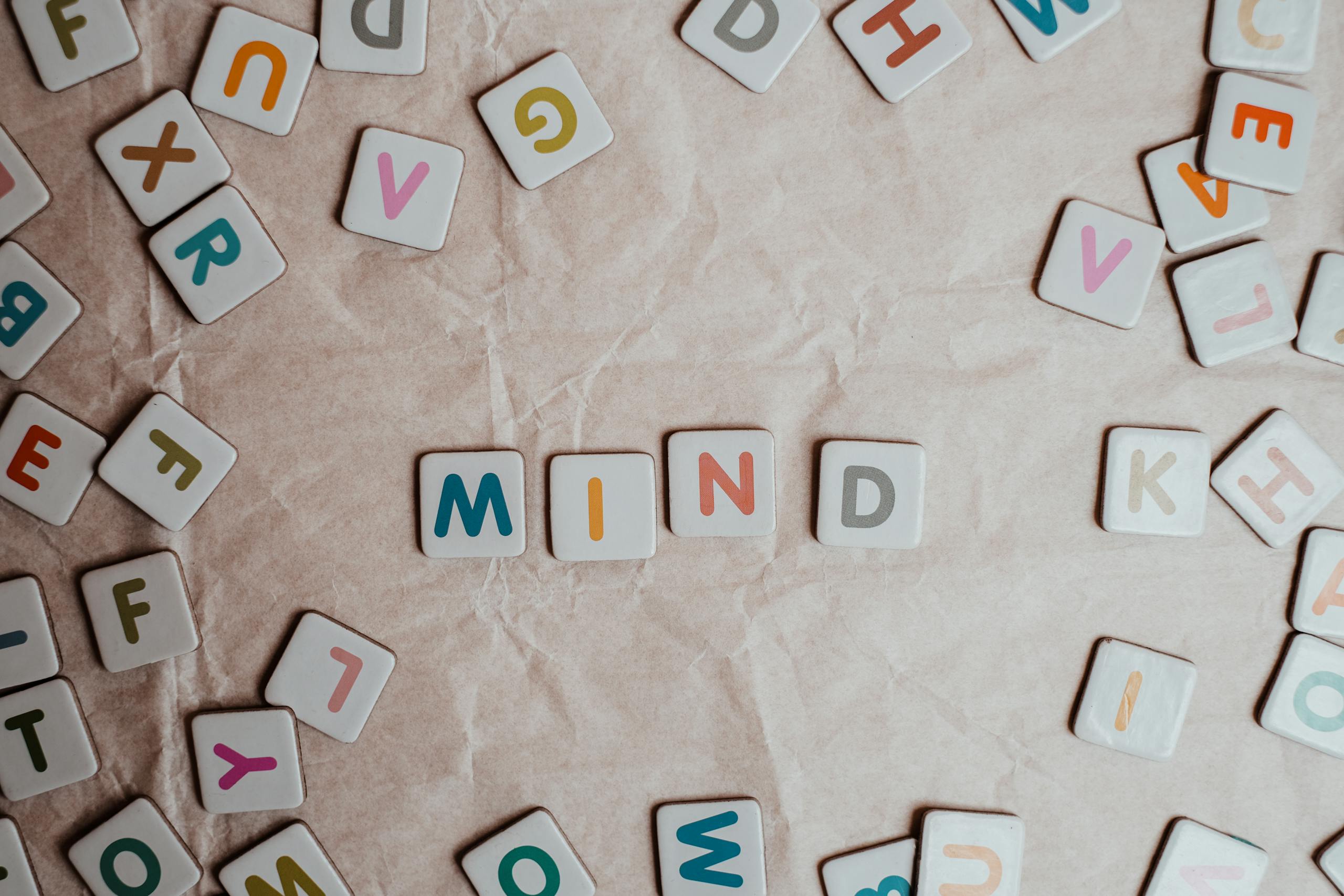
What Introverts Get Wrong About Stillness
There is a persistent assumption that introverts, because we recharge in solitude and prefer internal processing, should find stillness natural. The reality is more layered. Solitude and stillness are not the same thing. Many introverts are extraordinarily active internally even when they appear quiet externally. The inner world is busy, detailed, and often loud in its own way.
Stillness, in the meditative sense, is not about stopping that internal activity. It is about changing your relationship to it. You are not trying to become a different kind of thinker. You are learning to observe your thinking without being entirely at its mercy.
That distinction took me years to genuinely internalize. My INTJ tendency to analyze and strategize does not disappear during meditation. What changes is whether I am identified with every thought that arises or whether I can watch them pass with some degree of equanimity. Some days the equanimity is there. Other days it is not. Both are part of an honest practice.
Psychology Today’s introvert-focused writing has long noted that introverts are not antisocial but rather differently social, and that the internal richness of introvert experience is a feature rather than a problem. That same framing applies to restlessness. A mind that processes deeply will have a lot to process. Meditation does not fix that. It gives you better tools for living inside it.
If you want to explore the broader landscape of introvert mental health, including how sensitivity, anxiety, overwhelm, and emotional depth intersect, the Introvert Mental Health hub brings together the full range of topics in one place.
About the Author
Keith Lacy is an introvert who’s learned to embrace his true self later in life. After 20 years in advertising and marketing leadership, including running agencies and managing Fortune 500 accounts, Keith now channels his experience into helping fellow introverts understand their strengths and build fulfilling careers. As an INTJ, he brings analytical depth and authentic perspective to every article, drawing from both professional expertise and personal growth.
Frequently Asked Questions
Can meditation actually help with restlessness, or does it make it worse?
Meditation can help with restlessness, but the approach matters. Techniques that give the mind a specific anchor, like breath observation, body scans, or walking meditation, tend to work better than open-awareness practices for people who are already in a restless state. On days when sitting still amplifies agitation, shifting to a more active form of meditation or doing some physical movement first can make the practice more accessible. The goal is not to force stillness but to create conditions where the nervous system can settle on its own.
How long should I meditate if I have a restless mind?
Start shorter than you think you need to. Three to five minutes of consistent daily practice will produce more meaningful results than longer sessions attempted sporadically. As your nervous system becomes more familiar with the practice, you can extend the duration naturally. Trying to begin with twenty or thirty-minute sessions often leads to frustration and abandonment, especially for restless practitioners who are still building the foundational skill of returning attention without self-judgment.
Why do introverts experience mental restlessness even when they prefer solitude?
Solitude and stillness are not the same thing. Introverts often have highly active inner worlds that continue processing information, emotion, and experience long after external stimulation ends. Restlessness in introverts frequently reflects the residue of deep processing rather than a need for more stimulation. When the mind has absorbed a great deal during the day, whether through complex work, social interaction, or emotional experience, it continues sorting that material in quiet moments, which can present as restlessness rather than peace.
Is restlessness during meditation a sign that I am doing it wrong?
No. Restlessness during meditation is extremely common, particularly for beginners and for people with active, detail-oriented minds. The practice of meditation is not achieving a particular mental state. It is noticing what arises and returning attention to your chosen anchor repeatedly. A session full of restlessness and repeated returns is not a failed session. It is a session where you practiced the core skill many times. The restlessness is not the problem to solve. It is the material you are learning to work with.
What is the best time of day to meditate when dealing with restlessness?
The best time is the one you will actually use consistently. That said, many people find that meditating before the day’s demands accumulate, rather than at the end of a full and stimulating day, produces a more accessible practice. Morning meditation, even briefly, can set a calmer baseline before the nervous system begins absorbing the day’s input. Evening meditation can help process and release accumulated tension, but it requires more active settling first. Attaching your practice to an existing daily cue, like a morning beverage or a specific transition point in your routine, significantly improves consistency.