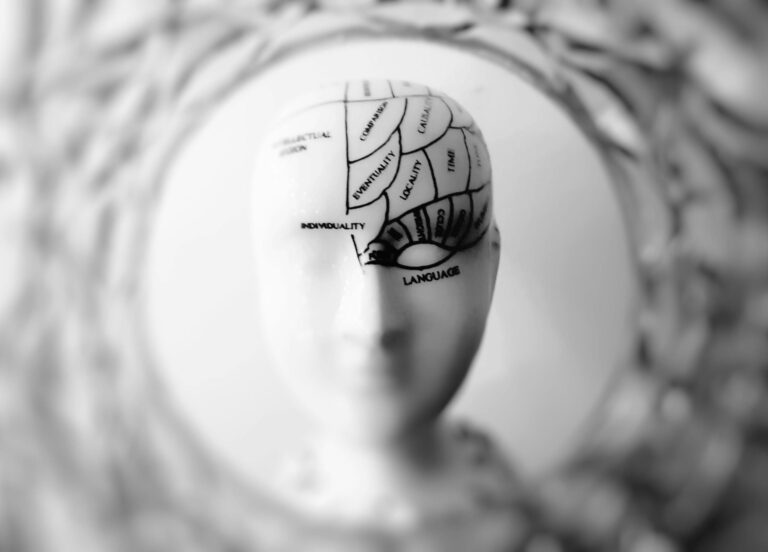
Meditation sitting is the practice of settling into a still, comfortable position and training your attention inward, allowing thoughts to arise and pass without forcing them away. For introverts and highly sensitive people, this practice often feels less like learning something new and more like returning to something the mind already knows how to do. The challenge is rarely the silence itself. It’s giving yourself permission to stay in it.
Most of what gets written about meditation focuses on the doing: the apps, the timers, the breathing techniques. What gets skipped is the why behind sitting still in the first place, and what it actually feels like for someone whose inner world is already loud, layered, and constantly processing. That’s what I want to talk about here.
If you’re someone who thinks deeply, feels things intensely, and finds the outside world more draining than most people seem to, the mental health dimensions of this practice go far deeper than stress relief. Our Introvert Mental Health hub covers a wide range of these dimensions, and meditation sitting connects to nearly all of them in ways I didn’t fully appreciate until I’d been practicing for a while.
Why Does Sitting Still Feel So Loaded for Deep Thinkers?
My first real attempt at meditation sitting happened during a particularly brutal stretch running my second agency. We had three major pitches in six weeks, a team that was burning out, and a client threatening to pull a contract worth a significant chunk of our revenue. A colleague suggested meditation. I remember thinking, “I don’t have time to sit and do nothing.” That was exactly the problem, and I couldn’t see it yet.
Career Coaching for Introverts
One-on-one career strategy sessions with Keith Lacy. 20 years of Fortune 500 leadership as an introvert, now helping others build careers that work with their wiring.
Learn More50-minute Zoom session · $175
What I eventually understood is that people who process the world deeply don’t experience “doing nothing” the way that phrase implies. When I sit quietly, my mind doesn’t go blank. It starts sorting. It begins making connections between things I hadn’t consciously linked. It surfaces feelings I’d been too busy to acknowledge. For someone wired this way, stillness isn’t emptiness. It’s the opposite.
That’s partly why the loaded feeling exists. Sitting still means encountering yourself without distraction. For someone who absorbs a lot from the environment, processes emotions at depth, and carries a high internal load, that encounter can feel daunting before it feels peaceful. The discomfort at the start of a meditation session isn’t a sign you’re doing it wrong. It’s often a sign you needed it more than you realized.
Many people who identify as highly sensitive find that the physical environment of their meditation sitting practice matters enormously. Temperature, sound, lighting, even the texture of what they’re sitting on can be the difference between settling in and staying agitated. This connects directly to what I’ve written about in relation to HSP overwhelm and managing sensory overload. The same sensitivity that makes a fluorescent-lit office unbearable can make an improperly set up meditation space feel counterproductive. Getting the physical conditions right isn’t being precious about it. It’s working with your nervous system instead of against it.
What Posture and Position Actually Matter in Meditation Sitting?
There’s a lot of mythology around the “correct” posture for meditation sitting. The image most people have involves a lotus position on a cushion, spine perfectly erect, hands resting just so. That image stops more people from starting than almost anything else.
The actual principles are simpler. Your position should allow you to stay alert without creating tension that pulls your attention away from your inner experience. Slouching tends to promote drowsiness. Rigidity tends to create physical discomfort that becomes its own distraction. What you’re looking for is a middle ground: supported, upright enough to stay present, and relaxed enough to breathe freely.
Seated on a chair with your feet flat on the floor works well for most people. A firm cushion on the floor works if your hips are flexible enough that your knees don’t float above your hip bones, which creates lower back strain. Lying down works for body scan practices but tends to invite sleep for most people during regular sitting. There’s no hierarchy of correctness here. What matters is that your body can settle without demanding constant attention.
Hand placement matters less than most instruction makes it seem. Resting your hands on your thighs, palms down or up, is fine. What you want to avoid is a position that requires active muscular effort to maintain. Your hands should rest, not hold a pose.
Eyes can be closed or softly open, directed downward at about a 45-degree angle. Closed eyes tend to promote more inward focus, which many introverts find natural. Open eyes can help if you’re prone to getting lost in thought or if closed eyes increase anxiety. Both are valid. Try each and notice which allows you to stay present more easily.

How Does Meditation Sitting Affect Anxiety in Sensitive People?
This is where I want to be honest, because the conversation around meditation and anxiety sometimes oversimplifies things in ways that aren’t helpful. For many people, sitting still and turning attention inward does reduce anxiety over time. The National Institute of Mental Health recognizes mindfulness-based approaches as part of the broader toolkit for managing anxiety disorders, and there’s meaningful clinical support for this.
At the same time, some people, particularly those with high sensitivity or a history of trauma, find that the early stages of meditation sitting increase anxiety rather than reduce it. Turning inward when your inner world is already agitated can feel like walking into a room where everything is on fire. That experience is real and worth acknowledging.
What tends to help in those situations is starting with shorter sessions, using an anchor like breath or sound to keep attention from spiraling, and treating the practice as gradual exposure rather than immediate relief. The HSP anxiety coping strategies I’ve explored elsewhere apply directly here. The same principles that help highly sensitive people manage anxiety in daily life, grounding, pacing, reducing unnecessary stimulation, translate into how you approach a sitting practice.
One thing that shifted my own practice was understanding that the goal during a session isn’t to feel calm. The goal is to observe what’s present without adding to it. Some sessions feel peaceful. Others feel like watching a crowded train station from a bench. Both are valid meditation. The bench is the practice. What’s moving through the station is just content.
There’s solid research supporting the neurological effects of regular meditation practice on stress response systems. A review published on PubMed Central examined how mindfulness-based interventions affect psychological well-being, including anxiety and stress. The findings aren’t magic-bullet simple, but the direction is consistent: regular practice tends to shift how the nervous system responds to perceived threat over time. That shift matters enormously for people who are wired to perceive threat at higher sensitivity than average.
What Does Meditation Sitting Do for Emotional Processing?
During my agency years, I managed a creative director who was one of the most emotionally attuned people I’d ever worked with. She absorbed the mood of every room she walked into. After a difficult client meeting, she’d need an hour before she could function normally again. At the time, I didn’t fully understand what was happening for her. I just knew she needed space and that pushing her through it made things worse.
What I understand now is that she was doing what deeply feeling people do: processing. Not performing emotion, not being dramatic, but actually working through what she’d taken in. That process takes time and it takes quiet. Meditation sitting, in a very real sense, is structured time for exactly that kind of processing.
When you sit quietly and allow your attention to rest without agenda, emotions that have been waiting in the queue get space to surface. This can feel uncomfortable, particularly if you’ve been in a high-stimulus environment all day and you’re carrying a lot. But the discomfort is usually the emotion moving through rather than getting stuck. There’s a meaningful difference between those two experiences, even when they feel similar in the moment.
The relationship between HSP emotional processing and feeling deeply is something I think about a lot in the context of sitting practice. Highly sensitive people don’t just feel more. They process more, which means they need more time and more internal space to complete that processing cycle. Meditation sitting provides exactly that: a container for processing that doesn’t require an external prompt or a conversation partner. It’s internal work done internally, which is where introverts and highly sensitive people do their best work anyway.

How Does Sitting Practice Help With the Weight of Absorbing Others’ Emotions?
Running an agency means you’re constantly in the emotional field of other people. Clients bring their fear and pressure. Creative teams bring their vulnerability and ego. Account managers bring their stress about relationships. As an INTJ, I processed most of this analytically, trying to understand what was driving each person’s behavior and respond strategically. But even analytical processing has a cost when the volume is high enough.
For people who are more empathically wired, the cost is considerably higher. The capacity to sense and resonate with others’ emotional states, which is a genuine strength in many contexts, can become exhausting when there’s no regular practice of clearing what you’ve absorbed. The double-edged nature of HSP empathy is real: the same attunement that makes someone an exceptional listener, leader, or creative can leave them depleted if they don’t have a way to regularly return to themselves.
Meditation sitting functions as that return. Not in a mystical sense, but in a practical one. When you sit quietly and follow your own breath, attend to your own body, observe your own thoughts, you’re reorienting toward your own interior rather than the emotional landscape around you. Over time, this reorientation becomes something you can access more quickly, even outside of formal sitting sessions. The practice trains a kind of internal compass.
Additional findings on mindfulness and emotional regulation are worth noting here. A study available through PubMed Central examined how mindfulness practices affect emotional reactivity and self-regulation, which is particularly relevant for people who experience strong empathic responses to others. The consistent thread in this research is that regular practice tends to create more space between stimulus and response, which is exactly what empathic people need most.
Can Meditation Sitting Help With Perfectionism and Self-Criticism?
One of the quieter gifts of a regular sitting practice is what it does to your relationship with your own mind. Most people who sit for the first time are surprised by how relentlessly self-critical their inner monologue is. Thoughts about what you should be doing, whether you’re doing this right, what you forgot to handle, what you said badly in a meeting last Tuesday. The volume of self-directed criticism can be startling when you’re sitting still enough to actually hear it.
Perfectionism often runs particularly deep in highly sensitive and introspective people. The same detail-orientation that makes someone excellent at their work can turn inward as a harsh internal auditor. I’ve seen this pattern in myself and in people I’ve managed. One account director I worked with was exceptional at her job precisely because she held herself to extraordinarily high standards, and those same standards made her miserable when she inevitably fell short of them.
The connection between HSP perfectionism and the high standards trap is something meditation sitting addresses in a specific way. When you practice observing your thoughts without immediately acting on them or believing them, you start to notice that the self-critical voice is just another thought. It’s not truth. It’s content passing through. That distinction, practiced repeatedly over weeks and months, genuinely changes how much power that voice has over your emotional state.
There’s also something worth noting about how meditation sitting relates to self-compassion. Sitting with discomfort without trying to fix it, staying present with an uncomfortable thought without attacking yourself for having it, builds a kind of tolerance for imperfection that extends beyond the cushion. The American Psychological Association’s work on resilience points to self-compassion as a core component of psychological resilience, and regular sitting practice is one of the more reliable ways to cultivate it.
How Do You Handle the Emotional Residue That Surfaces During Sitting?
There’s a specific experience that comes up for many sensitive people in meditation sitting that doesn’t get discussed enough: the session that surfaces something old and heavy. You sit down expecting a few minutes of quiet and instead find yourself confronting grief, or anger, or a memory you thought you’d processed years ago. This happens. It’s not a malfunction.
What I’ve found helpful is treating those sessions the way you’d treat any other difficult weather: you don’t have to chase it, and you don’t have to run from it. You can sit with it at a slight distance, observing rather than inhabiting. That’s easier to say than to do, especially if what surfaces is connected to something genuinely painful, like a professional failure, a relationship rupture, or a moment of rejection that left a lasting mark.
The experience of HSP rejection and the healing process is something that meditation sitting can support, but it can also be the thing that surfaces unexpectedly during a session. Highly sensitive people tend to carry rejection more deeply and for longer. When that material comes up during sitting, the temptation is to either push it away or spiral into it. Neither is necessary. The practice is to notice it’s there, breathe, and let it be present without amplifying it.
If you find that certain sessions consistently surface material that feels too heavy to hold alone, that’s worth paying attention to. Meditation is a valuable practice, but it’s not a substitute for working with a therapist on material that needs that kind of support. The two work well together. Sitting practice can make you more aware of what needs attention; therapeutic work can help you actually process it.
Research on mindfulness-based stress reduction, including work cited in academic resources like this University of Northern Iowa graduate research paper, supports the idea that sitting practices can be effective complements to other mental health approaches rather than standalone solutions. That framing feels right to me based on my own experience.
What Does a Sustainable Meditation Sitting Practice Actually Look Like?
After years of starting and stopping, I’ve come to believe that the most important variable in a meditation sitting practice isn’t the technique. It’s consistency at a scale that’s actually sustainable for your life. A five-minute practice you do every morning is worth more than a forty-minute practice you do twice a month when you feel motivated.
The neuroscience around habit formation is relevant here. A review of habit and behavior change research available through PubMed Central’s behavioral science resources supports what most experienced meditators know intuitively: repetition at the same time and in the same context is what builds the neural grooves that make a practice feel automatic rather than effortful. Attaching your sitting practice to an existing anchor, morning coffee, the end of your workday, before bed, tends to work better than trying to find time for it abstractly.
Duration matters less than most people think at the beginning. Start with what feels slightly too short rather than what feels ambitious. The goal in the first few months isn’t depth. It’s showing up. Depth follows consistency, not the other way around.
The physical setup of your sitting space is worth some attention, particularly if you’re highly sensitive. A consistent space, even just a particular chair or corner of a room, helps signal to your nervous system that this is the time and place for inward attention. Reducing variables like temperature discomfort, ambient noise, and visual clutter in your sitting space isn’t overthinking it. It’s removing friction from a practice you want to build.
One more thing worth naming: meditation sitting doesn’t have to be a solitary practice, even though it often is. Some people find that a group sitting, even a virtual one, provides the accountability and energetic support to stay consistent. For introverts who prefer minimal social interaction around their practice, this isn’t necessary. But if you’ve tried solo practice repeatedly and it hasn’t stuck, a light community structure might be what’s missing.
Why Introverts Often Find Meditation Sitting Easier Than They Expect
There’s an irony in how meditation gets marketed. It’s often framed as something you need to learn, a skill you acquire through instruction and effort. And while technique matters, the core of sitting practice, turning attention inward, staying with your own experience, observing without immediately reacting, is something introverts and highly sensitive people have often been doing their whole lives without calling it meditation.
The internal orientation that sometimes makes social environments exhausting is the same orientation that makes meditation sitting feel natural once you remove the performance pressure around it. You’re not trying to achieve a state. You’re just doing what you already do, noticing what’s happening inside, except now you’re doing it on purpose, in a dedicated space, without the competing demands of the external world pulling at you.
I spent the first part of my career trying to perform extroversion in a field that rewarded it. The presentations, the client dinners, the constant relationship management. There’s a piece I’ve read by Psychology Today’s introvert columnist that captures something I felt for years: the exhaustion of performing a social style that isn’t yours. Meditation sitting was, for me, one of the first practices that asked nothing of me socially. No performance, no impression management, no reading the room. Just sitting with myself. That felt like relief before it felt like anything else.
That relief is worth something. In a life that often demands outward expression and social performance, having a practice that is entirely, unapologetically inward is a form of restoration that goes beyond stress reduction. It’s a reclamation of your natural orientation. And for people who have spent years being told, implicitly or explicitly, that their inward nature is a problem to be solved, that reclamation matters.
There’s more to explore across the full range of these mental health topics. The complete Introvert Mental Health hub brings together everything from anxiety and emotional processing to sensitivity and resilience, and it’s worth bookmarking if these themes resonate with you.
About the Author
Keith Lacy is an introvert who’s learned to embrace his true self later in life. After 20 years in advertising and marketing leadership, including running agencies and managing Fortune 500 accounts, Keith now channels his experience into helping fellow introverts understand their strengths and build fulfilling careers. As an INTJ, he brings analytical depth and authentic perspective to every article, drawing from both professional expertise and personal growth.
Frequently Asked Questions
How long should a beginner sit for meditation?
Five to ten minutes is a reasonable starting point for most beginners. The priority in the early weeks is building the habit of showing up consistently rather than sitting for long stretches. Once sitting feels natural and you’re doing it regularly, you can gradually extend the duration. Many experienced meditators find that twenty to thirty minutes is a productive session length, but that takes time to build toward and shouldn’t be the starting expectation.
Does it matter what position I use for meditation sitting?
Position matters in the sense that you want to be alert without being tense, and comfortable without being so relaxed that you fall asleep. Sitting in a chair with feet flat on the floor works well for most people and requires no special flexibility. Cross-legged on a cushion works if your hips allow your knees to rest below your hip bones. The specific posture is less important than finding one you can maintain without physical discomfort pulling your attention away from the practice.
Is it normal for meditation sitting to bring up difficult emotions?
Yes, and it’s more common than most instruction acknowledges. When you sit quietly and turn attention inward, emotions that have been waiting for space often surface. This is particularly common for highly sensitive people who process a great deal emotionally. The practice is to observe what arises without chasing it or pushing it away. If difficult material surfaces consistently and feels overwhelming, working with a therapist alongside your sitting practice can be genuinely helpful.
Can introverts benefit more from meditation sitting than extroverts?
Both introverts and extroverts benefit from regular meditation practice, but the experience and entry point can differ. Introverts often find the inward orientation of sitting practice more natural, since it aligns with how they already tend to process experience. The challenge for introverts is more likely to be perfectionism around doing it correctly or managing the difficult material that surfaces, rather than the inward focus itself. Extroverts may find the stillness more challenging initially but benefit equally over time.
How is meditation sitting different from just sitting quietly and thinking?
The distinction is in where attention is directed and what you do with thoughts when they arise. Regular quiet thinking is often goal-directed: you’re working through a problem, planning, or replaying events. Meditation sitting involves resting attention on a neutral anchor, like breath or body sensation, and observing thoughts as they arise without following them into content. When a thought pulls your attention away, you notice that and return to the anchor. That returning is the practice, and it’s what builds the capacity for non-reactive awareness over time.