
Meditations for the anxious aren’t about forcing your mind into stillness. They’re about giving a restless, overactive nervous system something gentle to hold onto while the noise slowly settles. For introverts and highly sensitive people especially, anxiety often runs deeper than simple worry. It lives in the body, colors every interaction, and turns quiet moments into anything but quiet.
What actually helps is finding a practice that works with how your mind is already built, not against it. That’s what this article is about.
Our Introvert Mental Health hub covers a wide range of tools and perspectives for people who feel things deeply and process the world from the inside out. Anxiety, in particular, shows up in ways that deserve more nuanced attention than most generic wellness advice provides.
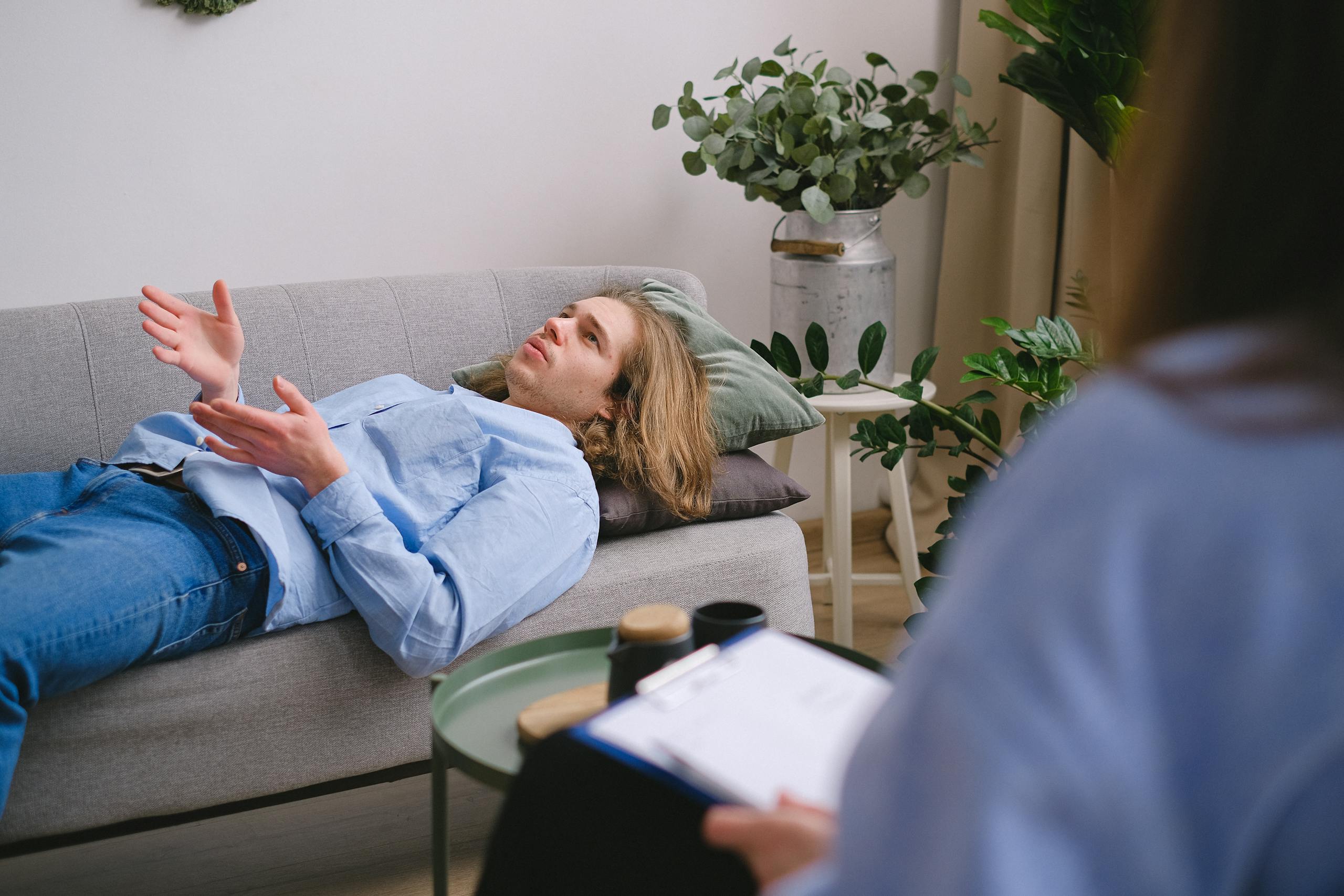
Why Does Anxiety Feel So Different for Introverts and HSPs?
There’s a particular kind of anxiety that doesn’t announce itself loudly. It doesn’t always look like panic attacks or obvious distress. Sometimes it looks like exhaustion after a routine meeting, a persistent low hum of dread before social events, or a mind that refuses to stop replaying conversations from three days ago.
What drains your social battery?
Not all social exhaustion is the same. Our free quiz identifies your specific drain pattern and gives you personalised recharging strategies.
Find Your Drain PatternUnder 2 minutes · 8 questions · Free
That’s the version I lived with for a long time without fully naming it. Running advertising agencies meant constant external stimulation. Pitches, client calls, team conflicts, deadlines that stacked on top of each other. As an INTJ, I processed all of it internally, which meant the pressure had nowhere obvious to go. It just accumulated. I’d sit in a debrief after a successful campaign presentation and feel utterly depleted in ways my extroverted colleagues clearly didn’t. They were energized. I was running on fumes and couldn’t explain why.
What I eventually understood is that introverts, and particularly highly sensitive people, don’t just experience anxiety as a mental event. The National Institute of Mental Health describes anxiety disorders as involving persistent, excessive worry that interferes with daily functioning, but for sensitive introverts, the interference often shows up in subtler forms long before it reaches clinical territory. It’s the sensory overload that builds across a full workday. It’s the emotional residue that clings after absorbing the stress of everyone in the room.
When you’re wired to notice everything, and to feel the weight of what you notice, anxiety isn’t just a thought problem. It’s a whole-system response. That matters enormously when choosing which meditation practices will actually help.
What Makes a Meditation Practice Actually Work for an Anxious Mind?
Most mainstream meditation advice assumes a fairly neutral starting point. Sit down, focus on your breath, let thoughts pass like clouds. Fine in theory. Genuinely difficult when your nervous system is already in a heightened state and your mind has a well-worn habit of treating every passing thought as urgent.
Effective meditations for the anxious tend to share a few characteristics. They give the mind something specific to anchor to, because an anxious mind left completely untethered will wander directly back into worry. They work with the body, not just the intellect, because anxiety is physiological as much as psychological. And they’re forgiving of imperfection, which matters more than most people realize.
That last point tripped me up for years. I’d sit down to meditate, my mind would immediately generate a to-do list or rehearse a client conversation, and I’d conclude I was doing it wrong. What I didn’t understand is that noticing the wandering and returning is the practice. The return is the repetition that builds the skill. Published research in mindfulness and cognitive function supports the idea that regular meditation practice produces measurable changes in how the brain processes stress, not through achieving perfect stillness, but through the repeated act of redirecting attention.
For introverts, there’s also something worth acknowledging about the environment. Many of us find group meditation classes more stressful than calming. The social awareness, the performance pressure of doing it right in front of others, the ambient sounds of other people breathing. Solo practice, at home, on your own schedule, often works better. That’s not avoidance. That’s knowing your own nervous system.
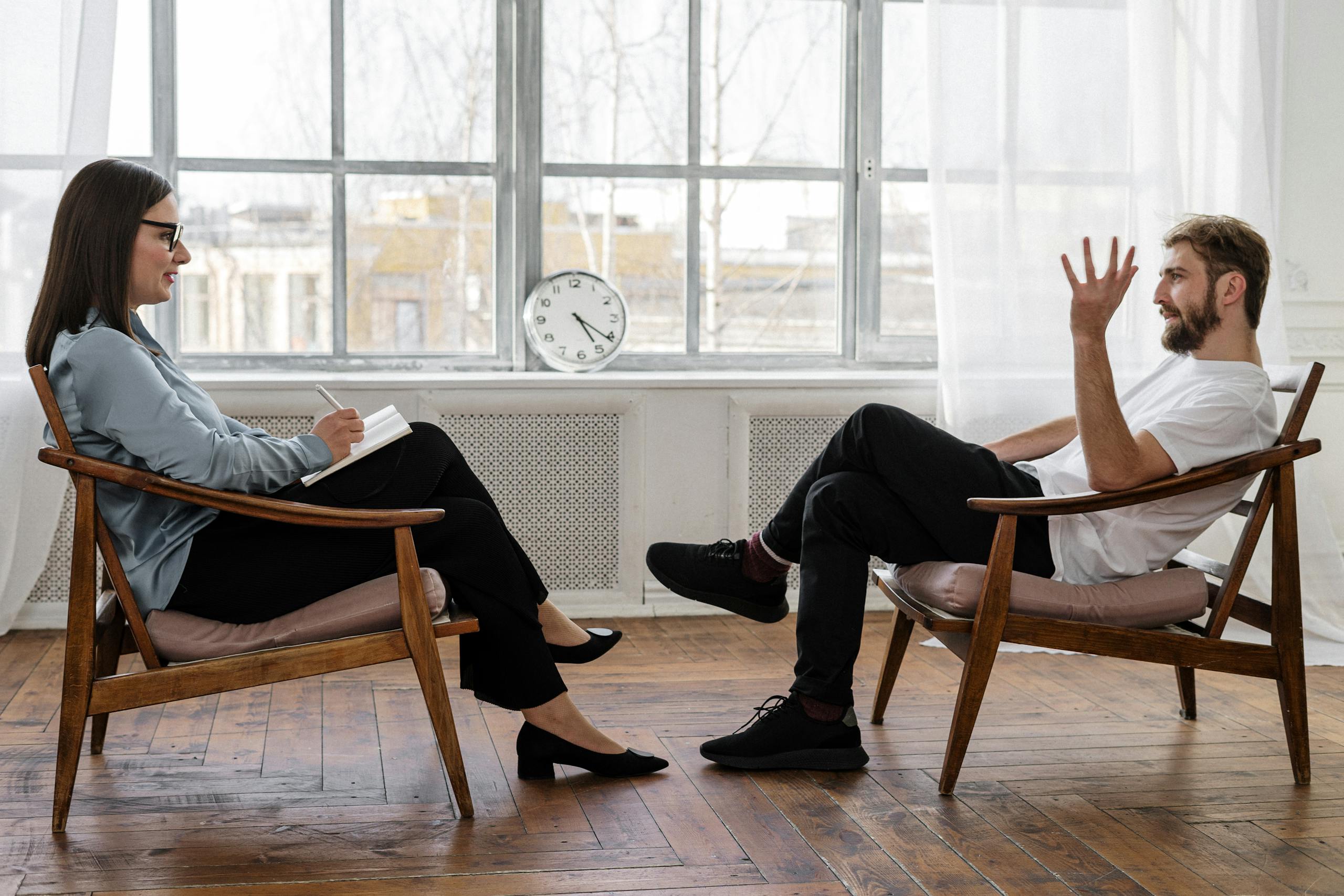
Which Meditation Styles Tend to Resonate With Anxious Introverts?
Not every meditation style is equally suited to an anxious, highly sensitive mind. Some approaches can actually heighten anxiety in the early stages, particularly open monitoring practices that ask you to observe thoughts without any anchor. Others feel like coming home from the first session.
Body Scan Meditation
Body scan meditation is one of the most consistently effective practices I’ve encountered for anxiety that lives in the physical. You move attention slowly through different parts of the body, noticing sensation without trying to change anything. For someone who tends to spend most of their time in their head, this practice is almost disorienting at first. You realize how disconnected you’ve become from the physical experience of being in a body.
I started doing a short body scan before important client presentations. Not to relax into passivity, but to locate where the tension was actually sitting (usually my shoulders and jaw) and give it some conscious attention before walking into the room. It didn’t eliminate the anxiety. It made the anxiety more legible, and somehow that was enough to take the edge off.
Breath-Focused Meditation
Breath-focused practices are foundational for good reason. The breath is always available, always present, and physiologically connected to the nervous system in ways that make it a genuine regulatory tool. Slow, extended exhales in particular activate the parasympathetic nervous system, the branch responsible for rest and recovery.
For anxious people, a simple ratio approach works well. Inhale for a count of four, hold briefly, exhale for a count of six or eight. The extended exhale is what does the regulatory work. Clinical literature on the autonomic nervous system explains how controlled breathing directly influences heart rate variability, a key marker of stress regulation. This isn’t mystical. It’s physiology.
Loving-Kindness Meditation
Loving-kindness, or metta meditation, involves directing phrases of goodwill toward yourself and others. It sounds soft, possibly too soft for an INTJ who spent decades in competitive business environments. But I’ve come to appreciate it precisely because anxiety, for many sensitive introverts, has a self-critical component that standard mindfulness doesn’t directly address.
People who struggle with perfectionism and high standards often carry a background hum of self-judgment that feeds anxiety. Loving-kindness meditation doesn’t fix that overnight, but it introduces a counterweight. You’re practicing a different relationship with yourself, one repetition at a time.
Visualization and Imagery Practices
Introverts tend to have rich inner lives and strong imaginative capacity. Guided visualization practices, which invite you into a specific mental scene (a quiet forest, a familiar room, a place where you feel safe) leverage that strength directly. For anxious minds that struggle with abstract breath focus, having a vivid internal landscape to inhabit can be more grounding.
Some of the most effective visualization practices I’ve used involve not just a pleasant scene but a specific sensory detail to anchor to. The texture of bark. The sound of water. The weight of sitting. Sensory specificity pulls the mind away from abstract worry and into present experience, which is where anxiety loses its grip.
How Does Anxiety Intersect With Emotional Depth and Empathy?
One thing that rarely gets discussed in standard anxiety resources is how much anxiety in sensitive people is connected to emotional processing, not just their own emotions, but the emotions of everyone around them.
I managed a team of about twelve people at one point during my agency years. Several of them were highly sensitive individuals who absorbed the emotional climate of the office in ways that visibly affected their functioning. One account director in particular would come into Monday morning status meetings already carrying the weight of the previous week’s tension. She wasn’t ruminating irrationally. She was genuinely processing emotional information that others had already discharged and moved past. Understanding what it means to feel and process deeply changed how I managed her, and honestly changed how I understood my own experience too.
For people with high empathy, anxiety is often entangled with the emotional states of others. You sit in a tense meeting and leave carrying tension that was never yours to begin with. You absorb a colleague’s frustration and spend the afternoon processing it as if it were your own. Empathy, in high doses, cuts both ways. It’s a genuine strength and a genuine source of exhaustion.
Meditations that help with this particular flavor of anxiety tend to include some element of boundary-setting within the practice itself. A visualization that involves a protective boundary around your energy. A loving-kindness sequence that explicitly acknowledges your own wellbeing before extending care outward. A body scan that helps you identify which sensations are yours and which feel imported from elsewhere.
This isn’t about becoming less empathetic. It’s about developing enough internal clarity to know where you end and others begin.
What Role Does Rejection Sensitivity Play in Anxiety?
Anxiety in sensitive introverts often has a specific trigger that doesn’t get enough attention: the fear of rejection, and the way perceived rejection echoes long after the initial event.
A critical email from a client. A presentation that landed flat. A casual comment from a colleague that stuck. For people with heightened anxiety responses, these events don’t just sting in the moment. They become material for extended internal processing, sometimes for days.
I lost a significant pitch once, a Fortune 500 automotive account we’d spent three months preparing for. The client chose a larger agency, which was a reasonable business decision on their part. But I spent weeks afterward running the post-mortem in my head, examining every slide, every word choice, every moment I’d sensed the room cooling. That internal loop wasn’t productive analysis. It was anxiety wearing the costume of preparation.
Understanding how to process and move through the particular pain of rejection is genuinely relevant to any anxiety practice. Meditation helps here not by suppressing the processing, which doesn’t work anyway, but by creating a container for it. You sit with the feeling, you observe it without amplifying it, and you practice returning to the present moment. Over time, the loop gets shorter.
The American Psychological Association’s work on resilience frames this kind of recovery capacity as a skill that can be developed, not a fixed trait. That framing matters. Anxiety after rejection isn’t a character flaw. It’s a response that can be worked with.
How Do You Build a Meditation Practice When Anxiety Makes Starting Hard?
There’s a particular irony in anxiety as it relates to starting a meditation practice. The very thing that makes meditation valuable, the quieting of mental noise, is also what makes beginning feel daunting. Sitting down with your own thoughts when your thoughts are the problem takes a certain kind of courage.
What actually worked for me was starting absurdly small. Not twenty minutes of silent sitting. Two minutes of breath focus before my morning coffee. That’s it. No cushion, no app, no ritual. Just two minutes of paying attention to my breath before the day started pulling at me.
The value of a tiny consistent practice over an ambitious inconsistent one is hard to overstate. Mindfulness research published in peer-reviewed literature consistently supports the idea that frequency matters more than duration in the early stages of building a practice. Five minutes every day outperforms forty-five minutes once a week, both for skill development and for the nervous system regulation benefits.
A few practical notes on structure that I’ve found useful:
Anchor your practice to an existing habit. Meditation after morning coffee, or before evening reading, or immediately after closing your laptop for the day. The existing habit carries the new one until it develops its own momentum.
Choose a consistent space. Introverts tend to be sensitive to environment, and having a specific physical location associated with the practice helps the nervous system shift modes more quickly. It doesn’t need to be elaborate. A particular chair, a corner of a room, even a specific spot on the floor.
Expect the first weeks to feel like failure. Your mind will wander constantly. You’ll feel restless, bored, or suddenly convinced you have urgent things to attend to. That’s not failure. That’s what the early practice looks like for almost everyone, especially for analytical minds that are accustomed to producing results.
One thing worth noting for introverts specifically: guided meditations work well for some and feel intrusive for others. The voice of a guide can be grounding, or it can feel like another external demand on your attention. Try both unguided and guided approaches before deciding. There’s no universal right answer.
What Happens in the Body During Meditation, and Why Does It Matter for Anxiety?
Understanding what’s actually happening physiologically during meditation helped me take it more seriously. As an INTJ, I needed the mechanism, not just the outcome. Once I understood why it worked, I was more committed to doing it.
Anxiety activates the sympathetic nervous system, the branch associated with fight-or-flight responses. Heart rate increases, breathing becomes shallow, muscles tighten, attention narrows. This is adaptive in genuine threat situations. It becomes a problem when the nervous system treats a difficult email as equivalent to a physical threat, which it often does.
Meditation, particularly breath-focused and body-based practices, activates the parasympathetic nervous system, the branch associated with rest, digestion, and recovery. This isn’t a passive state. It’s an active physiological shift that counterbalances the chronic activation many anxious people live with.
For highly sensitive people, who tend to have nervous systems that register more stimuli and process it more thoroughly, this regulation work is especially important. Academic work on sensory processing sensitivity suggests that the same neural architecture that makes HSPs perceptive and empathetic also makes them more susceptible to overstimulation and stress accumulation. Meditation doesn’t change the wiring. It gives the system regular recovery time.
There’s also something worth noting about the cumulative effect. A single meditation session produces some immediate calming. A consistent practice over weeks and months produces structural changes in how the nervous system responds to stress. The reactive spikes become smaller. The recovery after difficult events becomes faster. The baseline level of activation gradually decreases. That’s not a claim I’m making casually. It reflects what the science on long-term meditation practice consistently shows.
Can Meditation Work Alongside Other Anxiety Support?
Meditation is genuinely useful. It’s also not a complete solution for everyone, and presenting it as one would be dishonest.
For anxiety that significantly interferes with daily functioning, professional support matters. Therapy, particularly approaches like cognitive behavioral therapy or acceptance and commitment therapy, addresses the thought patterns and behavioral avoidance that maintain anxiety in ways that meditation alone doesn’t fully reach. Medication, when appropriate, can reduce the physiological intensity enough to make other practices more accessible.
Meditation works best as part of a broader approach. It pairs well with regular physical movement, which discharges the physiological arousal that anxiety generates. It pairs well with intentional social recovery time, which introverts need more than they’re often given credit for. It pairs well with honest attention to sleep, which anxiety both disrupts and depends on.
For introverts and HSPs specifically, the broader self-care picture often includes attention to environmental factors that most anxiety resources don’t address. Noise levels, social load, transitions between activities, the cumulative weight of too many demands on attention. Managing these inputs reduces the baseline activation that makes anxiety worse. Meditation helps process what gets through anyway.
I spent years treating anxiety as a character flaw to push through rather than a signal worth listening to. What eventually shifted was understanding it as information. My nervous system was telling me something about the gap between how I was living and how I was actually built to live. Meditation gave me enough quiet to start hearing that signal clearly.

If you want to explore more about mental health, emotional processing, and wellbeing from an introvert perspective, the full range of topics lives in our Introvert Mental Health hub.
Running on empty?
Five drain profiles, each with specific triggers, warning signs, and a recharging playbook.
Take the Free QuizUnder 2 minutes · 8 questions · Free
About the Author
Keith Lacy is an introvert who’s learned to embrace his true self later in life. After 20 years in advertising and marketing leadership, including running agencies and managing Fortune 500 accounts, Keith now channels his experience into helping fellow introverts understand their strengths and build fulfilling careers. As an INTJ, he brings analytical depth and authentic perspective to every article, drawing from both professional expertise and personal growth.
Frequently Asked Questions
Are meditations for the anxious different from regular meditation?
Meditations designed specifically for anxiety tend to emphasize physiological regulation more than standard mindfulness practices. They often include extended exhale breathing, body-based grounding techniques, and structured anchors that give a restless mind something specific to return to. The core mechanics are similar, but the emphasis on nervous system calming is more deliberate. For introverts and HSPs, practices that work with the body rather than purely with thought observation tend to be more accessible and more immediately effective.
How long does it take for meditation to help with anxiety?
Most people notice some immediate calming effect from even a single session, particularly with breath-focused techniques. Meaningful, consistent changes in baseline anxiety levels typically emerge after several weeks of regular practice. The frequency of practice matters more than the duration of individual sessions in the early stages. Five minutes daily tends to produce faster results than longer sessions practiced infrequently. Managing expectations here is important. Meditation builds a skill over time, and the early weeks often feel unrewarding before the cumulative benefit becomes noticeable.
Why do introverts and highly sensitive people often experience more intense anxiety?
Introverts and HSPs tend to process information more deeply and thoroughly than average. This depth of processing is genuinely valuable, but it also means the nervous system registers more stimuli, holds emotional information longer, and requires more recovery time after demanding situations. The same neural sensitivity that produces empathy, perceptiveness, and creative depth also makes the system more susceptible to overstimulation and stress accumulation. Anxiety in this context isn’t a disorder so much as an intensified version of a normal stress response in a system that’s built to feel everything more completely.
Can meditation replace therapy or medication for anxiety?
Meditation is a valuable tool for anxiety management, but it isn’t a replacement for professional support when anxiety significantly affects daily functioning. Therapy addresses thought patterns and behavioral avoidance that meditation alone doesn’t fully reach. Medication, when clinically appropriate, can reduce physiological intensity enough to make other practices more accessible. Meditation works best as part of a broader approach that may include professional support, movement, sleep attention, and intentional management of environmental stressors. If anxiety is interfering meaningfully with your work, relationships, or quality of life, speaking with a mental health professional is worth prioritizing alongside any self-directed practice.
What’s the best time of day to meditate for anxiety relief?
There’s no universally correct answer, but a few patterns tend to work well for anxious introverts. Morning meditation, before the day’s demands accumulate, can establish a calmer baseline that carries forward. Evening meditation, particularly body scan or breath-focused practices, can help discharge the day’s accumulated tension and support better sleep. The most important factor is consistency, which means the best time is whichever time you’ll actually maintain. Anchoring the practice to an existing habit, morning coffee, the end of the workday, or an evening routine, tends to produce more reliable consistency than trying to carve out a completely new time slot.