Meditations for women who do too much aren’t about adding another item to an already impossible list. They’re about creating small, intentional pauses that interrupt the cycle of constant output, so that the nervous system finally gets permission to exhale. If you’ve been running on obligation and adrenaline for so long that stillness feels uncomfortable, that discomfort is exactly where these practices begin.
There’s a particular kind of exhaustion that doesn’t show up on a blood panel. It’s the kind that comes from being emotionally available to everyone, anticipating every need before it’s spoken, and holding the invisible architecture of a household, a team, or a community together while quietly absorbing the weight of it all. Many women who identify as introverts, highly sensitive people, or deep processors know this exhaustion intimately. And most of them have never been handed a language for it, let alone a practice that actually helps.
I want to be honest about something upfront: I’m a man, and an INTJ at that. My experience of overextension looks different from what many women carry. But in over two decades running advertising agencies, I watched brilliant women on my teams operate at a level of sustained output that frankly astonished me, and I watched many of them quietly unravel from it. What I learned from observing that, and from my own struggles with chronic overcommitment, shapes everything I’m about to share.
If you’re exploring the intersection of introversion, sensitivity, and mental health more broadly, our Introvert Mental Health Hub covers the full terrain, from anxiety and overwhelm to emotional processing and the specific pressures that come with being wired for depth in a world that rewards volume.

Why “Doing Too Much” Hits Differently for Sensitive Women
Overcommitment isn’t just a scheduling problem. For women who are also highly sensitive, deeply empathic, or strongly introverted, it operates at a neurological level. The sensory and emotional input that others filter out automatically arrives fully formed and demands processing. A tense conversation in the morning can still be reverberating at midnight. A colleague’s offhand criticism can occupy mental space for days. A child’s bad mood can feel like a personal responsibility to fix.
Career Coaching for Introverts
One-on-one career strategy sessions with Keith Lacy. 20 years of Fortune 500 leadership as an introvert, now helping others build careers that work with their wiring.
Learn More50-minute Zoom session · $175
One of the women on my creative team years ago, a senior copywriter who was one of the most gifted people I’ve ever worked with, described it to me once as “having a second full-time job that no one can see.” She was talking about the emotional labor of her home life, but she could just as easily have been describing what happened inside her during our client presentations. She absorbed the room. Every undercurrent of tension, every flicker of dissatisfaction from a client, every unspoken dynamic between account managers. She processed all of it and then still had to produce brilliant work on top of it.
That kind of HSP empathy is genuinely a gift in many contexts. It makes someone a better collaborator, a more attuned parent, a more perceptive leader. But it also means the nervous system is working overtime in environments that were never designed with that level of sensitivity in mind. When you’re absorbing not just your own emotional experience but fragments of everyone else’s, the cumulative load becomes enormous.
Meditation, in this context, isn’t about achieving some transcendent state of bliss. It’s about giving that overloaded system a legitimate off-ramp. A chance to stop processing input long enough to discharge what’s already accumulated.
What Meditation Actually Does for an Overextended Nervous System
There’s a physiological reason why even short meditation practices can shift how an overwhelmed person feels, and it has nothing to do with mysticism. When the nervous system is in a prolonged state of activation, the body stays primed for threat even when no immediate threat exists. Breathing becomes shallow. Muscles hold tension. The mind scans for problems to solve because that’s what it’s been trained to do.
Intentional breath-focused or body-focused practices interrupt that cycle by activating the parasympathetic nervous system, the branch responsible for rest and recovery. Research published through PubMed Central has examined how mindfulness-based practices affect stress response systems, finding consistent evidence that even brief, regular practice can reduce physiological markers of chronic stress. For women who’ve been running on cortisol for months or years, that physiological shift isn’t a luxury. It’s repair work.
What I’ve noticed in my own practice, which I came to late and reluctantly as most INTJs do, is that meditation didn’t make me feel less. It made me feel more accurately. The constant background noise of unprocessed tension started to quiet enough that I could actually distinguish between what mattered and what was just accumulated static. That distinction, knowing which thoughts deserve attention and which are just the residue of chronic overload, turns out to be enormously valuable.
For women who do too much, that same clarity can become the foundation of something even more essential: the ability to say no with genuine conviction rather than guilt-laced apology.

The Sensory Piece That Most Meditation Advice Ignores
Most mainstream meditation guidance assumes a relatively neutral sensory baseline. Sit quietly, focus on your breath, return when your mind wanders. Simple enough in theory. But for someone who processes sensory input at a higher intensity, the environment in which you meditate matters enormously. A guided meditation with background music that someone else finds soothing might actually be overstimulating. A group meditation class might create more social anxiety than it relieves. A practice designed for someone with a typical sensory threshold might feel actively unpleasant for someone without one.
Managing HSP overwhelm and sensory overload often requires building a practice environment that accounts for your specific sensory profile before the meditation itself even begins. That might mean choosing a time of day when ambient noise is minimal. It might mean using a single, consistent sensory anchor, a particular scent, a specific texture, a familiar piece of music played at low volume, to signal to the nervous system that this is a safe moment to downregulate. It might mean keeping sessions very short initially, because five focused minutes in a genuinely supportive environment will do more than twenty minutes of white-knuckling through sensory discomfort.
I had a team member once, a project manager who was extraordinarily capable and also visibly fraying by the end of every major campaign. She’d tried meditation apps and found them intolerable because of the music. She’d tried sitting in silence and found the ambient office sounds pulled her attention constantly. What finally worked for her was a specific fifteen-minute walk she took alone each morning before anyone else arrived, no phone, no podcast, just movement and observation. Her nervous system needed a moving meditation, not a seated one. The form matters less than the function.
Meditations That Work When Your Mind Won’t Slow Down
One of the most common reasons women who do too much abandon meditation is the belief that they’re doing it wrong because their mind keeps producing thoughts. That belief is worth examining carefully, because it’s both common and counterproductive. The mind producing thoughts during meditation isn’t failure. It’s the mind doing exactly what minds do. The practice is in noticing the thought, releasing attachment to it, and returning attention to the anchor. That cycle, thought, notice, return, is the repetition that builds the mental muscle.
For women whose inner world runs at high volume, a few specific approaches tend to work better than generic breath-focus:
Body Scan Meditation
Moving attention systematically through the body, from feet upward, noticing sensation without judgment, gives the analytical mind something concrete to do rather than leaving it to spin in abstraction. It also builds the capacity to notice where tension is being held physically, which for chronic overextenders is often everywhere and unnoticed until it becomes pain.
Loving-Kindness Practice
This one is particularly relevant for women who give generously to others and struggle to extend that same generosity inward. The practice involves directing phrases of goodwill, “may I be well, may I be at ease,” first toward yourself, then outward to others. For those with a strong HSP perfectionism pattern, the experience of actively wishing yourself ease rather than improvement can be surprisingly disorienting at first, and then quietly profound.
Visualization With a Specific Anchor
For people who are primarily visual processors, abstract breath focus can feel thin. A vivid, specific visualization, a place that represents genuine safety and restoration, can provide a richer anchor. what matters is choosing a place that doesn’t trigger planning or problem-solving. Not your home office. Not a vacation destination that requires booking. Something genuinely neutral and nourishing.
Journaling as Meditation
For highly verbal, analytical processors, the act of writing without agenda can function as a meditative practice. Not journaling toward a goal, not processing a specific problem, but writing freely for a set period as a way of externalizing the internal stream. Evidence from PubMed Central supports expressive writing as a meaningful tool for emotional regulation, particularly for people who process deeply and hold a great deal internally. Getting the stream out of your head and onto a page creates the same kind of spaciousness that seated meditation aims for.
The Anxiety Layer That Sits Underneath the Busyness
Here’s something I’ve observed consistently, both in myself and in many of the women I’ve worked with over the years: chronic overcommitment and chronic anxiety are often the same thing wearing different clothes. The busyness isn’t incidental to the anxiety. For many people, it’s the primary coping mechanism for it. As long as there’s always something to do, there’s never a moment to sit with the discomfort underneath.
That’s a pattern worth sitting with, carefully and without self-judgment. HSP anxiety often has specific characteristics that make it different from generalized anxiety in important ways. It tends to be closely tied to environmental and relational input, meaning the anxiety spikes in response to specific triggers rather than operating as a constant undifferentiated hum. It often involves anticipatory processing, running through possible futures and preparing for each one, which can look like productivity from the outside while feeling like torture from the inside.
Meditation doesn’t cure anxiety. Anyone who tells you otherwise is overpromising. What it can do, over time, is change your relationship to anxious thoughts. Rather than being swept into the current of “what if” thinking, you develop the capacity to notice the current without being pulled in. That’s a meaningful shift. The National Institute of Mental Health acknowledges that mindfulness-based approaches can be a valuable component of a broader anxiety management strategy, though they work best in combination with professional support for more significant anxiety presentations.
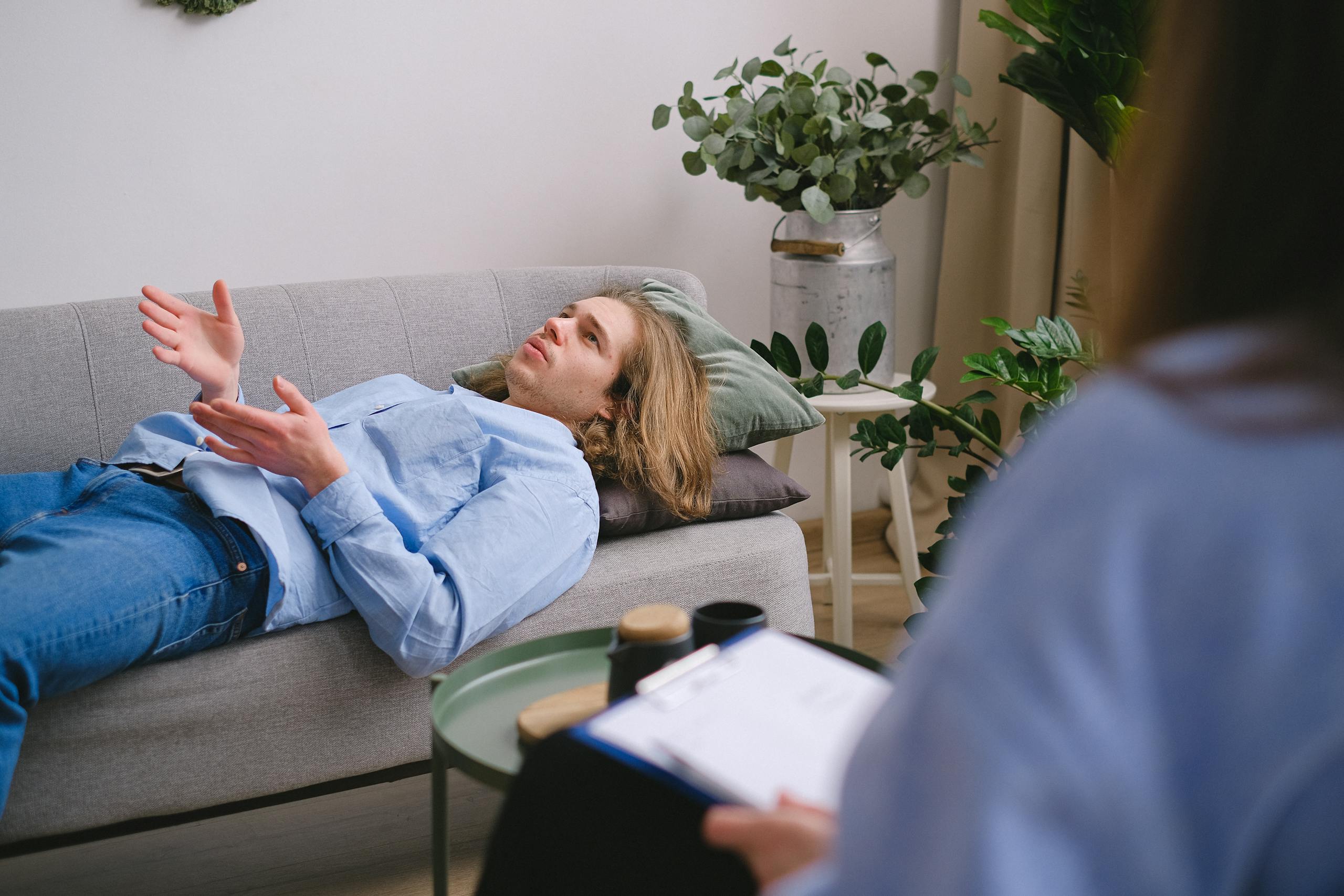
If the anxiety underneath your busyness is substantial, please don’t try to meditate your way through it alone. A good therapist who understands sensitivity and introversion is worth more than any app or practice guide, including this one.
Boundaries as a Meditation Practice in Themselves
Somewhere in my second decade of running agencies, I started to understand that the reason I was always exhausted wasn’t primarily about the volume of work. It was about the chronic low-grade stress of operating without clear boundaries. Every conversation was potentially a new obligation. Every request deserved consideration. Every relationship required careful tending. I was treating my attention as an infinite resource, and it wasn’t.
What I eventually figured out, slowly and imperfectly, is that setting a boundary is itself a form of meditation. It requires the same core skill: noticing what’s present, checking in with your actual state rather than your performed state, and responding from that honest place rather than from habit or obligation. When you’re asked to take on one more thing and your gut contracts but your mouth says yes automatically, that automatic yes is the opposite of mindfulness. A genuine pause, even a two-second one, changes the dynamic entirely.
For women who do too much, boundary-setting often carries a weight of guilt that men rarely experience in the same way. The cultural messaging around women’s availability, their responsiveness, their willingness to accommodate, runs deep. Meditation doesn’t dissolve that cultural conditioning. But it can create enough interior space to notice when you’re operating from that conditioning versus when you’re operating from genuine choice. That distinction, small as it sounds, is where real change lives.
The American Psychological Association’s work on resilience consistently points to the capacity to set limits on demands as a core component of sustainable wellbeing. Not as a sign of weakness or selfishness, but as a fundamental requirement for functioning at your actual best over time.
Processing Emotions Without Being Consumed by Them
One of the most common experiences I hear described by women who are both sensitive and chronically overextended is the feeling of emotional backlog. So much has happened, so many interactions have been absorbed and not fully processed, that there’s a kind of internal pressure that builds over time. It doesn’t always manifest as obvious distress. Sometimes it shows up as irritability. Sometimes as a flatness, a numbing that happens when the system has been running too hot for too long.
HSP emotional processing is a real and significant phenomenon. People who feel deeply don’t just experience more intense emotions in the moment. They also carry those emotions longer, process them more thoroughly, and are more affected by unresolved emotional material. Meditation can support that processing, but it needs to be paired with an understanding that processing emotions isn’t the same as suppressing them or rushing through them.
A practice I’ve found genuinely useful, adapted from something I first encountered in a leadership workshop I attended years ago under protest, is what I’d call a “completion” practice. At the end of each day, before sleep, you spend five minutes mentally noting what happened that day that still feels unresolved. Not to solve it. Not even to fully process it. Just to acknowledge it exists, to give it a name, and then to consciously set it aside with the intention to return to it when you have more capacity. That acknowledgment alone, the simple act of saying “this is here and I see it,” can prevent the accumulation that leads to the emotional backlog.

When Perfectionism Is Driving the Doing
Not all overextension comes from external demand. A significant portion of it comes from internal standards that were set long ago and never examined. For many sensitive, deep-processing women, the compulsion to do more is inseparable from the belief that what’s already been done isn’t quite enough. That the project could be tighter. That the email could be warmer. That the dinner could have been better. That somehow, with just a little more effort, they could get ahead of the nagging sense that they’re falling short.
HSP perfectionism is a specific and exhausting pattern. It’s not the same as having high standards, though it often masquerades as one. It’s the experience of high standards that can never quite be met, because the standard itself moves each time you approach it. Meditation doesn’t fix perfectionism. But it can create enough distance from the internal critic to notice when it’s speaking, to recognize its voice as a voice rather than as objective truth.
There’s interesting work from Ohio State University examining how perfectionism in parents affects both their own wellbeing and their children’s development, finding that the pursuit of perfect performance often creates exactly the kind of chronic stress it was meant to prevent. The same dynamic plays out in professional contexts. The perfectionist drive that produces excellent work also produces the kind of sustained pressure that eventually degrades both the work and the person doing it.
One of the most honest things I ever said to a client was that the campaign they were asking for would take twice as long as they wanted and cost more than they’d budgeted, because doing it the way they were describing would require a level of craft that couldn’t be rushed. I said it because I’d finally gotten comfortable enough with my own standards to defend them without apologizing. That comfort came directly from having a clearer sense of what I actually valued versus what I was doing out of performance anxiety. Meditation, imperfect and inconsistent as my practice has always been, was part of how I got there.
Healing the Part That Fears Stillness
There’s a moment in meditation that many overextended people encounter and then flee: the moment when the busyness stops and something uncomfortable rises to meet them. It might be grief. It might be loneliness. It might be a recognition of how long they’ve been running and how tired they actually are. Whatever it is, it’s been waiting, and the constant motion has been keeping it at bay.
This is where the practice requires the most gentleness. Not pushing through, not forcing a feeling to be processed faster than it wants to move, but simply allowing it to be present without immediately doing something about it. That tolerance for uncomfortable internal experience, what psychologists sometimes call distress tolerance, is itself a skill that develops with practice.
For women who’ve absorbed criticism or dismissal of their emotional experiences over time, the fear of stillness sometimes carries a specific flavor of HSP rejection sensitivity. The worry that if you stop performing, stop producing, stop being useful, you’ll become unworthy of the relationships and roles you hold. That fear deserves compassion, not dismissal. It’s often rooted in real experiences. But it also deserves examination, because a life organized around preventing rejection through constant output is an extraordinarily expensive way to live.
What stillness tends to reveal, when you stay with it long enough, is not the catastrophe the anxious mind predicted. It’s usually something quieter and more honest: a sense of what you actually want, what you actually need, what you would choose if you weren’t choosing from fear. That information is worth the discomfort of finding it.
Clinical literature on mindfulness-based stress reduction consistently identifies this capacity to be with difficult internal experience, without immediately suppressing or acting on it, as one of the primary mechanisms through which meditation produces lasting change. It’s not the relaxation that matters most. It’s the tolerance.
Building a Practice That Actually Sticks
Consistency in meditation doesn’t require long sessions. It requires regularity. Five minutes every morning will do more over six months than an hour once a week. For women whose schedules are already maxed out, the temptation is to wait for a block of time that’s large enough to “do it properly.” That block rarely comes. The practice has to fit into the life that exists, not the life you’re planning to have once things calm down.
A few things that support consistency without adding pressure:
Attaching the practice to something that already happens reliably, morning coffee, the school run, the transition between work and home, reduces the cognitive load of remembering to do it. The practice becomes part of an existing sequence rather than a separate item to schedule.
Releasing the idea that every session needs to feel good. Some sessions will feel like you’re just sitting with a restless mind for five minutes. That’s still the practice. The benefit accumulates across sessions, not within any single one.
Keeping a record, even a simple one, of how you felt before and after. Not to evaluate performance, but to build evidence that the practice is doing something. Over time, that evidence becomes its own motivation. Academic work examining meditation habit formation suggests that self-monitoring, even informally, significantly improves long-term adherence.
And perhaps most importantly: treating yourself with the same patience you’d extend to someone you love who was learning something new and struggling with it. The inner critic that shows up during meditation practice, the one that says you’re doing it wrong, you’re not good at this, you don’t have time for this, is the same inner critic that’s been driving the overextension. Noticing it without obeying it is, in a very real sense, the whole practice.
If you want to go deeper into the mental health dimensions of introversion and sensitivity, the full range of topics we cover lives in our Introvert Mental Health Hub, from managing anxiety and overwhelm to building emotional resilience that doesn’t require you to become someone you’re not.
About the Author
Keith Lacy is an introvert who’s learned to embrace his true self later in life. After 20 years in advertising and marketing leadership, including running agencies and managing Fortune 500 accounts, Keith now channels his experience into helping fellow introverts understand their strengths and build fulfilling careers. As an INTJ, he brings analytical depth and authentic perspective to every article, drawing from both professional expertise and personal growth.
Frequently Asked Questions
How long should meditations for women who do too much actually be?
Shorter than you think. Five to ten minutes practiced consistently will produce more meaningful change than longer sessions done sporadically. For women with packed schedules and overextended nervous systems, starting small reduces the resistance to beginning, and the regularity of practice matters far more than the duration of any individual session. As the practice becomes habitual, length can increase naturally if it feels useful, but it doesn’t have to.
What if sitting still makes my anxiety worse, not better?
That’s a common experience, especially early in practice, and it’s worth taking seriously rather than pushing through. Movement-based practices, walking meditation, gentle yoga, or even slow, deliberate household tasks done with full attention, can provide the same nervous system benefits as seated meditation without triggering the additional anxiety that stillness sometimes creates. The goal is parasympathetic activation, and there are multiple paths to it. If anxiety during meditation is significant or persistent, working with a therapist who understands mindfulness-based approaches is a sensible next step.
Can meditation help with the guilt of not doing enough?
Over time, yes, though not by eliminating the feeling immediately. Meditation builds the capacity to notice guilt as a mental event rather than an objective assessment of reality. That noticing creates a small but meaningful gap between the feeling and your response to it. In that gap, you can begin to ask whether the guilt is pointing to something genuinely important or whether it’s an old pattern running on autopilot. That discernment, developed gradually through consistent practice, is one of the most practically useful things meditation offers women who’ve been conditioned to equate their worth with their output.
Do I need a specific app or program, or can I start on my own?
You can absolutely start without any app or program. A simple practice of sitting quietly for five minutes, focusing on the physical sensation of breathing, and gently returning attention when it wanders requires no technology and no instruction beyond what you just read. Apps and guided programs can be helpful for people who benefit from structure or external accountability, and some people find a teacher’s voice genuinely supportive. But the core practice is available to you right now, without purchasing anything or downloading anything, and starting simply often produces the most sustainable habits.
Is meditation enough on its own, or does overextension require other changes too?
Meditation is one tool, and an important one, but it’s not a complete solution on its own. Chronic overextension typically involves patterns of thought, relationship dynamics, cultural conditioning, and sometimes structural circumstances that a meditation practice alone won’t resolve. The most sustainable approach combines a regular practice with honest examination of where overcommitment is coming from, support from a therapist or trusted community if the patterns run deep, and gradual, concrete changes to the external demands being placed on you. Meditation creates the interior space to make those other changes more clearly and with less reactivity. It’s the foundation, not the whole building.