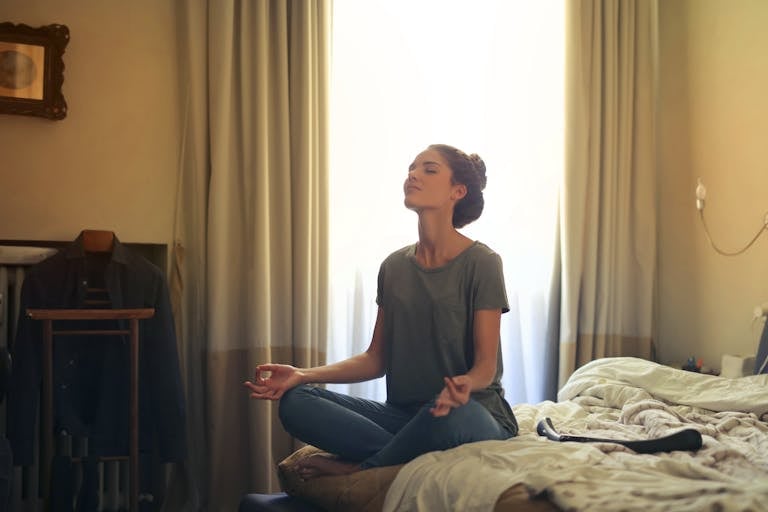

I spent years avoiding the whole mental health app trend. As someone who processes emotions internally and needs significant alone time to recharge, the idea of logging my feelings into a phone felt intrusive. My mind already runs constant analysis on every interaction, every social encounter, every moment that felt slightly off. The last thing I needed was another system demanding my attention.
Mental health apps for introverts work because they remove the energy-draining barriers of traditional therapy: scheduling appointments, traveling to offices, sitting in waiting rooms, and performing for strangers. Apps let you engage at 2 AM when your mind refuses to quiet, pause when you need processing time, and revisit lessons without judgment.
For more on this topic, see mental-health-disclosure-at-work-for-introverts.
Then came a particularly brutal stretch in my advertising career. Managing a team of twenty while navigating client demands from Fortune 500 brands had pushed me past my limits. Sleep suffered. Anxiety spiked before every presentation. I found myself withdrawing not just to recharge but to hide.
A colleague mentioned she had started using a meditation app during her commute. Nothing fancy, just ten minutes of guided breathing before walking into the office. Something about the private nature of it caught my attention. No therapist to perform for. No waiting room filled with strangers. Just me and my headphones.
That quiet recommendation changed my perspective on digital mental health tools entirely.
Why Do Mental Health Apps Appeal to Introverted Minds?
The appeal of mental health apps for introverts goes beyond simple convenience. Traditional therapy requires scheduling appointments, traveling to offices, sitting in waiting rooms, and engaging in face to face conversation with a stranger about your deepest struggles. Each of these steps drains energy before any actual help begins.
What’s your personality type?
Take our free 40-question assessment and get a detailed personality profile with dimension breakdowns, context analysis, and personalised insights.
Discover Your Type8-12 minutes · 40 questions · Free
Mental health apps remove those barriers. You can engage with therapeutic content at 2 AM when your mind refuses to quiet down. You can pause midway through a module when you need processing time. You can revisit lessons without feeling judged for needing repetition.
According to a comprehensive meta-analysis published in World Psychiatry, mental health apps show positive effects on depression and anxiety symptoms, with apps outperforming control conditions in reducing symptoms across 176 randomized controlled trials. This body of evidence has expanded dramatically, with over 100 new studies conducted since 2019.
Key advantages for introverted users:
- Control your environment: Use apps in familiar, comfortable spaces without navigating unfamiliar offices or waiting rooms
- Set your own pace: Process content as slowly or quickly as your natural rhythm demands
- Eliminate performance pressure: No need to appear articulate or emotionally available for another person
- Access during peak processing hours: Engage when your mind is naturally reflective, not when appointments are available
- Revisit without judgment: Review concepts multiple times without feeling like you should have understood them initially

For those of us who find managing anxiety particularly challenging in social contexts, the private nature of app-based support offers something traditional methods cannot. You control the pace. You control the environment. You control when and how deeply you engage.
What Does the Research Actually Show?
I used to think mental health apps were just glorified mood journals with pretty interfaces. The actual research tells a more nuanced story.
A systematic review in PLOS One found that over 70 percent of people globally who need mental health services lack access to adequate care. Mobile health technologies offer a potential solution by enabling broader and more affordable reach. The review identified 35 unique mobile apps, all leveraging Cognitive Behavioral Therapy approaches, with the most common strategies focusing on context engagement and cognitive change.
This matters for introverts specifically. CBT works by helping you identify and challenge thought patterns, something our introspective nature already prepares us for. We naturally analyze our reactions and behaviors. Apps that structure this process can channel that tendency productively rather than letting it spiral into rumination.
The National Institute of Mental Health notes that CBT is the gold standard for treating social anxiety disorder, teaching different ways of thinking, behaving, and reacting to situations. Digital delivery of these techniques can be particularly effective for those who find the prospect of face to face therapy itself anxiety inducing.
Research findings specific to introvert needs:
- CBT apps leverage natural analytical tendencies: Introverts already examine their thought patterns internally
- Self-paced learning improves outcomes: No pressure to process emotions on someone else’s timeline
- Consistent access reduces anxiety: Support available during actual moments of need, not just scheduled appointments
- Evidence-based approaches work digitally: Core therapeutic techniques translate effectively to app format
What Engagement Problems Do Introverts Face with Mental Health Apps?
Here is where I need to be honest about what I learned the hard way. Downloading an app is not the same as using it.
A meta-analysis published in npj Digital Medicine examined 92 randomized controlled trials with over 16,000 participants. Apps significantly improved clinical outcomes compared to controls, but the study found concerning patterns around engagement. Twenty five distinct engagement metrics were identified across studies, with the most common being the percentage of users who completed the intervention and average percentage of modules finished.

For introverts, this creates an interesting challenge. We excel at deep engagement when something captures our interest, and understanding how we naturally connect through our communication style can help us choose tools that align with our strengths. But we also tend to withdraw when things feel forced or performative, which is why identifying and naming our feelings becomes essential for maintaining our well-being in demanding environments. The key is finding apps that respect our processing style rather than demanding constant interaction.
Related reading: best-us-cities-for-introverts-2025.
During my first attempt with a popular anxiety app, I downloaded it with genuine motivation, completed the initial assessment, and started the first few modules. But the daily reminder notifications quickly began to feel intrusive. The progress tracking made me feel guilty on days when I needed solitude instead of structured exercises. I abandoned it within two weeks.
The breakthrough came when I found apps with reminder features that felt supportive rather than demanding. Short sessions fit better into my natural rhythms than lengthy modules that demanded sustained energy. The apps that worked for me were the ones that felt like tools rather than taskmasters.
Engagement strategies that work for introverts:
- Start with minimal time commitments: 5-10 minute sessions feel manageable rather than overwhelming
- Choose apps with gentle reminders: Supportive nudges rather than demanding notifications
- Focus on consistency over intensity: Daily brief engagement beats sporadic lengthy sessions
- Customize notification schedules: Align with your natural rhythms rather than generic recommendations
- Allow flexibility for low-energy days: Apps that adapt to varying energy levels
Which Categories of Apps Work for Introverted Users?
Not all mental health apps serve the same purpose, and understanding these distinctions helps you choose wisely. My experience managing diverse teams taught me that different personality types need different approaches. The same applies to digital mental health tools.
Mindfulness and Meditation Apps
These form the foundation of most introvert-friendly mental health routines. Apps offering guided meditation create structured solitude, something introverts intuitively understand but often struggle to prioritize. The research from the University of Michigan found that depression, anxiety, and suicidality all decreased measurably when patients used apps incorporating mindfulness practices.
If this resonates, introvert-health-coach goes deeper.
What makes these particularly effective for introverts is the non-judgmental nature of the practice. You are not performing for anyone. There is no right or wrong response. You simply observe your internal landscape, something our minds naturally do anyway.
CBT Based Therapy Apps
These apps translate therapeutic techniques into self-guided modules. For someone like me who spent decades analyzing everything internally, structured CBT exercises channeled that analytical tendency productively. Instead of endless loops of worry, you work through specific frameworks for challenging distorted thinking.
The American Psychiatric Association developed an evaluation framework specifically to help users navigate the growing space of mental health apps. Their expert panel includes psychiatrists, psychologists, social workers, and individuals with lived mental health experience. They emphasize looking for apps that incorporate evidence based approaches rather than unvalidated techniques.
Mood Tracking and Journaling Apps
Introverts often process emotions internally, sometimes without fully recognizing patterns in our moods. Tracking apps create external records that reveal trends invisible to daily awareness. That low energy every Wednesday might connect to specific meetings or responsibilities. That anxiety spike before certain events becomes visible over time.
If this resonates, introvert-trends-2025-2030 goes deeper.
I resisted mood tracking initially because it felt like homework. What changed my perspective was realizing these tools were mirrors, not demands. They reflected what was already happening internally, making it easier to understand my mental health needs and adjust accordingly.
What Should You Look for When Choosing an App?
After testing numerous apps over several years, patterns emerged about what works for introverted users. The APA’s app evaluation framework provides structure for assessment, but introvert specific considerations add another layer.
Essential features for introvert-friendly apps:
- Privacy-focused design: Apps that don’t require social features, sharing capabilities, or community engagement
- Customizable notifications: Ability to set specific check-in times that respect your natural rhythms
- Offline functionality: Support during moments when you need complete disconnection from the outside world
- Self-paced progression: No pressure to complete modules within specific timeframes
- Minimal data sharing: Clear privacy policies that don’t monetize your mental health information
Privacy matters more than you might initially realize. Apps that require social features, sharing capabilities, or community engagement can feel draining rather than supportive. Look for apps that allow solo use without pressure to connect with other users.
Customizable notification settings prove essential. Constant pings throughout the day deplete the same energy reserves we need for social interactions. Apps that allow you to set specific check in times respect your natural rhythms.
Offline functionality supports those moments when you need mental health support but want complete disconnection from the outside world. Some of my most valuable app sessions happened during flights or in quiet corners where cell service did not reach.

What Limitations Must Introverts Acknowledge?
I want to be direct about something important. Apps are tools, not treatments. They work best as supplements to care, not replacements for it.
Research from the British Medical Journal emphasizes that smartphone apps offer cost-effective, available, and accessible solutions for monitoring, supporting, and treating mental health conditions. However, self-help tools show limited effectiveness without some degree of human support. The emerging use of digital navigators or technology coaches to supplement digital interventions reflects this reality.
For introverts, this creates a tension. We prefer solitary solutions. We resist the vulnerability of sharing our struggles with others. But complete isolation in mental health management carries risks.
Critical limitations to understand:
- Apps cannot replace crisis intervention: Serious mental health episodes require human support
- Self-diagnosis limitations: Apps cannot provide clinical assessment or medication management
- Engagement consistency challenges: Without external accountability, motivation can wane during difficult periods
- Limited personalization: Generic approaches may not address your specific circumstances
- No therapeutic relationship: Missing the human connection that drives deeper healing
My own breakthrough came when I used app insights as starting points for conversations with a therapist. The data I had gathered gave us a foundation to build from. Sessions became more efficient because I arrived with documented patterns rather than vague recollections. If you are weighing options, our guide on therapy for introverts explores how to find approaches that honor your nature.
How Do You Build a Sustainable Digital Mental Health Routine?
Sustainability matters more than intensity. I have watched colleagues download five mental health apps simultaneously, use each obsessively for a week, then abandon all of them. That pattern reflects an extroverted approach to problem solving, throwing energy at the issue and expecting immediate results.
Introverts benefit from a different strategy. Start with one app. Use it consistently for at least a month before evaluating. Allow the practice to integrate into your existing routines rather than demanding separate time and energy.
Building sustainable app habits:
- Start with single app focus: Master one tool before adding others to prevent overwhelm
- Integrate with existing routines: Attach app use to established habits like morning coffee or evening wind-down
- Set realistic time commitments: 5-10 minutes daily beats 30 minutes sporadically
- Create environment consistency: Use apps in the same quiet, comfortable space when possible
- Track patterns, not just moods: Notice which times and contexts work best for engagement
- Allow flexibility for low-energy periods: Maintain connection even if engagement levels vary
- Review effectiveness monthly: Assess what’s working and adjust approach accordingly
I eventually settled on a morning meditation app and an evening mood journal. Ten minutes in the morning created a buffer before work demands began. Five minutes at night provided closure and reflection. The simplicity proved more valuable than complexity.
Consider how digital tools fit into your broader approach to navigating professional mental health support. Apps can complement therapy, bridge gaps between appointments, or serve as maintenance tools after intensive treatment ends.
Related reading: introvert-crisis-emergency-mental-health-navigation.
When Are Apps Not Enough?
There came a point in my journey when the apps that had helped for months suddenly felt inadequate. Anxiety that had been manageable escalated. Sleep that had improved deteriorated again. The tools I relied on no longer matched the intensity of what I was experiencing.
Recognizing when to seek additional support is crucial. Apps are effective for mild to moderate symptoms and maintenance. They are not designed for crisis intervention or severe mental health conditions.
Signs you need more than apps can provide:
- Persistent symptoms despite consistent app use: No improvement after 6-8 weeks of regular engagement
- Increasing isolation and withdrawal: Apps become substitutes for all human connection
- Sleep and appetite disruptions: Physical symptoms that indicate deeper issues
- Work or relationship impairment: Functioning declines despite using support tools
- Self-harm thoughts: Any consideration of hurting yourself requires immediate professional support
If you find yourself in a difficult moment, our resource on mental health crisis support for introverts provides guidance for navigating those darker periods. The strength to seek help is not weakness. It is strategic recognition of your current capacity.
How Can You Make Peace with Digital Mental Health Support?
The introvert resistance to mental health apps often stems from the same skepticism we apply to anything new and potentially intrusive. We guard our internal worlds carefully. We resist anything that feels performative or shallow.
What shifted my perspective was recognizing that these tools could honor rather than violate my need for privacy and control. The right app becomes an extension of the internal processing we already do naturally. It structures without demanding. It supports without intruding.
Twenty years in advertising taught me that the right tools, properly applied, amplify natural strengths. Mental health apps, chosen thoughtfully and used consistently, do the same for our emotional wellbeing. They meet us where we are, in the quiet spaces where we do our best thinking, and help us think more clearly.
The colleague who first mentioned that meditation app probably has no idea how significantly that simple recommendation changed my approach to mental health. Sometimes the most profound changes begin with the smallest digital doorways.
Frequently Asked Questions
Are mental health apps effective for treating anxiety?
Research consistently shows mental health apps can reduce symptoms of anxiety and depression when used appropriately. A meta-analysis of 176 randomized controlled trials found apps outperformed control conditions in symptom reduction. However, effectiveness increases significantly when apps incorporate evidence based approaches like Cognitive Behavioral Therapy and when used as supplements to professional care rather than replacements.
How do I know if a mental health app is safe and legitimate?
The American Psychiatric Association developed an evaluation framework examining access, privacy, clinical foundation, usability, and data integration. Key factors include whether the app clearly states it is not a replacement for care, whether it uses evidence based techniques, how it handles your personal data, and whether mental health professionals were involved in development. Apps requiring excessive permissions or lacking clear privacy policies warrant caution.
Can introverts benefit from therapy apps that require social interaction?
Some apps include community features or peer support elements that may feel draining for introverts. Look for apps offering solo use options without pressure to engage socially. Many effective apps focus entirely on individual work through guided exercises, journaling, and meditation without requiring any social component. The private nature of these tools is often what makes them appealing to introverted users.
How long should I use a mental health app before expecting results?
Consistency matters more than duration. Research suggests meaningful engagement over at least four to eight weeks provides the best foundation for evaluating effectiveness. Starting with one app and using it regularly before adding others prevents the overwhelm that leads to abandonment. Brief daily sessions often prove more sustainable than occasional lengthy ones.
Should mental health apps replace therapy for introverts?
Apps work best as supplements rather than replacements for professional care. Research indicates that digital tools show limited effectiveness without some degree of human support. For introverts who find traditional therapy challenging, apps can bridge gaps between appointments, provide practice between sessions, or serve as maintenance tools. They can also help you prepare for therapy by documenting patterns and identifying discussion topics.
Explore more mental health resources in our complete Introvert Mental Health Hub.
About the Author
Keith Lacy is an introvert who’s learned to embrace his true self later in life. With a background in marketing and a successful career in media and advertising, Keith has worked with some of the world’s biggest brands. As a senior leader in the industry, he has built a wealth of knowledge in marketing strategy. Now, he’s on a mission to educate both introverts and extroverts about the power of introversion and how understanding this personality trait can unlock new levels of productivity, self-awareness, and success.