
Mindfulness group activities are structured practices where people engage in shared awareness exercises, from group meditation and mindful movement to collaborative breathing sessions and reflective circles. For introverts, these settings can feel counterintuitive at first glance, since the whole premise of mindfulness seems built for solitude. Yet with the right structure and expectations, group mindfulness can offer something that solo practice rarely provides: the quiet, grounding experience of being present alongside others without the pressure to perform.
Most articles about mindfulness for introverts focus on solo practice, and for good reason. Sitting alone with your thoughts, following your breath, moving at your own pace, that feels natural. But there are real benefits to practicing alongside others, and ignoring group formats entirely means missing a dimension of mindfulness that can be genuinely powerful, particularly for people who are wired for depth and connection but exhausted by surface-level socializing.
If you’ve ever felt torn between wanting community and needing quiet, this is the conversation worth having.
Mindfulness is one thread in a larger fabric of introvert mental health. Our Introvert Mental Health Hub covers the full range of emotional wellbeing topics that matter most to people wired for depth, from anxiety and sensory sensitivity to emotional processing and resilience. This article fits squarely into that conversation by examining a format of mindfulness practice that most introverts dismiss before they ever try it.
Why Do Introverts Resist Group Mindfulness in the First Place?
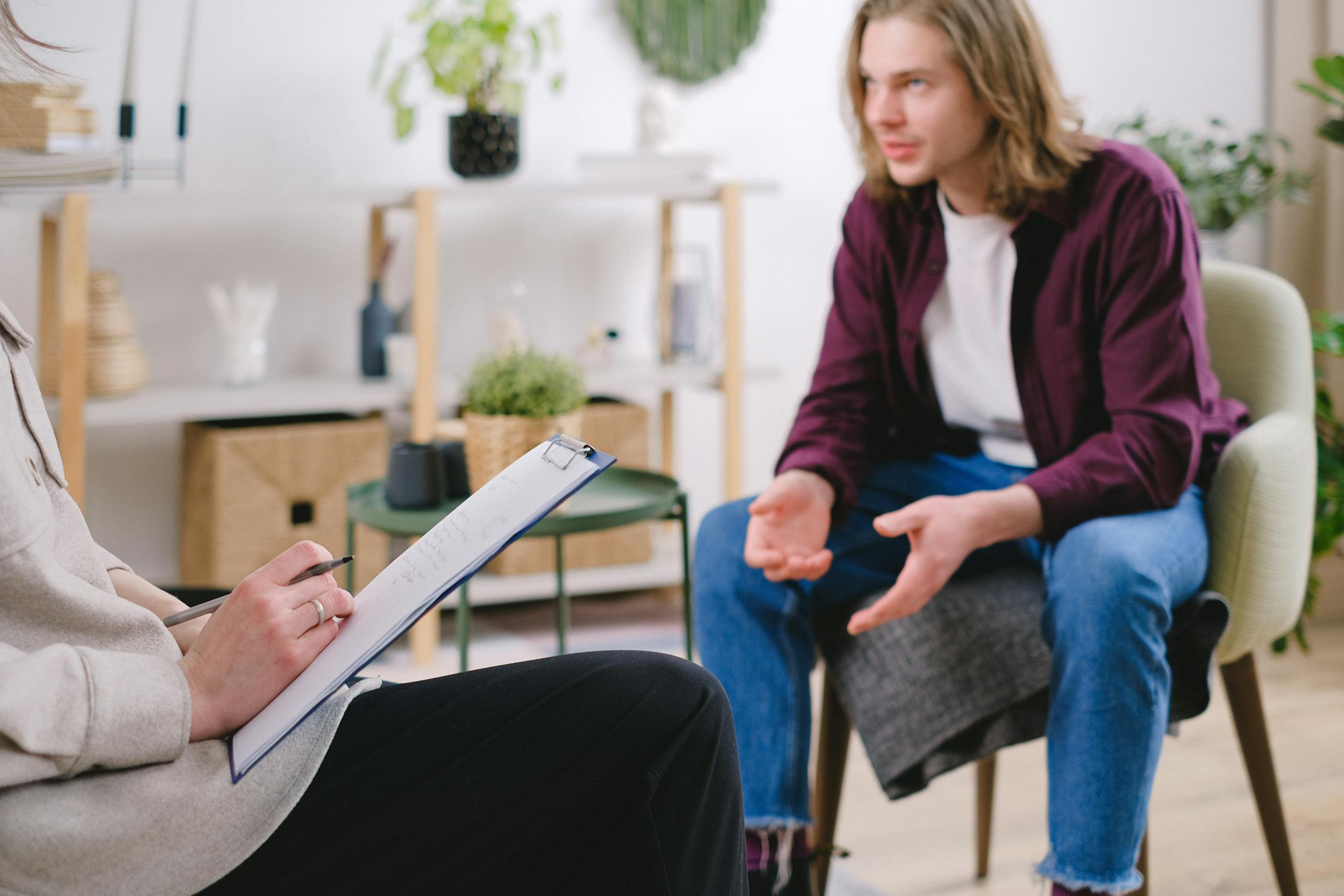
My first encounter with a group meditation session was at an agency retreat in the early 2000s. A consultant had been brought in to help our leadership team “reconnect.” We sat in a circle on yoga mats in a hotel conference room, fluorescent lights humming overhead, and were asked to share what came up for us after five minutes of guided breathing. I remember thinking: this is the opposite of what I need right now.
Career Coaching for Introverts
One-on-one career strategy sessions with Keith Lacy. 20 years of Fortune 500 leadership as an introvert, now helping others build careers that work with their wiring.
Learn More50-minute Zoom session · $175
That experience was badly designed. But it shaped my assumptions about group mindfulness for years afterward. I assumed that anything requiring shared vulnerability in real time was built for extroverts, and that introverts were better off practicing alone where we could process without an audience.
That assumption was half right. Poorly structured group mindfulness, the kind that demands immediate verbal sharing, open emotional displays, and performative vulnerability, genuinely does work against introvert strengths. Our minds process inward. We filter meaning through layers of observation and internal interpretation before we’re ready to speak. Being asked to externalize that process on someone else’s timeline creates friction, not calm.
Yet well-designed group mindfulness addresses something else entirely. It creates a container of shared presence where you’re not required to speak, perform, or respond. You simply exist alongside others who are doing the same internal work. That distinction matters enormously, and most introverts never get to experience it because they’ve already opted out.
There’s also the sensory dimension to consider. Many introverts, particularly those who identify as highly sensitive, find that group settings introduce a layer of stimulation that makes mindfulness harder to access. Sounds, movement, the emotional energy of other people in the room, all of it registers. For people who already deal with HSP overwhelm and sensory overload, a crowded group mindfulness session can feel more activating than settling. Knowing this in advance helps you choose formats that work with your nervous system rather than against it.
What Types of Group Mindfulness Activities Actually Suit Introverts?
Not all group mindfulness activities are created equal. The format, size, structure, and facilitation style all determine whether a particular practice will feel grounding or draining. Introverts tend to thrive in settings that prioritize parallel experience over interactive performance, where the group creates a shared field of attention without requiring constant interpersonal exchange.
Some formats tend to work particularly well.
Silent Group Meditation
Sitting in silence alongside other people sounds simple, and it is. But there’s something that happens in a room of people all quietly attending to their breath that differs from meditating alone. The collective stillness creates a kind of ambient support. You’re not isolated in your practice; you’re held by it. Many meditation centers and mindfulness studios offer drop-in silent sits that require no speaking before, during, or after. For introverts, this format is often the entry point that makes everything else feel accessible.
Mindful Movement Classes (Small Groups)
Yoga, tai chi, and qigong practiced in small group settings offer the benefits of shared presence with the added anchor of physical movement. The body becomes the focus, which means attention stays internal rather than interpersonal. You’re tracking sensation, breath, and alignment rather than managing social dynamics. Smaller classes of eight to twelve people tend to work better than large studio sessions where the energy becomes more performative.
Nature-Based Group Mindfulness
Walking meditations in natural settings, forest bathing groups, and outdoor mindfulness practices offer something that indoor group sessions often miss: a third point of focus. When everyone’s attention is directed outward toward the environment, the social pressure dissolves. You’re not watching each other; you’re watching the light through trees or the movement of water. This format works exceptionally well for introverts who find eye contact and close physical proximity activating.
Mindful Journaling Circles
These sessions involve guided prompts followed by individual writing time, with optional (never mandatory) sharing at the end. The writing itself is the practice. The group provides structure and accountability without demanding real-time verbal processing. For introverts who think best through writing, this format can feel like a genuine gift. It honors the way our minds actually work: we need time to process before we can articulate.
Structured Breathwork Sessions
Facilitated breathwork in a group setting, where everyone follows the same breathing pattern simultaneously, creates a powerful sense of collective experience without requiring any social interaction. The breath is the entire focus. Participants often lie down with eyes closed. The group presence amplifies the practice without demanding anything from it. Evidence published in PubMed Central points to the physiological effects of controlled breathing on the autonomic nervous system, effects that appear to be consistent whether practiced alone or in group settings.
How Does Group Mindfulness Affect Introverts Differently Than Solo Practice?
Solo mindfulness practice builds internal resources. You develop the capacity to observe your own mind, regulate your nervous system, and return to the present moment when anxiety or rumination pulls you away. Those are foundational skills, and they matter.
Group mindfulness builds something adjacent but distinct: the capacity to be present with others without losing yourself in the process. That’s a different skill, and for introverts, it’s often the harder one.
Many of the highly sensitive people I’ve known professionally, including several on my creative teams over the years, struggled not with being present alone but with staying grounded in the presence of other people’s emotional states. They absorbed the room. One of my senior designers used to describe client presentations as “emotionally expensive” because she was tracking everyone’s reactions simultaneously while also trying to do her own job. What she was describing is something that connects directly to HSP anxiety, the particular strain of hypervigilance that comes from being exquisitely attuned to interpersonal dynamics.
Group mindfulness, practiced consistently, can help recalibrate that hypervigilance. Not by suppressing sensitivity, which would be both impossible and counterproductive, but by training the nervous system to remain anchored even when external stimulation increases. You practice being present alongside others in a low-stakes environment so that the skill becomes available in higher-stakes ones.
There’s also a dimension of emotional processing that group mindfulness supports in ways solo practice sometimes doesn’t. When you sit in silence alongside other humans, you encounter the full range of your own emotional responses to being witnessed, to proximity, to the awareness that others are also struggling with their inner lives. Processing those responses in real time, with the anchor of a mindfulness practice holding you steady, builds emotional resilience in a way that purely solitary practice can’t fully replicate.
What Should Introverts Watch Out for in Group Mindfulness Settings?
There are real pitfalls, and I’d rather name them directly than pretend group mindfulness is universally accessible and comfortable for introverts.
The first is forced sharing. Any group mindfulness format that requires immediate verbal processing after a practice session is poorly designed for people who need time to integrate before they can articulate. Good facilitators make sharing optional and give adequate processing time. If you’re evaluating a group and the facilitator seems to expect real-time emotional openness, that’s a signal worth heeding.
The second is group size. There’s a meaningful difference between a circle of six and a studio of forty. Larger groups introduce more ambient stimulation, more social complexity, and more opportunities for the kind of comparison and self-consciousness that mindfulness is supposed to quiet. Smaller groups tend to create the conditions where introvert strengths, depth, attentiveness, genuine presence, actually become assets.
The third is the empathy tax. Highly sensitive introverts often find that group settings, even quiet ones, activate their attunement to others. They pick up on who seems uncomfortable, who’s struggling, who’s performing calm they don’t actually feel. That attunement is a genuine strength in many contexts, but it can interfere with personal mindfulness practice if it becomes a habit of attending to everyone else’s experience rather than your own. This connects to something I’ve written about elsewhere: the double-edged quality of HSP empathy, where the same sensitivity that makes you deeply perceptive also makes you vulnerable to emotional exhaustion.
A practical strategy here is to choose a seat that limits your visual field. Sitting near a wall, facing away from the majority of the group, or positioning yourself at the edge of a circle reduces the amount of social information you’re processing and allows more of your attention to stay with your own practice.
The fourth pitfall is perfectionism about the practice itself. Many introverts, particularly those with high standards for their own performance, arrive at group mindfulness with an internal scorecard. Am I doing this right? Am I more distracted than everyone else? Did I get less out of that session than I should have? HSP perfectionism can turn a practice designed for self-compassion into another arena for self-criticism. Recognizing that pattern before you walk into a group session is half the work of managing it.

Can Group Mindfulness Help with the Social Anxiety That Comes with Group Settings?
There’s a particular irony in the fact that the thing introverts most need to practice, being present in group settings without anxiety, is also the thing that makes group settings feel difficult in the first place. It’s a genuine tension, and I don’t want to minimize it.
What I can say from experience is that gradual exposure within a structured, low-demand context does something that avoidance never can. Avoidance keeps the anxiety intact. Presence, practiced repeatedly in safe conditions, gradually recalibrates it.
The National Institute of Mental Health frames anxiety as a condition that responds to gradual, supported exposure to feared situations. Group mindfulness, at its best, creates exactly that kind of environment: structured, predictable, low in social demand, and oriented toward non-judgmental awareness. It’s not therapy, and it’s not a replacement for professional support when anxiety is clinically significant. Yet as a regular practice, it builds the nervous system’s capacity to tolerate and eventually relax within social presence.
Mid-career, I ran a creative agency through a period of rapid growth. We went from twelve people to over forty in about eighteen months, and the shift in social complexity was significant. I found myself in more group settings, more often, with less control over the format. My instinct was to withdraw strategically, to attend the minimum required and leave as quickly as possible. What actually helped was finding a weekly meditation group that met on Thursday mornings, eight people in a small studio near the office. Nothing was required of me except showing up and sitting. Over months, something shifted. I became more comfortable with the simple fact of other people’s presence, not because I stopped being an introvert, but because I’d practiced being present in a low-stakes group enough times that it stopped feeling like a threat.
That’s what group mindfulness can do at its best. It doesn’t change your wiring. It expands your range.
How Do You Find or Build a Group Mindfulness Practice That Fits?
Finding the right group matters more than finding any group. A poorly matched format will reinforce your resistance; the right one will make you wonder why you waited so long.
Start with format over location. Decide which type of group mindfulness activity aligns with how you process: silent sitting, mindful movement, nature-based practice, or journaling circles. Then look for offerings in that specific format rather than accepting whatever happens to be convenient.
Ask about group size before you commit. Most facilitators will tell you how many participants typically attend. Aim for groups of four to twelve for your first experiences. Once you’ve established comfort in smaller settings, larger groups become more accessible.
Attend twice before deciding. First sessions in any new group carry the cognitive overhead of novelty: learning the space, reading the social dynamics, figuring out where to sit. That overhead interferes with the practice itself. A second session, when the environment is already familiar, gives you a much more accurate read on whether the format works for you.
Consider online formats as a legitimate starting point. Video-based group meditation and mindfulness sessions have become widely available, and for introverts, they offer a meaningful middle ground. You’re practicing alongside others, benefiting from the structure and accountability of a group, while retaining control over your physical environment. A review published in PubMed Central found that digital mindfulness interventions can produce meaningful outcomes, suggesting that the format matters less than the consistency of practice.
If no existing group fits, consider building one. Informal mindfulness circles, even two or three people who commit to sitting together weekly, can provide everything a formal group offers. You control the format, the size, and the expectations. Several of the most meaningful mindfulness experiences I’ve had came from informal arrangements, a colleague and I who started walking silently for twenty minutes before morning meetings, a small group of agency peers who gathered monthly for a shared meditation and dinner.

What Role Does Group Mindfulness Play in Processing Difficult Experiences?
One of the things I’ve noticed about introverts, particularly highly sensitive ones, is that we’re often very good at processing difficult experiences internally but less practiced at processing them in the presence of others. We retreat, we think, we write, we integrate quietly. That’s valuable. Yet it can also mean we miss the particular kind of healing that comes from being witnessed, from being present with others who are also carrying something.
Group mindfulness creates a container for that kind of witnessing without requiring disclosure. You don’t have to tell the group what you’re processing. You simply bring it into the room and sit with it alongside other people who are doing the same. There’s something in that shared humanity that solo practice can’t fully access.
This matters particularly for introverts who’ve experienced rejection or relational hurt and have developed a habit of processing those experiences entirely alone. The isolation of solo processing can reinforce the belief that our inner lives are too complex or too intense for others to hold. Group mindfulness gently challenges that belief by demonstrating, repeatedly, that shared presence is possible without exposure or vulnerability being demanded.
For those who carry the particular sting of social rejection, the kind that leaves you replaying interactions and questioning your own perceptions, HSP rejection processing involves a slow, layered kind of healing. Group mindfulness can support that process by rebuilding trust in shared space, one quiet session at a time.
The American Psychological Association identifies social connection as one of the core factors in psychological resilience, not deep disclosure or constant social contact, but the experience of being part of something larger than yourself. Group mindfulness, practiced consistently, builds exactly that kind of connection. It’s quiet, it’s low-demand, and it’s real.
Late in my agency career, I went through a difficult stretch after losing a major account that I’d built over several years. The professional loss was one thing; the relational dimension was harder. I’d trusted people who in the end made decisions that felt personal even when they weren’t. I spent months processing that privately, which helped up to a point. What actually moved me through it was returning to a small meditation group I’d been part of intermittently. Nothing was said about what I was carrying. No one knew. Yet sitting in that circle of quiet people, all of us attending to our breath and our inner lives, something loosened. Being present alongside others who were also doing their own difficult internal work reminded me that I wasn’t uniquely burdened. That’s a simple thing, but it was what I needed.
What Does the Research Suggest About Group Mindfulness Outcomes?
The evidence base for mindfulness-based interventions has grown substantially over the past two decades. Group formats have been studied in clinical contexts, workplace settings, and educational environments, and the findings are generally consistent: group mindfulness produces meaningful improvements in stress, anxiety, and emotional regulation across a range of populations.
A resource from the National Center for Biotechnology Information outlines the mechanisms through which mindfulness-based interventions affect psychological functioning, including improvements in attentional control and reductions in rumination. Both of those outcomes are particularly relevant for introverts, who tend toward sustained internal focus and are often prone to cycling through the same thoughts repeatedly.
What’s worth noting is that the group format itself appears to contribute something beyond the mindfulness techniques alone. The social accountability of showing up for a group, the shared intention, and the experience of practicing alongside others all seem to support consistency in ways that solo practice sometimes doesn’t. For introverts who struggle with self-discipline around practices that feel self-indulgent, the external structure of a group commitment can be the factor that makes a practice sustainable.
Academic work on group dynamics and wellbeing suggests that even minimal social connection within a structured group context can buffer against the effects of stress and isolation. You don’t need deep friendship with your fellow meditators for the group to be beneficial. Shared presence, practiced regularly, is sufficient.
There’s also the question of perfectionism and self-compassion, which intersect in interesting ways within group mindfulness contexts. Research from Ohio State University’s nursing program on perfectionism and wellbeing highlights how high personal standards, when combined with self-criticism, undermine the very outcomes people are working toward. Group mindfulness, because it’s witnessed, can paradoxically reduce perfectionist self-monitoring. When you see that everyone else in the room is also distracted, restless, or imperfect in their practice, the internal critic loses some of its authority.
How Do You Stay True to Your Introvert Nature Within a Group Mindfulness Setting?
The concern I hear most often from introverts considering group mindfulness is that they’ll feel pressured to engage in ways that don’t feel authentic, to share, to connect, to be more socially present than they actually want to be. That concern is legitimate, and it reflects a real pattern in poorly facilitated groups.
Yet in well-designed group mindfulness settings, introvert strengths are genuinely valued. The capacity for deep attention, for sustained inward focus, for noticing subtle shifts in experience, these are exactly what mindfulness practice cultivates. Introverts often find that they take to mindfulness more naturally than their extroverted counterparts, precisely because the practice asks for the kind of quiet, attentive presence that comes relatively easily to people wired for inner depth.
Staying true to your nature within a group setting means giving yourself permission to decline sharing, to arrive a few minutes early and leave promptly, to choose your seat deliberately, and to treat the practice as yours rather than the group’s. The group provides structure and shared presence. What you do within that container is entirely your own.
It also means being honest with yourself about what you need before and after. Group mindfulness sessions, even quiet ones, require social energy. Building in transition time, a few minutes of solitude before returning to the demands of the day, makes the practice sustainable rather than just another obligation that depletes you.
One thing I’ve learned over years of managing creative teams and running agencies is that introverts rarely thrive by pretending to be something they’re not. The same principle applies to mindfulness. You don’t have to become a different kind of person to benefit from group practice. You bring your actual self, your reflective nature, your depth, your preference for silence, and you let the practice meet you there.
There’s much more to explore across the full spectrum of introvert mental health. The Introvert Mental Health Hub brings together articles on anxiety, emotional processing, sensory sensitivity, and resilience, all written from the perspective of people who understand what it means to be wired for depth in a world that often rewards volume.
About the Author
Keith Lacy is an introvert who’s learned to embrace his true self later in life. After 20 years in advertising and marketing leadership, including running agencies and managing Fortune 500 accounts, Keith now channels his experience into helping fellow introverts understand their strengths and build fulfilling careers. As an INTJ, he brings analytical depth and authentic perspective to every article, drawing from both professional expertise and personal growth.
Frequently Asked Questions
Are group mindfulness activities suitable for introverts?
Yes, with the right format. Introverts tend to do best in group mindfulness settings that prioritize silent shared practice over verbal sharing. Silent meditation groups, mindful movement classes, and nature-based practices all offer the benefits of group presence without the social demands that drain introvert energy. The format matters more than the fact of being in a group.
What is the best type of group mindfulness activity for highly sensitive people?
Highly sensitive people tend to respond well to smaller groups with clear structure and optional sharing. Silent meditation sits, guided breathwork with eyes closed, and outdoor mindfulness walks are often well-suited because they limit interpersonal stimulation while still providing the grounding effect of shared presence. Avoiding large, high-energy group settings reduces the risk of sensory overwhelm.
How do group mindfulness activities differ from solo practice?
Solo mindfulness builds internal resources like self-regulation and attentional control. Group mindfulness adds the dimension of being present with others, which trains a different but complementary skill: staying grounded in your own experience while sharing space with other people. Both forms of practice are valuable, and they tend to reinforce each other over time.
Can group mindfulness help with social anxiety?
Group mindfulness can support people who experience social anxiety by providing repeated, low-demand exposure to being in the presence of others. Because well-structured group mindfulness doesn’t require social performance, it creates conditions where the nervous system can gradually become more comfortable with shared space. It is not a replacement for professional support when anxiety is clinically significant, but as a regular practice it can meaningfully reduce the baseline stress associated with group settings.
How large should a mindfulness group be for introverts?
Smaller groups of four to twelve participants tend to work best for introverts, particularly when starting out. Larger groups introduce more ambient stimulation and social complexity, which can interfere with the inward focus that mindfulness requires. Once comfort and familiarity are established in smaller settings, larger groups become more accessible over time.