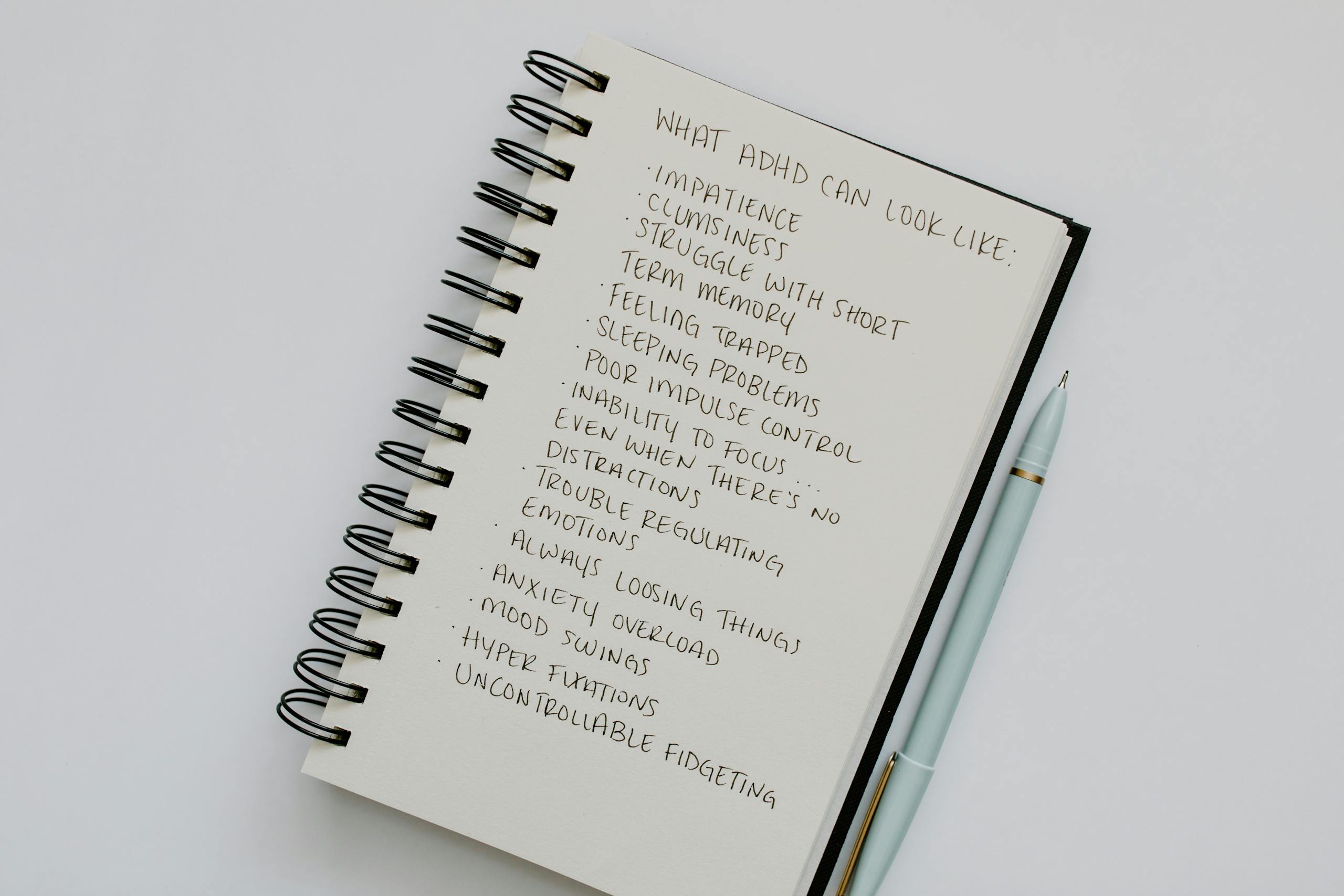
Mindfulness techniques for ADHD work differently than most people expect. Rather than demanding a blank, still mind, the most effective practices meet a dysregulated attention system where it actually is, using structure, sensory anchors, and short bursts of intentional focus to build the kind of regulation that ADHD brains genuinely struggle to sustain on their own.
That distinction matters enormously. ADHD is not a focus deficit in the simple sense. It is a problem with regulating attention, which means the same person who cannot finish a report might spend four uninterrupted hours in a state of complete absorption on something that genuinely captivates them. Hyperfocus is real, and it is actually a hallmark of the condition, not evidence against it. Mindfulness, when adapted thoughtfully, works with that neurological reality instead of fighting it.
I came to this topic from an unexpected angle. I do not have an ADHD diagnosis, but I spent two decades running advertising agencies, and I managed a lot of people who did. Some of my most gifted creatives and strategists were visibly, sometimes painfully, struggling with the kind of sustained attention that agency life demands. Watching them suffer while simultaneously watching their minds produce work that genuinely stunned clients taught me something about the gap between raw capability and regulated execution. Mindfulness, I eventually came to understand, is one of the bridges across that gap.
If you are exploring the broader landscape of mental health as an introvert, our Introvert Mental Health Hub covers the full range of topics that intersect quiet, reflective personalities with the real psychological challenges we face. ADHD and mindfulness sit right at the heart of that conversation.

Why Does Mindfulness Feel So Hard for ADHD Brains?
Telling someone with ADHD to sit still, close their eyes, and observe their breath without judgment is a bit like telling someone with a broken leg to run it off. The instruction is not wrong in principle. The delivery is completely disconnected from the physical reality of the person receiving it.
What drains your social battery?
Not all social exhaustion is the same. Our free quiz identifies your specific drain pattern and gives you personalised recharging strategies.
Find Your Drain PatternUnder 2 minutes · 8 questions · Free
ADHD involves measurable differences in brain structure and function, particularly in regions governing executive function, working memory, and the regulation of dopamine and norepinephrine. These are not character flaws or habits. They are neurobiological realities with decades of supporting evidence from neuroimaging and genetic research. When a person with ADHD sits down to meditate, their brain is not being uncooperative. It is doing exactly what it does, which is seek stimulation, resist sustained monotony, and drift toward whatever feels most immediately compelling.
Traditional mindfulness instruction often assumes a baseline of attentional control that ADHD brains simply do not have in the same way. A ten-minute silent sitting practice that feels mildly challenging for someone without ADHD can feel genuinely punishing for someone with it. The internal experience is not peaceful. It is a rapid-fire sequence of self-criticism, distraction, frustration at the distraction, and then distraction from the frustration.
One of my senior account directors, a brilliant woman who was eventually diagnosed with ADHD-PI (the predominantly inattentive presentation) in her late thirties, once described her attempts at meditation as “watching a browser with forty tabs open while someone keeps clicking on all of them.” She was not exaggerating. What she needed was not a longer meditation. She needed a different kind of entry point entirely.
There is also an important overlap worth naming here. Many people with ADHD are also highly sensitive, and the sensory and emotional dimensions of that combination create their own complexity. The way HSP overwhelm and sensory overload compound attention difficulties is something that gets underexplored in mainstream ADHD conversations. When a nervous system is already processing more sensory input than most, adding the demand of sustained internal focus without any external anchor can tip quickly into overwhelm rather than calm.
What Does the Evidence Actually Say About Mindfulness and ADHD?
Without overstating what the evidence shows, there is a meaningful and growing body of work suggesting that mindfulness-based interventions can support ADHD symptom management in both adults and adolescents. The mechanisms that researchers point to include improvements in attentional regulation, reductions in emotional reactivity, and better awareness of when the mind has wandered, which is actually a foundational mindfulness skill.
A study published in PubMed Central examined mindfulness-based cognitive approaches in adult populations and found meaningful reductions in inattention and hyperactivity symptoms alongside improvements in emotional regulation. That emotional regulation piece is significant. ADHD is not purely an attention condition. Emotional dysregulation, including intense frustration, rejection sensitivity, and difficulty tolerating boredom, is a core feature that often causes as much daily impairment as the attentional symptoms themselves.
Additional research available through PubMed Central supports the idea that mindfulness training can strengthen the prefrontal cortex functions most implicated in ADHD, including working memory and inhibitory control. These are not dramatic transformations. They are modest, real, and worth pursuing as part of a broader approach that may also include medication, behavioral strategies, and environmental accommodations.
What the evidence does not support is the idea that mindfulness alone is sufficient treatment for ADHD. ADHD is a clinical condition that causes real impairment in daily functioning. Framing it as something that can be fully managed through meditation alone does a disservice to people who are genuinely struggling. Mindfulness is a valuable tool in a toolkit, not a replacement for comprehensive care.

Which Mindfulness Techniques Actually Work for ADHD?
The techniques that tend to work best for ADHD brains share a few common features. They are short. They involve sensory anchors. They build in movement or tactile engagement where possible. And they do not demand perfection, because the moment a person with ADHD starts judging themselves for losing focus, the practice is effectively over.
Breath Counting With a Physical Anchor
Standard breath awareness asks you to simply notice the breath. For ADHD brains, that is often not enough stimulus to hold attention. Adding a counting component (inhale for four, hold for two, exhale for six) gives the mind something concrete to track. Adding a physical anchor, pressing a finger against your thumb on each count, or holding a smooth stone, gives the body something to do. Both elements reduce the cognitive load of staying present because they create multiple simultaneous inputs rather than asking the brain to sustain attention on a single, subtle sensation.
I started using a version of this during long client presentations when I was running my second agency. Not because I had ADHD, but because as an INTJ, my mind would often race ahead to implications and responses while someone was still mid-sentence. The physical anchor brought me back. I later shared the technique with several team members who found it genuinely useful, including one creative director who told me it was the first time a mindfulness suggestion had not made him feel worse about himself.
Movement-Based Mindfulness
Walking meditation is often better suited to ADHD than seated practice. The act of moving provides the sensory input and mild physical stimulation that helps regulate the nervous system, while the mindfulness component asks you to pay attention to the physical sensations of each step, the contact of your foot with the ground, the rhythm of your arms, the quality of the air. There is enough happening to hold interest without being so stimulating that focus scatters entirely.
Yoga, tai chi, and even simple stretching sequences can serve a similar function. The key quality they share is that they give the body a structured sequence to follow, which provides just enough external scaffolding to free the mind from having to generate its own focus entirely.
The Two-Minute Reset
Long meditation sessions are often counterproductive for ADHD. A two-minute intentional reset, done multiple times throughout the day, tends to produce better outcomes than a twenty-minute session that ends in frustration. The reset involves stopping whatever you are doing, taking three slow breaths, noticing five things you can physically feel (the chair beneath you, the temperature of the room, the texture of your clothing), and then returning to your task.
This practice works because it is achievable. It does not require a quiet room, a meditation cushion, or a cleared schedule. It can happen at a desk, in a car, in a bathroom stall between meetings. The consistency of returning to it repeatedly throughout the day builds the attentional muscle in small increments rather than demanding a sustained effort the brain is not yet equipped to sustain.
Mindful Transitions
ADHD brains often struggle most intensely at transitions, moving from one task to another, from one environment to another, from a high-stimulation activity to a low-stimulation one. Building a brief mindfulness ritual around transitions can significantly reduce the friction and emotional charge that these moments typically carry.
Something as simple as pausing before opening a new application on your computer, taking one conscious breath, and stating internally what you are about to do and why, creates a moment of intentional awareness that interrupts the reactive, impulsive switching that ADHD brains default to. It is not dramatic. Over time, it is genuinely useful.
The emotional dimension of these transitions is worth addressing directly. ADHD is often accompanied by heightened emotional sensitivity, and the frustration of constant task-switching or the shame of losing focus again can spiral quickly. Understanding how HSP anxiety and emotional coping strategies apply here is relevant, because many of the same principles around self-compassion and nervous system regulation translate directly to ADHD emotional management.

How Does Emotional Regulation Fit Into ADHD Mindfulness Practice?
Emotional dysregulation is one of the most disruptive and least discussed aspects of ADHD. The intensity of frustration when a task is not going well, the shame spiral after a mistake, the rejection sensitivity that makes even mild criticism feel crushing, these experiences are not separate from ADHD. They are part of it, rooted in the same neurobiological differences that affect attention and impulse control.
Mindfulness supports emotional regulation through a specific mechanism: it creates a small but meaningful gap between the stimulus and the response. Without that gap, ADHD brains tend to react immediately and intensely. With practice, even a brief moment of awareness before reacting can change the trajectory of an emotional experience significantly.
The practice of labeling emotions, noticing “I am feeling frustrated right now” rather than simply being swamped by frustration, is particularly powerful. Naming an emotional state activates the prefrontal cortex and slightly dampens the intensity of the limbic response. It is a small shift with a real effect, and it is something anyone can practice without a therapist, a quiet room, or twenty minutes of free time.
I watched this play out vividly during a particularly difficult pitch season at my agency. We had a senior strategist who was later diagnosed with ADHD-C (the combined presentation), and he was brilliant under certain conditions and completely derailed under others. What derailed him was almost always emotional, not intellectual. A dismissive comment from a client, a last-minute scope change, a sense that his work was not being seen. His emotional reactions were fast, intense, and often disproportionate in ways that created friction with clients and colleagues. When he started working with a therapist who incorporated mindfulness-based approaches, the change was not that he stopped feeling things intensely. He started noticing the feeling before it became a reaction. That gap was everything.
The depth of emotional processing that often accompanies ADHD, particularly in introverted or highly sensitive individuals, deserves its own careful attention. The way emotional processing works for those who feel deeply is relevant here, because the same capacity for rich internal experience that makes some people exceptional at creative and empathic work also makes emotional regulation genuinely harder without the right tools.
What Role Does Self-Compassion Play in ADHD Mindfulness?
Self-compassion is not a soft add-on to ADHD mindfulness practice. It is load-bearing. Without it, most mindfulness attempts for ADHD collapse under the weight of self-criticism.
Adults with ADHD have typically spent years, sometimes decades, receiving messages that they are lazy, disorganized, unreliable, or not trying hard enough. Many have internalized those messages deeply. Sitting down to meditate and immediately losing focus does not feel like a neutral event. It feels like more evidence of the same old story. That emotional charge makes it very hard to return to the practice with equanimity, which is exactly what mindfulness requires.
Self-compassion practice, in the tradition developed by researchers like Kristin Neff, involves three components: mindful awareness of suffering, recognition that suffering is a shared human experience, and extending toward yourself the same warmth you would offer a friend. For ADHD, this translates to noticing when you have lost focus without treating it as a catastrophe, recognizing that losing focus during meditation is something everyone does (and that ADHD makes it more frequent, not shameful), and responding to yourself with genuine kindness rather than contempt.
There is also a perfectionism dimension here that deserves direct attention. Many people with ADHD, particularly those with inattentive presentations who masked their symptoms for years by working harder than everyone else, carry a crushing standard of performance. The belief that anything less than complete focus means the practice has failed is itself a form of perfectionism that undermines the practice. Understanding how perfectionism traps people in impossible standards is directly relevant to anyone trying to build a sustainable mindfulness practice with ADHD.
The American Psychological Association has written meaningfully about resilience and its relationship to self-compassion, and the core insight applies here: the ability to recover from difficulty is not about being impervious to struggle. It is about responding to struggle in ways that allow you to continue. Self-compassion is how you continue.

How Do You Build a Consistent Practice When Consistency Is the Hard Part?
Consistency is one of the central challenges of ADHD, and it is also what makes mindfulness practice genuinely beneficial over time. That tension is real and it is worth naming honestly rather than glossing over it with reassurances about habit formation.
Habit formation for ADHD brains works differently than the standard advice suggests. The “just do it at the same time every day” approach assumes a level of routine adherence and working memory that ADHD often undermines. What tends to work better is what some researchers and clinicians call implementation intentions, specific if-then plans that attach the new behavior to an existing cue rather than relying on remembering to do it.
“When I sit down at my desk in the morning, before I open my email, I will take two minutes to breathe and ground myself” is more effective than “I will meditate every morning.” The specificity of the cue does the cognitive work that working memory cannot reliably do on its own.
External reminders matter too. A phone alarm labeled “two-minute reset” is not a crutch. It is an accommodation for a brain that genuinely struggles to hold intentions across time without support. Using tools is not weakness. It is practical intelligence about how your particular mind works.
Variety also helps more than most mindfulness instruction acknowledges. ADHD brains tend to disengage from repetitive stimuli over time, which means the same practice done in exactly the same way every day will often lose its effectiveness faster than it would for someone without ADHD. Rotating between breath-based practices, movement practices, body scans, and mindful observation of the environment keeps enough novelty in the routine to sustain engagement.
One of the most underrated consistency strategies is also one of the simplest: tracking. Not elaborate journaling, just a small mark on a calendar or in an app each time you complete a practice. ADHD brains respond well to visible evidence of progress, and the streak itself becomes a mild motivator. The clinical literature on behavioral interventions for ADHD consistently supports the use of external feedback and reward systems as genuine accommodations, not childish workarounds.
What About the Introvert-ADHD Overlap?
Introversion and ADHD are not the same thing, but they overlap in ways that create a specific experience worth addressing. Many introverts with ADHD find that their preference for solitude and internal processing actually supports certain mindfulness practices, while simultaneously making the social aspects of ADHD (the impulsive comments, the difficulty with turn-taking in conversation, the emotional reactivity in group settings) more confusing and distressing.
An introvert with ADHD might find solo mindfulness practices relatively accessible, at least in terms of willingness to sit alone. The challenge is more often the internal noise than the external environment. The mind does not quiet down just because the room does. In some ways, the absence of external stimulation makes the internal chaos more audible.
There is also an empathy dimension that intersects meaningfully with ADHD emotional dysregulation. Introverts who are also highly sensitive often absorb the emotional states of those around them, and when ADHD reduces the capacity to regulate those absorbed emotions, the result can be genuinely overwhelming. The way empathy functions as both a gift and a burden is especially relevant for introverts managing ADHD alongside high sensitivity.
I managed several people over the years who fit this profile precisely. One account manager, quiet and deeply perceptive, would pick up on client tension in a room before anyone else noticed it, and then spend the rest of the meeting unable to focus on the actual content of the discussion because she was so absorbed in processing the emotional undercurrents. Her attentional difficulties were not about disinterest. They were about being flooded. Mindfulness practices that helped her name and contain emotional input, rather than suppress it, made a genuine difference in her ability to function in high-stakes client environments.
Rejection sensitivity is another area where introversion, ADHD, and emotional processing converge in painful ways. Adults with ADHD often experience rejection sensitivity dysphoria, an intense emotional response to perceived rejection or criticism that can be disproportionate to the actual event. For introverts who already tend to process feedback deeply and privately, this can become an isolating and exhausting cycle. The work around processing and healing from rejection offers tools that translate directly to this experience.

How Does Mindfulness Support ADHD Without Replacing Professional Care?
Mindfulness is a complement to professional ADHD care, not a substitute for it. That distinction matters practically. Someone who is struggling significantly with ADHD symptoms in their daily life, at work, in relationships, in their ability to manage basic responsibilities, needs a comprehensive evaluation and likely a combination of approaches that may include medication, behavioral therapy, coaching, and environmental accommodations.
The National Institute of Mental Health provides accessible guidance on the intersection of attention difficulties and anxiety, which frequently co-occur with ADHD and can complicate both diagnosis and treatment. Understanding that intersection is important for anyone seeking support, because what looks like ADHD may involve anxiety, and what looks like anxiety may involve ADHD, and often both are present simultaneously.
Mindfulness sits most usefully in the daily maintenance layer of ADHD management. It is not crisis intervention. It is the quiet, cumulative work of building slightly better attentional awareness, slightly more emotional regulation, slightly more self-compassion over time. Those incremental gains matter. They add up. And they tend to make every other intervention more effective because they create a foundation of self-awareness that supports everything else.
One thing I have observed consistently, both in my own work with introverted team members and in the broader literature, is that the people who benefit most from mindfulness practices are those who approach them with curiosity rather than expectation. The goal is not to become someone who can meditate for an hour without distraction. The goal is to become someone who notices distraction a little sooner, returns to focus a little more gently, and judges themselves a little less harshly for the inevitable wandering. That is achievable. That is worth pursuing.
Academic research on mindfulness-based approaches, including work available through the University of Northern Iowa’s research archive, continues to support the value of adapted mindfulness protocols for populations with attentional and emotional regulation challenges. The adaptation part is essential. Generic mindfulness instruction designed for neurotypical adults is often not the right starting point for ADHD brains, and finding approaches specifically designed with ADHD in mind makes a meaningful difference in outcomes.
Mental health is rarely a single-issue conversation, and the threads connecting ADHD, introversion, sensitivity, and anxiety are worth following carefully. Our Introvert Mental Health Hub brings together the full range of these topics in one place, with articles written from a perspective that takes the quiet, internal experience seriously.
Running on empty?
Five drain profiles, each with specific triggers, warning signs, and a recharging playbook.
Take the Free QuizUnder 2 minutes · 8 questions · Free
About the Author
Keith Lacy is an introvert who’s learned to embrace his true self later in life. After 20 years in advertising and marketing leadership, including running agencies and managing Fortune 500 accounts, Keith now channels his experience into helping fellow introverts understand their strengths and build fulfilling careers. As an INTJ, he brings analytical depth and authentic perspective to every article, drawing from both professional expertise and personal growth.
Frequently Asked Questions
Can mindfulness actually help with ADHD symptoms?
Yes, with important caveats. Mindfulness-based practices have shown genuine benefit for ADHD symptoms, particularly around attentional regulation and emotional dysregulation. The evidence supports modest, real improvements when mindfulness is practiced consistently and adapted to suit how ADHD brains actually work. Short practices, sensory anchors, and movement-based approaches tend to be more effective than traditional long seated meditation. Mindfulness works best as part of a broader approach that may include medication, therapy, and behavioral strategies, not as a standalone treatment.
Why is traditional meditation so difficult for people with ADHD?
Traditional meditation instruction typically assumes a baseline of attentional control that ADHD brains do not have in the same way. ADHD involves dysregulated attention, not simply an absence of focus, which means the brain actively resists sustained monotony and seeks stimulation. Sitting still and following a single breath for ten minutes provides very little of the sensory input or novelty that helps ADHD brains stay engaged. The result is often rapid distraction followed by self-criticism, which makes the practice feel punishing rather than helpful. Adapted techniques that include counting, physical anchors, movement, or environmental variety tend to work significantly better.
How long should mindfulness sessions be for someone with ADHD?
Shorter and more frequent tends to outperform longer and less frequent for ADHD brains. Two to five minutes done multiple times throughout the day often produces better outcomes than a single twenty-minute session. The goal is to build the habit of returning to intentional awareness repeatedly, which strengthens attentional regulation incrementally over time. As the practice becomes more familiar and the brain builds capacity, session length can gradually increase. Starting short reduces the frustration and self-criticism that often derail longer attempts before they become established habits.
Is ADHD more common in introverts?
ADHD occurs across the full spectrum of personality types, including introversion and extroversion. That said, introverted individuals with ADHD, particularly those with the predominantly inattentive presentation, are often underdiagnosed because their symptoms present less disruptively than the hyperactive-impulsive presentation that historically received more clinical attention. Girls and women are significantly underdiagnosed overall, partly because inattentive ADHD tends to manifest more quietly. Introverts with ADHD may also be more likely to mask their symptoms in social settings, which can delay recognition and support.
What is the single most important thing to remember when starting a mindfulness practice with ADHD?
Self-compassion is not optional. The moment a mindfulness practice becomes another arena for self-criticism, it stops working. ADHD brains will lose focus during meditation. That is not failure. That is the practice. Noticing that the mind has wandered and returning without judgment is literally what mindfulness training is. For people with ADHD, who have often spent years receiving messages about their inadequacy, building a practice that treats distraction as neutral information rather than moral failure is both the hardest and most important part of the whole endeavor.