
The My Little Pony personality test matches you to one of the Mane Six characters based on how you think, connect with others, and approach the world. Each pony maps onto recognizable personality patterns, and for many people, the match feels surprisingly accurate.
Twilight Sparkle’s need to analyze everything before acting. Fluttershy’s quiet empathy that gets mistaken for weakness. Rarity’s exacting standards that others call perfectionism. Sound familiar? There’s a reason these characters resonate so deeply, and it goes well beyond colorful animation.
I’ll be honest with you. When my daughter first showed me My Little Pony years ago, I rolled my eyes. An ad agency CEO sitting down to watch cartoon ponies felt like the last thing I needed. But somewhere between a client crisis and a late-night creative review, I found myself genuinely thinking about which character reminded me of my best strategist, my most chaotic account manager, and, eventually, myself. The show had mapped something real about how people are wired.

Personality typing through pop culture isn’t new, but it works because great characters are built on consistent internal logic. The Mane Six aren’t random. They each embody a distinct way of processing the world, leading others, handling conflict, and finding meaning. That’s exactly what personality frameworks try to capture. If you want to go deeper into the theory behind these patterns, our MBTI General and Personality Theory hub covers the full landscape of how personality typing actually works and why it matters.
Why Do Fictional Characters Make Such Effective Personality Mirrors?
Personality tests built around fictional characters tap into something that dry questionnaires often miss: emotional resonance. When you read a description of a character you’ve watched struggle, grow, and connect with others, you’re not just answering abstract questions about yourself. You’re recognizing patterns in someone you already understand.
The American Psychological Association has explored how we form parasocial relationships with fictional characters, often projecting our own values, fears, and aspirations onto them. That projection runs in both directions. We see ourselves in characters partly because skilled writers build them from real psychological blueprints.
My Little Pony: Friendship Is Magic was specifically designed around the idea that different ponies represent different ways of engaging with the world. Twilight Sparkle leads through knowledge. Rainbow Dash leads through action. Applejack leads through reliability. Pinkie Pie leads through connection. Rarity leads through vision. Fluttershy leads through compassion. These aren’t arbitrary traits. They’re internally consistent personality systems.
What makes the My Little Pony personality test genuinely interesting rather than just entertaining is that the Mane Six map onto real psychological dimensions: how you gather energy, how you process information, how you make decisions, and how you structure your life. Those four dimensions will feel familiar if you’ve ever explored MBTI. They’re also the foundation of why some people see themselves so clearly in one pony and feel nothing toward another.
Before we go pony by pony, it’s worth understanding one axis that runs underneath all of this: the introversion and extraversion divide. If you’ve ever wondered why you find certain social situations draining while others seem to thrive on them, this breakdown of extraversion versus introversion in Myers-Briggs gives you the clearest possible picture of what’s actually happening in your psychology.
Which Pony Are You? The Mane Six and Their Personality Profiles

Twilight Sparkle: The Analytical Architect
Twilight Sparkle is the pony I identified with most, and not entirely comfortably. She’s driven by an almost compulsive need to understand, categorize, and solve. She reads everything. She prepares obsessively. She struggles when situations can’t be resolved through logic alone. When her emotional world gets complicated, her first instinct is to build a checklist.
In MBTI terms, Twilight reads as a strong INTJ or INTP, depending on which season you’re watching. Her dominant function is Introverted Intuition in her INTJ form, constantly building internal frameworks and long-range strategies. Her secondary Extraverted Thinking pushes her to implement those frameworks in the real world, often with more efficiency than warmth. If you want to understand why some leaders thrive on data and systems rather than gut feeling, this guide to Extroverted Thinking (Te) captures exactly what drives someone like Twilight.
I spent years running agency creative departments the way Twilight runs Ponyville: with meticulous planning, clear hierarchies, and an unspoken expectation that everyone else would appreciate the systems I’d built. What I missed for too long was that my team needed me to show up emotionally, not just strategically. Twilight’s arc across the series is essentially the same lesson.
Fluttershy: The Quiet Empath
Fluttershy is soft-spoken, deeply attuned to the feelings of others, and almost painfully conflict-averse. She’s also one of the most genuinely powerful characters in the show when her values are at stake. Her courage doesn’t look like Rainbow Dash’s bravado. It’s quieter, more deliberate, and often more effective.
She maps most closely onto INFJ or ISFJ territory. Her emotional attunement is extraordinary, and WebMD’s overview of what it means to be an empath describes characteristics that fit Fluttershy almost exactly: absorbing others’ emotions, needing significant recovery time after social intensity, and finding meaning through deep one-on-one connection rather than group dynamics.
Many introverts see themselves in Fluttershy and feel slightly embarrassed about it, as if her gentleness represents weakness. That’s a misread. A 2020 study published in PubMed Central found that high-empathy individuals demonstrate stronger social outcomes and relationship quality over time, even when they appear less assertive in the short term. Fluttershy’s way of moving through the world isn’t a liability. It’s a different kind of leadership.
Rainbow Dash: The Competitive Doer
Rainbow Dash acts first and reflects later. She’s competitive, energetic, loyal to the point of recklessness, and deeply uncomfortable with sitting still. She processes the world through direct experience rather than internal reflection, which puts her squarely in Extraverted Sensing territory.
If you want to understand what makes Rainbow Dash tick at a cognitive level, this complete guide to Extraverted Sensing (Se) explains how Se-dominant types engage with the world through immediate sensory experience, physical action, and real-time response. Rainbow Dash isn’t shallow. She’s just built to live in the present moment in a way that introverts often find exhausting to watch.
In MBTI terms, she’s a strong ESFP or ESTP. Her loyalty is fierce and her courage is genuine, but she struggles with anything that requires patience, long-term planning, or sitting with ambiguity. Sound like anyone you’ve worked with? I’ve managed several Rainbow Dashes over the years. Brilliant in a crisis. Restless in a strategy meeting.
Applejack: The Dependable Realist
Applejack is the pony you call when something actually needs to get done. She’s practical, honest to a fault, deeply family-oriented, and grounded in tradition and hard work. She doesn’t theorize. She does. And she’s skeptical of anything that can’t be verified through direct experience or common sense.
She maps cleanly onto ISTJ or ESTJ. Her decision-making is driven by what has worked before, what can be proven, and what serves her community. She’s not unfeeling, but she expresses care through action rather than words. She’ll show up at 5 AM to help you fix a fence before she’ll sit down and process feelings with you.
Every agency I ran had at least one Applejack. The account manager who never missed a deadline. The producer who could tell you exactly why a creative idea wouldn’t work in market. The person everyone quietly relied on while the more charismatic personalities got the spotlight. Applejack types are frequently undervalued precisely because they don’t seek recognition. They just deliver.
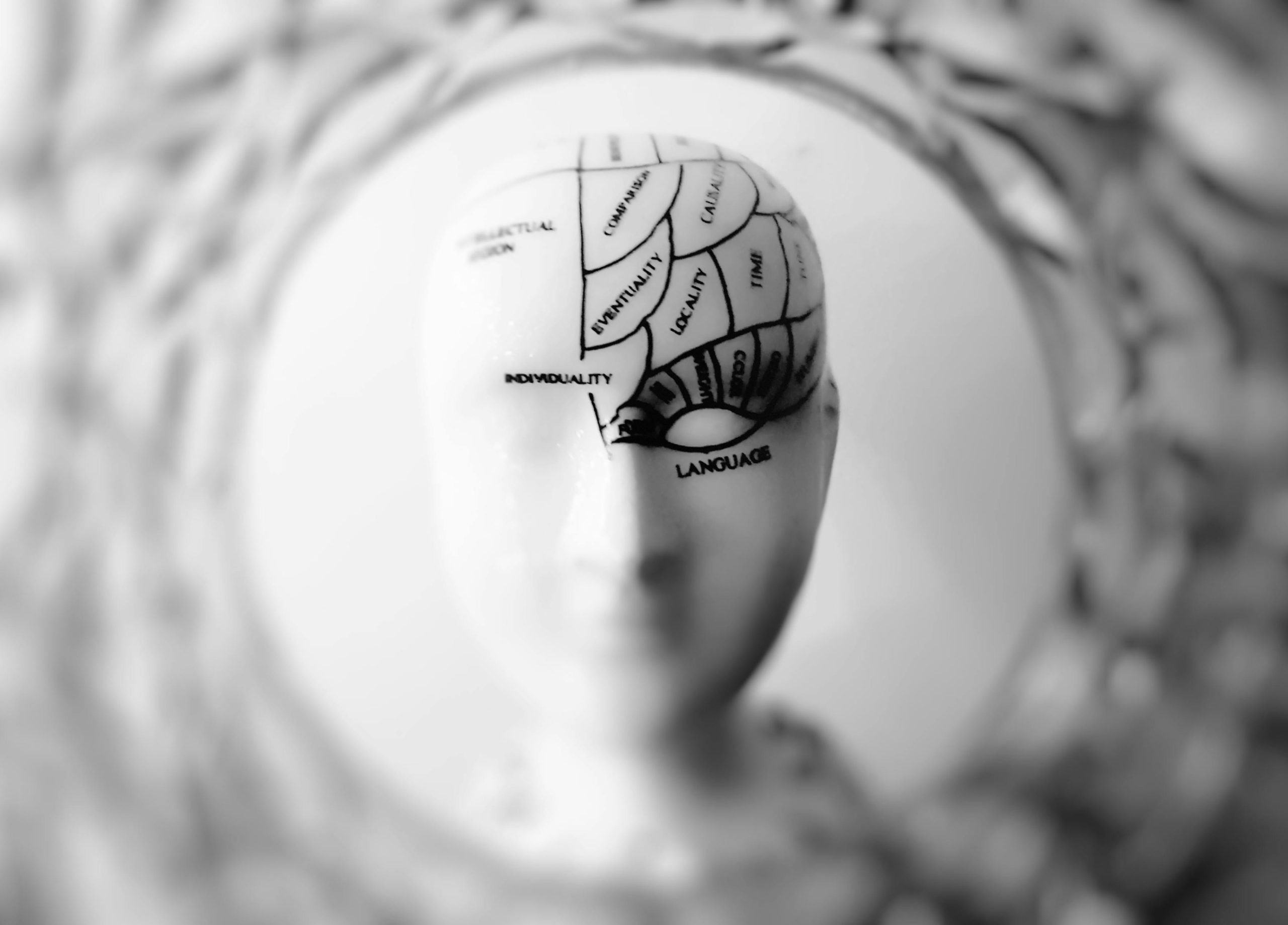
Rarity: The Visionary Perfectionist
Rarity has the sharpest aesthetic vision of any character in the show. She sees what could be, not just what is. She holds herself to exacting standards and expects the same from her work, which makes her both brilliant and occasionally exhausting to collaborate with. Her generosity is genuine and sometimes overwhelming. She gives everything to the people she loves, and she struggles when that giving isn’t recognized.
Rarity maps onto INTJ or ENTJ, with a strong creative and interpersonal dimension that makes her feel warmer than the typical depiction of those types. Her internal processing is meticulous. She sees patterns in aesthetics the way Twilight sees patterns in logic. Both are forms of the same underlying drive: to make meaning out of complexity and impose order on chaos.
She also illustrates something important about perfectionism. A 2019 study in PubMed Central found that adaptive perfectionism, the kind that drives high standards without collapsing into self-criticism, is associated with significantly better creative outcomes. Rarity at her best is adaptive perfectionism in action. Rarity at her worst is what happens when that perfectionism turns inward and becomes self-defeating.
Pinkie Pie: The Spontaneous Connector
Pinkie Pie is chaos energy with a generous heart. She doesn’t plan. She responds. She reads a room instantly and knows exactly what kind of energy it needs, then provides that energy at full volume. She’s the friend who remembers every birthday, throws the best parties, and can sense when someone is sad from three blocks away.
She’s a textbook ENFP, possibly the most ENFP character in animated television. Her cognitive stack leads with Extraverted Intuition, which means she’s constantly scanning for possibilities, connections, and patterns in people and ideas. She’s not shallow despite the constant enthusiasm. She’s genuinely perceptive. She just expresses that perception through joy rather than analysis.
Pinkie Pie types are often the most exhausting people for introverts to spend extended time with, and also sometimes the most necessary. They pull us out of our heads. They remind us that connection doesn’t always require depth to be real. I’ve had Pinkie Pie colleagues who drove me absolutely crazy in open-plan offices and also saved client relationships I’d written off as lost because they could read people in ways I simply couldn’t.
How Does the My Little Pony Test Connect to Real Personality Science?
Fun as pony comparisons are, the underlying question is whether they point to anything psychologically meaningful. The answer is yes, with some important caveats.
The Mane Six each demonstrate consistent cognitive patterns across hundreds of episodes. That consistency is what makes them feel true rather than arbitrary. Twilight doesn’t suddenly start acting like Pinkie Pie under pressure. She doubles down on analysis. Rainbow Dash doesn’t retreat into quiet reflection when things get hard. She acts. That behavioral consistency is exactly what personality frameworks are trying to capture.
Where pop culture personality tests fall short is in precision. Identifying as a Fluttershy tells you something real about your empathy and introversion, but it doesn’t tell you whether your dominant function is Introverted Feeling or Introverted Sensing, and that distinction matters enormously for how you actually process decisions. Many people who identify strongly with one pony find that a more rigorous assessment reveals unexpected complexity. If you’ve ever suspected your MBTI result doesn’t quite fit, this piece on being mistyped in MBTI explains exactly why surface-level results can mislead and how cognitive functions reveal your actual type.
The research on personality consistency is worth taking seriously here. Truity’s work on deep thinking patterns identifies characteristics like preferring solitude for processing, thinking in systems, and needing time before responding to emotional situations. Those traits show up consistently in certain pony characters and in certain MBTI types, which is part of why the mapping holds up better than you might expect from a cartoon.

What Does Your Pony Result Actually Tell You About How You Think?
The most useful thing a My Little Pony personality test can do is point you toward a cognitive pattern worth exploring more deeply. Not a definitive answer, but a direction.
Twilight Sparkle results often correlate with Introverted Thinking or Introverted Intuition as a dominant function. If you’re a Twilight, this deep exploration of Introverted Thinking (Ti) will probably feel uncomfortably accurate. Ti types build internal logical frameworks independent of external consensus. They’d rather be precisely right than quickly agreeable, which is both a strength and a source of friction in team environments.
Fluttershy results often point toward Introverted Feeling as a dominant or secondary function. Applejack results frequently align with Introverted Sensing. Rainbow Dash almost always correlates with Extraverted Sensing dominance. Rarity and Twilight share some Introverted Intuition characteristics, though they express it very differently.
None of this means your pony result is your MBTI type. It means your pony result is a starting point. If you want to move from “I’m probably a Twilight” to understanding your actual cognitive architecture, taking a proper assessment is the next step. Our free MBTI personality test is designed to give you a more precise picture of how your mind actually works, beyond the character comparison.
What the pony test gets right that many formal assessments miss is the emotional entry point. You’re not answering abstract questions about preference hierarchies. You’re recognizing yourself in a character you’ve watched handle real situations. That recognition is psychologically meaningful even if it’s not scientifically precise.
Why Introverts Often Find Themselves in Fluttershy or Twilight
When I look at the data from personality communities and fan discussions, a pattern emerges: introverts overwhelmingly identify with either Fluttershy or Twilight Sparkle, and extroverts cluster around Rainbow Dash and Pinkie Pie. Applejack and Rarity tend to attract people across the introversion spectrum, which makes sense given that both characters are defined more by their values and working style than their social energy.
The Fluttershy identification runs deep for many introverts because she captures something that’s hard to articulate: the experience of being deeply perceptive and emotionally attuned while also being genuinely drained by social exposure. She’s not shy because she’s broken. She’s quiet because her internal world is rich and complex and she doesn’t feel the need to perform it for others.
Twilight’s appeal to introverts is slightly different. She’s not particularly warm in the way Fluttershy is. She’s driven, focused, and sometimes oblivious to the emotional temperature of a room. But introverts who lead, who’ve had to manage teams and run meetings and present to clients while fundamentally preferring to think alone, often see themselves in Twilight’s struggle to translate internal clarity into external connection.
That was my experience. I could build a strategy that was airtight. I could see three moves ahead in a client relationship. What I couldn’t always do was make my team feel the warmth behind the vision. Twilight’s arc across seven seasons is essentially about learning that intelligence without emotional availability is incomplete leadership. That lesson landed for me in a way that a lot of leadership books didn’t, which says something interesting about the power of character-based storytelling.
Research from 16Personalities on team collaboration and personality consistently shows that teams with diverse personality types outperform homogeneous ones, precisely because different cognitive styles cover each other’s blind spots. The Mane Six work as a team for exactly this reason. Twilight’s planning without Pinkie’s social intelligence would miss half the picture. Rainbow Dash’s action without Fluttershy’s empathy would leave casualties.
Taking the My Little Pony Personality Test: What to Expect and How to Use the Results
Most versions of the My Little Pony personality test work through a series of scenario-based questions: how would you handle a conflict with a friend, what matters most to you in a team, how do you respond when plans fall apart. Your answers build a profile that the test matches to one of the Mane Six.
The best approach is to answer based on your actual instincts rather than your ideal self. Many people, especially introverts who’ve spent years adapting to extroverted environments, answer personality questions based on who they’ve trained themselves to be rather than who they are when no one’s watching. That gap is worth paying attention to.
There’s also the question of which pony you want to be versus which one you actually are. I wanted to be Rainbow Dash for most of my career. Confident, decisive, visibly competent. What I actually was, on my best days, was Twilight: thorough, strategic, and most effective when given space to think before acting. Accepting that took longer than it should have.
Once you have your result, use it as a conversation starter with yourself. What does this character do well that you recognize in yourself? Where does this character struggle in ways that feel familiar? What does this character need that you’ve been denying yourself? Those questions are more useful than the result itself.
If your result surprises you or feels wrong, that’s worth exploring too. A mismatch between your expected result and your actual result often points to areas where you’ve adapted so thoroughly to external expectations that you’ve lost track of your natural tendencies. Our cognitive functions test can help you go deeper, moving past surface-level character identification to understand the actual mental processes driving your behavior.

What the Mane Six Teach Us About Personality That Formal Tests Sometimes Miss
One thing the My Little Pony personality framework captures beautifully is that every personality type has both a strength profile and a shadow side. Twilight’s analytical precision becomes paralysis under pressure. Fluttershy’s empathy becomes enabling when she can’t set limits. Rainbow Dash’s confidence becomes arrogance when she stops listening. Applejack’s reliability becomes rigidity when she can’t adapt. Rarity’s vision becomes vanity when she loses perspective. Pinkie Pie’s joy becomes exhausting when she can’t read the room.
Formal personality assessments often present types as neutral profiles. The fictional character approach makes the shadow side visible because you’ve watched these characters fail in specific, recognizable ways. That failure visibility is actually more useful for self-understanding than a clean strengths profile.
Personality data from 16Personalities’ global type distribution research shows that certain types are significantly rarer than others, which means most people spend their lives surrounded by people who process the world differently than they do. The Mane Six model this beautifully: six characters who genuinely care about each other and genuinely frustrate each other because they’re wired so differently. That’s not a flaw in the show’s premise. It’s the whole point.
Understanding your pony, and by extension your personality type, isn’t about finding a box to live in. It’s about developing enough self-awareness to work with your nature rather than against it. That’s a lesson I kept having to relearn across twenty years of agency leadership. Every time I tried to lead like someone I wasn’t, I got worse results than when I leaned into what I actually did well.
There’s more to explore on this topic across our full MBTI and Personality Theory hub, where you’ll find deeper dives into cognitive functions, type dynamics, and how personality plays out in real work and life situations.
About the Author
Keith Lacy is an introvert who’s learned to embrace his true self later in life. After 20 years in advertising and marketing leadership, including running agencies and managing Fortune 500 accounts, Keith now channels his experience into helping fellow introverts understand their strengths and build fulfilling careers. As an INTJ, he brings analytical depth and authentic perspective to every article, drawing from both professional expertise and personal growth.
Frequently Asked Questions
What is the My Little Pony personality test?
The My Little Pony personality test matches you to one of the Mane Six characters from My Little Pony: Friendship Is Magic based on your personality traits, values, and behavioral tendencies. Each character represents a distinct personality pattern: Twilight Sparkle (analytical and strategic), Fluttershy (empathetic and quiet), Rainbow Dash (action-oriented and competitive), Applejack (dependable and practical), Rarity (visionary and perfectionistic), and Pinkie Pie (spontaneous and socially energetic). The test works through scenario-based questions and produces a character match that often correlates meaningfully with MBTI types and cognitive function profiles.
Which My Little Pony character represents introverts best?
Fluttershy and Twilight Sparkle are the characters introverts most commonly identify with. Fluttershy represents the empathetic introvert who is deeply attuned to others but genuinely drained by social exposure. Twilight Sparkle represents the analytical introvert who leads through knowledge and planning rather than charisma. Both characters demonstrate that introversion isn’t a single experience: it can look like quiet compassion or intense intellectual focus, and both are valid expressions of an inward-oriented personality.
How does the My Little Pony personality test relate to MBTI?
The Mane Six map reasonably well onto MBTI types. Twilight Sparkle aligns with INTJ or INTP, Fluttershy with INFJ or ISFJ, Rainbow Dash with ESFP or ESTP, Applejack with ISTJ or ESTJ, Rarity with INTJ or ENTJ, and Pinkie Pie with ENFP. The pony test captures the same four personality dimensions that MBTI measures: introversion versus extraversion, intuition versus sensing, thinking versus feeling, and judging versus perceiving. That said, the pony test is less precise than a full MBTI assessment and works better as an entry point than a definitive result.
Is the My Little Pony personality test scientifically accurate?
The My Little Pony personality test is not a clinically validated psychological instrument, but it draws on real personality patterns that have psychological validity. The characters are built on internally consistent behavioral logic that mirrors genuine personality dimensions. Where the test falls short is in precision: it can identify broad patterns but not the specific cognitive function stack that drives your behavior. For a more rigorous self-assessment, pairing your pony result with a cognitive functions test or a full MBTI assessment gives you a much more complete picture.
What should I do after getting my My Little Pony personality result?
Use your result as a starting point for deeper self-reflection rather than a final answer. Ask yourself which of your character’s strengths you recognize in yourself, where their struggles feel familiar, and what their needs might tell you about your own unmet needs. From there, exploring the MBTI type that corresponds to your character will give you a more detailed and actionable understanding of your personality. Pay particular attention to the cognitive functions associated with your type, since those reveal not just what you do but why you do it and how your mind actually processes information and decisions.