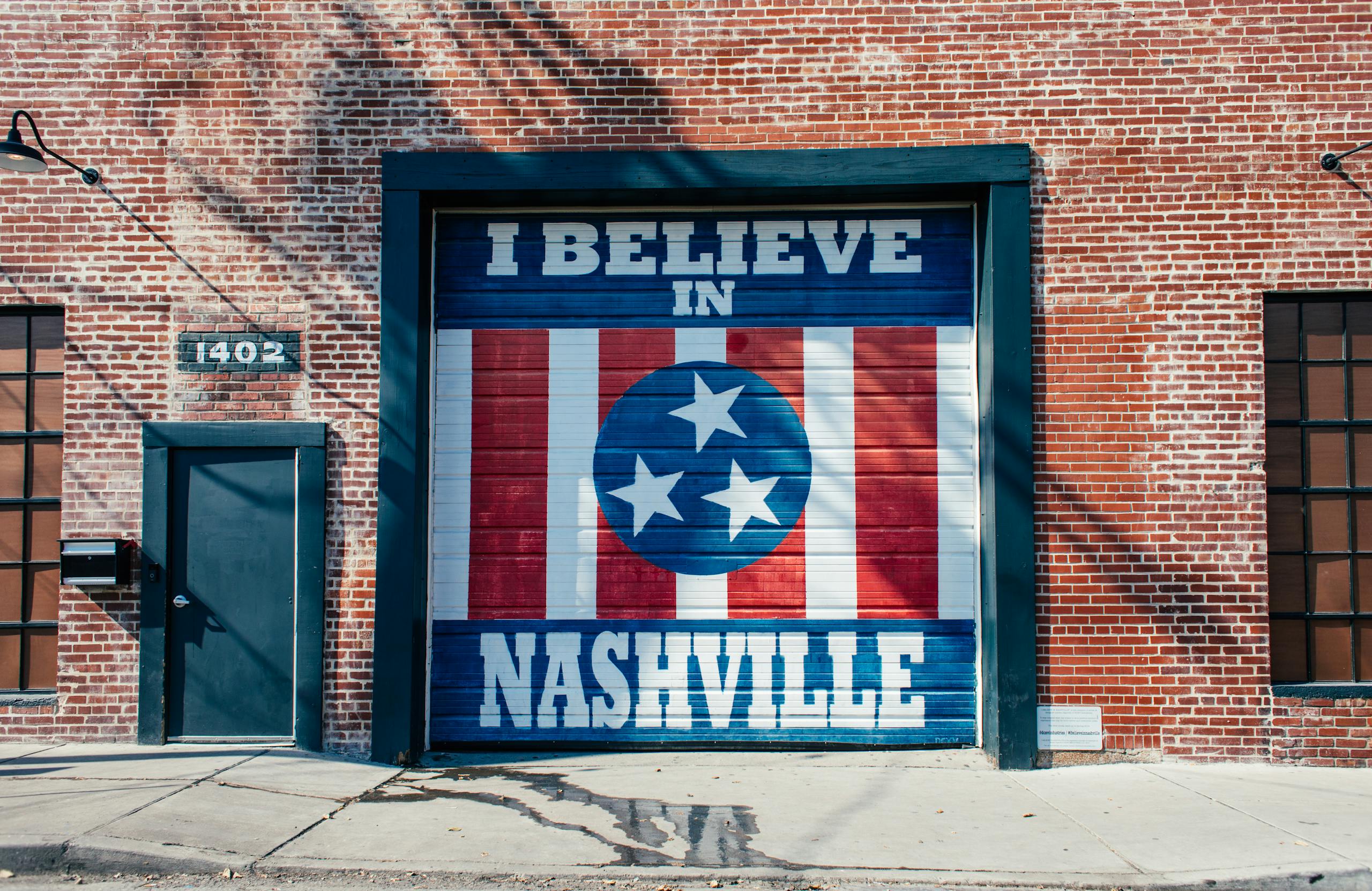

Nashville for introverts is a genuinely rewarding experience, but only if you know where to look. Beyond the neon-lit chaos of Broadway, the city holds quiet museums, walkable neighborhoods, world-class live music in intimate venues, and solo-friendly coffee shops where no one will pressure you to socialize. Most travel guides miss all of it.

I visited Nashville expecting to feel completely out of place. Loud bars, bachelorette parties, crowds shoulder-to-shoulder on every sidewalk. What I found instead was a city with two completely separate personalities, and the quieter one suited me far better than I expected. After spending a weekend deliberately off the tourist path, I came back with a mental map that I wish someone had handed me before I arrived.
Quiet travel is something I think about a lot. As someone who spent two decades in advertising agencies managing high-energy teams and client presentations, I learned early that my recharge happens in solitude. Travel should feed that, not drain it. Nashville, approached the right way, absolutely can.
Our travel and lifestyle content at Ordinary Introvert covers exactly this kind of intentional approach to experiencing the world on your own terms. This article goes deeper into one city that deserves a second look from anyone who assumed it wasn’t for them.
Why Do Introverts Assume Nashville Isn’t for Them?
The reputation is earned, at least partly. Lower Broadway on a Friday night is one of the loudest, most stimulating urban environments in the American South. Live country music pours out of every open door. Crowds spill onto the street. Servers shout over the noise. For someone who processes the world quietly, that strip can feel genuinely overwhelming within about fifteen minutes.
What’s your personality type?
Take our free 40-question assessment and get a detailed personality profile with dimension breakdowns, context analysis, and personalised insights.
Discover Your Type8-12 minutes · 40 questions · Free
A 2021 study published by the American Psychological Association found that highly introverted individuals report significantly higher physiological arousal in crowded, noisy environments compared to their extroverted counterparts. That arousal isn’t excitement. It’s exhaustion. The body is working hard to filter stimulation that others barely notice.
So the assumption makes sense. Broadway becomes the symbol of the whole city, and the whole city gets written off. What that assumption misses is that Nashville has neighborhoods, museums, parks, and venues that operate at a completely different register. The city is not one thing. It’s several things layered on top of each other, and the layers worth finding require a little more intention.
What Are the Best Quiet Neighborhoods in Nashville for Introverts?
East Nashville is where I spent most of my time, and it felt like a different city entirely. The streets are lined with craftsman houses, independent coffee shops, and restaurants where the ambient noise stays at conversation level. Five Points, the neighborhood’s central intersection, has a relaxed, unhurried energy that Broadway never approaches.
Germantown sits just north of downtown and offers a similar respite. The architecture is genuinely beautiful, with nineteenth-century brick buildings converted into galleries, wine bars, and farm-to-table restaurants. Walking through it on a weekday morning, I passed maybe a dozen people in an hour. That kind of quiet in a major American city is rare.
12 South is slightly more polished and a bit busier on weekends, but it rewards a slow walk. The boutiques are interesting without being overwhelming, and the coffee shop options are plentiful. Seating is usually available if you arrive before noon.
Sylvan Park, further west, is almost entirely residential and walkable in a way that feels genuinely restorative. There’s a small commercial strip with a handful of excellent restaurants, but the neighborhood’s main appeal is its pace. People walk dogs. Kids ride bikes. Nobody is performing for anyone.

Which Nashville Museums and Cultural Spaces Are Worth Visiting Solo?
The Country Music Hall of Fame is larger and more substantive than most people expect. I spent nearly three hours there and could have stayed longer. The permanent collection traces the full arc of American roots music with enough depth to satisfy someone who came in knowing almost nothing about the genre. Weekday mornings are significantly less crowded, and the audio guide makes the experience genuinely self-directed.
The Frist Art Museum is one of Nashville’s genuine hidden assets. A converted art deco post office building houses a rotating collection of traveling exhibitions alongside a permanent collection strong in American and European works. The building itself is worth the visit. I went on a Tuesday afternoon and had entire galleries to myself.
The Tennessee State Museum, free and often overlooked by tourists, covers the full sweep of Tennessee history from prehistoric times through the twentieth century. It’s well-curated, unhurried, and almost always quiet. For someone who processes information slowly and thoroughly, this kind of space is a gift.
Cheekwood Estate and Gardens sits about fifteen minutes from downtown and offers something different entirely: sixty-five acres of formal gardens, sculpture installations, and woodland trails. A 2020 Mayo Clinic review of restorative environments found that time in natural settings measurably reduces cortisol levels and perceived stress. Cheekwood delivers that kind of reset, especially on weekday mornings before tour groups arrive.
Can Introverts Actually Enjoy Live Music in Nashville Without Getting Overwhelmed?
Yes, but venue selection matters enormously. The Bluebird Cafe is the answer most people who know Nashville well will give you, and they’re right. The room holds fewer than a hundred people. The format is a songwriter circle, meaning three or four writers sit in the center and take turns performing the songs they wrote, often explaining the story behind each one. The crowd is there to listen, genuinely listen, and talking during a performance is considered rude. It’s one of the most introvert-compatible music experiences I’ve encountered anywhere.
The Listening Room Cafe operates on a similar principle. Larger than the Bluebird but still intimate, it enforces a genuine listening culture. Reservations are required, which means you arrive knowing exactly where you’ll sit and what to expect. That kind of predictability removes a significant layer of social anxiety before you even walk in.
3rd and Lindsley is worth mentioning for slightly larger shows. The room has good sightlines from almost every seat, the sound is excellent, and the crowd tends to be older and more focused on the music than on socializing. I saw an Americana show there on a Thursday night and felt genuinely relaxed the entire time, which is not my typical experience at live music events.
The key distinction is avoiding the Broadway honky-tonks for actual listening. Those venues are built for background music and social interaction. The smaller listening rooms are built for the music itself. That difference changes everything about how the experience lands.
Where Can Introverts Eat and Drink Alone in Nashville Without Feeling Awkward?
Solo dining in Nashville is more comfortable than in many cities, partly because the restaurant culture skews toward quality over scene. A few places stand out specifically for solo visitors.
Rolf and Daughters in Germantown has a long bar with excellent sightlines into the open kitchen. Sitting at the bar solo here feels entirely natural. The menu is interesting enough to give you something to think about, and the staff are attentive without being intrusive. I ate there alone on a Saturday night and never once felt conspicuous.
Biscuit Love in 12 South has a communal table setup that works surprisingly well for solo visitors who don’t mind being adjacent to strangers without being required to interact. The food is excellent and the morning rush is the kind of pleasant ambient noise that many introverts find energizing rather than draining.
For coffee and extended solo work sessions, Frothy Monkey has multiple Nashville locations and consistently offers good seating, reliable wifi, and a culture of people sitting alone with laptops or books. Nobody will check how long you’ve been there. East Nashville’s location on 5th Avenue is my personal preference for the neighborhood feel.
Bar-hopping the Broadway strip is genuinely not necessary to experience Nashville’s food and drink scene. The city’s independent restaurant culture is strong enough to sustain an entire trip without touching the tourist corridor.
What Outdoor Spaces in Nashville Offer Real Solitude?
Percy Warner Park is the answer most Nashville locals give when asked where they go to think. Over three thousand acres of wooded trails, most of them genuinely quiet on weekday mornings, sit about twenty minutes from downtown. The steeplechase trail offers enough elevation change to feel like real hiking without requiring technical gear. I spent two hours there on a Sunday morning before the crowds arrived and saw maybe eight other people.
Radnor Lake State Natural Area is slightly smaller but arguably more beautiful. A loop trail circles the lake through hardwood forest, and wildlife sightings are common. Great blue herons, white-tailed deer, and river otters have all been spotted here. The parking lot fills quickly on weekends, so arriving before eight in the morning makes a meaningful difference.
The Shelby Bottoms Greenway runs along the Cumberland River through East Nashville and connects several neighborhoods via a paved trail. It’s excellent for long solo walks with enough visual interest to hold attention without demanding social interaction. The river views are genuinely calming.
Research from the National Institutes of Health has consistently linked time in natural environments with reduced anxiety and improved mood regulation. For introverts managing the cumulative drain of travel, building outdoor time into each day isn’t optional. It’s a practical recovery strategy.

How Should Introverts Structure a Nashville Trip to Avoid Burnout?
Burnout during travel is something I’ve learned to plan against rather than hope to avoid. My agency years taught me that energy is a finite resource, and spending it without accounting for the cost leads to a crash that ruins the second half of any trip. Nashville requires the same intentionality.
A practical framework: plan one high-stimulation activity per day, maximum. That might be a Broadway bar for one hour, a busy weekend market, or a crowded museum on a Saturday. Surround that activity with low-stimulation recovery time. A morning walk at Radnor Lake, followed by two hours at a listening room show, followed by solo dinner at a quiet restaurant, is a sustainable day. A Broadway bar crawl followed by a crowded brunch followed by a packed tourist attraction is not.
Hotel selection matters more than most travel guides acknowledge. A room in East Nashville or Germantown means you can walk back to your space between activities. A room on Broadway means passing through the highest-stimulation zone in the city every time you come and go. That friction adds up.
Psychology Today has noted that introverts often experience what researchers call “social hangovers,” a period of fatigue and cognitive fog following extended social or sensory exposure. Planning buffer time after any high-stimulation activity isn’t indulgence. It’s recognizing how your nervous system actually works.
Building in a full slow morning every two days works well for me personally. No agenda, no reservations, no plans. Coffee, a walk, maybe a bookstore. That rhythm made my Nashville trip feel genuinely restorative rather than something to recover from after returning home.
What Does Nashville Offer That Most Introverts Never Find?
The city has a serious literary culture that almost never appears in travel coverage. The Parnassus Books in Green Hills is one of the finest independent bookstores in the South, co-founded by novelist Ann Patchett. The staff recommendations are genuinely thoughtful, the events calendar brings in significant authors, and the store has the particular quality of a place built by people who love books rather than people who sell them. I spent ninety minutes there and left with four books and a strong desire to move to Nashville.
The Nashville Public Library’s main branch downtown is architecturally striking and consistently underused by tourists. The Civil Rights Room on the second floor contains one of the most moving collections of photographs and documents from the Nashville sit-in movement of the early 1960s. It’s free, quiet, and genuinely significant. I sat in there for forty-five minutes and felt the particular stillness that comes from being in the presence of important history.
The Parthenon in Centennial Park is something that sounds gimmicky until you actually stand in front of it. A full-scale replica of the Athenian original, housing a forty-two-foot gilded statue of Athena, sits in a city park twenty minutes from downtown. The surrounding park is excellent for long walks, and the building itself is open as an art museum with a small but worthwhile permanent collection.
What connects all of these is that they reward slow, attentive engagement rather than quick consumption. They’re built for people who want to actually be somewhere rather than simply pass through it. That quality is what makes Nashville, at its quieter layers, genuinely suited to the way introverts move through the world.
Explore more travel and lifestyle resources for introverts in our complete content library at Ordinary Introvert.
About the Author
Keith Lacy is an introvert who’s learned to embrace his true self later in life. After 20 years in advertising and marketing leadership, including running agencies and managing Fortune 500 accounts, Keith now channels his experience into helping fellow introverts understand their strengths and build fulfilling careers. As an INTJ, he brings analytical depth and authentic perspective to every article, drawing from both professional expertise and personal growth.
Frequently Asked Questions
Is Nashville a good destination for introverts?
Nashville is an excellent destination for introverts who approach it intentionally. Beyond the busy Broadway strip, the city offers quiet neighborhoods like East Nashville and Germantown, intimate listening room venues, world-class museums, and thousands of acres of parks and trails. The experience depends almost entirely on which parts of the city you choose to spend time in.
What are the quietest neighborhoods in Nashville?
East Nashville, Germantown, Sylvan Park, and 12 South all offer significantly lower stimulation than the downtown tourist corridor. East Nashville and Germantown in particular have excellent independent restaurants and coffee shops with a relaxed, unhurried atmosphere. These neighborhoods are walkable and reward slow exploration without the sensory overload of Broadway.
Can introverts enjoy live music in Nashville?
Absolutely, with the right venue choices. The Bluebird Cafe and The Listening Room Cafe both enforce genuine listening cultures where talking during performances is considered disrespectful. These intimate venues hold fewer than a hundred people and offer a completely different experience from the loud, social-first honky-tonks on Broadway. Reservations are required at most listening rooms, which removes the uncertainty of walk-in crowds.
How do introverts avoid burnout while traveling in Nashville?
Planning one high-stimulation activity per day and building recovery time around it is the most effective approach. Choosing accommodation in a quieter neighborhood reduces ambient stimulation between activities. Incorporating outdoor time at Percy Warner Park or Radnor Lake each day provides the restorative reset that research consistently links to reduced anxiety and better mood regulation. Building in one completely unscheduled morning every two days also helps maintain sustainable energy throughout the trip.
What hidden gems in Nashville do introverts tend to love?
Parnassus Books in Green Hills, the Civil Rights Room at the Nashville Public Library, the Frist Art Museum, Cheekwood Estate and Gardens, and the Parthenon in Centennial Park all reward the kind of slow, attentive engagement that introverts typically prefer. These spaces are rarely crowded on weekday mornings and offer genuine depth rather than quick tourist consumption. The Tennessee State Museum is also free, substantive, and consistently undervisited.