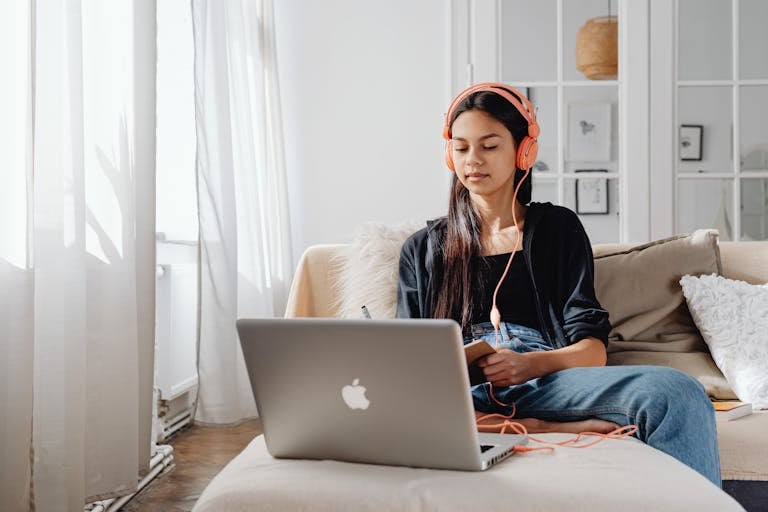
An online meditation coach is a trained practitioner who guides clients through personalized meditation practices via video, audio, or messaging, helping them build consistent habits, manage stress, and develop deeper self-awareness. For introverts and highly sensitive people, this format removes the social friction of group classes and creates the kind of quiet, one-on-one space where real inner work becomes possible.
My mind has always processed the world slowly and deliberately. I notice texture in conversations, weight in silences, and meaning in what goes unsaid. That’s not a flaw in my wiring. It’s actually the exact reason I found so much value in working with a meditation coach who met me where I was, rather than expecting me to perform wellness in a room full of strangers.
If you’ve been curious about meditation but keep hitting walls, whether that’s the noise of group studios, the pressure of performing calm, or simply not knowing where to start, you’re not handling this alone. A lot of what holds sensitive, introverted people back from meditation has nothing to do with meditation itself. It has everything to do with how it’s typically delivered. Our Introvert Mental Health hub covers a wide range of these friction points, and the question of finding the right meditation support is one that keeps coming up.
Why Does the Traditional Meditation Class Format Often Fail Introverts?
Picture the scene: a warm studio, soft lighting, a dozen people arranged on mats, and an instructor encouraging everyone to “share what came up for you.” My stomach tightens just writing that sentence.
Career Coaching for Introverts
One-on-one career strategy sessions with Keith Lacy. 20 years of Fortune 500 leadership as an introvert, now helping others build careers that work with their wiring.
Learn More50-minute Zoom session · $175
I spent over two decades running advertising agencies. Presentations, pitches, client dinners, team off-sites. I was surrounded by people who seemed to gain energy from every group interaction, and I spent years trying to perform that same enthusiasm. By the time I got serious about meditation, around my late forties, I had zero interest in adding another performance to my plate. The last thing I wanted was to sit in a circle and process my inner life out loud for an audience.
Group meditation classes are designed around social accountability. The assumption is that community creates motivation. For extroverts, that’s probably true. For introverts, especially those who are also highly sensitive, the social layer often creates more anxiety than the practice relieves. You’re managing the energy of the room, tracking other people’s reactions, wondering if your stillness looks right, and monitoring whether you’re doing it correctly relative to everyone else. That’s not meditation. That’s a performance review with incense.
Highly sensitive people face a specific version of this problem. The sensory environment of a group class, other people’s breathing, ambient music, physical proximity, temperature, can create the kind of HSP overwhelm and sensory overload that makes it nearly impossible to settle into stillness. You’re fighting the environment before you’ve even started the practice.
Online coaching sidesteps all of that. You’re in your own space, on your own terms, with a single guide who’s focused entirely on you.
What Does an Online Meditation Coach Actually Do?
The role is more specific than most people expect. An online meditation coach isn’t just someone who leads you through a guided breathing exercise and calls it a session. A good coach does several things that a meditation app or YouTube video simply cannot replicate.
First, they assess where you actually are. Not where you think you should be, and not where the curriculum assumes you are. I remember my first session with a coach feeling almost like a consultation. She asked about my sleep, my stress patterns, what I’d already tried, and what specifically wasn’t working. It felt closer to a conversation with a thoughtful colleague than a wellness class.
Second, they customize the practice. There are dozens of meditation modalities: mindfulness, breathwork, body scan, loving-kindness, visualization, transcendental techniques, and more. What works for someone with generalized anxiety looks different from what works for someone processing grief, or someone trying to improve focus during a high-pressure work period. The National Institute of Mental Health notes that anxiety presents differently across individuals, which is exactly why a one-size approach to managing it through meditation often falls short.
Third, they hold you accountable without pressure. This distinction matters enormously for introverts. Accountability in a group setting often feels like surveillance. Accountability from a single trusted coach feels more like being seen. There’s a difference between “I don’t want to let down twenty people” and “I want to show up for someone who genuinely understands what I’m working on.” The latter is sustainable. The former burns out fast.

How Does Online Meditation Coaching Support Anxiety and Emotional Depth?
One of the things I’ve observed in myself, and in many of the introverts I’ve connected with through this site, is that our relationship with anxiety is layered in ways that surface-level wellness solutions don’t address. We don’t just feel anxious. We analyze the anxiety, question whether the anxiety is proportionate, feel anxious about the anxiety, and then cycle through the whole thing again at 2 AM.
Meditation, when it’s properly guided, can interrupt that cycle. But it requires a practitioner who understands the specific texture of how sensitive, introspective people experience their inner world. HSP anxiety has its own character: it’s often tied to overstimulation, to absorbing the emotional states of people around us, and to a heightened awareness of everything that could go wrong. Generic stress reduction scripts don’t reach that level.
A skilled online meditation coach who works with sensitive individuals will often incorporate somatic awareness, which means paying attention to where emotion lives in the body, not just in the mind. This is particularly valuable for people who, like me, tend to intellectualize their emotional experience. I spent years in agency leadership analyzing my stress rather than actually feeling it. My body was keeping score in ways I wasn’t paying attention to, and meditation coaching was one of the first practices that helped me notice the difference.
There’s also the question of emotional processing depth. Introverts and highly sensitive people often feel things with an intensity that others don’t quite understand. The experience of HSP emotional processing and feeling deeply means that meditation isn’t just relaxation for us. It can surface significant emotional material that needs to be worked through carefully, not just breathed away. A good coach knows when to slow down, when to sit with something difficult, and when to refer out to a therapist if what’s emerging is beyond the scope of coaching.
The evidence base for meditation’s effect on anxiety is meaningful. A study published via PubMed Central found that mindfulness meditation programs showed measurable improvements in anxiety, depression, and stress, with effects that held up over time. That’s not a small thing for people who’ve struggled to find sustainable mental health support.
Is Online Meditation Coaching Right for Highly Sensitive People?
Short answer: often yes, but with some important nuances.
Highly sensitive people bring a particular set of gifts and challenges to any contemplative practice. The gifts are real: a natural capacity for introspection, a sensitivity to subtle internal states, and a genuine desire for depth over distraction. These qualities make HSPs potentially excellent meditators once the right conditions are in place.
The challenges are also real. HSPs can be prone to what I’d call “meditation perfectionism,” the quiet but relentless pressure to do the practice correctly, to achieve the right state, to not waste the session. I’ve seen this pattern in myself. There were stretches during my agency years when I’d try to meditate and spend the entire twenty minutes grading my own performance. That’s not meditation. That’s another form of the same HSP perfectionism trap that shows up in work, relationships, and creative pursuits.
A good online meditation coach recognizes this pattern and works with it directly. Rather than simply instructing you to “let go of judgment,” which is advice that tends to make perfectionists judge themselves for judging, they’ll build practices that make self-compassion structural rather than aspirational. That’s a meaningful distinction.
There’s also the matter of empathic sensitivity. Many HSPs carry significant emotional weight from their environments, absorbing the stress, grief, and anxiety of people around them in ways that accumulate over time. HSP empathy is genuinely a double-edged experience: it creates deep connection and insight, and it also creates a kind of emotional residue that needs regular clearing. Meditation practices specifically designed for empaths, including boundary-setting visualizations and energy-clearing breathwork, can be particularly effective when guided by someone who understands the HSP experience.

What Should You Look for When Choosing an Online Meditation Coach?
Choosing a coach is one of those decisions that rewards careful thought rather than quick action. I’ve made the mistake in both directions: hiring someone too quickly because they sounded good in a discovery call, and delaying too long because I kept finding reasons to wait for the perfect option.
consider this I’d actually look for, drawn from both my own experience and the patterns I’ve seen in the introvert community.
Training and Credentials That Match Your Needs
Meditation coaching is not a licensed profession in most countries, which means the range of training quality is enormous. Some coaches have completed rigorous multi-year programs in specific traditions. Others have done a weekend certification. Neither is automatically good or bad, but you want to understand what someone’s training actually covers before trusting them with your inner life.
If you’re dealing with significant anxiety, trauma, or mental health challenges, look for coaches who have specific training in trauma-sensitive meditation or who collaborate with licensed therapists. Research published through PubMed Central highlights that mindfulness-based interventions can be genuinely beneficial for mental health, and also that the quality of instruction matters significantly for outcomes. A credential from a recognized institution, whether that’s a mindfulness-based stress reduction program, a yoga therapy certification, or a formal teacher training lineage, gives you something concrete to evaluate.
A Communication Style That Matches How You Process
This one is underrated. Introverts often process information more slowly and deliberately than extroverts, and we typically prefer written communication, time to reflect before responding, and space to formulate our thoughts without pressure. A coach who conducts sessions at a rapid pace, who fills every silence, or who expects you to articulate your experience immediately after a meditation might not be the right fit, even if they’re technically skilled.
Ask in your initial consultation how they handle silence. Ask whether they offer asynchronous support between sessions, such as voice notes or messaging. Ask whether they give you time to reflect before responding during sessions. These questions will tell you a lot about whether their style will support or subtly undermine your natural processing rhythm.
Experience Working With Sensitive or Introverted Clients
Not every meditation coach understands introversion or high sensitivity as distinct experiences. Some will treat your preference for solitude as something to work through rather than something to honor. Some will interpret your tendency toward deep emotional processing as resistance rather than depth.
Look for coaches who explicitly mention working with introverts, highly sensitive people, or empaths in their practice description. Read their content. Notice whether they speak about inner life with nuance and respect, or whether their language defaults to extroverted assumptions about what thriving looks like.
How Does Online Coaching Handle the Emotional Weight of Rejection and Sensitivity?
One dimension of meditation coaching that doesn’t get discussed enough is its role in processing rejection and relational pain. Highly sensitive people often experience rejection with an intensity that can feel disproportionate to the triggering event, and that intensity can be disorienting when you don’t have a framework for understanding it.
I remember a particular client presentation in my agency years. We’d spent three months developing a campaign for a Fortune 500 brand, the kind of work we were genuinely proud of. They passed. The client was professional and kind about it, but the rejection landed hard, not just as a business loss but as something personal. I found myself replaying the feedback for weeks, extracting every possible meaning from each phrase. That level of processing is characteristic of how sensitive people experience setbacks, and it’s exhausting without the right tools.
Meditation coaching can provide those tools, specifically practices that help you feel the weight of rejection without being consumed by it. success doesn’t mean stop caring. It’s to develop what some practitioners call “equanimity,” the capacity to remain present with difficult emotions without being swept away by them. For people working through the particular pain of HSP rejection and the healing process, having a skilled guide for this work can make a meaningful difference in how quickly and completely you recover.
The online format matters here too. Processing rejection is vulnerable work. Doing it in a private, controlled environment, from your own home, with a single trusted guide, removes the additional exposure of doing it in a group or clinical setting. That reduced exposure often makes it easier to go deeper.

What Does a Typical Online Meditation Coaching Engagement Look Like?
The structure varies considerably by coach and client, but there are common patterns worth knowing about before you commit.
Most engagements begin with an intake session, sometimes called a discovery call or assessment session. This is where the coach learns about your history with meditation, your current stress or mental health context, your goals, and any relevant physical or psychological considerations. A thorough intake takes at least forty-five minutes. Be cautious of coaches who skip this step or keep it very brief.
From there, sessions typically run weekly or bi-weekly, between thirty and sixty minutes each. A session usually includes a brief check-in, a guided practice tailored to where you are that week, and a debrief conversation where you discuss what came up and how to carry the practice forward into daily life. The debrief is often where the most valuable work happens, and it’s what distinguishes coaching from simply following a meditation app.
Between sessions, most coaches will give you a specific daily practice to work with, usually short, between five and fifteen minutes, and calibrated to your schedule and capacity. Some coaches offer check-in support via messaging or voice notes between sessions, which can be particularly valuable when you’re building a new habit or working through something emotionally significant.
Engagements typically run from six weeks to six months, depending on your goals. Shorter programs are often focused on building a basic practice and reducing acute stress. Longer programs tend to go deeper into emotional patterns, identity work, and sustainable lifestyle integration.
The American Psychological Association’s resources on resilience frame the development of coping skills as an ongoing process rather than a fixed achievement. That framing aligns well with how the best meditation coaching works: not as a cure or a course to complete, but as a practice to develop over time, with support calibrated to where you actually are.
Can Meditation Coaching Work Alongside Therapy?
Yes, and in my experience, the combination is often more effective than either alone.
Therapy and meditation coaching serve different but complementary functions. Therapy, particularly evidence-based approaches like cognitive behavioral therapy or EMDR, works with the content of your psychological history: the specific events, beliefs, and patterns that shape how you experience the world. Meditation coaching works more with your present-moment relationship to your inner experience: how you relate to thoughts, emotions, and sensations as they arise.
Put simply, therapy often helps you understand why you feel what you feel. Meditation coaching helps you develop a different relationship with the feeling itself, regardless of its origin. Both matter.
There’s also meaningful evidence that mindfulness practices can enhance the effectiveness of therapeutic work. Research available through the National Institutes of Health supports the integration of mindfulness with psychological treatment for a range of conditions. A good meditation coach will know when to refer to a therapist, and many actively encourage clients to work with both simultaneously.
If you’re already in therapy, bring it up with your therapist before adding meditation coaching. Most therapists are supportive of the combination, and some will have specific recommendations about timing or approach based on what you’re working through therapeutically.
What Are the Practical Costs and Formats to Expect?
Pricing for online meditation coaching ranges considerably. At the lower end, newer coaches or those in training programs charge between thirty and sixty dollars per session. Experienced coaches with specialized training in areas like trauma sensitivity, HSP work, or mindfulness-based stress reduction typically charge between eighty and two hundred dollars per session. Package pricing is common and often offers better value than per-session rates.
Formats vary as well. Video sessions via Zoom or similar platforms are most common and allow for the visual connection that makes coaching feel personal. Audio-only sessions work well for some clients, particularly those who find video calls overstimulating. A small number of coaches offer asynchronous models where you submit voice recordings of your practice and receive audio feedback, which can suit introverts who prefer to process without real-time social pressure.
Group online programs exist too, typically at lower price points, but they reintroduce the social dynamics that many introverts find counterproductive. If cost is a constraint, a short-term individual engagement to build a foundation, followed by a self-directed practice, is often more effective than an ongoing group program where you never quite feel comfortable enough to go deep.
Some coaches offer sliding scale pricing for clients with financial constraints, particularly those working on mental health-related goals. It’s worth asking directly. Many practitioners in this field are genuinely motivated by accessibility, not just revenue, and the conversation is less awkward than you might expect.

How Do You Actually Start Without Overthinking It?
Here’s the honest challenge for introverts and highly sensitive people: the research phase can become its own form of avoidance. I know this pattern intimately. I spent months reading about meditation before I ever sat down to practice it. I spent weeks evaluating coaches before I booked a single discovery call. My INTJ tendency to gather information before committing can be a genuine asset, and it can also be a sophisticated way of not doing the thing.
At some point, you have to make a low-stakes first move. Most reputable online meditation coaches offer a free initial consultation, usually fifteen to thirty minutes. That’s not a commitment to anything. It’s a conversation. You can evaluate the fit, ask your questions, and walk away with no obligation if it doesn’t feel right.
What I’d suggest: identify two or three coaches whose backgrounds and communication styles seem like a reasonable fit. Book discovery calls with all of them within the same week. Compare how each conversation felt, not just what was said. Your intuition about relational fit is data worth trusting.
One more thing worth naming: starting a meditation practice often surfaces emotions and realizations that have been sitting below the surface for a long time. That can feel disorienting at first. It’s not a sign that something is wrong. It’s usually a sign that the practice is working. Having a skilled guide alongside you during that phase makes it significantly less isolating.
The University of Northern Iowa’s research on mindfulness reinforces what many practitioners observe in practice: consistent, supported meditation engagement produces more durable outcomes than sporadic self-directed attempts. That’s not an argument for dependency on a coach indefinitely. It’s an argument for getting solid support during the foundational period when habits are being formed and emotional material is being processed.
Mental health support for introverts and sensitive people is a broad topic that deserves more than a single article. If you want to keep reading, our full Introvert Mental Health hub covers everything from emotional regulation to anxiety management to building sustainable self-care practices that actually fit how we’re wired.
About the Author
Keith Lacy is an introvert who’s learned to embrace his true self later in life. After 20 years in advertising and marketing leadership, including running agencies and managing Fortune 500 accounts, Keith now channels his experience into helping fellow introverts understand their strengths and build fulfilling careers. As an INTJ, he brings analytical depth and authentic perspective to every article, drawing from both professional expertise and personal growth.
Frequently Asked Questions
What is an online meditation coach and how is it different from a meditation app?
An online meditation coach is a trained practitioner who works with you individually via video, audio, or messaging to build a personalized meditation practice. Unlike apps, which offer pre-recorded content with no awareness of who you are or what you’re working through, a coach assesses your specific needs, customizes the practice, provides real-time feedback, and adjusts the approach as you progress. The relationship itself is part of what makes coaching effective, particularly for people who need accountability and personalization to build a consistent habit.
Is online meditation coaching effective for anxiety?
Many people find online meditation coaching meaningfully helpful for managing anxiety, particularly when the coach has experience with anxiety-specific techniques like breathwork, body scan practices, and mindfulness-based approaches. The effectiveness depends significantly on the quality of the coaching and the consistency of practice. Meditation coaching works best as part of a broader approach to mental health, and for significant anxiety, it’s worth combining with therapy rather than treating coaching as a standalone solution.
How do I know if an online meditation coach is qualified?
Look for coaches with formal training from recognized programs, such as mindfulness-based stress reduction teacher training, yoga therapy certifications, or lineage-based meditation teacher programs. Ask specifically what their training covers, how long it was, and whether it included supervised teaching hours. For clients dealing with mental health challenges, look for additional training in trauma-sensitive meditation or a stated practice of collaborating with licensed therapists. Credentials alone don’t guarantee quality, so a discovery call that gives you a felt sense of the coach’s depth and communication style is equally important.
Why might online meditation coaching be better than in-person group classes for introverts?
Group meditation classes introduce social dynamics that many introverts find counterproductive: managing the energy of the room, performing calm for an audience, and processing inner experience publicly. Online one-on-one coaching removes those layers entirely. You’re in your own environment, working with a single guide who’s focused exclusively on you, with no social performance required. For highly sensitive people in particular, the sensory control of practicing in your own space can be the difference between actually settling into stillness and spending the whole session managing overstimulation.
How much does online meditation coaching typically cost?
Pricing varies widely based on the coach’s experience and specialization. Newer coaches typically charge between thirty and sixty dollars per session, while experienced practitioners with specialized training often charge between eighty and two hundred dollars per session. Many coaches offer package pricing that reduces the per-session cost for multi-week commitments. Some practitioners offer sliding scale rates for clients with financial constraints, and it’s worth asking directly if cost is a concern. A short-term individual engagement to build a strong foundation is often more valuable than an ongoing group program where the format doesn’t fully fit your needs.