Not everyone absorbs the emotions of others like a sponge. The opposite of an empath is someone who processes the world primarily through logic, analysis, and self-focused awareness rather than through emotional attunement to those around them. These individuals aren’t necessarily cold or cruel, but their default mode is detachment, rationality, and a limited instinct to feel what others feel.
Where an empath might walk into a room and immediately sense the tension between two colleagues, the person on the opposite end of that spectrum notices the same room through data points: who’s standing where, what the agenda says, what outcomes need to happen. Emotion registers as information, not experience.
I’ve spent a lot of time thinking about where I fall on this spectrum. As an INTJ who ran advertising agencies for more than two decades, I was surrounded by people who wore their feelings openly. Account executives who cried after client calls. Creatives who took critique personally. I processed most of that from a careful distance, not because I didn’t care, but because my wiring sent emotional signals through a different filter. That’s what drew me to this topic in the first place.
Our HSP and Highly Sensitive Person hub covers the full spectrum of emotional sensitivity, from those who feel everything deeply to those who wonder why they don’t feel things the way others seem to. If you’ve ever questioned where you land on that spectrum, that hub is a good place to start building context.
What Does It Actually Mean to Be the Opposite of an Empath?
Empathy exists on a continuum. At one end, you have highly sensitive people and empaths who absorb emotional information from their environment almost involuntarily. At the other end, you have individuals who are emotionally self-contained, analytical, and oriented toward facts over feelings.
What drains your social battery?
Not all social exhaustion is the same. Our free quiz identifies your specific drain pattern and gives you personalised recharging strategies.
Find Your Drain PatternUnder 2 minutes · 8 questions · Free
Several terms get used to describe this opposite end: low-empathy, alexithymia (difficulty identifying emotions in oneself or others), narcissistic traits, or simply a highly analytical personality type. These aren’t all the same thing, and collapsing them into one category does a disservice to the real complexity here.
Alexithymia, for example, is a psychological trait characterized by difficulty processing and describing emotional states. A 2019 study published in PubMed found that alexithymia is present in roughly 10% of the general population and is associated with reduced emotional empathy, though cognitive empathy (the ability to intellectually understand another person’s perspective) can remain intact.
That distinction matters enormously. Someone can understand intellectually that a colleague is grieving without feeling that grief themselves. Someone can recognize that a client is frustrated without absorbing that frustration into their own emotional state. That’s not sociopathy. That’s a different wiring.
I’ll be honest: for a long time, I thought something was wrong with me because I didn’t cry at movies that made everyone else weep. I didn’t feel the room the way my more emotionally attuned colleagues did. What I’ve come to understand is that this isn’t a deficit. It’s a different way of processing. And understanding the difference between introversion, high sensitivity, and empathy is genuinely clarifying. The piece on Introvert vs HSP: Highly Sensitive Person Comparison helped me put language to distinctions I’d felt but couldn’t articulate for years.
Is Being Low in Empathy the Same as Being a Narcissist?
No, and conflating the two creates real confusion. Narcissistic personality disorder involves a specific pattern of grandiosity, entitlement, and exploitative behavior. Low empathy is one component of that disorder, but low empathy alone doesn’t define narcissism.
Many highly analytical people, including a significant number of INTJs and ISTJs, score lower on emotional empathy measures without displaying any narcissistic traits. They’re not manipulative. They’re not seeking admiration. They simply process emotional information differently, often more slowly, more intellectually, and with less automatic resonance.
There’s also an important distinction between affective empathy (feeling what another person feels) and cognitive empathy (understanding what another person feels). Research published in Frontiers in Psychology in 2024 highlights how these two components can function independently. Someone might score low on affective empathy but high on cognitive empathy, making them effective at understanding others without being emotionally moved by them.
In my agency years, I worked with a senior strategist who fit this profile exactly. He could map client psychology with precision, predict how a brand message would land emotionally with consumers, and build campaign frameworks that resonated deeply with audiences. But in one-on-one conversations, he was flat. He’d miss when someone was upset. He’d continue a meeting while a junior staffer was clearly on the verge of tears. He wasn’t cruel. He simply wasn’t wired to feel the room. His cognitive empathy was exceptional. His affective empathy was nearly absent.
How Does Low Empathy Show Up in Relationships?
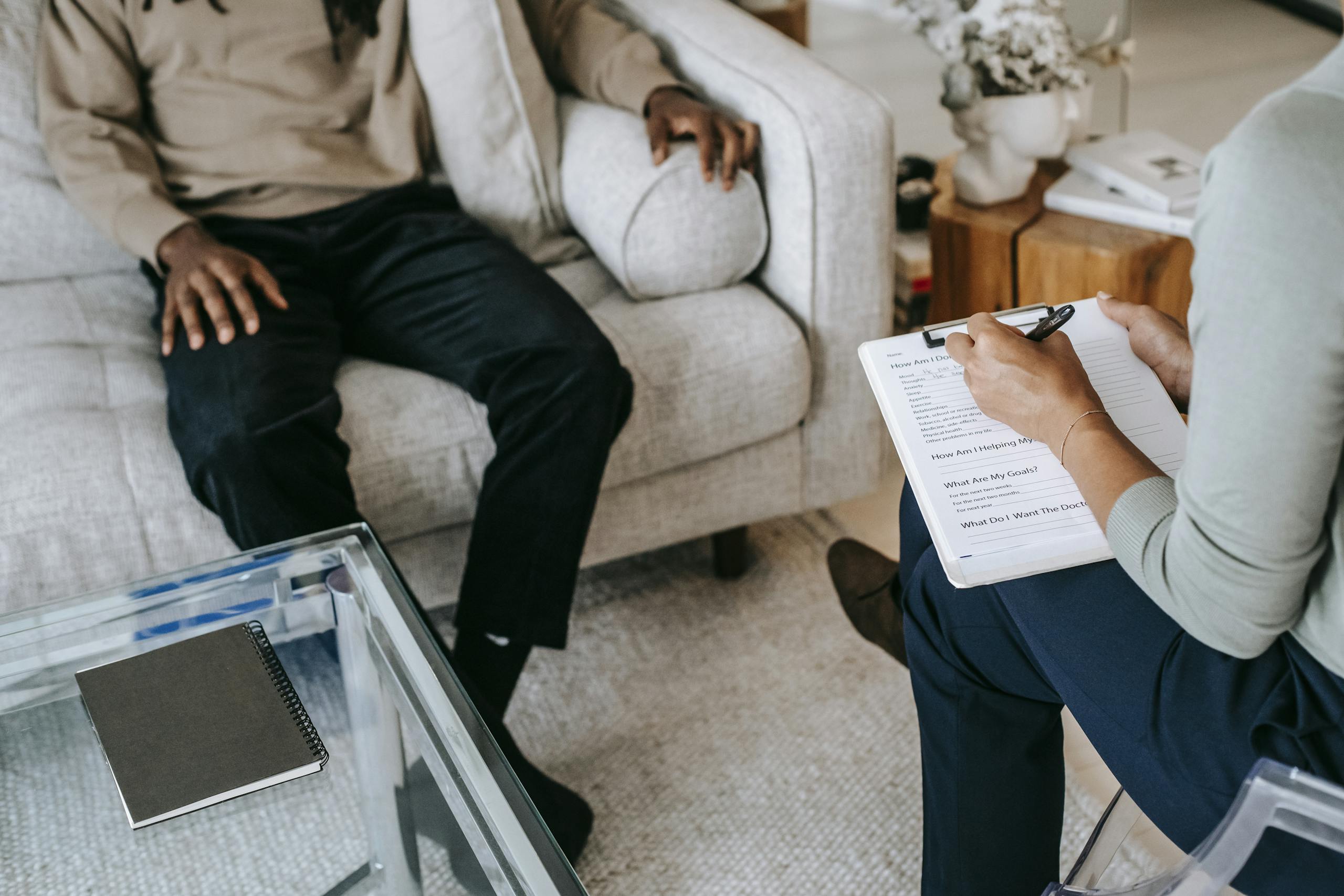
Relationships are where the absence of empathy becomes most visible and most consequential. Someone low in empathy may struggle to offer comfort in the way their partner needs it. They might respond to emotional distress with problem-solving when what was needed was presence. They might seem detached during conflicts, processing the argument as a logical puzzle rather than an emotional event.
For partners who are highly sensitive, this dynamic can feel profoundly isolating. The article on HSP and Intimacy: Physical and Emotional Connection explores how sensitive people experience closeness differently, and what they need from their partners to feel genuinely seen. When one partner is highly sensitive and the other is low in empathy, that gap can feel like speaking different emotional languages.
That said, low-empathy individuals aren’t incapable of love or deep connection. What they often need is explicit communication rather than emotional signals. Tell me directly what you need. Don’t expect me to read the room. That’s not an excuse for neglect, but it is a genuine difference in how emotional information gets received and processed.
A Psychology Today article on the differences between HSPs and empaths makes a useful point: empaths don’t just understand others’ emotions, they absorb them. Someone at the opposite end of that spectrum doesn’t absorb emotional information at all. They receive it secondhand, through words and behavior rather than through felt resonance.
Relationships between these two types can work, but they require significant intentionality. The piece on HSP in Introvert-Extrovert Relationships touches on how personality differences play out in partnerships, and many of those dynamics apply equally to empathy differences. What matters is whether both people are willing to meet in the middle, even if the middle looks different for each of them.
Can Someone Be Both Introverted and Low in Empathy?
Absolutely, and I’d argue this combination is more common than people realize. Introversion is about energy and stimulation preferences. Empathy is about emotional resonance with others. They’re related but distinct.
An introverted person who is also low in empathy might appear cold or aloof to others, when in reality they’re simply processing internally and not broadcasting emotional signals. They’re not indifferent. They’re just not externally emotionally expressive, and they’re not picking up on the emotional broadcasts of those around them either.
Highly sensitive people, on the other hand, tend to experience heightened emotional empathy. They’re often overwhelmed by the emotions of others precisely because they absorb so much of it. A 2025 piece from Psychology Today clarifies that high sensitivity is not a trauma response but rather a neurological trait, one that shapes how deeply emotional and sensory information is processed.
The contrast between high sensitivity and low empathy is striking. Where the HSP is flooded with emotional data, the low-empathy person experiences a kind of emotional quiet. Neither is wrong. Both carry costs and benefits depending on context.
What I’ve noticed in my own experience is that I sit somewhere in the middle, leaning toward the analytical end but not entirely devoid of emotional attunement. There were moments in client presentations when I could feel the energy shift in the room, when I sensed that a creative concept wasn’t landing before anyone said a word. That’s a form of empathy, even if it expressed itself through pattern recognition rather than emotional absorption.

What Happens When a Low-Empathy Parent Raises a Sensitive Child?
This is one of the more complex dynamics that emerges from the empathy spectrum. A parent who processes the world analytically and struggles with emotional attunement can find a highly sensitive child genuinely confusing. Why does everything feel so big to them? Why can’t they just let it go? Why does a minor disappointment spiral into an hour of tears?
These aren’t malicious questions. They’re the natural response of someone whose emotional processing works differently. But without awareness, a low-empathy parent can inadvertently communicate to a sensitive child that their feelings are excessive, dramatic, or wrong.
The article on HSP and Children: Parenting as a Sensitive Person approaches this from the other direction, exploring what it’s like to parent as someone who is highly sensitive. But the reverse scenario deserves equal attention. A parent who lacks natural empathic resonance can still parent a sensitive child well, but it requires deliberate effort to validate rather than minimize, to be present rather than problem-solve, and to recognize that the child’s emotional experience is real even if the parent doesn’t feel it themselves.
There’s also the question of what it’s like to grow up with a low-empathy parent as a sensitive child. Many adults who identify as highly sensitive trace their complicated relationship with their own emotions back to early experiences of emotional invalidation. Not abuse, necessarily, just a consistent experience of having their feelings met with confusion or dismissal. That shapes how they learn to express, suppress, or hide emotional experience.
Living alongside someone whose empathy operates very differently from your own is genuinely challenging. The piece on Living with a Highly Sensitive Person offers perspective from the other side, helping partners and family members understand what the HSP experience actually feels like from the inside. Both perspectives matter when you’re trying to bridge an empathy gap at home.
Does Nature or Environment Shape Low Empathy?
Both play a role, and the research is genuinely interesting here. Empathy has a significant genetic component. Twin studies have found that roughly 68% of the variation in empathy between individuals can be attributed to genetic factors. That doesn’t mean empathy is fixed, but it does mean that some people are simply born with less natural attunement to others’ emotional states.
Environment shapes the expression of that genetic baseline. A child born with lower empathic wiring who grows up in an emotionally expressive, validating household may develop stronger empathic habits than their biology alone would predict. Conversely, a child with naturally high empathy who grows up in an emotionally suppressive environment may learn to shut down those signals.
There’s also the role of chronic stress and overstimulation. Spending time in nature, for example, has been shown to reduce stress hormones and improve emotional regulation. A feature from Yale Environment 360 on ecopsychology explores how immersion in natural environments benefits mental health broadly, and there’s reason to believe that reducing chronic stress creates more capacity for empathic connection in people who are prone to emotional shutdown under pressure.
In high-pressure agency environments, I watched empathy erode in real time. People who were warm and emotionally attuned in their personal lives became clipped, transactional, and emotionally unavailable under sustained deadline pressure. That’s not a personality shift. That’s what happens when the nervous system is chronically overwhelmed. The capacity for emotional attunement requires a certain baseline of safety and calm to function well.

Where Do Low-Empathy Personalities Tend to Thrive Professionally?
Certain careers reward the qualities that come with lower empathic sensitivity: objectivity, analytical precision, the ability to make difficult decisions without being derailed by emotional fallout. Surgery, law, financial analysis, engineering, and strategic consulting are fields where emotional detachment can be a genuine asset rather than a liability.
That’s not to say these fields are populated entirely by low-empathy people. But they do tend to reward cognitive empathy (understanding people) over affective empathy (feeling with people). A trial lawyer needs to understand how a jury feels without being swept up in those feelings themselves. A surgeon needs to remain calm and precise when a patient is in distress.
The contrast with highly sensitive people is instructive. The article on Highly Sensitive Person Jobs: Best Career Paths outlines careers that align with deep emotional attunement, creative sensitivity, and the ability to perceive nuance. Those paths tend to look quite different from the ones where low-empathy personalities thrive.
There’s a fascinating middle ground worth noting. Some of the most effective leaders I’ve known over my career combined low affective empathy with high cognitive empathy and strong self-awareness. They didn’t feel the room, but they’d trained themselves to read it. They’d learned to ask the questions that an emotionally attuned person would ask instinctively. The result looked like empathy from the outside, even if the internal experience was entirely analytical.
That kind of deliberate cultivation of empathic behavior is genuinely possible. It doesn’t replace natural emotional attunement, but it creates functional bridges. And in leadership roles, functional bridges often matter more than authentic feeling.
Can You Develop More Empathy If You’re Naturally Low in It?
Yes, with important caveats. Affective empathy, the felt resonance with another person’s emotional state, appears to be more neurologically fixed than cognitive empathy. You can’t simply decide to feel what others feel if your brain doesn’t process emotional signals that way. But you can build habits, practices, and communication patterns that approximate the effect of empathy even when the felt experience isn’t there.
Active listening is one of the most powerful tools available. Not listening to respond, but listening to understand. Asking follow-up questions. Reflecting back what you’ve heard before offering solutions. These are learnable skills that don’t require emotional absorption to practice effectively.
Perspective-taking exercises, where you deliberately imagine yourself in another person’s situation before responding, can also strengthen cognitive empathy over time. This is essentially training the analytical mind to simulate emotional experience rather than feel it directly.
What doesn’t work is shame. Telling someone they’re broken because they don’t feel things the way others do creates defensiveness and shutdown, not growth. The more useful frame is curiosity: what would help me understand this person better? What information am I missing that would give me a clearer picture of their experience?
That reframe was genuinely useful in my agency work. When I noticed I wasn’t reading a client’s emotional state well, I stopped trying to feel my way through it and started asking more questions. What’s your biggest concern about this campaign? What would a successful outcome feel like for your team? Those questions gave me the emotional data I wasn’t receiving intuitively, and they made me a better partner in the process.

What’s the Difference Between Being Low in Empathy and Simply Being Introverted?
This confusion comes up constantly, and it’s worth addressing directly. Introverts are often perceived as cold, distant, or unfeeling because they don’t externalize emotion the way extroverts do. They process internally. They don’t perform warmth for the room. That gets misread as a lack of caring.
In reality, many introverts are deeply empathic. They feel others’ emotions intensely, which is part of why social situations are draining: they’re absorbing a lot of emotional information from their environment without necessarily showing it. The quiet person in the corner may be the one most affected by the tension in the room.
Low empathy, by contrast, isn’t about introversion or extroversion. It’s about the degree to which emotional signals from others register and resonate. An extroverted person can be low in empathy. An introverted person can be highly empathic. The variables are independent.
What makes this complicated is that introversion and low empathy can co-occur, and when they do, the external presentation can look similar: quiet, self-contained, not emotionally expressive, not particularly reactive to others’ emotional states. The difference lies beneath the surface. The introverted empath is absorbing everything and processing it privately. The low-empathy introvert isn’t absorbing much at all.
Knowing which category you fall into matters for self-understanding and for relationships. If you’re an introverted empath, your challenge is managing the emotional input without shutting down. If you’re genuinely low in empathy, your challenge is building the deliberate practices that create connection without relying on felt resonance.
If you want to go deeper into how high sensitivity and introversion intersect and diverge, the full collection of articles in our HSP and Highly Sensitive Person hub covers the territory from multiple angles, including relationships, careers, parenting, and personal identity.
Running on empty?
Five drain profiles, each with specific triggers, warning signs, and a recharging playbook.
Take the Free QuizUnder 2 minutes · 8 questions · Free
About the Author
Keith Lacy is an introvert who’s learned to embrace his true self later in life. After 20 years in advertising and marketing leadership, including running agencies and managing Fortune 500 accounts, Keith now channels his experience into helping fellow introverts understand their strengths and build fulfilling careers. As an INTJ, he brings analytical depth and authentic perspective to every article, drawing from both professional expertise and personal growth.
Frequently Asked Questions
What is the opposite of an empath called?
There isn’t one universally agreed-upon term, but several concepts describe this end of the empathy spectrum. Alexithymia refers to difficulty identifying and processing emotions in oneself and others. Low-empathy personality is a broader descriptor used in psychological literature. In clinical contexts, conditions like narcissistic personality disorder or antisocial personality disorder involve significantly reduced empathy, though these represent extreme ends of the spectrum rather than typical personality variation. Many people who are simply analytical, introverted, or emotionally self-contained may fall lower on empathy measures without fitting any clinical category.
Can someone be the opposite of an empath but still be a good person?
Yes, absolutely. Low empathy describes how someone processes emotional information, not their moral character. Many people who score lower on empathy measures are ethical, caring, and deeply committed to others’ wellbeing. They express that care through action, loyalty, and problem-solving rather than through felt emotional resonance. The absence of automatic emotional attunement doesn’t mean the absence of values, integrity, or genuine concern for the people in their lives. What it does mean is that connection often requires more explicit communication and deliberate effort rather than intuitive emotional mirroring.
Is being low in empathy the same as being a sociopath?
No. Sociopathy, or antisocial personality disorder, involves a persistent pattern of disregard for others’ rights, manipulative behavior, and lack of remorse. Low empathy is one element of that disorder, but it’s far from sufficient on its own to define it. Many people with low empathy are law-abiding, considerate, and relationship-oriented. They simply don’t feel others’ emotions in the way that high-empathy individuals do. Conflating low empathy with sociopathy is both inaccurate and harmful, as it stigmatizes a broad range of normal personality variation.
How does being the opposite of an empath affect relationships?
It creates specific challenges, particularly with partners or family members who are highly sensitive or emotionally expressive. Low-empathy individuals may miss emotional cues, respond to distress with logic rather than comfort, or seem detached during emotionally charged moments. These patterns can leave partners feeling unseen or unsupported. That said, relationships between people with very different empathy levels can work well when both partners communicate explicitly about needs, develop shared language for emotional experience, and approach differences with curiosity rather than judgment. Awareness of the gap is the starting point for bridging it.
Can someone with low empathy learn to be more empathic?
Cognitive empathy, the ability to intellectually understand another person’s perspective and emotional state, can be developed through deliberate practice. Techniques like active listening, perspective-taking exercises, and asking more emotionally oriented questions can meaningfully improve how someone with low affective empathy connects with others. Affective empathy, the felt resonance with another person’s emotions, is more neurologically fixed and harder to develop through conscious effort. The most effective path for low-empathy individuals is often to build strong cognitive empathy habits that create functional emotional bridges, even when the felt experience of empathy isn’t naturally present.