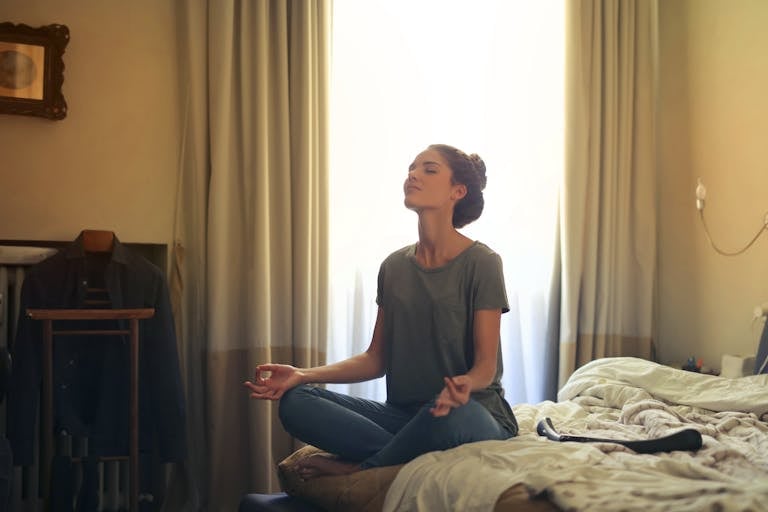
Parkinson’s caregiver burnout is a state of profound physical, emotional, and mental exhaustion that develops when someone caring for a person with Parkinson’s disease gives more than they can sustainably sustain over time. It builds quietly, often before the caregiver realizes what’s happening, and it hits introverts with particular force because the caregiving role strips away the solitude and internal processing time that introverts depend on to function.
If you’re an introvert caring for a parent, partner, or loved one with Parkinson’s, you may have noticed that the exhaustion you feel goes deeper than tired. It’s a kind of depletion that sleep doesn’t fix. That’s not weakness. That’s what happens when your nervous system runs on empty for too long.

Caregiving reshapes every relationship in a household, and the emotional weight doesn’t stay contained to the person with Parkinson’s. It ripples outward in ways that are worth examining honestly. Our Introvert Family Dynamics & Parenting hub looks at the full range of how introverts experience family roles, from parenting to partnership to caregiving, and this particular piece sits at one of the harder intersections: when love becomes labor, and labor becomes loss of self.
Why Does Parkinson’s Caregiving Drain Introverts So Differently?
Parkinson’s disease doesn’t follow a predictable schedule. The tremors, the freezing episodes, the cognitive shifts, the emotional volatility that can accompany the condition, all of it demands constant attentiveness. For introverts, that sustained vigilance is particularly costly.
Career Coaching for Introverts
One-on-one career strategy sessions with Keith Lacy. 20 years of Fortune 500 leadership as an introvert, now helping others build careers that work with their wiring.
Learn More50-minute Zoom session · $175
I spent more than twenty years running advertising agencies, and one of the things I understood early about myself as an INTJ was that I could perform at a high level in demanding, socially intense environments, but only if I had protected recovery time built into my days. When I didn’t have it, I didn’t just get tired. I got brittle. My judgment sharpened in the wrong direction, toward irritability and tunnel vision rather than clarity.
Caregiving for someone with Parkinson’s eliminates that recovery time almost entirely. The person you’re caring for needs you present, responsive, and emotionally available across long stretches of the day. Nighttime disruptions are common. Appointments stack up. The administrative load of managing medications, coordinating with neurologists, handling insurance paperwork, and anticipating the next stage of the disease becomes a second full-time role. For an introvert whose energy is already finite, this isn’t just demanding. It’s structurally incompatible with how we recharge.
Psychology Today has written about why social engagement costs introverts more neurologically than it does extroverts, and caregiving is social engagement at its most sustained and emotionally complex. There’s no clocking out. There’s no quiet office you can retreat to at the end of the day.
What Does Parkinson’s Caregiver Burnout Actually Feel Like?
People describe burnout in general terms, but Parkinson’s caregiver burnout has a texture that’s worth naming specifically. It often starts with a kind of emotional numbness. You stop feeling the warmth you used to feel toward the person you’re caring for, not because you love them less, but because your emotional reserves are so depleted that warmth requires energy you don’t have.
Then comes the resentment, quiet at first, then louder. You resent the disease. You resent the appointments. You resent the people who don’t help. Sometimes, painfully, you resent the person you’re caring for, even though you know they didn’t choose this. That resentment then generates guilt, which generates more depletion, and the cycle accelerates.

For introverts specifically, burnout often shows up as a complete withdrawal of inner life. The internal monologue that usually runs rich with observations and ideas goes quiet. You stop processing experiences. You stop noticing the details you normally absorb automatically. I’ve talked to introverted caregivers who describe it as feeling like they’ve become a function rather than a person. They exist to manage the disease, and somewhere in that process, they lost access to themselves.
There’s a meaningful overlap here with what highly sensitive people experience in caregiving roles. If you’ve ever explored HSP parenting and the challenges of raising children as a highly sensitive parent, you’ll recognize some of the same patterns: the emotional absorption, the difficulty filtering out distress, the way other people’s pain becomes your own pain without a clear boundary between them.
Published work in PubMed Central examining caregiver burden in progressive neurological conditions points to the compounding nature of the role. It’s not one hard thing. It’s a continuous accumulation of hard things with no defined endpoint, and that open-ended quality is particularly destabilizing for people who cope by planning and structuring their environments.
How Does the Introvert’s Inner World Become a Liability in Caregiving?
One of the things I’ve come to understand about introverts, and about myself in particular, is that our strength and our vulnerability are often the same thing. We process deeply. We notice subtleties. We hold complexity without needing to resolve it prematurely. In a leadership context, those traits made me a better strategist than many of my more extroverted peers. In a caregiving context, those same traits can become a source of compounded suffering.
When I was managing a major retail account in my agency years, I had a team member who was an exceptionally perceptive INFJ. I watched her absorb the emotional atmosphere of every client meeting and carry it home with her. She’d come in the next morning still processing the tension from a conversation that had ended sixteen hours earlier. I recognized something in that pattern because I did a version of it myself, though as an INTJ I tended to convert emotional data into analytical problems rather than sitting inside the feeling.
Introverted caregivers do something similar. They notice every small decline. They track the tremors, the pauses in speech, the moments when recognition flickers. They carry the weight of what they observe silently, often without telling anyone, because the inner world is where they process, and the inner world has no overflow valve.
That depth of processing, while it makes introverted caregivers extraordinarily attentive, also means they’re absorbing grief in real time, often for years. Parkinson’s is a condition with a long arc. The person you’re caring for changes gradually, and introverts tend to feel each change acutely, mourning incrementally in a way that doesn’t always get named or witnessed by others.
Understanding your own personality architecture matters here. The Big Five personality traits test can give you a clear picture of where you fall on dimensions like neuroticism and agreeableness, both of which shape how caregiving stress lands in your nervous system. High agreeableness, for instance, makes it harder to set limits. High neuroticism amplifies the emotional cost of ongoing uncertainty. Knowing your profile isn’t a diagnosis, but it’s a map.
Why Do Introverted Caregivers Struggle to Ask for Help?
There’s a particular kind of pride that introverts carry about self-sufficiency. We’ve spent our whole lives managing our own energy, protecting our own space, figuring things out internally. Asking for help requires externalizing vulnerability, and that goes against the grain of how many of us are built.
Add to that the social dynamics of caregiving. Caregiving is one of those roles that comes loaded with cultural scripts about selflessness and sacrifice. Admitting that you’re struggling can feel like admitting you’re failing the person who needs you. So introverted caregivers tend to go quiet. They manage. They cope. They hold it together in ways that look functional from the outside while the interior is quietly collapsing.

Something I’ve thought about in the context of introvert caregiving is how much our social presentation can mask internal distress. Many introverts are genuinely warm and capable in social situations, even when depleted. The likeable person test touches on some of these social competencies, the ability to make people feel heard, to project calm, to engage thoughtfully. Introverts often score well on these dimensions precisely because they pay close attention to others. But those same skills can make it easy for the people around us to miss that we’re struggling, because we present so well even when we’re not okay.
I saw this pattern in myself during a particularly brutal stretch at one of my agencies. We’d lost two major accounts in the same quarter, the team was demoralized, and I was running on about four hours of sleep a night. I kept showing up composed. Clients didn’t see it. My team didn’t see it. I was functional enough to be invisible in my own distress, which meant no one thought to ask if I needed support.
Introverted caregivers face the same invisibility problem. The very qualities that make them capable caregivers, attentiveness, composure, quiet competence, make it harder for others to see when they’ve hit the wall.
Research published in PubMed Central on caregiver stress and psychological wellbeing highlights the gap between how caregivers present publicly and what they report in private assessments. The divergence is significant, and it has real consequences for whether caregivers receive support before they reach crisis.
What Role Does Personality Play in How Burnout Progresses?
Personality isn’t destiny, but it does shape the trajectory of burnout in meaningful ways. Introverts who score high on conscientiousness tend to stay in the role longer before acknowledging they’re struggling, because the internal standard they hold themselves to is high. Introverts who are also highly sensitive may experience secondary traumatic stress, absorbing the suffering of the person they’re caring for as if it were their own.
There’s also a dimension worth considering around emotional regulation. Some introverted caregivers have histories that make the caregiving role particularly activating. If you’ve ever wondered whether your emotional responses in high-stress caregiving situations feel disproportionate or difficult to manage, it may be worth looking at whether there are underlying patterns worth understanding. The borderline personality disorder test isn’t a clinical diagnosis, but it can surface patterns of emotional intensity or relational difficulty that become more pronounced under the kind of sustained stress that caregiving generates.
Findings from Springer on personality and caregiver wellbeing suggest that certain trait configurations predict higher burnout risk, and that self-awareness about those traits is one of the more protective factors available. You can’t change your personality, but you can work with it rather than against it.
One thing I’ve consistently noticed in myself and in the introverts I’ve worked with over the years: we tend to pathologize our own needs. We frame the need for solitude as selfishness. We frame the need to step back as abandonment. We’ve absorbed enough cultural messaging about extroversion as the default that we treat our own basic requirements as character flaws. In a caregiving context, that internalized shame accelerates burnout dramatically.
How Can Introverted Caregivers Protect Themselves Without Abandoning Their Loved One?
This is the question that matters most, and it’s the one that gets the least honest treatment in most caregiving resources. The standard advice, take breaks, ask for help, practice self-care, is correct in principle and almost useless in practice without specifics.
For introverted caregivers, the most essential form of protection is structured solitude. Not occasional solitude when you can grab it, but protected time that is non-negotiable and built into the caregiving schedule. Even thirty minutes of genuine quiet, where you’re not monitoring, not available, not on call, can begin to restore the internal processing capacity that sustained caregiving depletes.

Getting there requires support infrastructure. That might mean a professional caregiver coming in for regular hours. It might mean a sibling or family member taking a consistent shift. It might mean a day program for the person with Parkinson’s that creates reliable windows of time. Whatever the mechanism, the point is that it has to be structural, not aspirational.
If you’re considering whether professional support roles might be part of your caregiving ecosystem, it’s worth understanding what those roles actually entail. The personal care assistant test online gives a useful overview of the competencies and responsibilities involved in professional caregiving support. Knowing what to look for when you’re bringing someone in to help can make the difference between a good fit and a stressful addition to an already strained situation.
Beyond structural support, introverted caregivers benefit from having a private outlet for processing. Journaling works well for many introverts because it externalizes the internal monologue without requiring social exposure. Therapy, particularly with a therapist who understands introversion and doesn’t treat it as a problem to fix, can provide a contained space for the kind of deep processing that caregiving generates.
Physical wellbeing also matters more than most caregiving resources acknowledge. The body carries the stress that the mind can’t fully process, and introverts, who tend to live heavily in their heads, are sometimes slow to notice that their physical baseline has deteriorated. If you’re working with a trainer or considering adding structured physical activity to your routine, the certified personal trainer test can help you understand what to expect from a qualified professional and how to find someone whose approach suits an introvert’s needs.
Additional perspectives on caregiver wellbeing in the context of neurological conditions are available through Springer, which has published work on psychosocial support approaches for people in long-term caregiving roles.
What Does Recovery From Parkinson’s Caregiver Burnout Look Like?
Recovery from burnout while still in the caregiving role is a different challenge than recovering after the role ends. Most introverted caregivers aren’t in a position to simply stop. The person they’re caring for still needs them. So recovery has to happen alongside the ongoing demands of the role, which requires a different kind of thinking than most burnout recovery frameworks address.
What I’ve come to understand about my own burnout recovery, from the agency years, from the periods when I was running too hot for too long, is that it rarely happened in a single dramatic reset. It happened in small accumulations of restoration. A morning where I walked before anyone else was awake. A client meeting I let my team handle without me. An afternoon I spent reading something completely unrelated to work. None of those things felt sufficient in the moment. Cumulatively, they rebuilt something.
For introverted caregivers, the same principle applies. Recovery isn’t a destination you reach when caregiving ends. It’s a practice you maintain within it. Small, consistent acts of internal replenishment, protecting your attention, honoring your need for quiet, giving yourself permission to have an interior life that isn’t entirely organized around someone else’s needs, these are what keep burnout from becoming permanent damage.
There’s also something worth saying about grief. Parkinson’s caregiving involves anticipatory grief, the mourning of losses that are still in progress. The person you’re caring for is changing, and you’re grieving the version of them you knew while also caring for the version of them that exists now. For introverts, who tend to process grief privately and at depth, this can be a long and lonely experience. Naming it as grief, rather than just stress or exhaustion, can be the first step toward processing it in a way that doesn’t simply accumulate.
Understanding family dynamics under conditions of chronic illness is part of what makes this kind of caregiving so complex. The roles shift. The relationships change. The person who was once a parent or partner becomes someone you’re responsible for in new ways, and that role reversal carries its own emotional weight that sits alongside the practical demands.

One thing that helps is reframing what adequate caregiving looks like. Many introverted caregivers hold an internal standard of total availability that isn’t sustainable for anyone, and particularly isn’t sustainable for someone whose energy is finite by nature. Adequate caregiving doesn’t mean being present every moment. It means being genuinely present in the moments that matter most, and having enough of yourself intact to make that presence real rather than mechanical.
You are not a better caregiver because you’ve run yourself into the ground. You’re a more depleted one. And a depleted caregiver makes more mistakes, responds with less patience, and in the end has less to give. Protecting yourself isn’t a betrayal of the person you’re caring for. It’s what makes sustained, quality care possible.
If you want to keep exploring how introversion shapes family roles and the emotional labor we carry within them, the full range of those conversations lives in our Introvert Family Dynamics & Parenting hub, where we look honestly at what these roles cost introverts and what they can teach us about ourselves.
About the Author
Keith Lacy is an introvert who’s learned to embrace his true self later in life. After 20 years in advertising and marketing leadership, including running agencies and managing Fortune 500 accounts, Keith now channels his experience into helping fellow introverts understand their strengths and build fulfilling careers. As an INTJ, he brings analytical depth and authentic perspective to every article, drawing from both professional expertise and personal growth.
Frequently Asked Questions
Is Parkinson’s caregiver burnout different from general caregiver burnout?
Yes, in meaningful ways. Parkinson’s is a progressive condition with no reversal, which means the demands on caregivers increase over time rather than stabilizing. Caregivers face a long arc of incremental loss, adapting to new stages of the disease repeatedly over years or decades. The combination of physical caregiving demands, emotional grief, and administrative complexity creates a particular kind of cumulative exhaustion that general burnout frameworks don’t always address adequately. For introverts, the absence of a defined endpoint makes the challenge of pacing and self-protection even more critical.
Why do introverts seem to hit burnout faster in caregiving roles?
Introverts restore energy through solitude and internal processing. Caregiving, particularly for someone with Parkinson’s, demands sustained social and emotional presence with very little opportunity for that restoration. The neurological reality of introversion means that social engagement, even with someone you love deeply, draws on a finite energy reserve that needs regular replenishment. When that replenishment is structurally unavailable, introverts reach depletion faster than extroverts might in the same role. This isn’t a character weakness. It’s a mismatch between the demands of the role and the architecture of how introverts are wired.
What are the early warning signs of burnout for introverted Parkinson’s caregivers?
Early signs often include emotional numbness toward the person being cared for, a loss of the inner richness that introverts normally experience, increasing irritability in situations that previously felt manageable, difficulty making decisions, and a sense of going through the motions without genuine presence. Many introverted caregivers also notice that they’ve stopped doing the things that used to restore them, reading, creative pursuits, time in nature, not because they don’t want to, but because they’ve lost access to the desire itself. That loss of desire is often a signal that burnout is already well underway.
Can an introvert continue caregiving sustainably, or does the role eventually become incompatible?
Sustainable caregiving is possible for introverts, but it requires structural support rather than willpower. The difference between introverts who maintain themselves through long caregiving roles and those who collapse is almost always the presence of reliable support systems that create protected recovery time. That might mean professional care support, family members taking consistent shifts, community resources, or a combination. What doesn’t work is relying on occasional breaks or aspirational self-care. Introverted caregivers need their solitude needs treated as non-negotiable requirements of the role, not as luxuries to be earned after everything else is handled.
How do you talk to family members about needing more support when you’re the primary caregiver?
This is genuinely hard for introverts, who tend to process needs internally and find explicit requests for help uncomfortable. One approach that works is framing the conversation around the quality of care rather than personal need. Explaining that you can provide better, more present care when you have protected time to restore yourself shifts the conversation from vulnerability to practicality. It also helps to come with specifics rather than a general request for more help. Identifying particular tasks, time slots, or responsibilities that others could take on makes it easier for family members to respond concretely, and it reduces the open-ended social negotiation that introverts find draining.