
Personality tests feel like self-discovery. That’s the appeal, and that’s exactly the problem. What most people don’t realize is that every answer you give on a personality assessment is filtered through something psychologists call persona, the version of yourself you’ve constructed for the world, often without knowing it.
Persona isn’t deception. It’s adaptation. And for introverts who’ve spent years performing extroversion at work, in relationships, or in leadership roles, the gap between persona and authentic self can be wide enough to skew test results in ways that matter deeply.
If you’ve ever taken an MBTI assessment and thought “that doesn’t quite sound like me,” persona is likely the reason why.
Personality theory is one of the most layered, contested, and genuinely fascinating areas of psychology, and our MBTI General and Personality Theory hub covers the full landscape of how these frameworks work, where they succeed, and where they fall short. What I want to explore here is something more specific: the psychological layer that sits between who you actually are and what your test results say about you.
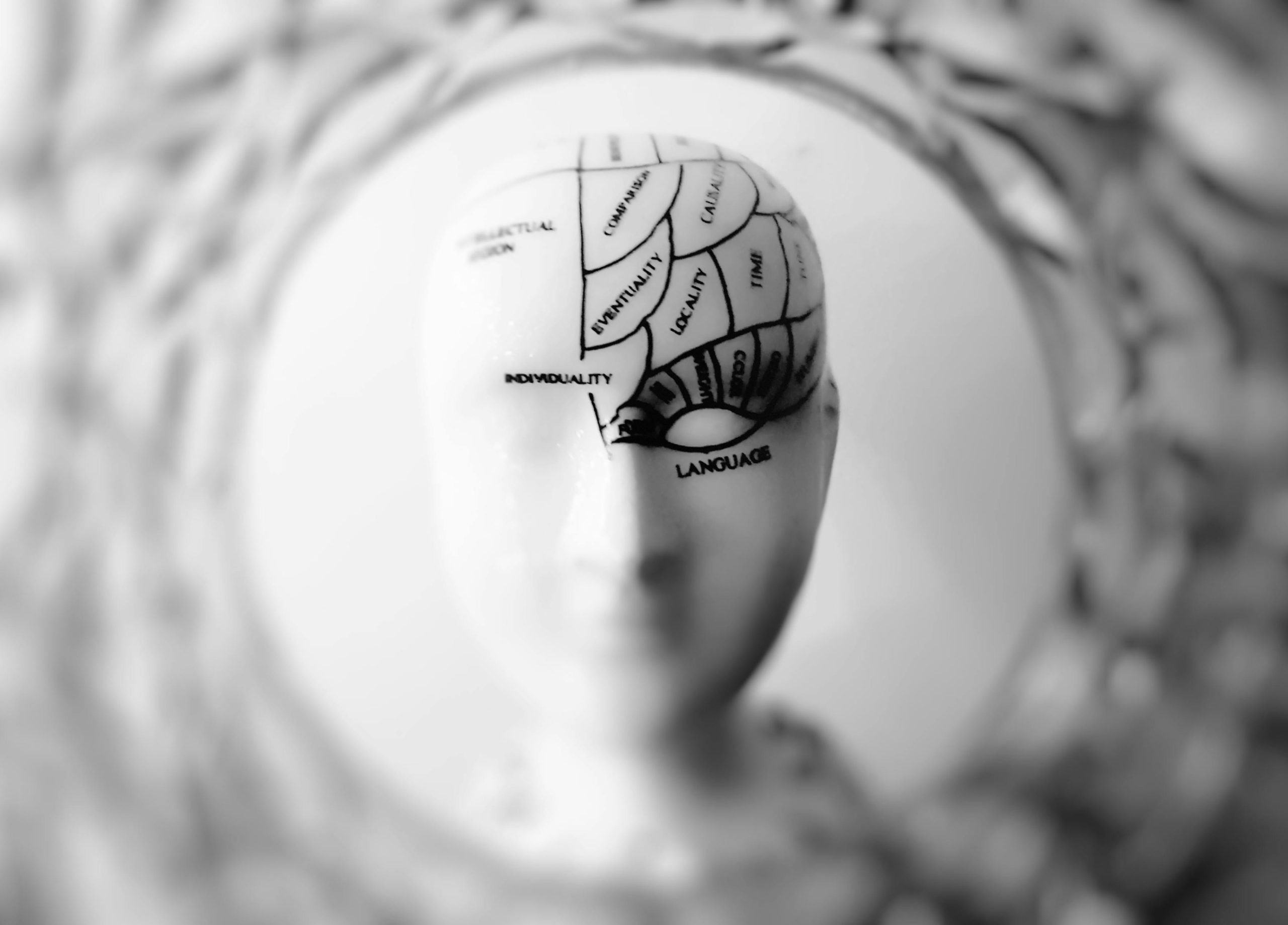
What Is Persona and Why Does It Distort Personality Tests?
Carl Jung introduced the concept of persona as the social mask we wear to meet the world’s expectations. He wasn’t describing dishonesty. He was describing survival. Every person develops a persona as a way of functioning in social environments, and for most of us, that persona is so well-practiced that we stop noticing where it ends and we begin.
For introverts, persona development often starts early. A quiet kid learns to perform enthusiasm in group settings. A thoughtful teenager learns to speak faster so people don’t lose interest. A reflective adult learns to project confidence in meetings even when they’d rather be processing alone. By the time that person sits down to take a personality test, they’re often answering as their persona, not as themselves.
A 2020 study published in PLOS ONE via PubMed Central found that self-report personality assessments are significantly influenced by social desirability bias, meaning respondents unconsciously skew their answers toward what they perceive as ideal or socially acceptable traits. That bias doesn’t come from dishonesty. It comes from persona operating below conscious awareness.
Consider how that plays out in practice. Someone who has spent fifteen years in client-facing advertising roles, presenting to Fortune 500 boards and running agency-wide meetings, might answer “I feel energized by social interaction” as true, because in their professional persona, they do. Their authentic self, the one that needs three hours of quiet after a presentation just to feel human again, never gets to answer the question.
That was me for a long time. I ran agencies. I presented campaigns. I shook hands and gave speeches and led rooms full of people. My persona was polished. My actual INTJ self was exhausted behind it.
How Professional Roles Build Personas That Override Your Real Type
There’s a particular kind of persona that forms inside high-pressure professional environments. I’ve watched it happen to dozens of people over twenty years in advertising, and I lived it myself. You get promoted because you’re competent. Then you’re expected to be visible, vocal, and socially fluent because leadership looks a certain way. So you build a persona that fits the role, and you wear it so consistently that it starts to feel like your actual personality.
The problem surfaces when that person takes a personality test. They’re not lying. They’re answering based on how they actually behave in their daily life. But that daily life has been shaped so heavily by professional expectations that the results reflect the role more than the person.
This is especially common among introverts in leadership positions. An INFP who’s spent a decade managing creative teams might test closer to an ENFP because their job required constant emotional attunement and external engagement. An ISTP who built a career around collaborative problem-solving might not recognize themselves in the more solitary portrait that ISTP personality type descriptions typically paint, even though those descriptions are accurate at the core.
The American Psychological Association has written about how self-concept, meaning the story we tell about who we are, is shaped as much by social feedback as by internal experience. When your social environment rewards extroverted behavior for years, your self-concept shifts to accommodate that. And your personality test results shift with it.

The Specific Ways Persona Corrupts Your Test Answers
Persona doesn’t corrupt test results randomly. It does so in predictable patterns, and understanding those patterns can help you read your results more honestly.
Answering From Your Best Day, Not Your Baseline
Most people unconsciously answer personality test questions from a place of aspiration or peak performance rather than typical experience. “Do you enjoy meeting new people?” gets answered with the memory of a great networking event, not the dread that preceded it. “Do you prefer working alone or with others?” gets answered based on the collaborative project that went brilliantly, not the baseline preference for solitude that exists on ordinary Tuesday afternoons.
Persona amplifies this. If your professional identity is built around being a good collaborator, you’ll answer collaboration questions through that identity lens, even if your honest preference runs in the other direction.
Conflating Capability With Preference
Introverts who’ve developed strong social skills often confuse what they’re capable of with what they actually prefer. Capability and preference are entirely different things, but on a personality test, the distinction gets blurry. “I’m comfortable speaking in public” might be genuinely true for someone who’s done it hundreds of times, but comfort doesn’t equal enjoyment, and enjoyment doesn’t equal energization.
An INTJ who’s delivered hundreds of client presentations might answer extroversion-coded questions affirmatively because they’ve become genuinely capable in those situations. The test doesn’t distinguish between “I can do this well” and “this is how I’m wired.” Persona fills that gap with capability, and the results tilt accordingly.
Context-Dependent Self-Perception
A 2008 study published in PubMed Central found that personality trait expression varies significantly across social contexts, and that people’s self-reports often reflect the contexts most salient to them at the time of testing. If you take a personality assessment right after a week of intensive client work, your answers will look different than if you take it during a quiet month of independent projects.
This isn’t a flaw in the test design exactly. It’s a reflection of how personality actually operates. But it does mean that a single test result, taken at a specific moment in a specific life context, captures a slice of you rather than the whole picture.
Why Some Types Are More Vulnerable to Persona Distortion Than Others
Not every personality type is equally susceptible to persona distortion on assessments. Some types, by virtue of their cognitive wiring, are more likely to have developed elaborate professional personas that diverge from their core preferences.
Introverted feelers, particularly INFPs, tend to be deeply aware of their internal emotional landscape but also highly sensitive to social expectations. That combination can create a persona that’s warm, engaging, and outwardly expressive in ways that don’t fully reflect the inner world those types actually inhabit. If you’re curious about what authentic INFP expression actually looks like beneath the social performance, the piece on INFP self-discovery and life-changing personality insights gets into that depth in ways most type descriptions skip.
ISTPs present a different kind of distortion risk. Their practical, hands-on intelligence often gets channeled into professional roles that require more verbal explanation and collaborative process than their type naturally gravitates toward. Over time, they can build personas around being team contributors and communicators, which can obscure the independent, observational quality that defines how they actually process the world. The markers that distinguish an authentic ISTP are often subtler than test questions can capture, and the article on ISTP recognition and unmistakable personality markers does a good job of identifying what to look for beneath the professional surface.
INTJs, my own type, face a particular irony. We’re naturally strategic about how we present ourselves, which means we can construct highly coherent professional personas that we then apply consistently and convincingly. The problem is that strategic self-presentation and authentic self-expression are very different things, and an INTJ taking a personality test might be strategically self-presenting even when they’re trying not to. The INTJ recognition signals that most people miss often lie precisely in the gap between the polished exterior and the internal processing style underneath.

What Happens When You Finally Test as Yourself
There’s a particular kind of disorientation that happens when someone takes a personality assessment and gets results that feel genuinely accurate for the first time. It’s not always comfortable. Sometimes the results reveal a self that’s been suppressed so thoroughly that seeing it named on a screen feels strange, almost accusatory.
A client I worked with early in my consulting work, a senior account director at a mid-size agency, had tested as ENFJ twice over the course of her career. She was good at her job, well-liked, and genuinely skilled at managing client relationships. When she retook an assessment during a quieter stretch between major accounts, she tested as INFJ. Her first reaction was resistance. “That can’t be right,” she said. “I’m a people person.”
What followed was a long conversation about the difference between being skilled with people and being energized by them. She was extraordinarily skilled. She was also chronically exhausted in ways she’d attributed to workload rather than wiring. The INFJ result wasn’t wrong. Her previous results had been filtered through fifteen years of professional persona.
Getting an accurate result requires something that feels counterintuitive: you have to answer from your preferences, not your performance. That means sitting with questions longer than feels comfortable, noticing when your first instinct is coming from your role rather than your self, and being willing to answer in ways that might feel unflattering given who you’ve built yourself to be professionally.
If you’re ready to try that kind of honest assessment, our free MBTI personality test is designed to be taken reflectively, and the results are most useful when you approach them with genuine curiosity rather than confirmation bias.
Can Personality Tests Actually See Through Persona?
Some assessments are designed with persona distortion in mind. The NEO Personality Inventory, for instance, includes validity scales that flag response patterns suggesting social desirability bias. The MMPI includes similar controls. Even some MBTI-adjacent instruments include consistency checks that can identify when someone is answering in an unusually coherent or idealized pattern.
But these controls have limits. They can identify extreme cases of social desirability, but they can’t fully account for the subtler distortion that comes from a well-integrated professional persona. If you’ve been performing a role for twenty years, your persona isn’t a conscious performance anymore. It’s been internalized. And internalized persona is nearly invisible to validity scales.
Research from 16Personalities on team personality dynamics suggests that the most accurate personality profiles emerge when people are assessed across multiple contexts and time periods rather than from a single sitting. That’s not how most people take personality tests, but it points toward a more honest approach: treating your results as one data point rather than a definitive verdict.
The traits that Truity identifies as markers of deep thinking are also worth considering here. Deep thinkers, which many introverts are, tend to be more aware of their own complexity than the average test-taker, and that awareness can actually make them less accurate self-reporters because they’re aware of too many exceptions to every question.
How to Strip Away Persona Before You Test
There are practical things you can do to reduce persona influence before taking a personality assessment. None of them are foolproof, but they can meaningfully shift your results toward accuracy.
Take the Test During Downtime, Not During a Work Sprint
Context shapes self-perception. Taking a personality assessment during a high-intensity work period activates your professional persona automatically. A quiet weekend, a vacation day, or any period when you’re not actively in role will produce more authentic responses. The version of you that answers questions on a Saturday morning with no meetings scheduled is closer to your baseline than the version answering between client calls.
Answer for Your Private Self, Not Your Professional Self
Before each question, ask yourself: am I answering this as the person I am at home, alone, with close friends, or am I answering as the professional I’ve trained myself to be? The distinction matters enormously. “Do you prefer to work through problems alone or with others?” is a very different question when you’re answering it as someone in a collaborative agency role versus as someone who genuinely prefers to think in solitude before bringing ideas to others.
Notice Your Emotional Reaction to the Results
Your gut response to your test results is data. If you read your results and feel immediate recognition, something resonates at a level below professional identity. If you feel resistance or dismissal, that’s worth examining too. Sometimes resistance means the results are wrong. Sometimes it means they’re accurate in ways your persona finds threatening.
Introverts who’ve built careers around extroverted performance often feel a specific kind of grief when they finally see their authentic type named accurately. Not sadness exactly, more like recognition of something that was always there but never acknowledged. That feeling is worth sitting with rather than explaining away.

The Deeper Problem: Persona as Identity Replacement
There’s a version of the persona problem that goes beyond test accuracy. For some people, especially introverts who’ve spent decades performing extroversion, the persona doesn’t just distort test results. It begins to replace the sense of authentic identity altogether.
The psychological concept of emotional attunement, which WebMD explores in the context of empaths and highly sensitive people, applies here in an interesting way. Introverts who are highly attuned to others’ emotional expectations often develop personas that are exquisitely calibrated to those expectations. Over time, that calibration can feel more real than the underlying self it was built to protect.
I experienced this in a specific way during my agency years. There was a version of me that existed in client meetings, on stage at industry conferences, in conversations with my team. That version was confident, decisive, energized by the room. He was also genuinely me in the sense that those weren’t performances I was consciously putting on. They were habits so deeply grooved that they felt natural.
What took me years to understand was that “feeling natural” and “being authentic” are not the same thing. A habit can feel natural. A compensation can feel natural. A coping mechanism can feel so natural that you mistake it for a personality trait.
The process of separating persona from authentic self is genuinely difficult, and it’s not something a personality test can do for you. What a test can do, when approached honestly, is give you a map. The territory is something you have to explore yourself.
That exploration often starts with noticing the traits that feel most private, most unperformed, most like the person you are when no one is watching. For many introverts, those traits look a lot like what authentic type descriptions actually describe. The traits that identify an INFP that nobody mentions are often precisely the private ones, the ones that don’t make it into the professional persona and therefore don’t show up in test results taken through that persona’s lens.
Similarly, the way an ISTP actually processes problems, which is through direct, hands-on engagement with reality rather than theoretical frameworks, tends to be something they do privately and instinctively rather than something they advertise. The piece on ISTP problem-solving and practical intelligence gets into how that cognitive style operates beneath the surface, which is exactly where authentic personality lives.
What Accurate Results Actually Give You
Accurate personality test results aren’t an end point. They’re a starting point for a different kind of self-understanding. When your results actually reflect your authentic wiring rather than your professional persona, they become genuinely useful in ways that misaligned results never can be.
They help you understand why certain environments drain you even when you perform well in them. They help you identify the kinds of work that energize rather than exhaust. They help you make career decisions based on actual fit rather than on what your persona has proven it can handle.
Globally, personality type distributions suggest that introversion is significantly more common than cultural narratives about leadership and success would imply. Data from 16Personalities global personality profiles shows introverted types making up a substantial portion of the population across cultures, yet most professional environments are still structured around extroverted norms. That gap is exactly where persona gets built, and it’s exactly what accurate self-knowledge can help you work around.
Accurate results also give you permission. Permission to stop performing traits that don’t belong to you. Permission to build a professional life that works with your actual wiring rather than against it. Permission to stop explaining away the exhaustion that comes from living inside a persona that doesn’t fit.
That permission was one of the most significant things I found when I finally stopped trying to test as the extroverted leader I’d trained myself to be and started answering as the INTJ I actually am. The results weren’t a surprise. They were a relief.

There’s much more to explore about how personality frameworks work, where they’re most useful, and how to apply them honestly to your own life. The full range of that conversation lives in our MBTI General and Personality Theory hub, which covers everything from type identification to the science behind how these systems were built.
About the Author
Keith Lacy is an introvert who’s learned to embrace his true self later in life. After 20 years in advertising and marketing leadership, including running agencies and managing Fortune 500 accounts, Keith now channels his experience into helping fellow introverts understand their strengths and build fulfilling careers. As an INTJ, he brings analytical depth and authentic perspective to every article, drawing from both professional expertise and personal growth.
Frequently Asked Questions
What is persona in the context of personality testing?
Persona, a concept introduced by Carl Jung, refers to the social mask people develop to meet external expectations. In personality testing, persona distorts results because people often answer questions as their socially adapted self rather than their authentic self. For introverts who’ve spent years performing extroverted behaviors professionally, this gap can be significant enough to shift their apparent type entirely.
Why do introverts in leadership roles often get inaccurate personality test results?
Leadership roles typically reward extroverted behaviors like public speaking, social networking, and collaborative decision-making. Introverts who succeed in these roles often develop professional personas built around those behaviors. When they take personality assessments, they answer through the lens of that persona, producing results that reflect their professional adaptation rather than their underlying cognitive wiring. The result is often a type profile that skews toward extroversion even when the person’s authentic preferences are strongly introverted.
Can personality tests detect when someone is answering through their persona?
Some assessments include validity scales designed to flag social desirability bias, which is one form of persona influence. The MMPI and NEO Personality Inventory both include these controls. That said, they’re most effective at identifying extreme or inconsistent response patterns. Subtle persona distortion, the kind that comes from a deeply internalized professional identity, is much harder for validity scales to detect because the respondent isn’t consciously performing. They genuinely believe their persona-filtered answers are accurate.
How can I get more accurate personality test results?
Several approaches can improve accuracy. Taking the test during a low-pressure period, away from work demands, reduces professional persona activation. Consciously answering as your private self rather than your professional self makes a meaningful difference. Noticing when your first instinct on a question feels like it’s coming from your role rather than your genuine preference, and pausing to reconsider, can shift results meaningfully. Treating your results as a starting point for reflection rather than a verdict also helps, since your emotional reaction to the results is itself useful data about what feels authentic.
Does persona ever become so internalized that it replaces authentic personality?
Psychologically speaking, persona doesn’t replace authentic personality, but it can become so deeply integrated that distinguishing between the two feels genuinely difficult. For introverts who’ve spent decades performing extroverted behaviors, those behaviors can feel completely natural, which makes them hard to identify as adaptations. The authentic self persists underneath, often visible in private moments, in what drains versus energizes you, and in the preferences you hold when no external expectations are present. Reconnecting with that authentic self is a process that unfolds over time rather than something a single test result can accomplish.