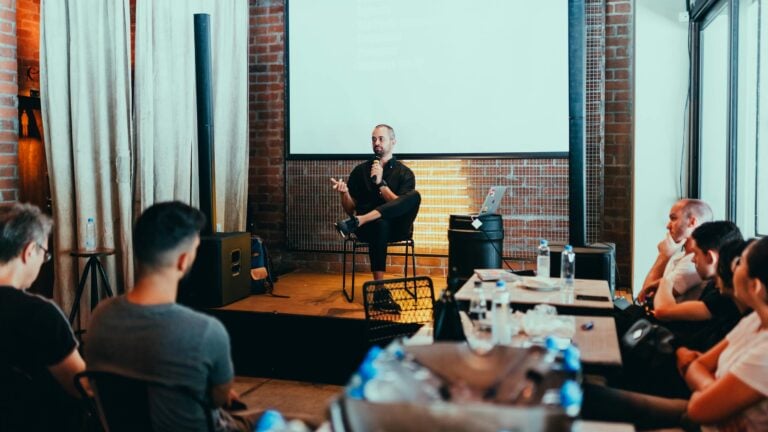
Personal growth retreats offer introverts something most self-improvement environments fail to provide: structured time away from the noise of daily life to process, reflect, and reconnect with what actually matters. For those of us wired to think deeply before we speak and recharge in solitude, the right retreat format can accelerate inner work that would take months to accomplish in ordinary circumstances. The challenge is knowing what to look for, and what to avoid, before you book anything.
My relationship with retreats started out rocky. Somewhere around year twelve of running my advertising agency, a business coach suggested I attend a weekend leadership intensive. The brochure promised “breakthroughs.” What I found was seventy-two hours of forced vulnerability circles, trust falls, and an emcee who treated silence like a problem to be solved. I came home more depleted than when I left. It took me years to separate that particular experience from the concept of retreats altogether, and when I finally did, everything changed.
If you’re exploring the broader territory of introvert family dynamics and how personal growth intersects with parenting and relationships, our Introvert Family Dynamics and Parenting Hub covers the full landscape. Retreats fit naturally into that conversation because the inner work you do in those concentrated spaces ripples outward into every relationship you have at home.
Why Do Introverts Often Struggle With Traditional Retreat Formats?
Most retreat formats are designed by extroverts, for extroverts, even when they’re marketed as inclusive. The assumption embedded in the structure is that growth happens out loud, in groups, through constant interaction. You’re expected to share early and often, to build energy through collective activity, and to measure your progress by how much you opened up to strangers by Sunday afternoon.
What’s your personality type?
Take our free 40-question assessment and get a detailed personality profile with dimension breakdowns, context analysis, and personalised insights.
Discover Your Type8-12 minutes · 40 questions · Free
That model runs directly against how introverts actually process experience. My mind works like a slow, deliberate filter. I take in information, let it settle, turn it over quietly, and arrive at insight after a period of internal digestion. When a retreat facilitator pushes me to share a “real-time breakthrough” in front of forty people, I’m not being resistant. I’m simply not done thinking yet. The insight is forming, but it needs space, not a spotlight.
Understanding your own personality architecture matters enormously here. Tools like the Big Five Personality Traits Test can help you identify where you fall on dimensions like openness, conscientiousness, and extraversion before you choose a retreat format. Knowing your profile helps you ask better questions of retreat organizers before you commit to anything.
The National Institutes of Health has documented how temperament traits present in infancy often persist into adulthood, which reinforces something many introverts already sense intuitively: this isn’t a phase or a preference to overcome. It’s a fundamental aspect of how our nervous systems are organized. A retreat that treats introversion as something to push through is working against your biology, not with it.
What Makes a Personal Growth Retreat Actually Work for Introverts?
After my disastrous first experience, I became much more deliberate about what I looked for. Over the years I’ve attended several retreats that genuinely moved me forward, and a few patterns emerged that separated the useful ones from the exhausting ones.
Solitude windows matter more than almost anything else. The best retreats I’ve attended built in significant unstructured time, not as filler between sessions, but as an intentional design choice. Two or three hours in the afternoon with no agenda, no group check-ins, just space to walk, write, or sit quietly. Those windows were often where the most meaningful processing happened for me.
Small group sizes also shift the entire dynamic. There’s a meaningful difference between sharing in a circle of eight and performing in front of forty. At one retreat focused on creative leadership, I was placed in a cohort of six people for all the deep-work sessions. By day two, I’d said more genuinely honest things about my professional fears than I had in years of one-on-one coaching. The intimacy created safety, and safety created depth.

Written reflection components are another strong signal. When a retreat incorporates journaling, written exercises, or structured contemplation as core elements rather than optional add-ons, it’s usually designed by someone who understands that not all processing is verbal. My best retreat experiences included morning pages, prompted writing exercises between sessions, and a final written reflection I kept and returned to for months afterward.
Nature-based settings help too, though they’re not strictly required. Something about being removed from screens and concrete and the ambient hum of professional life creates a different quality of attention. I’ve done productive inner work in a converted barn in Vermont and in a rented house in the mountains of North Carolina. The common thread was physical distance from my ordinary environment.
How Do Personal Growth Retreats Intersect With Family and Parenting Dynamics?
This is where the conversation gets personal in a way I didn’t anticipate when I first started taking retreats seriously. The inner work you do in those concentrated spaces doesn’t stay contained to your professional life or your individual psychology. It comes home with you.
I noticed this clearly after a retreat I attended focused on emotional patterns and leadership identity. I came back with a different quality of presence with my family. Not dramatically different, nothing cinematic. But I was less reactive in small moments. I listened longer before responding. I recognized when I was depleted and needed to step away before I became short-tempered, rather than after. Those are quiet changes, but they compound over time.
For introverted parents especially, the connection between personal growth retreats and family health is direct. HSP Parenting: Raising Children as a Highly Sensitive Parent explores how parents who process the world deeply often absorb their children’s emotional states in ways that are both a gift and a source of exhaustion. A retreat creates space to discharge that accumulated weight and return with more genuine capacity.
Psychology Today’s resources on family dynamics point to something I’ve observed repeatedly: the emotional tone of a family system tends to follow the emotional state of the adults in it. When I’ve done meaningful inner work, my family feels it. Not because I announce it, but because something in how I carry myself changes.
There’s also the matter of modeling. Children who watch a parent take their inner life seriously, who see that adults invest in their own growth and wellbeing, learn something important about self-respect. I didn’t have that model growing up. My father’s generation equated stoicism with strength. Watching me prepare for and return from retreats gave my kids a different picture of what taking care of yourself actually looks like.

What Should Introverts Look For When Choosing a Retreat?
Choosing a retreat without asking the right questions is how you end up in the situation I described at the start of this article. consider this I’ve learned to investigate before committing.
Ask directly about the daily structure. How many hours are scheduled versus unstructured? What does a typical day look like hour by hour? If the organizer can’t answer that question clearly, or if the answer reveals wall-to-wall programming, that’s important information. You need to know there’s room to breathe.
Ask about group size and whether there are options for individual sessions. Some retreats offer one-on-one time with a facilitator alongside the group work. For introverts, those individual sessions are often where the most honest conversations happen.
Ask about the facilitation philosophy. Do participants have the option to pass during sharing exercises? Is silence treated as a valid response? Facilitators who are comfortable with quiet tend to create safer spaces for introverts. Facilitators who treat silence as a problem to be immediately resolved will exhaust you.
Consider what kind of support professional you are or aspire to be. Retreats designed for caregivers, coaches, or health professionals often have a different energy than general personal development events. If you’re someone who works closely with others, a resource like the Personal Care Assistant Test Online can help you clarify your professional orientation before choosing a retreat theme that aligns with your actual goals.
Similarly, if you’re a fitness or wellness professional considering a retreat focused on professional development in that space, the Certified Personal Trainer Test offers a useful baseline for understanding where your knowledge and skills currently stand, which helps you choose a retreat pitched at the right level.
How Do You Prepare Mentally and Emotionally Before a Retreat?
Preparation matters more than most people realize. Walking into a retreat cold, without having done any preliminary reflection, is like showing up to a long run without warming up. You can do it, but you’ll spend the first portion just getting oriented instead of doing the actual work.
I started developing a pre-retreat practice about five years ago, and it changed how much I got out of the experience. Two weeks before, I begin journaling around a few specific questions: What am I carrying that I haven’t had time to examine? What patterns in my relationships or work keep recurring? What would I want to be different in six months? Those questions prime the pump. By the time I arrive at a retreat, I’m not starting from scratch.
It’s also worth doing some honest self-assessment about your current emotional state before you go. The American Psychological Association’s resources on trauma are a useful reminder that retreats involving deep emotional work can surface difficult material. If you’re in a period of acute stress or processing something significant, it may be worth working with a therapist before or alongside a retreat rather than treating the retreat as a substitute for professional support.
Some people find it helpful to take stock of their relational patterns before attending a retreat focused on interpersonal growth. The Likeable Person Test offers an interesting lens on how you come across in social contexts, which can be useful self-knowledge when you’re about to spend several days in close quarters with strangers.
Managing expectations is also part of preparation. A retreat is not a cure. It’s a catalyst. The insights you gain there need to be integrated into your daily life through ongoing practice. I’ve watched people leave retreats convinced they’ve been permanently transformed, only to find six weeks later that nothing has actually changed because they didn’t build any structures to support the insights they arrived at. The retreat is the spark. The real work happens after.

How Do You Integrate Retreat Insights Into Everyday Introvert Life?
Integration is where most retreat value either compounds or evaporates. I’ve made both mistakes: I’ve returned from retreats and immediately submerged back into the full weight of agency life without giving anything I’d discovered time to settle. I’ve also returned and treated the insights so preciously that I never actually applied them to anything real.
What works, at least for me, is a structured re-entry. I try to protect the forty-eight hours after returning from a retreat as much as possible. No big meetings, no major decisions, minimal social obligations. That buffer period lets me stay in contact with whatever shifted internally before the ordinary demands of life reassert themselves.
Writing is essential to my integration process. Within the first week back, I write a longer reflection document, not a summary of what happened at the retreat, but an honest account of what I’m thinking and feeling in its aftermath. What surprised me? What am I still resisting? What do I want to do differently? That document becomes a reference point I return to over the following months.
Sharing selectively also helps. I don’t try to explain the entire retreat experience to my family or colleagues. That’s a losing proposition, and it often dilutes the meaning of what happened. Instead, I identify one or two specific changes I want to make and communicate those clearly. “I’m going to start protecting Sunday mornings as quiet time” is more useful than a lengthy debrief about everything I discovered about myself over a weekend in the mountains.
Some of the most valuable integration work happens in the months after a retreat when you start noticing the old patterns reasserting themselves. That’s not failure. That’s where the actual growth happens, in the moment of recognizing a familiar reaction and making a different choice. Published research in PubMed Central examining psychological flexibility suggests that the ability to notice your own patterns and consciously choose your response is one of the most durable markers of genuine growth, and that capacity develops through repeated practice, not single experiences.
Are There Retreat Formats That Specifically Suit Introverted Needs?
Yes, and the landscape has expanded significantly in recent years as retreat organizers have become more sophisticated about personality and processing styles.
Silent retreats are the most obvious fit for many introverts. The structure removes the social obligation entirely and creates conditions where internal processing can happen without interruption. I attended a three-day silent meditation retreat several years ago that was among the most productive inner-work experiences I’ve had, not because anything dramatic occurred, but because the sustained quiet created a quality of attention I rarely access in ordinary life.
Writing retreats are another strong option. These typically involve a combination of structured writing exercises, individual work time, and optional sharing. The writing itself becomes the primary mode of processing, which suits introverts well. I’ve attended two writing retreats that weren’t explicitly about personal growth but functioned as exactly that because the act of writing honestly about experience is inherently reflective.
Nature immersion retreats, sometimes called wilderness retreats or solo retreats, offer extended time in natural settings with minimal programming. Some include solo periods of twelve to twenty-four hours where participants are entirely alone in a natural environment. These are not for everyone, and they require careful vetting of the facilitators and safety protocols, but for introverts who find deep restoration in nature, they can be genuinely powerful.
One-on-one intensive retreats, where you work exclusively with a single coach or therapist over two or three days, are worth considering if you find group dynamics consistently exhausting. The depth of work possible in that format is different from anything achievable in a group setting, and the absence of social performance pressure allows for a different quality of honesty.
It’s also worth noting that retreat experiences can sometimes surface unexpected emotional material. If you’re someone who carries patterns from difficult relational history, the Borderline Personality Disorder Test on this site is one resource among many that can help you understand your emotional landscape more clearly before engaging in intensive personal work. Self-knowledge is always the foundation.
Personality research continues to refine our understanding of how different types engage with growth experiences. Additional findings published through PubMed Central on personality and wellbeing reinforce that growth interventions work best when they’re aligned with individual temperament rather than applied uniformly. The retreat format that transforms one person can genuinely deplete another.

What Happens When You Return to Family Life After a Retreat?
Re-entry into family life after a retreat is its own skill, and it’s one I handled badly more than once before I understood what was actually happening.
The mismatch is real. You’ve spent several days in a carefully curated environment designed for reflection and growth. Your family has been living their ordinary lives, managing logistics, handling whatever came up while you were away. You’re in a contemplative state. They’re in a practical one. Those two states don’t always meet gracefully.
I learned to lower my expectations for the first day back. Not in a resigned way, but in a realistic one. The reconnection with family after a retreat doesn’t have to be profound. It can just be normal. Dinner, conversation about ordinary things, being present without an agenda. The depth comes later, once everyone has adjusted to being back in the same space.
I also learned not to come home with a list of changes I wanted to implement immediately. One retreat I attended included a session on relationship dynamics that genuinely shifted something in how I thought about communication with my partner. I came home wanting to have a long, serious conversation about all of it. She was tired and had managed a full week solo with the kids. The timing was wrong, and I had to sit with my insights quietly for a while before they could become useful conversations.
Psychology Today’s perspective on family transitions offers a useful frame: family systems are dynamic, and introducing change, even positive change, requires time and adjustment from everyone involved. Returning from a retreat is a kind of transition, and treating it as such, with patience and attentiveness to everyone else’s experience, makes the integration smoother.
The introverts I know who get the most long-term value from retreats are the ones who don’t try to make the experience immediately legible to everyone around them. They let it settle. They let it work quietly. And over time, the people closest to them notice something has shifted, not because they were told, but because they can feel it.
There’s much more to explore about how introverts grow within family systems and relationships. The complete Introvert Family Dynamics and Parenting Hub brings together resources on everything from sensitive parenting to handling family roles as an introvert.
Curious about your personality type?
Our free MBTI assessment goes beyond the four letters. Get a full breakdown of your scores, see how your type shows up at work and in relationships.
Take the Free Test8-12 minutes · 40 questions · Free
About the Author
Keith Lacy is an introvert who’s learned to embrace his true self later in life. After 20 years in advertising and marketing leadership, including running agencies and managing Fortune 500 accounts, Keith now channels his experience into helping fellow introverts understand their strengths and build fulfilling careers. As an INTJ, he brings analytical depth and authentic perspective to every article, drawing from both professional expertise and personal growth.
Frequently Asked Questions
Are personal growth retreats worth it for introverts?
Personal growth retreats can be genuinely valuable for introverts when the format matches how introverts actually process experience. The most effective retreats for introverts include significant unstructured time, small group settings, written reflection components, and facilitators who are comfortable with silence. Retreats that prioritize constant group interaction and real-time emotional sharing tend to be draining rather than restorative. The value comes from choosing deliberately, not from retreats as a category.
How do I know if a retreat is right for my personality type?
Ask the organizers specific questions about daily structure, group size, and whether participation in sharing exercises is optional or expected. Look for retreats that build in solitude windows and offer written reflection as a core component. Understanding your own personality profile through tools like the Big Five Personality Traits assessment can also help you identify what kind of environment supports your growth versus what depletes you. A retreat that works beautifully for an extrovert can be exhausting for an introvert in the same program.
How long should a personal growth retreat be for introverts?
Three to five days tends to be a productive length for most introverts. Shorter retreats of one to two days often don’t allow enough time to decompress from ordinary life before the retreat work begins. Longer retreats of a week or more can be meaningful but require more careful vetting of the structure and pacing. The first day of most retreats is largely adjustment and settling in, so a two-day event effectively gives you one day of real depth. Three days provides a more complete arc.
Can personal growth retreats help introverted parents specifically?
Yes, and often in ways that extend well beyond the individual. Introverted parents frequently carry accumulated emotional weight from the constant relational demands of parenting, particularly those who are also highly sensitive. A retreat creates concentrated space to process that weight, reconnect with personal identity beyond the parenting role, and return with more genuine presence and capacity. The benefits tend to ripple through family dynamics in quiet but meaningful ways over the weeks and months following a retreat.
What should I do after a personal growth retreat to make the insights last?
Protect the first forty-eight hours after returning from major obligations where possible. Write a substantive reflection document within the first week, focusing not on what happened at the retreat but on what you’re thinking and feeling in its aftermath. Identify one or two specific, concrete changes you want to make and communicate those clearly to people close to you. Expect old patterns to reassert themselves and treat that as part of the growth process rather than evidence that the retreat didn’t work. Integration happens gradually through repeated practice, not in a single weekend.