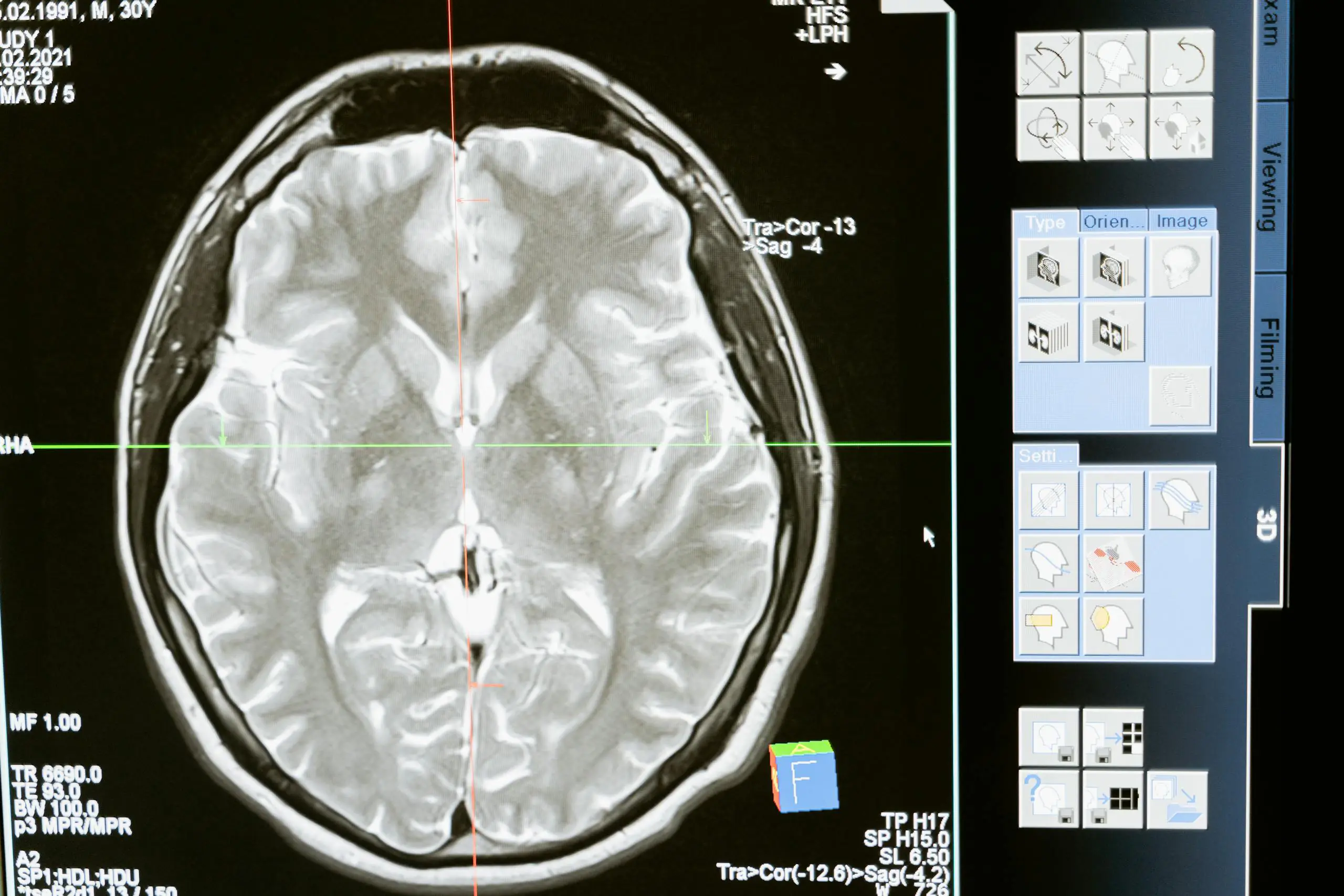
Personality test brain is the mental state you enter when you’ve taken enough assessments to start filtering your own thoughts through type labels, wondering whether a reaction is “very INTJ of you” or second-guessing a decision because it doesn’t match your profile. It’s a real cognitive pattern, and it shapes how millions of people understand themselves, often in ways that help and ways that quietly limit.
Most people don’t notice it happening. You take a test, get a result, and somewhere between reading the description and sharing it with a friend, the label starts doing something unexpected: it starts thinking for you.

If you’ve spent any time exploring personality frameworks, the deeper patterns behind your results are worth understanding. Our MBTI General and Personality Theory hub covers the full landscape of type theory, cognitive functions, and what these frameworks actually reveal about how you process the world. That broader context matters when we’re talking about the psychology behind why personality tests feel so compelling, and so sticky.
Why Does a Personality Test Feel So Immediately True?
There’s a specific sensation that hits when you read a personality description that fits. Something settles. A quiet recognition, almost like relief. I’ve felt it myself, more than once, and I’ve watched it happen with people on my teams over the years.
Part of what’s happening is a well-documented cognitive phenomenon called the Barnum effect, named after the showman P.T. Barnum. Psychologists describe it as our tendency to accept vague, general personality statements as uniquely accurate descriptions of ourselves. A 2005 piece from the American Psychological Association explored how self-reflection and self-recognition work in the brain, noting that people are remarkably willing to see themselves in broad characterizations when those characterizations are framed as personalized.
But there’s something else going on too, something more specific to introverts. Many of us spent years being told, implicitly or directly, that our natural way of operating was wrong. Too quiet. Too slow to respond. Too much in our heads. When a personality framework finally names what we’ve always been and frames it as a legitimate cognitive style rather than a flaw, the recognition runs deeper than a parlor trick. It lands because it’s correcting a false story we were handed.
I ran advertising agencies for over two decades. The culture of that world rewards fast talkers, quick pitches, and people who fill silence with confidence. For years, I absorbed the message that my preference for thinking before speaking was a liability. The first time I read a serious breakdown of INTJ cognition, I didn’t feel validated so much as I felt seen for the first time in a professional context. That’s a powerful experience. And powerful experiences can become powerful crutches.
What Actually Happens Inside a Personality Test Brain?
Once a type label sticks, the brain starts doing something interesting. It begins filtering incoming experience through that label. Psychologists call this confirmatory processing: you notice and remember the moments that confirm your type, and you unconsciously minimize the moments that don’t fit.
A 2020 study published in PubMed Central examined how self-categorization affects cognitive processing, finding that once people adopt a group identity, their attention and memory systems actively reinforce that identity. Personality types function as exactly this kind of self-categorization. Once you’re “an INFP” or “an ENTJ,” you’re not just describing yourself. You’re joining a category that your brain will now work to defend.
This isn’t inherently bad. Categories help us organize experience. The problem comes when the category starts overriding direct observation. I’ve seen this happen in professional settings more times than I can count. A team member describes themselves as “not a details person” because their type profile says so, even when their actual work history shows meticulous attention to specifics. The label became more real to them than the evidence.

There’s also the question of which version of a type you’re internalizing. Popular online descriptions of MBTI types vary wildly in quality. Some are grounded in genuine cognitive function theory. Many are simplified to the point of being caricatures. If your understanding of your type comes primarily from social media memes, you may be organizing your self-concept around a cartoon version of something that has real psychological depth underneath it.
The difference between a surface-level type label and a genuine understanding of your cognitive architecture is significant. Reading about Extroverted Thinking (Te), for example, shows you how certain types process decision-making through external systems and measurable outcomes. That’s a specific cognitive orientation, not just “being logical.” When you understand the actual mechanism, you can observe it in yourself with much more precision than a four-letter label allows.
Is Personality Test Brain Making You Smarter About Yourself, or Less Accurate?
Both, depending on how you use it.
The self-awareness that comes from personality frameworks is genuinely valuable. A 2009 study in PubMed Central on personality and behavior found meaningful correlations between stable personality traits and consistent behavioral patterns across contexts. Understanding your tendencies isn’t a trick. It’s a real cognitive tool. The question is whether you’re using it to observe yourself more clearly or to explain yourself more conveniently.
Observing yourself more clearly means noticing patterns, testing them against experience, and updating your understanding when reality pushes back. Using type to explain yourself conveniently means reaching for the label whenever you want to justify a behavior without examining it. “I can’t do small talk, I’m an introvert.” “I don’t do well with ambiguity, I’m a J.” These statements might be true. They also might be shortcuts that let you avoid developing a skill you actually could develop, if you chose to.
I spent years in client-facing work that required me to be more socially present than came naturally. At some point, I had to stop using my introversion as an explanation and start treating it as a variable to work with. That didn’t mean becoming someone I wasn’t. It meant understanding, at a more granular level, which parts of social interaction drained me and which parts I could actually manage well with the right conditions. That’s a much more useful map than “introverts don’t like people.”
The distinction between extraversion and introversion in Myers-Briggs is specifically about energy orientation, not social ability. Introverts restore energy through solitude and internal processing. That’s a real difference with real implications. But it doesn’t mean social competence is off the table. Personality test brain sometimes flattens this nuance into a fixed limitation, which is where the framework stops serving you.
How Deep Thinkers Experience Personality Frameworks Differently
There’s a particular way that people wired for depth and internal reflection engage with personality systems. It’s more intense, more recursive, and more prone to both insight and overthinking than the average experience.
Traits associated with deep thinking, including high openness to experience, strong pattern recognition, and preference for internal processing, correlate with a tendency to find personality frameworks deeply absorbing. As Truity notes in their research on deep thinkers, people with this cognitive style tend to seek comprehensive explanations for behavior and motivation, which makes personality theory particularly compelling territory.

What I’ve noticed in myself is that my engagement with personality frameworks goes in cycles. There are periods where I’m actively using the lens to understand a situation, a team dynamic, a communication breakdown. And there are periods where I catch myself reaching for the framework as a way to avoid sitting with uncertainty. The difference matters. One is using a tool. The other is hiding behind one.
Deep thinkers are also more likely to get caught in the loop of re-testing. If you’ve taken the MBTI or a similar assessment multiple times because the result didn’t feel quite right, or because you got a different answer and wanted to figure out which one was “real,” you’ve experienced this. The desire for a definitive, accurate result reflects genuine intellectual rigor. It also reflects how much weight you’re placing on the label itself.
One way out of that loop is to shift from asking “what type am I?” to asking “how do I actually process information?” That’s where cognitive function theory becomes genuinely illuminating rather than just another label to collect. Functions like Introverted Thinking (Ti) describe specific mechanisms: how a person builds internal logical frameworks, evaluates consistency, and resists external pressure to accept conclusions that haven’t been internally verified. Recognizing that in yourself is a different kind of self-knowledge than knowing your four-letter type.
Why Some People Get Mistyped and What That Reveals
Mistyping is more common than most personality enthusiasts realize, and it tells us something important about how personality test brain operates.
The most common source of mistyping isn’t bad tests. It’s that people answer based on who they’ve been conditioned to be rather than who they naturally are. If you spent twenty years in a corporate environment that rewarded extroverted behaviors, your answers to questions about social preferences might reflect your adapted self more than your default self. The result you get is accurate to the person you’ve learned to perform. It may not be accurate to the person who exists when no one is watching.
I’ve had this conversation with dozens of people over the years, particularly with professionals who tested as extroverts early in their careers and later, after some distance from high-pressure performance environments, discovered they were significantly more introverted than their results suggested. The performance layer is real and it shows up in test results.
Another major source of mistyping is the gap between trait-based and function-based frameworks. A test that asks whether you prefer structure over flexibility is measuring something different from a framework that examines whether your dominant cognitive orientation is toward internal or external information processing. Understanding how cognitive functions reveal your true type can clarify why someone might get inconsistent results across different assessments, and which result is actually more informative.
Personality test brain, in the context of mistyping, often shows up as resistance. Once you’ve identified with a type, evidence that you might be mistyped can feel threatening rather than clarifying. I’ve watched people argue passionately that they couldn’t possibly be a certain type, not because they’d examined the evidence, but because the label didn’t match their self-image. That’s the cognitive filtering effect in action, working against self-knowledge rather than for it.
What Cognitive Functions Add That Type Labels Miss
Type labels are summaries. Cognitive functions are the underlying architecture. The difference matters for anyone who wants to use personality frameworks as genuine tools for self-understanding rather than identity badges.
Take the sensory processing dimension. Most people understand the S/N distinction in MBTI as “practical vs. imaginative” or “detail-oriented vs. big-picture.” Those are rough approximations. The actual function, Extraverted Sensing (Se), describes a specific orientation toward immediate sensory data, a real-time engagement with the physical environment that influences everything from how someone handles stress to how they make decisions under pressure. That’s a meaningfully different kind of information than “you’re a practical person.”

Personality test brain tends to operate at the label level because labels are easier to hold and share. “I’m an INFJ” fits in a bio. “I lead with Introverted Intuition, supported by Extroverted Feeling, with Introverted Thinking as my tertiary function” is harder to tweet. But the deeper description is the one that actually explains behavior.
What I’ve found most useful, both personally and in the years I spent managing creative teams, is understanding the function stack rather than the type code. Knowing that someone leads with a particular cognitive function tells you something about how they’ll approach problems, where they’ll need support, and what kinds of friction they’ll create or experience in collaborative work. That’s actionable information. A four-letter type is a starting point for that conversation, not the conversation itself.
A well-designed cognitive functions test can help you identify your actual mental stack rather than just your surface preferences. The results often surprise people, particularly those who’ve been working from a type label they received years ago without much follow-up examination.
How Personality Test Brain Affects Teams and Workplaces
The individual psychology of personality test brain gets more complicated when it plays out in group settings. And in workplace contexts, it can have real effects on how teams function and how people are perceived.
On the positive side, shared personality frameworks can create a useful common language. When a team understands that different people process information differently, it can reduce the friction that comes from assuming everyone thinks the way you do. Research from 16Personalities on team collaboration suggests that personality-aware teams report higher satisfaction and more effective communication. That tracks with my experience managing creative teams where we explicitly talked about working styles.
The risk is when type labels become a substitute for actually knowing the people on your team. I’ve seen managers use MBTI results to make decisions about who gets which assignments, who gets promoted, who gets included in certain meetings. When that happens, the framework has moved from a tool for understanding to a sorting mechanism. And sorting mechanisms, applied to people, tend to calcify rather than illuminate.
There’s also a specific dynamic that plays out around introversion in workplace settings. Once someone is labeled as an introvert on a team, there’s a tendency for that label to become an explanation for everything: they didn’t speak up in the meeting (introvert), they prefer email to phone calls (introvert), they need time to process feedback (introvert). Some of that may be accurate. Some of it may be using the label to avoid asking what the person actually needs in a specific situation.
The most effective use of personality frameworks in teams is as a starting point for conversation, not a conclusion. “Your results suggest you might prefer to process information before responding in group settings. Does that match your experience?” is a very different approach from “you’re an introvert, so I’ll give you the written brief instead of including you in the brainstorm.” One opens dialogue. The other closes it.
Can Personality Test Brain Actually Change Over Time?
Personality itself is relatively stable across adulthood, though not fixed. The way you engage with personality frameworks, the cognitive habits that constitute personality test brain, can and does shift with experience and deliberate reflection.
What tends to change isn’t the underlying type so much as the sophistication of your relationship to it. Early engagement with personality frameworks is often characterized by enthusiasm and identification. You find your type, you feel seen, you consume everything you can find about it. That’s a natural and often valuable phase. The risk is staying there.
More mature engagement looks different. It involves holding the framework more loosely, using it as one lens among several rather than the primary organizing principle of your self-concept. It means being curious about the ways you don’t fit your type as much as the ways you do. It means recognizing that personality descriptions are probabilistic, not deterministic. They describe tendencies, not destinies.
My own relationship with MBTI and personality theory has gone through several phases over the years. There was the initial recognition phase, where understanding my INTJ wiring finally made sense of patterns I’d observed in myself for decades. Then a period of over-reliance, where I was filtering too many decisions through the lens of “what would an INTJ do.” Then, gradually, a more integrated relationship where the framework is genuinely useful without being determinative.
What accelerated that shift was getting curious about what I didn’t fit. The places where my behavior diverged from the INTJ description were actually more informative than the places where it matched. They pointed toward growth, toward the functions I’d underdeveloped, toward the ways my specific history had shaped a personality that was recognizably INTJ but also distinctly mine.

Using Personality Frameworks Without Letting Them Use You
The most useful frame I’ve found for working with personality test brain is treating type theory the way a good doctor treats a diagnostic tool: as information that informs judgment, not information that replaces it.
A diagnosis tells you something real and important. It shapes how you approach treatment and how you understand symptoms. But the doctor who treats the diagnosis instead of the patient is making a category error. The same error applies to personality frameworks. Your type tells you something real and important. The person who treats the type instead of engaging with the actual, specific, context-dependent human being is making the same mistake.
If you haven’t taken a structured assessment recently, or if you took one years ago and haven’t revisited the underlying theory, it’s worth starting fresh. Our free MBTI personality test gives you a solid baseline, and approaching it with fresh eyes, answering based on your natural tendencies rather than your adapted professional self, can surface patterns you might have missed the first time.
Beyond the test itself, the most valuable practice is developing the habit of noticing when you’re using type as a tool and when you’re using it as a shield. The tool version asks: “What does this framework help me see about this situation?” The shield version asks: “How does this framework explain why I don’t have to change?” Both feel like self-awareness. Only one of them actually is.
Personality test brain, at its best, is a form of structured self-reflection. It gives language to patterns that might otherwise remain vague and hard to examine. At its worst, it’s a sophisticated way of staying stuck, using the vocabulary of self-knowledge to avoid the discomfort of genuine self-examination. The difference lies in what you do with what you find.
There’s a lot more to explore across the full spectrum of personality theory and type frameworks. Our MBTI General and Personality Theory hub is a good place to go deeper, particularly if you’re ready to move beyond the label and into the underlying architecture of how you think.
About the Author
Keith Lacy is an introvert who’s learned to embrace his true self later in life. After 20 years in advertising and marketing leadership, including running agencies and managing Fortune 500 accounts, Keith now channels his experience into helping fellow introverts understand their strengths and build fulfilling careers. As an INTJ, he brings analytical depth and authentic perspective to every article, drawing from both professional expertise and personal growth.
Frequently Asked Questions
What is personality test brain?
Personality test brain is the cognitive pattern that develops when you begin filtering your own thoughts, behaviors, and decisions through the lens of a personality type label. It happens gradually after taking assessments like the MBTI, as the type result shifts from being a description you read to being a category you think from. At its most useful, it sharpens self-awareness. At its most limiting, it causes you to justify behaviors or avoid growth by pointing to your type rather than examining the situation directly.
Why do personality tests feel so accurate when you first take them?
Several factors combine to make personality test results feel immediately true. The Barnum effect plays a role: people tend to accept broad, positively framed personality descriptions as personally accurate. Beyond that, for many introverts specifically, personality frameworks offer the first clear language for cognitive styles that were previously unnamed or framed as deficits. When a framework finally validates how you actually work, the recognition can feel profound. That emotional resonance is real, though it’s worth distinguishing between genuine self-recognition and the brain’s tendency to find patterns that confirm what it already wants to believe.
Can your personality type change over time?
Core personality traits are relatively stable across adulthood, but your test results can shift for several reasons. Stress, major life changes, and professional environments that require you to adapt your behavior can all influence how you answer assessment questions. Someone who spent years performing extroverted behaviors in a high-pressure workplace may test differently after leaving that environment. What’s more likely to change than your underlying type is the sophistication of your self-understanding, moving from a surface-level identification with a label toward a more nuanced awareness of your actual cognitive tendencies and how they play out across different contexts.
How do cognitive functions differ from MBTI type letters?
MBTI type letters are summaries of four broad preference dimensions. Cognitive functions are the underlying mental processes those letters represent. For example, the “T” in INTJ doesn’t just mean “logical.” It points to specific functions: Extroverted Thinking as an auxiliary process and Introverted Thinking as a tertiary one, each operating differently. Understanding cognitive functions gives you a more precise map of how you process information, make decisions, and engage with the world. It also explains why two people with the same four-letter type can seem quite different from each other, because their function stacks interact in ways that the letters alone don’t capture.
Is it possible to use personality frameworks too much?
Yes, and the sign that you’ve crossed the line is usually when the framework starts explaining away behaviors rather than illuminating them. Using personality theory productively means staying curious about the places where you don’t fit your type, treating the framework as a starting point for self-examination rather than a conclusion. Over-reliance tends to show up as fixed explanations for why you can’t do certain things, resistance to feedback that doesn’t fit your type narrative, or a sense that your type is your identity rather than a description of some of your tendencies. The framework serves you best when it’s one lens among several, not the only lens you use.