
Personality test questions are carefully designed prompts that measure how you think, feel, and respond to the world, typically across dimensions like introversion versus extroversion, thinking versus feeling, and structure versus spontaneity. The best questions don’t ask you what you do, they ask you what you’d prefer, what drains you, and what energizes you when no one else is watching.
That distinction matters more than most people realize. And after two decades running advertising agencies, I’ve come to believe that understanding what these questions are actually measuring changes everything about how you interpret your results.
Our MBTI General and Personality Theory hub covers the full landscape of personality frameworks and type theory, but this piece focuses on something more specific: what’s actually happening beneath the surface of the questions themselves, and why some of them feel almost uncomfortably accurate.
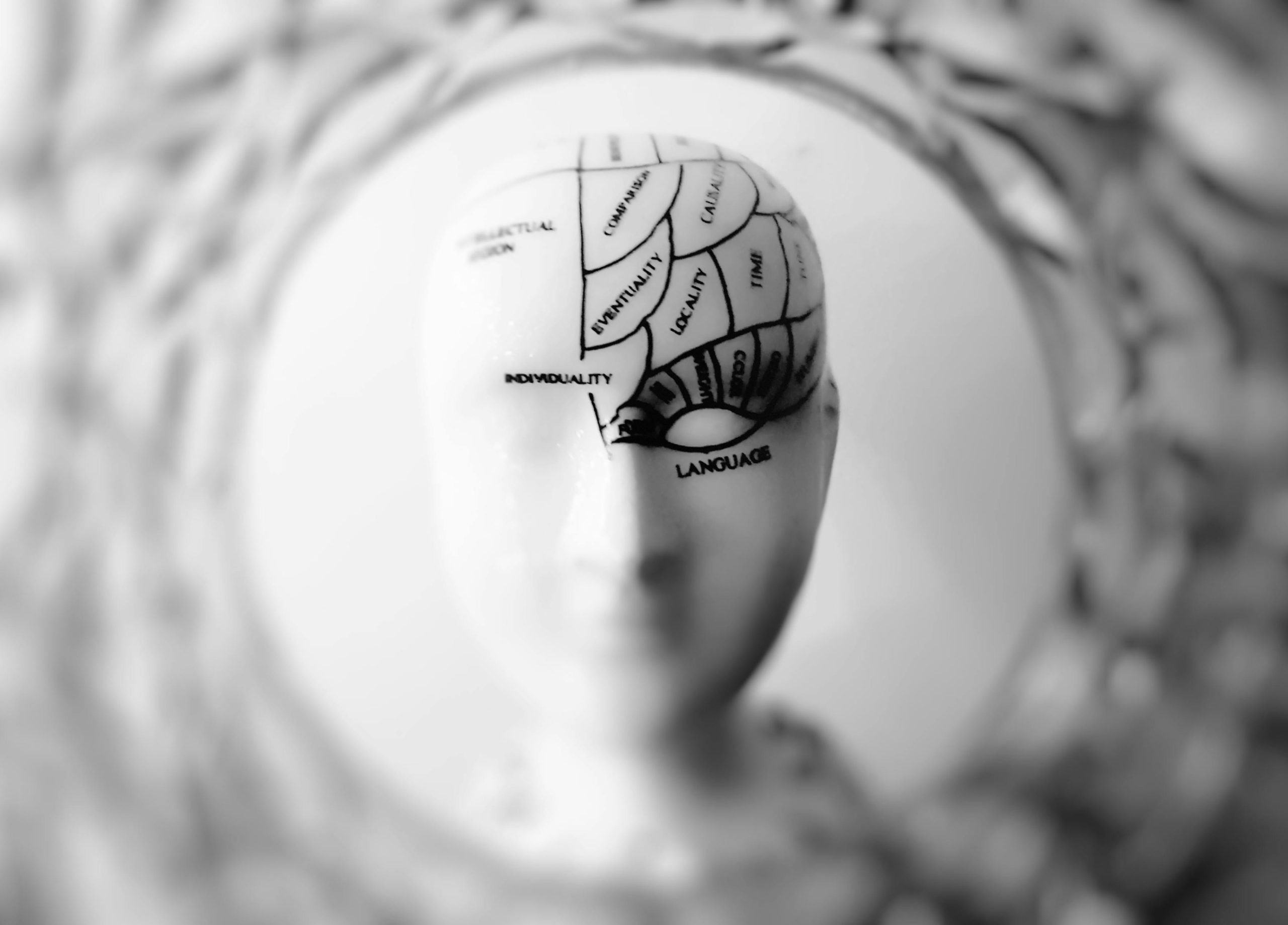
Why Do Some Personality Test Questions Feel So Uncomfortably Accurate?
You’re moving through a personality assessment and then a question stops you cold. Something like: “After a long day with people, do you feel energized or depleted?” Or maybe: “Do you prefer working through problems alone before discussing them with others?”
That feeling of recognition isn’t accidental. Well-constructed personality assessments are designed to surface preferences you’ve likely never articulated out loud. A 2020 study published in PubMed Central found that self-report personality measures show meaningful consistency over time, particularly when questions target behavioral tendencies rather than self-image. The accuracy you feel isn’t just flattery. It’s pattern recognition built into the question structure itself.
Early in my agency career, I sat through a team assessment exercise where we all completed a personality inventory together. One question asked whether I preferred “thinking through all possibilities before committing to a plan” or “deciding quickly and adjusting as I go.” I remember staring at it longer than anyone else in the room. My team was already flipping pages. That pause told me something before I even answered.
Good personality test questions create that pause. They’re not asking what you think the right answer is. They’re asking what you actually do when the pressure is off.
What Are the Main Categories of Personality Test Questions?
Most reputable personality assessments organize their questions around a handful of core dimensions. Understanding those categories helps you answer more honestly and interpret your results with more precision.
Energy Direction: Where Do You Recharge?
These questions measure the introversion-extroversion spectrum, and they’re often the most immediately recognizable. Examples include:
- “You prefer spending your free time alone rather than at social events.”
- “After a week of back-to-back meetings, you feel ready for more interaction or ready for quiet?”
- “You find it easy to strike up conversations with strangers.”
What these questions are really measuring isn’t whether you’re shy or outgoing. They’re measuring where your psychological energy comes from. A 2005 piece from the American Psychological Association explored how people’s self-perception around social behavior often differs from their actual preferences, which is exactly why these questions are phrased around preference and energy rather than skill.
I was genuinely good at client presentations. Confident, articulate, persuasive. My team assumed I loved them. What they didn’t see was that I needed about two hours of complete quiet afterward to feel like myself again. The skill and the preference were two entirely different things, and personality questions are built to separate them.
Information Processing: How Do You Take In the World?
These questions target the sensing versus intuition dimension in frameworks like the MBTI. They explore whether you trust concrete, present-moment data or whether you naturally look for patterns, connections, and future possibilities.
- “You focus more on what is than what could be.”
- “When reading instructions, you follow them step by step rather than skimming for the overall concept.”
- “You often find yourself making connections between ideas that seem unrelated on the surface.”
Sensing types tend to trust experience and detail. Intuitive types tend to trust patterns and implications. Neither is superior. Both are essential in a functioning team, which is something I only truly understood after years of watching sensing-dominant account managers save my intuition-driven strategy sessions from going completely off the rails.
Decision-Making: Logic or Values?
Thinking versus feeling questions don’t measure emotional intelligence. They measure what you prioritize when making decisions under pressure.
- “You believe it’s more important to be honest than to spare someone’s feelings.”
- “When making decisions, you rely more on logic and objective criteria than on personal values.”
- “You find it easy to remain detached when analyzing a difficult situation involving people you care about.”
Feeling types aren’t more emotional. Thinking types aren’t colder. The distinction is about what gets weighted most heavily when those two considerations conflict. As an INTJ, I tend to land firmly in the thinking category, and I’ve had to consciously build in a pause before delivering feedback to ask myself whether I’m being clear or just blunt. Those are not the same thing, and personality assessments that include these questions help you see where your default lands.

Structure and Lifestyle: Planned or Open?
Judging versus perceiving questions explore your relationship with structure, deadlines, and flexibility.
- “You prefer having a detailed plan before starting a project.”
- “You find it stressful to leave things unresolved.”
- “You enjoy the flexibility of keeping your options open rather than committing to a fixed schedule.”
These questions often reveal something people haven’t consciously examined about themselves. Many people assume they’re organized because their desk is tidy. Personality assessments push past surface behavior to ask about your relationship with closure itself.
How Do Personality Questions Differ Across Major Assessments?
Not all personality tests ask questions the same way. The format shapes what gets measured and how accurately.
The MBTI and similar type-based assessments typically use forced-choice questions: you pick between two options rather than rating yourself on a scale. “Do you prefer (A) working independently or (B) collaborating with a team?” That binary structure is intentional. It forces you to identify your preference rather than hedging toward the middle.
Big Five assessments like the NEO-PI use Likert scales instead. “I enjoy large gatherings: Strongly Disagree / Disagree / Neutral / Agree / Strongly Agree.” This format captures degree rather than direction, which produces more nuanced trait profiles but can also make it easier to unconsciously drift toward socially desirable answers.
According to 16Personalities research on team collaboration, different question formats surface different aspects of personality, which is why combining multiple assessment approaches often produces a more complete picture than relying on any single test.
If you’re curious about your own type and want a starting point, our free MBTI personality test uses carefully structured questions to help you identify where you fall across all four dimensions.
What Makes a Personality Test Question Well-Designed?
Poorly designed personality questions ask what you do. Well-designed ones ask what you’d prefer to do if circumstances were ideal. That gap is where real personality lives.
Consider two versions of what’s essentially the same question:
Weak version: “Are you introverted or extroverted?” Most people can’t answer this accurately because they’ve internalized cultural messaging about which one is more desirable.
Strong version: “After spending a Saturday at a busy family gathering, your ideal Sunday would involve (A) making plans with friends or (B) spending time alone or with one close person.” The behavioral specificity removes the abstraction and gets closer to actual preference.
A 2008 study in PubMed Central examining personality measurement validity found that situationally grounded questions, those tied to specific contexts rather than abstract self-descriptions, produced more reliable and consistent results across different populations. The more concrete the scenario, the more honest the answer tends to be.
Personality questions also work best when they avoid double-barreled constructions. “I enjoy meeting new people and am comfortable in large groups” is actually two separate questions collapsed into one. Someone might genuinely enjoy meeting new people in small doses while finding large groups exhausting. That conflation produces noise in the data.

Why Do Introverts Sometimes Struggle to Answer Personality Questions Honestly?
There’s a specific kind of interference that happens when introverts take personality assessments, and it took me years to name it clearly. It’s the gap between who you’ve trained yourself to be and who you actually are.
Spend enough time in environments that reward extroverted behavior, and you start to lose track of your genuine preferences. You adapt. You perform. You get good at it. Then you sit down to answer “Do you feel comfortable being the center of attention?” and you genuinely don’t know if your “yes” reflects preference or conditioning.
This is one reason why self-discovery through personality frameworks can feel so significant for introverts. Not because the test tells you something you didn’t know, but because it gives language to things you’ve felt but never had permission to claim. Pieces like INFP Self-Discovery: Life-Changing Personality Insights capture exactly that quality of recognition, the sense of finally seeing yourself clearly in a framework that doesn’t pathologize your quieter tendencies.
My advice when taking any personality assessment: answer for your ideal conditions, not your adapted ones. What would you choose if no one was watching and nothing was at stake professionally? That’s the version of yourself the questions are trying to reach.
A useful benchmark from Truity’s research on deep thinkers suggests that people who process information at greater depth, a trait common among introverts, often need more time with personality questions because they’re genuinely weighing more variables. Taking that extra time isn’t indecision. It’s accuracy.
How Do Specific Personality Types Experience These Questions Differently?
One of the more fascinating aspects of personality assessments is that the experience of taking the test itself varies by type. The questions that feel obvious to one person feel genuinely ambiguous to another, and that difference is meaningful.
ISTPs, for instance, often find questions about emotional processing frustrating in their vagueness. They’re wired for precision and concrete reality, so questions like “Do you often reflect on the meaning behind your experiences?” can feel slippery. If you’re curious about the markers that define this type, ISTP Recognition: Unmistakable Personality Markers breaks down the specific behavioral patterns that show up consistently, including how they approach ambiguous questions.
INFPs, on the other hand, often find the feeling-versus-thinking questions almost too easy, because their values are so central to how they process everything. What can trip them up are the judging-versus-perceiving questions, particularly around structure, because many INFPs have developed organizational habits out of necessity while still preferring open-ended exploration at their core. The nuanced traits covered in How to Recognize an INFP: The Traits Nobody Mentions illuminate exactly this kind of gap between surface behavior and underlying preference.
INTJs like me tend to overthink the questions themselves. I remember analyzing the phrasing of assessment items during a corporate evaluation, wondering whether “prefer” meant situationally or dispositionally. My HR director eventually asked if I needed help. I did not need help. I needed the questions to be more epistemologically precise. That’s very INTJ. The deeper patterns behind this type are worth examining, particularly the ones covered in INTJ Recognition: 7 Signs Nobody Actually Knows, which gets into the less obvious markers that most profiles miss.

What Do Personality Test Questions Tell You That You Can Actually Use?
Personality assessments aren’t useful because they categorize you. They’re useful because they give you a framework for making decisions that align with how you’re actually wired.
In practical terms, understanding your personality profile through the lens of specific question dimensions helps you in three concrete areas.
Work Environment Design
If your assessment reveals strong introversion and a preference for structured environments, you can use that information to advocate for work conditions that actually support your output. Open offices, constant interruptions, and impromptu brainstorming sessions aren’t just annoying for introverts. They’re genuinely cognitively costly. Personality data gives you a principled basis for requesting different conditions rather than just feeling vaguely uncomfortable.
I spent years arranging my schedule around what I thought a CEO was supposed to look like: available, visible, always in the mix. Once I had language for why that model was draining me, I restructured my days around protected thinking time in the mornings and consolidated meetings in the afternoons. My work got better. My team got better access to a version of me that wasn’t running on fumes.
Relationship Communication
Personality profiles don’t just describe you. They help you understand why other people operate so differently. The thinking-versus-feeling dimension alone explains a significant portion of workplace friction. A thinking-dominant person delivering feedback and a feeling-dominant person receiving it are often operating from completely different assumptions about what feedback is for.
According to 16Personalities global data, feeling types make up a majority of the global population, which means thinking-dominant introverts are often in the minority in how they process interpersonal situations. Knowing that changes how you approach communication rather than assuming your default is everyone’s default.
Career and Role Alignment
Personality dimensions measured by test questions have real implications for role fit. An ISTP’s preference for hands-on problem-solving and independence, captured in questions about working through challenges alone versus collaborating, points toward very different career environments than a type that thrives on social coordination. The practical intelligence dimension explored in ISTP Problem-Solving: Why Your Practical Intelligence Outperforms Theory shows how those assessment answers translate into real-world professional strengths.
Similarly, recognizing the specific behavioral signs that show up across ISTP profiles, as detailed in ISTP Personality Type Signs, can help someone with that profile understand why certain environments feel energizing while others feel like they’re working against the grain.
What Should You Watch Out for When Interpreting Your Results?
Personality test results are a starting point, not a verdict. A few honest cautions are worth keeping in mind.
First, your answers can shift depending on your current circumstances. Someone going through a high-stress period may answer energy questions differently than they would during a stable phase of life. Some researchers distinguish between state (how you feel right now) and trait (how you tend to feel across time). Personality assessments are measuring trait, but stress can temporarily push your answers toward state. If you’re in an unusually difficult season, that’s worth factoring into how you read your results.
Second, type labels can become self-limiting if you use them as excuses rather than explanations. “I’m an introvert, so I can’t do presentations” is a misuse of personality data. The more accurate framing is: “As an introvert, presentations cost me more energy than they cost my extroverted colleagues, so I need to structure my schedule accordingly.” That’s a practical adaptation, not a ceiling.
Third, personality questions measure preferences, not capabilities. Some of the most empathetic people I’ve worked with tested as thinking-dominant. Some of the most analytically rigorous thinkers I know test as feeling-dominant. The dimensions describe what comes naturally, not what you’re capable of developing.
WebMD’s overview of empathic sensitivity notes that emotional attunement exists on a spectrum that doesn’t map neatly onto any single personality dimension, which is a useful reminder that personality frameworks are lenses, not complete pictures.

There’s much more to explore about type theory, cognitive functions, and how different frameworks approach personality measurement. The full range of those topics lives in our MBTI General and Personality Theory hub, which covers everything from foundational concepts to more advanced type analysis.
About the Author
Keith Lacy is an introvert who’s learned to embrace his true self later in life. After 20 years in advertising and marketing leadership, including running agencies and managing Fortune 500 accounts, Keith now channels his experience into helping fellow introverts understand their strengths and build fulfilling careers. As an INTJ, he brings analytical depth and authentic perspective to every article, drawing from both professional expertise and personal growth.
Frequently Asked Questions
What are examples of personality test questions used in MBTI assessments?
MBTI-style personality test questions typically present two options and ask you to choose the one that feels most natural. Examples include: “Do you prefer (A) spending evenings at home or (B) going out with friends?” and “When solving a problem, do you rely more on (A) established methods or (B) new approaches?” The forced-choice format is intentional, pushing you to identify a preference rather than settle in the middle.
How many questions do most personality tests include?
Most validated personality assessments include between 60 and 100 questions to ensure reliability across multiple dimensions. Shorter tests of 20 to 30 questions exist and can offer useful indicators, but they typically sacrifice some precision. The MBTI Step I includes 93 questions. Longer assessments allow for more nuanced measurement of each dimension, reducing the impact of any single ambiguous answer on your overall profile.
Can you answer personality test questions “wrong”?
Technically no, but practically yes. There are no wrong answers in the sense of factual errors, but you can answer inaccurately by responding based on who you think you should be rather than who you actually are. The most common source of inaccuracy is social desirability bias, choosing answers that seem more positive or professionally impressive. Personality assessments are most useful when you answer for your genuine preference, not your performed self.
Why do personality test questions sometimes feel ambiguous or hard to answer?
Ambiguity in personality questions often signals that you’re genuinely balanced between two preferences on a given dimension, or that your adapted behavior has diverged from your natural preference over time. Introverts who’ve spent years in extrovert-rewarding environments often find energy and social questions particularly difficult because they’ve genuinely lost track of their baseline. If a question feels impossible to answer, that itself is useful information about where your preferences may be less fixed.
How do personality test questions differ between free and professional assessments?
Free personality assessments typically use adapted or independently developed questions that approximate the dimensions measured by validated instruments. Professional assessments like the official MBTI use questions that have been tested for reliability and validity across large populations, with specific statistical thresholds each question must meet. Free tests can offer meaningful starting points, particularly for self-reflection, but professional assessments are generally more precise for high-stakes applications like career counseling or team development.