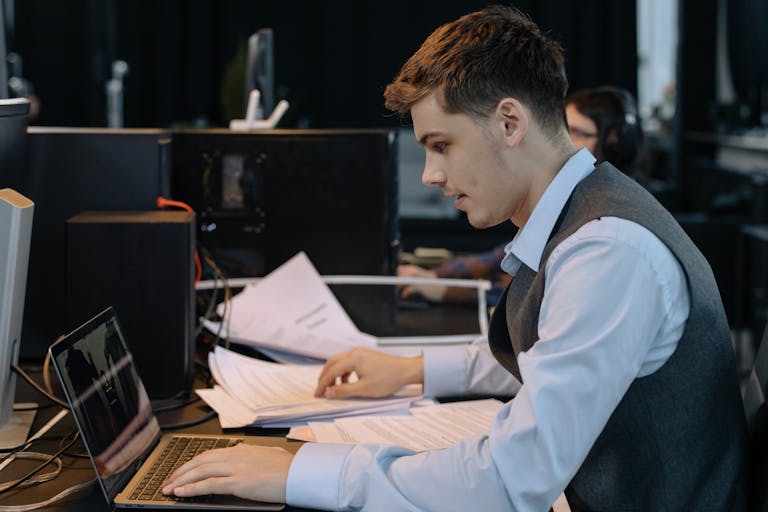

The recording light blinks on, and your heart rate immediately spikes. Your guest is waiting, your listeners are expecting brilliance, and you cannot remember a single question you prepared. If this sounds familiar, you are not alone. Running a podcast as someone who dreads conducting interviews creates a unique kind of cognitive dissonance that most extroverted hosts will never understand.
I spent years in advertising leadership, managing teams and conducting high stakes client presentations. You would think that experience would translate seamlessly into hosting conversations. It did not. When I started creating content around introversion and personality psychology, I discovered that the performance anxiety I felt before interviews was entirely different from presenting a campaign strategy. Interviews require spontaneous connection, real time adaptation, and sustained social engagement that felt exhausting in ways I had never anticipated.
The truth is that interview aversion does not disqualify you from hosting a successful podcast. Some of the most compelling interview shows are hosted by people who identify as introverted or socially anxious. What separates struggling hosts from thriving ones is not personality transformation but strategic adaptation. You can conduct interviews that feel natural, produce valuable content, and protect your energy reserves with the right systems in place.

Why Interviews Feel Harder for Some Hosts
Interview anxiety operates on multiple levels simultaneously. There is the surface level concern about asking good questions and maintaining conversational flow. Below that sits deeper worry about being judged, about awkward silences, about somehow failing your guest and your audience at the same time. For those of us wired for depth and internal reflection, these concerns become amplified because we process every interaction through multiple analytical filters.
What’s your personality type?
Take our free 40-question assessment and get a detailed personality profile with dimension breakdowns, context analysis, and personalised insights.
Discover Your Type8-12 minutes · 40 questions · Free
Research from the National Institute for Physiological Sciences demonstrates that active listening activates reward centers in the brain for both participants in a conversation. This suggests that the pressure interview-averse hosts feel is not imaginary but rather a heightened awareness of the neurological stakes involved in quality conversations. When you care deeply about making your guest feel heard and validated, the responsibility can feel overwhelming.
My early podcast recording sessions left me completely drained. I would schedule one interview and need the entire following day to recover. The constant monitoring of conversational dynamics, the pressure to respond intelligently, the awareness of the recording capturing every hesitation and verbal stumble created what psychologists describe as cognitive overload. Understanding that this response was normal rather than a personal failing changed everything about how I approached my process.
The distinction between hearing and listening becomes crucial here. As communication researchers explain, listening involves accurately understanding meaning while remaining aware of nonverbal communication like tone, timing, and context. Interview-averse hosts often excel at this deeper form of listening precisely because we take the responsibility so seriously. The challenge is harnessing this strength without letting the accompanying anxiety derail our performance.
The Preparation Paradox
Conventional podcast advice tells you to prepare extensively before interviews. Research your guest thoroughly. Write comprehensive question lists. Know their entire background. While this sounds logical, it can backfire spectacularly for interview-averse hosts. Over-preparation creates rigidity. You become so attached to your carefully crafted questions that you miss organic conversational opportunities. The interview starts feeling like an interrogation rather than a dialogue.
The University of Toronto’s podcasting guide recommends a more balanced approach. They suggest researching your guest thoroughly but leaving room for follow-up questions that emerge naturally. The more conversational the tone, the better the interview sounds to listeners. This means preparation should create confidence without creating a script that eliminates spontaneity.
I learned this lesson the hard way during my agency career. When preparing client presentations, over-scripting made me sound robotic and disconnected. The same principle applies to podcast interviews. Your guest can sense when you are reading from notes versus genuinely engaging with their responses. The goal is strategic preparation that builds confidence without sacrificing authenticity.

What actually works is establishing conversational frameworks rather than rigid question sequences. Know the three or four key areas you want to explore. Have a strong opening question that invites storytelling rather than yes or no answers. Beyond that, trust yourself to follow interesting threads as they emerge. This approach honors both your need for structure and the organic nature of quality conversation.
Reframing Your Role as Interviewer
Most interview anxiety stems from a fundamental misunderstanding about your role. You are not performing. You are not the entertainment. You are the facilitator helping your guest share their expertise with your audience. As Harvard Business Review explains, simply staying quiet and nodding can still leave speakers feeling unheard. True listening requires active engagement that makes others feel genuinely understood. This shift in perspective transforms the experience entirely.
When you position yourself as genuinely curious rather than trying to appear clever, the dynamic changes. Your questions become about genuine understanding rather than demonstrating your own knowledge. Your follow-ups come from actual interest rather than performance anxiety. The Libsyn blog describes this as establishing a focus and then exploring the backstory through questions that uncover the why behind your guest’s work.
This reframing helped me enormously when building my content business. Instead of trying to impress guests with my research, I started approaching interviews with genuine curiosity about their experiences. The conversations became richer, my anxiety decreased, and paradoxically my guests found the exchanges more engaging. Removing the performance pressure creates space for authentic connection.
Your listeners benefit from this approach as well. They hear the questions they would ask if given the opportunity. They experience the natural progression of discovery alongside you. The best podcast interviews feel like eavesdropping on a fascinating conversation rather than watching a formal interrogation.
Strategic Energy Management for Interview Days
Recording interviews requires substantial social energy expenditure. Pretending otherwise leads to burnout, poor performance, or both. Successful interview-averse hosts build their recording schedules around energy management rather than ignoring their needs.
Some hosts find batching interviews effective. Recording multiple episodes in a single session maintains your conversational flow and limits the number of days you need to summon interview energy. Others find the opposite approach works better, spreading interviews throughout the week so recovery time is built into the schedule. There is no universally correct answer because energy patterns vary significantly between individuals.

What I discovered through trial and error was that morning interviews worked best for my energy patterns. Scheduling recordings early meant I had not yet depleted my social reserves through other interactions. I protected the hour before recording for solitude and the hour after for recovery. This buffer system prevented interviews from draining energy I needed for other work.
The transition from corporate environments to independent work taught me the importance of designing systems around my actual energy patterns rather than aspirational ones. In agency life, I had no control over meeting schedules. Building my own content business meant I could finally structure my days around when I perform best rather than when others decided I should be available.
Pre-interview rituals also matter. Physical movement helps discharge nervous energy before recording. Brief meditation or breathing exercises center your focus. According to The Podcast Space, even a brief dance break or walk can significantly reduce fatigue and improve alertness before recording. Whatever routine signals to your brain that you are preparing for focused engagement will reduce ambient anxiety and improve your presence during the actual conversation.
Leveraging Your Natural Listening Advantage
Interview-averse hosts often possess superior listening skills precisely because we take conversations seriously. While extroverted hosts might be thinking about their next witty comment, those of us with quieter temperaments tend to genuinely absorb what our guests are saying. This represents a significant competitive advantage that most interview guides ignore.
Research published in the Personality and Social Psychology Bulletin found that quieter individuals often demonstrate stronger listening comprehension because they process information more thoroughly before responding. According to communication research compiled by EBSCO, active listening requires not only processing verbal content but also remaining aware of nonverbal cues like body language and tone. Where extroverts might rush to fill silences, introverted hosts allow space for reflection that often prompts deeper responses from guests.
This ability to truly listen creates better follow-up questions. You catch the interesting aside your guest mentioned casually. You notice when their energy shifts around certain topics. You recognize when they are reciting familiar talking points versus sharing something genuinely meaningful. These observations create opportunities for questions that produce unique content rather than rehashing what your guest has said everywhere else.
My background managing diverse teams taught me that different personality types contribute unique value to collaborative efforts. The same applies to podcasting. Interview-averse hosts bring a quality of attention that produces distinctively thoughtful content. Rather than apologizing for your temperament, lean into the advantages it provides.
Handling the Dreaded Awkward Silence
Nothing triggers interview anxiety quite like the pause that stretches slightly too long. Your guest finishes speaking, you cannot immediately think of a follow-up, and suddenly the silence feels deafening. For interview-averse hosts, these moments can derail entire conversations as anxiety spirals out of control.
Here is something that transformed my relationship with silence: those pauses feel much longer to you than they do to listeners. What feels like an eternity in the moment rarely exceeds a few seconds in the final edit. More importantly, brief silences often produce better content because they give your guest space to continue their thought or add additional context they might otherwise have skipped.
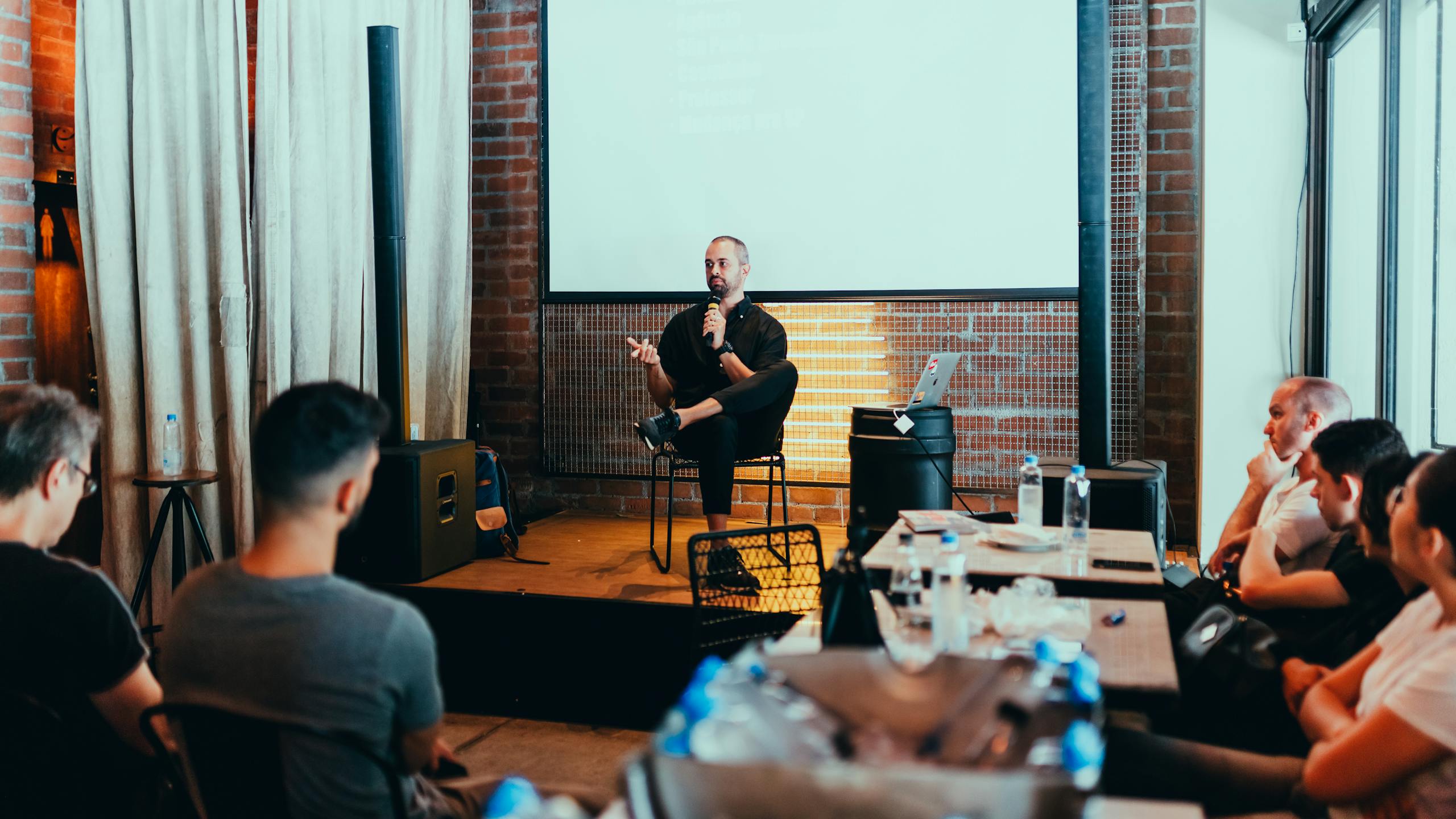
Developing a toolkit of transition phrases helps bridge these moments when needed. Simple expressions like “that’s fascinating, tell me more about…” or “I want to make sure I understand…” buy thinking time while maintaining conversational momentum. These phrases become automatic with practice, reducing the cognitive load of navigating transitions.
Remember also that editing exists. Unlike live broadcasting, podcast interviews can be cleaned up in post-production. Knowing you can remove a stumble or extended pause later reduces the pressure to perform perfectly in the moment. This safety net allows you to take risks, ask unexpected questions, and embrace the imperfect nature of authentic conversation.
Building Guest Rapport Without Small Talk
Pre-interview small talk represents a particular challenge for those of us who find surface level conversation draining. Yet building some rapport before diving into substantive questions creates better interviews. The solution is not forcing yourself through uncomfortable chitchat but finding alternative approaches to establishing connection.
One effective strategy involves sending thoughtful pre-interview questions via email. This allows you to demonstrate genuine interest in your guest’s work without the real-time pressure of verbal small talk. Many guests appreciate this approach because it shows you have done your research and value their time.
During the brief pre-recording period, focus on practical matters rather than forced pleasantries. Confirm technical setup, discuss timing, and establish any topics to avoid. These functional conversations serve rapport-building purposes without requiring the kind of surface level exchanges that feel inauthentic to many interview-averse hosts.
When I managed client relationships in advertising, I learned that authenticity trumps social performance. Clients could sense when I was being genuine versus going through expected motions. The same principle applies to podcast guests. A sincere “I’m excited to discuss your recent project” communicates more warmth than five minutes of awkward weather conversation.
Creating Interview Frameworks That Reduce Anxiety
Structure provides security for anxious minds. Creating repeatable frameworks for your interviews reduces cognitive load and frees mental energy for actual listening and engagement. This does not mean rigid scripts but rather flexible templates that guide without constraining.
Consider developing a consistent opening approach that feels natural to you. Some hosts start with a standard question about their guest’s current work or recent developments. Others prefer opening with lighter queries that ease both parties into the conversation. Whatever approach you choose, consistency creates comfort through familiarity.
Similarly, establishing standard ways to handle common interview situations reduces anxiety about the unexpected. Know how you will redirect a guest who goes off topic. Have a graceful way to conclude when time runs short. Prepare responses for technical difficulties. These contingency plans eliminate much of the uncertainty that fuels interview anxiety.
The content creation journey teaches you that systems reduce stress. When I developed standard workflows for my writing projects, quality improved while anxiety decreased. Interview frameworks serve the same purpose, providing structure that supports rather than constrains creative conversation.
Post-Interview Recovery Practices
What happens after recording matters as much as what happens during. Interview-averse hosts who ignore recovery needs find themselves dreading future recordings, creating a negative cycle that eventually undermines their shows. Building recovery time into your process maintains sustainable podcasting practice.

Immediately following an interview, avoid scheduling demanding tasks. Your brain needs time to decompress from the sustained social engagement. Light administrative work, physical activity, or complete downtime all serve this purpose depending on your preferences. What matters is recognizing that you have expended significant energy and honoring that expenditure.
Brief post-interview reflection also proves valuable. Not harsh self-criticism but gentle assessment of what worked well and what might improve. Did a particular question open unexpected territory? Was there a moment where the conversation lagged? These observations inform future preparation without spiraling into anxiety-producing rumination.
This approach mirrors what I learned through creative work as both therapy and career. The practice of processing experiences through reflection builds both skill and resilience. Applied to interviewing, it transforms each recording session into a learning opportunity rather than merely a survival challenge.
Technology Solutions for Anxious Hosts
Technical aspects of podcasting can amplify or reduce interview anxiety depending on how you approach them. Investing in reliable equipment and mastering your recording setup eliminates one category of worry entirely. When you trust your tools, you can focus entirely on the conversation.
Consider recording software that allows you to see your guest rather than just hear them. Video calls provide visual cues that help with conversational timing and rapport. Even if your final product is audio only, the visual connection during recording can significantly reduce anxiety for hosts who struggle with audio-only interactions.
Backup recording solutions provide additional peace of mind. Knowing that a technical failure will not result in losing an entire interview reduces the stakes feeling that contributes to anxiety. Test your setup before each recording. Confirm both parties can hear each other clearly. These simple technical checks create psychological security that improves your hosting performance.
The same systematic approach that serves introvert entrepreneurs building businesses applies to podcast production. Reliable systems and processes reduce cognitive load, freeing energy for the creative and interpersonal aspects of your work that cannot be systematized.
When to Consider Alternative Formats
Interview formats are not the only path to successful podcasting. If your anxiety around conducting interviews proves persistently problematic despite implementing these strategies, alternative formats might serve your goals equally well while better matching your temperament.
Solo episodes allow you to share expertise without the unpredictability of guest interactions. Co-hosted shows distribute conversational responsibility, reducing individual pressure. Panel formats create group dynamics where you facilitate rather than directly conduct all questioning. Documentary style podcasts use edited interview clips within produced narratives, giving you control over pacing and presentation.
The entrepreneurial path for introverts often involves finding approaches that leverage strengths while accommodating limitations. Forcing yourself into formats that drain you unsustainably produces neither good content nor career satisfaction. There is no shame in adapting your approach to match your actual capabilities and preferences.
That said, do not abandon interview formats prematurely. The discomfort of learning new skills often precedes mastery. Give yourself adequate time to develop competence before concluding that interviews are not for you. Many interview-averse hosts discover genuine enjoyment once they develop effective systems and build confidence through experience.
Growing Through Discomfort
Interview skills develop through practice, not avoidance. Each conversation you conduct, even imperfect ones, builds capacity for future recordings. The goal is not eliminating anxiety entirely but developing the skills and systems that allow you to produce quality content despite the discomfort.
Early in my career, presenting to Fortune 500 clients terrified me. The stakes felt impossibly high. The judgment of room after room of executives created persistent anxiety. Yet over time, through accumulated experience and refined technique, those presentations became manageable and eventually enjoyable. The same trajectory applies to podcast interviews for those willing to persist through initial difficulty.
Document your progress. Review early episodes occasionally to recognize how far you have developed. Note the moments in recent recordings where you navigated challenges that would have derailed you previously. This evidence of growth counteracts the anxiety-driven narrative that you are not improving or that interviews will always feel this hard.
The interview-averse podcast host who develops effective systems often produces distinctively thoughtful content. Your careful preparation, genuine listening, and considerate questioning create conversations that stand out in a landscape cluttered with superficial exchanges. The very qualities that make interviews initially challenging become competitive advantages once you learn to channel them effectively.
Frequently Asked Questions
How do I prepare for podcast interviews without over-preparing?
Focus on understanding your guest’s core work and identifying three or four topic areas you want to explore. Prepare one strong opening question that invites storytelling. Beyond that, trust yourself to follow interesting threads as they emerge during conversation. Over-preparation creates rigidity that often produces worse interviews than confident flexibility.
What should I do when my mind goes blank during an interview?
Have transition phrases ready that buy thinking time while maintaining conversational flow. Expressions like “that’s fascinating, tell me more” or “help me understand that better” give you space to collect your thoughts. Remember that brief pauses feel longer to you than to listeners, and editing can always clean up extended silences if needed.
How can I build rapport with guests when I hate small talk?
Send thoughtful pre-interview questions via email to demonstrate genuine interest without real-time pressure. During pre-recording, focus on practical matters like technical setup and timing rather than forced pleasantries. A sincere expression of interest in their work communicates more warmth than awkward weather conversation.
How many interviews should I batch together?
This varies significantly between individuals. Some hosts maintain better conversational flow by recording multiple episodes in single sessions. Others find their energy depletes after one quality conversation and need recovery time between recordings. Experiment with different approaches to discover what supports your best performance without causing burnout.
Is interview anxiety something that ever fully goes away?
For most interview-averse hosts, some level of anticipatory nervousness persists even after developing strong skills. What changes is your relationship with that anxiety. It becomes manageable rather than overwhelming. You develop confidence in your ability to navigate challenges. The discomfort no longer derails your performance because you have systems for channeling it productively.
Explore more entrepreneurship resources for introverts in our complete Alternative Work Models and Entrepreneurship Hub.
About the Author
Keith Lacy is an introvert who’s learned to embrace his true self later in life. With a background in marketing and a successful career in media and advertising, Keith has worked with some of the world’s biggest brands. As a senior leader in the industry, he has built a wealth of knowledge in marketing strategy. Now, he’s on a mission to educate both introverts and extroverts about the power of introversion and how understanding this personality trait can unlock new levels of productivity, self-awareness, and success.