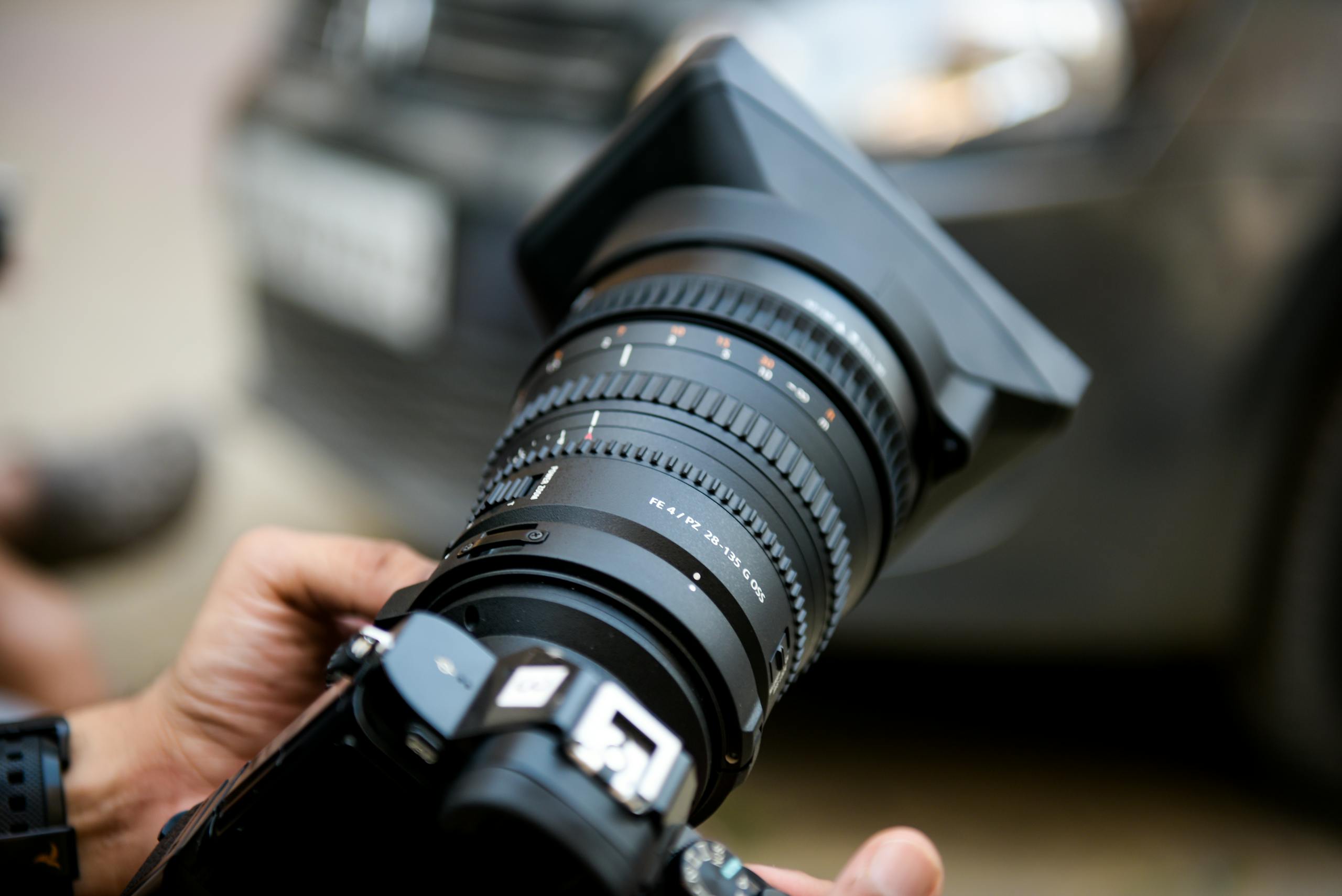

Portrait photography for introverts works because quiet observation captures what forced charisma never can. Introverts notice the slight tension in a jaw, the way someone’s shoulders drop when they relax, the unguarded moment between poses. That perceptive depth, the kind that comes from watching more than performing, produces portraits that feel genuinely alive rather than technically correct.
Most photography advice assumes the photographer is the loudest person in the room. Hype up your subject. Command the space. Project energy. For those of us wired differently, that advice lands like a costume that doesn’t fit. We put it on, feel ridiculous, and wonder why our results feel hollow.
What nobody tells you is that the best portrait photographers throughout history, from Yousuf Karsh to Dorothea Lange, were not performers. They were observers. They created conditions of stillness, not spectacle. That’s an introvert’s natural territory.
Early in my career at an advertising agency, I sat across from a senior creative director who barely spoke during a client shoot. He moved slowly, asked quiet questions, and waited. The client, a notoriously difficult executive, visibly softened. The resulting portraits were extraordinary. I filed that observation away for years before I understood exactly what I’d witnessed: an introvert using his wiring as a precision tool.

Our Introvert Strengths hub covers the full range of advantages that come with this personality type, and portrait photography sits squarely at the intersection of several of them: deep observation, patience, sensitivity to emotional atmosphere, and a preference for meaningful one-on-one connection over group performance.
Why Do Introverts Often Struggle With Portrait Photography at First?
Portrait photography puts two introverts in the same room and asks one of them to direct the other. That sentence alone explains most of the friction.
What’s your personality type?
Take our free 40-question assessment and get a detailed personality profile with dimension breakdowns, context analysis, and personalised insights.
Discover Your Type8-12 minutes · 40 questions · Free
The subject feels exposed and self-conscious. The photographer feels pressure to perform, to fill silence, to generate artificial energy. Both people end up in a state that the American Psychological Association links to heightened stress arousal, which is the exact opposite of what produces a good portrait.
The conventional wisdom says photographers should be high-energy, constantly talking, directing with big gestures. That model works for some people. It actively sabotages others, particularly those whose natural communication style runs quieter and deeper.
A 2021 study published through the National Institutes of Health found that introverts process social information more deeply than extroverts, spending more cognitive resources on reading facial expressions, emotional cues, and interpersonal nuance. That’s not a liability in portrait work. That’s the whole job.
The struggle, in my experience, comes from trying to perform extroversion instead of leaning into what actually makes introverted photographers exceptional. Spend an hour trying to be someone you’re not, and you’ll exhaust yourself before the session ends. Spend that same hour being fully present and observant, and you’ll produce work that surprises even your most skeptical subjects.
What Makes Quiet Observation Such a Powerful Photographic Tool?
Observation is not passive. Anyone who’s spent time genuinely watching people understands that active observation requires more concentration than most conversations demand.
Introverts tend to watch before they act. They absorb context, read the room, and form impressions before speaking. In a portrait session, that instinct translates directly into anticipating moments rather than manufacturing them.
Consider what actually separates a memorable portrait from a forgettable one. It’s almost never technical perfection. It’s the quality of presence in the subject’s eyes. The slight asymmetry of a genuine smile compared to a posed one. The way someone’s posture changes when they stop thinking about being photographed.
Those moments don’t happen on command. They happen in the spaces between commands, when the subject forgets to perform and simply exists. An observant photographer catches those windows. A performative photographer is usually too busy talking to notice them.
Psychology Today describes introversion as being associated with heightened sensitivity to environmental stimuli, which means introverted photographers often pick up on subtle shifts in lighting, mood, and body language that others miss entirely. That sensitivity, when channeled rather than suppressed, becomes a form of photographic intelligence.
Presence Over Performance
There’s a difference between filling a room with energy and filling a room with presence. Energy is loud and outward. Presence is focused and grounded. Subjects respond to both, but they respond to presence with something more valuable: trust.
A calm photographer communicates safety. A safe environment produces authentic expression. Authentic expression produces portraits worth printing.
That chain of cause and effect is exactly why quiet observation beats forced charisma in portrait work. Charisma can entertain a subject. Presence actually sees them.
How Can Introverts Prepare for a Portrait Session Without Burning Out?
Preparation is where introverts genuinely excel, and portrait photography rewards thorough preparation more than almost any other genre.
Before a session, spend time understanding your subject. Not just their face or the technical requirements of the shoot, but who they are. What do they care about? What makes them uncomfortable? What lights them up? A brief pre-session conversation, even a short email exchange, gives you material to draw on when you need to create a genuine moment during the shoot.
Managing your own energy matters as much as managing the session itself. A 2020 study from Mayo Clinic’s research division confirmed that social interaction drains energy at different rates depending on personality type, with introverts requiring more recovery time after sustained social engagement. Scheduling portrait sessions with buffer time before and after, rather than back-to-back, protects the quality of your presence.
I learned this the hard way during a stretch of client work where I scheduled three brand portrait sessions in a single day. By the third session, I was technically present but emotionally depleted. The photos showed it. The subjects could feel something was off, even if they couldn’t name it. Now I treat recovery time as a non-negotiable part of my shooting schedule.
Building a Pre-Session Ritual
A consistent ritual before portrait sessions serves two purposes. It prepares your technical setup so you’re not problem-solving during the shoot. And it settles your nervous system so you arrive as your best observational self rather than a slightly anxious version of someone trying to be someone else.
Some photographers spend twenty minutes in silence before a session. Others review reference images or notes about the subject. The specific ritual matters less than having one. Consistency signals to your brain that it’s time to shift into observation mode.
What Techniques Work Best for Introverted Portrait Photographers?
Certain approaches in portrait photography align naturally with how introverts operate. These aren’t workarounds or compensations. They’re methods that produce genuinely superior results precisely because they require the qualities introverts already possess.
The Long Pause Technique
After giving a direction or asking a question, stop talking and wait. Most photographers fill silence immediately because silence feels uncomfortable. Introverts, generally more at ease with quiet, can let silence do its work.
What silence does in a portrait session is remarkable. Subjects stop performing. They stop waiting for the next instruction and simply exist. Their expression settles into something more authentic. That’s your moment. Staying quiet long enough to catch it requires exactly the kind of patience that introverts naturally practice.
Conversation as Direction
Introverts tend to prefer meaningful conversation over small talk, and that preference produces better portraits. Asking a subject about something they genuinely care about, their work, a person they love, a place that matters to them, produces facial expressions that no pose can replicate.
During a corporate portrait session for a Fortune 500 client I worked with years ago, I watched a photographer ask the executive about the first company he’d ever built. Not the current one, the first one. The man’s face changed completely. Something opened. The resulting portrait ended up on the company’s annual report cover, and the executive told me later it was the only professional photo he’d ever liked of himself. The photographer had asked one good question and then listened.
Environmental Awareness
Introverts process environmental details with unusual depth. Use that. Notice how the light changes across a space during the hour you’re shooting. Notice which corner of the room puts your subject at ease versus which angle makes them stiffen. Notice the small details in the background that will either support or distract from the portrait.
This kind of environmental reading happens almost automatically for many introverts. Trusting it, rather than overriding it with a checklist of poses, produces portraits with a quality of place and mood that technically correct but observationally flat images simply cannot match.
Working in Shorter, Focused Sessions
A ninety-minute portrait session with genuine presence beats a three-hour marathon where both photographer and subject are running on fumes. Introverts who respect their own energy limits often produce more concentrated, intentional work in shorter windows.
Communicating this to clients as a feature rather than a limitation changes the dynamic entirely. “I work in focused ninety-minute sessions because I’ve found subjects stay most authentic in that window” is not an apology. It’s a professional philosophy backed by real results.
How Do You Handle the Social Demands of Working With Portrait Subjects?
The social dimension of portrait photography is real, and pretending it isn’t doesn’t help. Spending an hour in close, emotionally attentive interaction with another person requires social energy, and introverts have a finite supply of it.
What helps is reframing the nature of the interaction. Portrait photography is not a performance you give for your subject. It’s a focused collaboration where your job is to observe and respond, not to entertain. That reframe reduces the social load considerably.
Having a clear session structure also helps. Knowing that you’ll spend the first ten minutes in light conversation while you adjust lighting, then move into the shoot itself, then close with a brief review, gives you a framework that prevents the session from feeling like an open-ended social obligation. Structure is an introvert’s friend in high-interaction situations.
The Harvard Business Review has written extensively about how introverts’ natural listening orientation produces stronger outcomes in one-on-one interactions than extroverts’ tendency toward broadcasting. Portrait photography is fundamentally a one-on-one interaction. The research supports what many introverted photographers already sense: their approach is not a limitation to manage but an advantage to develop.
What Should Introverts Know About the Business Side of Portrait Photography?
Building a portrait photography practice involves more than the shooting itself. Marketing, client communication, and business development all carry social weight. Introverts who acknowledge this honestly tend to build more sustainable practices than those who ignore it until they burn out.
Written communication is an introvert’s natural medium. Crafting thoughtful emails, detailed client questionnaires, and clear session guides plays to strengths that extroverts often underinvest in. Many portrait photographers who identify as introverts report that their clients specifically cite communication quality as a differentiator, not just the images themselves.
Referral-based business development suits introverts particularly well. Rather than networking broadly and shallowly, building deep relationships with a smaller number of clients who become genuine advocates produces steadier growth with less social overhead. One client who genuinely loves your work and tells ten people is worth more than fifty acquaintances who vaguely remember your name.
The NIH’s research on personality and workplace performance suggests that introverts consistently outperform extroverts in tasks requiring sustained concentration and careful attention to detail, two qualities that define excellent portrait post-processing. The editing phase of portrait work, where you make the final decisions about what to keep, how to retouch, and what to present, rewards exactly the kind of careful, deliberate attention that introverts bring naturally.
How Can Introverts Build Confidence Behind the Camera Over Time?
Confidence in portrait photography builds the same way it builds in any skill: through accumulated evidence that your approach works. The challenge for introverts is that the conventional benchmarks of photographic confidence, commanding a room, directing loudly, projecting charisma, are the wrong benchmarks entirely.
Measure your progress by the quality of authentic moments you capture. Count the number of times a subject says something like “I didn’t expect to enjoy this” or “that’s actually me.” Track how quickly subjects relax in your presence. Those are the real indicators of portrait photography skill, and they’re indicators that introverted photographers tend to hit faster than their more performative counterparts.
Practice in low-stakes environments first. Photograph friends, family members, colleagues who know you. Not to produce portfolio work necessarily, but to develop the muscle memory of staying present and observant while someone else is in front of your lens. Comfort with the interpersonal dynamic of portrait work comes from repetition, and repetition is easier to accumulate when the stakes are low.
One thing that shifted my own approach to high-stakes work was stopping trying to hide my quietness and starting to explain it briefly. Telling a subject at the start of a session, “I work quietly and I might pause for a while without saying anything. That’s not awkward, that’s me seeing something worth waiting for” changed the entire dynamic. Subjects stopped interpreting my silence as discomfort and started reading it as focus. Which is exactly what it was.
Explore more resources on introvert strengths and self-understanding in our complete Introvert Strengths Hub.
About the Author
Keith Lacy is an introvert who’s learned to embrace his true self later in life. After 20 years in advertising and marketing leadership, including running agencies and managing Fortune 500 accounts, Keith now channels his experience into helping fellow introverts understand their strengths and build fulfilling careers. As an INTJ, he brings analytical depth and authentic perspective to every article, drawing from both professional expertise and personal growth.
Frequently Asked Questions
Can introverts be good portrait photographers?
Introverts often make exceptional portrait photographers. Their natural depth of observation, patience, and sensitivity to emotional nuance allows them to capture authentic expressions that more performative approaches miss. The quiet attentiveness that characterizes introversion is a direct asset in portrait work, not a limitation to overcome.
How do introverted photographers manage the social demands of portrait sessions?
Managing social energy in portrait work comes down to preparation, structure, and honest scheduling. Building in recovery time between sessions, using a consistent pre-session ritual, and framing the interaction as focused collaboration rather than performance all reduce the social load. Shorter, more concentrated sessions also preserve the quality of presence that makes introvert photographers effective.
What portrait photography techniques suit introverts best?
Several techniques align naturally with introvert strengths. The long pause technique, where the photographer stops talking and waits for authentic expression, leverages comfort with silence. Asking subjects meaningful questions rather than giving constant direction produces genuine facial expressions. Deep environmental awareness helps introverts find the light, angle, and moment that extroverts might overlook while focused on performing.
How do introverts handle portrait subjects who expect high-energy direction?
A brief explanation at the start of a session often resolves this. Telling subjects that you work quietly and that silence means focus rather than discomfort reframes the dynamic before it becomes awkward. Most subjects, particularly those who are themselves introverted or camera-shy, respond with relief. They were dreading the high-energy performance too. A calm, present photographer creates safety, and safety produces better portraits than energy ever does.
Is portrait photography a good career choice for introverts?
Portrait photography suits introverts well, particularly those who prefer one-on-one interaction over group settings. The work involves deep individual connection rather than crowd management, rewards careful observation and patience, and includes substantial solo time in editing and post-processing. Building a referral-based practice rather than broad networking allows introverts to grow their business in ways that align with their natural communication style.