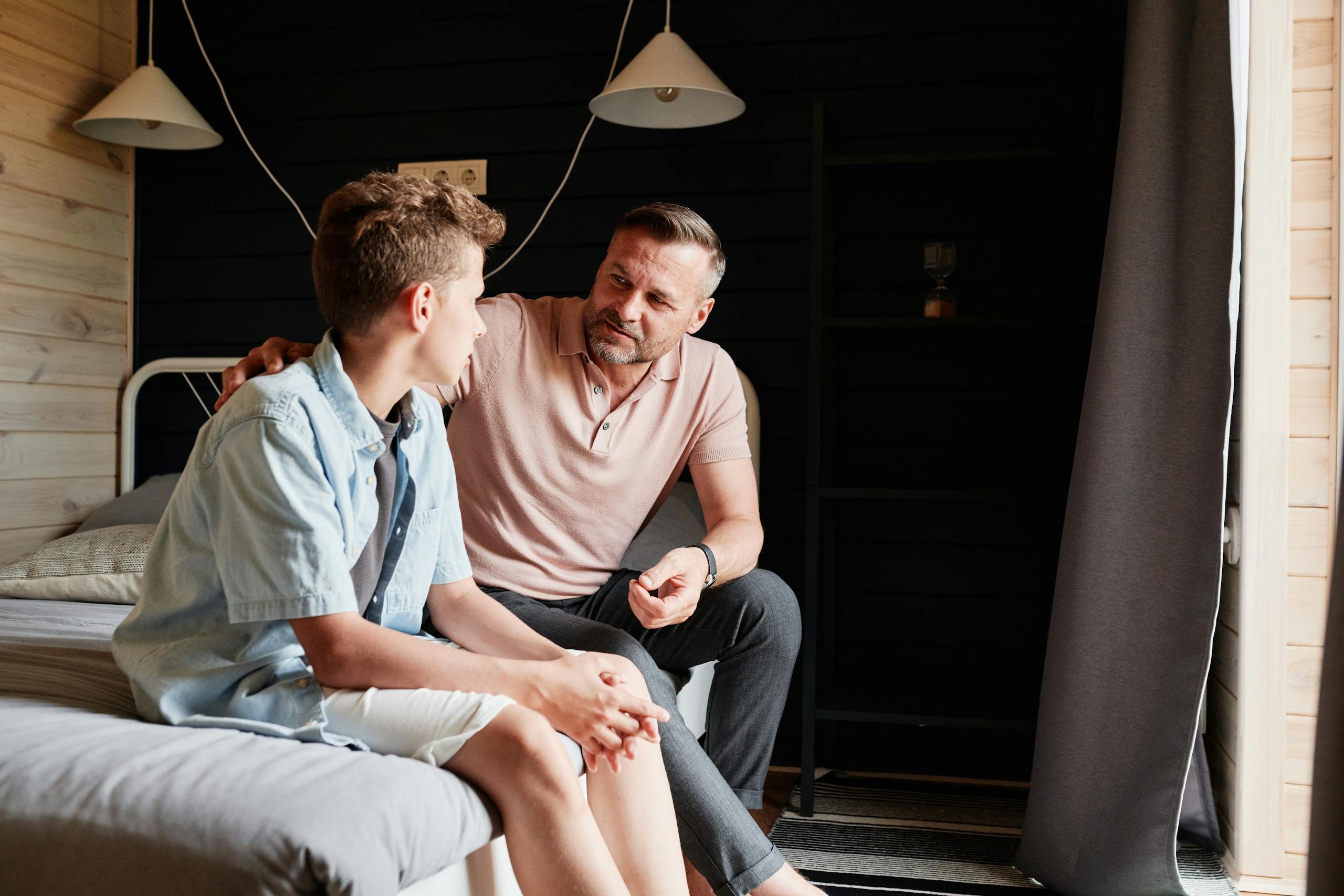

Children’s attachment styles form through the ongoing quality of care, emotional responsiveness, and safety they experience with their earliest caregivers. While genetics and temperament play supporting roles, the primary causes are relational: how consistently a child’s emotional needs are met, whether distress is soothed or ignored, and whether the people they depend on feel safe or unpredictable. These early patterns don’t lock a person into a fixed emotional destiny, but they do shape the internal blueprint that quietly influences how we connect, love, and trust throughout life.
Something I’ve come to understand about myself, slowly and sometimes uncomfortably, is that my own early experiences left fingerprints on the way I showed up in relationships long before I had words for any of it. As an INTJ, I’m wired to analyze systems and patterns. But it took me years to turn that analytical lens on myself and recognize that some of my distance in relationships wasn’t just introversion. It was something older than that.

Much of what we explore in our Introvert Dating and Attraction hub connects back to this foundational layer. How introverts love, why they pull back, what makes them feel safe enough to open up, so much of that traces to attachment patterns formed in childhood. Understanding where those patterns come from is one of the most clarifying things a person can do for their relationships as an adult.
What Is Attachment Theory, and Why Does Early Childhood Matter So Much?
Attachment theory, developed by John Bowlby and later expanded by Mary Ainsworth, describes the deep emotional bond that forms between a child and their primary caregiver. That bond isn’t a luxury. It’s a biological necessity. Children are born completely dependent, and their nervous systems are designed to seek proximity to a safe adult as a survival strategy. When that adult is consistently available and responsive, the child develops what researchers call a secure base, an internal sense that the world is manageable and that other people can be trusted.
What’s your personality type?
Take our free 40-question assessment and get a detailed personality profile with dimension breakdowns, context analysis, and personalised insights.
Discover Your Type8-12 minutes · 40 questions · Free
Ainsworth’s landmark “Strange Situation” experiments in the 1970s revealed that children respond to brief separations from their caregivers in distinct patterns. Some children were distressed when separated but quickly soothed upon reunion. Others seemed indifferent, suppressing visible distress even when their physiological arousal told a different story. Still others were difficult to soothe, oscillating between reaching for comfort and pushing it away. These patterns mapped onto what we now call secure, dismissive-avoidant, and anxious-preoccupied attachment styles, with a fourth category, fearful-avoidant or disorganized, identified later by Mary Main.
What matters here is that these aren’t personality types in the way MBTI describes personality. They’re adaptive strategies. A child who learns that caregivers are unpredictable doesn’t choose anxiety. Their nervous system adapts to the environment it’s in. That distinction matters enormously when we try to understand where these patterns come from and, critically, whether they can change.
How Does Caregiver Responsiveness Shape a Child’s Attachment?
Caregiver responsiveness is the single most documented factor in shaping a child’s attachment style. Responsiveness doesn’t mean perfection. No caregiver responds correctly every time, and repair after misattunement is actually a healthy and important part of the process. What matters is the overall pattern: Does this caregiver notice my distress? Do they respond in a way that helps? Can I count on them to show up?
When caregivers are consistently warm, attuned, and available, children tend to develop secure attachment. They learn that expressing needs is safe, that comfort is accessible, and that relationships are fundamentally reliable. This doesn’t mean those children grow up without relationship challenges. Securely attached people still experience conflict, hurt, and disconnection. They simply have better internal resources for working through difficulty rather than being overwhelmed or shut down by it.
When caregivers are consistently emotionally unavailable, dismissive of distress, or subtly punishing of emotional expression, children often develop dismissive-avoidant attachment. They learn to suppress emotional needs because expressing them doesn’t work and may even create distance. It’s a deeply intelligent adaptation. The child essentially learns to self-regulate by deactivating their attachment system. But the feelings don’t disappear. Physiological studies have consistently shown that dismissive-avoidant individuals experience internal emotional arousal even when they appear calm and detached. The suppression is real. The emotion underneath it is also real.

When caregivers are inconsistent, sometimes warm and sometimes cold, sometimes present and sometimes unavailable, children often develop anxious-preoccupied attachment. The unpredictability makes it impossible to know when comfort will be available, so the child’s attachment system stays perpetually activated. They become hypervigilant to signs of rejection or abandonment, not because they’re weak or “clingy” by nature, but because their nervous system has learned that the window for connection is narrow and can close without warning. That’s a genuine fear response, not a character flaw.
Fearful-avoidant or disorganized attachment tends to emerge in environments where the caregiver is simultaneously the source of comfort and the source of fear. This is most associated with caregiving that includes abuse, severe neglect, or a parent who is themselves in an unresolved trauma state. The child faces an impossible biological conflict: the person I need to run toward for safety is also the person I need to run away from. That conflict, when chronic, produces the disorganized patterns that can make adult relationships feel particularly complicated.
What Role Does Early Trauma Play in Attachment Development?
Trauma is one of the most significant contributors to insecure attachment in childhood, and it operates through multiple pathways. Direct trauma, such as abuse, neglect, or witnessing domestic violence, disrupts the child’s developing sense of safety in ways that ripple through their attachment system. But trauma doesn’t have to be dramatic to be formative. Chronic emotional neglect, a caregiver’s untreated depression, repeated experiences of having emotions dismissed or ridiculed, these can shape attachment just as powerfully as more visible forms of harm.
The American Psychological Association’s resources on trauma make clear that childhood trauma affects not just emotional development but neurological development as well. The brain structures involved in emotional regulation, stress response, and social connection are actively forming during early childhood. Chronic stress in that period can alter how those systems develop, which is part of why early relational experiences have such lasting influence.
I’ve worked with enough people over the years, and done enough of my own work, to know that trauma doesn’t always look like what we expect. Some of the most high-functioning people I’ve ever met, successful executives, brilliant creatives, people who seemed to have everything together, were quietly running on attachment wounds they’d never named. I managed a creative director at one of my agencies who was extraordinarily talented but completely unable to receive feedback without shutting down or disappearing for days. It took me a long time to understand that what I was watching wasn’t professional immaturity. It was a trauma response dressed in professional clothing.
Understanding the neurobiological dimensions of early attachment, as detailed in peer-reviewed research, helps explain why these patterns can feel so automatic and so difficult to shift through willpower alone. They’re not just beliefs or habits. They’re encoded in the nervous system.
Does a Child’s Temperament Influence Their Attachment Style?
Temperament does play a role, though it’s a supporting role rather than the lead. Some children are born with a more reactive nervous system, higher sensitivity to stimulation, stronger emotional responses. Others are naturally more easygoing and adaptable. These differences can influence how a child experiences caregiving and how their attachment system develops, but temperament alone doesn’t determine attachment style.
A highly sensitive child with a responsive, attuned caregiver can absolutely develop secure attachment. A more easygoing child with a neglectful caregiver is still at risk for insecure attachment. The relationship is what shapes the pattern, not the child’s baseline wiring. That said, temperament can influence how challenging it is for caregivers to respond consistently, and caregivers who struggle to attune to a highly reactive child may inadvertently create conditions for anxious attachment without any harmful intent.
The National Institutes of Health has documented how infant temperament can predict certain personality traits in adulthood, including introversion. But it’s worth being precise here: introversion and avoidant attachment are not the same thing. An introvert may be completely securely attached, comfortable with both deep intimacy and meaningful solitude. Avoidant attachment is about emotional defense and the suppression of relational needs, not about energy preferences or the need for quiet. Conflating the two does a disservice to both introverts and to people genuinely working through attachment challenges.

As an INTJ, I’ve had to be particularly careful about this distinction in my own life. My natural preference for solitude, my tendency to process internally rather than reaching out, these things are genuinely part of how I’m wired. But there were years when I used “I’m just an introvert” as cover for something that was actually about fear of vulnerability. Untangling those two threads was uncomfortable and necessary.
How Do Family Dynamics and Parenting Patterns Transmit Across Generations?
One of the most striking findings in attachment research is that attachment patterns tend to transmit across generations. Parents who have processed and made sense of their own attachment histories, even difficult ones, are more likely to raise securely attached children. Parents who haven’t processed their own histories, regardless of whether those histories were painful or seemingly unremarkable, are more likely to pass insecure patterns to their children, not through intention but through the subtle ways that unresolved material shapes moment-to-moment caregiving.
This is why family dynamics matter so much when examining the roots of attachment. It’s rarely about one dramatic moment or one clearly “bad” parent. It’s about the accumulated texture of thousands of small interactions: how emotions were talked about or avoided, whether vulnerability was welcomed or punished, how conflict was handled, whether repair happened after rupture.
I think about my own family of origin with a mix of clarity and compassion that took years to develop. My parents weren’t emotionally expressive people. Feelings were managed privately, not discussed openly. As a child, I absorbed the message that needing things from other people was a kind of weakness. That message shaped how I showed up in my early professional relationships, in my personal relationships, and in the way I led teams for the first decade of my career. I was competent, reliable, and emotionally distant in ways I didn’t even recognize until much later.
Understanding how complex family structures add additional layers to attachment development is also worth noting. Blended families, single-parent households, families with frequent disruption or instability, these contexts don’t automatically produce insecure attachment, but they do create conditions where consistent, responsive caregiving requires more intentional effort. The presence of even one stable, attuned adult in a child’s life can be enormously protective.
How Do Attachment Patterns Show Up in Adult Relationships?
The attachment patterns formed in childhood don’t stay in childhood. They travel with us into every significant relationship we form as adults, showing up in how we handle conflict, how much closeness feels comfortable, how we respond when a partner pulls away or gets too close, and what we do with our own emotional needs.
For introverts especially, this can get complicated. The patterns we explore in how introverts fall in love and form relationship patterns often intersect with attachment in ways that aren’t immediately obvious. An introvert who needs significant alone time might be genuinely honoring their energy needs, or they might be using solitude as a way to avoid the vulnerability of closeness. Often it’s both, layered together in ways that require honest self-examination to sort out.
Anxiously attached adults tend to experience what researchers describe as a hyperactivated attachment system. In practical terms, this means they’re more attuned to signs of rejection, more likely to interpret ambiguity as a threat, and more likely to seek reassurance in ways that can inadvertently push partners away. This isn’t neediness as a character trait. It’s a nervous system doing exactly what it learned to do in order to maintain connection in an unreliable environment.
Dismissively avoidant adults often present as highly self-sufficient, uncomfortable with emotional dependence, and prone to minimizing the importance of close relationships. They may genuinely believe they don’t need much from others. But the internal experience, when studied carefully, often tells a different story. The feelings are there. The defenses are simply very effective at keeping them out of conscious awareness.
People with fearful-avoidant patterns often find themselves caught between a deep desire for intimacy and an equally deep fear of it. They want closeness and they’re terrified of it simultaneously. This can produce relationship patterns that feel chaotic from the outside, and exhausting from the inside. Understanding the complexity of love feelings for introverts becomes even more nuanced when fearful-avoidant patterns are part of the picture.

Can Attachment Styles Change, and What Makes That Possible?
One of the most important things to understand about attachment is that it’s not fixed. Childhood patterns have genuine continuity into adulthood, but they’re not a life sentence. Attachment orientations can and do shift through several pathways, and the concept of “earned secure” attachment is well-documented in the research. People who grew up with insecure attachment can develop secure functioning as adults through meaningful corrective experiences.
Therapy is one of the most reliable pathways for this kind of shift. Approaches like Emotionally Focused Therapy, schema therapy, and EMDR have strong track records for helping people work through attachment-related patterns. What these approaches share is an attention to the relational and experiential dimensions of healing, not just cognitive insight but felt experience of something different.
Relationships themselves can also be corrective. A partner who is consistently patient, honest, and emotionally available can gradually shift the internal working models of someone who grew up expecting inconsistency or rejection. This doesn’t happen quickly, and it requires the insecurely attached person to be willing to take small risks toward vulnerability. But it happens. Many couples with anxious-avoidant dynamics, which can feel particularly charged, develop secure functioning over time when both partners bring awareness and genuine commitment to the work.
Highly sensitive people often have a particular relationship with attachment, given how deeply they process emotional experience. The complete guide to HSP relationships touches on how sensitivity intersects with attachment in ways that can amplify both the rewards and the challenges of close connection. And when conflict arises, which it always does in any real relationship, understanding how HSPs can work through disagreements peacefully becomes especially relevant for people whose nervous systems are already primed for intensity.
The neuroplasticity research available through PubMed Central supports the idea that relational experiences continue to shape the brain throughout adulthood. The patterns are not hardwired. They’re deeply grooved, which is different. Deep grooves require consistent new experiences to reshape, not a single revelation or a few months of effort. But they do respond to that kind of sustained, intentional work.
What Does This Mean for Introverts Trying to Build Secure Relationships?
For introverts, understanding attachment adds an important layer of self-awareness to an already reflective personality. Many introverts are naturally inclined toward depth in relationships, toward the kind of genuine knowing that takes time and trust to develop. That inclination is a real strength. But it can also mean that the stakes feel higher, that vulnerability feels more exposed, and that the cost of relational disappointment cuts deeper.
Knowing your attachment patterns, even roughly, can help you distinguish between what’s genuinely introvert-specific and what’s attachment-driven. Needing alone time to recharge is introversion. Consistently avoiding emotional conversations because they feel threatening is more likely attachment. Preferring a small circle of close friends is introversion. Keeping everyone at arm’s length because closeness has historically felt dangerous is attachment. The overlap is real, but the distinction matters for growth.
The way introverts express love is also shaped by these patterns. Understanding how introverts show affection through their love language can be illuminating precisely because introverts often express care through action, attention, and presence rather than verbal declaration. For someone with a secure attachment, this lands beautifully. For someone with an anxious attachment style, it can feel like ambiguity, like not quite enough. Knowing this helps both partners calibrate.
When two introverts are in a relationship together, attachment dynamics can create particularly interesting patterns. The relationship patterns that emerge when two introverts fall in love include both the gift of mutual understanding and the risk of two people retreating into their own internal worlds when the relationship needs engagement. Attachment awareness helps couples recognize when parallel solitude is healthy and when it’s avoidance dressed up as compatibility.

What I’ve come to believe, from my own experience and from years of observing how people connect and disconnect, is that understanding where your patterns come from doesn’t excuse you from the work of changing them. But it does make that work feel less like a character indictment and more like a map. You didn’t choose the terrain of your early childhood. You do get to choose what you do with what it gave you.
There’s more to explore across our full Introvert Dating and Attraction hub, where we look at how introverts approach love, connection, and the particular challenges and gifts that come with being wired for depth in a world that often rewards surface.
About the Author
Keith Lacy is an introvert who’s learned to embrace his true self later in life. After 20 years in advertising and marketing leadership, including running agencies and managing Fortune 500 accounts, Keith now channels his experience into helping fellow introverts understand their strengths and build fulfilling careers. As an INTJ, he brings analytical depth and authentic perspective to every article, drawing from both professional expertise and personal growth.
Frequently Asked Questions
What are the main causes of insecure attachment in children?
The primary causes are relational: inconsistent or emotionally unavailable caregiving, chronic misattunement, early trauma including abuse or neglect, and caregivers who are themselves unresolved in their own attachment histories. Temperament and environmental stressors can amplify these effects, but the quality of the caregiving relationship is the central factor. Children don’t develop insecure attachment because of a single bad experience. It forms through repeated patterns of interaction over time.
Can a child’s attachment style change as they grow up?
Yes. Attachment styles are not fixed at childhood. While early patterns have real continuity, significant life experiences, stable relationships with attuned adults, and therapeutic work can all shift a person’s attachment orientation. The concept of “earned secure” attachment is well-documented: people who experienced insecure early attachment can develop secure functioning in adulthood through corrective relational experiences and intentional growth. The patterns are deeply grooved, but they do respond to sustained new experience.
Is introversion the same as avoidant attachment?
No. These are independent constructs that are frequently confused. Introversion describes an energy preference, specifically the tendency to recharge through solitude and prefer depth over breadth in social connection. Avoidant attachment describes an emotional defense strategy in which a person suppresses relational needs because expressing them has historically been unsafe or ineffective. An introvert can be completely securely attached, comfortable with both meaningful closeness and meaningful solitude. Avoidant attachment is about emotional defense, not energy preference.
How does childhood attachment affect adult romantic relationships?
Childhood attachment patterns form internal working models, essentially templates for how relationships work, that travel into adult romantic relationships. They influence how much closeness feels comfortable, how conflict is handled, how a person responds to perceived rejection, and how they express and receive emotional needs. Securely attached adults tend to handle relational challenges with more flexibility. Anxiously attached adults may experience heightened fear of abandonment. Dismissively avoidant adults may struggle with emotional intimacy. Fearful-avoidant adults often feel caught between wanting connection and fearing it. All of these patterns can shift with awareness and effort.
What can parents do to support secure attachment in their children?
Consistent emotional responsiveness is the foundation. This doesn’t require perfect parenting. It requires showing up reliably, acknowledging a child’s emotional experience rather than dismissing it, repairing after moments of misattunement, and creating an environment where the child’s needs feel safe to express. Parents who do their own emotional work, including processing their own attachment histories, are better positioned to offer this kind of attuned caregiving. Seeking support through therapy or parenting resources is a strength, not a weakness, in this context.