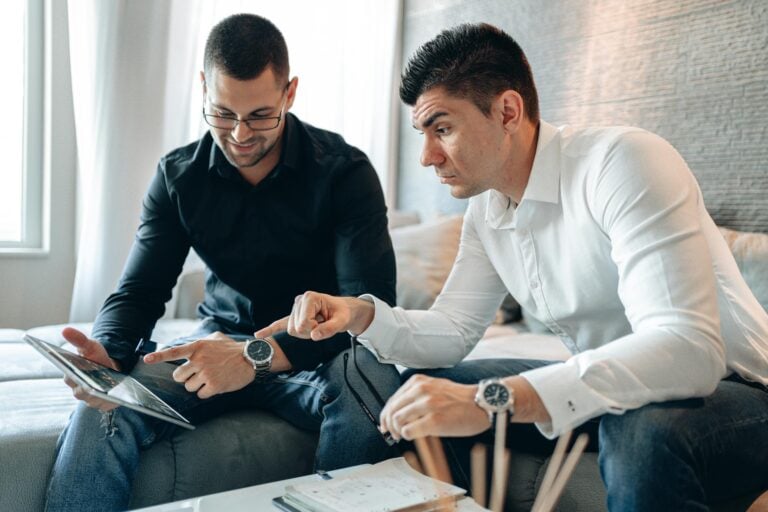
Power poses body language refers to expansive, open physical postures, like standing with feet wide apart and hands on hips, that are believed to signal confidence and influence how others perceive you in high-stakes situations. For introverts especially, understanding how posture and nonverbal cues interact with our natural communication style can shift the entire dynamic of a presentation, a job interview, or a difficult client conversation.
There’s genuine debate in psychology about what power poses actually do, and I want to be honest about that upfront. What I can tell you is what I’ve observed across two decades running advertising agencies, managing teams, and pitching Fortune 500 clients. Body language matters, the science on the edges is still being worked out, and introverts have a unique relationship with all of it.

Body language is just one layer of how introverts show up socially. If you want the broader picture, our Introvert Social Skills and Human Behavior hub covers everything from reading emotional cues to building authentic connections, and it’s a good place to start if this topic resonates with you.
What Are Power Poses and Where Did the Idea Come From?
Most people know the concept from a 2012 TED Talk that became one of the most-watched in the platform’s history. The central claim was that holding expansive postures for two minutes before a stressful event could change your hormonal state and make you perform better. The idea caught fire because it was simple, practical, and gave people a physical action they could take when confidence felt out of reach.
Career Coaching for Introverts
One-on-one career strategy sessions with Keith Lacy. 20 years of Fortune 500 leadership as an introvert, now helping others build careers that work with their wiring.
Learn More50-minute Zoom session · $175
The original research has since been challenged, replicated with mixed results, and debated at length in academic circles. According to PubMed Central’s research on behavioral and physiological responses, the relationship between posture and psychological state is genuinely complex, and single-study conclusions rarely hold up cleanly across populations. So I’m not going to tell you that standing in a superhero pose for two minutes will flood your bloodstream with confidence hormones. The evidence for that specific mechanism is shaky.
What holds up much better is this: how you hold your body affects how you feel, and how you feel affects how you communicate. That part isn’t controversial. It’s something every performer, athlete, and therapist has known for a long time.
Why Do Introverts Struggle With Body Language in the First Place?
There’s a physical pattern I’ve noticed in myself and in introverted colleagues over the years. We tend to make ourselves smaller. Crossed arms, rounded shoulders, eyes tracking downward during group conversations, a slight lean away from the center of the room. None of it is intentional. It’s what happens when your nervous system is quietly managing the energy cost of a social environment that doesn’t come naturally.
The American Psychological Association defines introversion as an orientation toward one’s inner world, with a preference for less stimulating environments. That preference has physical consequences. When an introvert walks into a loud, crowded, high-stakes room, the body responds to that stimulation the same way it responds to mild stress. Shoulders come up. Chest closes. Breathing gets shallow. None of that projects confidence, even when the person is genuinely competent and prepared.
I watched this play out constantly during my agency years. Some of the sharpest strategic thinkers I ever managed would walk into a client presentation physically braced for impact. They’d have done brilliant work. They’d have the answers. But the moment they stepped into the conference room, their posture told a completely different story than the one their work deserved.
Part of what makes this harder for introverts is that we tend to live so much in our heads. We’re processing, analyzing, second-guessing. Working on managing that inner overthinking loop is often what frees up the mental bandwidth to actually pay attention to how we’re physically showing up. When your mind is running at full capacity just managing internal commentary, there’s nothing left to notice that you’ve been standing with your arms locked across your chest for the past twenty minutes.
What Does Body Language Actually Signal to Other People?
Before we get into what to do with your body, it’s worth understanding what’s actually being communicated. Nonverbal signals operate on a different channel than words. People read them faster, trust them more instinctively, and remember them longer. A confident statement delivered with hunched posture and averted eyes lands very differently than the same statement delivered with an open chest and steady eye contact.
Harvard Health’s writing on social engagement for introverts touches on how physical presence affects the quality of connection, not just the impression of authority. People feel more at ease with someone who appears at ease themselves. This matters in leadership, in sales, in any situation where you need someone to trust you enough to follow your thinking.
The signals that register most strongly tend to be posture, eye contact, the orientation of your torso toward or away from the person you’re speaking with, and the pace and steadiness of your movement. Expansive postures, things like open arms, upright spine, feet planted solidly, tend to read as calm authority. Contracted postures read as uncertainty or discomfort, regardless of what’s actually being said.
One thing I’ve found genuinely useful, both personally and in coaching introverts on my teams, is paying attention to the torso specifically. You can maintain very quiet, still energy and still project presence if your chest is open and your shoulders are back. You don’t need to take up the whole room. You just need to stop collapsing inward.
Does the “Two Minutes Before” Approach Actually Work?
Here’s where I want to be honest about the limits of what we know. The original claim that holding an expansive pose for two minutes before a high-pressure situation measurably changes hormone levels and improves performance hasn’t been consistently replicated. That’s worth knowing, especially if you’ve built a pre-presentation ritual around it and wondered why the results felt inconsistent.
That said, published research on embodied cognition does support the broader idea that physical states influence psychological states. The body and mind aren’t separate systems sending messages to each other. They’re one integrated system, and the direction of influence runs both ways. How you hold yourself shapes how you feel, which shapes how you think, which shapes how you perform.
What seems to matter more than any specific pose is the practice of intentional physical awareness before a stressful event. Taking a few minutes to breathe deliberately, to stand or sit in a way that feels grounded rather than braced, to consciously drop the tension from your shoulders, these things work. Not because they trigger a hormonal cascade, but because they interrupt the automatic physical stress response and give you a moment to reset.
I started doing something like this before major pitches about ten years into running my agency. Not a pose, exactly. More like a deliberate pause in a quiet space, focused on breathing and physical grounding, before walking into a room. It wasn’t magic. But it helped me walk in with my chest open instead of my shoulders at my ears, and that made a real difference in how I started those conversations.

How Does MBTI Type Affect Your Relationship With Body Language?
Not all introverts experience body language challenges the same way, and MBTI type adds some interesting texture here. As an INTJ, my default mode in social situations is observational. I’m watching the room, reading dynamics, processing information. That internal focus means I can go long stretches without thinking about what my face is doing, or whether I’ve been standing with my arms crossed since the meeting started.
INFJs and INFPs on my teams tended to have a different pattern. They were often acutely aware of how other people were feeling, which meant they were reading body language constantly, but their own physical expression could become guarded as a form of emotional protection. ISFJs and ISTJs often had the most controlled, contained posture, which read as professional but could tip into unapproachable in informal settings.
If you’re not sure of your own type, our free MBTI personality test is a good starting point. Knowing your type helps you understand not just how you process information, but why certain social situations feel physically draining in ways that show up in your posture and presence.
The introverted thinking types, INTPs and ISTPs, often had the most genuinely relaxed physical presence in low-stakes situations, but could become visibly tense when asked to perform socially in ways that felt inauthentic. The body has a way of broadcasting what the mind is resisting.
Across all introverted types, the common thread is that body language tends to reflect internal state very honestly. Extroverts often have more practiced social performance, more automatic physical animation. Introverts tend to be more literal in how their bodies express what they’re actually experiencing. That’s not a weakness. It means when an introvert does project genuine confidence, it reads as very real.
What Specific Body Language Habits Make the Biggest Difference?
After watching hundreds of client presentations and managing teams through pitches, negotiations, and performance reviews, a few physical habits consistently separate people who project quiet authority from those who don’t.
Posture From the Ground Up
Confident physical presence starts with how your feet are planted. Feet roughly hip-width apart, weight distributed evenly, creates a physical foundation that actually changes how the rest of your body organizes itself. When you’re standing on a solid base, your spine tends to lengthen naturally. When you’re standing with feet together or weight shifted to one side, the whole structure above it becomes less stable, and that instability reads in your presence.
What to Do With Your Hands
Hands are where most people’s anxiety goes to live. Crossed arms, hands in pockets, fidgeting with a pen, gripping a notebook. The simplest approach is to keep your hands visible and relatively still. Hands resting on a table, or at your sides when standing, or used for deliberate, measured gestures when you’re making a point. success doesn’t mean perform expressiveness. It’s to stop the nervous habits that signal discomfort.
Eye Contact That Doesn’t Feel Like a Staring Contest
Many introverts find sustained eye contact genuinely uncomfortable, and there’s nothing wrong with that. What matters is that your gaze doesn’t consistently drop to the floor or the table when you’re making an important point. A useful approach is to make eye contact at the beginning and end of key statements, and during the moments when you want the other person to feel that you’re speaking directly to them. You don’t need to hold it throughout. You just need to use it intentionally.
The Pace of Your Movement
Anxiety speeds everything up. Fast walking, fast gesturing, quick head movements, all of it reads as nervous energy. Slowing down your physical pace, even slightly, creates an impression of calm authority that has nothing to do with how you’re actually feeling. I used to coach people on my team to physically slow down their entry into a room. Just that one change, walking in at a measured pace instead of rushing to find a seat, shifted how they were perceived before they’d said a single word.

How Does Body Language Connect to Authentic Introvert Confidence?
Here’s the tension I sat with for years: I didn’t want to perform confidence I didn’t feel. It seemed dishonest. And as an INTJ who values authenticity deeply, the idea of adopting physical postures as a kind of costume felt uncomfortable.
What shifted for me was understanding the difference between performing confidence and removing the physical signals of anxiety. Those aren’t the same thing. When I stand with my shoulders back and my chest open, I’m not pretending to be someone I’m not. I’m stopping my body from broadcasting stress that would distract from what I’m actually trying to communicate. The content, the thinking, the genuine perspective, that’s still entirely mine.
Psychology Today’s writing on the introvert advantage in leadership makes a related point: introverts often lead through the quality of their thinking and the depth of their listening, but those strengths get undermined when physical signals suggest they don’t want to be in the room. Addressing body language isn’t about becoming extroverted. It’s about making sure your physical presence doesn’t contradict the genuine authority you’ve earned.
Working on meditation and self-awareness has been one of the most practical things I’ve done for my body language, which surprised me. The connection is direct: when you develop the habit of noticing your internal state without immediately reacting to it, you get better at catching the moment your shoulders start to rise or your breathing gets shallow, and you can make a different choice. Awareness always comes before change.
Can You Become a Better Communicator Without Becoming Someone Else?
Yes. And this is the part I want to spend a moment on, because I think it’s the real question underneath all the interest in power poses and body language techniques. Introverts often approach communication skills with a quiet fear that improving them means becoming more extroverted, more performative, less themselves.
Working on improving social skills as an introvert doesn’t require any of that. What it requires is understanding which specific habits are working against you, and replacing them with habits that let your actual strengths come through more clearly. Body language is a big part of that, because it operates before you’ve said anything. Your physical presence either opens a conversation or closes it before it starts.
The same is true of conversation itself. Becoming a better conversationalist as an introvert isn’t about talking more. It’s about using the depth and attentiveness you already have more visibly, and pairing it with physical presence that signals you’re engaged rather than checked out.
I’ve watched introverts become genuinely magnetic communicators without ever becoming loud or performative. The ones who got there did it by working on specific, concrete habits, not by trying to rewire their personality. Body language was always part of that work, and it was almost always the first thing that changed visibly to others.
What About Reading Other People’s Body Language as an Introvert?
There’s a side of this conversation that often gets overlooked: introverts tend to be quite good at reading body language, even if they struggle to manage their own. The same internal orientation that makes social performance tiring also makes observation sharp. Many introverts I’ve known, and this was true of me in client meetings, can read a room’s emotional temperature with considerable accuracy.
That skill is genuinely valuable. Research on nonverbal communication and social cognition consistently shows that accurate reading of others’ emotional states is foundational to effective interpersonal functioning. Introverts who’ve developed this capacity often have a real edge in negotiation, in client relationships, and in managing teams, because they’re picking up information that others miss.
The challenge is that this skill can tip into hypervigilance, especially in emotionally charged situations. I’ve had team members who were so attuned to reading the room that they’d interpret a client’s distracted expression as disapproval and spend the rest of the meeting trying to recover from something that hadn’t actually happened. That kind of overthinking spiral is worth addressing directly. It’s one reason I think building emotional intelligence as a conscious practice matters so much for introverts, not just as a soft skill but as a way of calibrating the signal-to-noise ratio in what you’re reading.
There’s also a specific pattern worth naming: introverts who’ve been through emotionally difficult experiences, including betrayals in professional or personal relationships, can develop a kind of hyperalertness in reading others that becomes exhausting. If you’ve ever found yourself stuck in an overthinking loop after a significant betrayal, you’ll recognize how that pattern bleeds into how you read body language in everyday situations, looking for threat signals that often aren’t there.

Building a Sustainable Body Language Practice
One thing I’ve learned about working on physical habits is that they don’t change through willpower in the moment. They change through consistent practice in low-stakes situations until they become automatic. Trying to overhaul your posture and eye contact in the middle of a high-pressure pitch is nearly impossible. Your nervous system will revert to its defaults.
What actually works is building the habits in ordinary contexts first. Practicing an open, upright posture at your desk. Making deliberate eye contact in casual conversations. Slowing down your physical pace during routine interactions. Healthline’s writing on introversion and social anxiety is useful here because it helps distinguish between introversion as a trait and anxiety as a condition that can amplify physical stress responses. Both are worth addressing, but they respond to different approaches.
A few things that have been consistently useful in my own practice and in working with introverts over the years:
Notice your default. Spend a week simply observing your own physical habits in different contexts. What does your posture do in a one-on-one conversation versus a group meeting? What happens to your hands when you’re uncomfortable? Where does tension live in your body? You can’t change what you haven’t noticed.
Pick one thing at a time. Trying to fix posture, eye contact, hand placement, and facial expression simultaneously is a recipe for self-consciousness that makes everything worse. Pick the one habit that’s doing the most damage to your presence and work on that exclusively for a few weeks.
Use physical anchors before high-stakes moments. Not a power pose necessarily, but something deliberate. A few slow breaths, a conscious drop of the shoulders, a moment of physical grounding before you walk into the room. These small rituals work because they interrupt the automatic stress response, not because they trigger any particular hormonal change.
Record yourself occasionally. This is uncomfortable, but it’s the fastest way to see the gap between how you think you’re coming across and how you actually appear. I started doing this with pitch rehearsals at my agency, and the first time I watched myself on video I understood immediately why certain clients seemed uncertain even when my arguments were solid. My body was telling a different story than my words.
Give yourself credit for genuine strengths. Introverts often have steadier, less reactive physical presence than extroverts in genuinely difficult conversations. We don’t tend toward the aggressive posturing or the performative enthusiasm that can read as inauthentic. When we do project confidence, it tends to be quiet and credible. That’s worth building on rather than replacing.
If you’ve found this exploration of body language and nonverbal communication useful, there’s much more to explore in our full Introvert Social Skills and Human Behavior hub, covering everything from reading emotional cues to building deeper connections on your own terms.
About the Author
Keith Lacy is an introvert who’s learned to embrace his true self later in life. After 20 years in advertising and marketing leadership, including running agencies and managing Fortune 500 accounts, Keith now channels his experience into helping fellow introverts understand their strengths and build fulfilling careers. As an INTJ, he brings analytical depth and authentic perspective to every article, drawing from both professional expertise and personal growth.
Frequently Asked Questions
Do power poses actually work for introverts?
The specific claim that holding an expansive pose for two minutes changes hormone levels hasn’t been consistently supported by follow-up research. What does hold up is that intentional physical awareness before a stressful event, including deliberate breathing, grounded posture, and consciously releasing tension, can interrupt the automatic stress response and help you enter a high-stakes situation with more physical presence. For introverts especially, this kind of pre-event reset can make a meaningful difference in how you’re perceived before you’ve said a word.
Why do introverts tend to have closed body language?
Introverts are wired to find highly stimulating social environments more taxing than extroverts do. When the nervous system is managing that stimulation cost, the body tends to respond with protective postures: crossed arms, rounded shoulders, reduced eye contact, a physical drawing inward. This isn’t a character flaw or a lack of confidence. It’s an automatic response to overstimulation. Becoming aware of this pattern is the first step toward choosing a different physical response in situations where presence matters.
Can introverts project confidence without being performative?
Yes, and this distinction matters a great deal. Projecting confidence doesn’t mean performing extroversion. It means removing the physical signals of anxiety that contradict the genuine authority you’ve earned. An open chest, steady eye contact, grounded posture, and measured movement all communicate calm competence without requiring any performance. Introverts who project quiet authority are often perceived as more credible than those who perform enthusiasm, because the physical signals read as authentic rather than rehearsed.
How does MBTI type affect body language tendencies?
Different introverted types tend to have distinct physical patterns. INTJs and INTPs often have observational, contained postures that can read as detached. INFJs and INFPs may hold physically guarded postures as emotional protection. ISFJs and ISTJs often have controlled, formal physical presence that can tip into unapproachable in informal settings. Understanding your type helps you identify which specific habits are most likely to undermine your presence, and where your natural strengths in nonverbal communication already lie.
What’s the most effective way to improve body language as an introvert?
Change one habit at a time, and practice it in low-stakes situations before high-stakes ones. Your nervous system defaults to established patterns under pressure, so the only way to change how you show up in a big meeting or a difficult conversation is to build the new habit until it’s automatic in ordinary contexts. Start by noticing your current defaults without judgment. Then pick the single habit that’s doing the most damage to your presence, whether that’s posture, eye contact, hand placement, or pace of movement, and work on that one thing consistently for a few weeks before adding anything else.