
Proper meditation posture is the physical foundation that allows your mind to settle without distraction. When your body is aligned, comfortable, and stable, your nervous system can shift into the calm, focused state that makes meditation genuinely effective rather than a frustrating exercise in fidgeting.
Most people assume posture is just about sitting up straight. It’s more nuanced than that, especially if you’re someone whose mind runs deep and whose body holds tension in specific, predictable places. Getting this right changes everything about what happens once you close your eyes.
Meditation posture came up as part of a broader conversation I’ve been having with myself about what it actually means to care for an introverted mind. If you want to go deeper on that, our Introvert Mental Health Hub covers the full range of mental wellness topics specifically through the lens of introversion and high sensitivity, and it’s a good place to start if posture is just one piece of a larger puzzle you’re working through.
Why Does Posture Actually Matter for Meditation?
My first serious attempt at meditation happened during a particularly brutal stretch at the agency. We’d just taken on three major accounts simultaneously, the kind of growth that looks great on paper and feels like controlled chaos in practice. A colleague suggested meditation. I sat on a hotel room chair with terrible posture, hunched forward, and spent twenty minutes fighting a stiff neck instead of finding any kind of stillness.
Career Coaching for Introverts
One-on-one career strategy sessions with Keith Lacy. 20 years of Fortune 500 leadership as an introvert, now helping others build careers that work with their wiring.
Learn More50-minute Zoom session · $175
What I didn’t understand then is that the body and mind aren’t separate systems during meditation. They’re in constant conversation. When your spine collapses, your diaphragm compresses, your breathing becomes shallow, and your nervous system reads that physical signal as low-grade stress. You’re trying to calm your mind while your body is quietly telling it something is wrong.
Proper alignment does something specific: it keeps you alert without creating tension. The spine has a natural S-curve, and when you support that curve rather than fight it, breathing deepens automatically. Deeper breathing activates the parasympathetic nervous system, which is the part responsible for rest and recovery. Research published in PubMed Central has documented the relationship between controlled breathing and reduced physiological stress markers, which is part of why the physical setup of meditation matters as much as the mental intention behind it.
For people who process the world deeply, this matters even more. If you’re someone who absorbs emotional information constantly, who notices subtleties in a room that others walk right past, your nervous system is often working overtime before you even sit down to meditate. Poor posture adds another layer of physical noise that makes it harder to reach genuine quiet. Good posture removes one obstacle before you’ve even started.
What Are the Core Elements of Proper Meditation Posture?
There are five physical elements worth understanding. None of them require flexibility, special equipment, or years of practice. They require attention, and that’s something most deep thinkers have in abundance.
The Spine: Upright Without Rigid
The spine should be upright but not military-straight. Think of it as a stack of coins that curves gently rather than a steel rod. The lower back has a natural inward curve, the mid-back curves slightly outward, and the neck curves gently inward again. Supporting these natural curves means you’re not fighting gravity, you’re working with it.
A common mistake is overcorrecting by pulling the shoulders back aggressively. That creates tension in the upper back and shoulders within minutes. Instead, imagine a thread gently lifting from the crown of your head. Your chin drops slightly, your chest opens naturally, and the spine lengthens without strain.
The Seat: Stability Over Aesthetics
You don’t need to sit cross-legged on the floor to meditate properly. That image is culturally loaded and practically unhelpful for a lot of people. What matters is that your sitting bones are making solid contact with whatever surface you’re on, and that your hips are at or slightly above the level of your knees.
When hips are lower than knees, the pelvis tilts backward, the lower back rounds, and the whole spine collapses like a poorly constructed building. A firm cushion, a folded blanket, or even a chair with your feet flat on the floor all work equally well. The goal is a stable base that doesn’t require constant muscular effort to maintain.
The Hands: Settled and Intentional
Hand position is less about mystical significance and more about what happens to your shoulders and arms when your hands have a resting place. Hands floating in the air create subtle muscular tension in the arms and shoulders. Resting them on your thighs, palms down or palms up, gives your upper body something to release into.
Palms down tends to feel more grounding and settled. Palms up can feel more open and receptive. Neither is wrong. What you want to avoid is clasping your hands tightly together, which often signals and reinforces a braced, effortful quality that works against stillness.
The Head and Jaw: Where Tension Hides
I spent years carrying tension in my jaw without realizing it. Running an agency means a lot of difficult conversations, a lot of moments where you’re holding back what you actually think while you figure out the right way to say it. That tension doesn’t leave the body just because the workday ends. It settles into the jaw, the temples, and the base of the skull.
In meditation posture, the head should balance naturally on top of the spine, not jutting forward as it does when you’ve been staring at a screen. The jaw should be slightly unclenched, lips barely touching or gently parted. The tongue can rest lightly on the roof of the mouth, which actually reduces jaw tension for many people. Eyes can be closed or softly downcast at a 45-degree angle toward the floor.
The Breath: The Posture Check-In
Once you’ve set your position, your breath becomes the feedback system. If you can take a slow, full breath that expands your lower belly and then your chest without strain, your posture is working. If breathing feels restricted or shallow, something in the physical setup needs adjusting. Usually it’s the lower back collapsing or the chin jutting forward.
This feedback loop is worth paying attention to at the start of every session. Posture shifts as you sit. What felt aligned at minute one can drift by minute ten. A brief check-in, noticing whether the breath still flows freely, is more useful than rigidly maintaining a position that’s quietly become uncomfortable.
How Does Posture Interact With the Mental Challenges Introverts Bring to Meditation?
Deeply reflective people bring specific mental patterns to a meditation cushion. An overactive inner world, a tendency toward analysis, a heightened sensitivity to physical discomfort, and often a background hum of accumulated emotional material that hasn’t been processed yet. Posture intersects with all of these in ways that aren’t immediately obvious.
Take physical sensitivity. Many introverts, and especially those who identify as highly sensitive people, notice bodily sensations acutely. A slight ache in the lower back doesn’t stay slight, it becomes the dominant experience of the entire session. This is part of why the sensory overload that HSPs experience can make meditation feel counterproductive at first. Every physical sensation gets amplified. Getting the posture right from the start reduces the number of physical signals competing for your attention, which means your mind has fewer things to latch onto as distractions.
There’s also the anxiety dimension. People who carry anxiety into their practice, and many introspective people do, often hold that anxiety in the body as bracing. Shoulders lifted, belly held tight, chest slightly contracted. The National Institute of Mental Health notes that physical tension is a core component of anxiety, not just a byproduct. Deliberately opening the posture, softening the belly, dropping the shoulders, is a physical intervention in an anxious state. You’re not just sitting to observe anxiety from a distance. You’re using the body to begin shifting the nervous system before you’ve even started a formal practice.
For people handling HSP anxiety and its particular texture, this physical approach to meditation entry can be genuinely useful because it gives the mind something concrete to do rather than immediately confronting the open space of sitting with one’s thoughts.
What Happens When You Sit Still With a Deep Inner World?
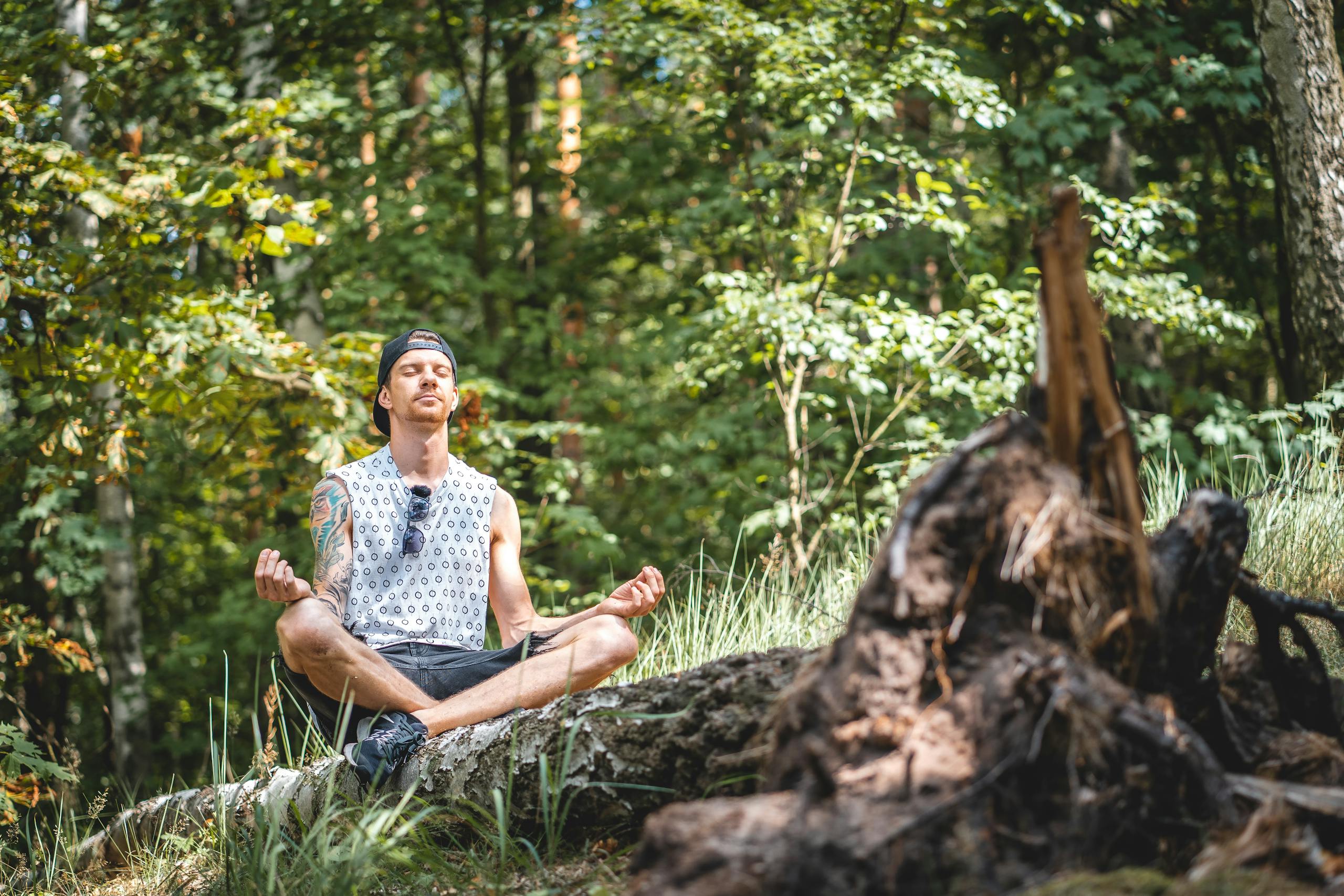
One of the things nobody tells you about proper meditation posture is that once you get the physical setup right, the real challenge begins. And for people who process the world internally, that challenge has a particular quality.
Sitting still with good posture creates a container. What fills that container depends on what you’ve been carrying. For deeply empathic people, it’s often a backlog of absorbed emotion, other people’s stress, other people’s pain, feelings that arrived through proximity and never quite got sorted. I watched this happen with several members of my agency team over the years. The people who felt everything most deeply were also the ones who struggled most with the early stages of any contemplative practice, not because they were doing it wrong, but because stillness gave all that accumulated material somewhere to surface.
Understanding how HSPs process emotions so deeply helps explain why proper posture matters beyond the physical. A stable, grounded position gives you somewhere to be while that emotional material moves through. It’s the difference between being swept away by a current and standing with your feet planted on the riverbed while the water flows past.
The empathy piece is real too. Sitting in a room full of people’s projected needs and expectations for twenty years in client services meant I absorbed a lot. Meditation posture, at its best, gives you a physical home base to return to when the inner world gets loud. Your breath is here. Your hands are here. Your spine is here. That groundedness is what makes it possible to observe emotional content without being consumed by it, which is something that matters deeply to anyone whose empathy functions as both a gift and a burden.
Does Lying Down Count as Proper Meditation Posture?
This question comes up constantly, and the honest answer is: it depends on what you’re trying to accomplish.
Lying down, specifically in what’s called savasana or corpse pose, is a legitimate meditation position. It’s excellent for body scan practices, for deep relaxation, and for certain forms of yoga nidra. The problem for most people is that it’s also excellent for falling asleep. The body associates horizontal with sleep so strongly that maintaining alert awareness while lying down requires more mental effort than sitting upright.
For people who are exhausted, who are dealing with chronic pain, or who are new to meditation and simply need to start somewhere comfortable, lying down is far better than not meditating at all. Evidence published in PubMed Central supports the idea that the relaxation response can be activated through multiple physical positions, not exclusively seated ones. The seated position is preferred in most traditions primarily because it supports the combination of relaxation and alertness that makes meditation most effective over time.
A middle option worth knowing: reclined sitting, where you’re propped against a wall or the back of a firm chair, allows you to be mostly upright with significant physical support. This works well for people managing back issues or for longer sessions where fatigue becomes a factor.
How Does Perfectionism Interfere With Getting Posture Right?
Here’s a pattern I’ve seen repeatedly, including in myself. Someone reads about proper meditation posture, absorbs every detail, and then spends their entire meditation session mentally auditing their physical position rather than actually meditating. The pursuit of perfect form becomes its own distraction.
This is perfectionism doing what perfectionism does: converting a simple practice into a performance standard that can never quite be met. For people who already struggle with the high standards trap that HSP perfectionism creates, meditation can inadvertently become another arena where they feel they’re not doing it correctly enough.
The antidote is treating posture as a starting condition, not a continuous evaluation. You set it up at the beginning of your session. You check in briefly if you notice significant discomfort. Otherwise, you let it be imperfect and meditate anyway. A slightly rounded lower back that you’re not obsessing over is better than a theoretically perfect posture that you’re constantly mentally measuring.
I spent the first year of my own practice getting this wrong. I’d come out of a session feeling like I’d failed because my shoulders had drifted forward somewhere around the ten-minute mark. Eventually I accepted that posture is something you set and periodically return to, not something you maintain perfectly for the entire duration. That shift made the practice sustainable in a way it hadn’t been before.
What About Posture When Emotions Surface During Practice?
Meditation sometimes brings up material you weren’t expecting. A wave of grief. A flash of old anger. A sudden, specific memory that carries weight. For people who process deeply, this isn’t unusual. It’s often a sign the practice is working.
When this happens, posture becomes a resource rather than just a starting position. The instinct is often to curl inward, to contract around the feeling. Consciously returning to an open, upright posture, not rigidly, but with a sense of spaciousness, changes the relationship with whatever is arising. You’re not collapsing around it. You’re making room for it.
This is particularly relevant for people who carry wounds around rejection or criticism. The body’s response to emotional pain often mirrors its response to physical threat: it contracts, protects, braces. Research documented in PubMed Central on stress physiology shows how the body and emotional state reinforce each other bidirectionally. Posture is one lever you can actually pull. Sitting upright with an open chest when you’re feeling emotionally tender isn’t denial of the feeling. It’s a physical statement that you can hold it without being undone by it.
For anyone working through the specific sting of social rejection or criticism, understanding how HSP rejection sensitivity works and how to process it adds useful context to what comes up during meditation. The body often holds rejection in the chest and throat, and those are exactly the areas that proper posture opens.
Can Posture Vary Across Different Types of Meditation?
Yes, and understanding this prevents a lot of unnecessary confusion.
Breath-focused meditation, where attention rests on the sensations of breathing, benefits most from an upright seated posture because the breath is the anchor and you want it to move freely. Any compression of the torso interferes with that.
Loving-kindness meditation, which involves generating feelings of warmth and goodwill toward yourself and others, works well in a slightly more relaxed seated position. Some people find that a more open, receptive posture, hands palms up, chest slightly more open, supports the emotional quality of the practice.
Body scan meditation, where attention moves systematically through different areas of the body, can be done lying down effectively because the goal is receptive awareness rather than alert focus. The risk of sleep is real, but for many people it’s manageable.
Walking meditation, which I started using during a period when sitting still felt impossible due to a particularly demanding project cycle, has its own postural principles: upright but relaxed, gaze slightly downward, arms hanging naturally or clasped loosely. Academic work examining mindfulness and movement supports walking meditation as a genuinely effective form of practice, not a lesser substitute for seated work. For people who find sitting still activating rather than calming, it’s worth taking seriously.
What Props and Supports Actually Help?
The meditation cushion industry would have you believe you need a specifically shaped zafu filled with buckwheat hulls to meditate properly. You don’t. What you need is support that keeps your hips elevated above your knees and your spine able to maintain its natural curves without muscular effort.
A firm sofa cushion works. A folded blanket works. A meditation bench, which allows you to kneel with your weight distributed between your shins and the bench, works well for people who find cross-legged positions uncomfortable. A standard chair with a firm seat works perfectly, especially if you sit forward slightly rather than resting against the back.
One prop worth knowing about: a small rolled towel or thin cushion placed at the base of the spine, in the curve of the lower back, can help maintain the lumbar curve without effort. This is particularly useful in longer sessions where the lower back tends to fatigue and round. It’s a simple fix that makes a significant difference in how the whole spine stacks.
The American Psychological Association’s work on resilience touches on the importance of sustainable practices in building psychological wellbeing over time. Meditation is most beneficial as a consistent long-term practice, and you won’t maintain a consistent practice if your body is in pain every time you sit. Investing attention in physical setup, even with simple props, is an investment in the practice itself.
How Long Should You Hold a Meditation Posture?
Duration is something people overthink. The answer is: as long as you can maintain reasonable alignment without significant discomfort, and not one minute longer.
There’s a distinction worth making between discomfort and pain. Some physical sensation during sitting is normal, mild tingling in the legs, a gentle awareness of the back muscles working, a slight warmth in the hips. These are signals of engagement, not injury. Sharp pain, numbness that doesn’t resolve when you shift position, or pain that persists after a session are signals to adjust your setup.
Most people starting a meditation practice find ten to fifteen minutes sustainable with good posture. Longer sessions are worth working toward gradually, not because suffering through discomfort builds character, but because the quality of what happens in the mind deepens with time. Psychology Today’s writing on introvert tendencies touches on how introverts often prefer depth over breadth in their experiences, and that preference applies to meditation too. A twenty-minute session with solid posture and genuine presence is worth considerably more than an hour of fidgeting and position-adjusting.
I started with ten minutes. It felt like a long time. Now thirty minutes passes in what feels like ten. That shift happened because the physical setup stopped being something I had to manage and became something that simply held me. That’s what good posture eventually becomes: not something you do, but something you rest in.
What Does Posture Feel Like When It’s Working?
There’s a quality that’s hard to describe but easy to recognize once you’ve felt it. The body feels both awake and at ease simultaneously. Not braced, not collapsed. Alert without effort. There’s a sense of being grounded through the sitting bones while simultaneously feeling a lightness through the crown of the head. The breath moves without restriction. The hands feel heavy and settled.
When I finally got this right, several months into a serious practice, my first thought was that it felt like the physical equivalent of being genuinely heard in a conversation. Settled. Present. Not performing anything.
For people who spend a lot of time in their heads, who process information in layers and carry emotional weight with care and attention, finding that physical settledness is not a small thing. It’s a place to come home to. And it starts with how you sit.
Mental wellness for introverts and highly sensitive people involves more than any single practice. If you’re building a broader foundation for your inner life, the full collection of resources in our Introvert Mental Health Hub covers everything from anxiety and emotional processing to sensory sensitivity and self-compassion.
About the Author
Keith Lacy is an introvert who’s learned to embrace his true self later in life. After 20 years in advertising and marketing leadership, including running agencies and managing Fortune 500 accounts, Keith now channels his experience into helping fellow introverts understand their strengths and build fulfilling careers. As an INTJ, he brings analytical depth and authentic perspective to every article, drawing from both professional expertise and personal growth.
Frequently Asked Questions
Do I have to sit cross-legged for proper meditation posture?
No. Cross-legged sitting is one option among several, and it’s not suitable for everyone. What matters is that your hips are at or above knee level, your spine can maintain its natural curves without strain, and your position is stable enough to hold without constant adjustment. A chair, a meditation bench, or a cushion that elevates the hips all provide the same essential conditions. Choose what lets you be still without fighting physical discomfort.
How do I stop my mind from obsessing over my posture during meditation?
Set your posture deliberately at the start of your session, do a single check-in about two minutes in to make any necessary adjustments, and then release your attention from it. If you notice significant discomfort arising during the session, make a small adjustment and return your attention to your meditation object, whether that’s breath, a word, or a sensation. Treating posture as a starting condition rather than a continuous performance standard prevents it from becoming its own distraction.
Why does my lower back hurt during meditation even when I try to sit up straight?
Lower back pain during meditation usually signals one of two things: your hips are too low relative to your knees, causing the pelvis to tilt backward and the lumbar curve to flatten, or you’re overcorrecting by arching the lower back excessively. Elevating your seat with a firmer cushion or folded blanket often resolves the first issue. A small rolled support placed at the base of the spine helps with the second. If pain persists across multiple sessions despite adjustments, a chair with a firm seat is a reliable alternative to floor sitting.
Can proper posture actually help with anxiety during meditation?
Yes, in a meaningful way. Anxiety tends to manifest physically as a contracted, braced posture: raised shoulders, compressed chest, tight belly. Deliberately adopting an open, upright posture works against that physical pattern and sends different signals to the nervous system. Deeper breathing, which proper posture supports, activates the parasympathetic nervous system and begins shifting the body out of a stress response. Posture doesn’t resolve anxiety on its own, but it’s a physical lever that changes the conditions in which you’re sitting with anxious thoughts.
How long does it take to find a posture that feels natural?
Most people find a workable posture within the first two to four weeks of consistent practice, assuming they’re meditating at least four or five times per week. The body adapts, hip flexors loosen slightly, postural muscles strengthen, and what initially required conscious effort becomes more automatic. The shift from “maintaining posture” to “resting in posture” typically takes a few months of regular practice. Patience with the process matters more than trying to accelerate it.