
A review journal in Las Vegas sounds almost contradictory, like bringing a meditation cushion to a casino floor. Yet for introverts and highly sensitive people who find themselves in one of the world’s most overstimulating cities, a structured review journal practice can be the difference between surviving Vegas and actually processing what happens there. It creates a private container for the emotional and sensory data that accumulates faster than you can consciously handle.
My own experiment with keeping a review journal during a Vegas work trip changed how I understand my own mental patterns. What started as a practical attempt to decompress after long client dinners became something more revealing: a window into how my introverted mind stores, filters, and eventually makes sense of overwhelming experiences.
If you’ve ever wondered whether your mental health tools even work in extreme environments, or whether the coping strategies you’ve built at home hold up when everything around you is designed to overwhelm your senses, this is worth reading. Our Introvert Mental Health hub covers a wide range of tools and strategies for sensitive minds, and the review journal sits in a particularly interesting corner of that landscape, one that most people overlook.
What Is a Review Journal and Why Does Vegas Make It Necessary?
A review journal is different from a traditional diary. You’re not narrating your day chronologically. You’re scanning back through recent hours or days with specific questions: What drained me? What surprised me? What am I still carrying emotionally that I haven’t examined yet? It’s less confession and more audit.
Vegas makes this necessary because the city is engineered to prevent reflection. No clocks on casino floors. Constant noise, light, and movement designed to keep your attention perpetually external. The architecture itself discourages the inward turn that introverts need to function well. I’ve been to Las Vegas probably a dozen times over my agency career, and every single trip involved some version of the same crash: I’d return home feeling hollowed out in a way that sleep alone couldn’t fix.
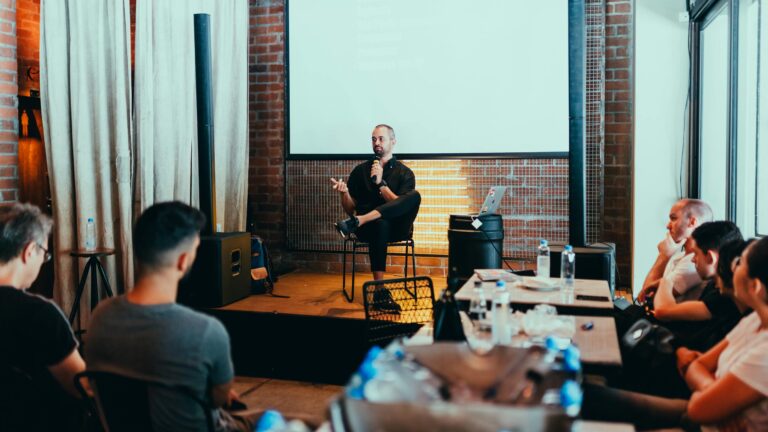
The city hosts enormous industry conferences, and advertising was no exception. I attended several major events there, including a few where I was responsible for managing a team of twelve people across client meetings, pitch presentations, and evening events that ran until two in the morning. As an INTJ, I could hold it together on the surface. My natural tendency toward strategic compartmentalization kept me functional. But the emotional and sensory backlog accumulated silently, and I had no system for clearing it.
For highly sensitive people especially, Vegas can trigger what I’d describe as a full-system overload. The kind of experience I’ve explored in depth when writing about HSP overwhelm and managing sensory overload is almost inevitable in that environment without deliberate countermeasures. A review journal is one of the most effective countermeasures I’ve found.
How Did I Actually Start Keeping a Review Journal in Vegas?
Honestly, it wasn’t intentional at first. On a trip about eight years ago, I found myself sitting in my hotel room at midnight, too wired to sleep and too depleted to do anything useful. I’d just come from a three-hour client dinner where I’d been performing extroversion for most of it, laughing at the right moments, steering conversation, managing the energy of the table. I picked up a legal pad I’d brought for meeting notes and started writing questions to myself.
What just happened tonight? What am I actually feeling right now, underneath the professional performance? What do I need before tomorrow morning?
What came out surprised me. I wasn’t just tired. I was carrying unprocessed tension from a comment a client had made three hours earlier that I’d smiled through at the time. I was anxious about a presentation the next morning in a way I hadn’t consciously registered. I was also, somewhere underneath all of it, genuinely energized by a conversation I’d had with a colleague about a creative direction we were considering. The journal separated those threads in a way that my mind, left to its own devices, would have compressed into a single undifferentiated feeling of exhaustion.

That night became a template. Every subsequent Vegas trip, I built in fifteen minutes of review journaling before bed. Not a diary entry. A structured scan. And the quality of my sleep, my decision-making the next day, and my overall resilience across multi-day conferences improved measurably. Not because the journal was magic, but because it gave my introverted processing style what it actually needs: structured time to work through the data.
What Specific Prompts Work Best for Introverts in High-Stimulation Environments?
The prompts matter more than the format. A blank page in a noisy environment tends to produce either nothing or an anxious stream of consciousness that amplifies rather than settles the mental noise. Specific questions create a structure that guides the introverted mind without constraining it.
These are the prompts I’ve refined over years of Vegas trips and high-intensity work travel:
What was the most emotionally charged moment of today? Not necessarily the most dramatic. The moment that left the strongest residue. Often for me, it was something small: a tone shift in a client’s voice, a moment of unexpected connection with someone I’d written off as difficult. Naming it specifically prevents it from bleeding into everything else.
What did I absorb from others that doesn’t belong to me? This one sounds a little unusual, but it’s genuinely useful. Highly sensitive introverts are particularly prone to what I’d call emotional osmosis, picking up the anxiety, excitement, or frustration of people around them and carrying it as their own. The double-edged nature of HSP empathy means that the same trait that makes you perceptive also makes you vulnerable to carrying other people’s emotional weight without realizing it. The review journal creates a moment to set it down deliberately.
What am I avoiding thinking about? Vegas is excellent at providing distraction. The review journal is a way to notice what you’ve been successfully not thinking about. For me, this often surfaced concerns about business decisions I’d been deferring, or interpersonal friction with a team member I hadn’t addressed.
What do I need tomorrow that I haven’t arranged yet? Practical. Grounding. And often the most immediately useful question for reducing pre-sleep anxiety. Writing down “I need thirty minutes alone before the 9am meeting” is more effective than lying awake worrying about tomorrow’s schedule.
What was genuinely good today? Not forced gratitude. Specific observation. What actually worked, what surprised me positively, what moment I’d want to remember. Vegas trips, even exhausting ones, usually contain something worth noting if you look carefully enough.
Does the Vegas Environment Change How Introverts Process Emotions?
Yes, and in ways that matter for mental health. The combination of sensory overload, disrupted sleep, alcohol often present at industry events, irregular eating, and sustained social performance creates a particular kind of emotional processing deficit. Your system is too taxed to do its normal work.
Under ordinary conditions, introverts process deeply. We sit with experiences, turn them over, extract meaning. That’s not a weakness; it’s actually a form of emotional processing that runs at considerable depth. But in Vegas, the conditions for that processing are systematically removed. There’s no quiet. There’s no natural rhythm. There’s no comfortable solitude unless you actively create it.
What happens instead is a kind of emotional deferral. You experience things, you respond to them in real time, but you don’t actually process them. They stack up. By day three of a conference, many introverts I’ve known and worked with are operating on a significant emotional backlog, making decisions and having conversations while carrying unprocessed residue from everything that came before.

One of my former creative directors, an INFP with a strong HSP profile, used to describe Vegas conferences as “borrowing against her future self.” She could perform brilliantly for three days, but the recovery period afterward was brutal. Watching her, and others like her on my teams over the years, taught me to take the environmental impact on sensitive nervous systems seriously. What looked like a personality quirk was actually a physiological reality. The National Institute of Mental Health’s work on anxiety points to how environmental stressors accumulate in ways that aren’t always visible until they reach a threshold. Vegas compresses that accumulation into a very short window.
The review journal interrupts the deferral cycle. Even fifteen minutes of structured reflection before sleep allows some of that backlog to move through conscious processing rather than sitting in your nervous system overnight.
How Does the Review Journal Connect to Anxiety Management for Sensitive People?
There’s a meaningful connection between unprocessed experience and anxiety that I’ve noticed in my own patterns over many years. When I leave things unexamined, they tend to resurface as low-grade anxiety, a background hum of unease that I can’t immediately trace to a source. The review journal short-circuits that process by giving experiences a named place to land.
For highly sensitive introverts, HSP anxiety often has this quality of accumulated unprocessed input rather than a single identifiable trigger. You’re not anxious about one thing. You’re anxious because your system has been receiving data faster than it can file it, and the backlog is creating pressure. Writing in a review journal is, in neurological terms, a form of cognitive offloading. You’re moving information from active working memory into a more stable external form, which reduces the cognitive load your brain is carrying.
Research into expressive writing and emotional processing has suggested that putting experiences into words helps regulate the emotional response to those experiences. The work published in PMC examining emotional regulation strategies points toward the value of structured reflection as a tool for managing emotional intensity. For introverts in Vegas, where emotional intensity is the default setting, this matters practically.
I want to be honest about what the journal doesn’t do. It doesn’t eliminate anxiety. It doesn’t replace sleep or genuine recovery time. On a particularly brutal conference trip where I was managing a client crisis while simultaneously trying to run a team across three time zones, fifteen minutes of journaling wasn’t sufficient. I came home genuinely depleted in a way that took two weeks to fully clear. But even then, the journal helped me identify what I was dealing with rather than arriving home confused about why I felt so bad.
What Does Perfectionism Have to Do With Journaling in an Overwhelming Environment?
More than you might expect. One of the most common reasons introverts abandon journaling practices, even ones they know are helpful, is perfectionism about the practice itself. The journal entries aren’t good enough. The writing is fragmented. The insights feel shallow. The handwriting is illegible because you’re tired.
This is a real obstacle, and it’s worth naming directly. The tendency toward HSP perfectionism and the trap of impossibly high standards doesn’t disappear when you’re trying to use a mental health tool. It often intensifies, because now the stakes feel higher. You’re not just writing badly, you’re failing at self-care.
My review journal entries from Vegas trips are genuinely terrible by any writerly standard. Incomplete sentences. Contradictions. Questions I never answer. Observations that don’t go anywhere. And that’s exactly as it should be. The purpose isn’t to produce something worth reading. The purpose is to move information from inside your head to outside it, so your brain can stop holding it.
When I managed teams in the agency, I noticed that the people who benefited most from any kind of reflective practice were often the ones who had to give themselves explicit permission to do it imperfectly. The most analytically rigorous people on my team, the ones who produced the sharpest strategic thinking, were sometimes the least able to tolerate the messiness of genuine reflection. They wanted their insights to arrive fully formed. The review journal works precisely because it doesn’t require that.
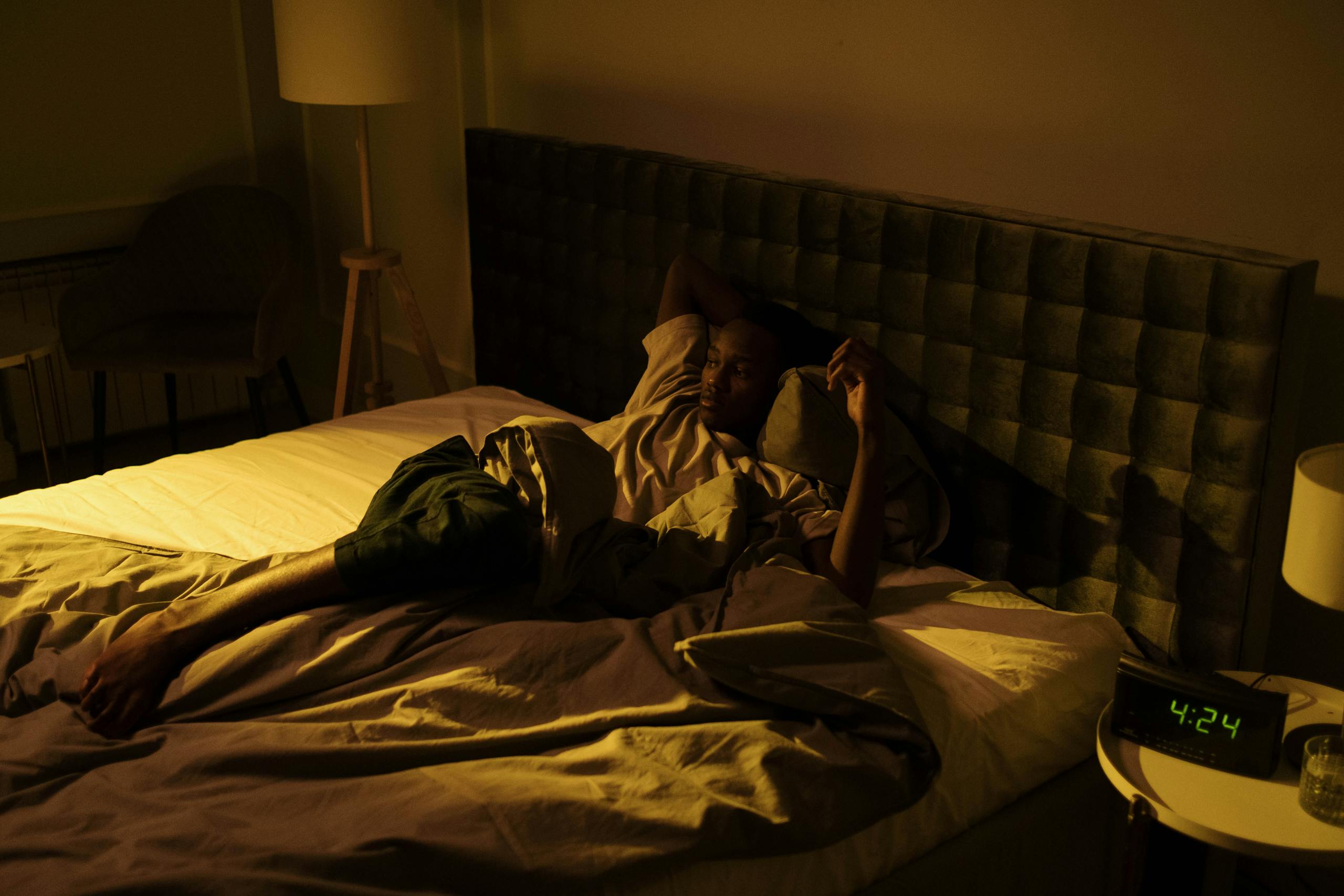
There’s also a related issue worth addressing: the fear of what you’ll find when you look. Vegas trips, particularly those involving professional performance over multiple days, can surface some uncomfortable self-knowledge. Resentment toward colleagues. Ambivalence about the work itself. Feelings of inadequacy that the busyness of the conference successfully masked. The review journal doesn’t manufacture these feelings; it reveals ones that were already present. That can feel threatening, especially if you’re someone who tends to process difficult emotions as personal failures.
The psychological research on self-reflection and emotional regulation suggests that the discomfort of self-examination is often temporary and tends to produce better outcomes than avoidance. Sitting with what the journal surfaces, even briefly, is more useful than closing the notebook and turning on the television.
How Do You Handle What the Journal Surfaces, Including Painful Material?
Sometimes the review journal opens things you weren’t expecting. A Vegas trip I took during a particularly difficult period in the agency, when we were losing a major account and I hadn’t fully acknowledged to myself how worried I was, produced journal entries that were more honest than I was comfortable with. I wrote things about my own leadership that I’d been carefully not thinking about for months.
That experience taught me something important about the difference between reflection and rumination. Reflection moves. You examine something, you name it, you set it down or make a decision about it, and you move on. Rumination circles. You examine something, you feel bad about it, you examine it again, you feel worse. The review journal, with its structured prompts and time limit, tends to produce reflection rather than rumination. But it’s worth being aware of the distinction.
For highly sensitive people, rejection and criticism, including self-criticism that surfaces during reflection, can land with particular weight. The way HSPs experience rejection and work through that pain is often more intense and longer-lasting than the average person expects. If your review journal surfaces feelings of professional failure, interpersonal hurt, or self-doubt, those deserve more than fifteen minutes of late-night processing. They deserve real attention, ideally with support.
My practice over time has been to use the journal to identify what needs attention without requiring the journal itself to resolve it. I note it, I acknowledge it, and I make a commitment to return to it in a more appropriate context. Not a promise to fix it at midnight in a Vegas hotel room. Just an acknowledgment that it’s real and worth addressing. That alone often reduces the urgency enough to allow sleep.
The American Psychological Association’s framework on resilience emphasizes that processing difficult experiences rather than suppressing them is central to psychological recovery. The review journal, even in its imperfect form, is a tool for that processing. It’s not therapy, and it doesn’t replace professional support when that’s what’s needed. But as a daily practice in a demanding environment, it does meaningful work.
What Are the Practical Logistics of Keeping a Review Journal in Vegas?
Logistics matter more than people admit. The most psychologically sophisticated journaling practice is useless if you can’t actually do it in the conditions you’re working with. consider this I’ve found works in practice:
Paper beats digital in Vegas. I’ve tried both, and the phone or laptop is too connected to everything else you’re trying to step away from. A small notebook, something that fits in a jacket pocket, creates a physical boundary that the phone can’t. There’s also something about handwriting that slows the mind down in a useful way when everything around you has been moving fast.
Set a hard time limit. Fifteen minutes. Not because fifteen minutes is the magic number, but because having a defined endpoint makes it easier to start. Open-ended reflection in a state of exhaustion tends to either spiral or stall. A timer creates a container.
Do it before the second wind hits. Vegas has a particular phenomenon I’ve observed across many trips: around 11pm, after the day’s events wind down, there’s often a second wind. People want to go to the bar, keep talking, extend the evening. That’s the exact moment when the introverted system most needs to turn inward, not outward. The review journal works best when you do it before that social pull gets its hooks in.
Don’t review the entries during the trip. Write and move on. The value isn’t in re-reading what you wrote. The value is in the act of writing it. Re-reading during a conference tends to produce either self-criticism or a kind of narrative-building that takes you out of the present. Save the review for after you’re home.
Keep the prompts visible. Write your four or five core questions on the inside cover of the notebook so you don’t have to reconstruct them at midnight when your cognitive resources are depleted. The structure is the point. Make it easy to access.

One more practical note: the review journal works better when you’ve also built in other forms of recovery throughout the day. Even ten minutes alone in your hotel room between sessions, a walk outside the casino floor, a meal eaten without checking email, these create the conditions in which the journal can do its best work. The journal is a processing tool, not a rescue operation. Pair it with genuine recovery time and it becomes significantly more effective. The clinical literature on stress and recovery consistently points to the importance of genuine downtime rather than passive distraction as a recovery mechanism, and the review journal supports that kind of active recovery rather than replacing it.
Is the Review Journal Only Useful in Vegas, or Does It Transfer?
Vegas was where I discovered it, but the practice transfers to any high-stimulation, high-performance environment. Industry conferences in other cities. Long stretches of client-facing work. Family gatherings that involve sustained social performance. Any period where the external demands on your attention consistently outpace your natural processing capacity.
What Vegas does is make the need obvious. The sensory and social intensity is so concentrated that the deficit becomes undeniable. In ordinary life, the same dynamic plays out more slowly and subtly, which is partly why it’s easier to ignore. You don’t notice the backlog building until it’s large enough to affect your mood, your relationships, or your work quality.
The academic work on reflective practice and self-regulation suggests that consistent reflection, even brief and imperfect, produces cumulative benefits over time. It’s not that any single journal entry transforms your mental clarity. It’s that the habit of regular reflection builds a kind of ongoing relationship with your own internal state that makes you more responsive and less reactive over time.
After years of using this practice in high-intensity environments, I brought it home. I now keep a review journal as a weekly practice rather than a travel-only one. Sunday evenings, about twenty minutes, same core prompts adapted for ordinary life rather than conference conditions. The quality of my self-awareness, and consequently the quality of my decisions, improved in ways I attribute at least partly to that consistency.
The Psychology Today coverage of introvert communication patterns touches on how introverts often need processing time before they can respond authentically rather than reactively. The review journal is, at its core, a tool for creating that processing time deliberately rather than hoping it happens naturally in a world that doesn’t make space for it.
If you’re an introvert who spends time in demanding environments, whether that’s Las Vegas for a conference, a corporate office that runs on extroverted energy, or any situation where you’re consistently performing beyond your natural comfort zone, the review journal is worth trying. Not as a cure, but as a practice. Something you do consistently, imperfectly, and without expecting immediate transformation. The value accumulates quietly, which is, perhaps appropriately, exactly how introverts tend to do their best work.
There’s a broader conversation about introvert mental health tools and practices worth exploring beyond this single technique. The Introvert Mental Health hub brings together resources on everything from sensory sensitivity to emotional processing to anxiety management, all through the lens of what actually works for introverted and highly sensitive people.
About the Author
Keith Lacy is an introvert who’s learned to embrace his true self later in life. After 20 years in advertising and marketing leadership, including running agencies and managing Fortune 500 accounts, Keith now channels his experience into helping fellow introverts understand their strengths and build fulfilling careers. As an INTJ, he brings analytical depth and authentic perspective to every article, drawing from both professional expertise and personal growth.
Frequently Asked Questions
What is a review journal and how is it different from a regular diary?
A review journal uses structured prompts to scan recent experiences rather than narrating them chronologically. Where a diary records what happened, a review journal asks what you’re carrying emotionally, what drained or energized you, and what needs attention before you can genuinely rest. The structure is what makes it useful in high-stimulation environments like Las Vegas, where open-ended writing can spiral rather than settle.
Why is Las Vegas particularly challenging for introverts and highly sensitive people?
Las Vegas is deliberately designed to prevent inward reflection. The absence of natural light cues, constant sensory stimulation, sustained social performance required at conferences, and irregular sleep all create conditions that overwhelm the introverted processing style. Highly sensitive people face an intensified version of this challenge because their nervous systems register environmental input more acutely. The city compresses what might otherwise be a gradual accumulation of stress into a very short window.
How long should a review journal session take during a Vegas trip?
Fifteen minutes is a practical and sufficient target for a nightly review journal session during a conference or work trip. A defined time limit makes it easier to start and prevents the session from either spiraling into rumination or stalling in exhaustion. The value comes from consistency and the act of writing, not from the length of the session. Having your core prompts written in the notebook before the trip removes the cognitive burden of constructing them at midnight when your resources are depleted.
What should I do if the review journal surfaces difficult or painful material?
Acknowledge what surfaces, name it specifically, and make a commitment to return to it in a more appropriate context rather than trying to resolve it in the moment. The review journal’s role is to identify what needs attention, not to provide resolution at midnight after a long conference day. If patterns of self-criticism, professional anxiety, or interpersonal pain appear consistently, those deserve real attention beyond the journal, including professional support if needed. The journal is a processing tool, not a substitute for genuine care.
Can the review journal practice transfer to everyday life outside of travel?
Yes, and the cumulative benefits of consistent practice are significant. A weekly review journal session adapted for ordinary life uses the same core structure: what drained or energized you, what you’re carrying that doesn’t belong to you, what you’ve been avoiding, what you need in the coming days, and what was genuinely good. Many introverts find that the habit builds a more continuous relationship with their own internal state, which improves both decision-making quality and emotional resilience over time.