
A quiet person who genuinely enjoys being alone is most commonly called an introvert, though that single word barely scratches the surface of what’s actually going on inside. Some people also use terms like “solitary,” “reserved,” or “loner,” though those labels often carry unfair weight that the word introvert doesn’t deserve. What matters is that preferring solitude isn’t a flaw or a phase. It’s a personality orientation with deep psychological roots, and millions of people share it.
Quiet people who recharge in solitude aren’t broken versions of extroverts. They process the world differently, feel more energized by reflection than by crowds, and often build some of the most meaningful, deliberate relationships of anyone around them. That’s not a consolation prize. That’s just how this particular wiring works.
I know this because I lived on the wrong side of that understanding for most of my professional life. Running advertising agencies for two decades, I spent years performing an extroversion that never quite fit, and the cost was real. Once I stopped fighting my own nature, everything changed, including how I understood the people around me.
If you’re exploring what it means to be a quiet, solitude-seeking person within your family or relationships, our Introvert Family Dynamics & Parenting hub covers the full landscape of how introverted personalities show up at home, from raising kids to managing relationships with people who are wired very differently from you.

What Are the Actual Names for Someone Who Prefers Quiet and Solitude?
Introvert is the most accurate and widely recognized term. Coined in modern psychological use by Carl Jung and later formalized through decades of personality research, it describes someone whose energy flows inward. Social interaction, especially with large groups or unfamiliar people, drains an introvert’s reserves. Time alone restores them.
What’s your personality type?
Take our free 40-question assessment and get a detailed personality profile with dimension breakdowns, context analysis, and personalised insights.
Discover Your Type8-12 minutes · 40 questions · Free
Beyond introvert, a few other terms sometimes get applied to quiet, solitude-preferring people, each with its own nuance.
“Ambivert” describes someone who sits between introversion and extroversion, comfortable in both modes depending on context. Many people identify here, especially those who can hold a room when needed but desperately need quiet afterward.
“Highly sensitive person,” or HSP, is a related but distinct category. Developed by psychologist Elaine Aron, it describes people who process sensory and emotional information more deeply than average. Many HSPs are also introverts, though not all introverts are HSPs. If you’re a parent trying to understand your own sensitivity alongside your child’s, the piece on HSP parenting and raising children as a highly sensitive parent offers a grounded look at that specific combination.
“Solitary” is sometimes used as a personality descriptor, particularly in older psychological literature. It simply means someone who prefers their own company. It doesn’t imply depression or social dysfunction, though those assumptions often get layered on unfairly.
“Reserved” is a behavioral description more than a personality type. It means someone who holds back in social situations, shares less, and doesn’t volunteer information freely. Many introverts are reserved, though some are quite expressive once they’re comfortable.
“Loner” is the term I’d push back on most. It carries a cultural stigma that suggests something is wrong with the person, that they’re isolated by rejection rather than by preference. Plenty of quiet people who love solitude have rich inner lives, deep friendships, and strong family bonds. They simply don’t need constant social contact to feel alive.
Is There a Personality Science Behind Preferring to Be Alone?
Yes, and it goes deeper than most people realize. Introversion is one of the most consistently measured personality traits across psychological research. In the Big Five personality framework, introversion sits at the low end of the extraversion scale. It’s not a disorder, a mood, or a life stage. It’s a stable trait that shows up reliably across time and cultures.
What’s happening neurologically is genuinely interesting. Research from Cornell University found that dopamine, the neurotransmitter associated with reward and stimulation, plays a different role in introverted versus extroverted brains. Extroverts tend to seek out stimulation partly because their dopamine systems respond more strongly to external rewards. Introverts are more sensitive to that same stimulation, which means they often feel overstimulated faster, not because they’re fragile, but because their systems are already running at a higher baseline.
I felt that difference viscerally during my agency years. After a full day of client presentations, creative reviews, and team check-ins, I’d sit in my car in the parking garage for ten or fifteen minutes before driving home. Not because anything went wrong. Just to let my system decompress before facing another environment. My extroverted colleagues would go out for drinks. I needed silence. Neither response was wrong. We were just wired differently.
There’s also a growing body of work connecting personality traits to broader wellbeing outcomes. A PubMed Central analysis on personality and psychological health highlights how trait-level differences, including introversion and extraversion, shape the way people experience stress, relationships, and emotional regulation over time. Introversion itself isn’t a risk factor. What creates difficulty is when introverts are chronically pushed to operate against their nature without recovery time.

When Does Preferring Solitude Cross Into Something Worth Paying Attention To?
This is a question worth sitting with honestly, because there’s a real difference between introversion and social withdrawal driven by anxiety, depression, or other factors. Preferring solitude feels like a choice. It feels good, even restorative. Withdrawal driven by pain feels like hiding. It feels heavy.
Introversion is a personality trait, not a mental health condition. Someone can be deeply introverted and psychologically thriving. They can also be introverted and struggling with anxiety or depression at the same time. Those things coexist, and one doesn’t cause the other.
What’s worth paying attention to is the quality of the solitude. Does being alone feel peaceful and chosen? Or does it feel like the only safe option because connection feels threatening or impossible? That distinction matters enormously.
Some people who are labeled “quiet” or described as preferring solitude are actually experiencing something more complex, including emotional dysregulation patterns that look like withdrawal but stem from different roots. That’s worth understanding. If you’re trying to get a clearer picture of what’s actually going on with your emotional patterns, tools like a borderline personality disorder test can be a starting point for self-awareness, though they’re not substitutes for professional support.
The Harvard Health mind and mood resource center offers solid grounding on the difference between personality traits and clinical conditions, which is useful reading if you’re trying to make sense of where introversion ends and something else begins.
In my experience managing large teams, I watched this distinction play out repeatedly. Some of my quietest team members were the most grounded and self-assured people in the room. Others who pulled back from group work were doing so from a place of real pain. Learning to tell the difference made me a better leader, and a more careful one.
How Does Society Tend to Misread Quiet, Solitude-Loving People?
Almost every way you can imagine. Quiet people get called shy when they’re not shy at all. They get labeled antisocial when they simply prefer smaller, more intentional social contexts. They get described as cold or unfriendly when they’re actually deeply warm, just selective about where they invest that warmth.
One of the most persistent misreadings is the assumption that a quiet person who likes being alone must be unhappy. That their solitude is a symptom of something missing. This gets projected onto introverts constantly, and it’s exhausting to be on the receiving end of it.
Early in my agency career, I had a senior partner pull me aside after a staff meeting and ask if I was doing okay. I’d been quiet during the meeting, thinking through a problem. He read my silence as distress. I wasn’t distressed. I was processing. But the cultural assumption was that silence meant something was wrong.
That assumption shapes how introverts are evaluated in professional settings, how they’re parented, how they’re treated in relationships. It creates enormous pressure to perform extroversion, to speak up more, to be more visibly engaged, to seem warmer or more enthusiastic. And that pressure has real costs. Work published in Frontiers in Psychology on personality and social behavior points to how mismatches between a person’s trait-level tendencies and their social environment can affect wellbeing over time.
There’s also a fascinating wrinkle here around likeability. Many introverts worry that their quietness reads as unfriendliness. In reality, the qualities that make someone genuinely likeable, attentiveness, depth, follow-through, the ability to really listen, are qualities introverts tend to have in abundance. If you’ve ever wondered how your natural style lands with others, the likeable person test can offer some interesting perspective on that.

What Does Being a Quiet, Solitude-Seeking Person Actually Look Like in Family Life?
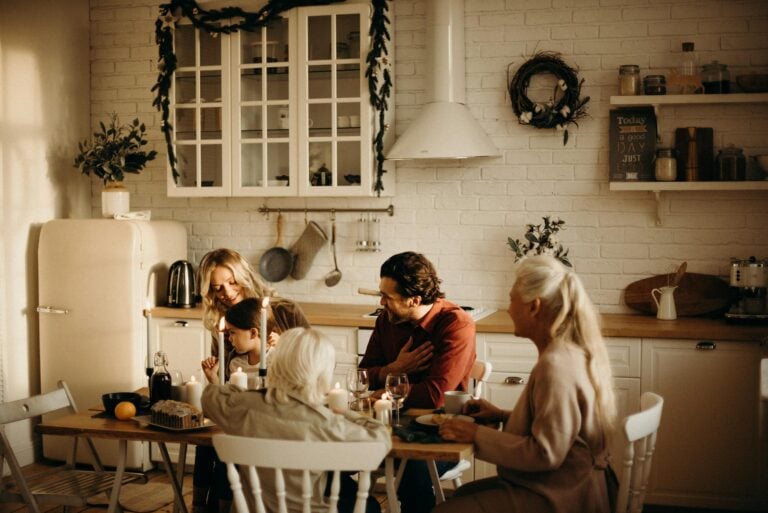
Family dynamics are where the tension around introversion becomes most personal, and often most complicated. Families have their own social ecosystems, their own expectations about togetherness, communication, and participation. When one person in that system is wired for quiet and solitude, it creates friction that nobody quite knows how to name.
The introverted family member who disappears after dinner isn’t being rude. They’re recovering. The parent who needs an hour of silence after the kids go to bed isn’t checked out. They’re refilling. The teenager who spends weekends alone in their room isn’t necessarily depressed. They might simply be doing what their nervous system needs.
The challenge is that these behaviors look, from the outside, like disengagement. And families that don’t have language for introversion often interpret them that way. That misinterpretation creates real damage, especially when it’s directed at children who are still forming their sense of self.
I think about the introverted kids in families where extroversion is the default and the standard. They get pushed to join more activities, to make more friends, to speak up at the dinner table. They learn early that their natural state is a problem to be corrected. That’s a painful lesson to carry, and it takes years to unlearn.
Psychology Today’s resource on family dynamics captures how personality differences within families create patterns that shape everyone’s experience, not just the person who’s “different.” Understanding those patterns is the first step toward changing them.
What helps most is naming it. When a family has language for introversion, when they understand that solitude is a need rather than a rejection, the whole dynamic shifts. The quiet person doesn’t have to defend themselves. The family doesn’t have to take it personally. Everyone can work with what’s actually true instead of what they assumed.
Can a Quiet Person Who Loves Solitude Still Thrive in Caregiving or People-Centered Roles?
Absolutely, and this is one of the most important misconceptions to address. There’s a persistent assumption that quiet, introverted people are poorly suited for roles that require sustained human connection, whether that’s parenting, caregiving, teaching, or any helping profession. That assumption is wrong.
Introverts often bring something to caregiving roles that extroverts have to work harder to develop: patience, the ability to sit with someone in discomfort without trying to fill the silence, attentiveness to what’s not being said, and a natural inclination toward one-on-one depth over group energy.
Some of the most effective personal care professionals I’ve encountered have been deeply introverted. Their quietness wasn’t a liability. It was part of what made their clients feel genuinely seen rather than processed. If you’re an introverted person exploring whether caregiving work fits your personality, the personal care assistant test online can help you think through the specific demands of that role and how your natural strengths map onto them.
The same applies to fitness and wellness work. Many introverts are drawn to roles like personal training because they offer structured one-on-one interaction, clear goals, and meaningful individual impact without the noise of large group environments. The certified personal trainer test is worth exploring if you’re an introverted person considering that path.
What quiet people in people-centered roles do need is intentional recovery time built into their structure. That’s not a weakness. That’s sustainability. A therapist who sees eight clients a day and then goes home to a silent house isn’t antisocial. They’re managing their energy so they can keep showing up fully for the people who count on them.
How Do Quiet, Solitude-Loving People Build Meaningful Relationships Without Losing Themselves?
This is probably the question I get asked most often, in different forms, by introverts who feel like they’re constantly choosing between connection and sanity. The answer isn’t a perfect balance. It’s a set of honest agreements, with yourself and with the people you care about.
Quiet people who love solitude aren’t incapable of deep connection. Many of them crave it. What they need is connection on terms that don’t require them to perform a version of themselves that doesn’t exist. That means being honest about what they need, which is genuinely hard when you’ve spent years being told your needs are inconvenient.
In my own marriage, learning to articulate what I needed after a draining week at the agency was one of the more vulnerable things I had to do. My wife is more socially energized than I am. For years, I’d agree to weekend plans and then resent them quietly, which helped no one. Once I started naming what I actually needed, “I need Saturday morning to myself before we do anything social,” the whole dynamic improved. She wasn’t hurt. She was relieved to finally understand what was happening.
That kind of transparency requires a degree of self-knowledge that doesn’t always come naturally, especially for people who’ve been told their whole lives that their needs are the problem. Building that self-knowledge is ongoing work. Research published in PubMed Central on self-awareness and interpersonal functioning suggests that people who understand their own emotional and personality patterns tend to have more satisfying close relationships over time. That tracks with everything I’ve seen.
For quiet people in family systems, success doesn’t mean become someone who needs less solitude. It’s to help the people around you understand that your solitude isn’t about them. That’s a conversation worth having more than once, and it gets easier each time.
Blended families add another layer of complexity here. When quiet, solitude-preferring people are handling step-parenting or shared custody arrangements, the social demands multiply in ways that can feel overwhelming. Psychology Today’s overview of blended family dynamics is a useful starting point for understanding how personality differences compound in those environments.
What Do Quiet, Solitude-Loving People Most Need Others to Understand?
A few things, stated plainly.
Solitude isn’t rejection. When a quiet person retreats, they’re not signaling that you’ve done something wrong or that they don’t value the relationship. They’re doing what their nervous system requires. Taking it personally is understandable, but it’s usually not accurate.
Quiet doesn’t mean empty. Some of the most complex, richly observant people I’ve ever worked with said almost nothing in group settings. In one-on-one conversations, they were extraordinary. The silence wasn’t absence. It was selection.
Pressure makes it worse. Pushing a quiet person to talk more, engage more, or be more visibly present doesn’t open them up. It closes them further. The conditions that help quiet people come forward are safety, patience, and the absence of performance pressure.
They’re often watching everything. As an INTJ, I’ve always processed environments by observing before engaging. I notice dynamics, shifts in tone, what’s not being said. Many quiet introverts operate this way. They’re not disengaged. They’re collecting information before they decide what to do with it.
And finally: their way of being in the world is valid. Not a lesser version of extroversion. Not something to fix. A genuine, coherent, valuable way of existing that deserves the same respect as any other personality orientation. A study published in Nature examining personality trait distributions across populations reinforces that introversion is a normal, stable variation in human personality, not an outlier condition.

There’s much more to explore about how introversion shapes family life, parenting, and close relationships. Our complete Introvert Family Dynamics & Parenting hub is a good place to keep going if this resonated with you.
About the Author
Keith Lacy is an introvert who’s learned to embrace his true self later in life. After 20 years in advertising and marketing leadership, including running agencies and managing Fortune 500 accounts, Keith now channels his experience into helping fellow introverts understand their strengths and build fulfilling careers. As an INTJ, he brings analytical depth and authentic perspective to every article, drawing from both professional expertise and personal growth.
Frequently Asked Questions
What is a quiet person who likes to be alone actually called?
The most accurate term is introvert. Introversion is a well-established personality trait describing people who gain energy from solitude and feel drained by extended social interaction. Other terms sometimes used include “solitary,” “reserved,” or “highly sensitive person,” though each has a slightly different meaning. Introvert is the most psychologically precise and least stigmatized label for someone who genuinely prefers and thrives in quiet, solitary environments.
Is preferring to be alone a sign of a mental health problem?
Not on its own. Introversion is a personality trait, not a mental health condition. Many introverts are psychologically healthy and fulfilled. The distinction worth paying attention to is whether solitude feels like a chosen, restorative experience or like the only safe option because connection feels threatening. The former is introversion. The latter may point to anxiety, depression, or other factors worth exploring with a professional.
Can a quiet person who loves solitude still be good at relationships?
Yes, often exceptionally so. Introverts tend to bring depth, attentiveness, and genuine listening to their close relationships. What they need is honesty about their limits and partners or family members who understand that solitude isn’t rejection. Many introverts form fewer but significantly deeper bonds than their more extroverted counterparts, which suits them well.
How is an introvert different from someone who is simply shy?
Shyness is a fear of social judgment. Introversion is an energy preference. A shy person wants social connection but feels anxious about it. An introvert may be perfectly comfortable in social settings but simply prefers not to spend too much time there. Many introverts are not shy at all. They’re confident in social situations. They just don’t seek them out as frequently as extroverts do.
What should family members understand about a quiet, solitude-loving person in their home?
The most important thing is that the quiet person’s need for solitude isn’t personal. It’s not a rejection of the family or a sign that something is wrong. It’s a genuine psychological need, similar to needing sleep or food. Families that develop language for introversion and build in space for quiet members to recover tend to have healthier dynamics overall. Pressure to perform extroversion rarely helps and often creates lasting damage to trust and self-worth.