Quiet suburbs appeal to family-focused introverts because they offer something cities rarely can: predictable calm, physical space, and a slower social rhythm. Neighborhoods with lower density, less noise, and more green space reduce the sensory overload that drains introverted parents, giving them the mental reserves to actually be present with their families.
Contrast that with where I spent most of my working life. My agencies operated out of downtown offices in Chicago and New York, and I commuted through some of the most stimulating environments a human being can experience. By the time I got home, I had nothing left. My kids would want to play, my wife would want to connect, and I was sitting there completely hollowed out, going through the motions of being a present father while my brain was still trying to process the day’s sensory backlog.
It took me longer than I’d like to admit to understand what was actually happening. I wasn’t a bad father. I wasn’t antisocial. I was an introvert living in an environment designed for someone else entirely, and it was costing my family something real.
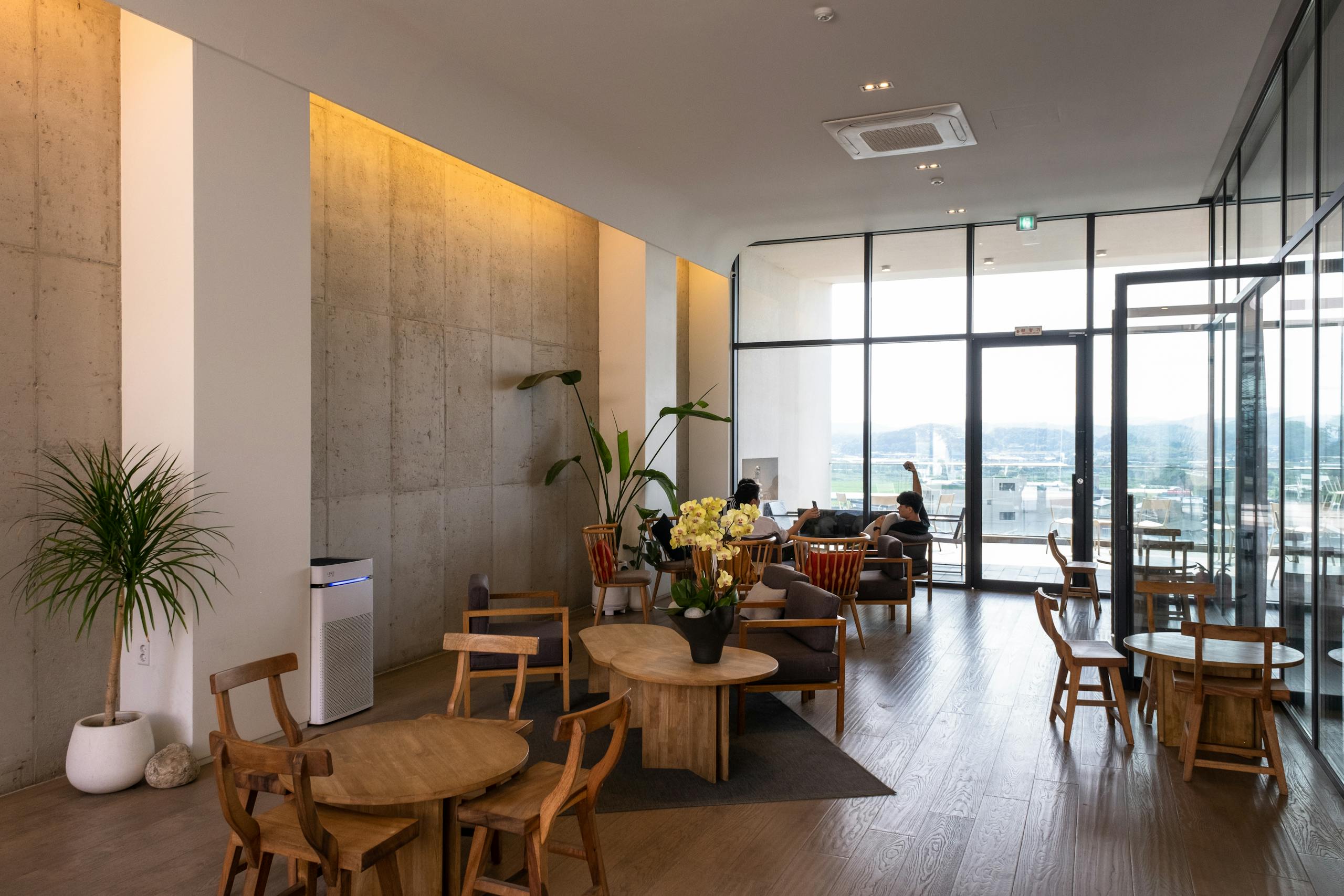
If any of that resonates, you’re in good company. Many introverted parents share this exact tension, and where you live plays a larger role in resolving it than most people realize. Our broader content on introvert lifestyle choices explores how environment shapes wellbeing at every level, and this piece gets specific about one of the most meaningful decisions introverted families make.
Why Does Environment Drain Introverted Parents Faster Than Others?
Introversion isn’t shyness, and it isn’t a preference for being alone. At its core, it’s about how your nervous system processes stimulation. Extroverts gain energy from external input. Introverts spend energy processing it. High-density, high-noise environments don’t just feel unpleasant to introverted parents, they create a genuine neurological cost that accumulates across a day.
What’s your personality type?
Take our free 40-question assessment and get a detailed personality profile with dimension breakdowns, context analysis, and personalised insights.
Discover Your Type8-12 minutes · 40 questions · Free
A 2019 paper published through the National Institutes of Health found that chronic noise exposure is associated with elevated cortisol levels and disrupted sleep architecture. For parents already managing the emotional labor of raising children, that cortisol load doesn’t just disappear when they walk through the door. It compounds.
Add the unpredictability of urban environments, the ambient noise, the strangers, the constant low-level social negotiation of shared spaces, and you have a recipe for what I used to call “being done before dinner.” My team would have told you I was sharp and decisive in client meetings. What they didn’t see was me sitting in my car in the parking garage for ten minutes before driving home, trying to find something resembling stillness before walking back into family life.
Quieter suburban settings reduce that neurological tax. Not because they’re perfect, but because they lower the baseline stimulation level enough to leave something in reserve. That reserve is what allows an introverted parent to be genuinely present rather than physically there but mentally absent.
What Makes a Suburb Actually Work for an Introverted Family?
Not every suburb is the same, and “quiet” isn’t a guarantee just because a neighborhood sits outside city limits. Some suburbs are dense, loud, and socially demanding in their own right. What actually matters to introverted families tends to cluster around a few specific features.
Physical space between homes. Lot size matters more than most real estate advice acknowledges. When your neighbors aren’t ten feet away, you don’t have to manage your presence constantly. You can sit on your porch without performing sociability. You can let your kids play in the yard without it becoming an impromptu neighborhood gathering. That buffer isn’t antisocial, it’s protective.
Access to nature. The American Psychological Association has documented the restorative effects of natural environments on attention and stress. For introverts specifically, natural settings offer stimulation that doesn’t demand social processing. A walk through trees or along a trail restores rather than depletes. Suburbs with parks, trails, or even generous tree canopy give introverted parents a reliable place to recharge.
Predictable social rhythms. One thing that exhausted me about city living was the randomness of social encounters. You never knew when you’d be pulled into a conversation, when your commute would turn into an extended social obligation, when a quick errand would become a thirty-minute exchange. Suburban neighborhoods, particularly those with established but not intrusive community norms, tend to have more predictable social patterns. You can prepare, participate, and recover on something resembling a schedule.

Shorter, more manageable commutes. Every additional minute of commute through dense, stimulating environments is energy an introverted parent doesn’t get back. Some suburban locations allow for reverse commutes or remote-friendly setups that reduce this drain significantly. When I eventually moved my agency’s leadership structure to accommodate more distributed work, I watched several of my introverted team members transform. They weren’t less capable in the city. They were just finally operating without a constant energy deficit.
Are Quiet Neighborhoods Actually Better for Raising Kids as an Introvert?
This is the question I sat with for a long time, because it felt selfish to frame a housing decision around my own energy needs when children were involved. What I eventually understood is that an introverted parent operating at capacity is categorically different from one running on empty, and that difference matters enormously to kids.
Children are extraordinarily sensitive to parental presence. Not physical proximity, but actual attentiveness. Whether a parent is genuinely engaged or just nearby. I know which version of myself my kids got during our years in a high-stimulation environment, and it wasn’t the version I wanted to be. I was patient in the way that people are patient when they’re exhausted, which is to say I was managing rather than connecting.
The Mayo Clinic has written extensively on how chronic stress affects parenting behavior, noting that depleted parents are more reactive, less attuned, and less able to engage in the kind of warm, responsive interaction that supports healthy child development. That’s not a moral failing. That’s physiology. And environment is one of the levers that directly affects it.
Quieter neighborhoods also tend to offer something specific for introverted children, who are more common than most parents expect. Lower-stimulation environments give introverted kids room to breathe, to play imaginatively without constant external input, and to develop the inner resources that will serve them throughout their lives. An introverted parent in a quiet suburb isn’t just serving their own needs. They’re often creating conditions where an introverted child can genuinely flourish.
How Do Introverted Parents Handle the Social Expectations of Suburban Life?
Here’s the tension that doesn’t get discussed enough: suburbs come with their own social pressures. Block parties. School committees. Neighborhood associations. The assumption that proximity equals community obligation. For introverted parents who moved to the suburbs specifically to reduce social demands, this can feel like a bait and switch.
What I’ve found, both personally and in conversations with other introverted parents, is that the difference lies in choice and control. Urban social encounters are often involuntary. They happen to you. Suburban social engagements, even when they feel obligatory, are more often opt-in. You can show up to the block party for an hour, have genuine conversations with two or three people, and leave without it being a social transgression. That’s a fundamentally different experience from being trapped in an open-plan office or a packed subway car.

The Psychology Today archives include substantial writing on how introverts can build genuine community without sacrificing their energy reserves. The consistent finding is that introverts don’t need fewer relationships, they need relationships with lower overhead. Suburban settings, when chosen thoughtfully, can actually support that kind of depth-over-breadth social life better than dense urban environments where everyone is in motion and no one has time to slow down.
My own approach, when I finally stopped trying to perform extroversion at neighborhood events, was to find one or two families whose company genuinely restored rather than depleted me. That’s it. Two families. We had dinners, our kids played together, and those relationships became something real. That’s more than I ever managed in years of city living, where I had hundreds of acquaintances and almost no one who actually knew me.
What Should Introverted Families Actually Look for When Choosing a Suburb?
Choosing a neighborhood is one of the most consequential decisions a family makes, and most of the conventional advice focuses on school ratings, commute times, and property values. Those things matter. But for introverted families, several other factors deserve equal weight.
Noise profile. Visit the neighborhood at different times of day. Morning, evening, weekend afternoon. Notice what you hear. Traffic patterns, neighbor activity, proximity to commercial areas, all of it contributes to the baseline stimulation level you’ll live with every day. A house that feels peaceful on a Tuesday afternoon may be a different experience on a Saturday morning.
Social culture. Talk to residents if you can. Some neighborhoods have strong expectations of participation. Others have a more live-and-let-live culture where people are friendly but not intrusive. Neither is objectively better, but one will suit an introverted family considerably more than the other. Ask directly: “How involved do most people get with neighborhood activities?” The answer tells you a lot.
Home layout. The interior of your home matters as much as its location. Introverted parents need spaces that function as genuine retreats. A home office with a door that closes. A bedroom that feels like a sanctuary. A backyard that offers privacy rather than a fishbowl view into neighbors’ yards. These aren’t luxuries. For an introverted parent, they’re functional necessities.
The Centers for Disease Control and Prevention has published guidance on how the built environment affects mental health outcomes, including the role of green space and neighborhood design in reducing stress and supporting psychological wellbeing. The evidence consistently points toward lower-density, higher-green-space environments as beneficial for mental health broadly, and the effect is amplified for people who are more sensitive to environmental stimulation.

Proximity to restorative spaces. Parks, trails, libraries, coffee shops with actual quiet corners. These are the places introverted parents use to recover between demands. A suburb that sits thirty minutes from any of them isn’t serving your needs, regardless of how peaceful the residential streets feel.
Does Moving to a Quieter Suburb Actually Change Things for Introverted Families?
I want to be honest here, because I’ve seen this question answered with a kind of lifestyle-magazine optimism that doesn’t serve anyone. Moving to a quieter suburb doesn’t fix everything. It doesn’t resolve the fundamental tension of being an introverted person in a world that makes constant demands. It doesn’t eliminate the exhaustion of parenting, or the guilt that many introverted parents carry about needing more alone time than their children can easily accommodate.
What it does is lower the floor. It reduces the baseline drain enough that you have more to work with. And for introverted parents, that margin is where everything important happens. That’s where patience lives. Where creativity lives. Where the version of yourself that your children actually need shows up.
A 2022 analysis published through the World Health Organization examined the relationship between urban noise exposure and psychological wellbeing across multiple countries. The findings were consistent: reducing environmental noise load produced measurable improvements in mood, cognitive function, and interpersonal relationships. Those aren’t abstract outcomes. For an introverted parent, they translate directly into being more available, more patient, and more genuinely present.
I moved my family out of the city about eight years into my agency career, when the commute and the environment had ground me down to something I didn’t recognize as myself. The change wasn’t instant, and it wasn’t total. But within a few months, I noticed something I hadn’t experienced in years: I was finishing dinner with my kids and actually wanting to stay at the table. Not managing the clock until bedtime. Actually present, actually enjoying it.
That’s not a small thing. For an introverted parent who’s been running on empty, it’s everything.
How Can Introverted Parents Thrive Without Losing Themselves in Suburban Life?
There’s a version of suburban life that can become its own kind of trap for introverts, particularly for those who work from home or whose social world contracts to the immediate neighborhood. The same quiet that restores can become isolation if it’s not balanced intentionally.
What I’ve found works is building structure around recovery rather than leaving it to chance. Introverted parents who thrive in suburban settings tend to be deliberate about a few things.
They protect specific windows of solitude. Not as a reward for surviving the day, but as a non-negotiable part of the schedule. Thirty minutes before the house wakes up. A lunch hour that isn’t a working lunch. A Saturday morning walk that belongs entirely to them. These aren’t selfish acts. They’re maintenance, the same way sleep is maintenance.
They communicate their needs clearly to partners and children. Many introverted parents struggle with this because it feels like admitting a deficiency. What I’ve come to understand, after years of pretending I didn’t have these needs, is that naming them honestly is actually an act of respect toward the people who love you. It gives them accurate information about how to support you rather than leaving them to interpret your withdrawal as rejection.
The Harvard Business Review has published compelling work on how introverted leaders who acknowledge their working style openly are more effective than those who mask it. The same principle applies at home. Authenticity about how you’re wired creates better outcomes than performance.
They find their version of community rather than accepting the default version. For me, that meant two families, a small group, and a standing Thursday morning at a coffee shop where I read for an hour before anyone needed anything from me. That’s a social life. It just doesn’t look like the extroverted template.

Suburban life, chosen carefully and lived intentionally, gives introverted families something genuinely valuable: an environment that works with their wiring instead of against it. That’s not a small thing. That’s the foundation everything else gets built on.
Explore more resources on introvert lifestyle and environment in our complete Introvert Life Hub.
About the Author
Keith Lacy is an introvert who’s learned to embrace his true self later in life. After 20 years in advertising and marketing leadership, including running agencies and managing Fortune 500 accounts, Keith now channels his experience into helping fellow introverts understand their strengths and build fulfilling careers. As an INTJ, he brings analytical depth and authentic perspective to every article, drawing from both professional expertise and personal growth.
Frequently Asked Questions
Why do introverts often prefer suburban living over city life?
Introverts tend to prefer suburban environments because they offer lower baseline stimulation, more physical space, and greater control over social interaction. Cities demand constant sensory processing and involuntary social engagement, which depletes introverts more rapidly than extroverts. Suburbs reduce that neurological cost, leaving introverted residents with more energy for the relationships and activities that actually matter to them.
What specific features should introverted families prioritize when choosing a suburb?
Introverted families benefit most from neighborhoods with generous lot spacing, access to natural areas like parks and trails, a social culture that’s friendly but not intrusive, and homes with dedicated private spaces such as a home office or secluded backyard. Noise profile is also critical: visiting at multiple times of day before committing gives a more accurate picture of what daily life will actually feel like.
Can introverted parents build genuine community in suburban neighborhoods?
Yes, and suburban settings often support the kind of community introverts actually thrive in. Rather than the high-volume, low-depth social interactions common in dense urban environments, quieter neighborhoods allow for fewer but more meaningful connections. Introverted parents who focus on one or two families with genuine compatibility often find more satisfying community than they experienced in years of city living with hundreds of acquaintances.
How does living in a quieter environment affect introverted parents’ ability to be present with their children?
Environmental stimulation has a direct effect on parental availability. Introverted parents who spend their days in high-stimulation environments often arrive home already depleted, which reduces their patience, attentiveness, and capacity for genuine connection. Quieter suburban settings lower the baseline energy drain, which means more remains for the moments that matter most with children. The difference isn’t marginal. It often shows up as a qualitative shift in how present and engaged a parent can actually be.
Are there downsides to suburban living that introverted families should consider?
Yes. Some suburbs carry their own social pressures through neighborhood associations, school committees, and community expectations that can feel demanding for introverts. Isolation is also a real risk if the quiet environment contracts a family’s social world too dramatically. The most effective approach is choosing a neighborhood with a live-and-let-live culture, building intentional structure around both solitude and connection, and being honest with partners and children about what you need to function well.