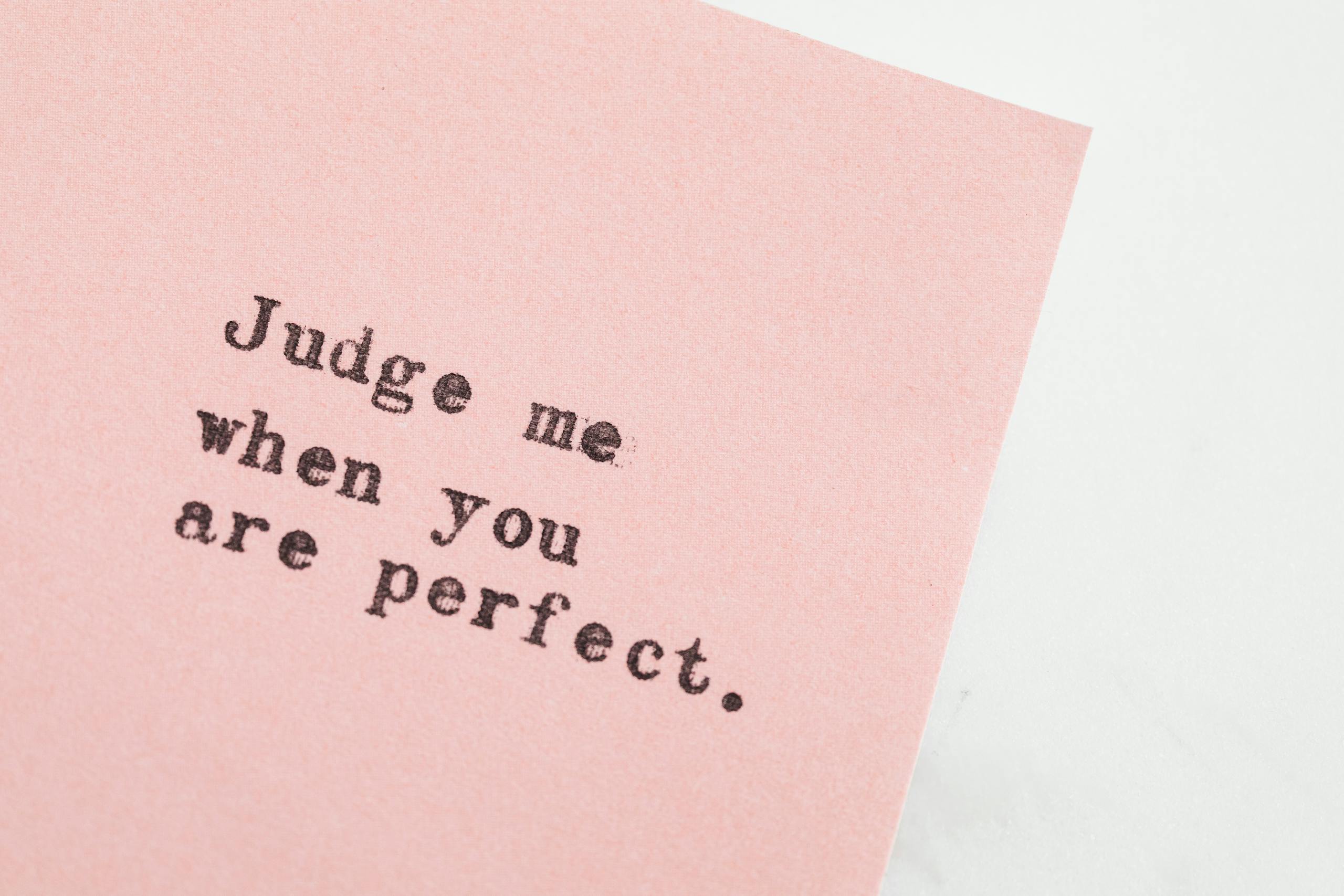

A quote from a Harvard reject about having a quiet personality cuts straight to something many of us have felt but rarely said out loud: being told your silence is a problem worth fixing. The quote, which has circulated widely in conversations about introversion and identity, captures the sting of being evaluated not for what you think or create, but for how loudly you present yourself. It’s a reminder that institutions built around performance often miss the people doing the deepest work.
Quiet personalities don’t lack ambition, drive, or intelligence. They process differently, connect differently, and often contribute in ways that don’t fit neatly into a rubric designed for extroverted expression. And when someone with a quiet nature gets rejected, the message they sometimes internalize isn’t “you weren’t the right fit.” It’s “you weren’t enough.”
That distinction matters enormously, especially for the parents, partners, and family members trying to understand the quiet person in their life.
If you’re exploring how introversion shapes family relationships and the way children develop their sense of self, our Introvert Family Dynamics and Parenting Hub covers the full range of these conversations, from raising introverted children to understanding how quiet adults show up in their closest relationships. This article adds a specific layer: what happens when the outside world tells a quiet person they’re not enough, and how that message echoes through families for years.

What Does a Harvard Rejection Have to Do With Introversion?
On the surface, a college rejection letter seems like it’s about grades, test scores, and extracurriculars. Dig a little deeper, and you’ll find something more uncomfortable: elite admissions processes have historically rewarded a very specific kind of person. Someone who leads clubs, commands rooms, and performs confidence in interviews. Someone who, in short, presents as an extrovert.
What’s your personality type?
Take our free 40-question assessment and get a detailed personality profile with dimension breakdowns, context analysis, and personalised insights.
Discover Your Type8-12 minutes · 40 questions · Free
The quote that sparked this article came from someone who described being told, in essence, that their quiet nature was a liability. Not their intellect. Not their character. Their quietness. And that framing, being quiet as a flaw rather than a trait, is something millions of people have absorbed from schools, workplaces, and families long before any admissions committee weighed in.
I felt this acutely in my own career. Running advertising agencies for two decades meant I was constantly in rooms where volume was mistaken for vision. I watched brilliant, quiet strategists get passed over for promotions because they didn’t “own the room” the way louder colleagues did. As an INTJ, I understood their experience viscerally, even if I was often the one making the difficult call about who moved up and who didn’t. The system I was operating inside rewarded performance over depth, and I wasn’t always able to change that, even when I wanted to.
What the Harvard rejection quote names is a pattern that starts early and runs deep. Children are told to speak up. Teenagers are graded on class participation. Adults are passed over for leadership roles because they don’t “seem like a leader.” The quiet person learns, over time, that something about them needs correcting.
Temperament, including the tendency toward introversion or extroversion, is shaped by a combination of genetics and early environment. According to MedlinePlus, temperament traits like sociability and emotional reactivity have a heritable component, meaning a quiet child isn’t choosing to be difficult. They’re wired a particular way. Treating that wiring as a deficiency doesn’t change it. It just teaches the child to feel ashamed of it.
How Does Rejection Shape a Quiet Person’s Self-Image?
Rejection stings for everyone. For people with quiet personalities, it often carries an extra weight because the rejection can feel like confirmation of a story they’ve already been told about themselves. You’re too reserved. You don’t put yourself out there. You need to be more outgoing.
When an institution as symbolically loaded as Harvard sends a rejection letter, and when a quiet person reads into that letter a judgment about their personality, the effect can be lasting. It reinforces what psychologists sometimes call a “fixed self-concept,” the belief that who you are is a permanent liability rather than a set of traits with their own strengths.
I’ve watched this play out in agency life more times than I can count. A talented copywriter on my team, someone whose written work was genuinely exceptional, would freeze in client presentations. She’d been told since childhood that she was “too quiet” and “hard to read.” By the time she reached her late twenties, she’d internalized that as a professional failing. It took real effort on my part, and hers, to reframe what she brought to the table. Her quietness in meetings wasn’t absence. It was processing. Every word she eventually said was precise and worth hearing. The clients who got to know her recognized that. The ones who judged her in the first five minutes didn’t.
Understanding your own personality architecture matters here. Tools like the Big Five Personality Traits Test can help quiet people see introversion not as a deficiency but as one dimension of a complex, functional personality. Knowing where you fall on dimensions like openness, conscientiousness, and agreeableness gives you language for your strengths, not just your perceived weaknesses.

Why Do Families Sometimes Amplify the “Too Quiet” Message?
Here’s the painful irony: the people who love a quiet person most are often the ones who deliver the “too quiet” message most frequently. Parents worry. They want their introverted child to make friends, succeed socially, and thrive in a world that seems to reward extroversion. So they push. They encourage. They sign kids up for debate club and insist on eye contact and coach them through small talk. All of it comes from love, and all of it can quietly communicate: the way you naturally are isn’t quite right.
Family dynamics, as Psychology Today notes, are shaped by the invisible rules and patterns that govern how members relate to one another. In families where extroversion is the norm, the quiet child often becomes the “project,” the one who needs to come out of their shell. That framing, however well-intentioned, can do real damage over time.
I think about my own family growing up. My parents weren’t unkind about my introversion. They were confused by it. My father was a natural salesman, warm and gregarious in every room he entered. He didn’t know what to make of a son who preferred reading to socializing and found large family gatherings genuinely exhausting. He never said anything cruel. But I absorbed his puzzlement. I spent years wondering if there was something wrong with me that I couldn’t just be more like him.
For parents who are themselves highly sensitive or introverted, the dynamic can be even more layered. You’re trying to protect your child from the judgment you’ve experienced, so you end up coaching them to mask their quietness rather than build confidence in it. Our piece on HSP parenting and raising children as a highly sensitive parent explores how parents who feel deeply can sometimes project their own anxieties onto their children’s social development, even when they’re trying to help.
The goal for any family isn’t to produce a child who performs extroversion convincingly. It’s to raise someone who understands their own nature well enough to work with it rather than against it.
What Does a Quiet Personality Actually Look Like in Practice?
Quiet personalities are often misread. The stillness gets mistaken for disengagement. The preference for listening gets labeled as passivity. The reluctance to fill silence gets called shyness, even when the person isn’t anxious at all, just selective.
In practice, a quiet personality often looks like someone who:
- Thinks before speaking, sometimes at length
- Prefers one-on-one conversation to group settings
- Observes carefully before acting
- Builds fewer but deeper relationships
- Recharges through solitude rather than social activity
- Produces their best work in focused, uninterrupted conditions
None of those traits are liabilities. In many professional contexts, they’re exactly what’s needed. The problem is that most of our evaluation systems, from school report cards to job interviews to Harvard applications, are designed to surface extroverted behavior as evidence of competence.
The 16Personalities framework describes introversion as a preference for depth over breadth in social engagement, not a fear of people or a lack of social skill. That distinction is worth holding onto when a rejection letter arrives and the temptation is to read it as proof of inadequacy.
One thing I’ve noticed across years of managing creative teams is that the quietest people in the room were often the ones whose ideas held up longest. They weren’t performing in brainstorms. They were filtering. By the time they spoke, they’d already stress-tested the idea internally. That’s not a weakness. That’s a different kind of rigor.
Can a Quiet Person Be Genuinely Likeable Without Changing Who They Are?
One of the most persistent myths about quiet personalities is that they’re harder to like. That warmth requires volume. That connection requires performance. Neither is true, but it can feel true when you’ve spent years being told to speak up, smile more, or “put yourself out there.”
Likeability, at its core, is about making people feel seen and valued. Quiet people often do this exceptionally well, through careful listening, genuine attention, and the kind of focused presence that’s increasingly rare in a distracted world. The person who remembers what you said three weeks ago and asks a specific follow-up question is practicing a form of connection that many extroverts, racing to fill silence, never quite achieve.
If you’ve ever wondered how you come across to others, the Likeable Person Test can offer some useful perspective. Not to change who you are, but to understand which of your natural traits are already landing well with the people around you.
I’ve had clients, Fortune 500 executives, who told me after years of working together that I was one of the most calming presences in any room we shared. That surprised me every time, because I was often the quietest person at the table. What I eventually understood was that my stillness read as confidence. My listening read as respect. My measured responses read as thoughtfulness. None of those were performances. They were just me, being myself without apology.
That shift, from apologizing for quietness to owning it, doesn’t happen overnight. And it certainly doesn’t happen when every institution you encounter treats your personality as something to overcome.
How Does the “Too Quiet” Label Follow Someone Into Adulthood?
Labels have staying power. A child told they’re “too quiet” doesn’t shed that label when they graduate. It follows them into job interviews, first dates, performance reviews, and parent-teacher conferences on the other side of the table. The internal voice that says “you’re not presenting yourself well enough” doesn’t go quiet just because the context changes.
What’s worth examining is whether that internal voice is accurate, or whether it’s simply repeating something it was taught. Many quiet adults carry a distorted self-perception, one that was shaped by environments designed for different personalities. When they finally encounter a space that values their particular way of being, the relief is often profound.
There’s also an important distinction between introversion and other psychological experiences that can produce quietness. Anxiety, depression, trauma responses, and certain personality patterns can all manifest as social withdrawal or reticence. If you’re uncertain whether your quietness is temperamental or something that might benefit from professional support, tools like the Borderline Personality Disorder Test can help you begin to distinguish between personality traits and patterns that might warrant a closer look with a mental health professional.
Introversion, by itself, isn’t a disorder. It’s a trait. But it can be complicated by other experiences, and it’s worth being honest with yourself about which is which.
Findings published in Frontiers in Psychology have examined how personality traits interact with social environments and self-perception, pointing to the complexity of how people experience and express their personalities across different contexts. What that complexity means practically is that quietness isn’t a fixed, simple thing. It’s shaped by context, relationship, history, and self-awareness.

What Careers Actually Reward a Quiet Personality?
Part of what makes the Harvard rejection narrative so potent is the assumption embedded in it: that the most prestigious, most rewarding careers require a particular kind of social performance. That quiet people should aim lower, or work harder to seem more extroverted, if they want to succeed at the highest levels.
That assumption is simply wrong, and it does real harm to quiet people who internalize it early.
Many fields that demand deep focus, careful observation, and sustained attention reward introversion implicitly even when they don’t name it. Writing, research, design, software development, therapy, accounting, and many forms of healthcare create conditions where a quiet person’s natural operating mode is genuinely advantageous.
Consider caregiving roles. The capacity to be fully present with someone, to listen without agenda, to notice subtle changes in mood or condition, is something many introverts do naturally. If you’re exploring whether a caregiving role might suit your personality, the Personal Care Assistant Test offers a starting point for understanding whether your traits align with that kind of work.
Similarly, health and fitness roles that require individualized attention, patient observation, and the ability to build trust over time can be a strong fit for quiet personalities. The Certified Personal Trainer Test is one resource for exploring whether that path might align with your strengths.
What I’d say to any quiet person wondering whether their personality will limit their professional ceiling: it won’t, unless they let the wrong institutions define what the ceiling is. I ran agencies. I sat across from Fortune 500 CMOs. I negotiated contracts worth millions of dollars. And I did all of it as an introvert who preferred thinking to talking, depth to small talk, and written communication to impromptu speeches. The key wasn’t pretending to be someone else. It was finding the contexts where my particular strengths were actually valued.
How Should Parents Respond When a Quiet Child Faces Rejection?
When a quiet child gets rejected, whether from a school program, a social group, or eventually a college, the parental instinct is often to help them “do better next time.” To coach them toward a more impressive presentation. To encourage them to be more outgoing, more visible, more legible to the evaluators.
That instinct, while understandable, can reinforce exactly the wrong message. What a quiet child needs after rejection isn’t a performance upgrade. They need someone to help them separate the rejection from their worth as a person, and to understand that some environments simply aren’t designed for them.
That’s a harder conversation. It requires a parent to say, honestly, “This particular place wasn’t built for how you think and work. That’s their limitation, not yours. Let’s find the places that are.” It means resisting the urge to fix the child and instead helping them find better-fit environments.
Research published in PubMed Central on child development and temperament highlights how children’s emotional responses to social challenges are shaped significantly by how caregivers respond to those challenges. A parent who treats rejection as evidence that the child needs to change sends a very different signal than one who treats it as information about fit.
The quiet child who grows up hearing “you’re exactly right for the right places” develops a very different relationship with rejection than the one who hears “you need to be more outgoing.” Both face the same rejections. Only one of them survives them intact.
Family dynamics play a powerful role in shaping how children interpret external feedback. Psychology Today’s coverage of family structure and dynamics touches on how the relational patterns children experience at home become the lens through which they interpret the world outside it. A family that treats quietness as valuable raises a child who believes, at some level, that they are valuable.

What Can the Rest of Us Learn From the Harvard Reject’s Quote?
The quote itself, whatever its exact wording in its original context, lands because it names something real. Quiet people are evaluated constantly, and the evaluation criteria are often stacked against them. The person who said it out loud did something that quiet people rarely do: they pushed back on the framing.
That’s worth something. Not because Harvard’s rejection was wrong, necessarily, but because the impulse to name the bias rather than absorb it represents a kind of self-advocacy that quiet people are rarely taught.
What the quote teaches, at least to me, is that the story of a quiet personality isn’t defined by the institutions that couldn’t see its value. It’s defined by what the person does with their particular way of being once they stop trying to fit a mold that was never cast for them.
I spent the first decade of my career trying to perform extroversion convincingly. I got good at it, in the way you get good at anything you practice. But it cost me. The energy I spent performing was energy I wasn’t spending thinking, creating, or leading in the ways that actually suited me. When I finally stopped performing and started operating from my actual strengths, everything got cleaner. My decisions got sharper. My relationships with clients deepened. My teams trusted me more, not less, because I stopped pretending.
A quiet personality isn’t a consolation prize. It’s a different kind of capability, one that the right environments recognize and the wrong ones overlook. The work isn’t changing your personality. It’s finding, and sometimes building, the right environments.
There’s much more to explore about how introverts show up in their closest relationships and how families can better support quiet members. Our complete Introvert Family Dynamics and Parenting Hub is a good place to keep reading.
About the Author
Keith Lacy is an introvert who’s learned to embrace his true self later in life. After 20 years in advertising and marketing leadership, including running agencies and managing Fortune 500 accounts, Keith now channels his experience into helping fellow introverts understand their strengths and build fulfilling careers. As an INTJ, he brings analytical depth and authentic perspective to every article, drawing from both professional expertise and personal growth.
Frequently Asked Questions
What does it mean to have a quiet personality?
A quiet personality typically describes someone who is introverted by nature, preferring depth over breadth in social interaction, processing internally before speaking, and recharging through solitude. It doesn’t indicate shyness, anxiety, or a lack of social skill. Many people with quiet personalities are deeply perceptive, thoughtful communicators who simply operate differently from extroverted norms. The trait is temperamental, meaning it’s shaped by both genetics and early environment, and it carries genuine strengths in focused work, careful listening, and sustained attention.
Can a quiet personality hurt your chances in elite college admissions?
Elite admissions processes have historically rewarded visible leadership, social performance, and extroverted presentation. A quiet personality isn’t inherently disqualifying, but it can be disadvantaged in systems that evaluate “demonstrated leadership” through high-visibility activities or that assess candidates through interviews favoring confident, outgoing presentation. The deeper issue is that these evaluation systems often conflate extroversion with competence, which can lead to quiet, highly capable people being passed over. Many quiet people thrive at elite institutions once admitted. The friction is often in the application process itself.
How should parents support an introverted child who experiences rejection?
Parents can support introverted children after rejection by separating the rejection from the child’s worth and helping them understand that some environments simply aren’t designed for their particular strengths. Coaching a quiet child to perform extroversion more convincingly sends the message that their natural personality is a problem. A more helpful response involves acknowledging the disappointment honestly, affirming the child’s specific strengths, and focusing energy on finding environments that are genuinely well-matched to how they think and work. Children who grow up hearing that their quietness is valuable develop more resilient self-concepts.
Is being quiet the same as being introverted?
Not exactly. Introversion is a personality orientation defined by where someone draws energy, specifically from solitude and internal reflection rather than social stimulation. Quietness is a behavioral expression that often accompanies introversion but isn’t identical to it. Some introverts are quite talkative in the right contexts. Some extroverts are quiet in unfamiliar settings. Quietness can also stem from anxiety, depression, cultural background, or situational discomfort. When someone describes having a quiet personality, they’re usually pointing to a consistent preference for measured, selective communication rather than a diagnosable condition or a temporary state.
What careers are well-suited to people with quiet personalities?
Many careers reward the traits that quiet personalities bring naturally: deep focus, careful observation, precise communication, and the ability to build trust through sustained attention. Fields like writing, research, design, software development, therapy, healthcare, accounting, and caregiving often create conditions where quiet people thrive. Leadership roles can also suit quiet personalities when the environment values thoughtful decision-making over performative confidence. The most important factor isn’t the specific career but whether the work culture rewards depth and substance or primarily rewards volume and visibility.