
Something clicked for me during a particularly chaotic Saturday morning. My wife and I sat across from each other at the kitchen table, both of us clutching coffee cups like lifelines while our kids ricocheted between the living room and backyard. Neither of us had said much that morning, not because anything was wrong, but because we both needed the quiet. That silent solidarity, I realized, was one of the greatest gifts we could give each other as introverted parents.
When both parents are introverts, parenting challenges traditional assumptions about household energy dynamics. Most parenting advice assumes one partner thrives on constant engagement while the other recharges through social interaction. But when both adults need solitude to function optimally, families must develop entirely different strategies for managing daily life, social obligations, and child development.
This article explores the distinct challenges and unexpected advantages of raising children when both parents identify as introverts. From managing energy reserves to modeling healthy boundaries, dual introvert households offer children something remarkably valuable: parents who understand the importance of inner life and the power of thoughtful observation.
What Happens When Both Parents Are Introverts?
The first thing to recognize about two introverted parents raising children together is that you are not operating at a deficit. For years, I believed my wife and I needed to compensate for our shared temperament, as if introversion were something to overcome rather than work with. That mindset exhausted us more than the parenting itself ever did.
What’s your personality type?
Take our free 40-question assessment and get a detailed personality profile with dimension breakdowns, context analysis, and personalised insights.
Discover Your Type8-12 minutes · 40 questions · Free
When both partners are introverts, household dynamics take on specific patterns that reflect shared needs for processing time and energy management:
- Parallel recharging becomes essential – Both parents need simultaneous downtime, requiring careful coordination of quiet periods
- Energy depletion affects both partners – Without one naturally high-energy parent to compensate, families must plan strategically around stamina limits
- Social obligations require team strategy – School events, birthday parties, and community activities need deliberate approach since neither parent naturally enjoys these settings
- Decision-making benefits from shared reflection – Major parenting decisions receive thorough consideration rather than impulsive responses
- Home environment naturally becomes calmer – Children experience less chaos but parents must ensure adequate stimulation for development

Research from the Journal of Family Psychology demonstrates that parental warmth and responsiveness matter far more than personality type in predicting positive child outcomes. The study found that warm and affectionate parenting practices have been positively associated with wellbeing across the lifespan. Introverted parents who connect deeply with their children, even in quieter ways, provide exactly what children need to thrive.
During my years managing creative teams at advertising agencies, I learned that some employees thrived in high-energy brainstorming sessions while others produced their best work in quiet, focused environments. The same principle applies to parenting. When I tried to force myself into the high-energy parent role during my daughter’s toddler years, both my effectiveness and my enjoyment plummeted. Once I accepted that my strength lay in patient listening and thoughtful responses rather than animated play, our connection deepened significantly.
How Do You Manage Energy When Both Parents Need Quiet Time?
Every parent faces energy depletion, but when both adults in the household draw from similar reserves, the mathematics becomes more complex. Without one partner naturally suited to handle high-stimulation situations while the other recovers, dual introvert couples must become strategic about energy management in ways that mixed-temperament households might not need to consider.
The solution begins with acknowledging reality rather than fighting it. My wife and I learned to stop pretending we could handle endless birthday party circuits or back-to-back social weekends. Once we accepted our limitations, we could plan around them rather than collapsing under their weight. If you have not yet explored strategies for managing your energy as a parent, our complete guide to parenting as an introvert offers foundational approaches that apply to dual introvert households.
Effective energy management strategies for dual introvert parents include:
- Establish daily energy check-ins – Use a simple 1-10 scale each morning to communicate current capacity and plan day accordingly
- Implement tag-team parenting – Alternate high-energy activities so one parent engages while the other recovers
- Create scheduled quiet periods – Build mandatory downtime into family routines when both parents can recharge simultaneously
- Batch social obligations – Handle multiple social commitments in concentrated periods followed by recovery days
- Prioritize sleep and morning routines – Protect the energy foundation that enables everything else
Tag-team parenting becomes essential in dual introvert households. Rather than both parents engaging simultaneously with high-energy activities, alternating allows one partner to recover while the other steps in. This approach means neither parent reaches complete depletion, and children still receive the attention they need. The Psychology Today research on introverted parenting confirms that introverted parents who accept themselves and their need for alone time become better parents, not worse ones.
What Home Environment Works Best for Introverted Families?
The physical space where you raise children matters enormously when both parents need quiet to function well. Dual introvert households benefit from intentional design that creates zones for different energy levels, allowing everyone in the family to find what they need without disrupting others.
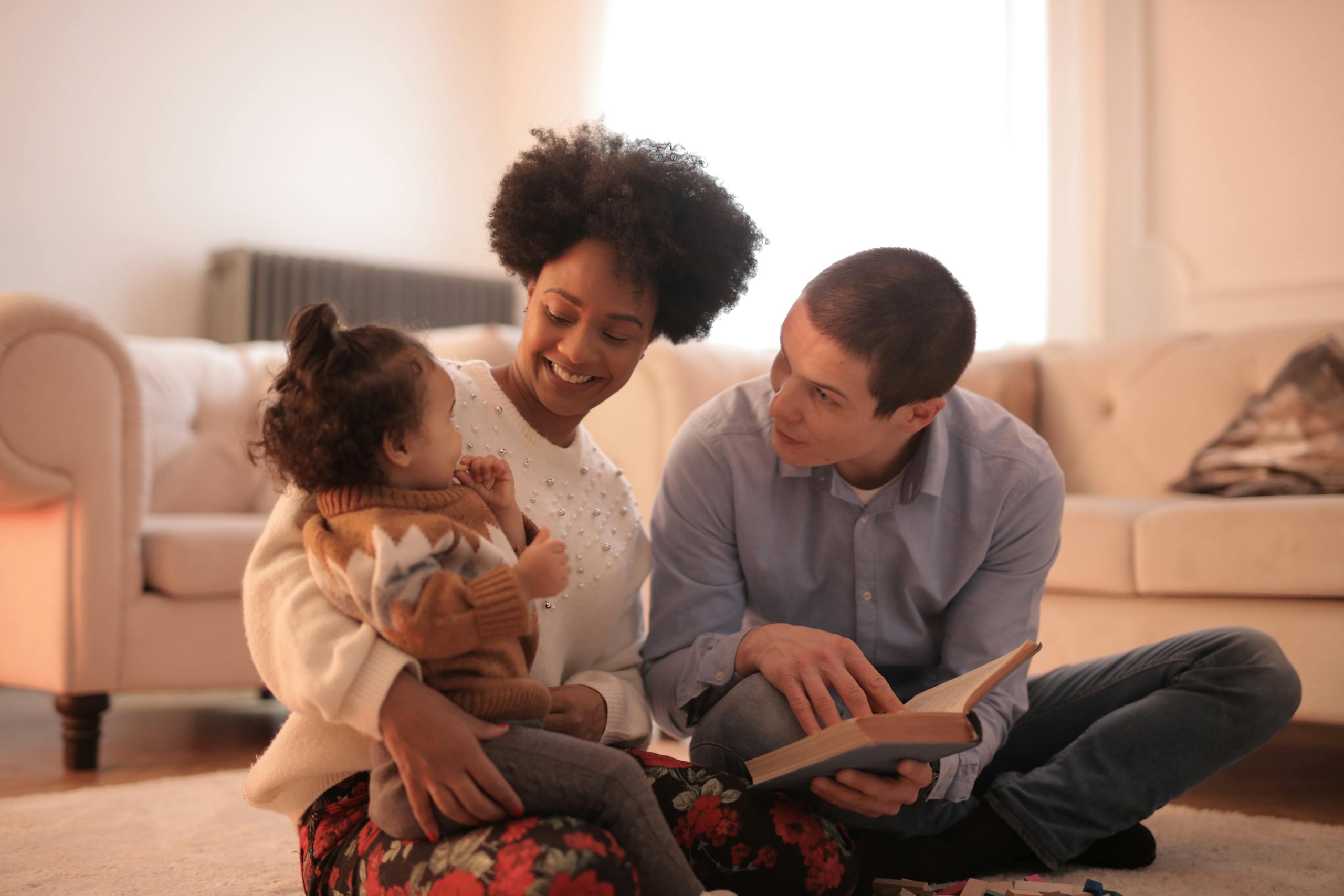
Consider designating specific areas where noise and activity are welcome and other spaces where quiet is expected. This does not require a mansion; even small homes can establish clear zones. The playroom might be the high-energy space, while the living room after a certain hour becomes a calm zone. Children adapt remarkably well to these expectations when they understand the reasoning and experience consistency.
Home design elements that support introverted family life:
- Quiet zones with comfortable seating – Reading nooks, meditation corners, or simply spaces designated for low-stimulation activities
- Sound management through soft furnishings – Rugs, curtains, and upholstery absorb noise and create calmer acoustic environments
- Natural light and plants – Research shows these elements reduce stress and support emotional regulation for all family members
- Organization systems that reduce decision fatigue – Clear storage, labeled spaces, and predictable locations for essential items
- Technology boundaries – Designated device-free times and spaces that support quiet connection
Soundproofing, even simple measures like rugs, curtains, and closing doors, can make a significant difference. During particularly overwhelming periods, noise-canceling headphones become legitimate parenting tools rather than signs of disengagement. My wife keeps a pair in the kitchen drawer for moments when the sensory input becomes too much. Knowing that option exists often means she rarely needs it.
The American Academy of Pediatrics emphasizes that family routines help children feel secure and parents feel less overwhelmed. For dual introvert households, predictable schedules reduce the need for constant decision-making and negotiation, preserving mental energy for the moments that truly require it—especially during family gatherings and social obligations. Structure becomes liberating rather than constraining.
How Do You Handle Social Pressure as Introverted Parents?
Modern parenting comes with enormous social pressure. Birthday party attendance, sports leagues, playdates, school events, and community activities create a calendar that would challenge anyone. For two introverted parents, the social demands of childhood can feel like an assault course where neither partner can serve as the designated extrovert.
The first step toward sanity is recognizing that you cannot attend everything, and attempting to do so will leave you depleted and resentful. Selectivity is not selfishness; it is sustainable parenting. My wife and I established a rule early on: we would choose quality over quantity in all social commitments. One truly engaged birthday party where we were fully present served our kids better than five events where we counted down the minutes until departure.
Strategic approaches to social obligations for dual introvert parents:
- Choose one high-priority event per weekend maximum – Protect recovery time by avoiding social overcommitment
- Divide responsibilities based on tolerance levels – One parent handles school functions while the other manages smaller gatherings
- Build relationships with other introvert families – Seek out parents who prefer parallel play and quieter interactions
- Use preparation strategies to reduce anxiety – Research events beforehand, plan arrival and departure times, identify quiet spaces
- Practice graceful declining without elaborate justification – Simple “that won’t work for our family” responses
Dividing social responsibilities based on each partner’s strengths and preferences helps enormously. Perhaps one parent handles school functions better while the other manages the smaller, more intimate gatherings. Maybe Saturday morning sports feel manageable but Sunday brunches with other families drain every reserve. Discussing these preferences openly allows for strategic division that benefits the entire family, especially when personality types differ significantly—a dynamic explored in depth in our guide to ENFJ parent and INFJ child dynamics. For specific guidance on family traditions that honor introvert needs, explore our article on creating traditions that don’t exhaust you.
Building relationships with other introverted parents can provide tremendous relief. These friendships often involve lower-key interactions that feel restorative rather than draining. Parallel play during playdates, where adults sit comfortably in quiet company while children entertain themselves, becomes possible with the right social circle. Seeking out these connections deliberately can transform social obligations into genuinely enjoyable experiences.
What Boundaries Should Introverted Parents Model?
One of the greatest gifts dual introvert parents can offer their children is a model of healthy boundary setting. In a world that often prizes constant availability and relentless activity, children benefit enormously from seeing adults who know their limits and honor them without apology.

When children watch both parents take quiet time without shame, they learn that solitude is healthy rather than antisocial. When they see parents decline invitations without elaborate justification, they understand that protecting personal energy is a legitimate choice. These lessons prove invaluable as children grow and face their own decisions about time, energy, and social engagement.
Essential boundaries that dual introvert parents should model include:
- Daily quiet time is non-negotiable – Show children that taking care of your mental health enables better care for others
- Social commitments require thoughtful consideration – Demonstrate that saying yes to everything means saying no to your wellbeing
- Different people have different energy needs – Normalize the fact that families can operate differently than their neighbors
- Quality relationships matter more than quantity – Show children that deep connections with fewer people can be more fulfilling
- Authenticity trumps social performance – Model being genuine rather than playing roles that exhaust you
The Center for Parenting Education confirms that introverted children who see their needs modeled by parents develop better coping skills and stronger self-acceptance. Even children with extroverted tendencies benefit from understanding that different people require different amounts of stimulation. Dual introvert households naturally demonstrate this diversity of needs.
Communication about boundaries should be age-appropriate and honest. Telling a child that Mommy needs quiet time to feel better teaches emotional vocabulary and self-awareness. Explaining that Daddy feels tired after lots of people time normalizes introversion without pathologizing it. These conversations, repeated naturally over years, build children who understand and respect both their own limits and those of others.
I learned this lesson during a particularly difficult period when my son was seven. He kept interrupting my evening downtime, not out of genuine need but from habit and attention-seeking. Instead of getting frustrated, I explained that just like he needed snacks to refuel his body, I needed quiet time to refuel my mind so I could be a better dad. Once he understood the purpose rather than seeing it as rejection, he began protecting my quiet time and even creating his own.
How Do You Parent Extroverted Children as Introverts?
Perhaps no challenge confuses dual introvert parents more than raising children who do not share their temperament. Genetics can produce surprising combinations, and many introverted couples find themselves parenting one or more children who seem to run on an entirely different energy system.
The first thing to understand is that your extroverted child is not defective, nor are you failing by not matching their energy level. Children can thrive with parents who differ from them temperamentally, provided those parents make conscious efforts to meet the child’s legitimate needs and remain aware of manipulation tactics used on introverts. For specific strategies, our comprehensive resource on dealing with extroverted children as introverts offers detailed guidance.
Research from Psychology Today’s emotion regulation research demonstrates that children learn emotional regulation through observation and modeling. When introverted parents demonstrate healthy ways to manage their own energy and emotions, children of all temperaments learn valuable skills. Supportive parental responses that focus on children’s needs encourage healthy emotional development regardless of introversion-extroversion differences.
Strategies for meeting extroverted children’s needs without depleting introverted parents:
- Arrange social opportunities that don’t require full parental participation – Team sports, clubs, and activities with other trusted adults
- Create structured social time with clear endpoints – Planned playdates with defined start and finish times
- Partner with extroverted family members – Grandparents, aunts, uncles who enjoy high-energy activities
- Focus on quality engagement during your peak energy times – Give full attention when you’re recharged rather than distracted presence when depleted
- Teach your child about different energy styles – Help them understand why some people need quiet time and others need social time
Practical solutions for extroverted children in dual introvert households include arranging social opportunities that do not require parental attendance for the entire duration. Team sports, clubs, and activities with other trusted adults can provide the stimulation extroverted children crave. Grandparents, aunts, uncles, and family friends who enjoy high-energy activities can become valuable partners in meeting your child’s social needs.
How Do Introverted Couples Maintain Their Relationship?
Raising children strains every marriage or partnership, and dual introvert couples face specific challenges in maintaining their connection. When both partners desperately need quiet and solitude, carving out time for relationship maintenance can feel like yet another demand on limited resources.
You might also find maintaining-friendships-when-you-have-kids helpful here.

The advantage dual introvert couples possess is mutual understanding. Neither partner needs to explain why they are quiet after a long day or apologize for preferring a night in over a night out. This shared language can form the foundation for connection that does not require constant verbal processing or high-energy activities.
Connection strategies that work for introverted couples with children:
- Parallel activities in shared space – Reading, working on separate projects, or pursuing individual hobbies while physically present together
- Brief but meaningful daily check-ins – Short, focused conversations about practical matters and emotional needs
- Scheduled date nights at home – After children’s bedtime, creating intentional couple time without leaving the house
- Wordless connection rituals – Morning coffee together, evening walks, or simply sitting together without conversation pressure
- Shared responsibility systems that reduce negotiation – Clear divisions of labor that eliminate daily decision fatigue
Connection for introverted couples often looks different than conventional relationship advice suggests. Parallel activities, where both partners engage in separate quiet pursuits in the same space, can feel deeply intimate. Reading together in comfortable silence, working on individual projects in shared space, or simply being present without the pressure of interaction maintains connection while respecting energy needs.
Communication, when it happens, should be efficient and meaningful. My wife and I developed a practice of short, focused conversations about household and parenting matters rather than endless discussions that drain us both. We save our deeper conversations for moments when we have the energy to truly engage, making those exchanges more valuable. Regular check-ins prevent small issues from becoming large ones while avoiding the exhaustion of constant processing.
One evening, after a particularly demanding week with both kids fighting a stomach bug, my wife and I found ourselves completely drained. Instead of forcing conversation or connection, we sat on the couch with our own books, occasionally sharing a meaningful glance or brief touch. That quiet presence together recharged us both more effectively than any elaborate date night could have during that period.
What Are the Hidden Advantages of Dual Introvert Parenting?
For all the challenges dual introvert parenting presents, significant advantages rarely receive attention. Children raised by two introverted parents often develop exceptional observation skills, emotional depth, and comfort with solitude that serve them throughout life.
Thoughtful parenting comes naturally when both partners prefer reflection over reaction. Major decisions receive careful consideration rather than impulsive responses. Discipline tends toward explanation and understanding rather than loud confrontation. The household atmosphere, while perhaps quieter than average, often carries less chaos and more intentionality.
According to research published by Zero to Thrive at Michigan Medicine, children with regular routines at home demonstrate better self-regulation skills, which form the building blocks of good mental health. Dual introvert households naturally gravitate toward routine and predictability, providing children with the structure that supports healthy development. The preference for order that many introverts share translates into home environments where children know what to expect.
Key advantages children gain from dual introvert parenting include:
- Deep listening skills – Parents who don’t compete for airtime create space for children to express themselves fully
- Comfort with solitude – Children learn that being alone is restorative rather than lonely or problematic
- Thoughtful decision-making patterns – Children observe parents who consider options carefully before acting
- Strong one-on-one relationship skills – Emphasis on quality connections rather than broad social networks
- Emotional regulation abilities – Children learn to manage their own energy and emotions through parental modeling
- Appreciation for authentic relationships – Children understand that genuine connections matter more than social performance
Deep listening, a skill many introverts develop through necessity, creates space for children to feel truly heard. When parents are not competing for airtime or filling every silence, children often share more. The patience that introversion cultivates allows for the slow unfolding of children’s thoughts and feelings in ways that rushed, high-stimulation environments cannot support. For parents working with toddlers, our resource on toddler parenting for drained introverts addresses specific challenges during those demanding early years.
How Do Parenting Challenges Change as Children Grow?
The demands on dual introvert parents shift dramatically as children grow. What works during infancy may become irrelevant by middle school, and strategies that manage elementary years might need complete revision for teenagers. Understanding these transitions helps parents prepare rather than simply react.
Infant and toddler years often prove the most physically exhausting for dual introvert parents. The constant demands, the inability to predict schedules, and the sheer sensory overload of young childhood can push both parents to their limits. Survival during this period requires lowering expectations, accepting help when offered, and remembering that this stage, while intense, is temporary.
Elementary years often bring relief as children develop independence and the ability to entertain themselves. However, this period introduces new challenges in the form of social obligations, school activities, and the expanding network of relationships that accompany childhood friendships. Dual introvert parents must consciously build social connections for their children while protecting their own energy reserves.
Developmental stage considerations for dual introvert parents:
- Infancy (0-2 years) – Focus on survival mode, accept imperfection, use tag-team approaches for night duties and high-stimulation periods
- Preschool (3-5 years) – Begin teaching quiet time expectations, establish family routines that include recovery periods for parents
- Elementary (6-11 years) – Navigate increased social obligations, help children develop independence, model boundary-setting
- Middle school (12-14 years) – Support children’s social development while maintaining family calm, prepare for adolescent emotional intensity
- High school (15-18 years) – Balance availability for important conversations with respect for mutual need for space
Adolescence presents a paradox for introverted parents. Teenagers often require less hands-on care but more emotional availability. They may retreat into their own worlds, which introverted parents understand intuitively, but they also need parents capable of engaging when they choose to connect. Our guide on parenting teenagers as an introverted parent explores these dynamics in depth.
What Support Systems Do Introverted Families Need?
No parent should attempt to raise children without support, and dual introvert households require networks that understand and accommodate their particular needs. Building these networks intentionally, rather than hoping they develop organically, prevents isolation while respecting introvert preferences for meaningful rather than abundant connections.

Family members who understand introversion can provide invaluable respite. Grandparents, siblings, or extended family who willingly take children for periods, even brief ones, offer both parents the recovery time they need. These relationships require cultivation and honest communication about needs and capacities. Explaining to an extroverted grandmother why you need breaks does not come naturally, but the conversation proves worthwhile.
Essential support system components for dual introvert families:
- Extended family who understand energy needs – Relatives willing to provide childcare without judgment about parenting style differences
- Professional support services – Reliable babysitters, housekeeping help, or other services that reduce overall household demands
- Like-minded parent friendships – Connections with other families who value quiet time and understand introvert preferences
- Online communities for validation and advice – Virtual connections that provide support without energy-draining social obligations
- Emergency backup plans – Trusted caregivers who can step in during parental burnout or crisis situations
Professional support, from reliable babysitters to housekeeping help when affordable, reduces the overall load on already-stretched resources. Dual introvert households often benefit more from these services than they realize because the mental energy required for constant household management compounds the drain of active parenting. Investing in help is an investment in parenting capacity.
Online communities offer connection without the energy cost of in-person socializing. Connecting with other introverted parents through forums, social media groups, or virtual communities provides the understanding and solidarity that reduces isolation. These connections can eventually become in-person friendships with people who already understand the rules of engagement. For comprehensive approaches to introverted parenting, our complete handbook for introvert parents offers additional resources.
What Will Your Children Actually Remember?
Years from now, your children will not remember whether you attended every school event or hosted the most elaborate birthday parties. What they will remember is whether they felt loved, understood, and secure. These qualities emerge from consistent presence and genuine connection, not from relentless activity or social calendars packed beyond capacity.
Introverted parents often provide experiences their children remember fondly precisely because those experiences receive full attention. Reading together before bed, quiet conversations during car rides, or shared activities that allow for connection without overstimulation create memories that endure. The gift of undivided attention, which introverted parents can offer during their recovered moments, outweighs the quantity of distracted interactions.
Children raised by two introverted parents learn valuable lessons about authenticity and self-knowledge. They see adults who know themselves, honor their needs, and live accordingly. They learn that different people require different things to thrive and that accommodating those differences is part of loving someone well. These lessons prepare them for relationships throughout their lives.
What children remember from introverted parenting includes:
- Parents who were fully present during conversations – Quality attention during interactions rather than distracted multitasking
- A calm home environment where they felt safe – Predictable routines and emotional stability that provided security
- Parents who listened without rushing to fix or advise – Space to express themselves completely before receiving responses
- Adults who demonstrated self-awareness and authenticity – Models of people who knew their limits and honored them
- Deep connections that felt meaningful – Relationships based on genuine understanding rather than social performance
The world needs people who can think deeply, listen carefully, and observe thoughtfully. Dual introvert households naturally cultivate these qualities. By parenting in ways that honor your temperament rather than fighting it, you prepare children for a world that benefits from the gifts introverts bring. Your quiet strength becomes their inheritance.
I think back to my own childhood and the moments that mattered most. They weren’t the loud birthday parties or crowded family gatherings. They were the evenings my father sat beside me while I worked on homework, not talking but simply present. They were the Saturday mornings when my mother and I read in comfortable silence, each with our own book but sharing the peaceful space. Those quiet connections shaped my understanding of love more profoundly than any high-energy activities could have.
Frequently Asked Questions
Can two introverted parents adequately socialize their children?
Absolutely. Children develop social skills through various channels, not solely through parental modeling of extroverted behavior. Schools, activities, extended family, and peer relationships provide ample socialization opportunities. Introverted parents often raise children with strong one-on-one relationship skills and comfort with deeper connections rather than superficial social networks.
What if both parents reach burnout at the same time?
This situation requires advance planning and external support. Building relationships with family or trusted caregivers who can step in during crisis moments prevents complete collapse. Some couples establish emergency protocols that include calling for help, reducing all non-essential activities, and entering survival mode until recovery becomes possible.
How do we handle pressure from extended family who do not understand our approach?
Clear, consistent communication helps, though it may not eliminate all misunderstanding. Explaining that your family operates differently, without apologizing for that difference, establishes necessary boundaries. Over time, relatives often come to respect an approach that clearly produces happy, well-adjusted children, even if they initially questioned it.
Should we try to make our home more stimulating for our children?
Children benefit from balance. While dual introvert households may be calmer than average, children still need age-appropriate stimulation and activity. The solution involves providing outlets for energy and creativity, through outdoor play, creative materials, and physical activities, while maintaining the overall peaceful atmosphere that allows parents to function well.
How do we know if our introversion is affecting our children negatively?
Warning signs include children who seem isolated, express consistent loneliness, or struggle significantly in social situations they want to succeed in. However, children who are content with smaller social circles or who enjoy solitary activities should not be confused with children in distress. Observing whether your children seem happy and well-adjusted provides better guidance than comparing them to external standards.
Explore more resources for introverted families in our complete Introvert Family Dynamics and Parenting Hub.
About the Author
Keith Lacy is an introvert who’s learned to embrace his true self later in life. With a background in marketing and a successful career in media and advertising, Keith has worked with some of the world’s biggest brands. As a senior leader in the industry, he has built a wealth of knowledge in marketing strategy. Now, he’s on a mission to educate both introverts and extroverts about the power of introversion and how understanding this personality trait can unlock new levels of productivity, self-awareness, and success.