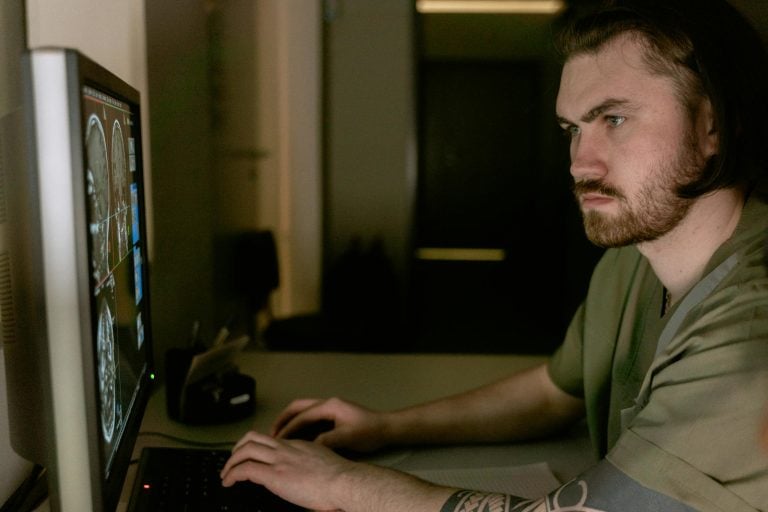
Nursing attracts certain personality types more than others, but some MBTI types remain surprisingly rare in healthcare settings. While empathetic types like ISFJ and ESFJ dominate nursing ranks, analytical personalities like INTJ and INTP represent less than 3% of practicing nurses, creating unique challenges and opportunities in patient care.
I discovered this firsthand when consulting for a major healthcare system. Their nursing leadership team struggled with retention among their most analytical staff members. These weren’t people lacking compassion, they were brilliant clinicians who approached patient care through a different lens. Understanding which types thrive in nursing versus which ones struggle helps both aspiring nurses and healthcare organizations build stronger, more diverse teams.
The intersection of personality and career choice becomes especially pronounced in high-stakes professions like nursing. While anyone can develop the skills needed for quality patient care, certain cognitive preferences make some aspects of nursing more natural than others. Our MBTI General & Personality Theory hub explores these patterns across professions, but nursing presents particularly interesting data about personality distribution.

Which MBTI Types Are Most Common in Nursing?
Research from the American Psychological Association shows that Sensing-Feeling types dominate nursing professions. ISFJ (The Protector) represents approximately 19% of nurses, making it the most common type in the field. ESFJ (The Provider) follows closely at 16%, while ISFP (The Mediator) accounts for about 12% of practicing nurses.
These percentages make sense when you consider nursing’s core requirements. Patient care demands attention to concrete details, emotional intelligence, and a service-oriented mindset. Extraverted Sensing (Se) helps nurses stay present and responsive to immediate patient needs, while strong Feeling preferences enable the empathy essential for therapeutic relationships.
During my agency days, I worked with several healthcare clients recruiting nursing staff. The most successful candidates consistently demonstrated what we called “practical empathy” – the ability to combine emotional intelligence with concrete problem-solving. This combination appears most naturally in SF (Sensing-Feeling) types, explaining their prevalence in nursing roles.
The Mayo Clinic has conducted extensive research on healthcare personality patterns, finding that approximately 60% of nurses identify as Feeling types, compared to just 40% in the general population. This concentration suggests that nursing attracts individuals whose decision-making process naturally prioritizes human values and interpersonal harmony.
What Makes Certain Types Rare in Nursing?
The rarest MBTI types in nursing share specific characteristics that can create friction with traditional nursing culture. INTJ (The Architect) represents less than 2% of nurses, despite making up about 2-3% of the general population. INTP (The Thinker) appears even less frequently, at roughly 1.5% of nursing professionals.
These types face unique challenges in nursing environments. Their preference for Introverted Thinking (Ti) can clash with nursing’s emphasis on established protocols and team-based decision making. Where most nurses rely on proven procedures and collaborative input, Ti-dominant types want to understand the underlying logic and may question standard practices.

I remember consulting with a brilliant INTJ nurse who consistently delivered exceptional patient outcomes but struggled with team dynamics. Her approach involved analyzing each case from first principles, questioning why certain procedures were standard, and developing innovative solutions. While her patients benefited enormously, her colleagues found her methods disruptive to established workflows.
The challenge isn’t competence – it’s cultural fit. According to research from the National Institutes of Health, analytical types in nursing often experience higher burnout rates not from patient care itself, but from the social and procedural aspects of the role. They excel at clinical reasoning but may struggle with the emotional labor and team coordination that nursing demands.
ENTP types also remain rare in nursing, representing about 2% of practitioners. Their preference for exploring possibilities and generating new ideas can conflict with nursing’s focus on established best practices and consistent patient care protocols. While innovation has its place in healthcare, bedside nursing typically rewards reliability over creativity.
How Do Thinking Types Navigate Nursing Careers?
Thinking-dominant types who choose nursing often gravitate toward specialized areas where analytical skills provide clear advantages. Critical care, emergency nursing, and nurse practitioner roles offer more opportunities to engage in complex problem-solving and independent decision-making.
Those who understand Extroverted Thinking (Te) recognize how it can be channeled effectively in healthcare settings. Te-dominant nurses excel at organizing systems, streamlining processes, and implementing evidence-based improvements. They bring valuable skills to nursing leadership and quality improvement initiatives.
One ENTJ nurse I worked with transformed her unit’s efficiency by redesigning workflow patterns and implementing data-driven protocols. Her natural leadership abilities and systems thinking made her incredibly valuable, even though her direct communication style initially challenged some colleagues. She found her niche in nursing administration, where strategic thinking and organizational skills were highly valued.
Research from Psychology Today indicates that Thinking types in nursing often pursue advanced degrees and specialized certifications at higher rates than their Feeling counterparts. This pattern suggests they seek roles where analytical skills and independent judgment are more prominently featured.

The key for Thinking types is finding environments that value their analytical contributions. Trauma centers, intensive care units, and research hospitals tend to appreciate nurses who can think critically under pressure and contribute to evidence-based practice improvements. These settings reward the same analytical skills that might feel underutilized in traditional bedside nursing roles.
Why Do Introverted Intuitive Types Struggle in Traditional Nursing?
Introverted Intuitive types (INTJ, INFJ, INTP, INFP) face particular challenges in nursing environments designed around extraverted sensing preferences. Traditional nursing culture emphasizes immediate response to concrete needs, team-based communication, and adherence to established procedures – all areas where Ni-dominant types may feel constrained.
The challenge often stems from different approaches to patient care. Where sensing types excel at noticing immediate physical needs and responding with established interventions, intuitive types naturally focus on patterns, underlying causes, and long-term implications. This can create tension in fast-paced environments where quick, standardized responses are valued over deep analysis.
Understanding whether you might be mistyped in MBTI becomes crucial for nursing students and professionals. Many introverted intuitives initially test as sensing types because they’ve learned to adapt to healthcare environments that reward sensing behaviors. However, this adaptation often leads to burnout and job dissatisfaction over time.
During my consulting work, I encountered several nurses who felt increasingly drained by their roles despite loving patient care. Many discovered they were actually intuitive types who had been forcing themselves into sensing-oriented approaches. Once they understood their true preferences, they could find ways to leverage their natural strengths while still meeting job requirements.
A study published by the Cleveland Clinic found that nurses with strong intuitive preferences often experience what researchers termed “cognitive dissonance” in traditional nursing roles. They excel at seeing the bigger picture and understanding complex patient needs, but struggle with the detailed, routine aspects of bedside care that dominate most nursing positions.
Where Do Rare Types Find Success in Healthcare?
Rare MBTI types in nursing often find their greatest success in non-traditional healthcare roles that better match their cognitive preferences. Nurse researchers, healthcare informatics specialists, and clinical educators represent areas where analytical and intuitive types can thrive while still contributing to patient care.
INTJ nurses frequently excel in quality improvement roles, where they can analyze systems, identify inefficiencies, and implement evidence-based changes. Their natural ability to see patterns and develop long-term strategies makes them valuable in healthcare administration and policy development. These roles allow them to impact patient care on a broader scale while working in environments that reward analytical thinking.

INTP types often gravitate toward roles in medical research, pharmaceutical development, or healthcare technology. Their love of theoretical frameworks and complex problem-solving aligns well with advancing medical knowledge and developing new treatment approaches. While they may not provide direct patient care, their contributions significantly impact healthcare outcomes.
Understanding the difference between extraversion and introversion in Myers-Briggs helps explain why some rare types struggle in traditional nursing environments. The collaborative, high-interaction nature of bedside nursing can be particularly draining for introverted types who need quiet time to process information and recharge their energy.
One INFP nurse I worked with found her calling in hospice care, where her deep empathy and ability to understand individual patient needs created profound therapeutic relationships. While still rare in nursing overall, INFPs can excel in specialized areas that value their unique combination of compassion and insight into human nature.
Research from the World Health Organization suggests that healthcare systems benefit from personality diversity among their nursing staff. Teams that include both common and rare types demonstrate better problem-solving capabilities and more innovative approaches to patient care challenges.
How Can Rare Types Assess Their Nursing Compatibility?
Before committing to nursing education or career changes, individuals with rare MBTI types should honestly assess their compatibility with healthcare environments. Taking a comprehensive cognitive functions test can provide insights into how your mental processes align with nursing demands.
The assessment should go beyond surface-level interests in helping people. While compassion is essential, successful nursing requires specific cognitive and emotional skills that may not come naturally to all personality types. Consider shadowing nurses in different specialties to observe the daily realities of various roles before making career commitments.
Pay attention to your energy patterns during healthcare experiences. Do you feel energized by constant patient interaction, or does it drain you? Are you comfortable with established protocols, or do you constantly question why things are done certain ways? These responses can indicate whether traditional nursing environments will support your long-term career satisfaction.

I’ve seen too many talented individuals struggle in nursing roles that didn’t match their personality preferences. One INTP student completed nursing school with excellent grades but felt increasingly miserable in clinical rotations. She eventually transitioned to healthcare informatics, where her analytical skills and love of complex systems made her incredibly valuable to patient care in a different way.
Consider whether you’re drawn to the idea of nursing or the actual day-to-day realities. Many people romanticize healthcare careers without fully understanding the cognitive demands involved. Honest self-assessment, combined with realistic job shadowing experiences, can prevent costly career mistakes and help you find roles where your personality type can truly thrive.
Healthcare needs diverse perspectives and skills. The goal isn’t to discourage rare types from healthcare careers, but to help them find roles where their unique strengths can be fully utilized while avoiding environments that consistently drain their energy and motivation.
For more personality type insights and career guidance, visit our MBTI General & Personality Theory hub page.
About the Author
Keith Lacy is an introvert who’s learned to embrace his true self later in life. After spending 20+ years running advertising agencies and working with Fortune 500 brands, Keith discovered the power of understanding personality types and how they impact our career choices and daily lives. As an INTJ, he brings both analytical insight and personal experience to exploring how introverts can build careers that energize rather than drain them. Keith’s approach combines professional expertise with authentic vulnerability, helping readers understand themselves and create lives that align with their natural strengths.
Frequently Asked Questions
Which MBTI type is rarest among nurses?
INTP (The Thinker) is the rarest MBTI type in nursing, representing approximately 1.5% of practicing nurses. Their preference for theoretical analysis and independent thinking often conflicts with nursing’s emphasis on established protocols and team-based care approaches.
Can Thinking types be successful nurses?
Yes, Thinking types can excel in nursing, particularly in specialized areas like critical care, emergency nursing, and nurse practitioner roles. They often find success in positions that emphasize analytical skills, independent decision-making, and evidence-based practice rather than traditional bedside nursing.
Why do ISFJ types dominate nursing professions?
ISFJ types naturally excel at the core requirements of nursing: attention to concrete details, emotional intelligence, and service orientation. Their combination of Sensing (focus on immediate needs) and Feeling (empathy and people-focus) aligns perfectly with patient care demands.
Should rare MBTI types avoid nursing careers entirely?
Not necessarily, but they should carefully consider role fit. Rare types often find success in specialized nursing areas like research, informatics, quality improvement, or advanced practice roles that better utilize their analytical and strategic thinking abilities.
How can introverted types thrive in nursing environments?
Introverted nurses can thrive by choosing specialties with less constant social interaction, such as operating room nursing, research roles, or one-on-one patient care positions. They also need to prioritize energy management and create quiet spaces for processing and recharging during their workday.