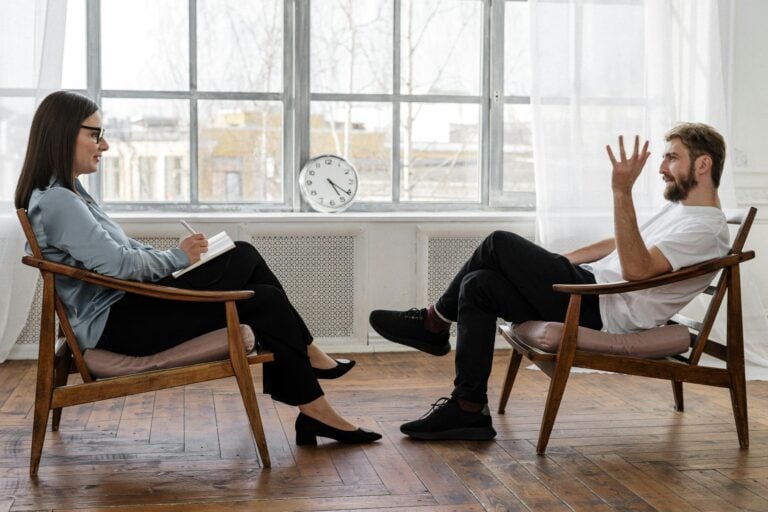

Introverts tend to avoid conflict in organizational settings not because they lack backbone, but because their nervous systems process confrontation more intensely than most people realize. The avoidance is a natural response to overstimulation, not a character flaw. And in workplace environments that reward whoever speaks loudest, this pattern can quietly derail careers, damage relationships, and leave real problems unaddressed for far too long.
Understanding why this happens, and what to do about it, starts with getting honest about the mechanics of introvert conflict avoidance in organizational life.

My own relationship with workplace conflict took years to make sense of. Running advertising agencies meant I was constantly surrounded by clashing opinions, territorial account managers, creative directors who took every critique personally, and clients who changed direction without warning. As an INTJ, I had strong views on almost everything. Yet I would often stay quiet in rooms where I should have spoken up, then spend the drive home composing the perfect response I never delivered. Sound familiar?
If you want to understand this pattern more fully, it helps to see it in the context of broader introvert personality traits. Our Introvert Personality Traits hub covers the full range of characteristics that shape how introverts think, react, and engage with the world around them. Conflict avoidance is one piece of a much larger picture.
What Actually Drives Conflict Avoidance in Introverts?
The word “avoidance” carries a negative charge. It implies cowardice or passivity. But for introverts, the avoidance of organizational conflict is often rooted in something more nuanced than fear.
Career Coaching for Introverts
One-on-one career strategy sessions with Keith Lacy. 20 years of Fortune 500 leadership as an introvert, now helping others build careers that work with their wiring.
Learn More50-minute Zoom session · $175
Introverts process information deeply. When conflict erupts in a meeting, an introvert’s mind doesn’t just register the surface-level disagreement. It’s simultaneously cataloguing tone, subtext, past history with the people involved, potential downstream consequences, and the emotional temperature of everyone in the room. That’s a lot of data to process in real time. Staying quiet isn’t always avoidance. Sometimes it’s the mind doing what it does best, working through complexity before committing to a response.
That said, the pattern does tip into genuine avoidance when introverts consistently delay responses until the moment has passed, agree outwardly while disagreeing inwardly, or sidestep difficult conversations entirely to preserve a fragile peace. Research published in PubMed Central on social behavior and emotional regulation confirms that individuals who experience higher internal arousal in social conflict situations are more likely to disengage rather than confront, a pattern that shows up consistently in introverted personality profiles.
There’s also a sensory dimension. Many introverts, particularly those with high sensitivity traits, find that raised voices, emotional escalation, and the raw energy of open conflict feel physically uncomfortable. It’s not drama. It’s a genuine physiological response to overstimulation. Reading more about introvert character traits can help clarify why this happens and why it’s more common than most people think.
How Does This Play Out in Organizational Settings Specifically?
Organizational conflict is different from personal conflict. At work, the stakes are layered. There’s your professional reputation, your relationships with colleagues, your standing with leadership, and the practical outcome of whatever the disagreement is actually about. For introverts, all of those layers amplify the internal processing load.
I watched this play out in my agencies in ways that cost real money and real talent. One of my most gifted strategists, a quiet, methodical thinker who could see around corners on a campaign brief, would consistently defer to louder voices in client meetings even when she knew they were wrong. She wasn’t lacking confidence in her ideas. She was overwhelmed by the social cost of pushing back in a room full of people who communicated through volume and interruption. Eventually, she left for a smaller firm where she could work more independently. I should have created conditions where her voice could come through differently. That’s on me.

The most common organizational patterns I’ve observed include: staying silent during meetings and then sending a detailed email afterward, agreeing in the moment and then quietly undermining decisions later, avoiding the person at the center of the conflict rather than addressing the issue directly, and escalating to a manager rather than handling a peer-level disagreement face to face.
None of these are inherently wrong strategies. But when they become reflexive defaults rather than conscious choices, they create a reputation problem. Colleagues start to see the introvert as passive, difficult to read, or politically evasive. That perception compounds over time.
It’s worth noting that not everyone who avoids conflict at work is a classic introvert. People who fall somewhere between introversion and extroversion handle this differently. If you’re curious about where you land on that spectrum, exploring ambivert characteristics can be illuminating, especially if you find that your conflict response shifts depending on the environment or the people involved.
Why Does Conflict Feel So Much More Costly to Introverts?
Part of the answer is neurological. Introverts tend to have higher baseline cortical arousal, which means their nervous systems are already working harder in social environments. Add conflict to that equation and the system gets pushed further toward overwhelm. The introvert’s instinct to withdraw is partly a self-regulation mechanism.
But there’s a psychological layer too. Many introverts place enormous value on harmony, depth of connection, and the integrity of their relationships. Conflict feels like a threat to all three. Walking into a difficult conversation means risking a relationship that took months to build, and for someone who invests deeply in the connections they do form, that risk feels disproportionately high.
There’s also the preparation factor. Introverts generally perform better in situations they’ve had time to think through. Spontaneous conflict, the kind that erupts in a hallway or hijacks a meeting agenda, strips away that preparation time. The introvert is left exposed, processing in real time while the extrovert across the table fires off responses without apparent effort. That asymmetry feels deeply unfair, and over time it can make introverts even more avoidant because they’ve learned that unplanned confrontation rarely goes well for them.
Psychology Today notes that introverts often become more comfortable with their own tendencies as they age, which includes developing more deliberate strategies for handling conflict rather than simply avoiding it. That’s been true for me. The avoidance I defaulted to in my thirties looks very different from how I handle disagreement now.
There are also specific patterns worth paying attention to among female introverts. The social conditioning around women expressing disagreement adds another dimension to conflict avoidance that deserves its own consideration. If that resonates, the piece on female introvert characteristics explores how gender shapes the introvert experience in meaningful ways.
What Are the Organizational Costs of Consistent Conflict Avoidance?
This is where the conversation gets uncomfortable, because the costs are real and they compound.
At the individual level, consistent conflict avoidance creates a credibility gap. When you never push back, people stop bringing you their real problems. They assume you’ll agree with whatever they say, or that you’re not willing to engage with anything messy. You get excluded from the conversations that actually shape decisions. Your ideas get less airtime. Your career stalls in ways that are hard to trace back to any single moment.

At the team level, unaddressed conflict doesn’t disappear. It goes underground. I’ve seen this destroy otherwise talented teams. Two people who can’t work through a disagreement start routing around each other, creating inefficiencies and communication gaps that affect everyone. Other team members pick sides or disengage entirely. The leader who avoids addressing the conflict, often because they’re an introvert who finds it genuinely painful, watches the dysfunction spread until it becomes impossible to contain.
I ran an agency where two senior account directors had a fundamental disagreement about how to handle a major client. Both were strong performers. Neither wanted to bring it to me directly, and I didn’t want to force a confrontation that might make things worse. So we all quietly avoided it for about four months. By the time the situation became undeniable, the client had already sensed the internal friction and started pulling work. We lost a significant account because three adults couldn’t have one honest conversation. That one still stings.
At the organizational level, cultures that inadvertently reward extroverted conflict styles, rewarding whoever argues loudest rather than whoever argues best, systematically suppress the contributions of introverted employees. PubMed Central research on workplace dynamics supports the idea that psychological safety, the sense that it’s safe to speak up without punishment, is a stronger predictor of team performance than any individual personality trait. When introverts don’t feel safe to engage with conflict, you lose their best thinking.
Is Conflict Avoidance Always a Problem, or Can It Be a Strength?
Here’s where I want to push back on the framing a little, because I think the conversation about introverts and conflict avoidance often swings too far toward pathologizing a natural tendency.
Not every conflict deserves engagement. Some disagreements are genuinely not worth the energy. Some battles are better won through patience and timing than through direct confrontation. Some situations call for strategic silence rather than immediate response. Introverts often have a cleaner read on which category a conflict falls into, precisely because they’re not driven by the need to win in the moment.
The introvert’s instinct to pause before responding, to gather information before committing to a position, to consider the full context before reacting, these are genuinely valuable in organizational settings where impulsive conflict escalation causes enormous damage. The question isn’t whether to develop a more extroverted conflict style. The question is whether your current approach to conflict is a conscious choice or an unconscious default.
There’s also something to be said for the introvert’s ability to hold a long view. In my agency years, I learned that some conflicts resolve themselves if you give them enough space. Not all of them, and not the ones involving real structural problems, but enough that jumping in immediately isn’t always the right call. The introvert’s patience can look like avoidance from the outside while actually being a form of strategic restraint.
Understanding which qualities are most characteristic of introverts helps clarify the difference between avoidance as a reflex and restraint as a strategy. They look similar from the outside, but they feel entirely different from the inside.
How Can Introverts Develop a More Effective Approach to Organizational Conflict?
success doesn’t mean become someone who loves conflict. That’s not realistic and it’s not necessary. The goal is to develop enough range that conflict doesn’t derail you, and that you can engage when engagement matters.
A few things have worked for me and for introverts I’ve worked alongside over the years.
Prepare for predictable conflicts. If you know a difficult conversation is coming, prepare for it the way you’d prepare for any important meeting. Think through the key points you want to make, the objections you’re likely to face, and the outcome you’re working toward. Preparation is the introvert’s superpower, and it applies to conflict just as much as it applies to presentations.
Buy yourself processing time without disappearing. You don’t have to respond immediately to every challenge. Phrases like “Let me think about that and come back to you” or “I want to give this the attention it deserves, can we schedule time tomorrow?” are not avoidance. They’re self-management. what matters is following through rather than using the delay to avoid the conversation entirely.
Choose your medium deliberately. Introverts often communicate more effectively in writing than in real-time verbal exchange. There’s nothing wrong with following up a difficult meeting with a written summary of your position. Written communication gives you the processing time you need while still engaging with the conflict directly. The trap is using email to avoid conversations that genuinely require face-to-face engagement.

Address the issue, not the person. Many introverts avoid conflict because they conflate disagreeing with attacking. Separating the problem from the person, “I think this approach has a flaw” rather than “I think you made a mistake” creates enough psychological safety to engage without it feeling like a personal assault on either side.
Build relationships before you need them for conflict. Introverts who invest in genuine one-on-one relationships find conflict significantly easier to handle when it arises, because the relationship provides a foundation of trust that survives disagreement. This is actually an introvert strength. We tend to build deeper, more durable connections than our extroverted counterparts, and those connections make hard conversations more manageable.
It’s also worth paying attention to how people who straddle the introvert and extrovert divide handle conflict in organizations. Introverted extroverts often develop hybrid approaches that are worth observing, engaging directly when necessary while preserving the reflective processing that prevents impulsive escalation.
What Do Organizational Leaders Need to Understand About Introverted Employees and Conflict?
If you’re leading a team that includes introverts, and statistically you almost certainly are, there are some things worth understanding about how conflict avoidance shows up and what you can do about it.
First, silence in a meeting is not agreement. Introverts who don’t speak up during a contentious discussion may have the clearest read on the situation in the room. Creating structured opportunities for input, written pre-meeting questions, smaller group discussions, one-on-one check-ins after meetings, gives introverted employees a channel that works with their processing style rather than against it.
Second, the introvert who sends you a detailed email after a difficult meeting isn’t being passive-aggressive. They’re communicating in the mode where they’re most effective. Respond to the substance rather than penalizing the medium.
Third, if you notice an introverted team member consistently deferring to louder voices or avoiding direct engagement with conflict, address it privately rather than putting them on the spot publicly. Calling out an introvert in a group setting for not speaking up is likely to make the avoidance worse, not better. A quiet conversation where you express genuine curiosity about their perspective goes much further.
The American Psychological Association’s research on personality and workplace behavior reinforces that individual differences in conflict style are stable and meaningful. Working with those differences rather than trying to override them produces better outcomes for everyone.
Many of the traits that make introverts seem avoidant in conflict situations are the same traits that make them exceptional at analysis, strategy, and relationship depth. There are 15 introvert traits that most people misread, and conflict avoidance is near the top of that list. What looks like withdrawal is often preparation. What looks like passivity is often patience. What looks like disengagement is often deep processing.
What’s the Difference Between Avoidance and Intentional Restraint?
This is a distinction I’ve spent a lot of time thinking about, partly because I’ve been on both sides of it.
Avoidance is reactive. It’s driven by discomfort, and it leaves the underlying problem intact. You feel relief in the short term and anxiety in the long term because you know the issue is still there, waiting. Avoidance accumulates. Every conflict you sidestep adds to an internal ledger of unresolved tension that eventually becomes impossible to ignore.
Intentional restraint is proactive. It’s a conscious decision to delay or redirect engagement based on a clear read of the situation. You’re not avoiding the conflict. You’re choosing the timing, the medium, and the conditions under which you’ll engage. You feel purposeful rather than cornered. And because you’re actually planning to address the issue, the anxiety doesn’t accumulate in the same way.
The practical test is simple: when you choose not to engage with a conflict, do you have a plan for how and when you will? If yes, that’s restraint. If no, that’s avoidance. Both feel similar in the moment. They diverge sharply over time.
A PubMed Central study on coping strategies and emotional regulation draws a similar distinction between avoidant coping, which suppresses the stressor without resolving it, and approach coping, which engages with the stressor directly even when that engagement is delayed or indirect. Introverts who develop approach-oriented strategies for conflict, even if those strategies look different from extroverted confrontation styles, show significantly better long-term outcomes in both wellbeing and professional effectiveness.

The Myers-Briggs framework, as described by Verywell Mind, helps explain why different personality types approach conflict so differently. INTJs like me tend to prefer resolution through logic and structured discussion. INFPs might avoid conflict because it threatens their deeply held values. ENTJs might engage conflict directly but miss the emotional undercurrents. None of these styles is inherently superior. Each has strengths and blind spots worth understanding.
And for those who want to go deeper on the psychological science behind personality and social behavior, Psychology Today’s exploration of empathic traits offers useful context for understanding why some people feel the weight of conflict more acutely than others. Empathy and introversion often travel together, and that combination shapes conflict response in ways that deserve more nuanced understanding than “they just don’t like confrontation.”
If you’ve found this exploration useful, our complete Introvert Personality Traits hub covers the full range of characteristics that shape how introverts experience the world, from social energy and communication style to emotional depth and professional strengths.
About the Author
Keith Lacy is an introvert who’s learned to embrace his true self later in life. After 20 years in advertising and marketing leadership, including running agencies and managing Fortune 500 accounts, Keith now channels his experience into helping fellow introverts understand their strengths and build fulfilling careers. As an INTJ, he brings analytical depth and authentic perspective to every article, drawing from both professional expertise and personal growth.
Frequently Asked Questions
Why do introverts avoid conflict at work more than extroverts?
Introverts tend to process conflict more intensely than extroverts because their nervous systems take in more information from social environments. When conflict erupts, an introvert’s mind is simultaneously processing the surface disagreement, the emotional undercurrents, the relationship implications, and the potential consequences, all at once. That cognitive load makes real-time engagement feel overwhelming, so withdrawal becomes a self-regulation mechanism rather than a deliberate strategy. It’s not a lack of courage. It’s a processing difference that shows up as avoidance when it isn’t managed consciously.
What is the organizational cost of introvert conflict avoidance?
Consistent conflict avoidance in organizational settings creates several compounding problems. At the individual level, it erodes credibility and limits career advancement because colleagues and leaders may perceive the introvert as passive or disengaged. At the team level, unaddressed conflicts go underground, creating communication gaps and dysfunction that affect everyone. At the organizational level, cultures that reward aggressive conflict styles systematically suppress the contributions of introverted employees, losing the deep thinking and strategic perspective those employees offer. The cost is real and tends to grow over time.
Is conflict avoidance always bad for introverts?
No. There’s an important distinction between avoidance as a reflex and restraint as a strategy. Not every conflict deserves immediate engagement. Introverts often have a clearer read than extroverts on which conflicts are worth the energy and which will resolve themselves with time and space. The problem arises when avoidance becomes the default response to all conflict, including situations that genuinely require direct engagement. When the avoidance is conscious and paired with a plan for eventual engagement, it functions more like strategic patience than problematic withdrawal.
How can introverts handle conflict more effectively without becoming extroverted?
Several approaches work well for introverts without requiring them to adopt an extroverted conflict style. Preparing thoroughly for predictable conflicts plays to the introvert’s strength of deep thinking. Buying processing time through phrases like “let me think about this and come back to you” creates space without avoiding the issue. Choosing written communication for complex disagreements leverages the introvert’s ability to express themselves precisely when they have time to reflect. Building strong one-on-one relationships before conflicts arise creates a foundation of trust that makes difficult conversations more manageable. The goal is developing enough range to engage when engagement matters, not transforming into someone who enjoys confrontation.
What can managers do to help introverted employees engage with conflict more effectively?
Managers can create structured channels for input that work with the introvert’s processing style rather than against it. Pre-meeting written questions, smaller group discussions, and private one-on-one check-ins after difficult meetings give introverted employees ways to contribute that don’t require real-time verbal sparring. Managers should also resist interpreting silence as agreement and avoid calling out introverted employees in group settings for not speaking up, as public pressure typically makes the avoidance worse. Addressing concerns privately, with genuine curiosity rather than criticism, consistently produces better results. Recognizing that delayed, written responses to conflict are a communication style rather than passive aggression also helps create an environment where introverts can engage more effectively.