

Being a homebody isn’t a personality flaw or a sign that something is wrong with you. For many introverts, home is where genuine restoration happens, where the mental noise of the outside world finally quiets down and real thinking, real feeling, and real living can begin.
There are real, deeply personal reasons why you prefer your couch to a crowded bar, your kitchen to a restaurant, your own company to a room full of near-strangers making small talk. Some of those reasons are wired into your temperament. Others were shaped by your family, your experiences, and the way you’ve learned to protect your energy over time.

If you’ve ever wondered why staying in feels so much more appealing than going out, or why you dread the Sunday evening plans you agreed to on Thursday, this article is for you. And if you’re curious about how homebody tendencies show up within families and close relationships, our Introvert Family Dynamics and Parenting Hub explores that fuller picture in depth.
Is Being a Homebody Actually About Introversion?
Not always, but the overlap is significant. Introversion, at its core, is about where you draw your energy. Extroverts refuel through social contact. Introverts refuel through solitude. Home, for most introverts, is the one environment they can fully control, which makes it the most reliable place to recover from a world that runs on extroverted assumptions.
What’s your personality type?
Take our free 40-question assessment and get a detailed personality profile with dimension breakdowns, context analysis, and personalised insights.
Discover Your Type8-12 minutes · 40 questions · Free
That said, not every homebody is an introvert, and not every introvert is a homebody in the extreme sense. Some introverts genuinely love travel, adventure, and new experiences. They just prefer to process those experiences quietly, and they need significant downtime before and after. The homebody tendency is often less about avoiding the world and more about having a strong gravitational pull toward the space where you feel most like yourself.
There’s also a temperament dimension worth considering. The National Institutes of Health has noted that infant temperament can predict introversion in adulthood, suggesting that some of this wiring is present from birth. You didn’t choose to be this way. You were built this way.
Early in my agency career, I used to assume that the people who stayed late at office happy hours were the ones who really cared about the work. I was wrong. Some of my most committed team members were the ones who slipped out quietly at 5:30, recharged at home, and came back the next morning with sharper thinking than anyone who’d spent three hours networking over drinks. They were homebodies in the truest sense, and they were also some of the most effective people I ever worked with.
Why Does Home Feel So Different From Everywhere Else?
Home is the one environment most people have genuine control over. The lighting, the sounds, the temperature, the social demands, all of it can be calibrated to your actual preferences rather than the preferences of a crowd. For someone whose nervous system is sensitive to stimulation, that level of control isn’t a luxury. It’s a necessity.
Highly sensitive people, in particular, often find that home is the only place where they can genuinely exhale. If you’re raising children as a highly sensitive parent, you may already know how much the home environment shapes not just your own wellbeing but your kids’ emotional lives too. The piece on HSP parenting and raising children as a highly sensitive parent gets into that dynamic in a way that might resonate deeply if you’ve ever felt like the sensory and emotional demands of parenting push you straight to your limits.
Beyond sensitivity, home represents something more symbolic for many introverts: permission. Permission to stop performing. When you’re out in the world, there’s a low-level performance happening almost constantly. You’re reading social cues, managing impressions, filtering what you say and how you say it. The moment you walk through your own front door, that performance ends. You can think in full sentences again. You can feel things without immediately having to manage how those feelings land on other people.
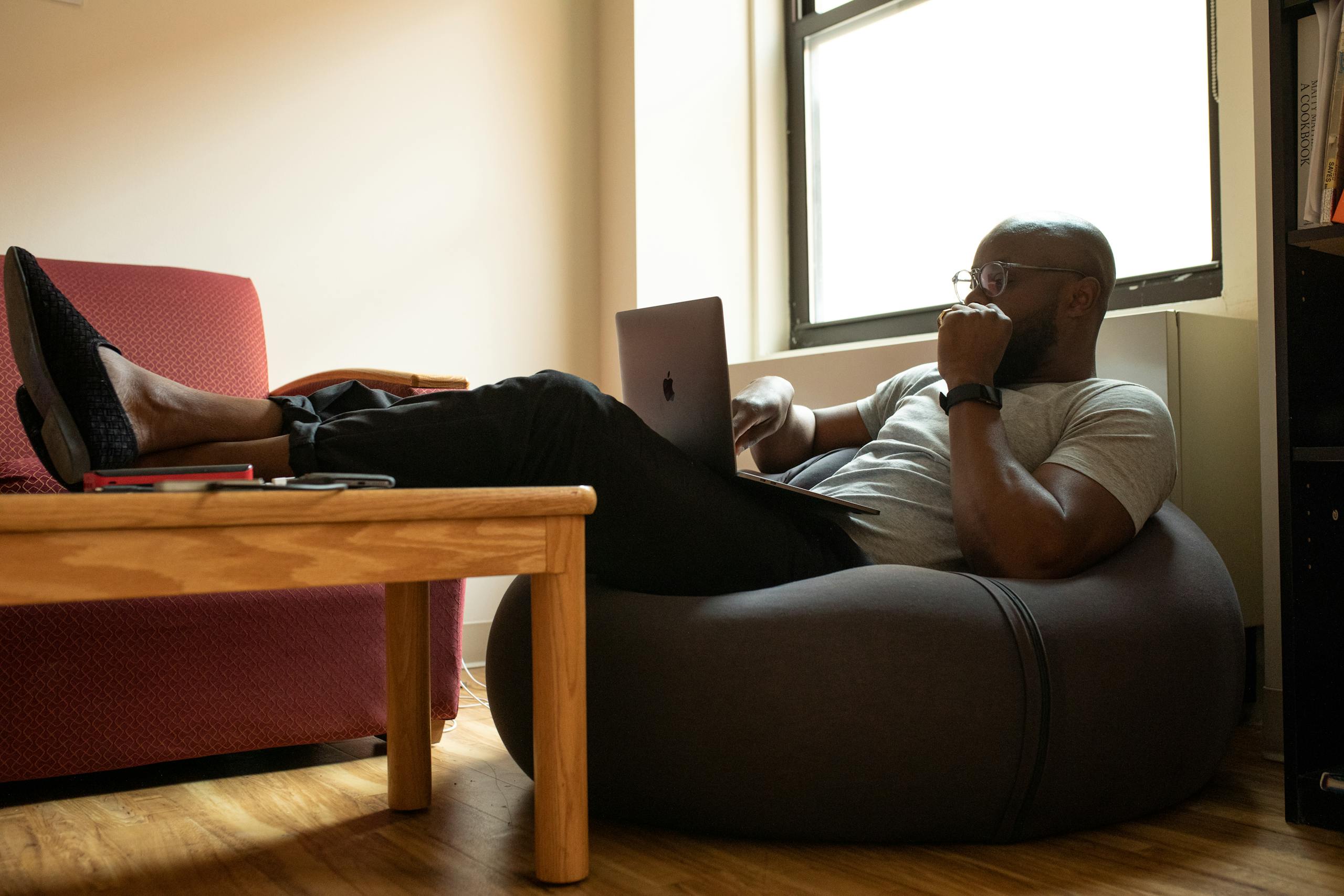
I spent years running client meetings in downtown Chicago offices, presenting campaign strategies to rooms full of executives who expected confidence, charisma, and instant answers. I got good at it. But every single time I walked back into my own space afterward, I felt the physical sensation of something releasing in my chest. That wasn’t weakness. That was my nervous system doing exactly what it needed to do.
What Role Does Personality Structure Play in Homebody Tendencies?
Personality is more layered than a single introvert/extrovert spectrum. The broader framework that psychologists use most often includes five dimensions: openness, conscientiousness, extraversion, agreeableness, and neuroticism. Each of these shapes how you relate to environments, people, and stimulation in ways that go well beyond a simple preference for staying in or going out.
People who score lower on extraversion and higher on neuroticism (which is about emotional reactivity, not negativity) tend to find social environments more draining and more unpredictable. That combination often produces strong homebody tendencies. If you want to understand your own profile more clearly, the Big Five Personality Traits test is a useful starting point for seeing where you land across all five dimensions, not just the introversion piece.
What’s worth noting is that personality structure isn’t destiny. Knowing your traits gives you language for your patterns, not an excuse to avoid growth. Some of the most meaningful shifts I’ve made in my own life came from understanding my INTJ wiring well enough to stop fighting it and start working with it instead. That included accepting that my preference for home wasn’t antisocial. It was strategic.
There’s also a connection worth acknowledging between homebody tendencies and certain emotional patterns that go beyond personality type. Some people who feel intensely uncomfortable in social settings or who experience extreme distress around leaving their safe spaces may be dealing with something that deserves more attention. The Borderline Personality Disorder test isn’t something most homebodies need, but if your discomfort around social situations feels severe, unpredictable, or tied to intense fears of rejection or abandonment, it’s worth exploring whether something deeper is at play.
Are You a Homebody Because of How You Were Raised?
Family of origin shapes more of our adult behavior than most people realize. If you grew up in a household where home felt genuinely safe, where the chaos of the outside world was something you retreated from together as a family, you likely developed a strong association between home and emotional security. That association doesn’t disappear when you become an adult. It deepens.
On the other hand, some people become homebodies not because home was safe but because the outside world felt particularly threatening during formative years. The American Psychological Association’s overview of trauma touches on how early adverse experiences can shape avoidance patterns that persist well into adulthood. For some people, staying home isn’t about recharging. It’s about staying protected. Those are meaningfully different things, even if they look the same from the outside.
Family dynamics also shape how we understand social obligation. Some people grow up in families where socializing is treated as a duty, where turning down an invitation is a personal insult and staying home is coded as laziness or depression. If that was your family culture, you may have spent years feeling guilty about your homebody tendencies without ever examining whether the guilt was warranted. Understanding family dynamics through a psychological lens can help reframe those inherited narratives.
My own family was a mixed picture. My mother was deeply social, always hosting, always planning. My father was quieter, more content to read in the next room while the gathering happened around him. I identified with my father’s approach more naturally, but I spent years thinking I was supposed to be more like my mother. It took a long time to recognize that neither approach was right or wrong. They were just different ways of being in the world.
Does Being a Homebody Affect How Others See You?
It can, and that’s one of the more uncomfortable truths about this particular personality tendency. We live in a culture that associates sociability with warmth, ambition, and likability. Someone who consistently declines invitations, who prefers a quiet evening in over a group dinner out, can be misread as cold, disinterested, or even arrogant.
That misread is frustrating because it’s so inaccurate. Many of the warmest, most genuinely caring people I know are also the ones who most reliably choose home over social events. Their care shows up in other ways: in the depth of their one-on-one conversations, in the thoughtfulness of their written communication, in the way they remember small details about the people they love. If you’ve ever wondered how you come across to others, the Likeable Person test can offer some useful perspective on how your natural tendencies land with the people around you.
There’s a real tension here that most homebodies know intimately. You want to be seen as warm and engaged without having to perform warmth in ways that deplete you. You want people to understand that your preference for staying in isn’t a rejection of them. It’s a reflection of how you’re wired. Communicating that clearly, especially in close relationships, is one of the more important social skills a homebody can develop.
During my years running agencies, I managed a team that included several people who were clearly more comfortable in smaller settings. One account director in particular almost never attended optional social events. Some clients initially read her as aloof. But every single person who worked closely with her came away feeling genuinely understood and valued. She was one of the most liked people in the building. She just expressed it differently than the room expected.
Can Homebody Tendencies Show Up in Your Career Choices?
Absolutely, and this is worth paying attention to. Many homebodies are drawn to careers that allow them to work independently, with minimal required social performance, and ideally in environments they can control. Remote work, freelancing, creative fields, research roles, and writing are all natural fits. So are many technical and analytical careers where deep focus is valued over constant collaboration.
That said, some homebodies end up in careers that seem counterintuitive at first glance. Certain helping professions attract deeply introverted people who find meaning in focused, one-on-one connection rather than broad social engagement. A personal care assistant, for instance, works in an intimate, contained environment rather than a loud, stimulating one. If you’re considering whether a caregiving role might suit your personality, the Personal Care Assistant test online can help you think through whether that kind of work aligns with your natural strengths.
Similarly, some fitness-oriented homebodies find that personal training suits them better than group fitness instruction. The work is deeply individual, the environment is structured, and the relationship is built on consistency rather than performance. The Certified Personal Trainer test is worth exploring if you’re someone who loves health and fitness but finds the idea of leading loud group classes deeply unappealing.

My own career trajectory makes more sense in retrospect than it did while I was living it. I ran agencies, which sounds like an extrovert’s dream, lots of client contact, team leadership, presentations, pitches. But what I actually loved most was the strategic thinking that happened before any of that. The late evenings alone with a brief, working through the problem. The quiet mornings before the office filled up. I built a career that looked extroverted from the outside while protecting the introverted core that actually did the best work.
What Does Science Tell Us About Why Some People Prefer Staying In?
The neurological dimension of introversion is real and well-documented. Introverts tend to process stimulation more deeply than extroverts do, which means that environments with high sensory input, lots of people, noise, competing conversations, require more cognitive resources to manage. Home, with its controllable stimulation, simply demands less of that processing overhead.
There’s also a dopamine dimension. Extroverts tend to be more responsive to dopamine, the neurotransmitter associated with reward and social excitement. For them, a crowded party delivers a genuine neurological reward. For introverts, the same environment can feel overwhelming rather than energizing. This isn’t a deficit. It’s a different calibration of the same system.
A closer look at published research on personality and neural processing supports the idea that these differences are physiological, not just attitudinal. You’re not choosing to find parties exhausting. Your brain is processing them differently than an extrovert’s brain does.
What’s also worth noting is that personality is genuinely complex. The traits that make you a homebody don’t exist in isolation. They interact with your emotional patterns, your history, your relationships, and your values in ways that ongoing personality research continues to refine and deepen. The simple story of “introvert stays home, extrovert goes out” misses most of the actual texture.
Is There a Difference Between Healthy Homebody Habits and Isolation?
Yes, and it’s one of the most important distinctions to make honestly. Healthy homebody tendencies are about choosing environments that support your wellbeing. Isolation is about avoiding connection because connection feels too risky, too painful, or too exhausting to attempt at all.
The difference often shows up in how you feel about your choice. A healthy homebody who stays in on a Saturday night typically feels content, maybe even quietly happy. Someone who is isolating often feels relief mixed with something heavier: loneliness, shame, or the nagging sense that they’re missing something they actually want but can’t bring themselves to pursue.
Another useful signal is whether your home life is genuinely rich. Homebodies who are thriving tend to have full inner lives: creative projects, deep reading, meaningful relationships maintained in ways that suit their temperament, a sense of purpose that doesn’t require constant external validation. People who are isolating tend to feel emptier the longer they stay in, not more restored.
Blended families and non-traditional family structures add another layer to this question. When your home is shared with people whose social needs differ significantly from yours, the negotiation between togetherness and solitude becomes more complex. The Psychology Today overview of blended family dynamics touches on some of the relational complexity that can arise when different temperaments share a household.

There was a period in my mid-forties, after a particularly brutal year of agency growth that had me traveling almost every week, when I stopped going out almost entirely. I told myself I was recharging. And partly I was. But I also noticed that I was turning down things I actually wanted to do, dinners with people I genuinely liked, events that would have fed something in me. That was a signal worth paying attention to. The line between restoration and retreat can blur when you’re not watching it carefully.
How Do You Embrace Being a Homebody Without Apologizing for It?
Stop treating your preference as a problem that needs solving. That’s the most direct answer I can give. The cultural pressure to be more social, more available, more spontaneously present in other people’s lives is real, but it’s not a moral requirement. You’re allowed to know what restores you and to protect access to it.
What helps most is getting clear on your actual values rather than the values you’ve inherited. Do you genuinely wish you were more social, or do you wish other people would stop making you feel bad about not being social? Those are very different problems. One calls for behavioral change. The other calls for better boundaries and clearer communication.
It also helps to recognize what your homebody tendencies make possible. The deep creative work, the quality of attention you bring to close relationships, the clarity of thought that comes from genuine quiet, these aren’t consolation prizes for missing the party. They’re real advantages that emerge from the same wiring that makes you prefer staying in.
As an INTJ, I’ve watched colleagues spend enormous energy trying to become people they weren’t. I’ve seen extroverted people force themselves into solitary roles that drained them, and I’ve seen introverts exhaust themselves trying to match extroverted social rhythms. The most effective people I’ve known were the ones who understood their wiring clearly enough to build lives that worked with it rather than against it. That’s not settling. That’s wisdom.
If you want to explore more about how introversion shapes family life, relationships, and the way we parent, the Introvert Family Dynamics and Parenting Hub brings together a wide range of perspectives on exactly those questions.
About the Author
Keith Lacy is an introvert who’s learned to embrace his true self later in life. After 20 years in advertising and marketing leadership, including running agencies and managing Fortune 500 accounts, Keith now channels his experience into helping fellow introverts understand their strengths and build fulfilling careers. As an INTJ, he brings analytical depth and authentic perspective to every article, drawing from both professional expertise and personal growth.
Frequently Asked Questions
Is being a homebody the same as being an introvert?
Not exactly, though the two often overlap significantly. Introversion is about where you draw your energy, specifically from solitude rather than social interaction. Being a homebody is a behavioral pattern that reflects a strong preference for home environments over outside social settings. Many introverts are homebodies, but some introverts enjoy travel and adventure while still needing significant quiet time to recover. And some extroverts can be homebodies for reasons unrelated to energy management, such as anxiety, life stage, or simply having built a home life they genuinely love.
Why do I feel guilty about preferring to stay home?
Guilt around homebody tendencies usually comes from cultural messaging that equates sociability with health, ambition, and likability. Many people absorb this messaging from their families of origin, where turning down social invitations was treated as antisocial or even depressive. If staying home feels genuinely restorative and your home life is rich with meaning, connection, and purpose, the guilt is likely inherited rather than earned. Examining where that guilt came from, and whether it reflects your actual values, is a worthwhile step toward making peace with how you’re wired.
How can I tell if my homebody tendencies have crossed into unhealthy isolation?
The clearest signal is how you feel about your choice. Healthy homebody habits tend to produce genuine contentment and restoration. Isolation tends to produce relief mixed with loneliness, emptiness, or the sense that you’re avoiding something you actually want. Another useful question is whether you’re turning down things you genuinely want to do, not just things that would drain you. If your home life feels full and purposeful, you’re likely in healthy territory. If it feels like a hiding place, that’s worth examining more honestly.
Can homebody tendencies affect relationships with family members who are more extroverted?
Yes, and this is one of the more common sources of friction in families with mixed temperaments. Extroverted family members may interpret a homebody’s preference for staying in as disinterest, rejection, or lack of investment in the relationship. Clear communication about what staying home means for you, and what it doesn’t mean, goes a long way. So does finding connection formats that work for both temperaments, like shared activities at home rather than group outings. Understanding each other’s energy needs as legitimate rather than negotiable is the foundation of making those differences workable.
Are there careers that naturally suit homebody personalities?
Many careers align well with homebody tendencies, particularly those that allow for independent work, controlled environments, and deep focus over constant social performance. Writing, research, software development, design, accounting, and many technical fields offer this kind of structure. Remote work has expanded the options considerably. Some helping professions also suit introverted homebodies well, particularly those built around one-on-one relationships in contained settings rather than broad social engagement. The most important factor is finding work where your need for quiet, focus, and controlled stimulation is an asset rather than something you have to work around.