Improving your skin may ease some self-consciousness in social situations, but it won’t resolve social anxiety on its own. Social anxiety runs deeper than appearance, rooted in patterns of thinking, nervous system responses, and emotional processing that skin care simply cannot reach. That said, the question itself reveals something worth paying attention to: the connection between how we feel about our bodies and how safe we feel around other people.
Scroll through any Reddit thread on social anxiety and you’ll find this question asked in a dozen different ways. Will losing weight help? Will fixing my teeth help? Will clearing my acne help? The answers are complicated, and I think they deserve more than a quick “therapy is the answer” dismissal. There’s something genuinely human in hoping that changing one visible thing will quiet the noise inside.
As someone who spent over two decades in advertising, I watched this dynamic play out constantly, not just in clients’ campaigns but in my own head. I was the INTJ in the room who noticed everything, processed everything quietly, and occasionally convinced myself that if I just looked more polished or projected more confidence, the social friction would dissolve. It didn’t work that way. But understanding why it didn’t work taught me a lot about what social anxiety actually is.

If you’re working through the mental health side of introversion, including anxiety, sensory sensitivity, and emotional processing, our Introvert Mental Health Hub covers the full landscape of these experiences in one place. This article focuses on one specific question that keeps surfacing, and it’s worth a thorough, honest answer.
Why Do People on Reddit Connect Skin to Social Anxiety in the First Place?
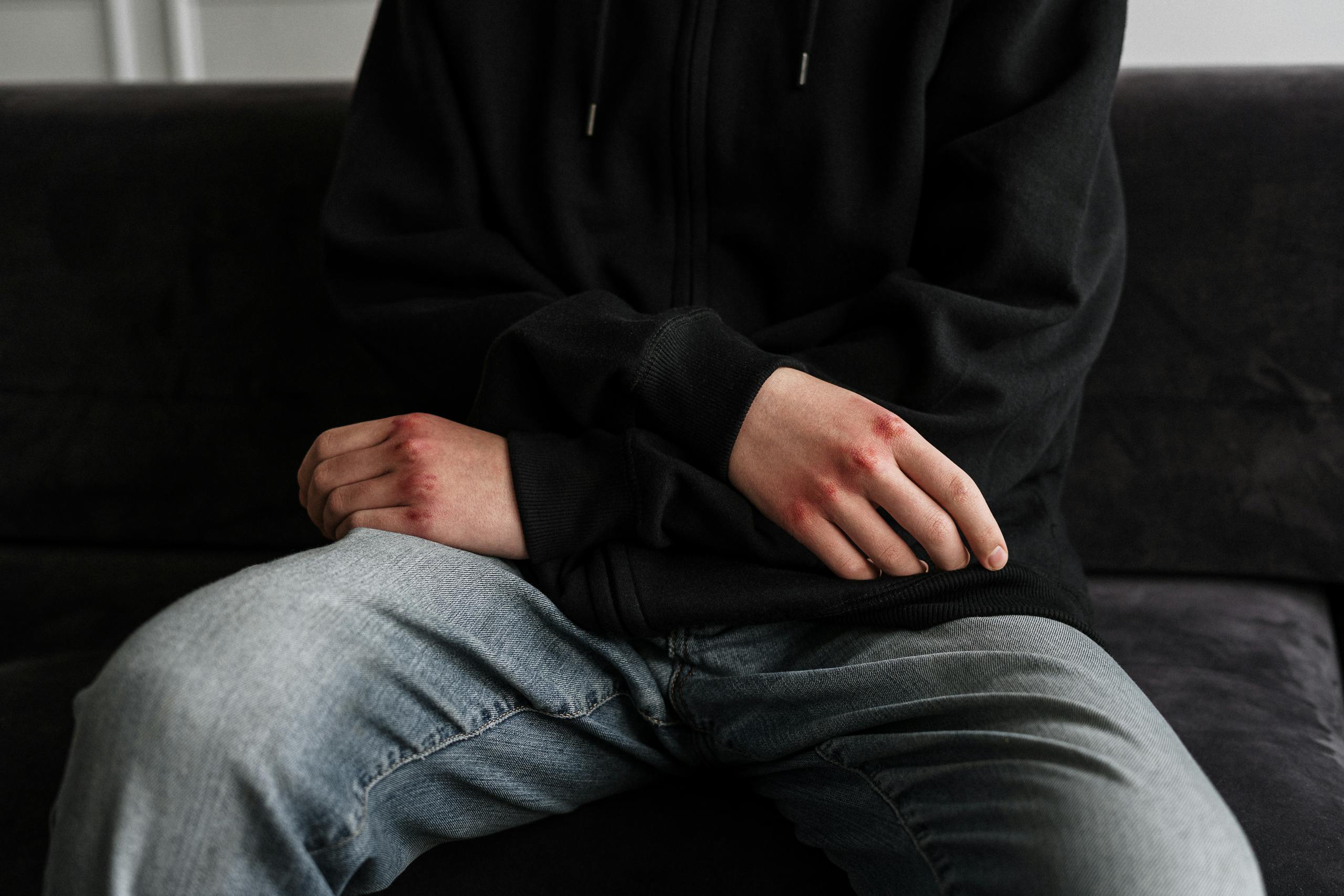
The Reddit threads asking this question aren’t coming from a shallow place. They’re coming from people who are exhausted. People who have tried to push through social situations while feeling deeply uncomfortable in their own skin, sometimes literally. Acne, rosacea, eczema, scarring: these are visible, and visibility matters when you already feel like everyone is watching you.
Career Coaching for Introverts
One-on-one career strategy sessions with Keith Lacy. 20 years of Fortune 500 leadership as an introvert, now helping others build careers that work with their wiring.
Learn More50-minute Zoom session · $175
There’s a real phenomenon here worth naming. When you have a physical feature you’re self-conscious about, your attention narrows to it in social situations. Psychologists sometimes call this self-focused attention, and it’s a core mechanism in social anxiety. You become hyperaware of what others might be noticing, which pulls your attention away from the actual conversation and toward an internal monitoring loop. You’re not fully present. You’re scanning.
For introverts who already process social environments with more intensity than most people, this loop can become genuinely exhausting. The distinction between introversion and social anxiety matters here: introversion is a preference for quieter, less stimulating environments, while social anxiety is a fear response. They can coexist, but they’re not the same thing. Many introverts don’t have social anxiety at all. And many people with social anxiety are actually extroverts who desperately want connection but feel blocked from it.
So when someone asks whether fixing their skin will help, they’re often really asking: will removing this one source of self-consciousness give me enough breathing room to actually show up? That’s a fair question. And the honest answer is: maybe a little, but probably not in the way you’re hoping.
What Does Social Anxiety Actually Feel Like From the Inside?
Social anxiety isn’t just shyness or nerves before a big presentation. According to the American Psychological Association, it involves a persistent, intense fear of social or performance situations where scrutiny by others is possible. The fear isn’t just discomfort. It’s the anticipation of humiliation, judgment, or rejection, and it often triggers physical responses: racing heart, flushed face, shallow breathing, a sudden inability to find words.
What makes it particularly cruel is that the physical symptoms of anxiety can themselves become a source of anxiety. You’re in a meeting, your face flushes, and now you’re anxious about the fact that people can see you’re anxious. The loop feeds itself.
I managed a team of creatives at one of my agencies, and one of my senior designers, a genuinely talented person, would go almost silent in client presentations. Afterward he’d tell me he spent the entire meeting convinced everyone was watching him, waiting for him to say something wrong. He wasn’t self-conscious about his appearance. He was caught in the same internal monitoring loop regardless. Removing any single external variable wasn’t going to touch what was happening in his nervous system.
For people who are also highly sensitive, the experience can be even more layered. Those who identify as highly sensitive persons often process emotional and sensory information more deeply, which means social situations carry more data, more texture, more potential for overwhelm. Understanding HSP anxiety and how to cope with it can be a meaningful first step for anyone who suspects their nervous system is working overtime in social settings.

Can Improving Your Skin Actually Reduce Social Anxiety?
Here’s where I want to be careful, because the honest answer is nuanced rather than a flat no.
There is some evidence that skin conditions, particularly acne and visible skin disorders, can contribute to reduced self-esteem and increased social avoidance. A review published in PubMed Central examined the psychological burden of skin conditions and found meaningful associations between dermatological issues and anxiety, depression, and social withdrawal. So the connection people on Reddit are sensing isn’t imaginary. Skin conditions can amplify existing social anxiety, and treating them may reduce one layer of distress.
But consider this that research doesn’t show: it doesn’t show that treating the skin condition resolves the anxiety itself. What tends to happen is that people who clear their skin feel some initial relief, sometimes significant relief, but the underlying patterns of anxious thinking remain. The self-focused attention, the anticipatory dread before social events, the tendency to interpret ambiguous social cues as negative: those patterns don’t vanish when the acne does.
I’ve seen this in a different context in my own life. Early in my career I was convinced that if I dressed better, spoke with more authority, and projected the right kind of confidence in client meetings, the discomfort I felt in large rooms would ease. So I upgraded the wardrobe. I practiced the posture. And honestly, some of it helped at the margins. But the fundamental experience of walking into a crowded room and feeling like I was operating at a deficit didn’t change until I started understanding what was actually driving it.
The APA’s framework for anxiety disorders makes clear that effective treatment targets the cognitive and behavioral patterns underlying anxiety, not the external triggers. Triggers can be reduced. The anxiety itself requires a different kind of attention.
What’s the Difference Between a Trigger and a Cause?
This distinction matters more than it might seem. A trigger is something that activates anxiety in a given moment. A cause is the underlying mechanism that makes the anxiety possible in the first place.
Your skin might be a trigger. Being in a room full of people might be a trigger. A particular person’s tone of voice might be a trigger. But the cause of social anxiety is something deeper: a nervous system that has learned to treat social evaluation as a threat, often shaped by early experiences of rejection, criticism, or environments where being seen felt unsafe.
For highly sensitive people, the emotional memory of social wounds can run particularly deep. The way HSPs process rejection often involves a level of intensity that can make past social pain feel present and immediate, even in new situations. That’s not a character flaw. It’s a function of how a sensitive nervous system encodes experience.
Removing a trigger can give you temporary relief. But if the underlying cause remains untouched, new triggers will emerge. You fix your skin and then you become self-conscious about your voice, or your height, or the way you laugh. The anxiety finds a new hook because the hook was never really about the skin.
What I eventually figured out, after years of trying to manage my discomfort in social and professional settings by optimizing external variables, is that the real work was internal. Not in a vague, self-help way. In a very specific, practical way: learning to recognize the thought patterns that were generating the anxiety, and slowly, imperfectly, interrupting them.
How Does Perfectionism Make This Worse?
There’s a particular flavor of social anxiety that I see most often in high-achieving introverts, and it’s tangled up with perfectionism. The belief that if you could just get everything right, if your appearance were flawless, your words were perfectly chosen, your reactions were appropriately calibrated, then social situations would feel safe.
Perfectionism and social anxiety reinforce each other in a particularly vicious way. The perfectionist sets an impossibly high standard for social performance, fails to meet it (because no one can), interprets that failure as evidence of fundamental inadequacy, and then approaches the next social situation with even more anxiety and even higher compensatory standards.
Skin improvement can become one more item on the perfectionist’s checklist. Fix this, and then maybe I’ll be acceptable. But the checklist never ends. Understanding how perfectionism traps highly sensitive people in cycles of self-criticism is worth exploring if this pattern sounds familiar.
At my agency, I watched this play out in a creative director I hired early in my career. She was extraordinarily talented, but she would spend hours agonizing over presentations, convinced that any imperfection would cause clients to dismiss her entirely. Her anxiety wasn’t about her work quality, which was excellent. It was about the belief that she had to be flawless to be safe. No amount of external polish was going to resolve that belief from the outside.
What Actually Helps Social Anxiety?
According to Harvard Health, cognitive behavioral therapy remains one of the most consistently effective approaches for social anxiety disorder. CBT works by identifying and challenging the distorted thinking patterns that fuel anxiety, and gradually exposing people to feared social situations in a structured, manageable way. It doesn’t promise that social situations will become effortless. It builds the capacity to tolerate them without the nervous system going into full threat response.
Beyond formal therapy, there are a few things that made a meaningful difference in my own experience.
One was understanding that my discomfort in large social settings wasn’t a deficiency. It was a function of how I’m wired as an INTJ. I process information internally, I prefer depth over breadth in conversation, and I find small talk genuinely effortful in a way that has nothing to do with fear. Separating introversion from anxiety helped me stop treating every social discomfort as a symptom of something broken.
Another was learning to notice when my sensory environment was contributing to my anxiety. Loud, crowded spaces genuinely affect my ability to think clearly and feel at ease. That’s not social anxiety. That’s sensory overload, and it’s a distinct experience that deserves its own kind of management. If you find that environments themselves feel like too much before social dynamics even enter the picture, the experience of HSP overwhelm and sensory overload may resonate.
A third was developing what I’d call emotional literacy around my social experiences. Rather than just feeling bad after a difficult social interaction and not knowing why, I started paying attention to what specifically had triggered the discomfort. Was it a comment that felt like criticism? A moment where I felt unseen? A situation where I’d been put on the spot without time to think? Each of these has a different source and a different response. The blanket experience of “social situations are hard” became something I could actually work with once I could see its components.
What About the Emotional Weight of Being Seen?
There’s something underneath the skin question that I think deserves direct acknowledgment. Being seen, really seen, is frightening when you’re not sure you’re acceptable. And for many people with social anxiety, the fear isn’t really about their skin or their appearance at all. It’s about exposure. About the possibility that if people looked closely enough, they’d find something lacking.
This is one of the most painful aspects of social anxiety: it often coexists with a deep longing for genuine connection. You want to be known. You’re terrified of being known. Those two experiences live side by side, and they create a kind of paralysis that no skin care routine can touch.
For people who feel emotions with unusual intensity, this tension can be especially acute. The capacity for deep feeling that makes connection so meaningful also makes the prospect of rejection feel catastrophic. Understanding how HSPs process emotions so deeply can help frame this experience not as weakness but as a feature of a particular kind of emotional architecture.
And for those who are highly attuned to others’ emotional states, social situations carry an additional layer of complexity. You’re not just managing your own anxiety. You’re absorbing the emotional atmosphere of the room, picking up on tension, unspoken dynamics, subtle shifts in tone. That’s a significant cognitive and emotional load. The way HSP empathy functions as a double-edged sword explains why social situations can feel simultaneously meaningful and exhausting for people wired this way.
None of this is fixed by clearer skin. But all of it can be worked with, gradually, honestly, and with the right kind of support.
A More Useful Question to Ask Yourself
Rather than asking whether improving your skin will help your social anxiety, consider asking: what is my anxiety actually protecting me from?
Anxiety is rarely random. It has a logic, even when that logic is distorted or outdated. Social anxiety often develops as a protective response to environments where social judgment had real consequences, where fitting in meant safety, where standing out meant pain. The nervous system learned to treat social evaluation as a threat, and it’s been operating on that learning ever since.
Understanding that logic doesn’t make the anxiety disappear. But it changes your relationship to it. Instead of fighting it or trying to eliminate every possible trigger, you start to see it as information. Something in this situation is activating an old alarm. What is it? Is the alarm accurate? What would it mean to stay in the room anyway?
There’s a relevant framework in psychological research on self-compassion and anxiety that suggests treating yourself with the same care you’d offer a friend in distress can meaningfully reduce the intensity of anxious responses over time. Not because it eliminates the anxiety, but because it interrupts the secondary layer of self-criticism that amplifies it.
I spent years being fairly harsh with myself about the discomfort I felt in social and professional settings. I was the CEO of an advertising agency. I was supposed to be the one who could walk into any room and command it. The gap between that expectation and my actual experience felt like evidence of something fundamentally wrong with me. It took a long time to understand that the gap wasn’t a flaw. It was just information about how I’m wired, and information is workable.
Your skin is part of your story. So is your anxiety. Neither one defines what’s possible for you in social situations. The work is learning to show up, imperfectly, with whatever you’re carrying, and discovering that the feared catastrophe rarely arrives.

If you’re exploring the mental health dimensions of introversion more broadly, the Introvert Mental Health Hub brings together articles on anxiety, emotional sensitivity, sensory overwhelm, and more, all written with the specific experience of introverts in mind.
About the Author
Keith Lacy is an introvert who’s learned to embrace his true self later in life. After 20 years in advertising and marketing leadership, including running agencies and managing Fortune 500 accounts, Keith now channels his experience into helping fellow introverts understand their strengths and build fulfilling careers. As an INTJ, he brings analytical depth and authentic perspective to every article, drawing from both professional expertise and personal growth.
Frequently Asked Questions
Will clearing my acne make me less socially anxious?
Treating a skin condition may reduce one specific source of self-consciousness, which can provide some relief in social situations. However, social anxiety is rooted in patterns of thinking and nervous system responses that go beyond appearance. Most people who clear their skin find that the underlying anxiety persists because the core mechanisms haven’t been addressed. Meaningful, lasting improvement in social anxiety typically requires working with those underlying patterns directly, often through therapy or structured self-work.
Is social anxiety the same as introversion?
No. Introversion is a personality trait describing a preference for quieter, less stimulating environments and a tendency to recharge through solitude. Social anxiety is a fear-based condition involving dread of social evaluation and judgment. Many introverts have no social anxiety at all, and many people with social anxiety are extroverts who genuinely crave social connection but feel blocked from it by fear. The two can coexist, but they have different origins and different solutions.
What is the most effective treatment for social anxiety?
Cognitive behavioral therapy is widely considered one of the most effective approaches for social anxiety disorder. It works by identifying distorted thinking patterns that fuel anxious responses and gradually building tolerance for feared social situations through structured exposure. For some people, medication is also helpful, particularly in combination with therapy. Self-compassion practices, mindfulness, and understanding the specific triggers of your anxiety can also support meaningful improvement over time.
Why do I focus so much on my appearance when I’m anxious in social situations?
Self-focused attention is a core feature of social anxiety. When anxiety activates, attention narrows inward as the nervous system scans for potential threats to social standing. Appearance becomes a focal point because it’s visible and therefore feels like something others might judge. This internal monitoring pulls attention away from the actual interaction, which can make social situations feel more difficult and confirm anxious predictions. Therapy approaches that target self-focused attention can be particularly helpful for this pattern.
Can highly sensitive people be more prone to social anxiety?
Highly sensitive people process sensory and emotional information more deeply than most, which means social environments carry more data and more potential for overwhelm. This doesn’t automatically mean HSPs have social anxiety, but the intensity of their social experience can make anxiety more likely, particularly if they’ve had experiences of rejection or criticism that their nervous system encoded strongly. Understanding the HSP trait and learning to manage sensory and emotional load can be meaningful steps in reducing anxiety for people wired this way.